
News
Bimal claims most of inherited issues already tackled by NPP govt.

By Saman Indrajith
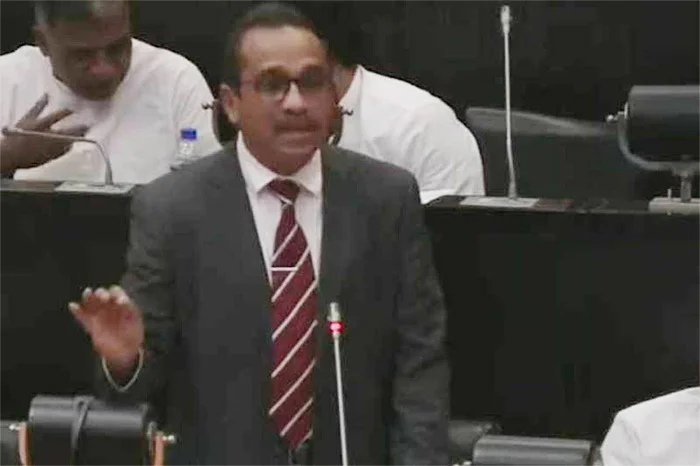
Leader of the House and Transport Minister Bimal Ratnayake told Parliament on Tuesday that during its first 100 days, the JVP/NPP government had to address problems inherited from previous regimes. Most of these issues had now been tackled and were in the process of being solved.
Delivering the concluding speech of the second reading debate on the 2025 Budget from the government benches, Minister Ratnayake stated: “None of these problems were caused by any decisions we made. Yet, we took responsibility for them, as we believe it is our duty to find solutions. We addressed them in a manner that ensures they will not recur. In doing so, we always opted for sustainable solutions.
Soon after assuming power, the government faced several pressing issues, including delays in passport issuance, shortages of rice, coconut, and salt in the market, a backlog in container clearance at the port, and a crisis following the release of the Grade Five scholarship examination results, which threatened to bring parents onto the streets. Additionally, the prices of essential goods reached unprecedented highs, and an underworld killing spree emerged. All these problems were the result of mismanagement by previous administrations.
“We introduced scientific solutions to each of these issues, and all of them are now on the path to being resolved. The passport issuance delay is being addressed, and there are no longer queues at the passport office. We regret the inconveniences caused by the shortages of rice, coconut, and salt. Short-term measures were implemented to address these shortages, and we assure you that these issues will be a thing of the past by next November, thanks to the long-term solutions currently being implemented. Container clearance at the Colombo Port has almost returned to normal levels, and the issue is being resolved in a way that prevents its recurrence. The Grade Five scholarship issue was resolved by the courts, delivering a solution acceptable to the majority of parents and fair to most students. Prices of essential goods are declining, as shown by retail chain statistics, which also indicate an increase in sales. As for the underworld killing spree, the police and security forces have been tasked with bringing it under control,” Ratnayake said.
“In addition, there were two moral issues: the first concerned the education certificates of the former Speaker, and the second involved the name change of a female Opposition MP. Since obtaining the former Speaker’s education certificates from overseas seemed time-consuming, immediate steps were taken to secure his resignation. Regarding the name change issue, Chief Government Whip Minister Nalinda Jayatissa informed the House on the same day that questionable remarks made by one of our MPs would be retracted, and we agreed to expunge them from the Hansard records.
“The 2025 Budget has also been prepared to address policy needs and provide solutions to the many problems our nation faces. A country cannot be developed by economists alone if there is no proper political management in place. Consider African nations with vast deposits of diamonds and oil that remain underdeveloped due to a lack of political management. During the debate, it was mentioned that foreign investors, who had come here with projects worth over $450 billion, turned away and invested elsewhere. This is unsurprising, as they were deterred by the corrupt political environment that prevailed at the time. A country cannot progress without political stability, backed by discipline, social stability upheld by discipline, and financial stability maintained by discipline. This Budget envisions achieving these stabilities.
For us, this is a historic occasion, as it is our first budget. We have long dreamed of presenting a budget of this nature to develop our country in line with our vision for systemic change. This Budget is also a tribute to those who sacrificed their lives for sharing that vision with us to transform this country,” Ratnayake said.


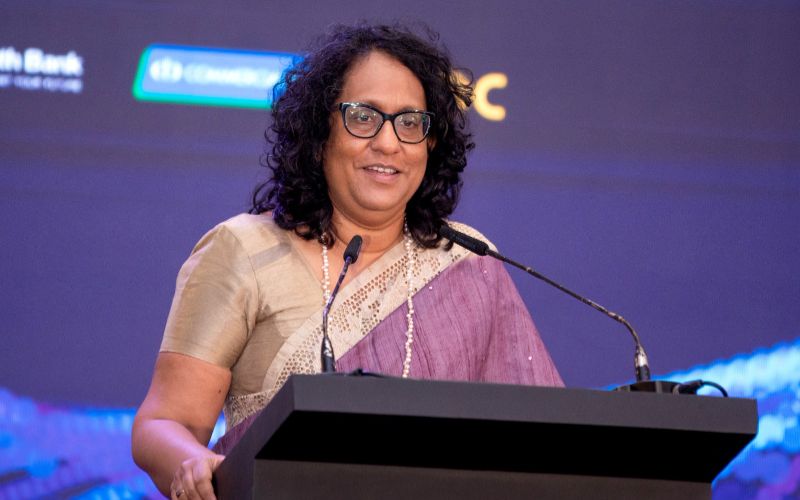
Marking a significant milestone in the digital economy, the official announcement on the expansion of PayPal services in Sri Lanka was made on Saturday (16) morning at the Galle Face Hotel under the patronage of Prime Minister Dr Harini Amarasuriya.
The Prime Minister, welcomed the initiative by Sri Lankan banks to collaborate with PayPal. PayPal services will soon be made available in Sri Lanka through initial banking partners Bank of Ceylon, Commercial Bank of Ceylon and Sampath Bank PLC, with additional banks expected to join in the coming months.
The announcement marks a significant step in ongoing efforts to strengthen secure and trusted cross-border payment access for Sri Lankan consumers, freelancers, entrepreneurs, start-ups and businesses.
Sri Lanka’s digital economy agenda is focused on enabling inclusive growth, supporting digital entrepreneurship and strengthening the country’s connectivity with international markets. The expansion of cross-border payment services is expected to play an important role in advancing this vision by enabling Sri Lankan small businesses, start-ups and enterprises to participate more actively in global commerce.
Sri Lanka’s micro, small and medium-sized enterprises are estimated to contribute approximately 52% of the country’s GDP, underscoring the importance of improving global market access for the sector. Freelancers, entrepreneurs, small businesses, start-ups and digital service providers are expected to benefit from improved payment interoperability and more secure and trusted methods of transacting with customers worldwide.
Addressing the event, the Prime Minister said;
“This is indeed a moment of celebration, and I think one that is testament to the fact that Sri Lanka’s role in the digital economy is finally being recognised, and that we are able to position ourselves both regionally and globally. As many of you know, we have ambitious targets for our digital economy, and this is expected to become one of our primary areas of growth and job creation.
We also have many talented freelancers in this sector, and establishing a system of transparent and secure financial services is absolutely important to our growth strategies and to establishing ourselves in this space. The SME sector, online services, e-commerce and the digital economy are all closely linked, and I believe this is a rapidly expanding sector where we can expect some of the most exciting growth opportunities in the months and years ahead.
I think it is extremely important that online services and payments come under a more secure, legitimate and accountable system. We have seen increasing concerns globally about scams, insecure systems and dubious transactions, so establishing a globally accepted and integrated platform that ensures accountability and security is essential as we move forward.
While we are looking to the digital economy, the SME sector and e-commerce as major areas of growth, we cannot forget that our economic growth plan is organised around two fundamental principles: equity, ensuring that no one is left behind, and transparency and accountability.
As we think about expanding the SME sector, supporting freelancers, growing e-commerce and strengthening our digital economy, we must also ensure that the longstanding issues our country has faced, social inequity, economic inequity and widening disparities in growth, are addressed. Our growth must be inclusive, equitable and socially responsible.
I am hopeful that our younger generation, which is enthusiastically participating in this transformation, will take the lead in ensuring that Sri Lanka’s future growth reflects those values.
I hope this collaboration and initiative will bring the benefits we are all hopeful for, and that it will ensure our country remains on the path not only to recovery and resilience, but also to positioning itself regionally and globally as a trustworthy nation, one that is capable of doing much more than merely following others, and one that is positioned as it truly deserves to be.”
Eranga Weeraratne, Deputy Minister of Digital Economy;
“For decades, Sri Lanka failed to introduce a trustworthy, simple and efficient payment solution, despite having talented people, globally competitive products and ambitious plans for the future.
We had entrepreneurs, freelancers and exporters delivering services to the world, but we did not have the proper platforms to support them or to help them receive payments efficiently. With the hard work of the President’s Secretariat, the Ministry of Digital Economy, the Ministry of Finance and all stakeholders, we have now been able to unlock this much-needed digital payment platform for Sri Lankans.
This platform is not only making it easier for Sri Lankans to receive payments from overseas, but also making it easier for clients around the world to do business with Sri Lanka.
For many years, the lack of trusted and efficient payment systems pushed people towards informal and grey-market solutions, meaning a significant amount of money never entered Sri Lanka’s formal financial system. According to current assessments, Sri Lanka’s digital exports amount to around US$1.5 billion, but there is also a large shadow industry because people have struggled to receive payments through formal channels.
This Government is committed to removing those barriers and making it easier to do business in the right way. We are also working on introducing regulatory frameworks for digital currencies and virtual assets as part of our broader digital transformation agenda.
We want to encourage more young entrepreneurs, freelancers and SMEs to participate in exports and the digital economy. Recently, we also introduced digital nomad visas as part of this strategy.
This is how we plan to build a US$15 billion digital economy by 2030 and increase the digital economy’s contribution to 20% of GDP. With the guidance of His Excellency the President, the Ministry of Digital Economy is spearheading this transformation together with all partner ministries and stakeholders.”
Secretary to the President Dr Nandika Sanath Kumanayake stated:
“Expanding the digital economy is a key priority of the new Government, and we believe that the initiative launched today will provide significant support towards achieving that goal.
Discussions on introducing a payment facilitation platform of this nature to Sri Lanka have been taking place over the past 10 to 12 years, during which several obstacles emerged. However, the President’s Office took the lead and held direct discussions with representatives of PayPal in India. As a result of those efforts, we have now been able to introduce this PayPal facility to Sri Lanka.
Special appreciation should also be extended to Dr Muditha Senarath Yapa of our Innovation Commercialization Unit. With the support of the Central Bank and all stakeholders in the financial sector, we were able to successfully bring this initiative to fruition.
This facility will be particularly beneficial to micro, small and medium-scale entrepreneurs, as well as those engaged in the technology sector. PayPal is also a timely requirement for expanding the country’s economy, and it is a matter of satisfaction that this need has now been fulfilled.
I invite young entrepreneurs to make use of this opportunity to further develop and expand their businesses.”
Dr. Nandalal Weerasinghe, Governor of the Central Bank of Sri Lanka;
“I remember first discussing PayPal with its CEO many years ago at the FinTech Festival in Singapore. At that time, Sri Lanka was not seen as a viable business opportunity, but today I am pleased that PayPal has recognised the country’s potential.
This is an important step in Sri Lanka’s digitalisation journey and a win-win situation for businesses, SMEs and the banking sector. In today’s world, businesses and professionals are no longer limited by geographical boundaries, but one of the biggest challenges faced by freelancers, entrepreneurs and exporters in Sri Lanka has been the difficulty in receiving international payments efficiently.
Enabling inward payments through globally recognised platforms such as PayPal is therefore a timely and significant step for the country. It will provide SMEs, freelancers and online service providers with a faster, safer and more convenient way to receive foreign income directly into their local bank accounts through formal channels.
This initiative will also strengthen Sri Lanka’s participation in global markets, particularly in export-oriented and knowledge-based sectors such as software development, digital marketing, e-commerce and other digital services industries.
Importantly, it will encourage foreign exchange inflows through regulated financial systems, improve transparency and strengthen confidence in the financial sector. This development goes beyond introducing a new payment method — it supports Sri Lanka’s broader vision of strengthening the digital economy, encouraging fintech innovation and enabling Sri Lankan businesses and professionals to participate more actively in the global marketplace.
We hope this initiative will encourage more young entrepreneurs, freelancers and SMEs to expand into exports and digital services, while contributing to Sri Lanka’s long-term economic growth.”
Mr. Nath Parameshwaran, Director, Corporate Affairs, India and South Asia at PayPal;
“It is a privilege to be here today for this important milestone for both Sri Lanka and PayPal. Today’s announcement reflects the strong collaboration between the Government, regulators, financial institutions and industry partners.
We are deeply grateful to the Honourable Prime Minister, the President’s Office, the President’s Secretariat, the Central Bank, the Ministry of Digital Economy and the Ministry of Finance for their leadership, guidance and support in making this initiative possible.
The Digital Economy Vision 2030 is an ambitious and forward-looking agenda that recognises the potential of technology and digital connectivity to drive inclusive economic growth.
What particularly stands out is the focus on ensuring that the benefits of digital transformation reach small businesses, freelancers, professionals and entrepreneurs across the country.
Small businesses and the freelance ecosystem form the backbone of Sri Lanka’s economy, and we are encouraged by the Government’s commitment to creating a more connected and inclusive digital economy.
This has been a genuine partnership among all stakeholders, involving significant commitment over the past several months. From PayPal’s perspective, we look forward to continuing this collaboration and playing a responsible role in Sri Lanka’s growth story.”
Nadia Syed, Senior Vice President, International Cross Border Trade and General Manager, APAC, PayPal;
“It is a privilege to be part of this important initiative, and we are grateful to the Prime Minister for bringing together public and private sector partners around a shared vision for a more connected digital economy in Sri Lanka.
At PayPal, our purpose has always been to empower small businesses, freelancers, entrepreneurs and consumers to gain access to the global economy. With 439 million active accounts across more than 200 markets, we are committed to helping make commerce simpler, more secure and more accessible.
Sri Lanka has a vibrant and outward-looking community of freelancers, entrepreneurs, exporters and startups already serving customers around the world. Their ambition is global, and the opportunities ahead are significant.
For many of them, the ability to receive international payments easily through trusted local banks is an important enabler of growth. It can help freelancers work with clients in new markets and help entrepreneurs turn global demand into sustainable growth for Sri Lankan goods and services.
Together with Bank of Ceylon, Commercial Bank and Sampath Bank, and with the support of the Honourable Prime Minister, we are taking an important step towards creating more accessible cross-border payment experiences for PayPal users and businesses in Sri Lanka.
This is not simply about payments. It is about access, choice and opportunity. It is about supporting Sri Lanka’s freelancers, entrepreneurs and small businesses at a pivotal time as digital commerce and cross-border services become increasingly important drivers of growth.
We look forward to continuing this momentum together with our banking partners to support Sri Lanka’s wider digital economy goals.”
General Manager and Acting Chief Executive Officer of the Bank of Ceylon, Y. A. Jayatilaka;
“We provide digital services to more than 16 million customers across Sri Lanka. In particular, we recently launched a new service called ‘Smart Freelancer’ for the younger generation engaged in providing freelance services to overseas markets through online platforms.
We also introduced a separate loan scheme called ‘E-Creator’ for them at very low interest rates. In addition, we launched the ‘Smart Remit App’ for those sending foreign remittances to Sri Lanka from abroad.
We believe that PayPal will help fill the long-standing gap in having a reliable payment platform alongside these services. Around 150,000 freelance service providers in Sri Lanka are customers of the Bank of Ceylon. There has been a strong need for a platform such as PayPal to enable them to receive salaries and other foreign remittances from overseas more efficiently and securely.
As the Bank of Ceylon, we are grateful for the efforts taken by the Central Bank and the Government of Sri Lanka to make this possible.”
Managing Director and Chief Executive Officer of Commercial Bank of Ceylon, Sanath Manatunge;
“The introduction of the PayPal withdrawal facility marks an important milestone in Sri Lanka’s digitalisation journey. PayPal is not merely a payment platform; it is a significant opportunity for the country’s business community, digital freelancers engaged in international transactions, and the wider digital economy to connect more easily with global markets.
Digital freelancers are already making a highly positive contribution to Sri Lanka’s economy. Across the world, employment opportunities are rapidly expanding in areas such as information technology, remote services, creativity and digital skills.
For a long time, the lack of a formal and convenient mechanism to receive foreign payments was a major obstacle for these professionals. The introduction of PayPal helps address this challenge.
This initiative will strengthen foreign exchange inflows into the country and ensure that the contribution made by Sri Lanka’s freelance professionals to the economy receives the recognition and value it deserves.”
Managing Director of Sampath Bank, Sanjaya Pradeep Gunawardena;
“We see this occasion as the successful outcome of a relationship built through years of effort. The introduction of PayPal is not merely the launch of another payment facility or technological solution, but an important step forward in connecting Sri Lanka more closely with the global digital economy and opening up new opportunities for the country’s people and business community.
Today, the world is changing rapidly. Digital payments, fintech innovation and cross-border financial connectivity have become key drivers of the global economy. They are no longer simply support services, but major factors that determine economic growth, exports, entrepreneurship, employment opportunities and a country’s competitiveness.
We have already seen that Sri Lanka possesses the talent, capability and creativity needed to succeed in the digital economy. Freelancers, technology entrepreneurs, creators and exporters in Sri Lanka are already engaging with global markets. What they require is a financial system that is accessible, reliable and efficient in connecting them with international markets.
When Sampath Bank began this journey with PayPal, our vision was to strengthen Sri Lanka’s connection with the global digital economy. We are extremely pleased to see that journey evolve into an initiative of national importance.”
Minister of Industry and Entrepreneurship Development Sunil Handunnetti, Minister of Labour and Deputy Minister of Finance and Planning Dr Anil Jayantha Fernando, Deputy Minister of Industry and Entrepreneurship Development Chathuranga Abeysinghe, Senior Presidential Adviser on Science and Technology Prof. Gomika Udugamasooriya, Presidential Adviser on the Digital Economy Dr Hans Wijayasuriya, and Director General of the National Initiative for Research and Development Commercialization (NIRDC), Ministry Secretaries, heads of financial institutions, government officials, industrialists, entrepreneurs and banking sector representatives were also present on the occasion.
[PMD]


ECONOMYNEXT –The recent sharp decline of the Sri Lanka Rupee (LKR) over the past month has reignited anxieties reminiscent of the 2022 financial collapse.
The rupee has fallen more than 5 percent so far this year to a level seen in 2022 after being stable for over three years.
While Central Bank Governor Nandalal Weerasinghe has attributed this volatility to global trends, likely strengthening of the US Dollar and shifting international commodity prices, the domestic implications are profound.
For a nation still in the fragile stages of an IMF-backed recovery, currency depreciation is not merely a technical adjustment; it is a direct threat to the standard of living for every citizen not earning in foreign exchange.
The ripple effects of the depreciation could be detrimental for Sri Lanka’s recovering economy under an IMF deal. Here are a few effects that could adversely impact the island nation:
Sri Lanka remains heavily dependent on imports for essential goods, including fuel, medicine, and food. When the rupee loses value, the cost of bringing these goods into the country rises instantly.
Cost-push inflation is the most direct consequence. As the landing cost of fuel increases, transport and
production costs across all sectors rise, leading to a second wave of price hikes.
In 2022, hyperinflation peaked near 70% following the sudden float of the rupee. While the current depreciation is less drastic, it threatens to reverse the disinflationary trend achieved in early 2025.
Already the inflation has spiked to 5.4 percent in April from 2.2 percent in the previous month, mainly due to sharp fuel price increases and its spillover effects. The recent rupee depreciation has yet to be absorbed into prices.
For the average household, depreciation translates to a hidden tax.
As prices for electricity, gas, and groceries climb, the portion of income available for education, healthcare, and savings shrinks.
The 2022 crisis proved that the middle class is the most vulnerable to sudden depreciation, as their fixed salaries fail to keep pace with the rapidly rising cost of a basic consumption basket.
In 2022, the sudden and uncontrolled floating of the Sri Lanka Rupee acted as a primary catalyst for the nation’s deepest economic collapse, causing the currency to lose over 60% of its value within months.
This sharp depreciation triggered a cost-push inflationary spiral that saw headline inflation peak at an unprecedented 70%, while food inflation soared near 95%.
For the average Sri Lankan, this meant the price of essential imports such as fuel, cooking gas, and medicine, doubled or tripled almost overnight, effectively wiping out the purchasing power of fixed-income earners and pushing millions into food insecurity.
Today, while the current depreciation is more gradual and attributed by the central bank to global trends, rather than domestic depletion, the impact remains a significant threat to household stability.
Unlike the 2022 shock, which was characterized by absolute shortages and queues, this gradual slide serves as a silent tax, steadily eroding the marginal gains made during the recent disinflationary period.
As transport costs and electricity tariffs rise in tandem with the weakening rupee, hardworking families again face the prospect of a nutritional trade-off, where the increasing cost of imported inputs for production and logistics forces a reduction in the quality and quantity of daily consumption.
By Shihar Aneez
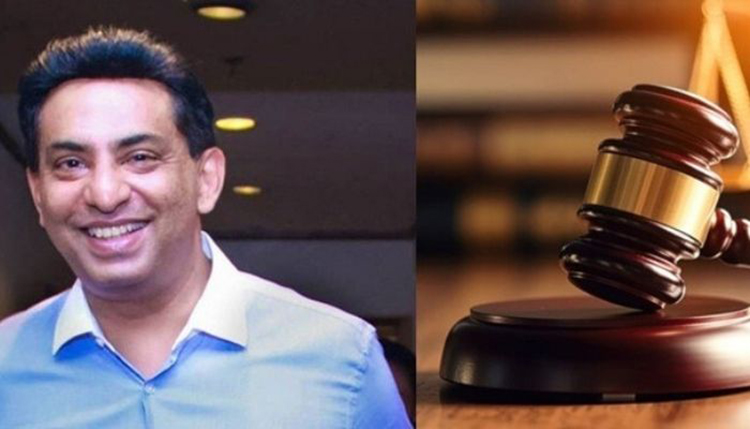
Colombo Additional Magistrate Lahiru Silva has directed Keselwatta Police to obtain and examine the telephone data records of a Grama Niladhari who issued certification documents for bail guarantors in a suspected bail-for-money racket linked to proceedings involving former SriLankan Airlines CEO Kapila Chandrasena.
The order was issued after police requested further investigations when four suspects, including Perumal Ganesh, a domestic worker attached to the residence of former cricketer Aravinda de Silva, were produced before court over allegations of presenting fake bail guarantors.
Police told court that investigators have uncovered strong suspicions surrounding the issuance of 17 Grama Niladhari certificates within a five-month period to two individuals—Mohamed Rizwan and Mohamed Ishan—who allegedly acted as guarantors in multiple bail applications. According to police, Rizwan obtained 10 certificates while Ishan obtained seven, all of which were used in court-related proceedings, raising concerns of an organised racket.
The Magistrate ordered that telephone data records of the relevant Grama Niladhari from January to date be analysed as part of the probe.
Police further alleged that Rizwan, Ishan, and Ariya Tissa de Silva, residents of the Sanchi Arachchiwatte area near the Aluthkade Courts complex, provided cash and acted as personal guarantors in the bail application of Chandrasena, who had been remanded in connection with allegations of receiving a USD 2 million bribe in the Airbus deal.
On the 5th, court granted bail to Chandrasena under conditions including two personal sureties of Rs. 10 million each and cash bail of Rs. 500,000. Police allege that the guarantors presented were not known relatives or associates of the accused.
Investigators further informed court that Perumal Ganesh had signed the cash bail guarantee and was identified during an identification parade held on Thursday. The Crime Branch of Keselwatta Police, led by Sub-Inspector K.W.D. Anuruddha, told court that prison officials had identified him.
Police also raised objections to granting bail, noting that investigations into Chandrasena’s death remain ongoing and a final determination has not yet been reached.
However, defence counsel appearing for the suspects rejected the allegations, arguing that their clients were only present to facilitate bail and that no direct charges had been established against them.
After considering submissions, Magistrate Lahiru Silva ordered that the four suspects be further remanded until the 20th and directed police to submit a detailed summary of evidence in the case.

Expansion of PayPal services in Sri Lanka officially announced

Showers expected in the Western, Sabaragamuwa, Central, North-western and Northern provinces and in Galle and Matara districts

Rupee slide rekindles 2022 crisis fears as inflation risks mount

Kapila Chandrasena case: GN phone records under court scrutiny

Sri Lankan Airlines Airbus Scandal and the Death of Kapila Chandrasena and my Brother Rajeewa

Inland Revenue (Amendment) Bill takes centre stage in Parliament Tuesday

‘Dates have the highest sugar content to fight Coronavirus’

Sunday Island 27 December – Headlines

#SundayIsland 17th December – Headlines

Sunday Island – 28th March

Sunday Island Headlines – 21 March

Sunday Island – 21st February – Headlines
-
 News4 days ago
Ex-SriLankan CEO’s death: Controversy surrounds execution of bail bond
-
Features5 days ago
High Stakes in Pursuing corruption cases
-
 Features5 days ago
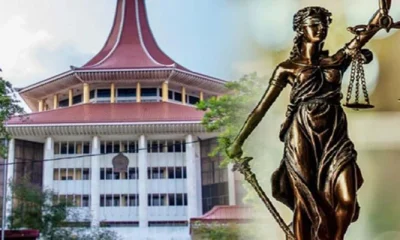
When University systems fail:Supreme Court’s landmark intervention in sexual harassment case
-
 Midweek Review4 days ago
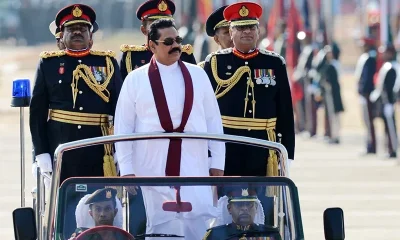
A victory that can never be forgotten
-
 News6 days ago
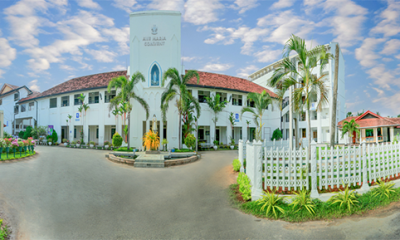
150th anniversary celebrations of Ave Maria Convent, Negombo
-

 Features2 days ago
Mysterious Death of United Nations Secretary General Hammarskjöld
-
 Business3 days ago
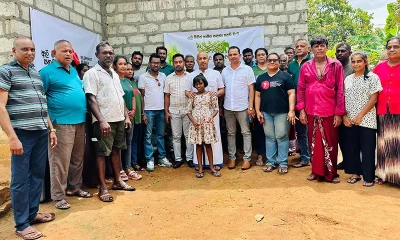
Lime trees to crack HEC conundrum
-
 News1 day ago
Lanka’s eligibility to draw next IMF tranche of USD 700 mn hinges on ‘restoration of cost-recovery pricing for electricity and fuel’