
Features
Pilgrimages to India – personal experiences

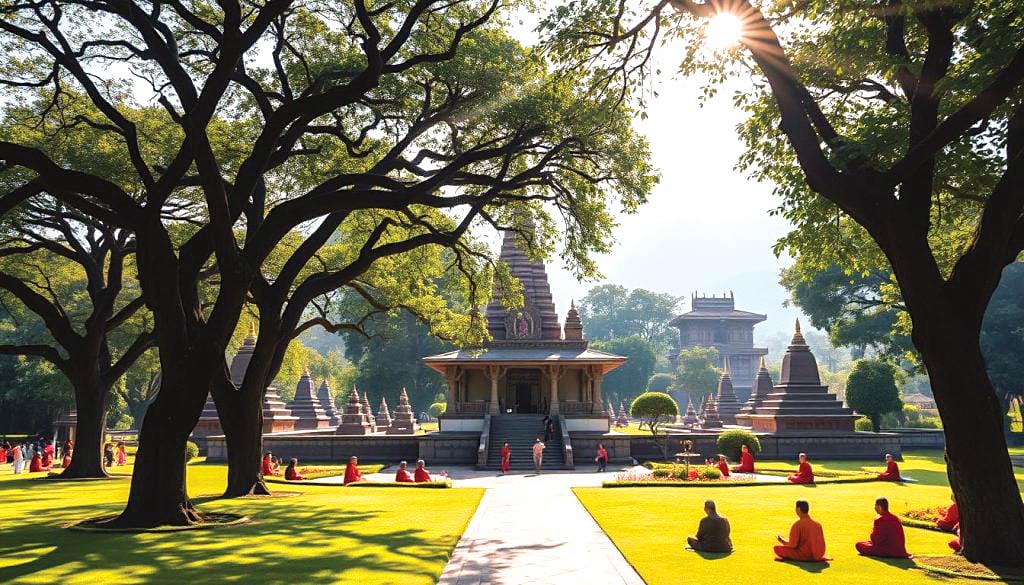
 The season to venture forth to venerate places in India and Nepal rich in history and Buddhist relevance is ending. The cooler temperatures of Benares and Bihar make for the season for Buddhist pilgrimages to be from November through February.
Four places of significance
I listened recently to a YouTube presentation by Ajahn Brahmali retailing his experiences on pilgrimage in India. That brought back vividly my own memories of three visits. I need to mention here that Ajahn Brahmali translated the sutta where the Buddha tells people to visit the four places of profound significance in his life. Ven Brahmali shared the usual interpretation of this statement to be the four places of significance in the Buddha’s life: Lumbini where he was born as Prince Siddhartha Gautama; Buddha Gaya where as an ascetic he attained enlightenment; Sarnath where he preached his first sermon as the Buddha; and Kusinara where he died – Parinibbana.
The Buddha always insisted he was just a human being, and deification and elevating him to supernatural states was wrong. But he wished people to visit places of significance in his life so they would be inspired and also draw closer to him. I heard Ajahn Brahm, mentor and teacher to Ajahn Brahmali, say that the four places the Buddha considered ought to be visited by his followers were the four jhanas reached when in very deep and absorbed meditation. I really admire this interpretation of the ‘four places’ since it tallies with the Buddha’s earnest request that people follow his Path, meditate and reach final relief.
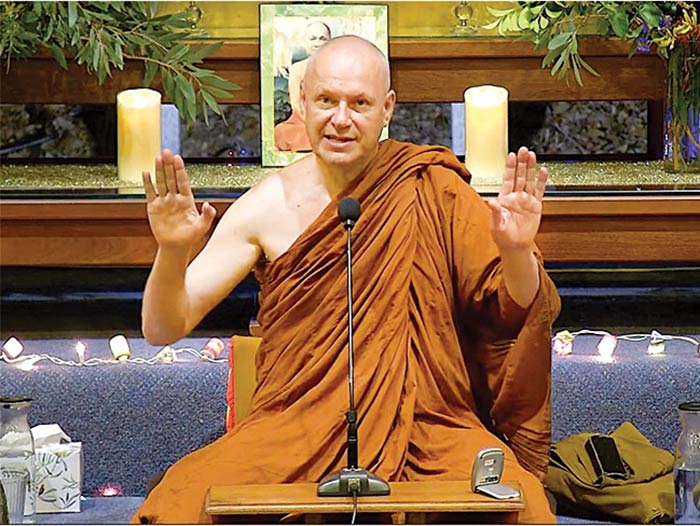
Ajahn Brahmali
Deeply significant visits
My elder brother escorted my mother on pilgrimage in 1949 when hardly anyone braved entering notorious-for-bandits Bihar State. But my Aiya did. From Bombay (then), they entrained and went to the three sacred places in India, at that time very remote and undeveloped, and Buddha Gaya still under the supervision of the Hindu Mahantha resident within the premises of the Sacred Tree.
In 1956, Aiya suggested, nay obliged my second brother to take Mother on pilgrimage. Thus in late December 1956 and including the first week of 1957 – the Buddha Jayanthi year celebrating 2,500 years of Buddhism – my second brother fulfilled his obligation and included Aiya’s wife and me in the party. Pilgrimages were becoming common with concessions being given by India on travel to mark the historical event.
We registered with a travel agency in Colombo and booked first class train travel in India. Flying to Madras, we went to the railway station to obtain our booked seats first to Calcutta. We were told we would have to wait a fortnight for first class seats. Our entire trip was for two weeks. We were then advised to engage a porter, give him a bed sheet and he would reserve seats for us.
This we did, and the man jumping in to a third class compartment while the express train was approaching the station, spread our sheet on a seat alongside one side of the compartment, claiming it as our territory. A small bunch of school children with a teacher entered and the teacher took over. He gave mother a seat where she was able to lie down all through the journey; me and SIL a seat where alternatively we could lie down; my brother a luggage rack above; the school children on the floor, two Burmese ladies next to me and SIL. A lovely Kashmiri lady opted to sit and lie down on her large suitcase for the two nights’ journey. We were fine eating stuff sold on platforms, mostly mandarin, washing minimally and in the same Kashmir saris we had worn to fly in.
One misadventure: late the first night when I had to sit up, I found a man crouched near the door scratching himself violently and softly moaning. I called out to the Teacher-Commander.
Came over promptly, opened the door of the train now speeding, and pushed the intruder out. But miraculously he returned the next night too. This time Teacher saw to it he was thrown really out – no chance to swing onto the compartment ledge.
From Calcutta onwards the travelling was OK since our first class tickets were operable. We spent a super night in the restrooms of the New Delhi station where the station master’s niece escorted us on a spin around the city. Met loads of Tibetans who uncouthly would enter our station rooms to stare at themselves in the mirror
I was young, in love, and the astounding significance of places visited were rather lost on stupid me. Lumbini was not developed, only the Asokan pillar stood way up tall, indicating here Prince Siddhartha was born in a sal grove to Queen Mahamaya. The pond lay still, the one she is supposed to have washed herself in.
Buddha Gaya was reached in cycle rickshaws. Impressed, but when the other three crossed the Neranjana Ganga to visit the spot where Sujatha offered the Bhodisatva his last meal before he became the Buddha, I sat on the vast stretch of sand with the river reduced to a small stream, writing a letter to my boyfriend, posted surreptitiously by bribing hotel receptionists and waiters. We visited the Mahantha, plump and podgy, seated like a king receiving pilgrims who were obliged to pay him a respectful courtesy call.
We included Sarnath, Sravasti and Sanchi in our travel itinerary. At Sanchi we spent the night in a dak bungalow after me existing that day on peanuts and mandarin which moved within its skin and was sold shouting out its name – reyvela. The others lunched on chapatti and sambal, I paid for it that night in a tourist bungalow with all lights off, groping with mother to the toilet to throw up and also purge. However, fine in the morning. I found this was the way it was on my second trip too. Feeling feverish at bedtime but getting up fresh and energetic the next morning
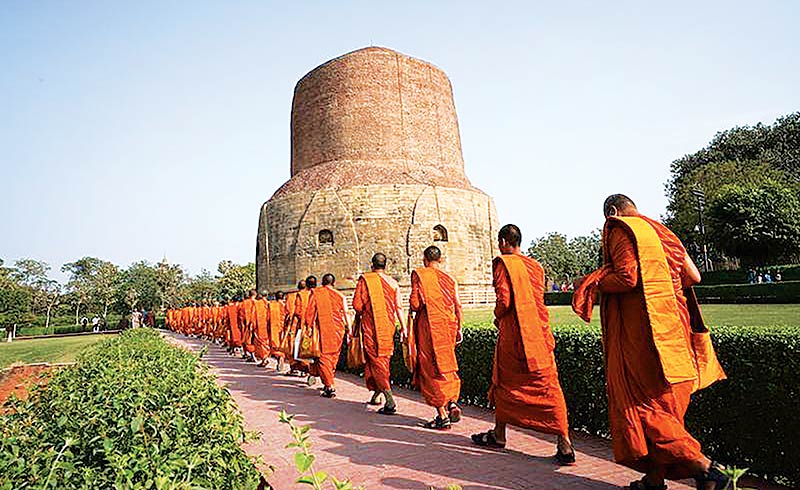
Captain Wick’s luxury pilgrimage
In the 1970s a friend, my second sister and I joined a trip organized by Captain DA Wickremasinghe for a family group. Capn Wicks as we called him, was expert planner of this trip, having taken to it as his service after retiring from the Ceylon Army. He took us first to Kathmandu by Royal Nepal Airlines and then after a day of rest flew us in a small plane to Lumbini.
After excavation much development had been taken place. Sites were marked as per the birth of the prince of the Sakyan principality. I was much more in gratitude for having the good fortune to visit these places in congenial company with everything looked after efficiently. We had fun too with Capn Wicks choosing to spend the evenings before dinner with us three. He gave me a task – to accompany when sightseeing or shopping his ex-batman’s wife, to whom he was giving a free trip. I did it, enviously seeing my sister and my friend trotting off on their own.
We travelled around in a luxury bus from Lumbini onwards. Buddha Gaya was almost taken over by the Indian Tourist Board but the sanctity within the premises was still intact. In fact I went alone to the precincts of the Sacred Bo Tree and was immediately immersed in meditation. The others were crossing the river and my sister had to nudge me to get me to join them. This time I walked across village lanes which to me seemed to have remained thus from the time of the Buddha. All rituals such as offering early morning dane and going in procession with cloth torches lit, which we had brought from home, were fulfilled.
Kusinara sends most devotees to tears. The lying down large statue and recognizing it as depicting the Parinibbana at age 80 of the Buddha, is touching. But my most profound experience in this trip and the next was roaming around Sravasati where the Buddha spent most vas seasons: 19 in all. I distinctly felt an aura of serene sanctity pervading the place. Touchingly significant was meeting the Sinhala bhikkhu in charge of the sacred place and his taking us to view the kuti supposedly used by the Buddha, a few steps below ground level.
The Ananda Bodhiya in Sravasti has a beautiful story to it. The Buddha was preparing to go on a Dhammduta charikawa – mission of preaching. By then the Sangha was large in number. Hence the Ven Ananda Thera, Buddha’s assistant and close companion, asked the Buddha who would be venerated in the Buddha’s absence by the monks who remained at Sravasti.
The Buddha directed a bo sapling be brought from the tree in Gaya under which he sat and paid homage to, and planted in the grounds of Sravasati. This was to be his substitute. This Bo Tree flourishes unlike the Sacred Tree in Anuradhapura, the Ananda Bodhiya, the monk said, being third generation.
Captain Wicks gave us a bonus of three days unwinding in Katmandu, before flying back.
With the Bank of Ceylon
Pilgrimage Three was about 12 years ago, when the full impact of the places fell on a receptive mind now more sincerely religious and having been to meditation retreats. Chief organizer was friend Menik Dissanayake, excellent tour arranger and guide who engaged the Bank of Ceylon to arrange a pilgrimage for forty of us, including Delhi, the Taj Mahal and shopping. I was particularly happy as it gave me the chance to revisit the carpet sellers at Agra and send my son a small silk thread woven carpet.
Both interpretations of the word of the Buddha to visit the four places where he was, were valid for me though admittedly I was far far away from reaching even the first jhana. We live, we appreciate, we learn and very slowly progress on the Path to final Deliverance, which we need to sort out for ourselves.



The appointment of former minister Eran Wickremaratne to chair the Sri Lanka Cricket Transformation Committee is significant for more than the future of cricket. It signals a possible shift in the culture of governance even as it offers Sri Lankan cricket a fighting possibility to get out of the doldrums of failure. There have been glorious patches for the national cricket team since the epochal 1996 World Cup triumph. But these patches of brightness have been few and far between and virtually non-existent over the past decade. At the centre of this disaster has been the failures of governance within Sri Lanka Cricket which are not unlike the larger failures of governance within the country itself. The appointment of a new reform oriented committee therefore carries significance beyond cricket. It reflects the wider challenge facing the country which is to restore trust in public institutions for better management.
The appointment of Eran Wickremaratne brings a professional administrator with a proven track record into the cricket arena. He has several strengths that many of his immediate predecessors lacked. Before the ascent of the present government leadership to positions of power, Eran Wickremaratne was among the handful of government ministers who did not have allegations of corruption attached to their names. His reputation for financial professionalism and integrity has remained intact over many years in public life. With him in the Cricket Transformation Committee are also respected former cricketers Kumar Sangakkara, Roshan Mahanama and Sidath Wettimuny together with professionals from legal and business backgrounds. They have been tasked with introducing structural reforms and improving transparency and accountability within cricket administration.
A second reason for this appointment to be significant is that this is possibly the first occasion on which the NPP government has reached out to someone associated with the opposition to obtain assistance in an area of national importance. The commitment to bipartisanship has been a constant demand from politically non-partisan civic groups and political analysts. They have voiced the opinion that the government needs to be more inclusive in its choice of appointments to decision making authorities. The NPP government’s practice so far has largely been to limit appointments to those within the ruling party or those considered loyalists even at the cost of proven expertise. The government’s decision in this case therefore marks a potentially important departure.
National Interest
There are areas of public life where national interest should transcend party divisions and cricket, beloved of the people, is one of them. Sri Lanka cannot afford to continue treating every institution as an arena for political competition when institutions themselves are in crisis and public confidence has become fragile. It is therefore unfortunate that when the government has moved positively in the direction of drawing on expertise from outside its own ranks there should be a negative response from sections of the opposition. This is indicative of the absence of a culture of bipartisanship even on issues that concern the national interest. The SJB, of which the newly appointed cricket committee chairman was a member objected on the grounds that politicians should not hold positions in sports administration and asked him to resign from the party. There is a need to recognise the distinction between partisan political control and the temporary use of experienced administrators to carry out reform and institutional restructuring. In other countries those in politics often join academia and civil society on a temporary basis and vice versa.
More disturbing has been the insidious campaign carried out against the new cricket committee and its chairman on the grounds of religious affiliation. This is an unacceptable denial of the reality that Sri Lanka is a plural, multi ethnic and multi religious society. The interim committee reflects this diversity to a reasonable extent. The country’s long history of ethnic conflict should have taught all political actors the dangers of mobilising communal prejudice for short term political gain. Sri Lanka paid a very heavy price for decades of mistrust and division. It would be tragic if even cricket administration became another arena for communal suspicion and hostility. The present government represents an important departure from the sectarian rhetoric that was employed by previous governments. They have repeatedly pledged to protect the equal rights of all citizens and not permit discrimination or extremism in any form.
The recent international peace march in Sri Lanka led by the Venerable Bhikkhu Thich Paññākāra from Vietnam with its message of loving kindness and mindfulness to all resonated strongly with the masses of people as seen by the crowds who thronged the roadsides to obtain blessings and show respect. This message stands in contrast to the sectarian resentment manifested by those who seek to use the cricket appointments as a weapon to attack the government at the present time. The challenges before the Sri Lanka Cricket Transformation Committee parallel the larger challenges before the government in developing the national economy and respecting ethnic and religious diversity. Plugging the leaks and restoring systems will take time and effort. It cannot be done overnight and it cannot succeed without public patience and support.
New Recognition
There is also a need for realism. The appointment of Eran Wickremaratne and the new committee does not guarantee success. Reforming deeply flawed institutions is always difficult. Besides, Sri Lanka is a small country with a relatively small population compared to many other cricket playing nations. It is also a country still recovering from the economic breakdown of 2022 which pushed the majority of people into hardship and severely weakened public institutions. The country continues to face unprecedented challenges including the damage caused by Cyclone Ditwah and the wider global economic uncertainties linked to conflict in the Middle East. Under these difficult circumstances Sri Lanka has fewer resources than many larger countries to devote to both cricket and economic development.
When resources are scarce they cannot be wasted through corruption or incompetence. Drawing upon the strengths of all those who are competent for the tasks at hand regardless of party affiliation or ethnic or religious identity is necessary if improvement is to come sooner rather than later. The burden of rebuilding the country cannot rest only on the government. The crisis facing the country is too deep for any single party or government to solve alone. National recovery requires capable individuals from across society and from different sectors such as business and civil society to work together in areas where the national interest transcends party politics. There is also a responsibility on opposition political parties to support initiatives that are politically neutral and genuinely in the national interest. Not every issue needs to become a partisan battle.
Sri Lanka cricket occupies a special place in the national consciousness. At its best it once united the country and gave Sri Lankans a sense of pride and international recognition. Restoring integrity and professionalism to cricket administration can therefore become part of the larger task of national renewal. The appointment of Eran Wickremaratne and the new committee, while it does not guarantee success, is a sign that the political leadership and people of the country may be beginning to mature in their approach to governance. In recognising the need for competence, integrity and bipartisan cooperation and extending it beyond cricket into other areas of national life, Sri Lanka may find the way towards more stable and successful governance..
by Jehan Perera

Court vacation this year came with an unexpected lesson, not from a courtroom but from the streets of Dhaka — a city that moves, quite literally, on three wheels.
Above the traffic, a modern metro line glides past concrete pillars and crowded rooftops. It is efficient, clean and frequently cited as a symbol of progress in Bangladesh. For a visitor from Sri Lanka, it inevitably brings to mind our own abandoned light rail plans — a project debated, politicised and ultimately set aside.
But Dhaka’s real story is not in the air. It is on the ground.
Beneath the elevated tracks, the streets belong to three-wheelers. Known locally as CNGs, they cluster at junctions, line the edges of markets and pour into narrow roads that larger vehicles avoid. Even with a functioning rail system, these three-wheelers remain the city’s most dependable form of everyday transport.
Within hours of arriving, their importance becomes obvious. The train may take you across the city, but the journey does not end there. The last mile — often the most complicated part — belongs entirely to the three-wheeler. It is the vehicle that gets you home, to a meeting or simply through streets that no bus route properly serves.
There is a rhythm to using them. A destination is mentioned, a price is suggested and a brief negotiation follows. Then the ride begins, edging into traffic that feels permanently compressed. Drivers move with instinct, adjusting routes and squeezing through gaps with a confidence built over years.
It is not polished. But it works.
And that is where the comparison with Sri Lanka becomes less about what we lack and more about what we already have.
Back home, the three-wheeler has long been part of daily life — so familiar that it is often discussed only in terms of its problems. There are frequent complaints about fares, refusals or the absence of meters. More recently, the industry itself has become entangled in politics — from fuel subsidies to regulatory debates, from election-time promises to periodic crackdowns.
In that process, the conversation has shifted. The three-wheeler is often treated as a problem to be managed, rather than a service to be strengthened.
Yet, seen through the experience of Dhaka, Sri Lanka’s system begins to look far more settled — and, in many ways, ahead.
There is a growing structure in place. Meters, while not perfect, are widely recognised. Ride-hailing apps have added transparency and reduced uncertainty for passengers. There are clearer expectations on both sides — driver and commuter alike. Even small details, such as designated parking areas in parts of Colombo or the increasing standard of vehicles, point to an industry slowly moving towards professionalism.
Just as importantly, there is a human element that remains intact.
In Sri Lanka, a three-wheeler ride is rarely just a transaction. Drivers talk. They offer directions, comment on the day’s news, or share local knowledge. The ride becomes part of the social fabric, not just a means of getting from one point to another.
In Dhaka, the scale of the city leaves less room for that. The interaction is quicker, more direct, shaped by urgency. The service is essential, but it is under constant pressure.
What stands out, across both countries, is that the three-wheeler is not a temporary or outdated mode of transport. It is a necessity in dense, fast-growing Asian cities — one that fills gaps no rail or bus system can fully address.
Large infrastructure projects, like light rail, are important. They bring efficiency and long-term capacity. But they cannot replace the flexibility of a three-wheeler. They cannot reach into narrow streets, respond instantly to demand or provide that crucial last-mile connection.
That is why, even in a city that has invested heavily in modern rail, Dhaka still runs on three wheels.
For Sri Lanka, the lesson is not simply about what could have been built, but about what should be better managed and valued.
The three-wheeler industry does not need to be politicised at every turn. It needs steady regulation — clear fare systems, proper licensing, safety standards — alongside encouragement and recognition. It needs to be seen as part of the solution to urban transport, not as a side issue.
Because for thousands of drivers, it is a livelihood. And for millions of passengers, it is the most immediate and reliable form of mobility.
The tuk-tuk may not feature in grand policy speeches or infrastructure blueprints. It does not run on elevated tracks or attract international attention. But on the ground, where daily life unfolds, it continues to do what larger systems often struggle to do — show up, adapt and keep moving.
And after watching Dhaka’s streets — crowded, relentless, yet functioning — that small, three-wheeled vehicle feels less like something to argue over and more like something to get right.
(The writer is an Attorney-at-Law with over a decade of experience specialising in civil law, a former Board Member of the Office of Missing Persons and a former Legal Director of the Central Cultural Fund. He holds an LLM in International Business Law)
by Sampath Perera recently in Dhaka, Bangladesh

 According to reports coming my way, the entertainment scene, in Dubai, is very much opening up, and buzzing again!
After a quieter few months, May is packed with entertainment and the whole scene, they say, is shifting back into full swing.
The Seven Notes band, made up of Sri Lankans, based in Dubai, are back in the spotlight, after a short hiatus, due to the ongoing Middle East problems.
On 18th April they did Legends Night at Mercure Hotel Dubai Barsha Heights; on Thursday, 9th May, they will be at the Sports Bar of the Mercure Hotel for 70s/80s Retro Night; on 6th June, they will be at Al Jadaf Dubai to provide the music for Sandun Perera live in concert … and with more dates to follow.
These events are expected to showcase the band’s evolving sound, tighter stage coordination, and stronger audience engagement.
With each performance, the band aims to refine its identity and build a loyal following within Dubai’s vibrant nightlife and event scene.

Pasindu Umayanga: The group’s new vocalist
What makes Seven Notes standout is their versatility which has made the band a dynamic and promising act.
With a growing performance calendar, new talent integration, and international ambitions, the band is definitely entering a defining phase of its journey.
Dubai’s music industry, I’m told, thrives on diversity, energy, and audience connection, with live bands playing a crucial role in elevating events—from corporate shows to private concerts. Against this backdrop, Seven Notes is positioning itself not just as another band, but as a performance-driven musical unit focused on consistency and growth.
Adding fresh momentum to the group is Pasindu Umayanga who joins Seven Notes as their new vocalist. This move signals a strategic upgrade—not just filling a role, but strengthening the band’s front-line presence.
Looking beyond local stages, Seven Notes is preparing for an international tour, to Korea, in July.

Bassist Niluk Uswaththa: Spokesperson for Seven Notes
According to bassist Niluk Uswaththa, taking a band abroad means: Your sound must hold up against unfamiliar audiences, your performance must translate beyond language, and your discipline must be at a professional level.
“If executed well, this tour could redefine Seven Notes from a local band into an emerging international act,” added Niluk.
He went on to say that Dubai is not an easy market. It’s saturated with highly experienced, multi-genre bands that can adapt instantly to any crowd.
“To stand out consistently you need to have tight rehearsal discipline, unique sound identity (not just covers), strong stage chemistry, audience retention – not just applause.”
No doubt, Seven Notes is entering a critical growth phase—new member, multiple shows, and an international tour on the horizon. The opportunity is real, but so is the pressure.
However, there is talk that Seven Notes will soon be a recognised name in the regional music scene.
-
 News7 days ago
Treasury chief’s citizenship details sought from Australia
-

 News6 days ago
Rooftop Solar at Crossroads as Sri Lanka Shifts to Distributed Energy Future
-
 News5 days ago
“Three-in-one blood pressure pill can significantly reduce risk of recurrent strokes”
-

 News7 days ago
Central Province one before last in AL results
-

 Sports7 days ago
Well done AKD!
-

 News2 days ago
USD 3.7 bn H’tota refinery: China won’t launch project without bigger local market share
-

 News5 days ago
Alarm raised over plan to share Lanka’s biometric data with blacklisted Indian firm
-
 News3 days ago
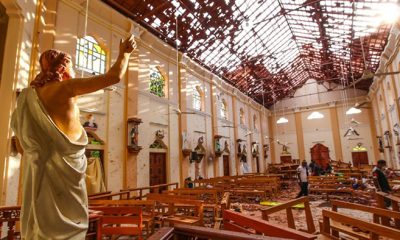
Easter Sunday Case: Ex-SIS Chief concealed intel, former Defence Secy tells court