
News
2025 Budget: Positive Welfare Measures, but Economic Concerns Remain, says Prof. Tissa Vitharana

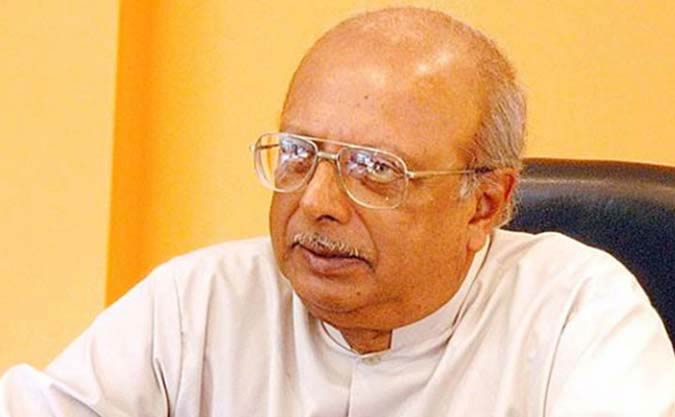
Prof. Tissa Vitharana, leader of the Lanka Sama Samaja Party (LSSP), has welcomed several key aspects of the 2025 national budget, particularly its emphasis on social welfare, but raised significant concerns about the country’s economic trajectory, urging stronger action to avoid a return to bankruptcy.
One of the most promising features, according to Vitharana, is the prioritization of nutrition for the nearly 63% of families in Sri Lanka who struggle to access three meals a day. With malnutrition rates possibly doubling to 14.3%, Vitharana emphasized that Sri Lanka’s robust public health service is well-positioned to target the most vulnerable households. He expressed hope that the government would implement this initiative effectively, acknowledging the importance of addressing food insecurity in a country where many families are forced to subsist on one meal per day for adults and two for children.
Vitharana also lauded the government’s focus on promoting industrial development, particularly in the export sector, pointing to the successful Vidatha Program and SLINTEC, which he helped establish as former Minister of Science and Technology. He noted that over 30,000 entrepreneurs have emerged through the Vidatha program, and many are now contributing to the country’s export revenue. He urged the President and Finance Minister to ensure that the budget adequately supports this critical sector.
Another highlight of the budget, according to Vitharana, is the allocation for education, renewable energy, and digitalization. He also supported the government’s initiative to make use of the country’s oil tanks, which could potentially enhance energy security.
However, Vitharana expressed concerns regarding the health sector, particularly the severe shortage of essential medicines, many of which are imported at high prices. He pointed out that this shortage is causing immense hardship for those with chronic illnesses, particularly low-income individuals who cannot afford the high costs of private pharmacies. He called for greater attention to implementing the WHO-approved Senaka Bibile medicinal drug policy, which ensures affordable, high-quality medicines.
On the economic front, Vitharana criticized the government’s growing reliance on foreign loans, noting that recurrent expenditure is four times higher than capital expenditure. This, he argued, undermines the potential for economic development and may lead Sri Lanka back into a debt crisis. He also highlighted the situation in the rice market, where traders and mill owners are benefiting from higher prices while government reserves remain low.
Vitharana further expressed concern about the budget’s reliance on indirect taxes, which he believes will disproportionately burden the poor and middle classes, exacerbating income inequality.
In conclusion, Vitharana drew comparisons to the 1970s, recalling how LSSP leader Dr. N. M. Perera, as Finance Minister, navigated Sri Lanka through an economic crisis without raising taxes. He urged the current government to adopt similar strategies to avoid exacerbating the nation’s fiscal problems. He also referenced his COPA Chairman’s report in Parliament, which advocates for quicker tax collection from large corporations and tackling issues such as the ongoing elephant-human conflict.



The Ministry of Industries and Entrepreneurship Development has recommended the establishment of Sri Lankan Standards, i.e. the import testing methodology for imported tires used for passenger cars and pneumatic tires for three-wheelers with the aim of ensuring a fair competitive environment for local
manufactures and ensuring consumer safety and security.
Taking into the said recommendations, “Import and Export (control regulations N0.08 of the 2026)” has been enacted to amend the existing regulations by means of the Extraordinary Gazette Notification No. 2508/27 dated 2026-10-01, prescribing Sri Lanka standard 1212 for the import of passenger types (HS Code 4011.10.90) and Sri Lanka standard 1347 for the import of
pneumatic tires for three – wheeled vehicles (HS Code 4011.90.10).
Accordingly, the Cabinet of Ministers has approved the resolution furnished by the President in his capacity as the Minister of Finance, Planning, and Economic Development to submit the aforementioned regulations to Parliament for approval.
Approval of the Cabinet of Ministers was granted at their meeting held on 02.06.2025 to introduce a new act to promote and providing legal provisions for facilitating the Public Private Joint Enterprises within Sri Lanka as well as the establishment of the National Agency for Public Private Partnership Joint Enterprises.
Accordingly, the Legal Draftsman has formulated the relevant draft bill and the Attorney General has given his clearance to the said draft bill.
The Cabinet of Ministers approved the resolution furnished by the President in his capacity as the Minister of Finance, Planning and Economic Development to publish the said
draft bill in the government gazette notification and thereby submit it to the Parliament for its concurrence.
Regulation, development and control of indigenous medical sector in Sri Lanka comprised of Ayurvedha, Sidhdha, Unani, Local Therapies are carried out under the provisions of Ayurvedha Act No. 31 of 1961.
Although amendments were made to the act from time to time as per the requirements, the necessity of further amending the Ayurvedha Act has been identified to enable efficiently maintaining all activities of local medical field productively, further formalizing the regulation of the sector, taking actions to providing licenses applicable to export of local medicines, and achieving the progress and sustainable development goals in the local medical sector.
Based on the said factors, the Cabinet of Ministers granted approval to the resolution furnished by the Minister of Health and Mass Media to direct the Legal Draftsman to formulate a draft bill to amend the Ayurvedha Act No. 31 of 1961.

Import and Export (Control) Regulations No. 08 of 2026
Draft Bill of the Public Private Partnership Enterprises Act to be gazzetted
Amendment of the Ayurvedha Act No. 31 of 1961

Cabinet nod to amend the Sri Lanka Development Administration Institute Act No. 9 of 1982
Establishment of the National Higher Performance Centre
State patronage for the cremation ceremony of the late deputy prelate (Anu Nayaka Thero) of the Sri Laka Ramangya Maha Nikaya, Gatambe Rajopawanramadhipatha, Siri Chandawimala Wanshalankara, Chandrakeerthi Sri Amarawansha, Sadhdharmawageeshwara, Shasanashobhanna Most Venerable Keppetiyagoda Siriwimalabhidhana Thero

‘Dates have the highest sugar content to fight Coronavirus’

Sunday Island 27 December – Headlines

#SundayIsland 17th December – Headlines

Sunday Island – 28th March

Sunday Island Headlines – 21 March

Sunday Island – 21st February – Headlines
-

 Features3 days ago
Kotahena:A Small Enclave, An Extraordinary Legacy
-

 News7 days ago
Sri Lanka, India caught in US-Iran ship crisis
-
 News4 days ago
Asgiri Mahanayake calls for immediate release of Gnanasara Thera
-

 Latest News7 days ago
Missiles intercepted near Riyadh after Saudi coalition hits Yemen fuel depot
-

 Latest News7 days ago
Kusal Mendis’ unbeaten 87 hands Sri Lanka consolation win
-

 News3 days ago
Record 1,600 students take Russian Classical Ballet examination in Sri Lanka
-
 News6 days ago
AC President recuses himself from hearing prison attire case pertaining to Gnanasara Thera
-
 News5 days ago
Naval officer testifies Yoshitha received Rs. 5.15 mn in salaries during SLN service