
Features
Dealing with sexual-and gender-based violence in universities


Out of the Shadows:
By Nicola Perera
 Despite policy interventions at the University Grants Commission (UGC), university, and faculty levels, sexual- and gender-based violence (SGBV) is so entrenched in the system that victim-survivors seeking justice are more likely to experience concerted pushback than the empathetic solidarity of their peers. Colleagues and friends will often close ranks, rallying to protect the accused under misguided notions of safeguarding the reputation of, not merely the assumed perpetrator, but the institution. While gender and sexual inequalities, inflected by class, ethnicity, religion, region, and other characteristics, shape the identities of the perpetrator and victim and the situation of abuse, the hyper-hierarchised nature of the university space itself enables and conceals such violence. It’s also important to note that women are not the exclusive victims of violence; boys and men are caught in violent dynamics, too.
Similar to intimate partner violence in the private confines of home and family, violence attributed to the sex and gender of abusers and victims in our universities goes heavily underreported. The numerous power imbalances structuring the university – between staff and students; academic staff versus non-academic staff; senior academic professionals as opposed to junior academics; or, senior students in contrast to younger students – also prevent survivors from seeking redress for fear of professional and personal repercussions. Research by the UGC in 2015 in collaboration with the Federation of University Teachers’ Associations (FUTA) and CARE International Sri Lanka, and more recently with UNICEF in 2021, revealed discomfiting truths about the university as places of work and education. In naming oneself as a survivor-victim, even within whatever degree of confidentiality that current grievance mechanisms offer, the individual may also represent (to some members of the university community, if not to the establishment itself) a threat to the system.
Conversely, an accused is liable to not just disciplinary action by their university-employer, but to criminal prosecution by the state. Via the Penal Code, the Prevention of Domestic Violence Act (2005), etc., the law recognises SGBV as an offence that can take place across many contexts in the private and public spheres. (The criminalisation of SGBV is in line with state commitments to ensuring the existence, safety, and dignity of women and girls under a host of international agreements, such as the United Nations Convention on the Elimination of Discrimination Against Women, Vienna Declaration on the Elimination of Violence Against Women, the Sustainable Development Goals, International Labour Organisation conventions regarding non-discrimination in employment, etc.). Specific to the university, the so-called anti-ragging act (the Prohibition of Ragging and Other Forms of Violence in Education Institutes Act of 1998, in addition to UGC circular no. 919 of 2010, etc.) deems SGBV as a punishable offence. The rag is one site where SGBV often finds fluent articulation, but it is hardly the only one: this is not a problem with just our students.
As the apex body governing higher education in the country, the UGC has not remained insensible to the fact that SGBV harms the lives, rights, and work of students, staff, (and other parties) in university spaces. The Centre for Gender Equity/Equality sits at the UGC level, along with gender cells/committees in individual universities. Universities and faculties have elaborated their own policies and bylaws to address sexual- or gender-based harassment and sexual violence. Although variously articulated, these policies touch on issues of consent; discrimination against a person, or creation of a hostile environment, on the basis of their gender or sexuality; the spectrum of actions that may constitute harassment/violence (including through the use of technology); coerced or voluntary sexual favours as a quid-pro-quo for academic or professional benefits; procedures for making and investigating SGBV complaints; protection of witnesses to an investigation; the irrelevance of the complainant’s sexual history to the complaint at hand. And here begins the inevitable tale of distance between policy, practice, and effect.
Different faculties of the same university may or may not include SGBV awareness/ training in the annual orientation for new students. The faculty’s SGBV policy may or may not appear in all three languages and Braille in student handbooks. Staff Development Centres training new recruits in outcome-based education and intended learning outcomes may or may not look at (or even realise) the politics of education, nor include an SGBV component in its Human Resources modules. Universities may or may not dedicate increasingly stretched resources to training workshops on SGBV for staff, or cover everyone from academics, to administrative staff, to the marshals, to maintenance staff, to hostel wardens.
Workshops may in any case only draw a core of participants, mostly young, mostly women. Instead, groups of male academics (aided sometimes by women colleagues) will actively organise against any gender policy which they construe as a personal affront to their professional stature. Instead, the outspoken women academic is painted as a troublemaker. Existing policy fails to address such discourse, and other normalised microaggressions and subtle harassment which create a difficult environment for gender and sexual minorities. In fact, the implementation of gender policy at all may rest on the critical presence of an individual (inevitably a woman) in a position of power. Gender equality in the university at any point appears to rest on the convictions and labour of a handful of (mostly women) staff or officials.
The effect is the tediously heteropatriarchal spaces that staff and students inhabit, spaces which whether we acknowledge them as such or not, are imbued with the potential, the threat of violence for those on the margins. The effect, as Ramya Kumar writing earlier in this column states, is the inability of our LGBTQI students and staff to be their authentic selves, except to a few confidantes. Since the absence/rarity of SGBV complaints is no evidence that the phenomenon does not exist, perhaps a truer indication of how gender-sensitised our institutions and personnel are, comes back again to the reception of such complaints. Thus, a woman accuser is frequently portrayed as the archetypal scorned woman: abuse is rewritten not just as consent, but a premeditated transaction of sexual relations in exchange for better grades, a secured promotion, and so on. A situation of abuse becomes inscribed as one of seduction, where the accuser basically changes their tune and cries harassment or rape when the expected gains fail to materialise. Especially with the global backlash to MeToo, society is preoccupied with the ‘false accusation,’ even though there is plenty of evidence that few incidents of SGBV are reported, and fewer still are successfully prosecuted. These misogynist tropes of women and women’s sexuality matter in relation to SGBV in university, because Faculty Boards, investigative committees, Senates, and Councils will be as equally susceptible to them as any citizen or juror in a court of law. They matter in placing the burden of documenting abuse/harassment as it takes place on the victim-survivor, to accumulate evidence that will pass muster before a ‘neutral,’ ‘objective’ observer.
At the end of the day, when appointments to gender committees may be handpicked to not rock the boat, or any university Council may dismiss a proven case of SGBV on a technicality, the strongest policies, the most robust mechanisms and procedures are rendered ineffective, unless those who hold power in everyday dealings with students and persons in subordinate positions at the university also change.
(Nicola Perera teaches English as a second language at the University of Colombo.)
Kuppi is a politics and pedagogy happening on the margins of the lecture hall that parodies, subverts, and simultaneously reaffirms social hierarchies.


Beyond the Forex Crossfire:
“The emergency measures of today have a way of becoming the permanent institutional arrangements of tomorrow, unless we actively dismantle them.” — Friedrich Hayek (Nobel Prize-winning Economist & Author of ‘The Road to Serfdom’)
Introduction: The Anatomy of a Dual Narrative
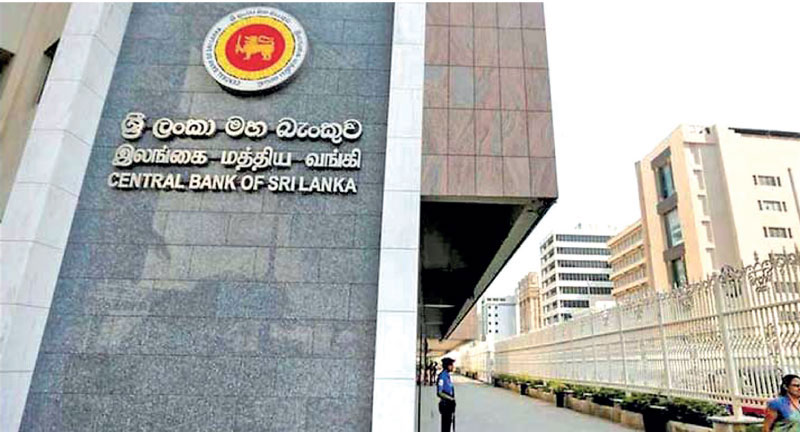
Parliament recently witnessed a fierce macroeconomic clash over the Central Bank of Sri Lanka’s (CBSL) latest Extraordinary Gazette, which accelerated the mandatory conversion of residual export proceeds by the 10th day of the following month. Main Opposition MP Dr. Harsha de Silva vehemently challenged the rationale, questioning whether Sri Lanka was declaring a psychological return to the “crisis era” of 2022–2024.
Almost instantly, the financial markets responded: the Sri Lankan Rupee (LKR) strengthened sharply against the US Dollar, bouncing back to roughly Rs. 330. To the average observer, this creates a profound paradox. How can a policy be criticised as “draconian” and “anti-business” yet yield immediate, positive numerical results? The answer lies in a deep analytical blind spot that dominates public perception. My view is that the public is being forced to choose between two valid, yet seemingly contradictory, economic realities. In short, this article introduces a clear theoretical framework—”Macro-Structuralism vs. Micro-Pragmatism”—to establish new economic knowledge and elevate the conversation above routine political mudslinging.
The Public Blind Spot: Why the Majority Misunderstands the Debate
The fundamental reason the wider public struggles to comprehend this debate is that macroeconomic communication in Sri Lanka is routinely reduced to binary political theater. One side celebrates a strengthening rupee as an absolute victory; the other side decries capital controls as an absolute failure.
In reality, the public fails to recognise that the CBSL and its critics are looking at two different halves of the exact same coin:
· The CBSL operates in the immediate present, focusing on micro-market mechanics to prevent speculative currency hoarding.
· The Opposition focuses on the future, prioritising structural reputation, investor predictability, and international market signals.
Without an analytical framework that links these two perspectives, the public views the issue as a mere partisan disagreement, rather than a sophisticated technical trade-off between short-term stabilisation and long-term economic development.
Micro-Pragmatism: The Financial Justification for CBSL’s Directive
From a technical central banking perspective, the CBSL’s intervention was not only justified but textually necessary. As expectations of rising dollar demand grew—fuelled by discussions surrounding vehicle import liberalisations—exporters began acting as rational corporate agents. Anticipating a potential depreciation of the rupee, they held onto their foreign currency cushions.
This behaviour, while commercially logical for individual firms, triggers a collective crisis: it starves the domestic market of dollar liquidity, creating an artificial shortage that forces the rupee down. When “moral suasion”—informal requests and agreements with commercial banks—fails to change corporate behaviour, the Central Bank must utilise its statutory power. By implementing a strict legal timeline, the CBSL shattered the speculative loop, forced hoarded liquidity back into the banking system, and protected the domestic economy from an inflationary currency shock.
Macro-Structuralism: The Core of the Opposition’s Critique
Conversely, Dr. Harsha de Silva’s critique carries significant weight when viewed through the lens of long-term investment attraction. His argument is built on Macro-Structuralism: the idea that a nation’s regulatory reputation dictates its future growth trajectory.
In my view, forced conversion rules are indisputably crisis-management tools. When an economy enters a normalisation phase, continuing to deploy emergency administrative mandates signals to the global capital market that the domestic financial ecosystem remains fragile and unpredictable. If exporters feel their residual profits are subject to abrupt state appropriation, it introduces policy risk. The long-term danger is (i) capital flight (ii) businesses may under-invoice exports, (iii) delay legal repatriation, or shift their corporate headquarters to hyper-predictable regional hubs like Dubai or Singapore, structurally reducing Sri Lanka’s long-term foreign exchange inflows.
Global Precedents: Compulsion vs. Liberalisation
To understand where Sri Lanka stands, we must look at how the rest of the world navigates this delicate balance (See Table 1):
The global lesson is unambiguous: While administrative compulsion can serve as a temporary emergency buffer—a practice tolerated by the IMF during economic stabilisation phases—no nation has ever achieved sustainable, high-growth status by continuously dictating how private enterprises manage their residual revenue.
The Liquidity Jam: Connecting the SVAT and Conversion Debates
This tension is not new; it mirrors the previous parliamentary friction regarding the abolition of the Simplified Value Added Tax (SVAT). Under pressure from the IMF to eliminate revenue leakages and tax evasion, the government dismantled SVAT. Dr. de Silva vigorously opposed this move at the time—a stance critics labelled as mere populism.
However, I think that the structural link between the SVAT debate and the current export conversion mandate is undeniable. By abolishing SVAT, the state forced exporters to pay taxes on inputs upfront and wait indefinitely for bureaucratic refunds, locking up their domestic liquidity. Now, by tightening the conversion rule, the state is simultaneously restricting its foreign-currency liquidity. When a government squeezes a country’s primary engine of growth—its exporters—from both the domestic tax and foreign-exchange sides, it risks stalling the very development initiatives it aims to protect.
The Balanced Blueprint: Creating a Scaffolding Transition
The path to true, sustainable economic growth requires transitioning from regulatory coercion to institutional stability. The CBSL’s strict conversion directive should not be viewed as a permanent feature of Sri Lanka’s economic policy, but rather as temporary stabilising scaffolding.
To balance immediate financial safety with long-term investor confidence, I think that the state must implement a benchmark-driven policy framework:
· Conditional Sunset Clauses: The CBSL should formally tie the expiration of the mandatory 30-day conversion rule to clear, objective macroeconomic milestones—such as reaching six months of import reserve cover. This transforms a “draconian rule” into a predictable, transparent transitional mechanism.
· Automated VAT Refund Bridges: To alleviate the cash-flow pressure caused by the removal of SVAT, the Ministry of Finance must implement an automated, digital tax-refund system that guarantees input refunds to compliant exporters within 14 days. If the state demands its dollars quickly, it must return its tax cash flows just as rapidly.
· Incentive-Driven Retention (Moving from Force to Reward): Instead of using legal mandates to force dollar conversion, the financial system should use market rewards. Commercial banks must design competitive, inflation-adjusted, rupee-denominated investment products specifically tailored for exporters. To a business, money behaves like water—it flows where it is treated best. If the Central Bank manages the domestic currency competently so it holds its value, and commercial banks offer attractive, high-yielding rupee accounts that beat inflation, market players will choose to convert their dollars voluntarily to maximize their profits. When the rupee becomes a lucrative asset to hold, draconian administrative mandates naturally become obsolete.
Summary
The ongoing debate in Parliament over the Central Bank of Sri Lanka’s (CBSL) sudden tightening of export proceeds conversion rules highlights a fundamental tension in national policy. While the main Opposition, represented by Dr. Harsha de Silva, warns that forced residual conversions mark a return to “crisis-era” draconian dictates that deter investors, the CBSL’s actions have curbed exchange-rate speculation and stabilised the rupee. This article argues that the general public is trapped in an unnecessary dichotomy because political discourse fails to separate Micro-Pragmatic FX liquidity management from Macro-Structural economic signalling. In my view, by transitioning from regulatory compulsion to institutionalised trust, Sri Lanka can balance short-term currency stability with long-term, export-led growth. This is our aspiration.
Conclusion: Trust as the Ultimate Economic Currency
Ultimately, a country cannot build a competitive, export-led economy on a foundation of legal mandates and constant regulatory interventions. While the Central Bank fulfilled its immediate duty by intervening to break a speculative cycle and defend the rupee, the Opposition’s warnings about investor psychology are valid.
True economic modernisation requires recognising that short-term micro-pragmatism and long-term macro-structuralism are not mutually exclusive. By converting the current restrictive mandates into a transparent, transitional framework supported by aggressive tax digitization, Sri Lanka can move beyond reactionary crisis management. In my view, the ultimate goal of national economic planning must be to cultivate an environment in which local and international capital remains in the country, not because a Gazette mandates it, but because institutional trust demands it.
(The writer, among many, served as the Special Advisor to the Office of the President of Namibia, from 2006 to 2012, and was a Senior Consultant with the UNDP for 20 years. He was a Senior Economist with the Central Bank of Sri Lanka (1972-1993). He can be reached via asoka.seneviratne@gmail.com)
By Prof. Asoka S. Seneviratne

Participating at the All Party Conference that then President Jayewardene convened in January 1984 in the aftermath of the watershed violence of 1983, Dr. Colvin R de Silva characteristically perorated that the structure of the Sri Lankan state is incongruent with the country’s sociopolitical reality. He said it more as Historian than as a Lawyer or the architect of the 1972 Constitution.
This gap between state structure and political reality was somewhat bridged by the 13th Amendment that came three years later, with all due credit to President Jayewardene no matter how begrudgingly he may have done it and even if it was under Indian duress as JRJ’s critics have been alleging ever since.
In this backdrop, it is fair to say that the NPP’s constitutional proposals, even if they may not have been drafted with this specific intent, could contribute to further bridging the structural-reality gap and potentially transform Sri Lanka into an ethno-equal state and an ethno-equal nation. The rub, however, is in the ability of the government, as well as its intention, to fulfill in practice what is otherwise a very laudable purpose. The experience so far with the Provincial Council elections and the absence of any manifest effort by the NPP government towards implementing any of its main constitutional proposals do not allow room for too much optimism.
As I cite below, the NPP’s Manifesto fulsomely promises to hold all provincial and local government elections within one year after coming into office. Now with all the ministerial and prime-ministerial explanations in parliament as to what and what pre-steps this overworked government is apparently constrained to take, the PC system would consider itself lucky if the next provincial elections end up being held at the same time as the next parliamentary elections. That is the reality. It could be much better and that too by a government that promised to be much better.
The NPP’s Constitutional Purpose
Section 4 of the NPP Manifesto, A Thriving Nation, A Beautiful Life, is entitled A Dignified Life – A Strong Country, and includes nine subsections, viz. 1) A new constitution – A united Sri Lankan nation; 2) An efficient public service – A skill based professionalism; 3) Rule of law – A judicial system with equal access; 4) Public security assuring – People friendly service; 5) A humanitarian prison – A lawful confinement; 6) A drug-free country – A healthier citizen life; 7) A dignified diplomacy – A sovereign state; 8) High level of national security – Secured state; and 9) A Sri Lankan Nation – The Universal Citizen. These subheadings and sections are indicative of the NPP’s vision for the Sri Lankan State, a Sri Lankan Nation, and the equality of all its citizens.
The Section specific to the constitution (Section 4.1) includes the NPP’s promise to usher in “a new constitution” for “a united Sri Lankan nation.” The process for introducing the new constitution is described thus: “A new constitution will be drafted and passed through a referendum with the necessary changes, if there any, after going through a public discourse.” In addition, Section 4.9 – A Sri Lankan Nation – The Universal Citizen, elaborates on the premise and the purpose of a new NPP Constitution which are outlined as follows:
“Introduce a new constitution that strengthens democracy and ensures equality of all citizens. This initiative will build on the constitutional reform process started in 2015 which remains incomplete. The proposed constitutional reforms will guarantee equality and democracy and the devolution of political and administrative power to every local government, district and province so that all people can be involved in governance within one country. Provincial councils and local government elections, which are currently postponed indefinitely, will be held within a year to provide an opportunity for the people to join the governance.”
Fifteen “activities” are included as making up the constitution making process: 1) Recognizing and enacting the rights mentioned in the International Covenant on Civil and Political Rights as basic rights; 2) Broadening the constitutional law about the rights of children, women, and people with disabilities according to international conventions; 3) Safeguarding the voting rights of immigrants within and outside of the country; 4) Abolishing the executive presidency and appointing a president, without executive powers, by the parliament; 5) Introducing a new parliamentary electoral system; 6) Limiting official presidential residences to one; 7) Abolishing the pensions and special privileges given to retired presidents and their families; 8) Appointing 25 ministers and corresponding deputy ministers to 25 logically determined ministries and abolishing State Ministerial posts; 9) An advisory council consisting of specialists on the subject will be appointed to each ministry; 10) Introducing a code of ethics, including not allowing members of parliament (MPs) and ministers to appoint their immediate family members to their personal staff; 11) Abolishing allowances made to MPs for participating in parliamentary sessions; 12) Abolishing the pension offered to MPs after 05 years; 13) Preventing MPs or their close family members from directly or indirectly engaging in businesses or contracts with the government; 14) Removing the tax-free vehicle permits for MPs; and 15) Giving only one vehicle for Ministers /Deputy Ministers to be used during their period of office.
Interestingly, while the aborted 2015 constitutional reform process that the NPP was a part of is acknowledged, there are no references in the proposals – to the 1972 Constitution or the 1978 Constitution, and missing in the proposals are some of the signature terms that were/are both the badges and burdens of the two constitutions viz., the republic; unitary state; socialist (1972) and democratic socialist (1978); and special status for Buddhism. On the other hand, the proposals (Activity #1 & #2) include the commitment to enshrine and enforce rights and freedoms of Sri Lankans in accordance with international covenants and conventions. This inclusion is refreshingly open in contrast to the 1972 and 1978 constitutions which were rather averse to embracing anything ‘foreign’ due to the misplaced fear of diluting the island’s sovereignty, which is more theoretical than concrete.
Sovereignty and territorial integrity are duly emphasized in Section 4.7 of the proposals: A Dignified Diplomacy – A sovereign State, and in Subsection 4.8: Sovereignty and Territorial Integrity. Section 4.9: A Sri Lankan Nation – The Universal Citizen, underscores national reconciliation, equality of citizens in religion and language, and the vigorous operationalization of the Provincial Council system even though the 13th Amendment is not mentioned in the proposals. There is, however, specific reference to the 16th Amendment and the promise to implement the National Language Policy that is enshrined in 16A. Sri Lanka’s ethnic diversity is acknowledged and various measures are identified for achieving national reconciliation and a free and equal society.
Among these measures are: establishing an Inter-Religious Council consisting of all religious leaders and religious scholars to resolve inter-religious issues; releasing all political prisoners and ensuring their free socialization; abolition of all oppressive acts including the Prevention of Terrorism Act (PTA); regularization of civil administration in a way that the civil rights of the people in all parts of the country including the North and East are guaranteed; providing educational and employment opportunities to all ethnicities based on merit without political influence; providing relief to war widows, internally displaced persons, people with disabilities and people with trauma in need of relief and shelter; settlement of existing land related issues by a National Commission on Lands and Settlements; and ending resettlement programmes that operate with the aim of changing population composition; and addressing the wages, land, housing, education, and health issues of the Malaiayaka Tamils based on the NPP’s Hatton Declaration of 2023.
This is an impressive list by any comparison and it will be all the more impressive if the NPP government were to seriously and capably set about achieving most or all of them.
The Constitutional Process
While the Manifesto indicates that “a new constitution will be drafted and passed through a referendum with the necessary changes, if there are any, after going through a public discourse,” it is not clear if the NPP intends to comprehensively amend the current (1978) constitution, or repeal and replace it based on a referendum. Similar to its 1972 predecessor, the 1978 Constitution provides for repealing and replacing itself but requires the people’s endorsement in a referendum. Although the referendum requirement is limited to specific provisions of the constitution, an interpretive judicial culture has since evolved widening the referendum net to capture other provisions that are not stipulated in Article 83 of the constitution.
Opposing and, in my view, more persuasive voices have been heard from experts like Dr. Nihal Jayawickrema, and long before that from Dr. Colvin R.de Silva during the controversy over 13A referendum requirements, that a referendum requirement should be limited to changing only the provisions that are specifically to the provisions mentioned in Article 83. By this interpretation, a referendum is required to extend the term of a president or of parliament, but not for abolishing the system of elected executive presidency itself.
At the same time, a synthesizing view has also evolved that if the constitution were to be changed in a substantial manner, let alone repeal and replace it even without changing any of the Article 83 provisions, it would be prudent to have a referendum and be done with it. The latter is also the NPP’s position but seemingly taken from a more positive and democratic standpoint than a narrow interpretive standpoint. But there are questions as to how and when the NPP government will have a constitution package ready and when will it likely call for a referendum. It is not necessary to detail the amending processes in an election manifesto, but with nearly two years in office it is time for the government to indicate what is going to be its new constitution and how is it going to be achieved.
Another technicality is that when it drafted the manifesto promising constitutional changes subject to a referendum, the NPP may not have been expecting a two-thirds majority in parliament. So, what was its thinking about meeting the initial amendment requirement of a two-thirds majority in parliament without having sufficient numbers in the government. It would have had to find common ground with opposition parties in parliament. That is the very purpose of the two-thirds majority in parliament – to achieve interparty consensus as opposed to using a steamroller single-party majority.
The question to the government is why is it not being consultative with at least some, if not all, of the parties in opposition. As well, inasmuch as the Manifesto refers to a continuation of the 2015 constitutional reform process, why is the government not consulting with those individuals and organizations who were significantly involved in that earlier process. Some of them were directly associated with the NPP. But none of them is in the scene now, while the current Minister of Justice was politically unheard and unseen at that time.
The double burden of Justice and Constitutional Affairs is too much for even the most experienced and equipped political leader. It is too much to saddle a first time MP and Minister with such heavy responsibilities. As well, there is much talk about the government inviting non-NPP experts to play lead roles in institutions and agencies involved in running the economy. Why not extend this approach to implementing the NPP’s constitutional reform process?
To hark back briefly to the making of the 1972 Constitution, neither Colvin R de Silva nor the United Front were banking on winning a two-thirds majority in the 1970 elections. Instead, they were relying on Colvin’s legal theory that the new constitution will be a total rupture from the Soulbury Constitution and that its making will follow its own path based on an electoral mandate from the people.
“Not merely despite the Queen, but in defiance of the Queen and her Crown,” was Dr. Colvin’s platform pitch. The two-thirds majority that the United Front turned out to be a curse in disguise. While the NPP is now saddled with a two-thirds majority it doesn’t have Colvin’s legal theory to ignore the amending procedures of the 1978 Constitution. JR Jayewardene faithfully followed the amending procedure of the 1972 Constitution, but created a more rigid constitution than its far more flexible predecessor.
Ushering new constitutions are easily done on the morrow of independence or a revolution. Midlife constitutional changes are extremely difficult in any country and there are only a handful of countries that have successfully achieved this feat. The successful making of the 1972 and 1977 constitutions in Sri Lanka were almost entirely due to the power and competence of their two architects, Colvin R de Silva whose power was entirely intellectual and professional, and JR Jayewardene who in addition had absolute political power after the UNP’s landslide victory in 1977.
Sri Lankan politics has not been able to replicate their circumstances ever since, and the circumstances of the NPP are no different, its two-thirds majority notwithstanding. If the government is serious about drafting a new constitution, conducting public consultation, and holding a referendum, it should have started the process the day after it was sworn into office. It could start the process right away even now. The task deserves a separate ministry and supporting expertise. It cannot be the part time job of a first time Minister of Justice.
All that said, many of the NPP’s reform proposals can be implemented without introducing a new constitution. Few have already been introduced and many more can be introduced by simple legislation or through amendments without a referendum. For the super majority the government has in parliament, its legislative record has not been sufficiently impressive. The government has given priority to implementing proposals that it considers to be more resonant with the voters at large.
They include, the taking away the manifestly undue perks and privileges of former presidents, and the proposals to end the more offensive perks and privileges of parliamentarians. The reform of parliament itself is to be achieved by implementing a new electoral system; by limiting cabinet size to 25 and appointing an advisory council for each ministry; and introducing a code of ethics for MPs. These measures will also go down well with the public, but they can all be implemented through simple legislation without having to change the constitution through a referendum.
The most glaring omission is the continuing foot dragging over the repeal of the Prevention of Terrorism Act (PTA). There are already new victims of this continuation. What is the point in indefinitely detaining people like Retired Major Gen. Suresh Sallay under the PTA? It only vitiates however plausible a case the government might have against Gen. Sallay. More importantly, it flies in the face of the NPP’s promise to abolish the PTA, and its promise of custodial and prison reforms under Section 4.5 of the Manifesto: A humanitarian prison – A lawful confinement. The PTA only keeps the door open for police abuse and overreach.
The most recognizable and much talked about proposal is for “Abolishing the executive presidency and appointing a president, without executive powers, by the parliament.” If only the NPP government can deliver on this promise during its current first term, it can justifiably claim to have fulfilled its constitutional promise almost in entirety. No one will likely ask for anything more from the NPP, constitutionally speaking. But that seems unlikely to happen and this gets clearer as each day goes by. The talk inside the NPP and outside would seem to suggest that President Dissanayake will seek a second term as an elected Executive President and renege on what was made out to be a historic promise. It will become another daydream, so to speak.
by Rajan Philips

Soon after Pyongyang unveiled a new facility to produce nuclear bomb fuel, with Kim Jong Un reaffirming plans to expand the country’s nuclear forces “at an exponential rate”, President Xi Jinping crossed the border after seven years to visit his neighbouring state. Before his arrival, Xi published a carefully crafted message, couched in the deeply rooted lexicon of diplomacy and carrying layered meanings for a North Korean audience, in which he argued against hegemonic politics and the erosion of international rules. It was not merely a gesture of goodwill but a calculated act of strategic signaling, written in the language of stability while echoing the rhetoric of geopolitical rivalry that increasingly shapes the international order.
The visit itself, staged with extraordinary ceremony across Pyongyang’s grand civic spaces, was presented as an affirmation of friendship between socialist neighbours. Yet beneath the choreographed spectacle lies a more complicated reality. China is no longer speaking to North Korea as a problem to be solved, but as a condition to be managed within a fragmented international system. Xi’s carefully chosen phrases — “shared destiny”, “mutual assistance” and “unbreakable friendship” — were not decorative flourishes. They were assertions of permanence in a relationship that has survived war, sanctions and decades of strategic ambiguity.
At Kim Il Sung Square, where formations of soldiers, students and citizens performed beneath fluttering flags, the language of unity concealed an underlying imbalance. China’s diplomatic doctrine, repeatedly articulated in Xi’s writings, presents both states as “fellow travellers on the socialist road”; yet the material reality is more hierarchical. Beijing is not merely a partner to Pyongyang. It is the centre of gravity around which much of the North Korean system revolves economically, diplomatically and, increasingly, strategically. This is not openly acknowledged, but it is reflected in trade patterns, energy dependence and the tightly managed permeability of the border regions.
Xi’s article, published ahead of the visit and carried by North Korean and Chinese state media alike, reveals the intellectual framework behind this engagement. It speaks of “top-level strategic guidance”, a phrase that in Chinese political language denotes the primacy of leader-to-leader diplomacy over institutional negotiation. It also reiterates opposition to “hegemonism and power politics”, a formulation that simultaneously criticizes Western strategic dominance while offering ideological reassurance to Pyongyang. The brilliance of the wording lies in its dual purpose. It reassures North Korea while signaling to the United States without ever mentioning it directly.
Less visible, but widely recognized among regional specialists, is the dense network of economic activity that sustains the frontier between China and North Korea. Officially, trade remains constrained by sanctions and regulatory controls. Unofficially, the border operates through a mixture of state-approved commerce, local barter arrangements and carefully managed informal exchanges. Chinese provinces adjoining the frontier depend on this controlled permeability, particularly in sectors such as food supplies, textiles and consumer goods. In return, North Korea provides labour, access concessions and selected resource exports. This is not a “shadow economy” but a tolerated grey area maintained by both governments because it preserves stability without allowing the relationship to descend into crisis.
It is within this grey area that stories of “secret networks” frequently emerge. Yet the reality is often more bureaucratic than clandestine. Trade is driven less by rogue actors than by overlapping permissions, discretionary enforcement and shifting instructions from the centre. The notion of a handful of powerful profiteers orchestrating cross-border commerce oversimplifies a system in which benefits are dispersed through layers of administrative authority, provincial intermediaries and sanctioned enterprises. The defining feature is not secrecy but carefully managed ambiguity.
Xi’s emphasis on “jointly upholding the international system with the United Nations at its core” becomes particularly revealing when viewed alongside these frontier realities. On the surface, it is a reaffirmation of multilateral order. In practice, it reflects China’s preference for a world in which legitimacy flows through established institutions, even while bilateral relationships such as that with North Korea operate according to a different set of political calculations. This dual-track approach enables Beijing to retain strategic flexibility without formally dismantling the international framework from which it continues to benefit.
The visit also took place against a wider shift in global diplomacy. The Financial Times has noted the growing number of world leaders traveling to Beijing rather than Xi traveling abroad. Some interpret this as evidence of a China-centred diplomatic sphere. Whether viewed as modern statecraft or, more controversially, as a distant echo of tributary-era symbolism, one fact remains evident. Xi Jinping has built a diplomatic model in which China is less a participant in international gatherings and more a focal point through which bilateral relationships are channeled.
Within this arrangement, North Korea occupies a uniquely delicate position. It is at once a liability, a buffer and a strategic asset. Its nuclear programme complicates China’s relations with much of the international community, yet its existence also serves as a geopolitical barrier on the Korean peninsula. Xi’s language avoids direct reference to nuclear weapons, concentrating instead on “regional stability” and a “peaceful environment”. That omission is deliberate. Silence, in this context, is not avoidance but the management of contradiction.
One of the most closely watched questions following Xi’s visit is whether North Korea’s rapid nuclear expansion will become less visible, or simply retreat further from public view. Xi later stated that he and Kim had reached an “important consensus” and agreed to safeguard regional and global peace, a formulation that may signal a preference for restraint in presentation rather than any fundamental change in Pyongyang’s strategic ambitions.
Under Xi, Chinese foreign policy has increasingly prioritized stability over transformation and management over resolution. Nowhere is this more evident than on the Korean peninsula, where the objective is not denuclearization through coercion but the containment of escalation within predictable limits. In this sense, North Korea is not being pushed towards change.
Rather, it is being held within a carefully maintained balance that serves broader regional interests.
The wider geopolitical setting, including Russia’s deepening alignment with Pyongyang and the fluctuating approach of the United States towards Asia, further complicates this balance. Xi’s diplomatic language — with its emphasis on multi-polarity, opposition to “power politics” and the creation of a “community with a shared future for mankind” — is intended to place China at the centre of an alternative vision of international affairs. Yet that vision is not merely ideological. It is expressed through trade agreements, infrastructure investment and selective political partnerships.
What emerges from the Pyongyang visit is not a straightforward story of alliance, but one of carefully calibrated interdependence. North Korea retains leverage through its strategic unpredictability, while China retains influence through economic indispensability. The border between them is not merely geographical. It is a political and economic mechanism composed of regulated flows of goods, labour and messaging. It is this managed interdependence that allows both governments to preserve autonomy while avoiding collapse or confrontation.
Xi Jinping’s rise in global politics, therefore, cannot be understood solely through military strength or economic weight. It rests upon the construction of a diplomatic order in which China functions simultaneously as host, mediator and stabilising force. Foreign leaders travel to Beijing not as supplicants, but as negotiators entering a system where outcomes are increasingly shaped through bilateral and asymmetrical relationships. Within that framework, North Korea remains both an exception and a participant, its nuclear status complicating but not excluding its place within China’s strategic sphere.
Xi’s visit to Pyongyang reflects a world in transition, where the old certainties of alignment and isolation no longer fully apply. In their place is emerging a more complicated pattern of selective cooperation, managed tensions and carefully cultivated historical memory. Xi’s diplomacy does not resolve contradictions. It arranges them. And within that ability to arrange competing interests lies much of his contemporary influence. Whether that model ultimately proves durable or fragile remains one of the defining geopolitical questions of our age.
by Nilantha Ilangamuwa

Mandhana, Deepti, Ghosh star as India breeze past Pakistan

Showers will occur in the Western, Sabaragamuwa and North-western provinces and in Galle, Matara, Kandy and Nuwara-Eliya districts

Theft of USD 2.5 mn from Treasury: CoPF accused of complicity in NPP cover-up

Viral diseases on the rise

Ranil warns of another economic crisis, calls for Opposition unity

Govt. eyes multi-billion dollar green hydrogen future

‘Dates have the highest sugar content to fight Coronavirus’

Sunday Island 27 December – Headlines

#SundayIsland 17th December – Headlines

Sunday Island – 28th March

Sunday Island Headlines – 21 March

Sunday Island – 21st February – Headlines
-
 News3 days ago
CIABOC summons Yoshitha over his participation in British Navy training programme
-
 News5 days ago
Local firms move millions of dollars overseas for phantom imports: Govt.
-
 Midweek Review5 days ago
July 09: An inexcusable overall security failure and exceptional contingency plan
-

 Opinion6 days ago
Could Sri Lanka once again face an economic crisis similar to 2022?
-

 News5 days ago
AI raises concerns over arrest of Sallay and rapper under PTA
-
 News6 days ago
Sallay refuses to end hunger strike unless probe is taken out of CID led by Shani
-

 News2 days ago
Commonwealth lawyers urge Lanka to uphold rule of law
-
 Latest News6 days ago
Iran and Israel say they will pause strikes but warn of retaliation if ceasefire breached again