
Latest News
It is crucial to uphold respect for the diverse cultural traditions across the world as we strive to build a global community founded on sustainable values- President

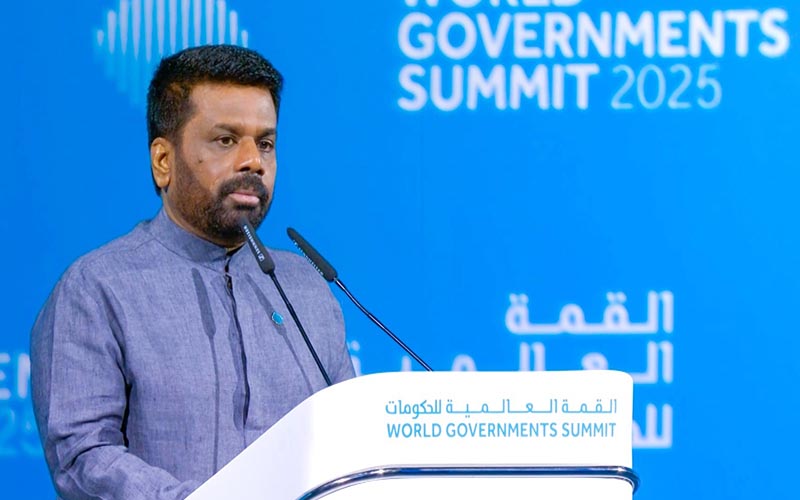
President Anura Kumara Disanayake addressing the World Governments Summit 2025 in UAE on 12th February 2025 said that it was, crucial to uphold respect for the diverse cultural traditions across the world as we strive to build a global community founded on sustainable values.
Full text of the President’s speech:
“Esteemed state leaders, distinguished delegates representing various organisations, honoured guests, members of the media and all those present, I seek your permission to address this extraordinary summit.
It is a great privilege to speak at this significant gathering, held at a crucial juncture in human history, at a time when the world calls for unprecedented global cooperation.
My country is a beautiful island nation with a unique history, a present filled with optimistic dreams for the future and a citizenry that possesses broad political and social awareness. The people of my country have a deep sense of empathy for events occurring anywhere in the world. While they cherish their traditions, they also demonstrate the wisdom and openness necessary to embrace change when required.
Moreover, if you were to search the internet at this very moment with your mobile phone and ask, “Which country has the highest number of eye donations in the world?” the answer would be the nation I represent, located at the edge of the Indian subcontinent: ‘Sri Lanka’.
It is a great honour and privilege for me to represent a nation of such altruistic and warm-hearted citizens, I take immense pride in addressing you on their behalf.
I believe that this summit, which focuses on developing future strategies and policies concerning critical aspects of human progress, will contribute positively to global well-being at some point.
Today, the challenges we face at national, regional and global levels are vast and complex.
Some choose to ignore these issues, embarking on self-cantered journeys. However, isolated problems of today soon evolve into global concerns of tomorrow, knocking on everyone’s doors ultimately bringing an end to solitary pursuits.
Therefore, I reiterate the importance of uniting as global citizens to confront cross-border challenges together. Addressing these crises requires collective global action and a unified front.
Effective Governance and Accountability
Enhancing governance accountability and efficiency is essential for the future world. Citizens must be encouraged to transition from individual efforts to collective initiatives.
The structure of state institutions and bureaucratic systems must prioritize accountability and responsibility, as these are crucial for the future of governance.
Social justice and the rule of law are not only vital for a regulated state but also for a well-functioning professional world. Proper implementation of agreements and laws, systematic support for low-income and vulnerable communities and ensuring accountability through an independent media and social activism are all of paramount importance.
The emergence of digital access rights, environmental rights and other new rights—along with evolving political systems—highlights the need for an updated universal declaration on human rights, which was not envisioned in the 1948 declaration. This moment serves as a reminder of the importance of awareness and proactive engagement in addressing these pressing issues.
As we strive to build a global community founded on sustainable values, it is crucial to uphold respect for the diverse cultural traditions across the world.
Financing the Future and the Global Economy
Nearly 60% of the poorest countries are either in a debt crisis or at high risk of one, raising serious concerns about the future of the global economy. With tightening global financial conditions, the prospect of massive debt repayments and a poorly prepared international financial structure, the global economic outlook appears increasingly precarious. Transforming into a fair and equitable financial system is of critical importance.
Climate, Crisis Mitigation and Resilient Cities
The world is heading toward the devastating consequences of uncontrolled industrial growth, including climate change, loss of biodiversity, and severe corruption. These issues are more frightening than a catastrophic celestial event that could impact Earth in a matter of years. While many developed countries have historically contributed to three-quarters of carbon dioxide emissions, their exposure to the impacts of climate change remains relatively low. Despite significant advancements in development, many naturally beautiful low-income countries are being ravaged by the harmful actions of others. These countries and islands, once known for their pristine coastlines, are now plagued by these disasters. If you ever visit our country, you will be astonished by the breath-taking coastal areas surrounding us. We are committed to making enormous efforts to protect our coastlines and preserve their beauty.
Human-Cantered Future and Sustainable Growth
The digital revolution has already transformed the way people live, work, and communicates. While these technologies have the potential to help billions of people lead happier, healthier, and more productive lives, they also create new challenges for citizens and governments around the world. It is important not to forget that the very technologies that empower individuals can also present significant risks. Take a computer virus, for example—though it doesn’t attack with a bullet or a nuclear bomb, it can wreak havoc in ways that are far more dangerous than traditional warfare, as evidenced by the increasing threat of cyber-attacks in recent years.
Global Health Transformation
Over the next two decades, population growth, urbanization, and the rise of antimicrobial resistance will likely contribute to the continuation and expansion of several health challenges.
As humans, we are inevitably interconnected. For over a year, a virus caused much of the global population to conceal their faces behind masks, creating significant pressure in both wealthy and impoverished nations.
In 2024, the world saw an increase or resurgence of several infectious diseases. Among non-communicable diseases, cancer has had an extraordinary impact on people’s lives. At this moment, millions of cancer patients are fighting for survival. Heart disease, regardless of national borders, continues to devastate lives, and it has become a major global crisis. Health experts predict that by 2030, the economic cost of mental health disorders worldwide could exceed $16 trillion.
The climate crisis is expected to result in an additional 14.5 million deaths by 2050, according to predictions.
In this context, it is crucial to focus on digital health, new technologies, and modern health tools, as well as the relationship between environmental health, sustainability, and health financial cooperation for economically vulnerable countries.
At times, you may represent the Middle East, Africa, Asia, Europe, or the West. However, the problems we all face and the call for unity, as expressed through the “lub dub” sound in our hearts, urge us to build the world together.
As Martin Luther King Jr. once said, “We must learn to live together as brothers.” If we don’t, he also foresaw the consequences.
We have united with a purpose to provide our people with “a thriving nation, a beautiful life,” a goal that has been historically endorsed.
At this historic summit, I urge you to join us in building a beautiful life and a beautiful world.”
[PMD]

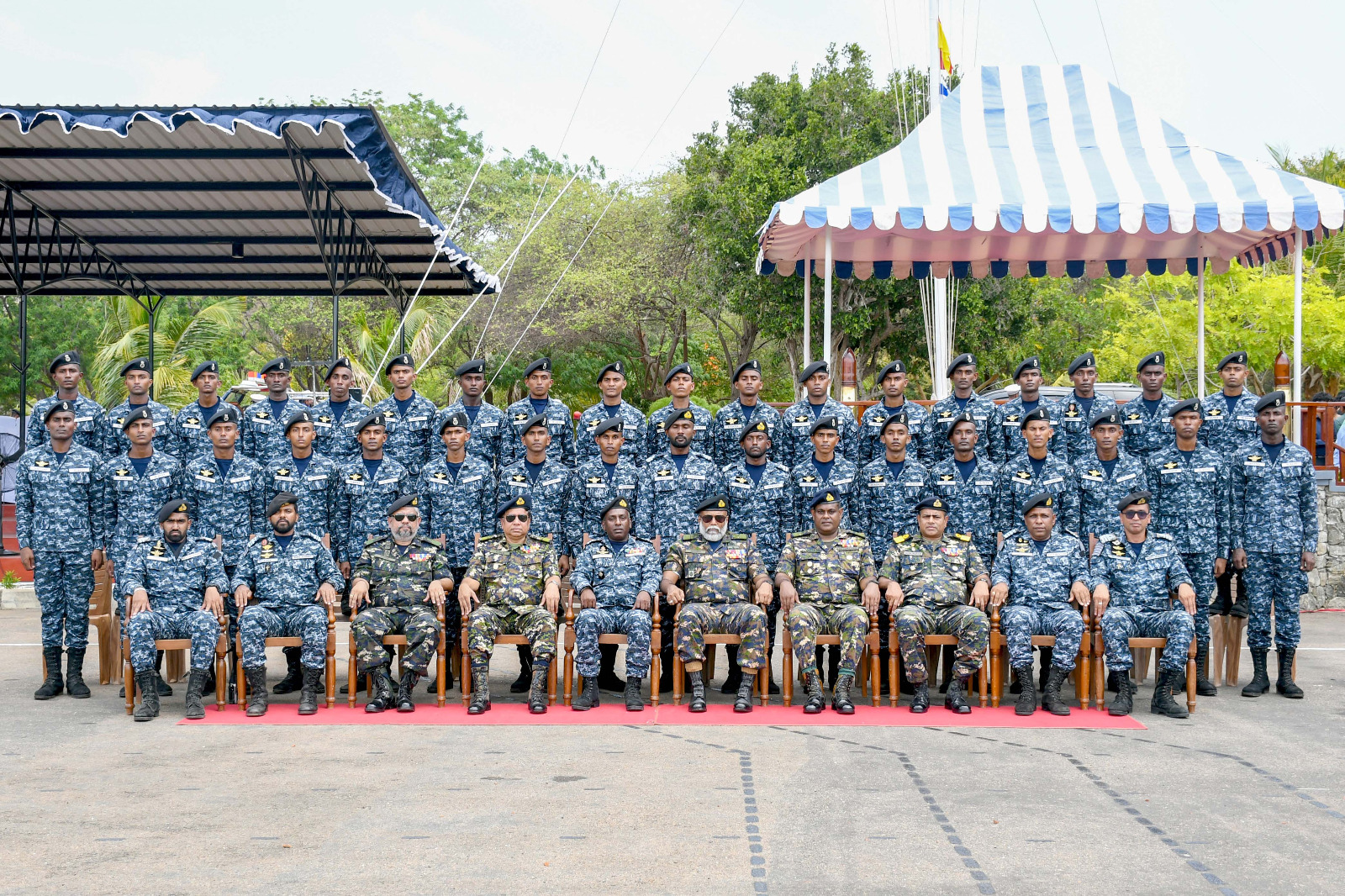
Thirty-six (36) naval personnel completed an eight-month Basic Marine Qualification Course and received their Marine insignia at the main parade ground of SLNS Vidura in Sampur, Trincomalee today, (29 August 2026).
At the invitation of Commandant SLNS Vidura, Captain Ravindu Harischandra, the ceremony was graced by Rear Admiral Buddhika Liyanagamage, Deputy Chief of Staff of the Navy and Commander Eastern Naval Area.
The group, comprising 3 officers and 33 sailors, completed the 10th intake of the Basic Marine Qualification Course, after volunteering for the demanding training programme.
In recognition of exceptional performance during the training, trophies were presented to outstanding personnel. Lieutenant (S) VPA Sasanka was awarded trophies for Best Marine of the Course, Highest Aggregate in Overall Subjects, and Best Marksman.
Physical Training Instructor WMGDP Bandara received the trophy for Best Physical Fitness. Addressing the newly qualified personnel,
Rear Admiral Liyanagamage congratulated them on successfully completing the course. He urged them to use the skills and experience gained through their training to contribute to safeguarding the country’s sovereignty and territorial integrity.
He also called on them to apply the courage and determination developed during the course both in their professional and personal lives, and to remain prepared to meet any challenge faced by the country.
He stressed the importance of keeping their knowledge and training up to date and maintaining constant vigilance while carrying out their duties.
Rear Admiral Liyanagamage also expressed his appreciation to
the Commanding Officer of SLNS Vidura and the directing staff for their contribution to the successful completion of the course.
The insignia ceremony also included a demonstration showcasing the capabilities and skills of the Sri Lanka Navy Marine.
Rear Admiral Achala Silva, Director General Logistics; Rear Admiral Kusal Dissanayake, Commandant Naval Infantry; Commodore Sanjeewa Kodikara, Director Marine; officers
from Navy Headquarters and the Eastern Naval Area; senior officers from the Army, Air Force and Police; and parents of the newly passed out marine personnel attended the ceremony.
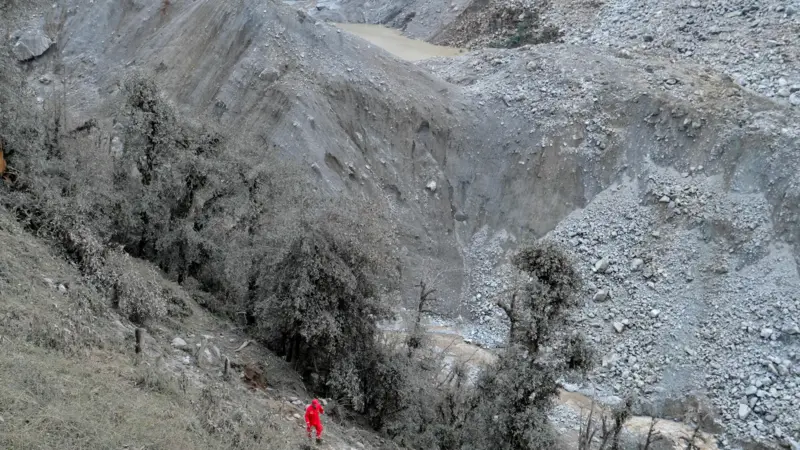
Water levels in the lake which formed amid the debris of the landslide in Tibet are rising once again, according to Chinese state media.
There is a continued risk of secondary mudslides or landslides, the report adds.
The command team in charge of rescue efforts around Gyirong port, the main land border between Nepal and Tibet, have launched drones and set up observations posts to monitor the slopes and provide an early warning system to rescuers working nearby.
Search teams are making the most of a short weather window to try to find survivors.
Work is also underway to try to re-open the road.
(Aljazeera)
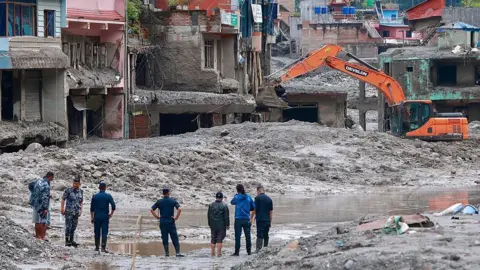
More than 600 people have died following Wednesday’s devastating flash flood in Nepal.
An update from Nepal’s National Disaster Risk Reduction & Management Authority (NDRRMA) confirms the figure as 626 and the number of people missing as 2,426, as rescue operations continue for the fourth day
Emergency teams are warning that rain is making it difficult to reach some of the worst affected areas, our correspondent in Trishuli writes
Families of the missing – including at least 517 foreign nationals – are waiting for news on the whereabouts of their loved ones
(Aljazeera)

Thirty-six naval personnel pass out on successful completion of Marine training

Ex-White House teleprompter operator ordered to pay $172,000 for Trump speech bets

Rescuers on high alert for signs of secondary landslides

More than 600 killed in Nepal flood as search for survivors enters fourth day

Norway mourns King Harald as Haakon VIII ascends throne

Trump announces ‘biggest oil deal in world history’ with Venezuela

‘Dates have the highest sugar content to fight Coronavirus’

Sunday Island 27 December – Headlines

#SundayIsland 17th December – Headlines

Sunday Island – 28th March

Sunday Island Headlines – 21 March

Sunday Island – 21st February – Headlines
-

 Features7 days ago
My secondary schooling after Royal Primary
-
 Features7 days ago
From the First to the 22nd: A short history of Amendment Politics and Reform Frustrations
-

 News5 days ago
Missing doctor’s body found in Mahiyanganaya
-
 Features7 days ago
How Shelton Kodikara became first Professor of International Relations
-

 Features7 days ago
How St. John’s College Shaped Panadura for 150 Years
-
 News5 days ago
Australia declines to release Finance Secy Suriyapperuma’s citizenship details
-
 News7 days ago
Ex- Atamasthanadhipathi uses Magistrate’s gate to enter court
-

 News5 days ago
22A: BASL suggests CJ recuse himself from hearing petitions