
Latest News
Fifty countries affected by USAID freeze, says WHO

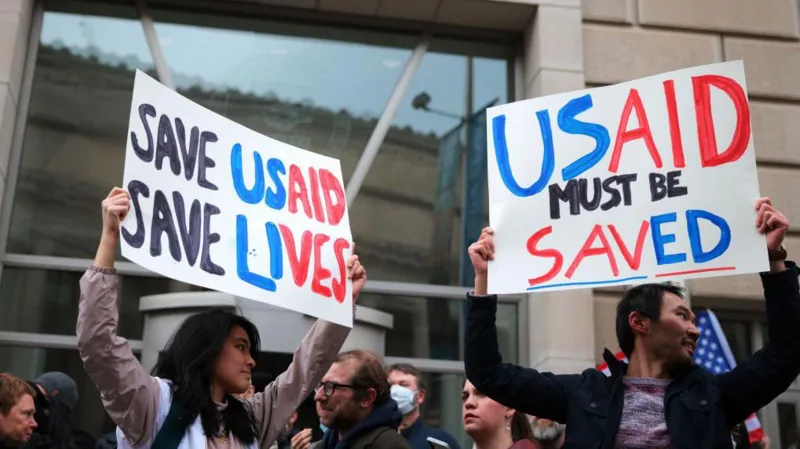
Programmes to tackle HIV, polio, mpox and bird flu have been affected by the freeze on tens of billions of dollars of overseas aid from the US, says the head of the World Health Organization (WHO).
US President Donald Trump has taken steps to close the United States Agency for International Development (USAID), arguing that its spending is “totally unexplainable”.
However, WHO chief Dr Tedros Adhanom Ghebreyesus has urged the Trump administration to consider resuming aid funding until other solutions can be found.
HIV treatments and other services have been disrupted in 50 countries, he said at a briefing on Wednesday.
Speaking publicly for the first time about the freeze on US aid funding, at a virtual press conference in Geneva, Dr Tedros said: “There are actions that the US government is taking… which we’re concerned are having a serious impact on global health.”
In particular he pointed to the suspension of PEPFAR, the President’s Emergency Plan for Aids Relief, which he said had halted HIV treatment, testing and prevention services in 50 countries.
He added that a reprieve for life-saving services had not stopped the disruption. “Clinics are shuttered and health workers have been put on leave,” Dr Tedros said.
Experts in global health have warned of the spread of disease, as well as delays to the development of vaccines and new treatments as a result of the cuts.
Trump has argued that USAID is “incompetent and corrupt”.
He recently announced huge cuts to the agency’s 10,000-strong workforce and the immediate suspension of almost all of its aid programmes.
The agency spends about $40bn (£32bn) – about 0.6% of total US yearly government spending – on humanitarian aid, much of which goes towards health programmes.
The vast majority of USAID money is spent in Asia, sub-Saharan Africa and Europe, where it is primarily used for humanitarian efforts in Ukraine.
Elon Musk, the tech billionaire who is working on the White House’s effort to shrink the size of the federal government, has previously claimed that the aid agency is “a criminal organisation”.
Neither Trump nor Musk have provided clear evidence to support their claims.
As well as the freeze on USAID, President Trump has taken steps to withdraw the United States from the WHO.
Under the Biden administration the US was the largest funder of the UN’s health agency and in 2023 it contributed almost one-fifth of the agency’s budget.
Dr Tedros said Trump’s decision was affecting collaboration between countries on global health threats. He also said the US had reduced its reporting of bird flu cases in humans.
The WHO says it has employed emergency measures similar to those used during the Covid pandemic to fill the gaps where there are shortages – in life-saving antiretroviral medication, for example, which is used to treat people living with HIV.
Meg Doherty, director of global HIV, hepatitis and sexually-transmitted infection (STI) programmes at the WHO, said efforts were being made to co-ordinate the sharing of vital supplies of medicines between countries.
However, she said a better, long-term solution was needed: “We have been seeking support from country to country for sharing, but this is a short-term approach.”
[BBC]

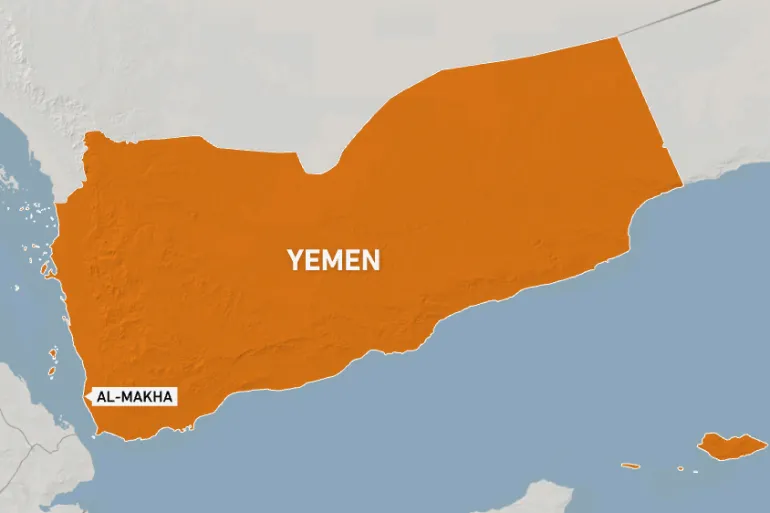
Yemen’s internationally recognised government has said that its forces have retaken the strategic port city of Mocha and key positions near the Bab al-Mandeb strait as they pursue a major counter offennsive against the Houthis.
The Saudi-backed government’s military said on Monday that a “strategic offensive” has also been launched on Yemen’s capital, Sanaa, which the Houthis have held since 2014.
The Houthis denied that Mocha had fallen.
Al Jazeera could not independently verify the battlefield claims.
In a post on X, the Yemeni government’s military said it took control of Mocha after “fierce fighting with the Houthis” and that battles there resulted in several Houthi casualties.
The Saudi-led military coalition backing the government also said on Monday that it had begun an air campaign against the Houthis.
The coalition’s spokesman, Major-General Turki al-Maliki, said 100 fighter jets were supporting Yemeni government forces and that the coalition had secured “air protection” over Bab al-Mandeb. Hundreds of Houthi targets were destroyed, he added.
[Aljazeera]
Latest News
Landslide Early Warnings issued to the Districts of Kandy, Kegalle, Matale and Ratnapura

The Hational Building Research Institute (NBRI) has issued landslide early warnings to the Districts of Kandy, Kegalle, Matale and Ratnapura valid from 2200 hrs on 03rd October upto 2200 hrs on 04th October 2026.
Accordingly,
LEVEL II (AMBER) landslide early warnings have been issued to the Divisional Secretaries Divisions and surrounding areas of Udu Dumbara and Minipe 8n the Kandy district, Dehiowita in the Kegalle district, and Ambanganga Korale and Matale in the Matale district.
LEVEL I (YELLOW) landslide early warnings have been issued to the Divisional Secretaries Divisions and surrounding areas of Rambukkana in the Kegalle district, Rattota in the Matale district, and Eheliyagoda in the Ratnapura district.
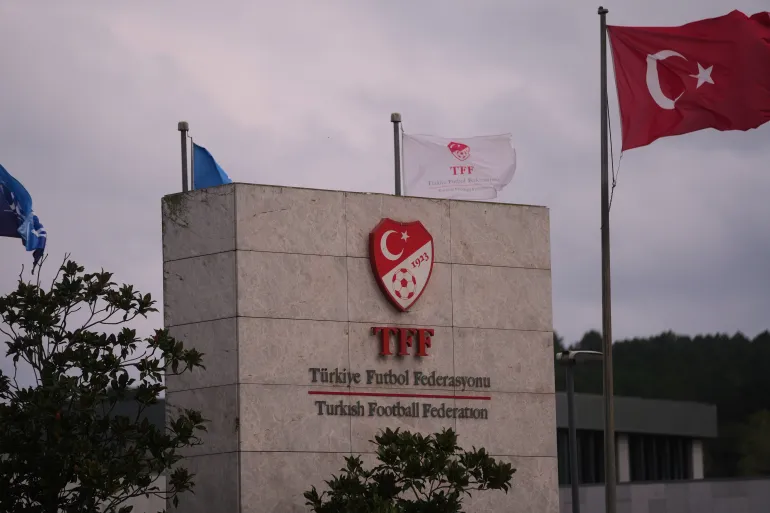
The head of Turkiye’s football refereeing body and four other officials have been placed in pretrial detention by a court as part of a corruption investigation, the state news agency Anadolu reports.
Ferhat Gundogdu, head of the Central Referees Committee, and six others appeared before a judge over allegations of manipulation of the referee administration process, Anadolu said on Saturday.
They appeared on Friday before a judge at Istanbul’s Caglayan courthouse on several charges, including forgery of official documents, breach of trust and illegal acquisition of personal data, the report said.
The judge remanded five people in custody and granted the other two conditional release, Anadolu said.
It was the latest scandal to shake football in Turkiye, coming exactly a year after the Turkish Football Federation (TFF) suspended 149 referees on charges of illegal betting.
On Thursday night, police from the illegal betting and sports crime unit also detained Yasin Kol, a referee from Turkiye’s top-flight Super Lig, as well as an assistant referee, media reports said.
Justice Minister Akin Gurlek said prosecutors are examining claims about “interference in the processes of referee classification, assignments, scoring and appointments as well as the exams on rules”.
During raids on Tuesday, police searched the VAR room at TFF’s headquarters in Istanbul. Observers said the investigation was likely linked to last year’s betting scandal and would have implications for the federation.
“It does seem to be a continuation of 2025, and it looks like it will continue further,” sports journalist Ayhan Sensoy told the AFP news agency.
Sensoy, who wrote a 2024 book on the issue called The Gambling Pit, said it was unlikely that federation bosses “have any chance of staying in office”.
So far, the TFF has not directly addressed the arrests as its top officials are due to fly home on Saturday after attending Friday night’s Belgium-Turkiye UEFA Nations League clash in Liege, which Turkiye lost 3-0.
[Aljazeera]
New Chancellor appointed to General Sir John Kotelawala Defence University

Yemen government forces claim recapturing Mocha from Houthis

Showers above 75 mm are likely at some places in the Western, Sabaragamuwa, Central, and Southern provinces after 1.00 pm

Govt. urged to halt ‘illegal’ presidential pardons

GL urges cautious handling of Saudi death row case, blasts govt. over BRICS affair

Shiranthi files anticipatory bail application

‘Dates have the highest sugar content to fight Coronavirus’

Sunday Island 27 December – Headlines

#SundayIsland 17th December – Headlines

Sunday Island – 28th March

Sunday Island Headlines – 21 March

Sunday Island – 21st February – Headlines
-

 Latest News6 days ago
Gold winner Tharanga gets brand-new Honda Vezel from SLAAJ
-

 Features6 days ago
Why Sri Lanka needs an Inclusive Civic Nationalism – urgently
-

 News5 days ago
US-assisted ‘Ice’ detection: NPC to examine IGP’s move to transfer drug-busting team
-

 Editorial4 days ago
Colombo Port drug bust: The plot thickens
-

 News6 days ago
Civil society activist accuses govt. of favouring Ven. Gnanasara
-

 Editorial6 days ago
When crime bosses rise above law and shrines
-
 Midweek Review6 days ago
Dappula’s Easter Sunday ‘grand conspiracy’ claim demolished
-
Editorial5 days ago
Drug busting, transfers and trust deficit