
Sports
Abhishek shatters records and England in Mumbai


Abhishek Sharma demolished records left, right and centre – and with it England’s pace-laden T20I attack – to power his way to 135 from 54 balls, the highestscore ever made by an Indian batter in T20Is.
On his watch, India romped to a massive total of 247 for 9, which would prove to be overkill in a crushing 150-run victory, and with it a 4-1 series scoreline.
In response, Phil Salt reprised some of the form that had lit up last year’s IPL, to crack his way to a 21-ball fifty, but his was a lone hand in an overwhelmed England reply, as they stumbled to 97 all out in 10.3 overs.
Even after his commanding display, there was no keeping Abhishek out of the game. First, he was on hand in the covers to intercept Ben Duckett’s first-ball drive and hand Mohammed Shami the first of his three wickets.
And then, after Jos Buttler, Harry Brook and Liam Livingstone had each fallen in their quest to stay in touch with a rate of more than two a ball, Abhishek was tossed the ball for the ninth over, and duly bagged two more in five balls, as Brydon Carse and Jamie Overton each holed out.
All of that, however, was somewhat superfluous to the day’s main action. The stats of Abhishek’s innings were as breathless as his strokeplay. He creamed an India-record 13 sixes (equating to almost one in four of his balls faced), all of them in the arc from point to mid-on, with the crowd at extra cover living a particularly dangerous existence.
His 17-ball fifty was India’s second fastest in the format; his 37-ball century was tucked in just behind David Miller’s 35 ball effort against Bangladesh in 2017 as the second-fastest in a contest between Full Member nations. On Abhishek’s watch, India romped to 95 for 1 in the six-over powerplay, another national record … and all this after being stuck in by Jos Buttler, too.
At times, it was like watching a full-fidelity game of Stick Cricket, with Abhishek’s utter faith in the conditions, and in England’s often guileless lengths, encouraging him to plant his front foot to pace and spin alike, and launch even 150kph deliveries with impunity through the line.
At the 10-over mark of the innings, the sky was the limit for India’s ambitions. Abhishek had pumped his way to 99 from 36 balls, and with 143 for 2 on the board, the first Full Member 300 was very much on the cards.
To their credit, however, England found themselves a relative toe-hold, thanks in particular to Brydon Carse’s excellent three-wicket spell. Abhishek’s momentum dipped significantly after he had nudged a rare single into the covers to bring up his three figures, as he was limited to nine runs from nine balls in the next six overs.
India’s onslaught could not be entirely contained, however. Abhishek reasserted himself as Carse’s final over went for 17, and though a game of cat-and-mouse with Adil Rashid resulted in a miscued wrong’un to deep cover, that wasn’t until Abhishek had connected with two more sixes back over the bowler’s head.
There was no shortage of needle after the events at Pune, where Harshit Rana’s controversial introduction as Shyam Dube’s concussion substitute had left England feeling rather aggrieved. Buttler’s description at the toss of England’s four unselected players as “impact subs” was an amusing commitment to the rumpus.
The fact that Dube was back in action, just 48 hours after a heavy blow to the helmet from Overton, was further reason for England to look slightly askance at that call. But not only did Dube show no ill-effects, he underlined the fact that his own bowling – though noticeably less express than Harshit’s – was every bit as capable of making an impression.
His first delivery, at the start of the eighth over, was the final death knell to England’s innings. Salt had bludgeoned 17 runs from Shami’s first over – the only moment at which England had been ahead of India’s rate – but when he snicked Dube’s 117kph sighter through to Dhruv Jurel, England were 82 for 5 and sinking fast. He then bowled Jacob Bethell with the first ball of his next over. Oh, and he also thumped 30 from 13 balls for good measure.
Carse has had an exceptional breakthrough winter for England across formats. His thirst for the hard overs means he has already inked himself in as their go-to third seamer in Test cricket, and many of those same big-hearted traits were on show in a gruesome match situation today.
Carse began his spell with India rattling along at more than 15 runs an over, having reached 127 for 1 after eight, but from the outset, his ability to hit hard lengths with canny changes of pace set him apart from the more one-dimensional block-knocking approach that his colleagues had settled for.
Mark Wood and Jofra Archer set the tone for England’s approach with another deeply unsubtle powerplay display, albeit it was thrilling to behold. Archer’s first-over duel with Sanju Samson featured two sixes, 16 runs and a nasty cut to the finger from a third-ball lifter into the gloves; Wood’s follow-up barely dipped below 150kph, as Samson holed out to deep square leg – his fifth dismissal to the pull shot in as many innings this series.
Suryakumar Yadav had a similar experience – once again India’s captain came a cropper to a leading edge as he finished his series with just 28 runs in five innings. But at the other end was Abhishek, and so it mattered little.
Brief scores:
India 247 for 9 in 20 overs (Abhishek Sharma 135, Tilak Varma 24, Shivam Dube 30; Brydon Carse 3-38, Mark Wood 2-32) beat England 97 in 10.3 overs (Phil Salt 55; Mohammed Shami 3-25, Varun Chakravarthy 2-25, Shivam Dube 2-11, Abhishek Sharma 2-03) by 150 runs
[Cricinfo]


World javelin leader Rumesh Tharanga lived up to his reputation to win Sri Lanka a highly anticipated gold medal, beating wet weather and track conditions at the Asia Games in Nagoya Japan a little while ago.
He took the lead with a massive 88.33 metres effort in his penultimate throw before sealing the contest with 88.55 metres throw.
He beat a strong field inclusive of reigning Olympic champion Arshad Nadeem of Pakistan. (Reemus Fernando)

Sri Lankan javelin star Rumesh Tharanga is on the cusp of winning the men’s javelin throw gold medal at the Asian Games in Nagoya, Japan, after producing a leading throw of 88.33 metres.
Tharanga’s effort has placed him at the top of the standings with one attemp remaining.
The 88.33m throw once again underlined the Tharanga’s consistency at the highest level and has put him firmly in contention to add another major international title to his growing collection of honours.
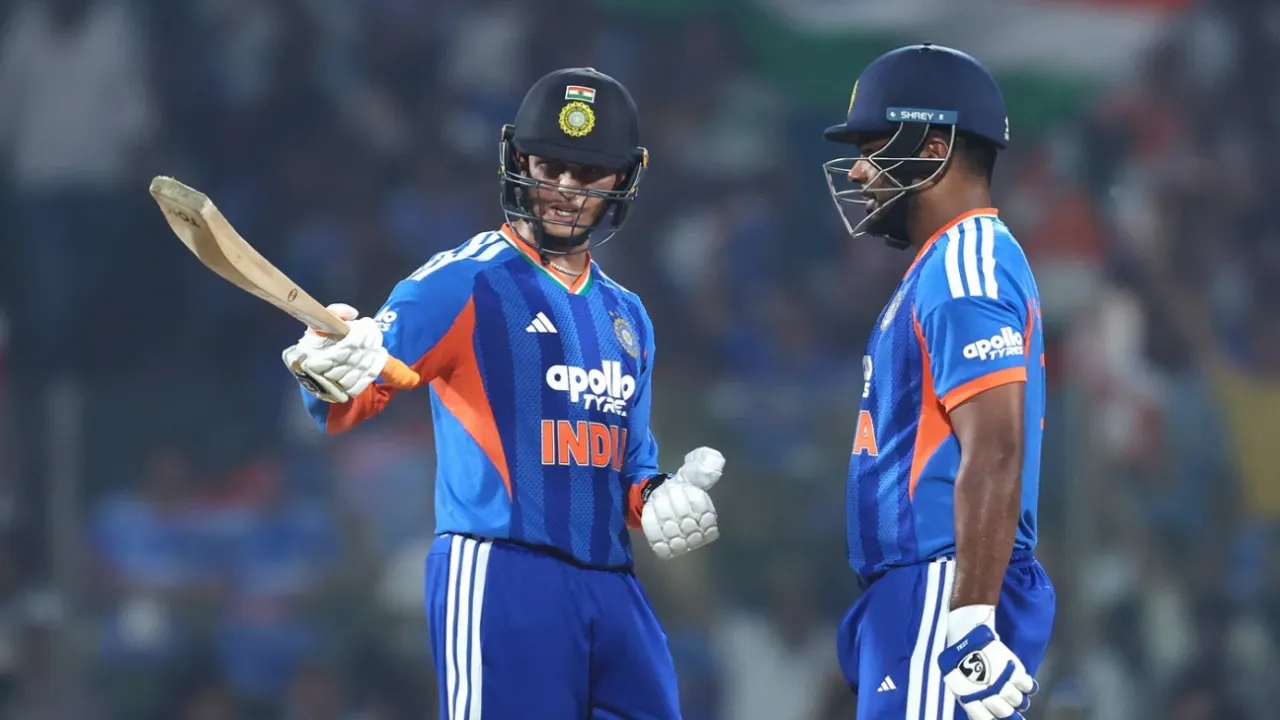
The gulf between India and Afghanistan during the recent bilateral T20I series – which India won 3-0 – was a further vindication of India’s dominance in the format and why they are world champions. It may not have reflected Afghanistan’s pedigree in the format, but it showed the gaps they still have to make up to match the top sides in the world, especially in terms of dot-ball percentage and their strike rate while batting.
Now Afghanistan, who have sent a second string side to the Asian Games, take on a full-strength India in the quarter-finals. Thirteen of the 15 players who toured India for the bilateral series are not in Afghanistan’s squad now, and the only two retained are Darwish Rasooli (the captain) and Abdollah Ahmadzai. Afghanistan’s squad of 15 is so raw that it features six uncapped players and five others who have fewer than ten international appearances. Their combined T20I experience of 262 matches is only a fraction (30%) of India’s 872 games.
There is no Rashid Khan, no Rahmanullah Gurbaz, no Mohammad Nabi, but Nabi’s genes are in the side, in his 20-year-old son Hassan Eisakhil.
India, despite a calendar clash with the home ODI’s against West Indies, which also start on Sunday, have sent their big guns to Japan in search of their second straight gold medal. If there is one team that can field multiple white-ball squads simultaneously, it is India, and they have done that. It is not officially known, however, why Afghanistan have sent such an inexperienced side when their next international fixture, a one-off Test against Bangladesh, only starts on October 9. Afghanistan aren’t alone in sending a second-string squad, perhaps to give their first-choice players some rest in an otherwise packed calendar.
The divide between the two sides is stark and even though they would want to take heart from the scare Japan handed India – even if in a rain-truncated game – recently, Afghanistan themselves lost to Nepal a couple of days ago. Now they have to compete against the world champions, a task they struggled with even at full strength earlier this month.
India have been plagued by injuries of late and one of the names on that list was of Washington Sundar, who returned to action in the Japan T20I last week. He didn’t get to bat and bowled two overs and took two wickets while playing his first game in two months. India would want to give him more game time before he heads back home for the West Indies T20Is that start on October 6 in Lucknow. Barring his niggles, Washington has otherwise had an impressive year across formats with an unbeaten 52in an ODI to give India their first win of their UK tour after he took a four-for in the Test against Afghanistan, during which he also scored 52*.
Pace-bowling allrounder Ismat Alam, 24, has played two Tests and one T20I so far, Afghanistan’s opening game against Japan. Alam was the Player of the Tournament in Afghanistan’s domestic T20s – Shpageeza Cricket League – for scoring 294 runs at a strike rate of 168, while also taking nine wickets. He had starred on his Test debut last year, scoring a century in the lower order that set up Afghanistan’s victory over Zimbabwe. Afghanistan may want to give him a game and hope he steps up again on the big stage.
India had rested Jasprit Bumrah in the one-off T20I against Japan and played Arshdeep Singh and Yash Thakur as their quick options apart from legspinner Ravi Bishnoi and spin-bowling allrounders Axar Patel and Washington Sundar. India will now have to decide whom to leave out for Bumrah. The other question will be if India want to give Vaibhav Sooryavanshi a game early in the tournament, although Abhishek Sharma and Sanju Samson look undroppable given the runs they scored in the series against Afghanistan.
India (probable): Abhishek Sharma, Sanju Samson (wk), Ishan Kishan, Shreyas Iyer (capt), Tilak Varma, Axar Patel, Shivam Dube, Washington Sundar, Ravi Bishnoi, Yash Thakur/Arshdeep Singh, Jasprit Bumrah.
Against Nepal, Afghanistan gave a T20I debut to Faisal Shinozada who top-scored along with the experienced Najibullah Zadran, the only batters who scored in double-digits in the game.
Afghanistan (probable): Mohammad Akram, Hassan Eisakhil, Karim Janat, Darwish Rasooli (capt), Najibullah Zadran, Mohammad Ishaq (wk), Ismat Alam, Nangeyalia Khan, Abdollah Ahmadzai, Faridoon Dawoodzai, Arab Gul.
[Cricinfo]

Mexico’s Pacific coast braces for Hurricane Polo

Washout against Afghanistan sends India into semi-finals

‘Still a lockdown’: Deadly floods hit Nepal tourism as peak season begins

Tharanga wins highly anticipated Asian Games gold

Tharanga on cusp of Asian Games Gold

Rain threat looms over lopsided India vs Afghanistan quarter-final

‘Dates have the highest sugar content to fight Coronavirus’

Sunday Island 27 December – Headlines

#SundayIsland 17th December – Headlines

Sunday Island – 28th March

Sunday Island Headlines – 21 March

Sunday Island – 21st February – Headlines
-

 News6 days ago
Mastermind Naufer Moulavi among 15 found guilty
-

 Midweek Review6 days ago
Thileepan’s fast unto death: An authentic narrative that many missed
-

 News7 days ago
Protest against setting up of cement factory in highly populated area near BIA
-

 Editorial7 days ago
Trouble beginning in earnest
-

 Latest News5 days ago
Showers above 100 mm are likely at some places in the Western, Sabaragamuwa, Central and North-western provinces and in Galle and Matara Districts
-
Editorial6 days ago
Big Bad Bills
-

 News7 days ago
Police may seek clarification from US
-

 News7 days ago
Govt. confident of 2/3 majority despite NPP split speculation