
Foreign News
Trump imposes tariffs but Canada and Mexico hit back

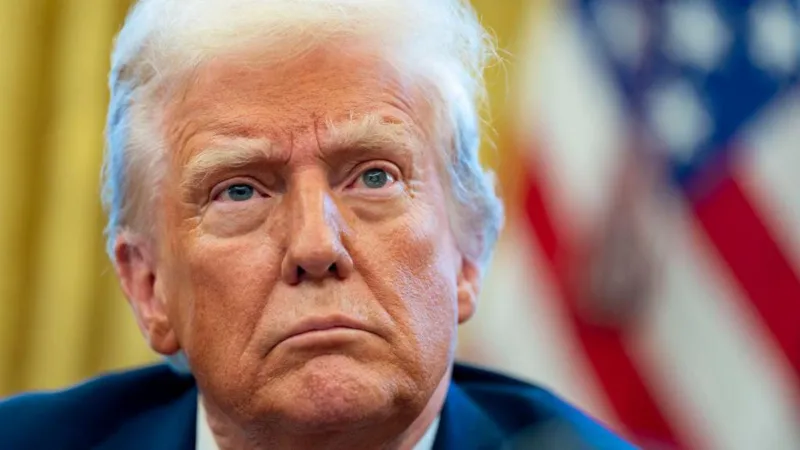
US President Donald Trump has announced sweeping new tariffs on all goods imported from America’s three largest trading partners, China, Mexico and Canada.
Trump said the US would impose tariffs beginning on Tuesday of 25% on Canada and Mexico, and 10% on China. Canadian energy faces a lower 10% tariff.
He had threatened to impose the import taxes if the three countries did not address his concerns about illegal immigration and drug trafficking.
Both Canada and Mexico said they are preparing retaliatory tariffs of their own.
Trump has indicated he is ready to escalate the duties if the countries retaliate.
Together, China, Mexico and Canada accounted for more than 40% of imports into the US last year.
“Today’s tariff announcement is necessary to hold China, Mexico, and Canada accountable for their promises to halt the flood of poisonous drugs into the United States,” the White House said in a statement on X on Saturday.
Trump posted on his Truth Social platform: “This was done through the International Emergency Economic Powers Act (IEEPA) because of the major threat of illegal aliens and deadly drugs killing our Citizens, including fentanyl.”
A tariff is a domestic tax levied on goods as they enter the country, proportional to the value of the import. They are a central part of Trump’s economic vision.
He sees them as a way of growing the US economy, protecting jobs and raising tax revenue – and in this case, pushing for policy action from allies.
In her response, Mexican President Claudia Sheinbaum called allegations that the Mexican government had alliances with criminal organisations “slander”.
The White House, in its announcement, accused Mexico’s government of having “an intolerable alliance” with Mexican drug trafficking organisations.
In a statement, Sheinbaum called on the US to do more to clamp down on the illegal flow of guns south to arm the cartels.
Her country is willing to work with the US, she said. “Problems are not resolved by imposing tariffs, but by talking.”
She has instructed her economy minister to respond with tariff and non-tariff measures. They are expected to include retaliatory tariffs of 25% on US goods.
Canadian Prime Minister Justin Trudeau said his country will also respond.
“We don’t want to be here, we didn’t ask for this,” he said in a news conference late on Saturday.
“But we will not back down in standing up for Canadians.”
His government will impose 25% tariffs on $155bn worth of American goods – $30bn will come into force on Tuesday and another $125bn in 21 days.
Targeted items include American beer, wine, bourbon, fruits and fruit juices, vegetables, perfumes, clothing and shoes, as well as household appliances, sporting goods and furniture. Lumber and plastics will also face levies.
Non-tariff measures being considered are related to critical minerals and procurement, although Trudeau did not offer more detail.
The prime minister pushed back on the suggestion the shared border posed a security concern, saying less than 1% of fentanyl going into the United States comes from Canada.
In a bid to avoid the tariffs altogether, Ottawa had promised to implement C$1.3bn ($900m; £700m) of new security measures along its US border.
“Tariffs are not the best way we can work together to save lives,” Trudeau said.
He also said he had not spoken to Trump since the inauguration, but would keep lines open with US counterparts.
China said in a statement that it is strongly dissatisfied with the levies and “firmly opposes” them.
It added that it would file a lawsuit with the World Trade Organization against the US for its “wrongful practice” and would take countermeasures to “safeguard its own rights and interests”.
China’s vice-premier Ding Xuexiang told the World Economic Forum in Davos, Switzerland, last month that his country was looking for a “win-win” solution to trade tensions and wanted to expand its imports.
Canada, Mexico and the US have deeply integrated economies, with an estimated $2bn (£1.6bn) worth of manufactured goods crossing the borders daily.
Economists say the tariffs and subsequent retaliation could raise prices on a wide range of products, from cars, lumber, and steel to food like frozen French fries, avocados, and tomatoes, to alcohol.
The auto sector could be especially hard hit. Auto parts cross the three borders multiple times before a final vehicle is assembled. TD Economics suggest the average US car price could increase by around $3,000.
A January report by the Peterson Institute for International Economics suggested blanket 25% tariffs on Canada and Mexico would slow growth and accelerate inflation in all three countries.
On Friday, Trump acknowledged there could be “some temporary, short-term disruption” from the tariffs.
The Canadian Chamber of Commerce released a statement saying tariffs will have “immediate and direct consequences on Canadian and American livelihoods” and will “drastically increase the cost of everything for everyone”.
US industry groups have also raised alarm bells.
The National Homebuilders Association said the levies could increase housing costs.
The Farmers for Free Trade said, with many US farmers already struggling, “adding tariffs to the mix would only exacerbate the situation across much of rural America”.
The US Retail Industry Leaders Association, which includes big names such as Home Depot, Target and Walgreens among its more than 200 members, expressed hope tariffs could still be averted.
The White House, explaining on Saturday why it was targeting its top trading partners, said Mexican cartels were responsible for trafficking fentanyl, methamphetamine and other drugs.
It said tariffs on Canada would remain until it “co-operates with the US against drug traffickers and on border security”.
Lastly, it said “China plays the central role in the fentanyl crisis” with exports of the lethal synthetic painkiller.
Both the northern and southern US borders have reported drug seizures, though amounts at the border with Canada are considerably lower than those with Mexico, according to official data,
US border agents seized 43lbs (19.5kg) of fentanyl at the northern border between October 2023 and last September, compared to more than 21,000lbs (9,525.4kg) at the southern border.
Still, recent reports from Canadian intelligence agencies suggest a growing number of transnational organised crime groups are manufacturing drugs in Canada.
Ashley Davis, a Republican lobbyist for businesses, who represents major US companies, including Walmart and Boeing, and has been involved in discussions about tariffs, told the BBC’s World Business Report she thinks Trump will pull back on the tariffs in North America if he can point to progress on the issues he has raised as complaints – especially immigration.
“You have to remember – the border and China are the two biggest issues that Americans voted him on in the elections in November. Anything he can do to claim wins on that, I think he’s going to do,” she said.

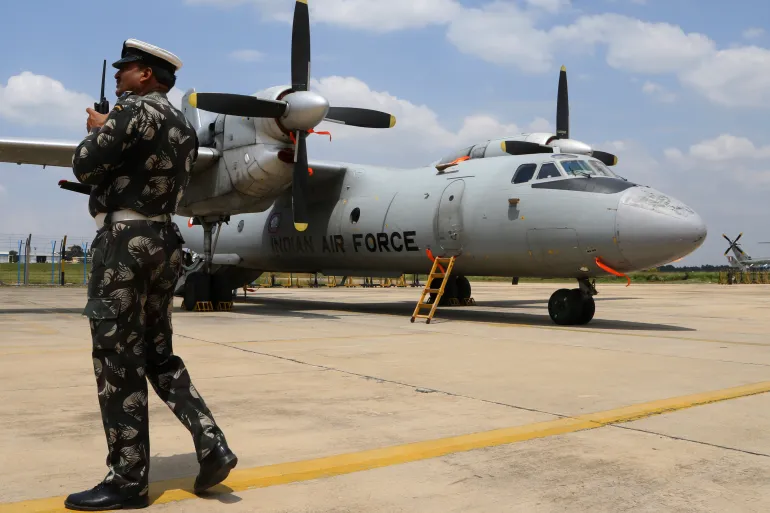
Five Indian air force personnel have been killed after the aircraft they were travelling in crashed in the northeastern Indian state of Assam, according to officials.
The Antonov An-32 transport plane “met with an accident” during a “routine sortie” in Assam’s Jorhat region, the Indian Air Force said in a statement on Saturday.
“Crash site management and initial enquiries are on at this time,” the Air Force wrote, adding that an investigation to determine the cause of the accident was under way.
News channel NDTV broadcast images of the crash site, showing a thick black plume of smoke and the aircraft apparently broken into pieces.
India’s air force operates a fleet of about 105 An-32 aircraft to transport people and cargo.
The last major crash involving a twin-engine turboprop took place in 2019 in Arunachal Pradesh state, near the border with China, when 13 people were killed
(Aljazeera)
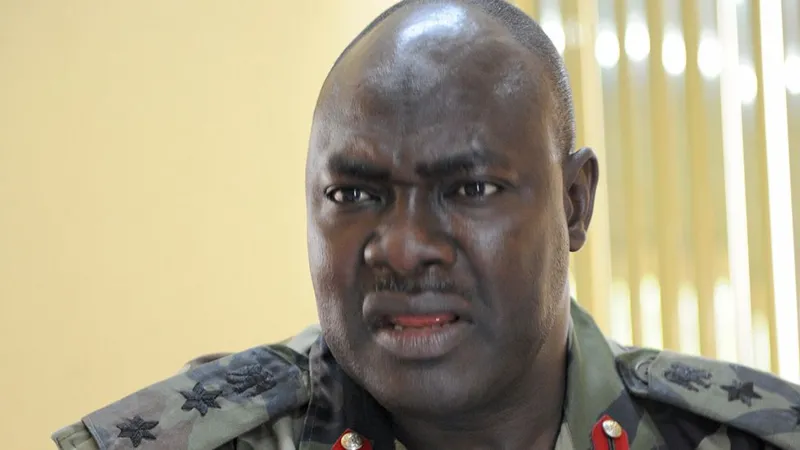
A retired Nigerian army general who had been kidnapped by gunmen in the country’s north-west has died while being held captive, the military has said.
Maj Gen Rabe Abubakar, who had a high-profile job as military spokesman between 2015 and 2017, was abducted with his wife while travelling in Katsina state last month.
No group has said it was behind the kidnappings.
The abduction and death of Abubakar highlights the continuing security challenges facing parts of north-west Nigeria, where criminal gangs known locally as “bandits” frequently carry out kidnappings for ransom, as well as cattle rustling and attacks on rural communities.
Some militant jihadists have also operated in the region. An alleged militant camp in Sokoto state was the target of a US airstrike on 25 December last year.
Katsina has been one of the states most affected by the violence.
Local media reported that the retired officer had been going to a wedding on 30 May when armed men attacked his vehicle and seized him, his wife and their driver.
Days before news of his death emerged, a video shared on social media appeared to show Abubakar in captivity. He was seen with an apparent injury to his left leg alongside his wife and other hostages.
The military said it chose not to comment publicly on the abduction while efforts to free those in captivity were being made.
“In deference to ongoing rescue efforts by security agencies, the Armed Forces withheld public comment while every operational resource was deployed in the hope of securing his safe return,” the statement said.
The whereabouts and condition of Abubakar’s wife remain unknown. But a military spokesman said that “ongoing operations have since been further intensified to bring perpetrators to justice and to dismantle all terrorist networks threatening our nation”.
The military paid tribute to the major general, who local media reported was 61 when he died, describing the loss as “tragic” and offered condolences to his family and former colleagues.
A statement said he made “immense contributions to counter-insurgency operations… His commitment to duty and to the unity of Nigeria remains a shining example for all personnel.”
[BBC]
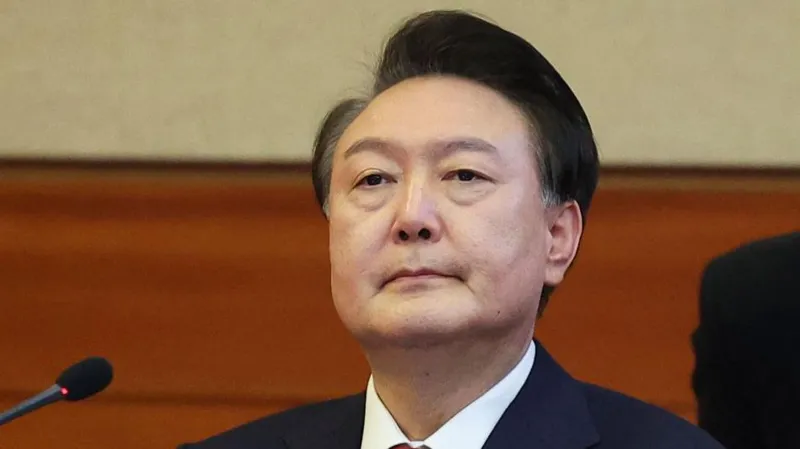
A South Korean court has sentenced former President Yoon Suk Yeol to 30 years in jail for sending drones into North Korea.
Prosecutors argued that Yoon ordered the operation in October 2024 to provoke Pyongyang and create a pretext for his failed martial law bid later that year.
When Yoon declared martial law on 3 December, he had claimed he was protecting the country from “anti-state” forces that sympathised with North Korea. But it soon became clear he was driven by domestic troubles and he rolled back the order in the face of mass protests.
Yoon was impeached and is now serving time in prison after he was sentenced to life for insurrection over his botched martial law attempt.
On Friday, the Seoul District Court found Yoon, as well as his former defense minister Kim Yong-hyun, former head of the Defense Counterintelligence Command Yeo In-hyung and former head of Drone Operations Commands Kim Yong-dae guilty of treason and abuse of power.
Kim was sentenced to 30 years in jail, while Yeo received 15 years and Kim Yong-dae received three years in prison with a five-year suspended sentence.
“The defendants used the guise of a military operation to induce provocations from North Korea with the aim of creating a state of emergency,” the court said.
It added that all three officials had “provoked North Korea”, thus “increasing the risk of a military conflict”, but concluded that Yoon bore the “greatest responsibility” in this event.
Yoon’s lawyers had argued that his actions were a “legitimate” response to North Korea’s “provocations with rubbish balloons”.
This was a reference to North Korea dropping hundreds of balloons in 2024, which were later found to contain “filthy waste and trash”, across the border in the South.
The two countries have used such “propaganda balloons” in their campaigns since the Korean War, where messages are put inside the balloons.
But tensions shot up in 2024 when North Korea accused the South of flying drones into its capital. These drones allegedly scattered propaganda leaflets all over Pyongyang, in what the North described as a provocation that could lead to war.
It was Yoon who sent these drones into the North expecting it to strike back, said a judge in Friday’s ruling.
Apart from insurrection, Yoon has was also sentenced to five years in jail for abuse of power and obstructing his own arrest.
Yoon’s martial law attempt and the protests that followed created months of chaos in the country, ending in an election which saw the opposition Democratic Party’s Lee Jae-myung win a decisive mandate.
[BBC]

Mandhana, Deepti, Ghosh star as India breeze past Pakistan

Showers will occur in the Western, Sabaragamuwa and North-western provinces and in Galle, Matara, Kandy and Nuwara-Eliya districts

Theft of USD 2.5 mn from Treasury: CoPF accused of complicity in NPP cover-up

Viral diseases on the rise

Ranil warns of another economic crisis, calls for Opposition unity

Govt. eyes multi-billion dollar green hydrogen future

‘Dates have the highest sugar content to fight Coronavirus’

Sunday Island 27 December – Headlines

#SundayIsland 17th December – Headlines

Sunday Island – 28th March

Sunday Island Headlines – 21 March

Sunday Island – 21st February – Headlines
-
 News3 days ago
CIABOC summons Yoshitha over his participation in British Navy training programme
-
 News5 days ago
Local firms move millions of dollars overseas for phantom imports: Govt.
-
 Midweek Review5 days ago
July 09: An inexcusable overall security failure and exceptional contingency plan
-
 Opinion6 days ago
Could Sri Lanka once again face an economic crisis similar to 2022?
-

 News5 days ago
AI raises concerns over arrest of Sallay and rapper under PTA
-
 News6 days ago
Sallay refuses to end hunger strike unless probe is taken out of CID led by Shani
-

 News2 days ago
Commonwealth lawyers urge Lanka to uphold rule of law
-
 Latest News6 days ago
Iran and Israel say they will pause strikes but warn of retaliation if ceasefire breached again