
Life style
Childhood obesity- a bad sign of what might follow

by Randima Attygalle
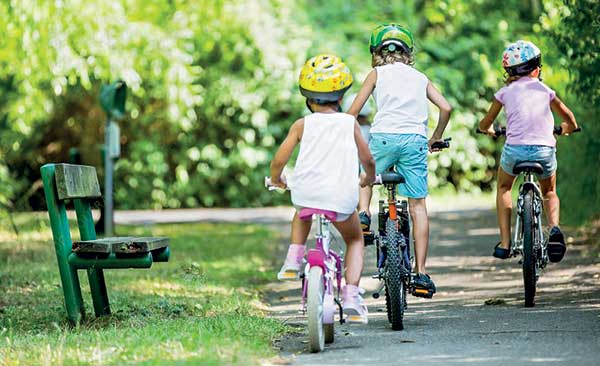
‘All work and no play makes Jack a dull boy’ calls for rephrasing today into ‘Bad food and screen time make Jack an obese boy’. Childhood obesity is increasing rapidly in Sri Lanka and the present COVID-19 pandemic is a double whammy, with children being home-bound with no physical activity. The increased screen time spent on virtual learning adds fuel to the fire.
“Although we did see more obese and overweight children in high income settings in the past, today the incidence of obesity is rising among the urban middle class,” observes the Consultant Paediatrician and Professor of Paediatrics from General Sir John Kotelawala Defence University, Prof. Ishani Rodrigo. She cites a recent survey among 5-18 year olds in urban Sri Lanka which showed an obesity prevalence of 10.3% and overweight prevalence of 11.3%. Studies in the Colombo, Gampaha and Jaffna Districts reflect a higher prevalence of childhood obesity says Dr. Rodrigo. “We are yet to unearth island-wide data on the problem,” she adds.
 In 2019, according to the WHO, an estimated 38.2 million children worldwide, under the age of five years were overweight or obese. Once considered a high-income country problem, excess weight and obesity are now on the rise in low- and middle-income countries, particularly in urban settings. In Africa, the number of overweight children under five has increased by nearly 24% percent since 2000. Almost half of the children under five who were overweight or obese in 2019 lived in Asia.
The etiology of obesity is multi-factorial and complex. Although at a basic level it is about more ‘calories in’ than ‘calories out’, there is a genetic contribution as well, says the paediatrician. “Although pathological obesity is attributed to medical conditions such as Cushings Syndrome and hypothyroidism what is more often seen is simple obesity. It is often the food and lifestyle which contribute to it.”
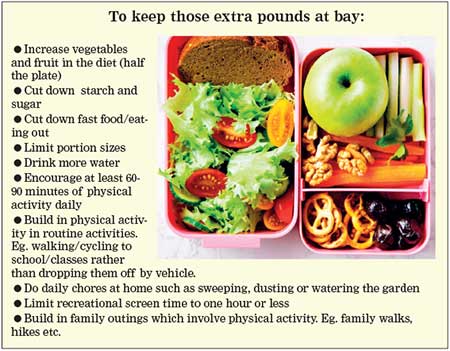
Increased intake of food high in simple carbohydrates, sugars and fats, convenience food such as pastries and kottu high in energy, fast food, sweetened beverages, flavoured milk, fizzy drinks, large portion sizes and frequent snacking are among the major triggers of obesity in children. Poor intake of vegetables and fruit in the diet, less outdoor play, increased screen time, less household chores for children and dependence on electrical appliances as opposed to doing tasks manually have made the situation worse.
Food advertising aimed at children, enabling availability of sugary beverages at affordable prices and lack of healthy food choices in school canteens/tuck shops (the choices largely being starchy and sugary food) have also accelerated this national health dilemma. “In the UK, the school meal policy was revised, adopting the healthy school lunches which were promoted by the famous master chef Jamie Oliver. The country also imposed a sugar tax on beverages depending on the amount of sugar they contain,” explains Prof. Rodrigo who calls for a similar shift in the local policy. “Although the Ministry of Health had issues dietary guidelines, they have not yet filtered to communities and there are no national level programmes to have a dialogue with parents, teachers and school authorities on this national health crisis.”
COVID pandemic has also led to an alarming increase in the weight of children across all age groups. “Children have lost most opportunities for physical activities including walking to school, playing with friends and organized sports. With virtual classrooms replacing real classrooms, children spend a considerable time before screens. Most of the entertaining is also afforded by screens. With very little to do at home, children eat often to relieve their boredom and mothers too tend to make more treats at home and feed their children which could go against them.”
Once obesity is established, managing of it becomes very challenging, warns Dr. Rodrigo who urges parents to encourage healthy eating and living. “Children usually eat the family diet, hence if the family diet is rich in starchy, fatty and sugary food and low in vegetables and fruit, they will automatically follow this.”
The long term repercussions of childhood obesity are multiple: adult obesity, the increased risk of cardiovascular disease, hypertension, heart disease, strokes and orthopaedic complications including joint pains and early osteoarthritis, increased levels of cholesterol, Type 2 diabetes and fatty liver are among these. The condition can also trigger skin problems such as thickening and discolouration of skin and stretch marks and also cause breathing problems including obstructive sleep apnea (stopping breathing during sleep), obstruction to airway and snoring. Childhood obesity also increases risk of fractures and certain cancers in adulthood including endometrial, breast, ovarian, prostate, liver, gallbladder, kidney, and colon cancers.
 Addressing childhood obesity requires a multidisciplinary approach with collective inputs of paediatricians, nutritionists, physical training instructors, psychologists etc. “Motivation of the child and family or motivational counseling is the key in intervention which if often very intensive,” remarks the Professor. Following the initial assessment involving physical markers and other necessary medical tests, the psychological assessment involving the child and his/her family would follow. “Family history of obesity, family perception and understanding of the problem and motivation to achieve a healthy weight is important in this process,” she notes. Regular monitoring of children and motivational therapy sessions help keep children and their families on track, she says.
The ‘Nutri-Fit Programme’ at the University Hospital of the Kotelawala Defence University manages overweight and obese children. Conducted through the Paediatric Clinic of the hospital, the programme emphasizes on becoming healthier and more fit rather than losing weight. “Weight loss inevitably happens as a result of this approach,” explains the professor who goes on to note that this facility is extended to healthy cooking demonstrations for children, exercise and yoga sessions.
Obese children need to be empowered to overcome psychological trauma the condition entails, remarks the Consultant. Destigmatizing obesity, motivational counseling, removing the guilt stigma, making them partners in achieving the target, emphasizing health rather than obesity, identifying their strengths and encouraging them and early involvement of a clinical psychologist in addressing these issues are among the tools of empowerment. Severe cases of obesity may need certain medications.


From Colombo to Canberra:
By Zanita Careem ✍️
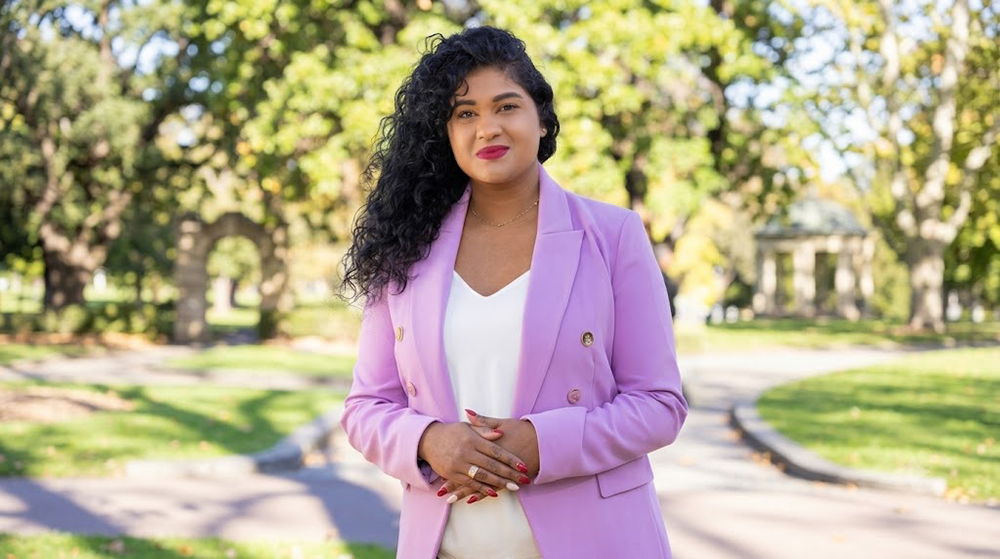
Cassandra Fernando made history in 2022 by becoming the first Sri Lankan-born member of Australia’s Federal Parliament. She was elected as the Australian Labour Party MP for the electorate of Holt in Victoria. Born in Colombo, Fernando migrated to Australia, with the family, in 1999, at the age of 11. Before entering politics, she worked as a Pastry Chef at Woolworth, became a trade union organiser and later entered public life through the Labour Party. Her victory was widely celebrated by the Sri Lankan diaspora as a milestone for representation in Australian politics. “I am proud to be the first Sri Lankan-born Federal Member of Parliament in Australia,’’ she says.
In a story that embodies resilience, determination and the promise of opportunity, Cassandra Fernando has etched her name into history as the first Sri Lankan-born person elected to theAustralia’s Parliament. Grounded in resilience, shaped by her Sri Lankan heritage, and driven by a passion for justice, Fernando has become a powerful advocate for working families, multicultural communication and equal opportunity. In this exclusive interview with ‘The Sunday Island’, she reflects on the challenges she overcame, the values that continue to guide her, leadership and her vision for creating more inclusive and compassionate Australia.
About Cassandra Fernando
My name is Cassandra Fernando and I am the first Sri Lankan-born Member of of the Austalian Labour Party and represent the Electoral Division of Holt, which covers the outer south-east suburbs of Melbourne.
I moved to Australia in 1999, at the age of 11, when my family settled in Dandenong North. I have lived, worked and grown up in Melbourne’s south-east ever since.
My first job was at Woolworths, at the age of 15, to help my parents pay my school fees. I spent more than 15 years working in supermarkets, baking bread, stacking shelves and making lifelong friends.
Trade unionism has always been lurking in my mind. When I joined the shop, namely Disributive and Allied Employees Association (SDA), on my very first day at Woolworths, a union organiser asked if I would like to represent my fellow workers. I accepted the opportunity and spent more than five years working as a union organiser. Later, in 2022, after the retirement of the long-serving Federal Member for Holt, Anthony Byrne, I was elected to the Australian Parliament, in 2022, and re elected in 2025 to serve as part of the Albanese Labour Government.
I’m a proud mum to my one-year-old son Llija, also a qualified pastry chef, and a proud Catholic.
Your journey from migrant worker to a Member of Parliament has inspired many. What motivated you to enter politics?
One of the defining turning points in my life came when I became actively involved in the trade union movement at my workplace. At that time, my knowledge of politics was fairly limited, but soon everything changed when I witnessed the challenges faced by workers and realised I would want to help create a fairer workplace. I became a union delegate and organiser and started campaigning for better pay and better welfare conditions This was the beginning After years of of advocating outside Parliament, I wanted to take that advocacy into Parliament where I could change or shape national policy
In 2007, our union’s magazine focused on the Howard Government’s WorkChoices industrial relations laws and how they threatened the rights and job security of workers like me. That was a crucial turning point. That experience inspired me to enter public service and eventually politics
What were some of the biggest challenges you faced before entering Parliament?
Growing up in Dandenong was a wonderful experience because it was one of Australia’s most multicultural communities. I was surrounded by people from every corner of the world.
Like many other families, we had to work incredibly hard to build a life in Australia. Parliament and politics were far beyond my imagination, but growing up watching TV, debates on challenging issues of workers such as wages, job security and workplace rights, inspired me to believe that ordinary people could make a difference. That inspiration stayed with me and eventually motivated me to enter politics, created a desire to give back and ensure others have the same opportunities like myself.
How has your Sri Lankan heritage influenced your values and leadership style?
My Sri Lankan heritage has shaped me to who I am in many ways. My parents made enormous sacrifices to give our family a better future in Australia, and I never forget their hard work and their profound influence on me. They instilled in me the importance of perseverance, gratitude and treating everyone with respect and dignity. These values continue to guide my work as a member of Parliament, where I am committed to advocating for working families, multi-cultural communities and creating opportunities for future generations. My Lankan heritage helped shaped my values of resilience, hard work and compassion.
My leadership style is built around listening first, working hard and treating everyone with respect. Whether I am at a meeting with local families, business owners or community groups, I always try to remain grounded and instilled the importance of perseverance, respect others and giving back policies. These qualities made me a stronger leader and gave me a deeper understanding of the challenges faced by multicultural communities.
What are your key priorities for your constituency, the Division of Holt?
My electorate covers Melbourne’s rapidly growing, outer south-east, where thousands of new families move into new housing estates every year.
Growth brings enormous opportunities, but it also creates pressure on infrastructure and services.
Road upgrades have been one of my major priorities. Since becoming the Federal Member for Holt. I have overseen the competition of the Narre Warren-Cranbourne Road upgrade. At the last Federal Election, I also secured commitments to upgrade key intersections at Berwick-Cranbourne Road, Thompsons Road and Pattersons Road.
Another major issue I want to address is to rectify the pure mobile reception in certain parts of Holt. I want to advocate better telecommunications facilities, infrastructure so that every resident have access to dependable mobile coverage and digital connectivity. Creating pathways for employment, training and opportunities for young people are aso some of my priorities. Holt also has a younger populations in Australia, with almost one in four residents under the age of 18. Ensuring young families have access to quality healthcare, education and community services remains one of my highest priorities.
What do your see as the biggest challenges facing multicultural communities in Australia today?
Major challenge is combatting discrimination and anti immigrant attitudes and building greater understanding and respect between coomunities. Many migrants also face difficulties having thier voices heard and ensuring thier cultures and contributions are recognised.
Australia has been one of the world’s great multicultural success stories, but like many countries we have seen a rise in populist anti-immigrant attitudes and activities remain a challenge, because they can create fear and a sense of exclusion within communities.
I believe in promoting respect, inclusion and understanding while ensuring every person regardless of their background feels valued and has an equal opportunity to contribute to Australia.
How do you balance the needs of local communities with national policy goals?
The best national policies are built by listening to local communities, first and then ensure the voices of residents are reflected in every aspect of life My job is to take the concerns I hear from families in Holt, whether it’s about roads, healthcare, cost of living or education, and ensure those voices are heard in Canberra. My focus is bringing local concerns to Parliament while working within national priorities to deliver positive outcomes for all.
As a woman in politics, what barriers have you encountered and how do you overcome them?
Politics has traditionally been a male-dominated profession and women often face greater scrutiny than men. One of the biggest battles I encountered in politics were breaking through glass ceilings and making my voice heard in challenging moments for the welfare of people. Like many others, I have faced sterreotypes, online abuses but I have overcome all these barriers by staying focused on my job, with the idea on why I entered politics to serve my community, build a strong support network, and work hard for my community and I always wanted my actions to speak louder than words. These prindiples, within me, refused to let stereotypes define my journey.
One of the challenges I faced was successfully balancing family responsibilities with the demands of public life. It was a journey of commitment and resilience. Becoming a mother, while building a political career, taught me the importance of time, priorities, and the need for having a strong support network. Family and leadership are not separate journeys but they can strenghten each other, My experience as a mother and migrant worker have shaped my understanding of the challenges faced by everyday families and influenced the way I represent my community and leadership of balancing the family. The reality is that thousands of women raise children, build careers, run businesses and contribute enormously to our community. Being a mother doesn’t make someone less capable of serving their community, it gives you another perspective on the issues families face.
I am incredibly proud to represent those women in Parliament and to be their voice. I hope that by serving as both a member of Parliament and a mum, it gives me a deeper understanding of the issues families face everyday,
How important is diversity in shaping modern Australian politics?
In a representative democracy, Parliament should reflect the people it serves.
Australia is one of the most multicultural countries in the world, so it is important that people from culturally and linguistically diverse backgrounds are represented in our national institutions. Diversity strengthens decision-making because people with different life experiences bring efficient perspectives to public policy.
What message would you share with migrants who dream of making a difference in their adopted country?
Australia is an amazing country full of opportunity for people who are prepared to work hard and contribute to their communities. My advice is to seize every opportunity that comes their way. One can start by getting involved locally. Volunteering at your sporting club, helping at their local food bank or become involved in community organisations can make leadership to take shape. Leadership often begins through service.
Do you maintain close ties with Sri Lanka, and how have those connections shaped your outlook?
Absolutely.
I am proud to serve as Chair of the Parliamentary Friendship Group for Sri Lanka, where I work closely with the Sri Lankan High Commission, community organisations and business leadership to strengthen the relationship between our two countries.
Remaining connected to my heritage reminds me of the importance of cultural identity while also highlighting the opportunities that exist when nations work together through education, trade, tourism and people-to-people relationships.
What opportunities do you see for stronger Australia-Sri Lanka relations?
Australia and Sri Lanka already enjoy strong relationship built on trade, education, development cooperation and shared interests in the Indo-Pacific.
Australia has supported economic reform, governance initiatives and skills development in Sri Lanka, while Australian investment in Sri Lanka’s eduction sector continues to grow.
Looking ahead, I see enormous opportunities to expand tourism between our countries, increase business investment and strengthen cooperation in technology, communications and education.
What legacy would you like to leave in public service?
At the end of my career, I hope people will simply be able to say that I improved the lives of working Australian families. I hope my legacy is one of compassion and opportunity. I want to inspire more women and young people from diverse backgrounds to believe in themselves and pursue leadership
What role can the Sri Lankan diaspora play in fostering cooperation between the two counties?
The Sri Lankan diaspora plays a vital role in building bridges between Australia and Sri Lanka.
Business partnerships, educational exchanges and cultural programmes often begin through personal relationships.
These people-to-person connections create trust, open new opportunities and strengthen coopertion in ways that governments alone cannot achieve.
What gives you hope for the future of politics of women?
I draw hope from seeing more women, particulary from diverse and multicultural background, stepping forward to take leadership roles. I believe representation matters because when women are part of decision they bring different experiences, perspectives and solutions to the table. I strongly believes the future of politics will be stronger when leadership reflects the diversity of the communities it serves.
What gives me hope is seeing more Australians from different backgrounds stepping forward to serve their communities.
I strongly believe that the future of politics in Australia we see the growing diversity of voices and the willingness of people to engage in shaping their future. This gives me confidence that democracy is becoming more inclusive.

Wings over paradise
By Zanita Careem ✍️
The publication ‘Aviation in the Maldives,’ an iconic book by industry veteran Ahamed Mohamed, was launched in 2024. This comprehensive book is a culmination of a three-year effort of a aviation veteran, who not only witnessed, but actively participated in a significantly chapter of the country’s aviation saga. Ahamed, who is at present working on his second book ‘Maldivean SeaplaneAviation,’ has a fleet of over 100 Twin Otter Aircraft with four airlines operating seaplanes carrying tourists to distant resorts, from Male International Airport.
He served for 15 years at Air Maldives and also spent a total of 38 years in government civil service. This book contains 12 chapters, meticulously curated by author Ahamed Mohamed, who chronicles the fascinating journey of how a nation of scattered islands conquered the skies. This book is not merely a record of aircraft and airports, but a human story of vision, perseverance and progress. Through rare photographs, historical accounts and inspiring stories of pioneers, this book captures the triumps, challenges and milestones that transformed aviation into the lifeline of the Maldives,. Reading through, I found the book a fascinating tribute to the people, aircraft and dreams that carried a small island nation towards the global stage
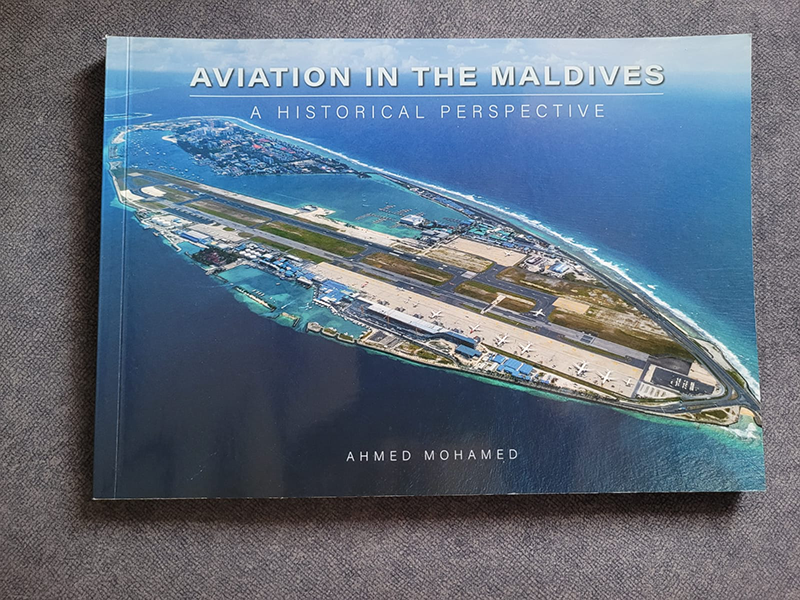
Beautiful cover of the book -Aviation in the Maldives
The cover of the book captures the spirit of a nation that learned to conquer the skies, while surrounded by the vast Indian Ocean; a breathtaking aerial new of the Maldives, iconic turquoise lagoons symbolising the unique geography that made aviation essential to the country’s growth.
With rare insights into the milestones, challenges and pioneers who shaped the industry, the book preserves an important chapter of Maldivian history for future generations and for those who study Maldivian aviation. His work stands as a reminder that every flight carries not only passengers, but also the dreams and aspirations of a nation that dared to reach beyond the horizon
Indeed, this book ‘Aviation in the Maldives’ is a celebration of those who gave the islands wings – a timeless story of ambition, innovation and the unstoppable human desire to fly
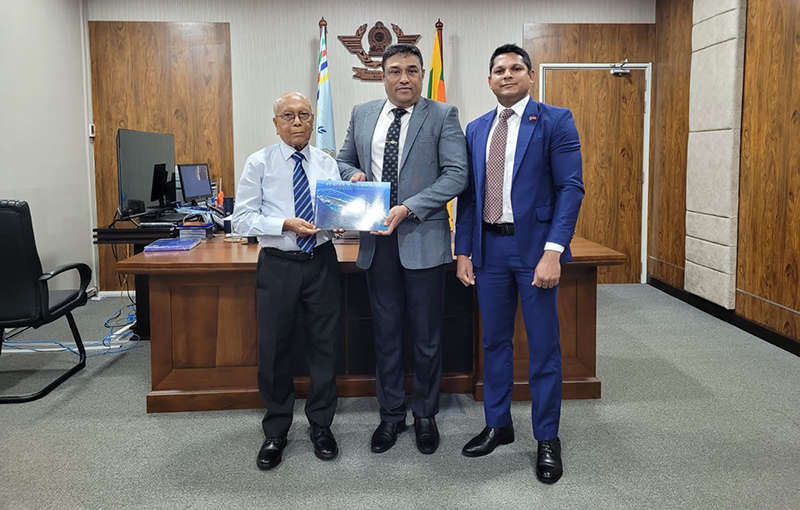
Ahamed presenting a copy of the book to captain Daminda Rambukawella, Director General of Civil Aviation Authority of Sri Lanka, with the Councillor of the Maldivian High Commission also in the scene
For the Maldives, aviation has always been more than means of transport – it has been their lifeline. Spread across hundreds of islands in the Indian ocean, the nation has relied on their air connectivity to bridge vast distances, linking communities, supporting healthcare, strengthening the economy, and opening the country to the world.
In his book ‘Aviation in the Maldives,’ Ahamed traces this remarkable journey, from its humble beginnings to the sophisticated aviation network that exists today. His research highlights the vision, determination, and resilience of the pioneers who helped make air travel an integrate part of Maldivian life. In this interview, Ahamed reflects on the milestones that defined Maldivian aviation.
“The development of aviation transformed the country’s tourism industry, enabling visitors to reach even the most remote luxury resorts by domestic aircraft and seaplane” said Ahamed
Q What inspired you to write about the history of aviation in the Maldives.
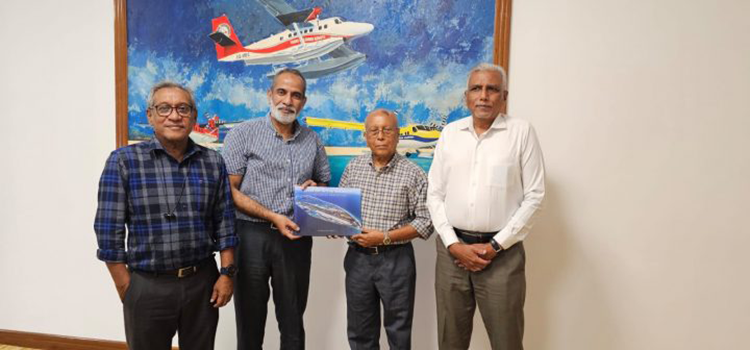
Leading figures from the aviation sector with Ahamed to mark the publication of his latest work, Aviation of the Maldives
A: Aviation has played a defining role in the Maldives. I wanted to preserve this remarkable journey and honour pioneers whose dedication transformed transportation and connected our islands .
Q Why is Aviation so important to the Maldives?
A: As an archipelago, air transport is essential. It supports tourism, healthcare , education, business while connecting people across the country.
Q: What was the most fascinating discovery during your research ?
A: I was surprised by the determination of the early aviation pioneers who overcame enormous challenges with limited resources and a clear vision for the future.
Q How has aviation changed the tourism industry in Maldives?
Aviation made it possible for visitors to reach islands quickly and comfortably. Tourism has been one of the key drivers of the Maldives success as a world renowned tourist destination.
Q: What is your message for the readers about your book?
A: I hope readers appreciate the people behind the progress and understand that the growth of Maldivian aviation is a story of courage, innovation and national development.
Q: Looking ahead, what is your vision for aviation?
A: I believe the future is bright. I forsee aviation remaining central to the country’s development, while meeting the needs of the future generation.
Through meticulous story telling, Ahamed Mohamed captures how aviation became a bridge, connecting communities, supporting tourism and bringing the Maldives closer to the world.

By Nipuni Fernando
Nipuni Fernando is an aesthetics and healthcare management professional attached to a leading private hospital chain in Sri Lanka. She is actively involved in the aesthetic and cosmetology industry, with experience in cosmetic centre operations, healthcare management, industry development, and cosmetology education. She also contributes to discussions related to standards, professionalism, and the future development of the aesthetic industry in Sri Lanka.
For many years, the aesthetic industry was largely driven by aspiration. New treatments, trending procedures, celebrity-inspired beauty standards, and rapidly evolving technologies shaped consumer demand across global markets. Clinics competed through devices, visible transformations, promotional campaigns, and the promise of quick aesthetic enhancement.
But globally, the industry is now entering a more complex phase of evolution.
Today’s aesthetic consumer is no longer behaving like the consumer of a decade ago. Today’s clients are far more informed, exposed to digital content, and more aware of aesthetic treatments than before. Before even attending a consultation, many consumers have already spent hours researching treatments, comparing providers, watching patient experiences online, reading reviews, and following international aesthetic trends through social media platforms.
This has fundamentally changed the relationship between the industry and the consumer.
In the past, aesthetic decisions were often heavily influenced by visible transformation alone. Today, consumers are increasingly influenced by credibility, safety, natural outcomes, professionalism, and long-term confidence in the provider itself.
The rapid growth of the wellness and healthy ageing movement has also contributed to changing attitudes toward aesthetics. Increasingly, people are viewing appearance not as an isolated beauty concern, but as part of a broader lifestyle conversation connected to confidence, wellbeing, self-care, prevention, and healthy ageing.
As a result, the industry is gradually moving away from purely trend-driven consumption. Consumers are becoming more cautious about aggressive cosmetic changes, overfilled appearances, unrealistic beauty standards, and aggressive treatment marketing. In many international markets, there is already visible movement toward more natural-looking results, skin health optimisation, preventative approaches, and regenerative-focused aesthetics.
The language of the industry itself is also slowly changing. Terms such as “skin quality,” “healthy ageing,” “regenerative aesthetics,” and “preventative care” are increasingly replacing the older culture of dramatic transformation and obvious cosmetic alteration.
This reflects something much deeper than a beauty trend. It reflects a psychological shift in how consumers now define attractiveness, wellness, and ageing itself.
Today’s clients are often not looking to become unrecognizable versions of themselves. Instead, many are seeking healthier skin, a fresher appearance, subtle enhancement, and the ability to age with confidence, while still looking natural.
This evolution is also changing what consumers expect from aesthetic providers. Clients are no longer simply asking what treatment is popular or trending. Increasingly, they are asking whether a provider is trustworthy, whether recommendations are genuinely personalised, whether treatments are being over-sold, and whether the overall approach supports long-term wellbeing rather than short-term commercial gain.
In many ways, trust is becoming one of the industry’s most valuable currencies.
This conversation becomes even more important in developing markets like Sri Lanka, where the aesthetic industry is still evolving socially as well as commercially. Despite the growing popularity of Botox, fillers, laser procedures, PRP, acne scar treatments, and anti-ageing treatments, many people still feel uncomfortable openly discussing aesthetic concerns. At the same time, social media has created increasing confusion through unrealistic before-and-after images, heavily filtered beauty content, and aggressive advertising.
In such an environment, building consumer trust becomes extremely important. Clients are increasingly looking not only for results, but also for honest guidance, safety, and clear communication. Many simply want understandable answers to important questions such as: “Do I really need this treatment?”, “Are there side effects?”, “Will the results look natural?”, and “Is this the right option for me?”
This is where responsible aesthetic practice becomes critical. Ethical consultation, proper client education, realistic expectation setting, and medically guided treatment planning may ultimately become more valuable than marketing alone.
At the same time, unethical advertising has also created space for unqualified individuals and misleading practices to gain visibility and popularity online. In some cases, aggressive social media marketing can make inexperienced or untrained providers appear highly credible to the public. This creates both safety concerns and long-term reputational risks for the industry itself.
This may become especially relevant for Sri Lanka. Compared to larger regional industries such as South Korea, Thailand, or Singapore, Sri Lanka’s aesthetic sector is still relatively young. But this stage of development also creates an important opportunity. The country still has the ability to shape the industry before unhealthy industry practices become common within the market.
Globally, industries that sustain long-term growth are often those capable of balancing innovation with responsibility. Within aesthetics, this may increasingly mean stronger operational standards, better client education, ethical communication, medically guided environments, realistic treatment planning, and more responsible marketing approaches.
The future leaders of the industry may therefore not necessarily be the businesses offering the highest number of procedures or the latest trends. Instead, they may be the organizations capable of building long-term trust through professionalism, transparency, personalization, consistency, and consumer confidence.
Because while trends may change rapidly, trust is ultimately what determines whether an industry grows sustainably over time.
Word Count: 810

Typhoon Noul makes landfall in China, with hundreds of thousands evacuated

Colombo Kaps down Dambulla Sixers by 21 runs

Kandy Royals win by 11 runs
Showers will occur in the Western, Sabaragamuwa and North-western provinces and in Galle, Matara, Kandy and Nuwara-Eliya districts

Govt. launches EPF, ETF shake-up

SLPI concerned over the proposed Chartered Institute of Media Professionals of Sri Lanka

‘Dates have the highest sugar content to fight Coronavirus’

Sunday Island 27 December – Headlines

#SundayIsland 17th December – Headlines

Sunday Island – 28th March

Sunday Island Headlines – 21 March

Sunday Island – 21st February – Headlines
-
 Midweek Review5 days ago
Three high-profile alleged suicides shaping key investigations
-

 News2 days ago
Fort Magistrate orders arrest of MP Archchuna
-

 Editorial2 days ago
An indictment of all parties
-

 News5 days ago
Customs asked to resume probe or face legal action
-
Editorial6 days ago
Welcome bid to tackle rolling death traps
-

 Opinion3 days ago
Ukraine’s power struggle spills on to the streets
-

 News2 days ago
National-level cybersecurity facility Lab established
-

 News7 days ago
Merchant Shipping Secretariat probes bribery scandal