
Midweek Review
Deep divisions over Rohingya ‘refugees’

By Shamindra Ferdinando
Sri Lanka must address the developing issue of Rohingya refugees cautiously. Whatever the domestic politics, or divisions within political parties represented in Parliament, the country shouldn’t, under any circumstances, encourage more Rohingyas to seek refuge here or use northern Sri Lanka as a transit point.
Unless the National People’s Power (NPP) government reaches a consensus with the main Opposition Samagi Jana Balawegaya (SJB) in this regard, swiftly, interested parties here, and in Myanmar, are likely to exploit the situation to their advantage.
Bankrupt Sri Lanka, beset with political, economic and social problems, cannot afford to accommodate boat loads of Rohingyas.
Rohingyas are an ethnic group, the majority of whom are Muslims hailing from Bangladesh, but denied citizenship in Myanmar since 1982. The move has effectively rendered them stateless. Alleging constant persecution over the years by the Myanmar government, Rohingyas have sought refuge elsewhere.
The Rohingya issue attracted fresh public attention after the Navy rescued 115 persons found adrift on a fishing trawler off Mullaitivu on 19 Dec., last year. Although Rohingya shad reached Sri Lankan waters previously, it was not a favoured destination, with majority Muslim Malaysia and Indonesia being their major destinations.
Public Security and Parliamentary Affairs Minister Ananda Wijepala, on 08 January, warned Parliament that as many as 100,000 Rohingyas could reach Sri Lankan waters.
The former Private Secretary to the then JVP Parliamentarian Anura Kumara Dissanayake, and the new entrant to Parliament, based his claim on intelligence services’ assessments. Responding to a query by The Island, Minister Wijepala declared that the government wouldn’t give into human traffickers and various other interested parties, peddling the Rohingya issue, but would conduct a thorough investigation to establish the truth.
The Human Rights Commission of Sri Lanka (HRCSL) on 27 Dec., 2024, took up the Rohingya issue with President Anura Kumara Dissanayake. The HRCSL found fault with the government for not allowing the HRCSL team to visit the Rohingyas held at the Kepapilavu Air Force camp in Mullaitivu. The HRCSL made its highly publicized intervention within 24 hours after the Air Force denied entry to its team.
HRCSL Chairman, retired Supreme Court Justice L.T.B. Dehideniya, in his letter dated 27 Dec., 2024, reminded President Dissanayake that, according to section 11(d) of the HRCSL Act, No. 21 of 1996, the powers and functions of the Commission extend not only to Sri Lankan citizens but to “any person” detained within Sri Lanka.
Therefore, the Commission has the statutory authority to access the said Air Force Camp and monitor the detention conditions of all asylum seekers, including the children present, Dehideniya declared.
Strangely Justice Dehideniya, however, gave a lame excuse last year not to probe serious allegation made by former Speaker Abeywardena about external involvement in President Gotabaya Rajapaksa’s forced ouster when he said that Speaker Mahinda Yapa Abeywardena’s claim of foreign interventions could be inquired into only if he received a complaint.
The Rohingya issue should receive the NPP government’s priority. The government cannot absolve itself of the responsibility for thwarting organized attempts by human traffickers to use Northern Sri Lanka to receive Rohingyas. Of the 115 rescued off Mullaitivu, the 12-member crew had been remanded by Trincomalee Acting Magistrate, Abdul Saleem, pending further investigations.
The issue at hand is whether the destination of the trawler was Sri Lanka or the vessel, after engine breakdown, and due to inclement weather, simply drifted towards Vellamullivaikkal, the scene of fierce fighting during the last phase of the ground offensive against the Liberation Tigers of Tamil Eelam (LTTE).
Let me stress that this journey is not the first boat to reach Sri Lanka, situated about 1,750km (1,100 miles) across open seas, southwest of Myanmar. In Dec., 2022, the Navy rescued another boat carrying over 100 Rohingyas, during Wickremesinghe’s presidency.
Large groups of Rohingyas had fled Myanmar, over the past years, due to military action, but in the recent past the Myanmar government recruited some Rohingyas to the military. Myanmar turned to Rohingyas to strengthen its Army fighting the ethnic terrorist group, called the Arakan Army, in Rakhine state.
Rohingya issue taken up in Parliament
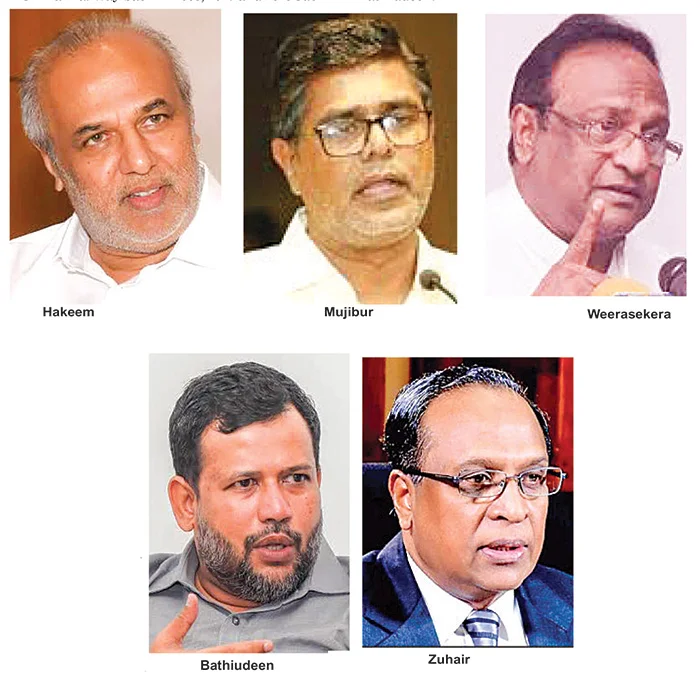
Sri Lanka Muslim Congress (SLMC) leader Rauf Hakeem raised the Rohingya issue in Parliament. Attorney-at-Law Hakeem condemned the NPP administration for its response to the latest arrival of Rohingyas.
Lawmaker Hakeem discussed the issue against the backdrop of Myanmar facing a genocide trial at the International Court of Justice, in The Hague, over its treatment of the Rohingyas.
All Ceylon Makkal Congress (ACMC) leader Rishad Bathiudeen, SJB MP Mujibur Rahuman, as well as former MP, senior state counsel and ex-Ambassador in Tehran M.M. Zuhair, PC, intervened on behalf of Rohingyas. Lawmakers took up the issue in Parliament. A section of the civil society, too, intervened.
Some found fault with SJB leader Sajith Premadasa for the stand taken up by Hakeem, Bathiudeen and Rahuman as they were elected to Parliament on the SJB ticket.
Referring to the Air Force depriving HRCSL of an opportunity to visit the Rohingyas on 26 Dec., 2024, the Commission brought the incident to President Dissanayake.
Lawmaker Hakeem, in a fiery speech delivered in Parliament, threw his weight behind the HRCSL. Hakeem declared: “The HRCSL has the right to go and inspect any place where there is a report about maltreatment and ill-treatment of individuals. This is not the first time refugees from Myanmar arrived in Sri Lanka. Way back in 2008, 2017 and 2018 such people came here”
The Air Force action is a total violation of the HRCSL Act, the one-time Justice Minister alleged, warning the Air Force could be held in contempt.
The Kandy district lawmaker also referred to the strong statement issued by PC Zuhair in this regard. Hakeem slammed Public Security Minister Wijepala for the government’s stand on the developing issue. He questioned the rationale in the NPP government consulting the Myanmar government responsible for the massive exodus of people.
Alleging that Myanmar relentlessly persecuted the Rohingyas, the SLMC leader declared that hundreds of thousands of people had left the country. Hakeem estimated the number of Rohingya refugees in Bangladesh and Malaysia almost at a million and nearly 500,000, respectively. Indonesia, the UAE and Saudi Arabia, as well as Western countries, had given them refuge, the ex-Minister said. Hakeem censured Minister Wijepala for calling the Rohingya refugees human traffickers. “How dare you say this? How dare you say this? Do you forget your own members, way back in the ’70s ’80s, when you were persecuted and you took refuge in Italy, in the UK, France, all over, and in Lebanon? How many JVP activists were there as refugees?’
Hakeem was referring to the 1971 and 1987-1990 JVP-led terror campaigns that were ruthlessly suppressed by the SLFP and UNP administrations, respectively.
The SLMCer also found fault with the Public Security Minister and his Deputy Attorney-at-Law Sunil Watagala for simply acting on the advice of officials without realizing the responsibility on their part to properly function as MPs.
Hakeem demanded that the government act in accordance with international law and UNHCR must be asked to provide the necessary security. “The government is bound under humanitarian law and under UN declaration of human rights, where specific sections have been highlighted.”
The SLMC leader asked the government not to forcefully repatriate the Rohingyas. The right of Hakeem, Bathiudeen, Rahuman and Zuhair to represent the interests of the Rohingyas cannot be disputed.
Eminent lawyer Zuhair pointed out that the Universal Declaration of Human Rights (UDHR) of 1948, in Article 14 states, “Everyone has the right to seek and to enjoy in other countries asylum from persecution”. Sri Lanka is a party to this United Nations sponsored international convention. Persecution in Myanmar is well known. Violent persecution of Rohingyas is well documented and established beyond debate.
The ex-Ambassador said that the HRCSL should be allowed to operate in terms of article 14 of the UDHR and related provisions of the applicable treaties. Amidst the continuing controversy over the Rohingya refugees, The Island carried hard-hitting statements issued by Zuhair, Rahuman and Bathiudeen.
SJB’s stance questioned
Political analyst Shenali Waduge blamed the SJB’s stand on the Rohingya issue. Referring to a Rohingya refugee woman delivering a baby boy at Mullaitivu hospital on 21 January, 2025, Ms. Waduge sarcastically said that the SJB could adopt the child.
The prolific writer questioned the SJB pursuing a politically motivated strategy meant to encourage more boat loads of Rohingyas. She warned of dire consequences unless political parties represented in Parliament took a national stand instead of seeking political advantage. The crux of the matter is the possibility of external elements having influence over a political party represented in Parliament or individual lawmakers.
The bottom line is Sri Lanka lacked the wherewithal to engage in such a risky project. In other words, Sri Lanka shouldn’t get entangled in the Rohingya matter. Let the government address this issue in consultation with the Myanmar government and UNHCR.
The Rohingya issue took a different turn when the North-East Coordination Committee spearheaded a protest in Mullaitivu demanding that the refugees shouldn’t be deported. Jesumaney Yartan Figurado, the joint co-ordinator of the grouping, was among the participants. The CID’s Human Trafficking and Maritime Crime Division recorded a statement from Figurado regarding his involvement in the protest.
It would be pertinent to mention that the North-East Coordination Committee campaigns for permanent devolution of power to the North and East. The Committee has repeatedly urged Tamil political parties not to pursue strategies that may undermine their efforts to secure international recognition.
Obviously various interested parties cooperate on movement of refugees across national boundaries. The recent actions taken by US President Donald Trump underscores the importance the new Republican administration attaches to protecting US borders. Over the past several decades, for want of cohesive international cooperation against organized but illegal and lucrative movement of various people gathered momentum with America, Canada and Europe being flooded with uninvited guests.
Australia is one of the countries that has adopted a tough military-led initiative called ‘Operation Sovereign Borders’ launched in 2013 to curb illegals reaching land. In spite of the change of governments, both here and Australia, successive administrations remained fully committed to the high profile operation that facilitated the forceful repatriation of Sri Lankan illegals.
Sri Lanka needs a national policy to address the contentious issue of illegals. Australia has underscored that their policy in this regard is beyond party politics.
Over the past several decades EU countries, the UK, Canada, Scandinavian countries and the US, have accommodated thousands of ex-Sri Lankan terrorists, including those who had received weapons training in India, and in Sri Lanka also by Indian instructors. Foreign governments granted them citizenship on the pretext of them being political refugees.
The possibility of wanted men being among those Rohingyas who had fled to different countries cannot be ruled out.
Let us remind our readers of the case of Antonythasan Jesuthasan, the male star of renowned French filmmaker Jacques Audiard’s Deepan that won the Palme d’Or at the 2015 Cannes Film Festival. Jesuthasan, an ex-Sri Lankan terrorist, and most probably still categorized as missing/disappeared from here, is on record as having revealed how he inflicted injury on himself to secure political asylum.
In an interview with Tom Seymour (TS) posted in The Guardian nearly a decade ago, in the wake of Palme d’Or, Jesuthasan, while revealing what TS called a dense lattice of scars, said: “I did those to myself.” Having mimicked running a blade across his skin, Jesuthasan told TS. “I was 22, and I had spent years trying to come to the west. I wanted to get a fake French passport, but I had to be accepted as a refugee. I went to the UNHCR [the UN High Commissioner for Refugees], but they wouldn’t believe my story. So I cut myself, and held up my arm, and said to them: ‘Look at my blood. This is my word.”
Jesuthasan’s story is not different from millions of similar tales. They are all beneficiaries of governments which knowingly accepted fake documents and clandestine operations of illegal traffickers. That is the truth some do not want to accept.
SW’s take on Rohingya
Former Public Security Minister and retired Rear Admiral Sarath Weerasekera emphasized the responsibility on the part of the government to counter propaganda meant to compel the country to accept groups of Rohingya. Some people with vested interests questioned the government’s authority to hold a group of Rohingyas in an Air Force camp, the former Navy Chief of Staff pointed out.
Acknowledging that Rohingyas had been brutally treated by the Myanmar military over the years, the former lawmaker emphasized that the violence therein should be examined against the backdrop of attacks on 30 Myanmar military camps in August 2017 carried out by ARSA (Arakan Rohingya Salvation Army).
Quoting Amnesty International, Weerasekera said that armed Rohingyas carried out attacks on Hindus in August 2017, killing 99 persons over the latter’s refusal to embrace Islam.
The former Minister pointed out that Premier Narendra Modi ordered the deportation of Rohingyas who entered India following the 2021 military coup. Referring to different Asian governments’ response to the Myanmar crisis, Weerasekera urged the government to be extra cautious in addressing this issue.
It would be a great mistake on Sri Lanka’s part if the government failed to reach a consensus on this vexed issue as quickly as possible, the ex-Minister said.
Political parties represented in Parliament hadn’t been able to reach an agreement on major national issues. There cannot be a better example than their failure to agree on the need to defeat terrorism that caused immense death and destruction for three decades.
The executive, legislature and judiciary should work collectively to address major issues that may spiral out of control unless dealt swiftly and decisively. Regardless of party politics and whatever differences among political parties represented in Parliament, MPs couldn’t act regardless of collective responsibility towards the wellbeing of the country.


The ruling NPP is in a deepening dilemma over a hotly disputed move to extend the retirement age of superior courts judges. The party is also under heavy fire for delaying fresh appointments to the superior courts consisting of the Court of Appeal and Supreme Court.
A section of the Opposition wants Speaker Dr. Jagath Wickremaratne to take up the inordinate delay in filling vacancies in the superior courts. The Bar Association of Sri Lanka, Colombo High Court lawyers, Lawyers Collective, as well as the Commonwealth Lawyers’ Union have criticised the government’s move.
By Shamindra Ferdinando
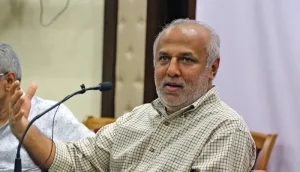
Sri Lanka Muslim Congress (SLMC) leader Rauff Hakeem, MP, recently expressed concern over the alleged way Balachandran Prabhakaran, 12-year-old son of LTTE leader Velupillai Prabhakaran was killed, in cold blood, on 19 May, 2009.
A section of the Tamil media highlighted Kandy District lawmaker Hakeem’s comments regarding the alleged way Balachandran, the youngest of the three children of Tiger Supremo, met his end. Prabhakaran himself was also killed on the same day.
What prompted MP Hakeem to raise a contentious but now largely forgotten issue! Both the Sinhala and English print and electronic media failed to report the SLMC leader’s comments. Some questioned the purpose in lawmaker Hakeem raising Balachandran’s death. Some even suggested a Tamil Diaspora hand in Hakeem’s unexpected interest in Balachandran’s death.
The Island obtained the video, released by the Parliament, of the SLMC leader’s 10-minute speech, delivered on 10 June. Reference to Balachandran’s killing had been made towards the tail end of his fiery speech that primarily dealt with President Anura Kumara Dissanayake’s continuing failure to fill existing vacancies in the Court of Appeal and the Supreme Court.
The deliberate and utterly contemptible holding up of judicial promotions, for whatever reasons, cannot be discussed without examining a disputed bid to introduce an amendment to the Constitution to increase the retirement age of the Judges of the Court of Appeal and the Supreme Court.
President Anura Kumara Dissanayake, the leader of two registered political parties, namely the Janatha Vimukthi Peramuna (JVP) and the National People’s Power (NPP), seems to be on a collision course with the Opposition. With a commanding 159 MPs in Parliament, meaning a 2/3 majority, Dissanayake can easily introduce the required amendment, regardless of protests. But, the electorate won’t like that dictatorial attitude. Those who exercised their franchise for Dissanayake and the NPP at the September 2024 and November 2024 national polls, respectively, wouldn’t expect them to adopt, what can be safely described as, a dogmatic approach.
Attorney-at-law and one-time Justice Minister Rauff Hakeem castigated the President and the ruling party, ahead of the joint Opposition action, to pressure the President to fill the vacancies. Their appeal to Speaker Dr. Jagath Wickremaratne in this regard can be also interpreted as a collective opposition to the proposed amendment to increase the retirement age of judges.
The SLMC group in Parliament consists of five MPs. Of them, three had been elected under the SLMC symbol (two elected and one on the National List) and two through the Samagi Jana Balawegaya (SJB), one of them on the latter’s National List.
Lawmaker Hakeem, who had served the Parliament for over 30 years, at the onset of his speech, questioned the sudden decision to bring in regulation to compel exporters to convert their export proceeds into USD. The SLMCer declared that such panic action was taken by the government in view of the rapid deterioration of the Rupee against the USD.
Commenting on the extension of the Emergency continuously, MP Hakeem alleged that it was done for the NPP’s own parochial purposes and the Opposition expected the government to discontinue the practice.
Then he dealt with the alleged move to extend the retirement age of top judges. Referring to Chief Government Whip Dr. Nalinda Jayatissa’s shameless declaration that the issue hadn’t been even discussed among the government. The ex-justice Minister, however, disputed Jayatissa’s claim made at the post-Cabinet media briefing, while highlighting the statements issued by the Bar Association, Colombo High Court Lawyers’ Association. In addition, the Lawyers’ Collective and the Commonwealth Lawyers’ Association strongly opposed the alleged move. In spite of the Cabinet spokesman’s denial, Justice Minister and Attorney-at-Law Harshana Nanayakkara, in his comments on the issue, indicated that the matter was under discussion. In fact, Nanayakkara mentioned a comparatively higher retirement age of top judges in other countries to support the NPP’s controversial and unnecessary move.
Obviously, the NPP is not talking in one voice.
Rauff takes a strong stand
Emphasising that he addressed the issue at hand as a member of the BASL, Hakeem pointed out that there were four vacancies, each in the Court of Appeal and the Supreme Court, for the past six months. The SLMC leader said: “The President has failed in his constitutional duty to nominate judges for promotion. From the High Court to the Court of Appeal and from the Court of Appeal to the Supreme Court. By denying the rights of the judges, undue pressure is being brought on them. What will happen? This very President, when he was in the Opposition, when the previous Presidents failed to gazette the names decided on by the Constitutional Council, he made a big protest. Several times he spoke about this very vociferously in the House. But, since becoming the President, he has not nominated any names. Very clearly, the 21 Amendment provision was made to prevent Presidents from delaying the decisions taken by the Constitutional Council. He is doing the reverse by not nominating anyone to the top two courts. This is much worse. As a consequence, even our fundamental rights are impacted. Because we as litigants or lawyers or public, our right for the expeditious disposal of cases is being impacted by the delay in appointing judges to the Superior Courts.
Moreover, you are frustrating the judges who served years in the judiciary. What happens to the minor judiciary and others? There are heavy concerns among the judiciary about extending the retirement age. That’ll block their path. That’ll deprive many suitably qualified individuals the right to get onto the bench or the superior bench. High court judges will now await their chances of being promoted. Undue pressure will be brought upon them.”
Hakeem alleged that the Constitution was being deliberately violated by the President. Having directed serious allegations at the President, Hakeem emphasised the responsibility on the part of the Speaker to take up this matter with the President on their behalf. Hakeem questioned as to why the President unduly delayed the promotions. The President’s deliberate failure has caused unnecessary frustration among the judicial ranks in the country and deprived those who served the judiciary of their due rights.”
Hakeem explained how even senior officers of the Attorney General’s Department had been affected by the President’s inaction. Those officials have been deprived of the opportunity to move onto one of the superior courts, Hakeem alleged, accusing the President of, what he called, deliberate inaction and a constitutional violation.
Then Hakeem made a very serious allegation. The ex-Justice Minister alleged that the NPP was delaying the process until a favoured person is eligible to get onto the bench, “You are picking and choosing people by that thereby undermining the judiciary.”
MP Hakeem also dealt with the vexed issue of the Prevention of Terrorism Act (PTA) that had been opposed by many political parties, civil society as well as organisations such as Amnesty International. The Sttorney-at-Law took up the issue in the wake of the controversial arrest of Maj. Gen. (retd.) Suresh Sallay, Director of the Directorate of Military Intelligence (DMI/2012-2016) and Director, State Intelligence Service/2019-2024) in terms of the PTA.
MP Hakeem chided the NPP for proposing to bring in a new anti-terrorism law, under a different title, to replace the existing PTA. Declaring that the new Act would be definitely far worse than the current law, the lawyer faulted the police and the Attorney General’s Department for abusing the PTA. The former Minister said so while alleging the continuous deterioration of the standards of the police and the Attorney General’s department, due to their dependence on the draconian PTA.
Killing of Balachandran
Referring to Tamil media reports regarding the new UK Channel 4 video that dealt with the killing of Prabhakaran’s 12-year-old son, lawmaker Hakeem discussed how the military dealt with the families of the LTTE leader and that of the JVP leader Rohana Wijeweera, killed on the night of 13 November, 1989.
Pointing out that Wijeweera who had been apprehended, along with his family, by the military, was killed, Hakeem stressed that the family members weren’t harmed. They lived under the protection of successive governments but in Prabhakaran’s case the situation was entirely differently.
Hakeem scorned the JVP/NPP government for conveniently forgetting its leaders, though an annual ceremony was held in Colombo in memory of those who perished during the insurgency. Hakeem said that even the daughter of Zahran Hashim, who led the 2019 Easter Sunday attacks, was spared. But, if Prabharatan’s daughter, Duwaraka, had been killed, as alleged, that should be investigated, Hakeem said. Hakeem ended his speech addressing the Parliament in Tamil.
Prabhakaran’s wife Mathivathani, too, had been killed during the final phase of the ground offensive. Prabhakaran’s eldest son, Charles Anthony, was killed in the Karayamullavaikkal area of the Mullaitivu district, the day before Prabhakaran, wife Mathivathani, daughter Duwaraka and younger son Balachandran were killed.
Acknowledging the SLMC leader’s right to rake up the controversy over the alleged manner the deaths of the LTTE leader and his family, while in government custody, took place. It would be pertinent to mention that Hakeem, in his capacity as the Justice Minister, from November, 2010, to December, 2014, could have pushed the Mahinda Rajapaksa government to inquire into the incident.
In fact, the writer once sought a meeting with the then Minister Hakeem to discuss accountability issues and the failure on the part of the government to address them. Although the Minister gave a patience hearing and acknowledged the urgent need to take remedial measures, the war-winning Rajapaksa government, instead of taking tangible measures, played politics. By late 2014, the SLMC switched its allegiance to the UNP-led coalition, formed with the US blessings to back the candidature of another political turncoat, Maithripala Sirisena, at the 2015 presidential election.
Hakeem received the Urban Development, Water Supply and Drainage portfolio in the succeeding Yahapalana government. The Tamil National Alliance (TNA), that had been an integral part of that alliance, served the Yahapalana interests well, though it refrained from accepting any Cabinet portfolio. The JVP, too, refrained from joining the Cabinet but their role in the Yahapalana operation is in the public domain.
The Yahapalana government betrayed the armed forces at the Geneva-based United Nations Human Rights Council (UNHRC), in October, 2015, but the extent of their treachery was highlighted two years later when that administration unceremoniously dismissed Lord Naseby’s revelations pertaining to the final phase of the war.
What made the SLMC leader Hakeem to compare three incidents – the killing of Wijeweera, and government protection for his family, in November, 1989; killing of Prabhakaran and his family on the banks of the Nanthikadal lagoon, in May, 2009; and the rescue of Zahran Hashim’s daughter, following the Sainthamaruthu blasts in April, 2019. Whatever the SLMC leader’s motive in highlighting the LTTE’s case now, the need for collective response on the part of the Parliament to address the concerns of the loved ones of those who engaged in terrorism cannot be overemphasised.
The circumstances of Prabhakaran, his wife and their daughter and youngest son remained mired in controversy. Like over 11,000 LTTE cadres, both men and women, including suicide cadres who surrendered to the advancing troops on multiple fronts, Prabhakaran and his family could have given themselves up to the Army on the Vanni front. They ignored that opportunity believing in a US operation to evacuate them.
Critically important combined stand
As mentioned by the SLMC leader during his 10 June speech in Parliament, a group of Opposition MPs handed over a letter expressing their concerns over the inordinate delay in filling the vacancies in the superior courts. Pointing out that the President, in his capacity as the Chairman of the Constitutional Council, had failed to fill those vacancies, the Opposition MPs stressed the responsibility on the part of the President to act in accordance with the provisions of the Constitution. They also reminded the Speaker that it would be his responsibility to protect the independence of the judiciary, which is an important part of the sovereignty of the people.
Kandy District MP Anuradha Jayaratne, represented the new Democratic Front (NDF) in the SJB-led effort, while NDF MP Ravi Karunanayake, too, joined, though he is in logger heads with the UNP over taking the National List slot won by the NDF at the last parliamentary election. Former President and UNP leader Ranil Wickremesinghe threw his weight behind the NDF, at the November, 2024, General Electio, but could not achieve the anticipated results. The NDF managed to secure just five seats, two of them National List slots.
All Ceylon Tamil Congress leader Gajendrakumar Ponnambalam, representing the Jaffna electoral district, signed the petition, along with the Sarvajana Balaya leader Dilith Jayaweera. Unfortunately, the SLPP hadn’t been part of that grouping. Responding to The Island queries, SLPP sources assured that though they didn’t sign the petition handed over to Speaker Wickremaratne, they wholeheartedly supported the initiative.
Whatever efforts by political parties/governments in power to interfere with the judiciary should be opposed at every level. The Rajapaksas went to the extent of impeaching Chief Justice Dr. Shirani Bandaranayake and removing her under the most despicable circumstances. Belligerent Rajapaksas reacted, as expected, following the Supreme Court rulings, including one against the then SLFP/UPFA strongman Basil Rajapaksa.
The ruling UPFA directed a series of unsubstantiated allegations against her, including financial impropriety and interfering in legal cases. SJB MP Dayasiri Jayasekera recently made reference to the impeachment of Dr. Bandaranayake when he censured the NPP move to extend the retirement age of judges of the superior courts. MP Jayasekera questioned whether the NPP wanted to retain Chief Justice Preethi Padman Surasena beyond the stipulated retirement age.
Although there had been a spate of interventions, the 2013 impeachment of CJ 43 was undoubtedly the worst case ever and the appointment of former Attorney General Mohan Peiris as her successor made matters worse.
The UPFA hit back hard at Dr. Bandaranayake following unprecedented controversy over The Town and Country Planning (Amendment) Bill and Divi Neguma, gazetted in 2011 and 2012, respectively. The UPFA abandoned the first Bill and then amended the second to avoid a referendum and the required 2/3 approval. By then, the cocky UPFA had decided to impeach Dr. Bandaranayake who stood up to outright political intimidation.
Ranil Wickremesinghe, during his tenure as the President (July, 2022, to September, 2024) reacted angrily to the Supreme Court ruling that he, in his capacity as the Finance Minister and the Election Commission, violated voters’ rights by arbitrarily delaying the Local Government polls in 2023. Wickremesinghe had been also angered by his failure to secure Supreme Court endorsement for his bid to appoint Dehabandu Tennakoon as the IGP in the run-up to the 2024 Presidential Election.
There had been so many other instances when the political party/coalition, in power, felt that the judiciary undermined its agenda. There cannot be better examples of the daunting challenge faced by the UPFA due to the Supreme Court stand during Dr. Bandaranayake’s tenure as the Chief Justice.
But post-Aragalaya period, no one expected President Dissanayake to pursue an agenda that compelled the BASL to issue hard hitting statements. Since May Day 2026, there had been two such statements from the BASL that should have triggered alarm bells. The NPP is obviously on the wrong path, believing that it can proceed with a 2/3 super majority unhindered in Parliament.
The first BASL statement dealt with President Dissanayake’s controversial May Day prediction of a court ruling in a high profile case. The second one responded to a move to extend superior court judges’ retirement age.
The government should rethink its strategy. With the national economy experiencing severe difficulties and the government under pressure to abolish fuel and electricity subsidies at the behest of the IMF, the NPP should concentrate on saving the economy instead of creating fresh issues that it cannot just brush aside just because of its steamroller majority in Parliament.

Gladdening was the sight at morn,
For the folk of the invisible village,
Of mirthful children trekking to school,
And refuge did they take in the thought,
That at least their young would be spared,
The crushing ordeals of tenant farming,
Since they would come by some erudition,
But our elders are now up against the truth,
That all is not well at the humble school,
Since even the morsel of education,
Painstakingly dished out there,
Comes with scary price tags attached;
Making dropping out the best thing to do.
By Lynn Ockersz
Ulugetenne
The Sri Lanka Navy, on 04 June, commissioned SLNS Samudravijaya, formerly United States Coast Guard Cutter Decisive. It is the fourth mothballed US Coast Guard cutter transferred to the SLN through the US Excess Defence Articles Programme. President Anura Kumara Dissanayake attended the ceremony at the Colombo Port. The US Embassy in Colombo, in a statement issued on the same day, quoted Defence Attaché Lieutenant Colonel Matthew House as having said: “Few partners have demonstrated the commitment to maintaining and operating these vessels as successfully as the Sri Lanka Navy. The outstanding condition and operational performance of SLNS Samudura, SLNS Gajabahu, and SLNS Vijayabahu are a testament to the professionalism and technical expertise of Sri Lankan sailors. Their stewardship of these vessels helped build the confidence that made this fourth transfer possible.” The first of the four vessels SLNS Samudura was commissioned on 19 February, 2005, during Chandrika Bandaranaike Kumaratunga’s tenure as the President. Milinda Moragoda, Economic Reforms and Science and Technology Minister of the previous UNP-led UNF government, played a significant role in acquiring that vessel. SLNS Samudura boosted SLN and participated in numerous operations, including the high profile hunt for LTTE floating warehouses, during the Eelam War IV. But, the US refrained from transferring any more big ships during the war though on the then Navy Commander Vice Admiral Wsantha Karannagoda’s request to provide intelligence and Washington obliging, made the successful hunt for LTTE floating arsenals in the last stages of the war possible. The transfer of the second vessel took place 19 years after the end of the war. Ex USCG Sherman was commissioned 06 June, 2019, as SLNS Gajabahu (P626). The third vessel was transferred to the Sri Lanka Navy on October 26, 2021, as the country was heading towards an unprecedented economic crisis. That vessel was commissioned as SLNS Vijayabahu at the Colombo Port with the participation of President Ranil Wickramasinghe and US Ambassador to Sri Lanka Julie Chung on November 20, 2022. Ironically SLNS Gajabahu, one of the ex-US vessels prominently figured in the contingency plan to save President Gotabaya Rajapaksa, but whose downfall was engineered by the US.
By Shamindra Ferdinando
The moment President Gotabaya Rajapaksa decided to take up residence at the President’s House (Janadhipathi Mandiraya), Fort, in the first week of April, 2022, the Navy had no option but to prepare a thorough contingency plan, in case the regime change project posed a realistic threat to the life of the President.
The President, in consultation with senior military officers, made his move within 48 hours after violence erupted outside his private residence at Pangiriwatte, Mirihana, on the night of 31 March, 2022. That decision seemed realistic and sensible at that time.
But, in the wake of the disastrous overall armed forces response to the coordinated violence unleashed by the regime change project on 09 May, 2022, in the aftermath of the Temple Trees ordered attack on Galle Face protesters, the top brass must have recognised the urgent need for total overhauling of security strategy. But, unfortunately, that hadn’t been the case. With violent crowds overwhelming the armed forces, deployed to block them, rapidly approaching the President’s House, those who had been at the makeshift Operations Room there were stunned.
In hindsight, the President’s decision to remain at the President’s House, regardless of the near failure on the part of the armed forces to repulse the raid on Temple Trees, on 09 May, seemed unwise. The rescue operation could have gone wrong and the war-winning President Mahinda Rajapaksa could have ended up in the hands of an angry mob.
Perhaps, the conspirators envisaged the President’s move, from Pangiriwatte to the President’s House, situated walking distance away from the Galle Face protest site, where they could draw additional strength.
The failure on the part of the government to take tangible measures, in the wake of the President’s House becoming the sole target on that fateful day, is a contentious issue that needs to be properly investigated. Don’t forget that the court case filed over the 09 May attacks on the residences and properties belonging to SLPP politicians, and some supporters ,was later withdrawn. The Wickremesinghe-Rajapaksa government never investigated the 09 May incidents.
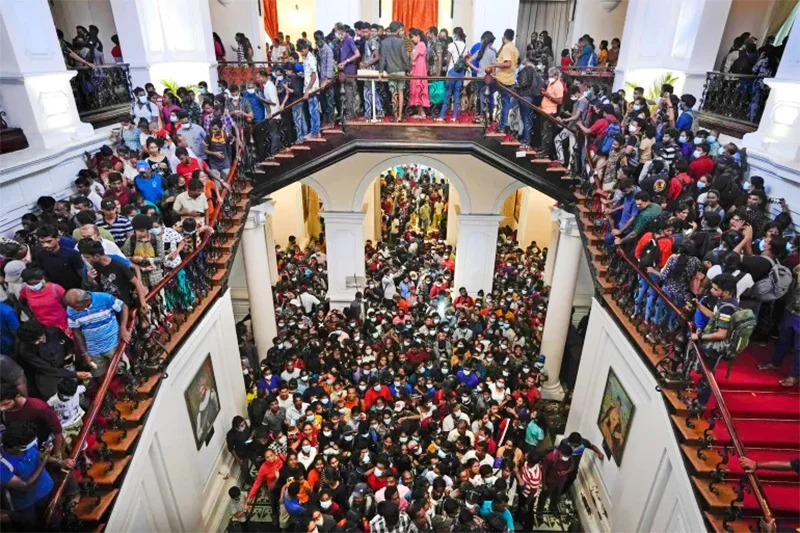
Exactly two months after the mobs almost succeeded in breaking through defences at Temple Trees, on the night of 09 May/10, where Prime Minister Mahinda Rajapaksa was residing, they mounted the assault on the President’s House.
In the wake of the 09 May mayhem, President Gotabaya Rajapaksa named Lt. Gen. Vikum Liyanage as the Commander of the Army. He succeeded General Shavendra Silva who served as the CDS but was out of the country when all-out mayhem was unleashed by the Aragalaya mobs on 09 July, 2022, to oust the sitting government.
In spite of a direct and growing threat to the President’s House, on 09 July, 2022, the President felt confident in meeting the challenge. The President issued a directive to the Secretary, Ministry of Defence, General (retd.) Kamal Gunaratne, to shift the Operations Room from the Defence Force Headquarters, at Akuregoda, to the President’s House. Having shifted the Operations Room on 08 July, 2022, to the President’s House, as directed by the President, the top brass prepared to face the challenge.
Maj. General K.B. Egodawela, who served as an Additional Secretary (Administration) to the President, from the day the President moved to the President’s House, till he vacated on 09 July, 2022, in his memoirs ‘Aragalaya: Adarayen Prachandathwayata’ (From Love to Violence) revealed that though the top brass opposed the shifting of the Operations Room they carried out the directive. While the President felt that the top brass could collectively work at the President’s House to bring the situation under control, Gen Gunaratne proposed that the President should move to Akuregoda Defence Forces Headquarters, according to Egodawela. In fact, Gunaratne, who had been with Gotabaya Rajapaksa from the very beginning of the sinister campaign, strongly opposed the President’s decision to remain there.
Obviously, the President’s House pathetically failed to ascertain the scale of the protest and the rapidity with which protesters overwhelmed troops deployed outside the President’s House stunned the top brass. Had they swiftly reached consensus on Gen. Gunaratne’s suggestion, perhaps the 09 July regime change operation could have been thwarted. The armed forces could have resorted to tougher measures to prevent a march on Akuregoda Defence Forces Headquarters had the President agreed to move there.
Within two hours after the protest, targeting the President’s House began, video footage provided by drones indicated that troops couldn’t hold the rampaging mobs any longer. According to Egodawela, the top brass had been prepared to remove the President, even without his consent, by landing a helicopter in the Colombo harbor or by ship. Finally, they resorted to the second option. As the President and First Lady Ayoma got into a vehicle and took the rear exit into the adjoining former Navy Headquarters, mobs entered the President’s House. Another vehicle carrying several other persons followed.
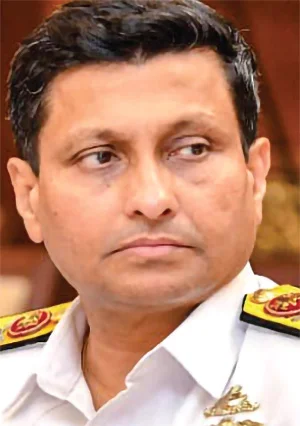
The then Navy Commander Vice Admiral Nishantha Ulugetenne who had been with the President at the President’s House got into the vehicle carrying the President. Had they stayed at the President’s House for 10 more minutes, the consequences could have been devastating. https://island.lk/gotabayas-escape-from-aragalaya-mob-in-rti-spotlight/
Egodawela, who had been with the President from the very beginning of the presidential term, alleged that the raiders planned to kill the President and several others and display their bodies. The author quoted an unidentified intelligence officer as having told him that the raiders wanted to display the bodies the way LTTE leader Velupillai Prabhakaran’s body was shown.
Perhaps shifting the Operations Room from Akuregoda Defence Force Headquarters to the President’s House had been a risky move that, in a way, facilitated the regime change operation. The rationale in bringing those who had been tasked with countering the impending threat to one place (President’s House) to be with the target (Gotabaya Rajapaksa) seems unbelievably a dicey move. The President had been influenced by what he described as inordinate and unforgivable delay on the part of the Akuregoda Operations Room to carry out timely evacuation of Prime Minister Mahinda Rajapaksa on the night of 09 May from Temple Trees. Most probably, the President wanted to oversee the 09 July counter operation personally. But, in hindsight, the decision to shift the Operations Room from Akuregoda to the President’s House obviously hadn’t been a clever move.
SLN preparations
When mobs threatened to overwhelm the President’s security at Pangiriwattta, on 31 March, additional police and STF contingents were brought in. They were followed by the Navy and Air Force. The Army arrived at the scene, subsequently.
As pointed out by the President himself, the situation at Temple Trees, on 09 May, had been far worse and the combined police and armed forces response revealed that they hadn’t taken precautionary/counter measures, even after the Pangiriwatta fiasco.
At the time of the incidents, the overall Temple Trees security deployment included about 60 elite Special Boat Squadron (SBS) personnel deployed within the premises and were supplemented by seven SLN platoons. The Army also moved in to strengthen Temple Trees defences but the mobs pressed on till troops fired blank ammunition.
The top brass, directing counter measures from Akuregoda Defence Force Headquarters, had to act swiftly and decisively to evacuate those at the Temple Trees or face the consequences. As there hadn’t been any other alternative place of living proposed, Prime Minister Mahinda Rajapaksa, wife Shiranthi and their eldest son Namal were escorted to nearby former Air Force Headquarters and from there flown to the Trincomalee Navy base. VA Ulugetenne, over the phone, issued instructions to the relevant officer in Trincomalee to make arrangements as two helicopters carrying the group took off from the helipad on the top of the former Air Force Headquarters. The helicopters departed around 04 in the morning.
They had stayed at Trincomalee Navy House for about a week and, as requested by the Navy, paid for their stay because by then Mahinda Rajapaksa had resigned. Perhaps, they could have taken refuge at the Panagoda Army cantonment or at Saliyapura, home to the Gajaba Regiment, but, at the end, sought the protection at the Trincomalee Navy base.
Ironically, President Gotabaya Rajapaksa, too, had to take refuge at the Trincomalee Navy base, exactly two months later. Ever since the President moved into the President’s House, Fort, the Navy had been on their toes to meet any eventuality. The daunting task of arranging evacuation by sea fell on the shoulders of VA Ulugetenne, who, meticulously, planned the operation with his staff.
Having informed the President of the contingency plans, VA Ulugetenne stationed two Advanced Offshore Patrol Vessels (AOPVs), namely SLNS Sindurala and SLNS Gajabahu and four Fast Attack Craft (FACs), at the Colombo Port. It would be pertinent to mention that SLNS Sindurala, built at the Goa shipyard, in terms of an agreement signed at the tail end of the Mahinda Rajapaksa government, was adjudged the best vessel in the SLN fleet in 2022.
Additional SBS personnel and snipers, too, had been brought in to Colombo though none of them knew exactly what their task would be. The OPV and FAC crews most probably felt that they were awaiting orders for a major anti-drug operation in the high seas.
As the decision was made to evacuate the President and the First Lady, the Chief alerted the vessels and quickly deployed tugboats to pull SLNS Sindurala and, shortly thereafter, SLNS Gajabahu, formerly of the US Coast Guard, carrying the President and the First Lady. By the time the two AOPVs moved in different directions, on the instructions of VA Ulugetenne, the hand phones of SLNS Gajabahu crew were collected to prevent them from revealing what was happening. Along with the AOPVs, two pairs of FACs had moved out to sea. (https://island.lk/ranil-reveals-bid-to-get-rid-of-him-while-gr-was-fleeing-to-trinco-on-board-slns-gajabahu/)
Nearly 12-hour journey to Trinco
The SLNS Gajabahu, formerly of the US Coast Guard, had a crew consisting of over 100 officers and men. Someone, most probably a port employee, posted a short clip of some unidentified persons taking large travelling bags into the ship but the President, First Lady and VA Ulugetenne going in were never captured on a camera.
As the vessel began its journey towards Trincomalee, it remained approximately 12 nautical miles from land and the President received many calls, some of which weren’t answered. VA Ulugetenne, too, received quite a number of calls. Those familiar with the developments at that time said that some felt that SLNS Gajabahu should move out of Sri Lankan waters. There had been suggestions that the destination should be the Maldives, India or Singapore. Regardless of such suggestions, SLNS Gajabahu proceeded towards Trincomalee where the Navy made necessary arrangements to host them.
Captain Marlon Perera, who still serves the Navy, had been the Commanding Officer of the vessel. Perera now holds the Commodore rank.
During the journey precautions were taken to ensure the safety and security of the President and the First Lady. Although the crew hadn’t been aware that they would be entrusted with such a sensitive task at a time the country was in crossroads against the backdrop of an economic collapse and sovereign default, there were fears of the crew being affected by propaganda in support of regime change operation.
The attempt made by sailor Wijemuni Vijitha Rohana de Silva to cause harm to Indian Prime Minister Rajiv Gandhi, way back in July, 1987, underscored the necessity to take precautions during the Colombo-Trincomalee journey as the possibility of anti-Gotabaya campaign having an impact on at least some members of the ship crew couldn’t be ruled out.
On July 30, 1987, during a guard of honor in Colombo, the 21-year-old naval rating struck Gandhi on the shoulder and back with the butt of his rifle. Gandhi narrowly avoided the full impact of the blow by evasive ducking.
On the invitation of VA Ulugetenne, Gotabaya Rajapaksa attended all the formalities in respect of a visit undertaken by the President to the Trincomalee Navy base. The President participated in those formalities knowing that he couldn’t attend the commissioning parade that was scheduled to be held on 15 July, 2022. The Navy was not in a position to put off the commissioning parade hence the decision to invite Defence Secretary Gunaratne as the Chief Guest.
Ulugetenne retired from active naval service on 18 December, 2022, following a distinguished career, spanning over 37 years. He received the appointment as the 24th Commander of the Navy in July, 2020, just a couple of months after Gotabaya Rajapaksa’s election as the President.
Wickremesinghe, in his capacity as Gotabaya Rajapaksa’s successor, appointed Ulugetenne as Sri Lanka’s Ambassador to Cuba. The appointment was made in late 2023 and the retired Navy Chief presented his credentials to Cuban President Miguel Díaz-Canel on 13 February, 2024 (https://island.lk/from-fonseka-convictions-to-arrest-of-ulugetenne/)
However, within weeks after the last presidential election held in late November, 2024, the NPP government recalled over a dozen top envoys appointed by the previous administration. Admiral Ulugetenne was among them. The government deprived a decorated officer, who had served the country for nearly four decades, from completing his term in Havana. Within months after his return, he became the target of a murder investigation.
Then out of the blue the retired Navy Chief became the focus of a murder investigation, that, too, post-war. The Criminal Investigation Department (CID) arrested him on 28 July, 2025, over the disappearance of a person reported in July, 2020.
Kurunegala High Court Judge Tikiri Jayatilleke, on 14 October, 2025, granted him bail. Jayatilleke declared that the CID acted in an illegal manner in respect of the former Navy Commander. His counsel Kalinga Indatissa, PC, alleged in court that his client had been apprehended only on the basis of an ex-LTTE cadre’s allegation in the absence of any evidence
The next hearing is scheduled for 08 July, 2026. Ulugetenne was held at the Kegalle Prison for four days and then transferred to the Dumbara (Pallekale) Prison. Altogether, he was in prison for 80 days, like a common criminal, despite him being a former Navy Commander with an unblemished career record.
Wartime Chief of Naval Intelligence, Rear Admiral (retd) Sarath Mohotti, who had been also arrested in connection with the same investigation, was also granted bail, a few weeks later.

What the Trump-Iran agreement says about Lebanon, Hormuz and Uranium

Scotland face West Indies with a chance to reopen World Cup wounds

Moscow hit by largest Ukrainian attack since start of Russia’s full-scale war

Sooryavanshi to have parents with him on tour of Ireland and England

Luis Diaz, Colombia defeat World Cup 2026 debutants Uzbekistan

Oil prices fall, stocks rally as US, Iran sign framework to end war

‘Dates have the highest sugar content to fight Coronavirus’

Sunday Island 27 December – Headlines

#SundayIsland 17th December – Headlines

Sunday Island – 28th March

Sunday Island Headlines – 21 March

Sunday Island – 21st February – Headlines
-
 News7 days ago
CIABOC summons Yoshitha over his participation in British Navy training programme
-

 News4 days ago
Release of 2025 O/L results likely to be delayed
-

 News7 days ago
Justice Minister responds to social media claims he represented Easter Sunday ringleader
-

 Sports4 days ago
Tharanga set for high-profile javelin clash in Ostrava
-

 Features5 days ago
Politics of protected species
-

 News3 days ago
Beijing Capital Airlines to resume flights to Colombo signalling boost to tourism
-

 News4 days ago
Theft of USD 2.5 mn from Treasury: CoPF accused of complicity in NPP cover-up
-

 News6 days ago
Commonwealth lawyers urge Lanka to uphold rule of law