
Latest News
New leader’s promises will be tricky to keep in crisis-hit Sri Lanka

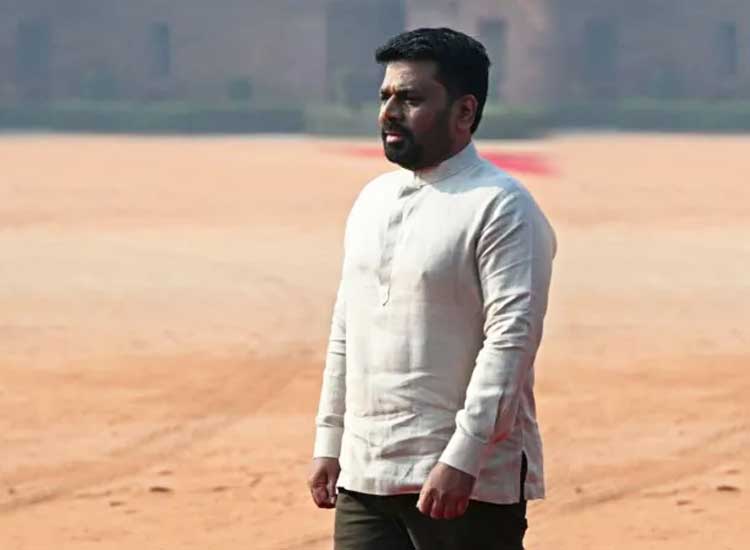
Stunning election wins by a new left-leaning president and his party have changed Sri Lanka’s political landscape – but the cash-strapped island’s new rulers are quickly realising that campaign promises are easier to make than to keep.
Anura Kumara Dissanayake’s remarkable victory in the presidential election in September was swiftly followed by a landslide for his National People’s Power (NPP) alliance in parliamentary elections.
As a new year starts, he and his supporters want this to be a turning point for the country, which is trying to recover from devastating economic crisis and years of misrule.
However, they have limited room for manoeuvre to make good on pledges to voters, whose expectations from the new government are high.
Since the financial meltdown of 2022, economic recovery has been fragile and Sri Lanka is far from out of the woods.
The NPP won 159 seats in the 225-member assembly in November – an unprecedented two-thirds majority – giving Dissanayake a sweeping mandate to push through major economic and constitutional reforms.
However, even as the results were coming in, the new president had to gear up for a meeting with a visiting delegation from the International Monetary Fund (IMF), with which the outgoing government had negotiated a $2.9bn (£2.31bn) bailout package. The IMF deal became controversial as it led to severe austerity measures, tax rises and cuts in energy subsidies – hitting common people hard.
During the campaign Dissanayake and his alliance promised that they would re-negotiate parts of the IMF agreement.
But in his address to the new parliament, he performed a U-turn. “The economy is in such a state that it cannot take the slightest shock… There’s no room to make mistakes,” Dissanayake said.
“This is not the time to discuss if the terms [of the IMF loan] are good or bad, if the agreement is favourable to us or not… The process had taken about two years, and we cannot start all over again.”
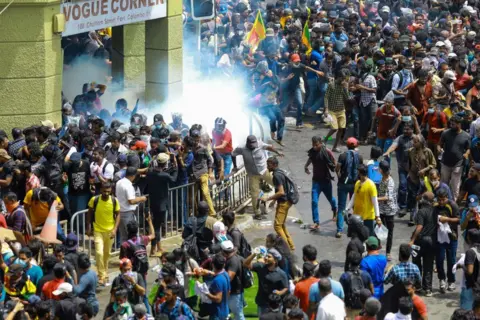
The voters’ overwhelming verdict for the NPP is seen as the culmination of a people’s uprising triggered by the economic crisis. The uprising toppled president Gotabaya Rajapaksa in the summer of 2022, when Sri Lanka ran out of foreign currency and struggled to import food and fuel.
The country had earlier declared bankruptcy after defaulting on its external debt of about $46bn. India, China and Japan are among those who have loaned billions of dollars.
The recent election results also reflected people’s anger towards established political parties – of former presidents Mahinda Rajapaksa and Ranil Wickremesinghe and others – for failing to handle the economic meltdown.
“One of the priorities for Dissanayake will be to give some economic relief to the people due to excessive taxation and the cost-of-living crisis. Debt management is another big challenge,” veteran political analyst Prof Jayadeva Uyangoda told the BBC.
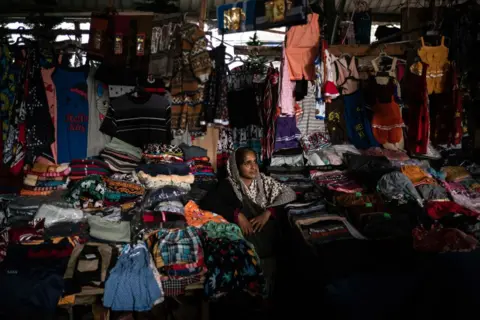
So far the massive political changes don’t seem to have had any impact on people like Niluka Dilrukshi, a mother-of-four who lives in a suburb of the capital Colombo. Her husband is a daily-wage labourer and the family still find it hard to get by.
The BBC spoke to her about the soaring cost of living in January 2022, months before mass protests erupted. At that time, she said her family was eating only two meals a day, instead of three, and they were giving only vegetables and rice to their children due to the high cost of fish and meat.
“We are still struggling to make ends meet and nothing has changed. The price of rice, which is the staple food, has increased further. We are not getting any relief from the government,” Mrs Dilrukshi said.
People like her want the new government to take immediate steps to bring down the cost of essentials. Sri Lanka is an import-dependent nation, and it needs foreign currency to bring in items like food and medicine.
For now, Colombo is able to hold on to its currency reserves as it has suspended its debt repayments.
The real struggle, experts point out, will start probably in the next three or four years when it starts repaying its debt.
People’s perception of President Dissanayake and his new government could change if there’s no visible change in their standard of living in the next two or three years.
“People have given him a huge mandate. The IMF should respect that by allowing him to give some relief to the people through social welfare programmes,” says Prof Uyangoda.
Dissanayake must also contend with India and China, which are jostling for influence in Sri Lanka, where both have invested heavily in recent years.
“Both India and China will try to bring Colombo under their sphere of influence. I think the new government’s foreign policy will be very pragmatic without aligning with anyone,” says Prof Uyangoda.
In a careful diplomatic manoeuvre, Dissanayake chose Delhi as his first official overseas destination in mid-December. During the visit, India promised to supply liquefied natural gas for Sri Lankan power plants and work on connecting the power grids of the two countries in the long run.
China’s increasing foothold in Sri Lanka, especially calls by Chinese “research” vessels to the island’s ports – so close to India’s southern tip – has triggered concern in Delhi.
“I have given an assurance to the prime minister of India that we will not allow our land to be used in any way in a manner that is detrimental to the interest of India,” Dissanayake said after talks with Narendra Modi. Delhi will no doubt be pleased with the assurance, but Dissanayake will find out what Beijing expects when he visits China in mid-January.
[BBC]

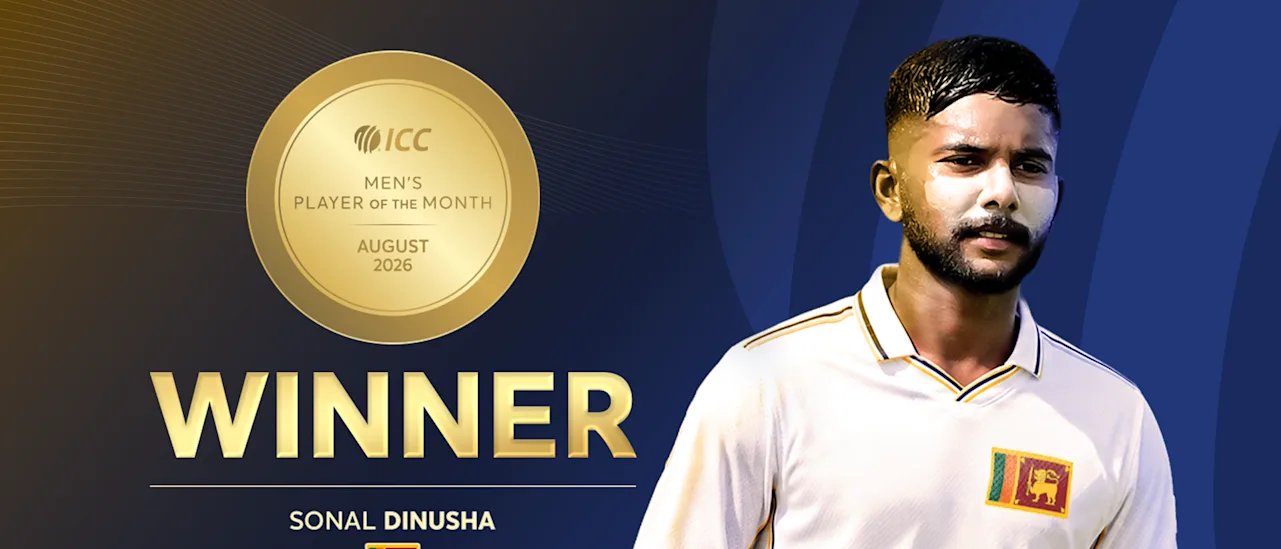
Sonal Dinusha has been named the ICC Men’s Player of the Month for August 2026.
This marks Dinusha being crowned with the accolade for the first time in his career.
Having played only three Tests for Sri Lanka coming into the ICC World Test Championship series against India, the left-handed batter was the leading run-getter in the two-match series.
Dinusha finished with 420 runs, averaging a spectacular 140, with three centuries and a half-century to his name.
“This recognition means so much to me, especially so early in my career, and I’m truly grateful to the ICC for this honour,” Dinusha said while reflecting on his latest achievement.
While Sri Lanka lost the first Test by 165 runs, Dinusha managed to score 100 in the first innings, followed by 84 runs in the second.
In the second Test, with the hosts battling to avoid a series sweep, Dinusha scored twin centuries in the two innings (103 and an unbeaten 133) to orchestrate a famous draw.
“The series against India will always hold a special place in my heart,” Dinusha added.
“Scoring three centuries was a dream come true, made even more meaningful by achieving them in Colombo and Galle in front of our home fans. “Although we didn’t get the overall result we hoped for, the way our team fought back in the second match showed the character, belief and determination we have as a side. I’m proud to have shared that fight with my teammates.
Dinusha made his Test debut for Sri Lanka last year, during the home series against Bangladesh.
In a short time, the all-rounder has made a big impact while representing his team in the longest format, an achievement he isn’t taking for granted.
“Representing Sri Lanka is a privilege I never take for granted, and this recognition gives me even more motivation to keep learning, improving and contributing to the team.
“I’ll continue to give my very best for Sri Lanka in the months and years ahead.”
The hosts managed to keep the series at 1-0, and Dinusha was named the Player of the Match in Colombo.
[ICC]
Latest News
Steps will be taken to implement a new National Youth Policy in Sri Lanka in the first quarter of 2027 – PM
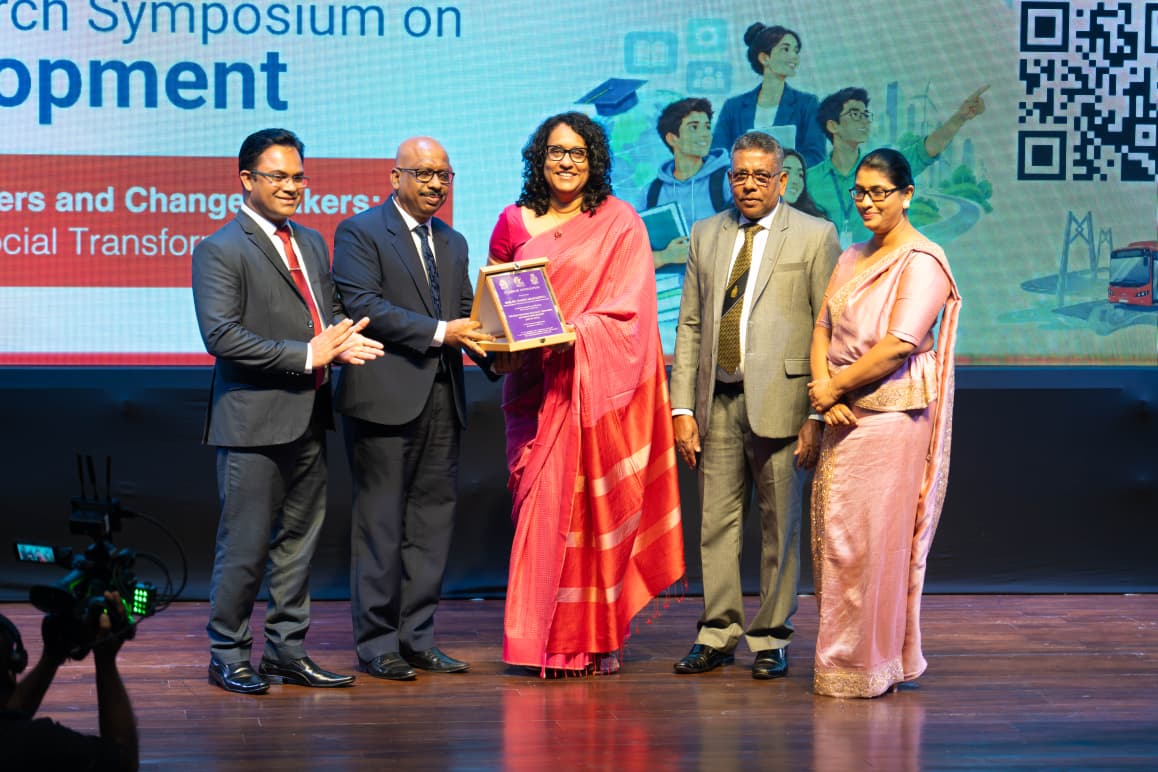
Prime Minister Dr. Harini Amarasuriya stated that the new National Youth Policy, being formulated to address the current challenges faced by Sri Lanka’s youth and fulfill their aspirations for the future, is scheduled to be finalised and implemented by the first quarter of 2027.
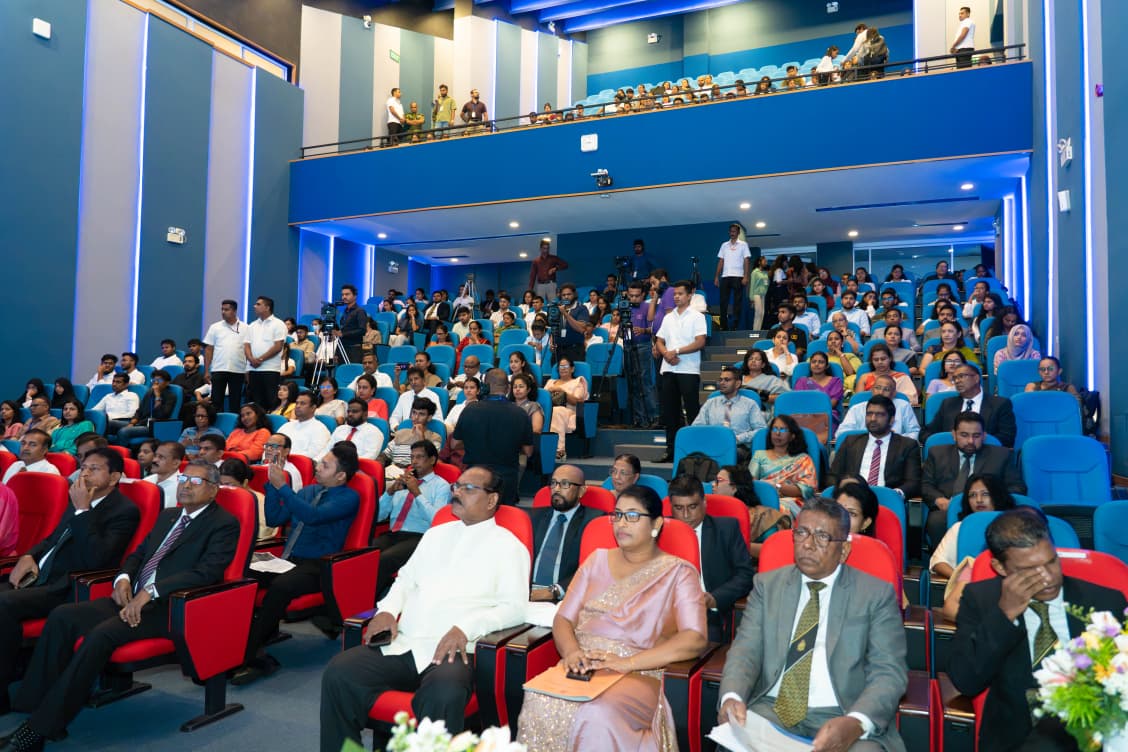
The Prime Minister made these remarks on Wednesday [September 16], while addressing the 1st National Research Symposium on Youth Development – NRSYD 2026, jointly organised by the Open University of Sri Lanka (OUSL) and the Ministry of Youth Affairs and Sports, held at the Water Supply and Drainage Board Auditorium in Ratmalana.
The symposium was held under the theme, “Young People as Right Holders and Change-Makers: Asset-based Pathways for Social Transformation.” Research papers are being presented under nine key thematic areas.
These areas include youth empowerment and leadership; education, vocational training and skills development; health, mental well-being and nutrition; youth entrepreneurship and economic participation; technology, digitalisation and innovation; climate change and sustainable development; minorities, social integration and the rule of law; youth migration and international relations; and arts, culture and creative expression.
The official publication of the symposium was presented to Prime Minister Dr. Harini Amarasuriya and other distinguished guests by Deputy Minister of Youth Affairs and Sports Dinindu Saman Hennayake and Secretary to the Ministry A.M.H.U. Aruna Bandara.
Speaking at the event, Prime Minister Dr. Harini Amarasuriya sated:
“Although a draft National Youth Policy was prepared in 2014, it was not implemented. Therefore, a new policy is currently being formulated with the participation of all stakeholders, taking into consideration the current changes in technology, the economy and the employment market.
Under the Government’s Public Investment Programme, Rs. 145 million has been allocated for research and development activities in the youth and sports sectors. Rs. 5 million has been allocated for this symposium. This allocation is a good beginning. It clearly demonstrates the seriousness with which we view evidence-based policymaking.
In the face of technological advancement and digitalisation, providing young people with academic knowledge alone is not sufficient. It is essential to equip them with practical, technical and vocational skills alongside knowledge. For this purpose, curricula within the existing education system must be updated in line with new technologies and global demand.
As for the Government, youth development is a cross-cutting issue that concerns all sectors. Our intention is to establish a unified policy framework that can provide guidelines and recommendations to address the challenges faced by young people in a scientific and sustainable manner.
Formulating a policy is only the beginning. The success of the National Youth Policy will depend on its implementation, monitoring and evaluation. Our objective should be to develop young people who are resilient and capable of facing changes, while also enabling them to become a generation that leads positive changes taking place in the world”.
The Prime Minister further stated that there is a proposal to hold the research symposium as an international conference next year, which would provide Sri Lankan researchers with significant opportunities to establish connections at regional and international levels.
The occasion was attended by the Minister of Youth Affairs and Sports Sunil Kumara Gamage, Vice Chancellor of the Open University of Sri Lanka Senior Professor P.M.C. Thilakarathne, along with a large number of researchers, academics and young people.
[Prime Minister’s Media Division]
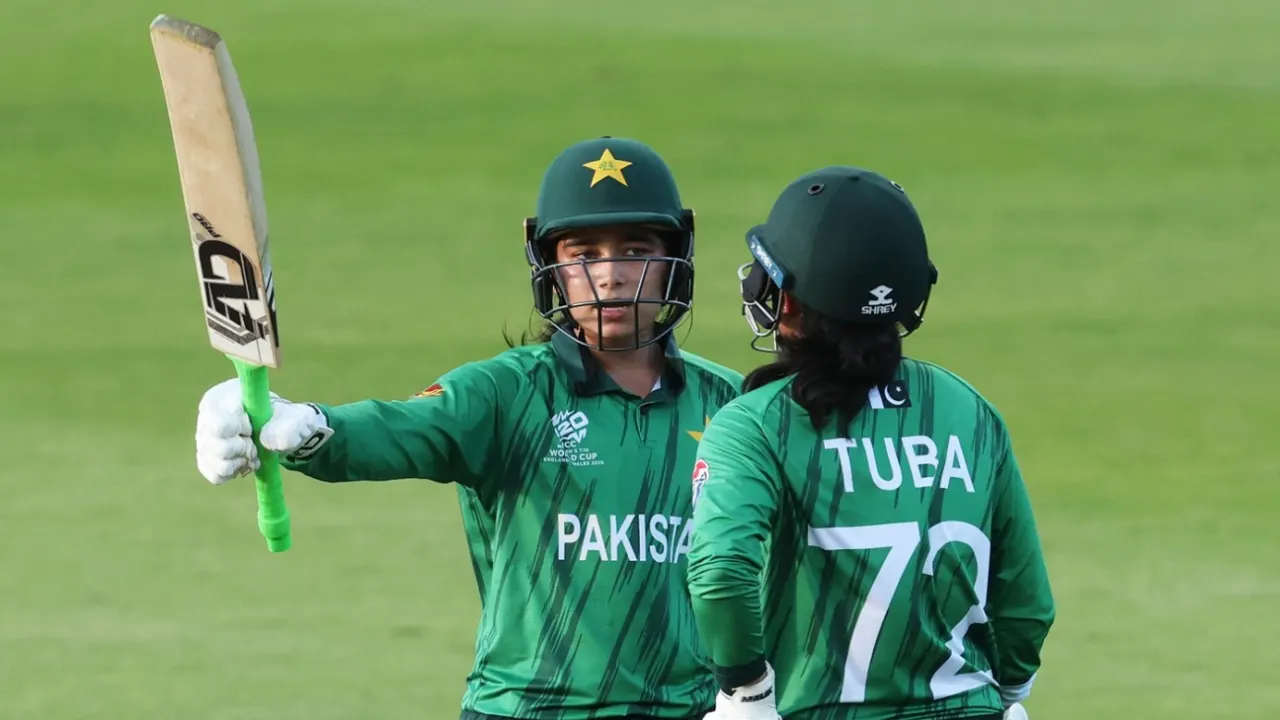
Two-time gold medalists Pakistan survived a mighty scare from Thailand in a rain-reduced game and scampered their way to the Asian Games Women’s cricket semi-finals with a tense three-wicket win. Pakistan were set a stiff target of 92 in 11 overs and they clinched the topsy-turvy game with a few clusters of boundaries towards the end even as wickets fell at regular intervals that kept Thailand’s hopes alive until the last over.
Pakistan will now face Bangladesh in the semi-final on September 20.
Pakistan were in trouble when they needed 44 runs from 24 balls before their captain Fatima Sana went down on her right knee to smoke 4, 4 and 6 on the leg side before going down the ground where she was dropped by a diving long-off fielder that also fetched her a boundary. Eyman Fatima ended the over with another six off the middle of the bat and the 25-run over titled the scales in Pakistan’s favour as they needed 19 from 18.
But the rest of the chase was hardly straightforward. Sana holed out at the start of the next over which saw just three runs to make the equation 16 to get from 12. When Eyman Fatima also handed a catch in the 10th over and Pakistan needed 15 from 10, Tuba Hassan struck a six and a four off consecutive balls to leave Pakistan just four runs away with seven balls to go.
Hassan was also caught at the boundary – at fine leg – at the end of the 10th over but Eman Naseer and Umm-e-Hani took four risk-free singles off the next four balls to avoid any more stutters.
The match earlier got delayed by nearly two hours because of a wet outfield. When the toss happened and Pakistan opted to bowl, it was Thailand who seized the advantage. They were 20 for 1 in the reduced powerplay of 3.2 overs in which Sana removed the experienced Natthakan Chantham before No. 3 Nannapat Koucharoenakai took off with shots all around the park. She picked up pace mainly after the sixth over with back-to-back fours off Umm-e-Hani for a 14-run over and was helped by some big hits from captain Naruemol Chaiwai at the other end. Koncharoenkai raced towards her fifty with a reverse-lap off Sana in the last over but fell on 49 off 38 when she was trapped right in front by a full delivery for which she went back and across, but missed.
Opener Shawaal Zulfiqar gave Pakistan a cracking start with three fours and a six in the first three overs. But that was just the start of the thriller in the making that swung wildly as Thailand fought back with four quick wickets in the space of 14 balls for just 11 runs. Zulfiqar handed a return catch to offspinner Onnicha Kamchomphu, No. 3 Ayesha Zafar fell for 1, and the other opener Gull Feroza stepped out against Kamchomphu to be stumped for 16 before Aliya Riaz was also caught off the same bowler.
Pakistan were now 47 for 4 with 45 runs to get from 30 before Sana’s clean strikes turned the game Pakistan’s way in the eighth over and they went over the line after some nervy last few overs.
Scores:
Pakistan Women 92 for 7 in 10.4 overs (Gull Feroza 16, Shawal Zulfiqar 25, Fatima Sana 21, Tuba Hassan 13; Phannita Maya 1-13, Sunida Chaturongrattana 2-23, Onnicha Kamchomphu 3-37, Suleeporn Laomi 1-03) beat Thailand Women 91 for 4 in 11 overs (Phannita Maya 15, Nannapat Koncharoenkai 49, Naruemoi Chaiwai 10; Fatima Sana 2-22, Bashra Sandhu 1-19) by three wickets
[Cricinfo]

Sonal Dinusha named the ICC Men’s Player of the Month for August 2026.

USA midfielder sues doctors after on-pitch cardiac arrest

River home to 500 crocodiles chosen as Olympic rowing venue

Steps will be taken to implement a new National Youth Policy in Sri Lanka in the first quarter of 2027 – PM

Pakistan survive Thailand scare to make Asian Games semi-finals

Bangladesh through to semi-final after washout against China

‘Dates have the highest sugar content to fight Coronavirus’

Sunday Island 27 December – Headlines

#SundayIsland 17th December – Headlines

Sunday Island – 28th March

Sunday Island Headlines – 21 March

Sunday Island – 21st February – Headlines
-

 Sports7 days ago
DDS set to lose Test captaincy
-

 News6 days ago
Sri Lanka faces new grid challenge as rooftop solar surges: former CEB GM
-

 Latest News6 days ago
Shafali, Deepti power India into sixth T20 Asia Cup final
-

 Latest News6 days ago
Sri Lanka thwart Fatima Sana challenge to secure Asia Cup final spot
-

 News4 days ago
Gnanasara Thero absconding after SC ruling
-

 News6 days ago
Ammunition cache found in old Kandy bungalow
-

 Editorial7 days ago
A flight of fancy
-

 News5 days ago
Green Climate Fund (GCF) Regional Dialogue for East and South Asia will be held from 14 to 17 September 2026 at Cinnamon Life at City of Dreams Hotel, Colombo