
Latest News
Manmohan Singh, Indian ex-PM and architect of economic reform, dies at 92

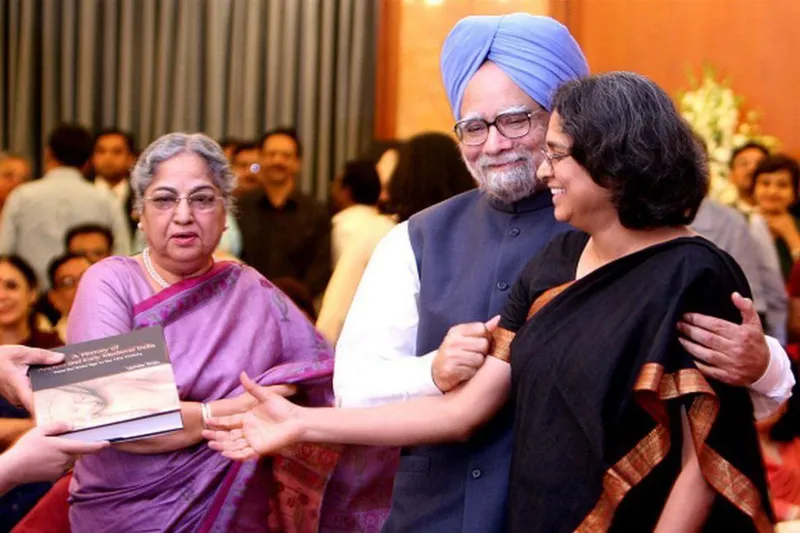
Former Indian prime minister Manmohan Singh has died at the age of 92.
Singh was one of India’s longest-serving prime ministers and he was considered the architect of key liberalising economic reforms, as premier from 2004-2014 and before that as finance minister.
He had been admitted to a hospital in the capital Delhi after his health condition deteriorated, reports say.
Among those who paid tribute to Singh on Thursday were Prime Minister Narendra Modi, who wrote on social media that “India mourns the loss of one of its most distinguished leaders”.
Modi said that Singh’s “wisdom and humility were always visible” during their interactions and that he had “made extensive efforts to improve people’s lives” during his time as prime minister.
Priyanka Gandhi, the daughter of former prime minister Rajiv Gandhi and a Congress party member, said that Singh was “genuinely egalitarian, wise, strong-willed and courageous until the end”.
Her brother Rahul, who leads Congress, said he had “lost a mentor and guide”.
Singh was the first Indian leader since Jawaharlal Nehru to be re-elected after serving a full first term, and the first Sikh to hold the country’s top post. He made a public apology in parliament for the 1984 riots in which some 3,000 Sikhs were killed.
But his second term in office was marred by a string of corruption allegations that dogged his administration. The scandals, many say, were partially responsible for his Congress party’s crushing defeat in the 2014 general election.
Singh was born on 26 September 1932, in a desolate village in the Punjab province of undivided India, which lacked both water and electricity.
After attending Panjab University he took a master’s degree at the University of Cambridge and then a DPhil at Oxford.
While studying at Cambridge, the lack of funds bothered Singh, his daughter, Daman Singh, wrote in a book on her parents.
“His tuition and living expenses came to about £600 a year. The Panjab University scholarship gave him about £160. For the rest he had to depend on his father. Manmohan was careful to live very stingily. Subsidised meals in the dining hall were relatively cheap at two shillings sixpence.”
Daman Singh remembered her father as “completely helpless about the house and could neither boil an egg, nor switch on the television”.
His unexpected appointment capped a long and illustrious career as an academic and civil servant – he served as an economic adviser to the government, and became the governor of India’s central bank.
In his maiden speech as finance minister he famously quoted Victor Hugo, saying that “no power on Earth can stop an idea whose time has come”.
That served as a launchpad for an ambitious and unprecedented economic reform programme: he cut taxes, devalued the rupee, privatised state-run companies and encouraged foreign investment.
The economy revived, industry picked up, inflation was checked and growth rates remained consistently high in the 1990s.
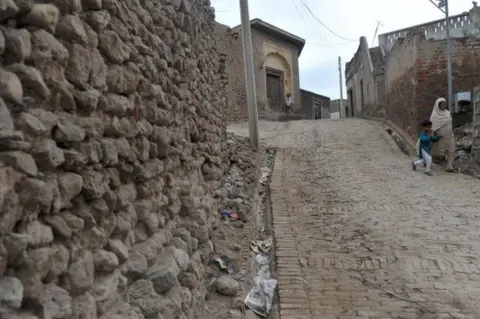
Manmohan Singh was a man acutely aware of his lack of a political base. “It is nice to be a statesman, but in order to be a statesman in a democracy you first have to win elections,” he once said.
When he tried to win election to India’s lower house in 1999, he was defeated. He sat instead in the upper house, chosen by his own Congress party.
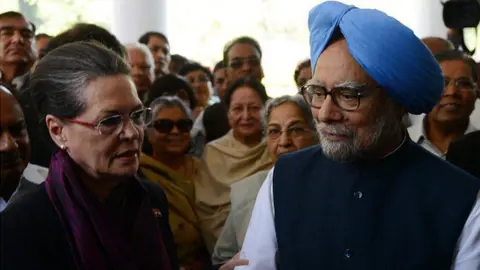
The same happened in 2004, when Singh was first appointed prime minister after Congress president Sonia Gandhi turned down the post – apparently to protect the party from damaging attacks over her Italian origins. Critics however alleged that Sonia Gandhi was the real source of power while he was prime minister, and that he was never truly in charge.
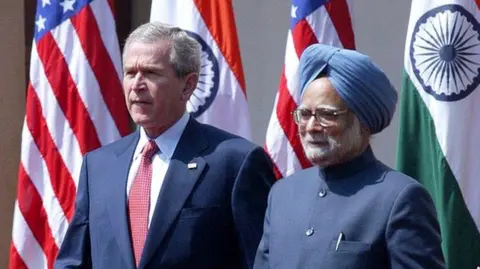
The biggest triumph during his first five-year term was to bring India out of nuclear isolation by signing a landmark deal securing access to American nuclear technology.
But the deal came at a price – the government’s Communist allies withdrew support after protesting against it, and Congress had to make up lost numbers by enlisting the support of another party amid charges of vote-buying.
A consensus builder, Singh presided over a coalition of sometimes difficult, assertive and potentially unruly regional coalition allies and supporters.
Although he earned respect for his integrity and intelligence, he also had a reputation for being soft and indecisive. Some critics claimed that the pace of reform slowed and he failed to achieve the same momentum he had while finance minister.
When Singh guided Congress to a second, decisive election victory in 2009, he vowed that the party would “rise to the occasion”.
But the gloss soon began to wear off and his second term was in the news mostly for all the wrong reasons: several scandals involving his cabinet ministers which allegedly cost the country billions of dollars, a parliament stalled by the opposition, and a huge policy paralysis that resulted in a serious economic downturn.
LK Advani, a senior leader in the rival BJP party, called Singh India’s “weakest prime minister”.
Manmohan Singh defended his record, saying his government had worked with “utmost commitment and dedication for the country and the welfare of its people”.
Singh adopted the pragmatic foreign policies pursued by his two predecessors.
He continued the peace process with Pakistan – though this process was hampered by attacks blamed on Pakistani militants, culminating in the Mumbai gun and bomb attack of November 2008.
He tried to end the border dispute with China, brokering a deal to reopen the Nathu La pass into Tibet which had been closed for more than 40 years.
Singh increased financial support for Afghanistan and became the first Indian leader to visit the country for nearly 30 years.
He also angered many opposition politicians by appearing to end relations with India’s old ally, Iran.
A studious former academic and bureaucrat, he was known for being self-effacing and always kept a low profile. His social media account was noted mostly for dull entries and had a limited number of followers.
A man of few words, his calm demeanour nevertheless won him many admirers.
Responding to questions on a coal scandal involving the illegal allocation of licences worth billions of dollars, he defended his silence on the issue by saying it was “better than thousands of answers”.
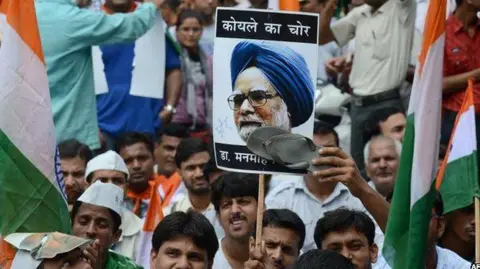
In 2015 he was summoned to appear in court to answer allegations of criminal conspiracy, breach of trust and corruption related offences. An upset Singh told reporters that he was “open for legal scrutiny” and that the “truth will prevail”.
After his time as premier, Singh remained deeply engaged with the issues of the day as a senior leader of the main opposition Congress party despite his advancing age.
In August 2020, he told the BBC in a rare interview that India needed to take three steps “immediately” to stem the economic damage of the coronavirus pandemic, which had sent the country’s economy into a recession.
The government needed to provide direct cash assistance to people, make capital available for businesses, and fix the financial sector, he said.
History will remember Singh for bringing India out of economic and nuclear isolation, although some historians may suggest he should have retired earlier.
“I honestly believe that history will be kinder to me than the contemporary media, or for that matter, the opposition parties in parliament,” he told an interviewer in 2014.
Singh is survived by his wife and three daughters.
[BBC]

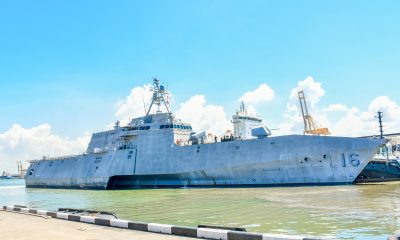


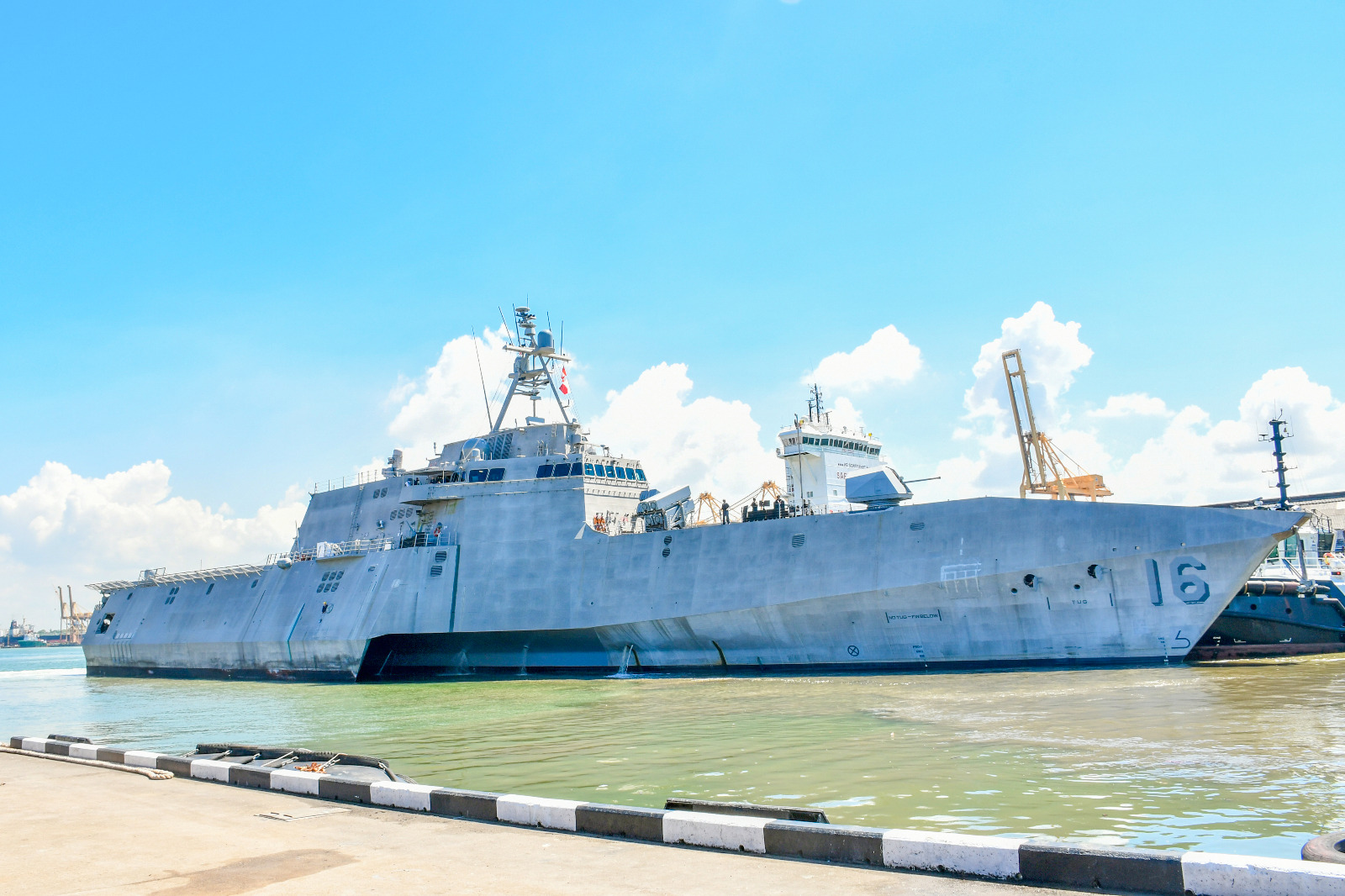
The U.S. Navy ship USS Tulsa (LCS 16) set sail from the port of Colombo today, 09 October 2026.
On her departure, the Sri Lanka Navy extended a traditional naval farewell to the ship.
USS Tulsa, a Littoral Combat Ship, and arrived in the island on 7 October on a replenishment visit and departed the island on completion of intended purposes.
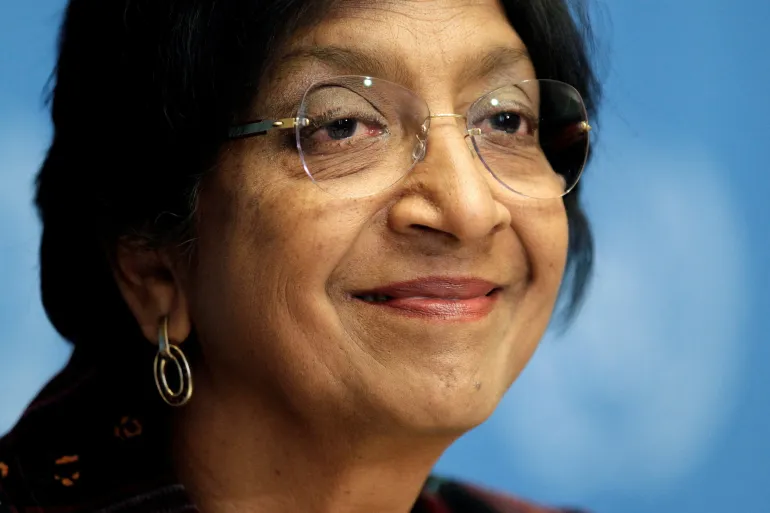
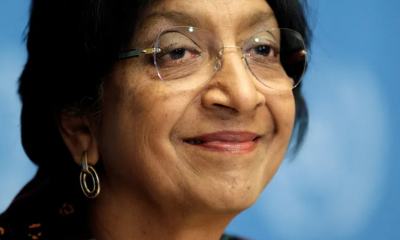
The Norwegian Nobel Committee has awarded the 2026 Nobel Peace Prize to Navanethem “Navi” Pillay.
The committee’s announcement of the 125th Nobel Peace Prize, made on Friday in Oslo, said the prestigious award would go to the South African jurist for her work to promote peace and international law.
The committee said in a statement that Pillay, a former United Nations rights chief, had been instrumental in ensuring that war crimes, crimes against humanity and genocide are prosecuted.
“At a time of existential challenges – including more wars and conflicts than the world has seen in a long time – international law is no longer just a supplement to peace and security. It is an absolute necessity,” the statement read.
Committee chair Jorgen Watne Frydnes said the system of international law was “under tremendous pressure” and its institutions were “under attack”. It is judges, he continued, “who guard the thin red line between order and chaos”.
Prosecuting crimes against humanity
A South African of Indian Tamil origin, the 85-year-old Pillay was the first woman to start a law practice in Natal, in 1967.
She acted as a defence lawyer for Nelson Mandela, who previously won the peace prize, and other anti-apartheid activists, and was the first woman of colour to serve on South Africa’s High Court.
She later served on the International Criminal Tribunal for Rwanda and the International Criminal Court, and as UN high commissioner for human rights.
The committee highlighted her role in establishing that rape and sexual violence can be constituted as a crime against humanity and genocide, during her time on the Rwanda tribunal.
She chaired the UN Independent International Commission of inquiry on the occupied Palestinian territory, which concluded last year that Israel committed genocide in Gaza.
“We concluded that the State of Israel is responsible for the commission of four genocidal acts in Gaza with the specific intent to destroy Palestinians in Gaza, as such,” she declared in a presentation to the UN General Assembly.
She also declared Israel’s president, prime minister and former defence minister had “incited the commission” of genocide.
She currently sits on the International Court of Justice in the case in which Myanmar stands accused of genocide.
Verification
Reacting to the award, Pillay said she thought at first it must be a joke. “Being a lawyer and a judge, I still want to verify this,” she remarked.
“The last thing I did is the delivery of the report on Gaza, naming what’s happening there as genocide,” she continued. “One of the main reactions to that report is paying tribute to me for my courage. And you can imagine how surprised I was, why would you need courage to speak the truth?” she added.
The prize, which is worth 12 million Swedish crowns ($1.2m), will be presented in Oslo on December 10, on the anniversary of the death of Swedish industrialist Alfred Nobel, who founded the awards in his 1895 will.
Four other awards were also announced earlier this week, for medicine, physics, chemistry and literature.
The Nobel committee received nominations for 287 candidates for this year’s peace prize. Other contenders included the International Space Station, emergency teams in Sudan, children’s advocates in Ukraine and two top international courts.
United States President Donald Trump has long coveted the prize and repeatedly said he deserves it, despite his ongoing war on Iran.
Last year’s winner, Venezuelan opposition leader María Corina Machado, handed her medal to Trump after the US deposed former President Nicholas Maduro.
Pillay joked that she might share her prize with the US leader.
“If you clap a little bit more I may share this prize with Trump,” she said in a video posted on social media by the Secretary General of Amnesty International that showed Pillay being applauded after the announcement of the award.
[Aljazeera]
Latest News
Showers above 100 mm are likely at some places in the Western, Sabaragamuwa, Central, Uva and Southern provinces and in Anuradhapura district

WEATHER FORECAST FOR 08 OCTOBER 2026
Issued at 05.30 a.m. on 08 October 2026 by the Department of Meteorology
Misty conditions can be expected at some places in the Western, Sabaragamuwa, Central and Uva provinces and in Galle and Matara districts during the early hours of the morning.
Showers or thundershowers will occur in the most part of the island after 1.00 p.m. Heavy showers above 100 mm are likely at some places in Western, Sabaragamuwa, Central, Uva and Southern provinces and in Anuradhapura district.
The general public is kindly requested to take adequate precautions to minimize damage caused by temporary localized strong winds and lightning during thundershowers.

USS Tulsa departs Colombo

Appointments for 1,540 Grama Niladhari Officers

Trump says US will not strike Iran before midterm elections

2026 Nobel Peace Prize awarded to Navi Pillay

Showers or thundershowers will occur in most part of the island after 1.00 p.m.

Removing monk’s robes matter for Sangha to decide: Mahanayake Theras

‘Dates have the highest sugar content to fight Coronavirus’

Sunday Island 27 December – Headlines

#SundayIsland 17th December – Headlines

Sunday Island – 28th March

Sunday Island Headlines – 21 March

Sunday Island – 21st February – Headlines
-

 Features6 days ago
The first woman in the foreign service or Ceylon Overseas Service it was then called
-

 News4 days ago
Geneva takes up Sallay’s case and govt. ignores opportunity to answer accusations
-

 Editorial7 days ago
Fuelling discontent and protest
-

 Foreign News6 days ago
Ten injured after car crashes into rugby supporters in Australia
-

 Latest News6 days ago
Tharindu Rathnayake, bowlers secure Asian Games Bronze for Sri Lanka
-

 News5 days ago
Nearly 20 Iranian tankers stranded off Lanka amid US sanctions
-

 Features5 days ago
Sri Lanka Cricket Bill: Governance reform is not yet a cricket strategy
-

 Features3 days ago
Preventing grievances from becoming communal