
Business
‘Indian investors eye Sri Lanka’s economic resurgence for greater cross border synergy’

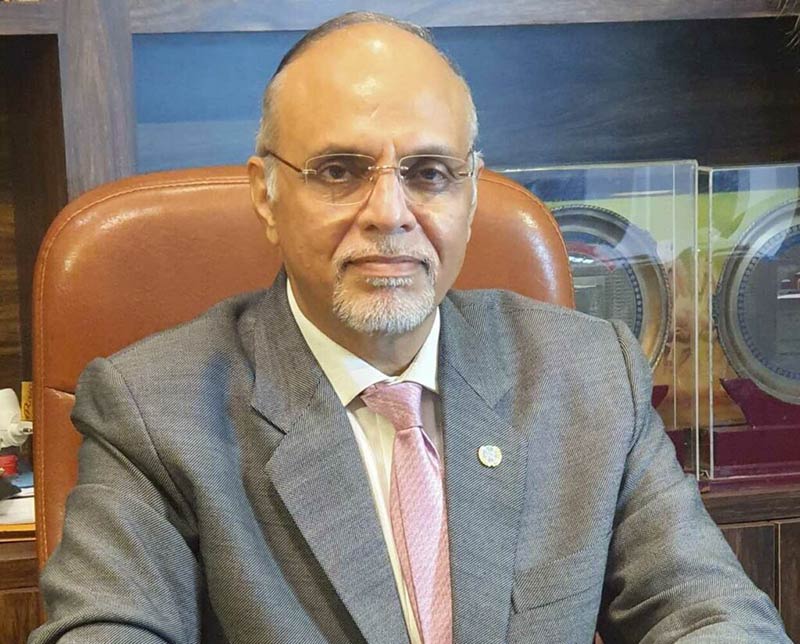
Amid Sri Lanka’s journey toward economic recovery, Indian investors and businesses are closely monitoring the emerging opportunities in the local market.
Dr. Naresh Bana, Vice Chairman of the Indo-Sri Lanka Chamber of Commerce and Industry (ISCCI) shared his perspective recently, on current investment trends, bilateral trade, and collaborative ventures between the two neighbours.
Despite strong tourism ties, Indian investment in Sri Lanka’s tourism sector remains cautious. “Indian investors, like their counterparts elsewhere, rely on credible data, projections, and business prudence,” Dr. Bana explains. The country’s credit rating challenges, influenced by banking and financial institutions, often determine the final investment decisions. However, trading relations between the two nations remain robust.
On recent economic reforms, Dr. Bana highlights Sri Lanka’s efforts to diversify investment instruments through municipal bonds, real estate investment trusts (REITs), and SME listings. “These initiatives, if executed effectively, could accelerate economic growth,” he states, adding that Indian businesses are observing these developments while awaiting more consistent, reliable data to guide their decisions.
The ISCCI plays a crucial role in building Indo-Lankan economic ties. “We assist companies in securing industry tie-ups, facilitate bilateral trade, and disseminate policy-related information,” Dr. Bana shares. The Chamber’s initiatives aim to create a supportive environment for Indian investors and help Sri Lankan businesses establish a foothold in India.
The Blue Economy presents significant collaborative potential for India and Sri Lanka. With expansive coastlines, the two nations can leverage marine resources for mutual benefit. Dr. Bana outlines key areas for cooperation, including Marine Domain Awareness (MDA) and maritime security, Fisheries and aquaculture, Offshore energy, including hydrocarbons and wind farms, Maritime trade and connectivity, Tourism and marina development and Research and innovation. He emphasizes, “Collaboration in these areas would unlock economic and ecological benefits for both nations.”
The Adani Group’s investment in Sri Lanka is a significant milestone in Indo-Lankan energy cooperation. “The $442 million wind power project is not just an investment but a torchbearer for Sri Lanka’s renewable energy aspirations,” Dr. Bana notes. He highlights the project’s potential to stimulate ancillary industries, reduce energy dependency, and position Sri Lanka as a net energy exporter.
India remains Sri Lanka’s largest trading partner, with bilateral trade reaching $5 billion in 2023. The relationship is anchored by India’s ‘Neighborhood First’ policy, which includes development aid, credit lines, and infrastructure investments.
Indian businesses have established a robust presence across Sri Lanka’s economy. The Tata Group, Bajaj, and Airtel have significant investments in telecommunications, automotive, and financial services. Indian Oil operates in the energy sector, while ITC Hotels has recently entered the tourism and leisure market. Additionally, the Adani Group has made strategic investments, including the development of the Colombo West International Terminal and the acquisition of Singha Cement. All these ventures underline the strengthening economic ties and mutual business interests between India and Sri Lanka.
Dr. Bana also highlighted the importance of the forthcoming Economic and Technology Cooperation Agreement (ETCA), which is expected to further enhance trade and economic ties.
As Sri Lanka rebuilds, the role of Indian businesses and institutions like ISCCI will be critical in fostering sustainable growth. With shared interests in energy, trade, and the Blue Economy, the Indo-Lankan partnership holds immense promise for regional prosperity.
Dr. Bana’s insights reinforces the potential for deeper collaboration, driven by strategic investments and mutual trust. As he aptly concludes, “The future of Indo-Lankan relations lies in harnessing each other’s strengths for collective growth.”


Nestlé Lanka Limited, the ‘Good Food, Good Life’ company, celebrates 120 years of operations in Sri Lanka this year. Since its founding in 1906, the company has grown into the nation’s leading food and beverage manufacturer, producing over 90% of its locally sold products in Sri Lanka. Guided by its purpose of enhancing quality of life for today and future generations, Nestlé Lanka has touched lives through nutrition, livelihoods, and sustainability.
Over the decades, the company has offered tastier and nutritious choices tailored to local needs, from birth to old age, with micronutrient-fortified products that promote healthier living. Iconic brands such as NESTOMALT and MILO further encourage active and healthy lifestyles through sports sponsorships.
Beyond products, Nestlé Lanka engages communities through partnerships with dairy and coconut farmers, supporting skills development, responsible sourcing, and local livelihoods. Its youth empowerment initiative, Nestlé Needs YOUth, strengthens employability, while collaborations with organisations like BConnected create inclusive work pathways for people with disabilities.
Sustainability is a core focus, with a commitment to achieve net-zero carbon emissions by 2050. Recent steps include a biomass boiler commissioned in 2024 and the use of 100% renewable electricity at the Kurunegala facility. Through these initiatives, Nestlé Lanka continues to deliver on its promise of enriching lives while safeguarding the planet.
Commenting on this milestone, Bernie Stefan, Chairman and Managing Director of Nestlé Lanka said, “Celebrating 120 years in Sri Lanka is a moment of immense pride for all of us at Nestlé. This milestone reflects not only the longevity of our business, but the trust generations of Sri Lankan families have placed in us and the strong partnerships we have built across the country. For over a century, we have been committed to Working Together for Good – contributing meaningfully to the Sri Lankan economy, supporting livelihoods, and positively impacting communities, while consistently providing tasty and nutritious products that consumers love. Through iconic brands such as NESTOMALT, MILO, MAGGI to name a few, we have been part of everyday moments in Sri Lankan homes, helping nourish families and support healthier, more active lifestyles. As we look ahead, we remain firmly committed to continuing this journey with purpose, responsibility and care, enriching Sri Lankan lives every single day.”

Sri Lanka’s condominium landscape continues to expand at pace, reshaping urban living across the country, yet many residential communities still rely on manual payment methods that slow down collections, delay reconciliations and limit financial visibility for both residents and management corporations.
Responding to this growing gap, Sampath Bank PLC has partnered with Apartner (Pvt) Ltd to digitise condominium payments in Sri Lanka, introducing a secure, real-time payment and settlement framework designed to support smarter, more efficient apartment living. The partnership integrates Visa’s Cybersource payment gateway with Sampath Bank’s API Manager, enabling seamless digital payment collection alongside instant outward settlements and reconciliations.
Speaking on the collaboration, Chirath Samarasekara, Head of Card Centre at Sampath Bank, stated, “Condominium living is becoming a defining feature of modern Sri Lanka and the financial infrastructure that supports it must evolve accordingly. Through Visa’s Cybersource payment gateway and our API Manager, this partnership enables real-time settlements and reconciliations that bring greater transparency, control and predictability to condominium payments while offering residents a secure and convenient digital experience.”
Deshan Dias Bandaranayake, Co-Founder and Chief Executive Officer of Apartner, commented, “This partnership with Sampath Bank allows us to remove one of the biggest operational pain points faced by condominium communities. Real-time payment visibility and automated reconciliation give management corporations confidence in their cash flows while residents gain convenience, security and peace of mind through a platform built for everyday living.”

For many Sri Lankans, buying a lottery ticket is a daily ritual. Some do it out of habit; others try their luck from time to time. Morning crowds gathered around lottery kiosks across the country are testimony to the enduring appeal of the small slip of paper that promises fortune.
But in the quiet village of Dolahena in Kalawana lives a man whose relationship with the lottery stretches far beyond hope of a windfall.
At 88, retired postal worker E. M. D. Bandara Ekanayake has spent more than seven decades buying lottery tickets — and, more remarkably, preserving them. His collection, which dates back to the early years of organized lotteries in Sri Lanka, may well be one of the most extensive personal archives of lottery tickets in the country.
“I started buying lottery tickets in 1962, the year the National Lottery Board was established,” Bandara told the Sunday Island. “At that time a ticket cost only 50 cents, and the top prize was about one lakh of rupees.”
His fascination with lotteries, however, predates the National Lottery Board itself. Bandara recalls purchasing his first ticket in 1959 when a lottery was held in connection with an industrial exhibition.
“From then until today, I have been buying five tickets at a time,” he said. “For about 76 years I have continued this habit.”
Unlike most lottery buyers who discard their tickets once the draw is over, Bandara carefully preserved every ticket he purchased. As a result, he now possesses lottery tickets issued by both the National Lottery Board and the Development Lotteries Board from 1962 to the present.
“I don’t think anyone else has such a collection,” he said with a quiet smile.
Ironically, his decades-long participation has not brought him extraordinary winnings. “Apart from small prizes, the biggest amount I have ever won is Rs. 10,000,” he admitted.
Yet Bandara insists that winning has never been his primary motivation.
“I buy lottery tickets with great interest and enthusiasm, but not because I expect to win,” he said. “The lottery boards contribute a great deal to the development of this country. Funds raised through lotteries support education, health and other development work. I feel a deep sense of satisfaction knowing that I too contribute, even in a small way.”
His dedication to buying tickets has endured despite the difficulties he once faced in obtaining them.
“In the early days there were no lottery sales outlets in the Kalawana area,” Bandara recalled. “The only place we could buy them was at Sinnaiah Stores in Nivitigala. I used to travel by bus to buy the tickets and bring them back. Sometimes I would send someone else to buy them for me.”
Over time, lottery sales expanded to Kalawana itself. Bandara remembers that a trader named P. D. T. Lathpadura Mudalali began selling lottery tickets at the Ranasinghe Hotel, making it easier for locals like him to buy them.

E. M. D. Bandara Ekanayake
From then on, Bandara purchased his tickets locally, but the practice of carefully preserving them remained unchanged.
His passion for collecting does not stop with lottery tickets. Bandara has also maintained an extensive collection of newspapers over the years. Even bus tickets from his journeys have been preserved alongside his treasured lottery slips.
The unusual collection recently drew the attention of officials from the National Lottery Board, who visited Bandara’s home bearing gifts after learning about his decades-long dedication.
For Bandara, however, the recognition is secondary to a larger sense of purpose.
“I will continue buying lottery tickets as long as I live,” he said. “At the same time, I try to help others and engage in social service whenever I can.”
His commitment to community welfare is not merely rhetorical. Using his own funds, Bandara has already built a community hall for the benefit of residents in his village.
“I hope to continue doing social service in the future as well,” he said.
In an era when lotteries are often associated with dreams of instant wealth, Bandara’s story offers a different perspective — one of quiet dedication, civic-mindedness and personal discipline.
For him, the value of a lottery ticket lies not in the promise of riches but in the small contribution it makes towards the collective good.
And after 76 years, that belief remains unshaken.
By Upendra Priyankara Jathungama

‘Gruesome’ war bets fuel calls for crackdown on prediction markets

Three more Iran football team members change minds over asylum

Trump urges UK and other nations to send warships to Strait of Hormuz

Addressing the drug issue in the country must be treated as a national priority – PM

QR code system will be implemented for fuel with effect from 06.00 a.m. today (15th)

Showers will occur at several places in the Western, Sabaragamuwa, Central, North-western and Uva provinces and in Galle, Matara, Mannar and Anuradhapura districts after 2.00 pm.

‘Dates have the highest sugar content to fight Coronavirus’

Sunday Island 27 December – Headlines

#SundayIsland 17th December – Headlines

Sunday Island – 28th March

Sunday Island Headlines – 21 March

Sunday Island – 21st February – Headlines
-

 News7 days ago
Repatriation of Iranian naval personnel Sri Lanka’s call: Washington
-
 Features7 days ago
Winds of Change:Geopolitics at the crossroads of South and Southeast Asia
-

 News6 days ago
Prof. Dunusinghe warns Lanka at serious risk due to ME war
-

 News4 days ago
Historic address by BASL President at the Supreme Court of India
-

 Sports5 days ago
Royal start favourites in historic Battle of the Blues
-

 Sports4 days ago
The 147th Royal–Thomian and 175 Years of the School by the Sea
-
 Business5 days ago
BOI launches ‘Invest in Sri Lanka’ forum
-

 News5 days ago
CEBEU warns of operational disruptions amid uncertainty over CEB restructuring