
Latest News
South Korean president survives impeachment vote

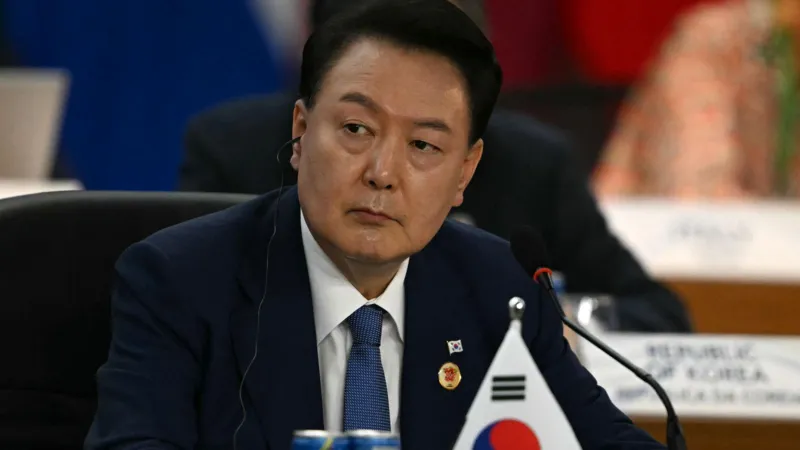
Lawmakers in South Korea have narrowly failed to impeach the nation’s president over his short-lived attempt to declare martial law.
A bill to censure Yoon Suk Yeol fell three votes short of the 200 needed to pass, with many members of parliament in the ruling People Power Party (PPP) boycotting the vote.
The South Korean premier sparked widespread shock and anger when he declared military rule -associated with authoritarianism in the country – on Tuesday, in a bid to break out of a political stalemate.
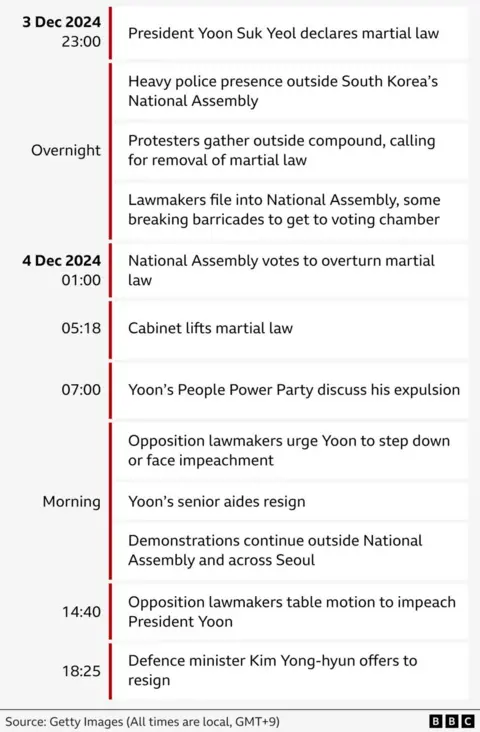
Yoon’s declaration was quickly overturned by parliament, before his government rescinded it a few hours later in the midst of large protests.
The impeachment bill needed a two-thirds majority in the National Assembly to pass, meaning at least eight PPP MPs would have to vote in favour.
However, all but three walked out of the chamber earlier on Saturday.
One of those who remained, Cho Kyung-tae, credited Yoon’s apology for the martial law decree on Saturday morning – after three days out of public view – as having influenced his decision not to back impeachment this time.
“The president’s apology and his willingness to step down early, as well as delegating all political agendas to the party, did have an impact on my decision,” he told the BBC ahead of the vote.
Cho said he believed impeachment would hand the presidency to the leader of the Democratic Party of Korea (DPK), Lee Jae-myung.
He added that Yoon’s “irrational and absurd decision” to declare martial law had “overshadowed” what he described as the DPK’s “many extreme actions” while in power.
Following Saturday’s vote, Lee insisted his party “will not give up” with its attempts to impeach Yoon, who he said had become “the worst risk” to South Korea.
“We will definitely return this country to normal by Christmas and the end of the year,” he told a crowd gathered outside the parliament in the capital, Seoul.
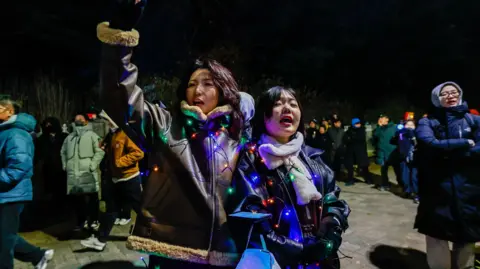
Prior to Tuesday, martial law – temporary rule by military authorities in a time of emergency, during which civil rights are usually curtailed – had not been declared in South Korea since before it became a parliamentary democracy in 1987.
Yoon claimed the measures were needed to defeat “anti-state forces” in the parliament and referred to North Korea.
But others saw the move as an extreme reaction to the political stalemate that had arisen since the DPK won a landslide in April, reducing his government to vetoing the bills it passed, as well as Yoon’s increasing unpopularity in the wake of a scandal surrounding the first lady.
The president’s late-night address caused dramatic scenes at the National Assembly, with protesters descending en masse as military personnel attempted to block entry to the building.
Lawmakers tussled with the soldiers, with 190 MPs making it into the building to vote down the order.
In the early hours of Wednesday morning, Yoon’s cabinet rescinded the martial law declaration.
However, the short-lived military takeover has seen daily protests on the streets. Some came out in support of Yoon, though they were drowned out by angry mobs.
Authorities have since revealed more about the events of Tuesday night.
The commander charged with the military takeover said he had learned of the decree on TV along with everyone else in the country.
He said he had refused to make his troops arrest lawmakers inside parliament, and did not give them live ammunition rounds.
The National Intelligence Service later confirmed rumours that Yoon had ordered the arrest and interrogation of his political rivals – and even some of his supposed political allies, such as his own party leader Han Dong-hoon.
These revelations saw some members of Yoon’s own party signal their support for impeachment.
The president’s apology on Saturday morning appeared to be a last-ditch effort to shore up support.
He said the martial law declaration had been made out of “desperation” and pledged he would not make another.
Yoon did not offer to resign, but said he would leave decisions on how to stabilise the country to his party.
Were he to be impeached, it would not be unprecedented. In 2016, then-President Park Geun-hye was impeached after being accused of helping a friend commit extortion.
If South Korea’s parliament passes an impeachment bill, a trial would be held by a constitutional court. Two-thirds of that court would have to sustain the majority for him to be removed permanently from office.
[BBC]

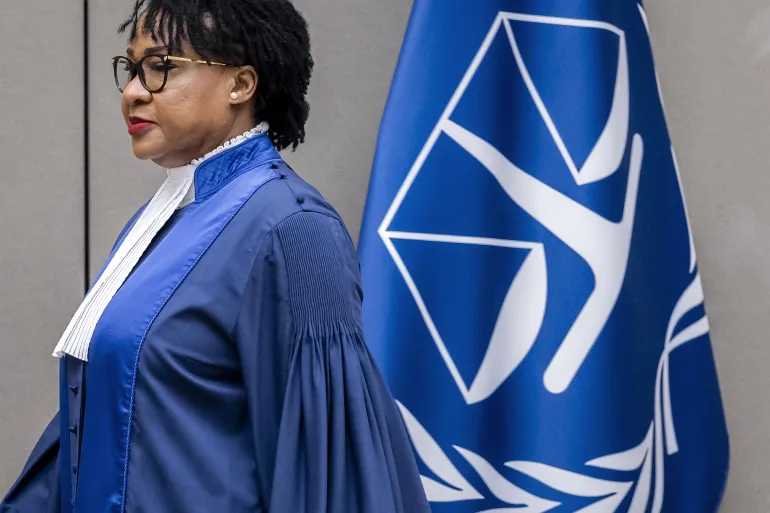
United States Secretary of State Marco Rubio has announced a new set of sanctions against the International Criminal Court (ICC), this time targeting the entity itself, as opposed to the tribunal’s officials or groups that provide support.
The announcement on Friday represented a major escalation from the administration of US President Donald Trump, which has vowed an “all of government” approach to dismantling the court.
“We will ban transactions with this rogue court, cutting off their resources and crippling their ability to operate against us because our message is clear: the United States and the American people are not subject to the jurisdiction of this fake ICC,” Rubio said in a video posted on social media. “Either the ICC will end its threats, or we will end the ICC.”
As justification for its actions, the administration has pointed to the court’s ongoing investigation into abuses committed in Afghanistan, which could ensnare US military and intelligence personnel, as well as the ICC’s arrest warrant for Israeli Prime Minister Benjamin Netanyahu and former Defence Minister Yoav Gallant for war crimes committed in Gaza.
Before Friday’s actions, the US had sanctioned ICC judges and prosecutors, a UN special rapporteur focusing on the occupied Palestinian territories and Palestinian rights groups that have provided evidence to the court.
Several rights groups have challenged those sanctions in US federal court, saying restricting how US citizens interact with the court treads on their constitutional freedoms. Sanctioned ICC judges have also launched legal challenges in the US.
[Aljazeera]
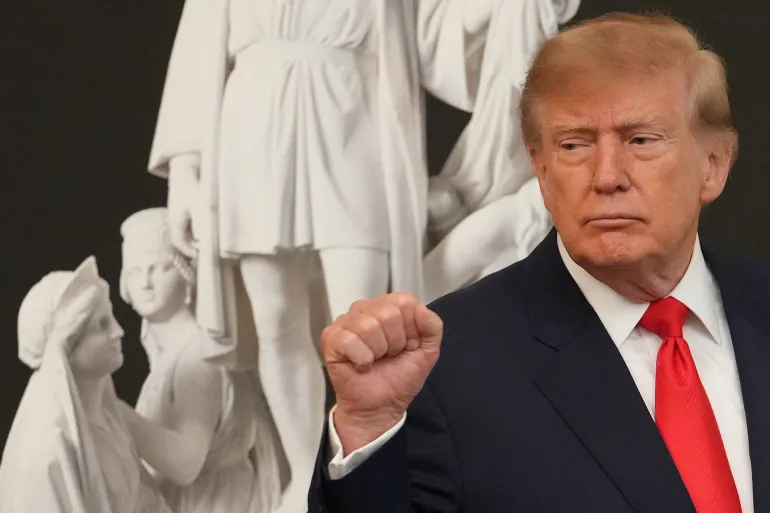
United States President Donald Trump said that Russia has agreed to supply 300,000 tonnes of diesel fuel to global markets amid discussions with Russian President Vladimir Putin.
“I have just concluded a highly successful discussion with President Vladimir Putin, of Russia, wherein it was agreed that Russia will immediately supply over 300,000 Tons of Diesel Fuel to the American and Global Marketplace, another 500,000 Tons during the month of November, and 1,000,000 Tons immediately thereafter,” Trump said in a post on his Truth Social platform.
The president added that Russia would deliver an additional 3 million tonnes of fuel “within a short period of time”. He said that the country would supply 500,000 tonnes in November.
An envoy for Russian President Vladimir Putin, Kirill Dmitriev, praised cooperation between Russia and the United States on diesel and energy in a post on X shortly after.
“Russia-US cooperation on diesel and energy will benefit the world,” Dmitriev wrote on X.
Petrol price pressures
The deal comes despite Ukrainian air strikes, which have taken more than half of the country’s oil refining capacity offline, according to claims made by Ukraine’s Ministry of Defence on Sunday.
The latest announcement comes a week after the G7 countries agreed to release 100 million barrels amid pressure from the White House.
Diesel prices have been elevated in recent months but have started to decline. The average price for a gallon is $6.27 ($1.66 per litre), according to the American Automobile Association (AAA), which tracks daily petrol prices. That’s down $0.10 from this time last week, but up $5.94 from this time one month ago.
[Aljazeera]
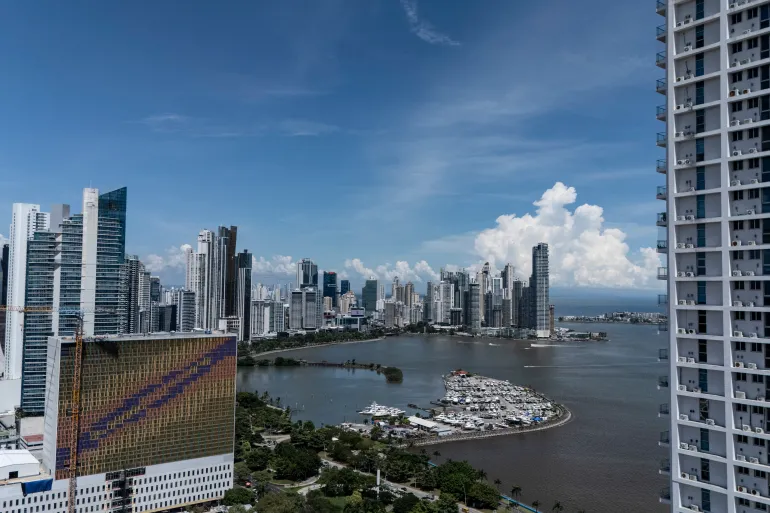
A magnitude 7.7 earthquake has hit southern Panama, triggering tsunami warnings across Central and South America.
The US National Weather Service issued tsunami warnings for Panama, Colombia, Ecuador, Nicaragua and Guatemala on Friday following the quake.
Chile’s naval Hydrographic and Oceanographic Service also issued a tsunami warning.
The US Geological Survey said the earthquake was centred about 10km (6 miles) southwest of the remote community of Pitaloza Arriba along the Pacific Ocean coast.
Residents of Panama City reported feeling tremors, with buildings shaking and people evacuating into the streets.
“We felt it very strongly. It knocked things over in the kitchen, but we’re okay, though we’re very scared,” 60-year-old Rosendo Dominguez, who is from Herrera province, where the earthquake struck, told The Associated Press news agency by phone.
“Everyone is outside, scared,” Dominguez added.
Videos shared by newspaper La Prensa showed the tower of a historic building had collapsed along with several balconies of a residential building in Penonome, a city about halfway between the epicenter and Panama City.
Panama’s ministry of education ordered schools closed.
There have been several destructive earthquakes in the region this year.
In June, twin quakes hit northern Venezuela, causing widespread devastation and killing at least 6,500 people.
In August, a magnitude 7.4 earthquake hit Colombia, killing at least 289 people.
[Aljazwwea]

Sri Lanka ITEC Alumni Association formally launched

Measures underway to protect Diyagama Forest as a Reserve — Deputy Minister of Environment

Showers or thundershowers will occur in most parts of the island after 1.00 p.m.

NPP govt. reminded of its responsibilities as US warship leaves Colombo

CERT: Beware of foreign Uni. scams on social media

Shiranthi receives treatment at National Eye Hospital

‘Dates have the highest sugar content to fight Coronavirus’

Sunday Island 27 December – Headlines

#SundayIsland 17th December – Headlines

Sunday Island – 28th March

Sunday Island Headlines – 21 March

Sunday Island – 21st February – Headlines
-

 Features6 days ago
The first woman in the foreign service or Ceylon Overseas Service it was then called
-

 News5 days ago
Geneva takes up Sallay’s case and govt. ignores opportunity to answer accusations
-
 Foreign News7 days ago
Ten injured after car crashes into rugby supporters in Australia
-
 News6 days ago
Nearly 20 Iranian tankers stranded off Lanka amid US sanctions
-
 Features4 days ago
Preventing grievances from becoming communal
-

 Sports2 days ago
Nissanka absence opens door for Sri Lanka’s young guns
-

 Features5 days ago
Sri Lanka Cricket Bill: Governance reform is not yet a cricket strategy
-

 News3 days ago
Gnansara Thera to be assigned to prison printing section: Officials