
Life style
Politics is still dominated by men in Sri Lanka

By Zanita Careem
 Women in Sri Lankan politics have come a long way, but they still face many challenges. From early pioneers who broke barriers to modern leaders making strides, the journey has been both inspiring and difficult. Despite laws and policies aimed at promoting gender equality, societal norms and structural issues continues to hinder women’s full participation in politics. Although Sri Lanka elected the world’s first female PM in 1960, over six decades later, the country’s political arena continues to be male dominated. Women represent over 52% of the country’s population yet men continue to play a dominant role, in the national legislature while globally there is increased legislators and diversity in politics, Sri Lanka too needs to welcome more women in leadership and political spaces to break political bias. This is the only way to ensure inclusivity, equality and genuine democracy.
In an interview with Dr. Deepika Udagama, Sri Lanka Professor of Law at the University of Peradeniya, she said women in politics are essential for representative governance. However while global statistics for female representation in governments worldwide continues to improve, equal participation of women in Sri Lanka is still a far fetched goal. Here are excerpts of the interview.
We received the right to vote in 1931, gave the world its first woman PM. Sri Lanka still remains hopelessly behind in terms of equal representation of women in politics both local and at national level? Your opinion
First, let’s recognize that women’s political representation is essential not just as an end but as a means to an end. Women’s increased participation in politics is required for women to be heard at various policy-making levels so that their issues and concerns and lived realities are factored into decision-making.
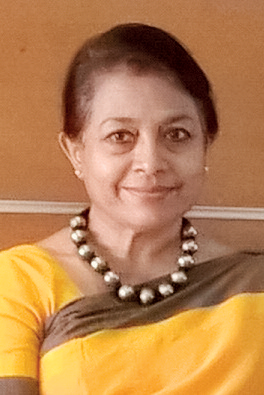
Dr.Deepika Udagama, Professor of Law at University of Peradeniya. She served previously as the Chairperson of the Human Rights Commission
It is encouraging to observe a surge in the number of women elected to parliament at the recent General Election. My understanding is that 21 women have been elected to Parliament (19 from NPP and 02 from SJB), and there may be a few more named in the National Lists. However, the numbers are still very insignificant given that women constitute nearly 52% of the national population and form the bulk of the voters. One could also observe the large numbers of women enthusiastically participating in election rallies in recent months. Who can forget the dynamic role played by women in the Aragalaya? However, it appears that women are eventually counted on for their votes, not so much for the contribution they can make as political representatives to national development.
It’s no secret that there wasn’t a single female candidate at the recent Presidential Election as well. We also know that there have been very few women parliamentarians appointed as cabinet ministers in the past. Despite the recent increase in the number of elected women MPs, the current cabinet too has only two women, including the Prime Minister. It is very disappointing to note that there isn’t a single woman among the Deputy Ministers.
It is also observed that, women cabinet ministers in Sri Lanka have yet to be assigned portfolios that are conventionally considered to be ‘important’ such as finance, defense and foreign affairs although our South Asian neighbors have made those advances. I do believe that after President Kumaratunga this is the first time a female minister is in charge of education. Such marginalization is a travesty, especially in a country which boasts around 92% female literacy and over 60% female students in public universities.
In the past few Parliaments of Sri Lanka, women’s representation hovered around 5.3%. Now it may go up to perhaps 10%-12% depending on the number of women coming in through the national lists of parties. Compare that with the present 33.1% female MPs in Nepal and 20% in Bangladesh. These are Inter-Parliamentary Union data. Of a total of 183 countries ranked as at October, 2024 , Sri Lanka stood at 175. The number 1 ranking was awarded to Rwanda with 63.8% female members of Parliament. Our ranking may go up slightly now, but as I said, in the larger scheme of gender equality in the country even the improved numbers make only an insignificant difference. However, we must build on recent gains and the 25% quota for women’s representation at the local government level introduced in 2016. We must seek quotas for parliament and provincial councils.
Challenges women face especially in the male political culture with deeply rooted social and cultural biases still exists. Do these obstacles for greater representation still persists? Your comments
Yes, of course they do. Public life is still very much a male bastion in Sri Lanka and elsewhere. We understand that gender played a role at the recent US Presidential Election where a sizeable segment of voters believed that they are still not ready for a female president. That’s due to socio-cultural factors. Some countries have, through national conversations on gender equality and with the intervention of inspiring political leaders and proactive civil society, made greater strides than others. African countries such as Rwanda and South Africa are examples.
Turning to Sri Lanka, one primary observation is that the high level of literacy among women has not necessarily translated into improving women’s empowerment in a socio-political sense. It’s almost a given fact that politics is still dominated by men. Even at the level of university student politics women are terribly marginalized. There’s yet to be a female president of a university student union or the IUSF. Patriarchy in the political party system is very much alive and well. Is there a single political party in Sri Lanka presently headed by a woman? A political party of which the General Secretary is a woman?
In contrast, who can forget the dynamic role played by large numbers of women in the Aragalaya? But come election time and party politics, that electrifying gender dynamic has not got translated into the massive shift in women’s political representation one could have reasonably expected. There’s been an improvement of course, but not a radical shift where all or most political parties felt compelled to nominate at least 1/3 of women in their nomination lists. So yes, male domination of politics and political parties is deeply structural brought on by our socio-cultural value base. At a broader level, I believe that educational reforms that focus on personality development and increase our democratic and civic consciousness is a key factor to changing these unacceptable realities aside from advocating for quotas for women in Parliament and Provincial Councils, and yes, in trade unions and student councils etc.
I feel the male model of politics and lack of internal democracy within political parties, may be some of the reasons? Your opinion
Correct. The Conventional model of politics is very male oriented. It is extremely confrontational, reliant on violence (physical, verbal, discriminatory etc.) and massive funding (whether legal or illegal) and encourages patron/client relations. A gentler and cleaner model of politics would certainly encourage female candidates. The past two elections were peaceful and dignified, so there’s future hope.
However, the questionable level of internal party democracy definitely contributes to the challenges women in politics face. Centralized party hierarchies (usually male centric) decide on all important matters including nominations, distribution of election funding, policies, strategies and so on without much consultation with rank and file. If a party does not have a strong women’s wing, women do not have much of a say in the internal decision-making. Any opportunities that come in the way of female members are viewed as concessions, not as entitlements. In Sri Lanka leadership is very personality-based and tends to be monolithic. I have always advocated constitutional or legal regulation of internal party democracy. There must be rules on non-discrimination and inclusivity within parties. How can political parties with authoritarian, non-inclusive hierarchies bring about democracy in a country?
Women make up more than half the voters but not a single women contest for Presidential elections. Financial constraints can be one of the causes for women not to take part in politics. Your opinion?
There are many forms of violence on women, psychological, sexual, physical and economic. Do these obstacles impede political participation?
. Gender equality was mentioned at the conference in Beijing in 1995 Do we follow these highlights and has Sri Lanka taken seriously these clauses? Are there any structural obstacles holding it back?
Women politicians around the world face more or less the same types of challenges, but to varying degrees. Use of violence as a political strategy always discourages women. There was a time in Sri Lanka when any politician who wanted to be ‘successful’ would have to possess a squadron of political goons. A few women became violent politicians, but others just gave up the idea of being active politicians. Hopefully, those are abominations of the past that will no longer be tolerated.
The most potent threat against women in politics is sexual vilification. It is cowardly, but in a conservative society such demeaning tactics work. It breaks the spirit of women. We’ve seen how women parliamentarians participating in debates were vilified by fellow parliamentarians in the recent past. One cannot recall formal action being taken against the miscreants. I note though that the current generation of women politicians is made of tougher metal. They will not give in or be defeated easily. However, the structural dimensions of political parties need a lot of work to achieve gender parity in politics.
Can you mention some of the steps taken by the former governments to rectify the shortcomings, have by any chance women have benefited ?
Introduction of quotas is the main method used to increase female political representation. Quotas can be introduced either at the level of nominations by parties or by reserving seats in elected bodies. The ‘Yahapalanaya’ government introduced a 25% quota for women in local government bodies. India introduced a 1/3 quota for women in the lower house of parliament and state legislative assemblies last year. A few decades ago India introduced a 1/3 quota for women in village councils (Panchayats) that has proved to be very successful. Rwanda which has the highest percentage of women in parliament at present also has adopted quotas. Around 138 countries have adopted gender quotas to increase women’s political representation.
Of course, much more needs to be done than adopt quotas. Civil society and the media should create a strong enabling environment for women to enjoy and advocate rights. Political education of women must reach a point where women actively shame and boycott political parties that marginalize women’s participation. The education system of the country must focus on creating a strong human rights ethos which includes sensitivity to non-discrimination including on the bases of sex and gender. Gender studies must be integrated into all disciplines than being confined to social sciences and humanities. Education must focus on personality development and make extra effort to strengthen women’s life experiences. Overall, the quality of women’s education must improve. Pressure must be put on political parties to create enabling environments that encourage women’s participation in politics including proactive recruitment and nurturing of young women community workers and political activists to take up active politics, political education programs for women and ensuring the inclusion of women in all decision-making bodies of parties.
One hopes that the Speaker and party leaders will create an enabling environment for women MPs to actively contribute to parliamentary affairs and punish any miscreants who belittle them. I do believe that the new women MPs are strong and smart enough to assert themselves and shout down and shame bullies and detractors. The Women’s Parliamentary Caucus should be more active and vocal on women’s issues and encourage more women to join their ranks. Much needs to be done to create a decent society where all have equal opportunities whatever one’s gender.

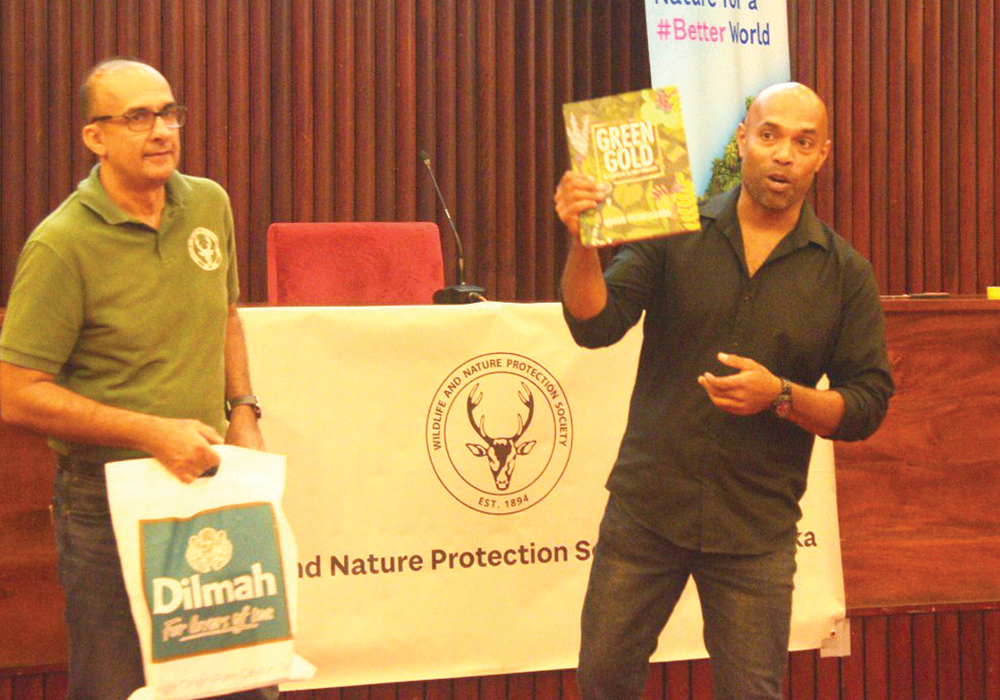
Dr. Ruchira Somaweera on Rethinking Conservation
What happens when one of the world’s richest marine biodiversity hotspots collapses almost overnight — and no one knows why?
That was the question facing Australian authorities in the early 2000s when Ashmore Reef, a remote marine reserve in the Timor Sea, suddenly lost what once made it globally unique: its extraordinary diversity and abundance of sea snakes.
“At one point, this place had more species of sea snakes and more individuals than anywhere else on Earth,” recalled Dr. Ruchira Somaweera, one of the world’s leading reptile biologists. “Then, within a few years, everything collapsed.”
Speaking at a packed Wildlife and Nature Protection Society (WNPS) Monthly Lecture, sponsored by Nations Trust Bank and held at the BMICH, Dr. Somaweera described how the mysterious disappearance triggered a major federal investigation.
“At the time, I was a federal government scientist,” he said. “We were sent to find out what went wrong — but it wasn’t obvious at all.”
Ashmore Reef, a protected area managed by Parks Australia, was still teeming with turtles, sharks and pelagic birds. Yet the sea snakes — once recorded at rates of up to 60 individuals per hour — had virtually vanished.
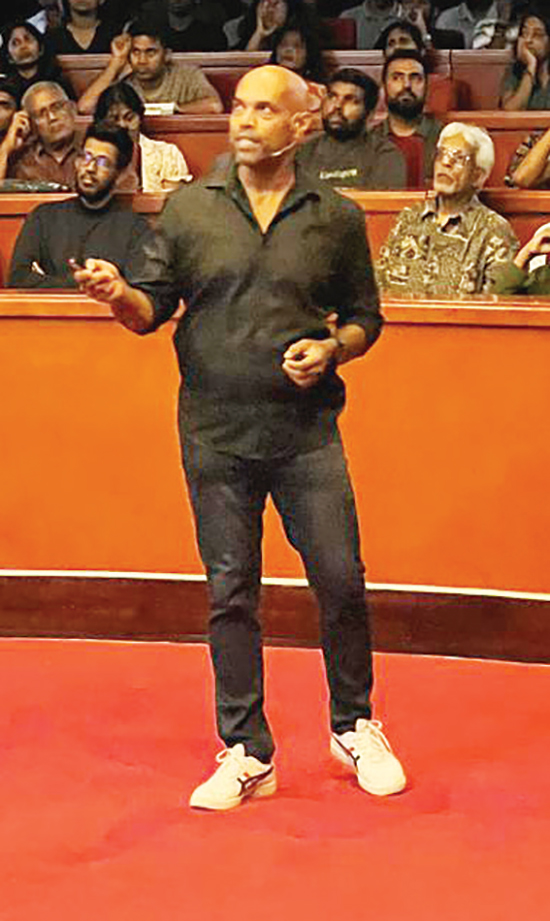
Ruchira making his presentation
The breakthrough came not from the water, but from policy.
For decades, traditional Indonesian fishers from Roti Island had been permitted to harvest sharks at Ashmore under a bilateral agreement. When Australia banned shark fishing around 2000, shark numbers rebounded rapidly.
“And sharks are the main predators of sea snakes,” Dr. Somaweera explained. “What we realised is that what we thought was ‘normal’ may actually have been an imbalance.”
In other words, sea snakes had flourished during an unusual window when their top predators were suppressed. Once sharks returned, the ecosystem corrected itself — with dramatic consequences.
“It was a powerful lesson,” he said. “Sometimes collapse isn’t caused by pollution or climate change, but by ecosystems returning to balance.”
The mystery didn’t end there. Some sea snake species once known only from Ashmore were now feared extinct. But instead of accepting that conclusion, Dr. Somaweera and colleagues took a different approach — one that combined science with local knowledge.
“Scientists often fail by not talking to the people who live with these animals,” he said. “Fishermen have decades of experience. That knowledge matters.”
Using museum records, fisher interviews and species distribution modelling, the team predicted where these snakes might still exist. The models suggested vast new areas — some the size of Sri Lanka — had never been properly surveyed.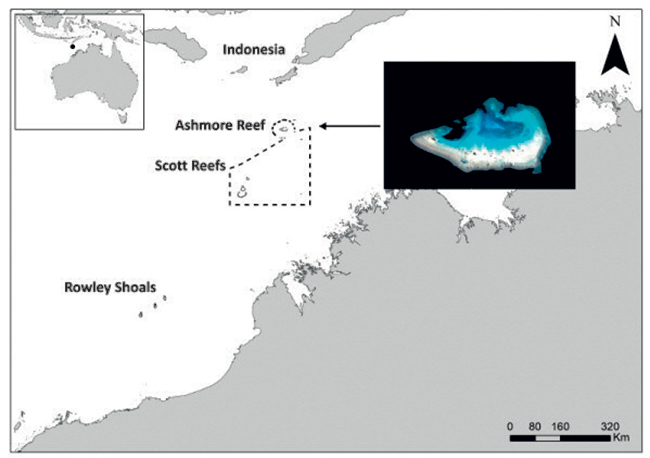
When researchers finally reached these sites, often involving helicopters, research vessels and enormous logistical costs, they made a startling discovery.
“We found populations of species we thought were gone,” he said. “They were there all along. We were just looking in the wrong place.”
Even more surprising was where they were found — far deeper than expected.
Traditional sea snake surveys rely on night-time spotlighting, assuming snakes surface to breathe and rest. But footage from deep-sea remotely operated vehicles (ROVs) revealed that many species live in the mesophotic zone, where light fades and surveys rarely reach.
“Some of these snakes are deep divers,” Dr. Somaweera said. “They don’t behave the way we assumed.”
That insight led to one of his most remarkable discoveries — coordinated, communal hunting in the Irabu sea krait off Indonesia.
“At 40 metres deep, on the slope of an extinct volcano, we found them hunting in groups,” he said. “They take turns flushing fish and feeding. That level of cooperation was never known in snakes.”
Beyond discovery, Dr. Somaweera’s work increasingly focuses on how conservation itself must evolve.
One of the most transformative tools, he said, is environmental DNA (eDNA) — the ability to detect species from genetic traces left in water, soil or even air.
“You no longer need to see the animal,” he explained. “A bottle of water can tell you what lives there.”
His team now uses eDNA to detect critically endangered snakes, turtles and sea snakes in some of Australia’s most remote regions. In one project, even children were able to collect samples.
“A 10-year-old can do it,” he said. “That’s how accessible this technology has become.”
The implications for countries like Sri Lanka are profound. From snakebite management to marine conservation, eDNA offers a low-impact, cost-effective way to monitor biodiversity — especially in hard-to-reach areas.
Dr. Somaweera ended his lecture with a message aimed squarely at young scientists.
“We already have a lot of data. What we lack is the next question,” he said. “So what? That’s the question that turns knowledge into action.”
After nearly two decades of research across continents, his message was clear: conservation cannot rely on assumptions, tradition or good intentions alone.
“It has to be evidence-based,” he said. “Because only action — informed by science — actually saves species.”
By Ifham Nizam ✍️

Fazeena Rajabdeen
Fazeena Rajabdeen stands at the forefront of Sri Lanka’s fashion evolution as the Executive Director of Colombo Fashion Week.
With a visionary approach that bridges local talent with global opportunities, Fazeena has been instrumental in elevating Colombo Fashion Week into a sought-after platform for designers, buyers and industry innovators. In this interview, she shares insights on the growth of Sri Lanka’s fashion landscape, the challenges and triumphs of steering a major fashion event, and her aspirations for the future of the industry.
(Q) As Executive Director of Colombo Fashion Week, how do you define CFW’s role in shaping Sri Lanka’s fashion identity?
(A) CFW is fundamentally the backbone of Sri Lanka’s fashion industry. Over 23 years, we’ve built more than a platform, we’ve crafted an entire fashion ecosystem that didn’t exist before.
What I’m most proud of is that over 80% of the designers you see in Sri Lanka today have come through our development system. That’s not accidental, it’s the result of building infrastructure, including partnerships, brand development support, retail insights, and international networks. We’ve essentially created the conditions for a Sri Lankan fashion industry to emerge organically, rooted in our heritage but completely contemporary in its expression. This has resulted in the creation of few design education schools, fashion retailers, model academies.
CFW has given Sri Lankan fashion an identity that carries weight, one that speaks to craftsmanship, sustainability, and creative integrity. That’s the legacy we continue to build upon.
(Q) What has been your personal vision in steering Colombo Fashion Week over the years?
(A) My vision has always been about scale and sustainability, taking what was a seasonal event and building it into a year-round business ecosystem. My key focus was on developing the next generation through structured programs like emerging designers and CFW Accelerate, embedding responsibility into fashion through tools like the Responsible Meter, and expanding our reach with new editions and International partnerships.
We’ve moved from showcasing fashion to building the infrastructure that makes sustainable, commercially viable fashion careers possible in Sri Lanka. Another mission was to expand the platform so Sri Lankan designers aren’t just showing collections, they’re building brands that compete regionally, especially within South Asia.
(Q) Fashion Weeks globally are evolving. How has CFW adapted while staying true to its roots?
(A) The role of fashion platforms has evolved, as the development of fashion, the consumption of fashion and choices fashion consumers make has changed. At the core Fashion is an emotional choice hence engagement with fashion consumers remains high priority. CFW as a platform that leads the fashion industry, creates formats that effectively engage consumers with the fashion creators and with that open opportunities in Sri Lanka and internationally through BRICS, South Asia and Beyond. There are interesting new projects planned to push this forward.
(Q) How does CFW contribute to positioning Colombo as a regional fashion and lifestyle capital?
(A) CFW is known as a renowned South Asian Fashion Week and serves as a regional hub with its longstanding influence of 23 years in the region. That longevity alone has made us a reference point for South Asian fashion and we’ve become first-in-mind when people think of fashion here.
But it’s more than just presence. CFW has positioned the city with its synonymous brand name and interaction with influential people within the region as a lifestyle destination, not a peripheral market. That sustained visibility and the calibre of what we produce has put Colombo on the map as a regional capital where fashion, craft, and commerce intersect.
(Q) Sustainability and craftsmanship are growing conversations—How are those reflected in designer collections?
(A) Responsibility in fashion has been our cornerstone from the beginning. We’ve always championed Batik and traditional craft, and we’ve backed that with real resources through our craft funds.
What we’ve done differently is make sustainability measurable. The Responsible Meter we developed is a transparent scoring system that shows the environmental and social impact of each garment. Designers now build collections with accountability baked in from the start, not as an afterthought. This process is included in all emerging designer development processes.
(Q) Colombo Fashion Week has been a launch pad for many designers. What do you look for when curating talent?
(A) Above all—passion and drive. You can teach technique, refine a collection, connect someone to the right resources. But that hunger to build something, to push through the hard parts of turning creativity into a viable business That has to come from them.
We look for designers who understand that fashion is both art and commerce. They need a point of view, yes, but also the discipline to execute it consistently. The ones who succeed through CFW are the ones who see the platform as a starting point, not the finish line—they’re ready to put in the work to build a real brand, not just show a collection and continue with us in building that brand.
(Q) What role does CFW play in connecting Sri Lankan designers to global markets?
(A) CFW set out on a designer exchange programme through the BRICS International Fashion Federation, showcasing Sri Lankan talent at BRICS fashion weeks while welcoming international designers to Colombo. The platform positions Sri Lanka within the global fashion landscape while attracting international buyers and media. We have partnerships with the commonwealth countries and relevant fashion weeks. The interaction with global designers we invite during fashion week is primarily to focus on such interactions with Sri Lankan designers, opening doors for learnings and opportunities.
(Q) What can we expect from upcoming editions of CFW?
(A) Every edition has a unique focus to it and we work towards creating more expansion, more accessibility. We’re doubling down on our development programs, bringing in stronger international partnerships, deeper craft integration, and wider opportunities for designers at every stage.
We’re also looking at new formats and editions that create the Sri Lankan story in international markets.
We focus on being beyond a showcase; as the engine that drives Sri Lankan fashion forward regionally and globally. We’re building for scale and impact. The upcoming editions will reflect that ambition.
(Q) You have Co-founded the Ceylon Literary and Arts Festival, what inspired you to start and what was your original vision?
(A) It was a natural expansion, honestly. After years of building CFW and seeing the power of creative platforms, we realized there is space for the same thing for arts and literature, a space that celebrates Sri Lanka’s intellectual and cultural soft power.
The vision was simple: create a festival that puts Sri Lankan voices in conversation with regional and global thought leaders. Literature and the arts are incredible tools for cultural influence, and we weren’t leveraging that enough. Ceylon Literary and Arts Festival became that platform, a way to showcase our writers, artists, and thinkers while positioning Sri Lanka as a hub for meaningful cultural exchange.
It’s about soft power. Fashion opened doors, arts and literature deepened the conversation. Together, they tell a fuller story of who we are as a country.
(Q) What makes it unique in Sri Lanka’s cultural scene?
(A) It’s the ecosystem with its breadth and accessibility. We’ve built a festival that doesn’t silo creativity, it brings together literature, art, film, performing arts and music under one platform. That cross-pollination doesn’t really exist elsewhere in Sri Lanka at this scale.
What sets us apart is that we’ve made it deliberately accessible, students are free as our focus is the Youth. Projects and processes that empower the youth and foster creative talent from the grassroot.
(Q) What role does the festival play in promoting local writers, poets and literary talent?
(A) We platform both established names and emerging voices who haven’t had the visibility. The festival creates real dialogue and gives local talent stages they wouldn’t normally access.
We take the best of the world.
We’ve made it accessible, students get free entry, and we run a Children’s Festival for ages 5 to 11. It’s about building pathways early and giving Sri Lankan writers, poets, and creatives the exposure that launches careers.
Our winner of the first edition of the Future writers’ program, was recently awarded the acclaimed Gratiaen Award. We were happy we were able to mentor and pave the pathway for Savin and all future writers for the next generation.
(Q) What are the next dates to look out for?
(A) We have the HSBC Ceylon Literary and Arts Festival Edition 03 set to take place February 13th ,14th,15th 2026. This year’s Festival brings together creativity across all genres including the children’s festival, performing arts and Arts festival. We are proud to celebrate Sri Lankan and international Authors including the renowned author of the Bridgerton series Julia Quinn.
Following which the annual Summer edition of Colombo Fashion Week will take place in March 2026
This is for the start of 2026. looking forward to many exciting plans for the rest of the year.
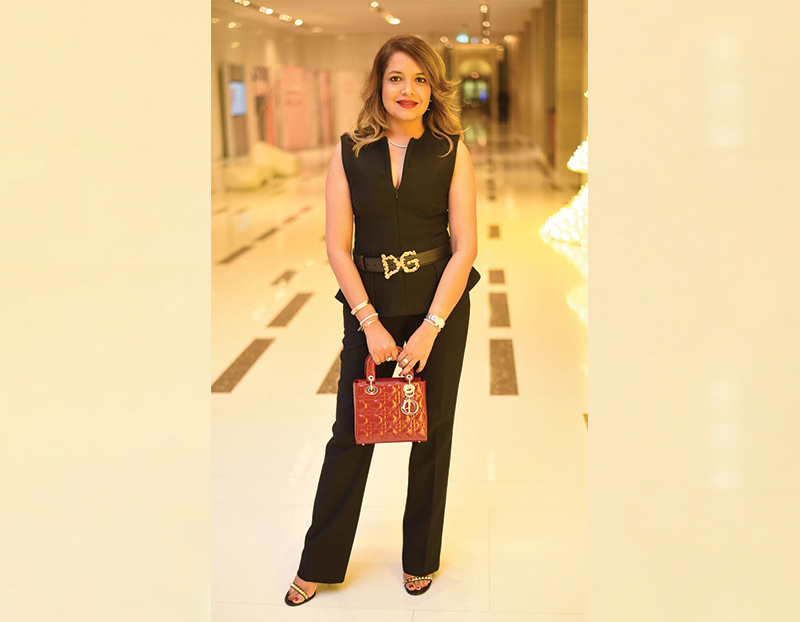
The HALO Trust, the world’s largest humanitarian landmine clearance organization, has appointed Rishini Weeraratne as its Ambassador for Sri Lanka. In her new role, she will support HALO’s global mission by raising awareness of mine action, strengthening advocacy efforts, and championing initiatives to protect communities impacted by landmines and unexploded ordnance, particularly in Sri Lanka. She will also play a key role in HALO’s international engagement and communications initiatives.
HALO began working in Afghanistan in 1988. Today HALO operates in more than 30 countries and territories across Africa, Asia, Europe and Caucasus, Latin America, and the Middle East. Its teams work daily to clear landmines, deliver risk education and restore land for agriculture, homes and infrastructure. HALO gained international recognition after Diana, Princess of Wales, visited its work in Angola in 1997 which helped accelerate support for the Mine Ban Treaty. Sri Lanka is one of HALO’s longest standing programmes. HALO has been operational in the island since 2002 and has cleared more than 300,000 mines and over one million explosive remnants of war, enabling thousands of families to return home safely. HALO is the second largest employer in the Northern Province, and its workforce is 99 percent locally recruited. Women make up 42 percent of the demining teams, reflecting HALO’s commitment to local empowerment and employment in post conflict communities.
Rishini Weeraratne, Ambassador for Sri Lanka, The HALO Trust:
“It is a privilege to support The HALO Trust’s mission. Although Sri Lanka is my home country and close to my heart, I am also committed to advocating for HALO’s work around the world. Millions of people live with the daily risk of landmines and unexploded ordnance. By raising awareness and amplifying the voices of affected communities, I hope to contribute to a safer future for families everywhere.”
Prime Minister launches Zahira College, Puttalam Website

Pretoria Capitals recover from 7/5 to beat Joburg Super Kings

Dry weather will prevail in most parts of the island

Premadasa: Grade 6 syllabus fiasco signals deeper issues

Sri Lankan Airlines launches Intl branding initiative for Colombo Nawam Maha Perahera 2026

Reports on Grade 6 module adult website link due next week

‘Dates have the highest sugar content to fight Coronavirus’

Sunday Island 27 December – Headlines

#SundayIsland 17th December – Headlines

Sunday Island – 28th March

Sunday Island Headlines – 21 March

Sunday Island – 21st February – Headlines
-
 News1 day ago
UNDP’s assessment confirms widespread economic fallout from Cyclone Ditwah
-

 Business3 days ago
Koaloo.Fi and Stredge forge strategic partnership to offer businesses sustainable supply chain solutions
-

 Editorial1 day ago
Crime and cops
-

 Editorial2 days ago
The Chakka Clash
-

 Editorial10 hours ago
Illusory rule of law
-
 Business3 days ago
SLT MOBITEL and Fintelex empower farmers with the launch of Yaya Agro App
-

 Features2 days ago
Online work compatibility of education tablets
-
 Business3 days ago
Hayleys Mobility unveils Premium Delivery Centre