
Sports
Buttler powers England to 2-0 series lead after bowlers limit West Indies again


Jos Buttler rampaged into form in his second innings back in charge of England’s T20I side, a brutal 83 off 45 balls helping to clinically ice a chase of 159 and give the tourists a 2-0 lead in the five-match series.
Batting once again at No. 3, Buttler followed up the good work of his bowling attack by peeling off the 26th 50 plus score of his career in T20 internationals, eight fours and six sixes ringing off his bat during a century stand with Will Jacks that saw England cruise to their requirement with more than five overs to spare.
Having again won the toss and opted to bowl, England made good use of the conditions to leave West Indies three down in the powerplay, Saqib Mahmood striking twice to continue his prolific start to the series. Rovman Powell provided some ballast for West Indies with a 41-ball 43 but Romario Shepherd was the only other batter to reach 20 as Dan Mousley, in his second T20I, and Liam Livingstone shared four wickets.
Although England then lost their centurion from Saturday’s successful chase of 183, Phil Salt, to the first ball of the reply, Buttler and Jacks dispelled West Indies’ hopes of making a game of it with a domineering stand of 129 from 72 balls. Both fell in the same Shepherd over but there was no reprieve forthcoming for West Indies.
Hosein’s opening salvo
Only three times had a score of 150 or less been defended in T20Is at Kensington Oval – and none since 2010. West Indies clearly needed to make early inroads with the new ball, and they couldn’t have gone any better in that regard. Akeal Hosein gave his first ball some air, found a little turn, and Salt’s aggressive thump went straight to hand in the covers. Buttler was then late in jabbing down on Hosein’s fourth delivery, the ball deflecting off the toe of the bat before bouncing over the stumps. Might the pitch still be tricky to master?
Buttler serves up a classic
The short answer was: no. Jacks did the early running, picking off boundaries against Matthew Forde and Hosein, with Buttler scoring just three runs off his first 10 balls. Back-to-back fours off Forde followed, before Jacks deposited Hosein over long-off. England were beginning to feel a little more comfortable as Shepherd came on to bowl the final over of the powerplay – and they were metaphorically in a deckchair sipping from a cold bottle of Banks by the end of it.
Jacks again took the lead, clubbing four high over mid-off, before ceding the stage to Buttler. His first of three consecutive boundaries was something of an ungainly hack that spun away to the rope at deep backward point, but that was followed up by emphatically drilling Shepherd’s slower ball over the sightscreen, then walking across to the change of length and flipping four more over the head of short fine leg, as England reached the end of the powerplay on 56 for 1.
Another bludgeon down the ground off Gudakesh Motie meant a replacement ball had to be sent for, and Buttler went to a 32-ball half-century by smashing Roston Chase into the crowd in the 10th over of the chase. Terrance Hinds, making his debut for West Indies, was collared for 15 runs as England brought up their 100 in the next, before Buttler went 6-6-4 against Chase. He fell in the next over, three balls after Jacks – and one ball after being dropped in the covers. But the finish line was already in sight for England, Livingstone creaming four boundaries in 11 balls and sealing the result with a six.
Mahmood in the mood again
There was early evidence of some juice in the pitch, with Bridgetown having been lashed by rain during the morning, as Evin Lewis edged Jofra Archer fortuitously wide of slip while attempting to leave in the first over. Brandon King was in no mood for sighters, though, and tried to thrash his second ball from Mahmood over the top: the ball stood up just enough off the surface to send a spiralling leading edge to mid-off.
Archer had Lewis prodding and poking in the channel, before producing a brute of a lifter to flick the glove through to Salt. And although Mahmood struggled at times to control the amount of movement on offer, conceding 10 wides in his opening three-over burst, he picked up his fifth powerplay wicket of the series when beating Chase on the inside to win an lbw decision that was backed up on DRS as umpire’s call. West Indies were 35 for 3 inside the fourth over – marginally better off than their start to the first T20I, but not by much.
Powell powers the revival
West Indies needed a partnership and they got one from Powell and Nicholas Pooran – but it was not fluent. Pooran soon opted for seeing off the new-ball pair, given the movement on offer, while Powell was also circumspect, seeing off a maiden from Sam Curran in the eighth. The pair put on 35 from 43, with just a boundary apiece, before Pooran was lured from his ground by Livingstone, whose flighted offbreak left the West Indies No. 3 stranded.
Powell had crabbed his way to 18 off 28 before he found his range, panning Livingstone over the midwicket rope for the first six. He lost another partner in Sherfane Rutherford, England reviewing successfully for lbw, and then somehow managed to muscle Rashid on to the rope at extra cover, despite aiming down the ground. Another boundary at the end of the over brought up West Indies’ 100; but just as Powell appeared set to unleash through the death overs, he was undone by Mousley’s 116kph/72mph yorker, which dipped under the bat to hit middle stump and give the 21-year-old his maiden international wicket.
Windies tail wags
The hosts only managed three boundaries between the end of the powerplay and the start of the 15th over, but after Powell’s dismissal, the lower order heaved away to good effect. Motie made good use of the extra pace Mousley put on the ball to thrash two fours in three balls, before Shepherd took back-to-back boundaries off Archer and crunched Curran down the ground. Forde also found the ropes three times in six balls, all them sweetly struck, while Hinds hit his second ball in international cricket for four – Mousley’s final over costing 15, including five wides down the leg side.
Brief scores:
England 161 for 3 in 14.5 overs (Will Jacks 38, Jos Buttler 83, Liam Livingstone 23*; Akeal Hossein 1-24, Romario Shepherd 2-42) beat West Indies 158 for 8 in 20 overs (Rovman Powell 43, Romario Shepherd 22; Liam Livingstone 2-16, Jofra Archer 1-31, SaqibMahmood 2-20, Adil Rashid 1-32, Dan Mousley 2-29)by seven wickets
[Cricinfo]


All of Pakistan’s squad members from the T20 World Cup have been fined PKR 5 million (US$ 18,000 approx.) each by the PCB following their underwhelming campaign. Pakistan were eliminated from the tournament following the Super Eight stage, missing out on the semi-finals of an ICC men’s event for the fourth successive time – the first such instance in Pakistan’s history.
ESPNcricinfo has learnt that the fines are not for disciplinary reasons, but specifically for what the board deems poor performance at the event. They were imposed immediately following Pakistan’s match against India in the group stages, where a meek showing resulted in a 61-run defeat. They were further told the fines may end up being waived off if Pakistan reached the tournament semi-finals.
Pakistan did get to the second round, thus avoiding a third straight first-round exit, but ran into trouble in the Super Eight group after a washout against New Zealand was followed by defeat to England. New Zealand’s crushing win over Sri Lanka left them relying on other results and a huge victory over Sri Lanka to sneak into the last four. However, their winagainst Sri Lanka was much too narrow to prevent an early exit.
The PCB has come down hard on players in the past, though sanctions have generally been framed as disciplinary. ESPNcricinfo has learned there were no disciplinary issues within the team throughout the tournament, and the fines have been levied specifically for the quality of their on-field performances. That makes the sanctions handed out by the PCB particularly rare, and potentially unprecedented.
The current PCB administration, though, does have form for imposing punishments in the wake of disappointments at major tournaments. Five months earlier, following a narrow defeat to India in the Asia Cup final, the PCB had briefly suspended all No-Objection Certificates (NOCs) issued to players that would have allowed them to take part in T20 leagues through the winter. That suspension, though, was lifted soon after as some of the top players headed to Australia for the BBL.
While the fines will be imposed on all players, Pakistan did have players who enjoyed individual success at the tournament. Sahibzada Farhan broke the record for most runs at a T20 World Cup, and became the only player to score two hundreds at the same event.
[Cricinfo]

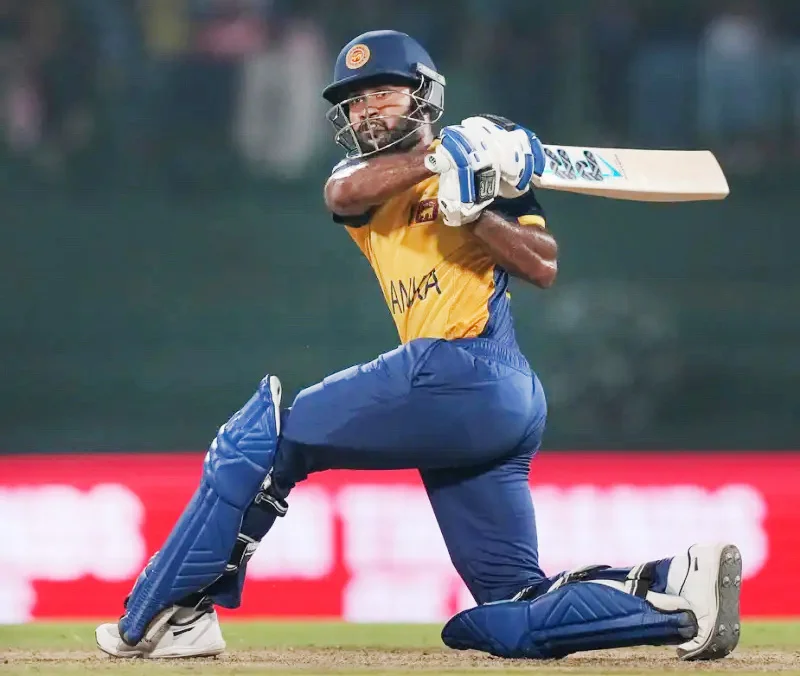
If you are late for work and fancy beating every red light on Galle Road to clock in on time, you are chasing a mirage. Try the same stunt on Baseline Road and you will learn soon enough that Colombo traffic plays by its own rules. Sri Lanka’s World Cup campaign was much the same. When you are ranked eighth in the world and expect to waltz into the semi-finals, that is wishful thinking. And as the old saying goes, if wishes were horses, beggars would ride.
Reaching the Super Eight was no mean feat. Heavyweights like Australia were bundled out in the first round, while Afghanistan, tipped as dark horse, never quite got out of the paddock. On paper, Sri Lanka did what was expected of them. So why the hue and cry?
Because this was a home World Cup. England and New Zealand were served up on a silver platter in familiar conditions and Sri Lanka dropped the ball at the business end. Those were games there for the taking, matches where one nerveless knock could have turned the tide. Instead, they blinked. The final Super Eight clash against Pakistan, however, offered a glimpse of what this side can do when the pitch suits their armoury. On helpful tracks, they have begun to punch above their weight, trading blows with sides ranked well above them.
Yet the turbulence off the field continues to undo the good work on it. Perhaps it is time to think outside the box and appoint captains specifically for World Cups, leaders given a fixed tenure for the tournament cycle, empowered to plan without looking over their shoulders. Sri Lankan cricket has witnessed enough bloodless coups over the past 15 years to fill a political thriller.
In the past, it was established players, permanent fixtures in the XI, who engineered these power shifts when a younger man was handed the reins. Now the worrying trend is different. Even those unsure of their own places in the side are sharpening knives behind closed doors. That is a slippery slope and a dangerous precedent for a team trying to build a culture of accountability.
Not everything about this campaign was doom and gloom. Far from it. The fielding, for one, was razor sharp. Half-chances stuck, direct hits flew in like guided missiles and the athleticism in the ring saved crucial runs. For years this was Sri Lanka’s Achilles’ heel. Now it is fast becoming a strength, the result of sustained emphasis and hard graft behind the scenes.
Then there was young Pavan Rathnayake. Drafted into the squad barely a week before the tournament, the 23-year-old was expected to soak in the atmosphere and learn the ropes. Instead, he walked in at the deep end and swam like a seasoned pro. Rathnayake not only held the middle order together but finished as Sri Lanka’s second highest run-getter behind Pathum Nissanka, striking at over 150. He counter-punched spinners, found gaps with soft hands and cleared the ropes with fearless intent. It was a breakout campaign that left many wondering why he had been warming the benches for so long.
True, his domestic T20 numbers were hardly headline-grabbing. But selectors are paid to look beyond spreadsheets and see temperament, technique and ticker. Thank God Sri Lanka once had a man like Duleep Mendis backing a young Sanath Jayasuriya when the numbers did not stack up. Duleep saw the bigger picture and refused to lose faith.
by Rex Clementine

Former Nannapurawa MV athlete Madushani Herath established a new Sri Lanka record in the women’s triple jump on the final day of the selection trial held at Diyagama on Sunday.
Currently, a management student of University of Kelaniya, Madushani cleared 13.68 metres to erase the record held by Vidusha Lakshani. Lakshani’s 13.66 metres record remained unshaken since 2019.
Madushani’s coach Krishantha Kumara said that the record breaking performance was a result of hardwork and combined coaching effort.

PCB fines Pakistan players for underwhelming T20 World Cup campaign

Iran strikes Qatar and Saudi energy sites as US jets shot down by Kuwaiti ‘friendly fire’

India and Canada agree series of deals as Carney and Modi reset ties in Delhi

Oil prices rise after ships attacked near Strait of Hormuz

War photographer Paul Conroy dies as tributes paid

Allies of US in the Gulf bear brunt of Iran attacks

‘Dates have the highest sugar content to fight Coronavirus’

Sunday Island 27 December – Headlines

#SundayIsland 17th December – Headlines

Sunday Island – 28th March

Sunday Island Headlines – 21 March

Sunday Island – 21st February – Headlines
-

 Opinion4 days ago
Jamming and re-setting the world: What is the role of Donald Trump?
-

 Features4 days ago
An innocent bystander or a passive onlooker?
-

 Features6 days ago
Building on Sand: The Indian market trap
-

 Features5 days ago
Ratmalana Airport: The Truth, The Whole Truth, And Nothing But The Truth
-
 Opinion6 days ago
Future must be won
-

 Business6 days ago
Dialog partners with Xiaomi to introduce Redmi Note 15 5G Series in Sri Lanka
-

 Business5 days ago
IRCSL transforms Sri Lanka’s insurance industry with first-ever Centralized Insurance Data Repository
-

 Sports7 days ago
CEA halts development at Mandativu grounds until EIA completion