
Opinion
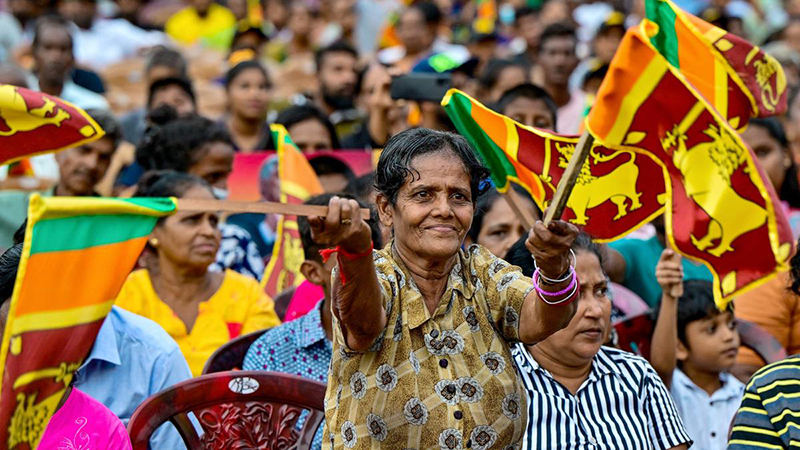
Importance of ethical campaign

by Dr. Justice Chandradasa Nanayakkara
The period leading up to the current President’s assumption of power was characterised by a series of mass protests and agitations calling for a transformation in political culture, with citizens demanding a new and ethical political environment in the country. The presidential election held on September 29th brought about a dramatic shift in the nation’s political landscape by installing a left-oriented leader Anura Kumara Dissanayake as President who promised to foster a new political culture.
In many democratic countries, political parties and candidates articulate their ideologies and policies on pressing issues confronting the people during their election campaigns. The primary objective of these campaigns is to galvanise existing supporters to vote while attracting uncommitted voters whose support may significantly influence the election outcome. Campaign strategies often try to dissuade supporters of opposing parties by questioning the viability of their policies Through these campaigns, candidates attempt to reach, communicate with, and persuade voters that they deserve their votes.
For campaign purposes, candidates adopt a variety of techniques, including traditional and social media, mass meetings, and other public events, to convince voters of their ideologies and policies so that they can make well-informed decisions before casting their ballots in the election. Therefore, election campaigns become vital to achieving these goals and instilling a sense of civic duty in people. In some democratic countries, public media is allocated to candidates for these purposes.
Conducting an ethical campaign is essential within the context of the new political culture that the present administration has pledged to uphold. Elections constitute one of the most consequential events in the political sphere, as they fundamentally contribute to democratic governance. People generally vote for their preferred candidates expecting they will address their needs and solve their problems. Therefore, conducting election campaigns that align with principles of civility and ethics under the new political culture that the present government advocates will become crucial.
Some argue that the realms of politics and ethics do not mix and the two realms are incompatible. They claim what counts in politics is power and using power, which is not bound by ethical rules. Power is the process of making and implementing decisions binding upon society. Ethics, on the other hand, is a set of beliefs and customs shared by members of society about what is right and wrong. Ethics is primarily about righteous living; nevertheless, politics and ethics are inseparable. Sometimes, what ought to be ethical values can become law through legislation. Therefore, the intersection of politics and ethics is a complex issue that cannot be disentangled. Many circumstances arise in which politics, ethics, and morality become intertwined, demanding that the government make decisions with profound ethical consideration. Therefore, ethical considerations play a pivotal role in governance.
In representative democracies, ethical norms should lie at the forefront of the state’s decision-making process, as they can profoundly affect people’s lives. Ethical considerations in politics are essential for ensuring that political leaders act in the best interests of society and uphold fundamental values such as justice, fairness, and accountability. No ruler can govern effectively without at least some degree of consent from the ruled, as laws enforced by a ruler must be rooted in ethical norms to be effective.
Ethical political campaigns are characterised by honesty, integrity, and transparency, enabling the electorate to make informed decisions. Conversely, unethical campaigning undermines public trust, fosters confusion, creates divisions amplifies cynicism, and leads to negative sentiments about opponents.
Therefore, political leaders have a responsibility to uphold these ethical norms in their political campaigns and decision-making processes.
A marked decline in civility and decency in the conduct of election campaigns was observed in many of the campaigns held so far in this country. Unethical conduct among politicians during election campaigns knows no borders. There is no shortage of insults in political campaigns. The decline in civility and decency in political discourse has become so commonplace that candidates stoop to dirty campaigning, such as name-calling, belittling opponents, taking personal jabs, mud-slinging, and uttering brazen falsehoods. Campaigns are mainly hinged on the personalities rather than their political philosophies. Indulging in chauvinistic inflammatory rhetoric has also become part of election campaigns in this country. This obnoxious behaviour can assume serious proportions in many upcoming election campaigns unless necessary measures are taken in time.
It is the responsibility of our candidates to run issue-oriented campaigns without stooping to such low tactics. When politicians prioritise disparaging their opponents without addressing crucial issues, they foster a toxic political environment that erodes public trust and detracts from the issues that matter to people. Eventually, people are left with a political landscape marred by negativity and hostility.
Public perception often paints politicians as corrupt, self-serving, and egoistical, and fail to meet public expectations. Many avoid answering pressing questions and rarely accept responsibility for their misdeeds. They often lack transparency in their actions, leading to growing disenchantment with political institutions and the individuals who serve within them. Some candidates campaign on agendas of retribution and retaliation based on ethnicity, religion, and caste. Therefore, it is up to the people to critically evaluate political parties and their policies rather than supporting them based solely on ethnicity, religion, caste and personal affiliations.
The public has generally expressed negative views about the quality of candidates running for political office in our country. People’s evaluations of the quality of candidates have become increasingly negative. There are widespread concerns that the quality of candidates running for office has declined tremendously in recent years. Reflecting on the quality of some parliamentarians who composed the previous parliament, several members were accused of criminal offences and their conduct in the well of the parliament, to say the least, is abhorrent. When an august assembly like parliament is composed of one or two such members of debased character people tend to lose confidence in the entire parliamentary system and political culture suffers in the country
Moreover, given the highly competitive nature of political elections, candidates should have equitable access to whatever public resources are available for their campaigns, as this ultimately reflects the people’s will. There should be equitable opportunities for all candidates to convey their respective positions to voters ensuring a fair playing field that reflects the will of the people. Therefore, ethical considerations should guide when allocating resources to ensure that the distribution is fair and just.
In the context of democracy and equal social rights, election processes must be conducted fairly and decently. The electoral process should be free from manipulation.
Transparency and accountability regarding political financing are also essential for maintaining the integrity of political campaigns. There should be complete disclosure of the sources of campaign funding, including substantial contributions by interest groups supporting candidates and political parties. People believe that enforcing expenditure limits will reduce the influence of money in politics. There should be limits on the amount of money individuals and groups can spend on campaigns, as only the wealthy have the chance to influence the outcome of elections.
Moral turpitude and corruption are also two issues that arise often in politics. Corruption refers to the abuse of power or influence for personal gain rather than serving the public. It is pervasive and can take many forms from bribery, kickbacks, and commissions to conflicts of interest and misuse or abuse of authority. Corrupt politicians line their own pockets at the expense of their constituents. Moral turpitude refers to an act or conduct that gravely violates the sentiment or accepted standard of the community. It comprehends acts of baseness, vileness, sexual promiscuity or depravity in private and social life. Behaviours such as lying, also defrauding, sexual assault, and accepting financial help from illegal sources can come under this category. Politics is concerned with the governance of society, and the decisions made by political leaders accused of moral turpitude can have a profound negative impact on people’s lives. Therefore, it is crucial candidates running for political office have impeccable character free of moral turpitude and be worthy of respect. The presence of morally impeccable candidates in politics enables election campaigns to be conducted ethically and accords with the new political culture that the present government advocates. It must be remembered politicians are often judged not only on their political performances but also on their moral character.
Many factors motivate people to engage in politics. Some are attracted by the lure of power and some are attracted by glory and prestige while others seek self-aggrandizement and a few others do so to serve their fellow citizens as best they can.
People should not support a political party for personal reasons without critically assessing its policies. A healthy political culture is worthy of human dignity and consistent with society’s noble values. Politically credible leaders act in a manner that upholds their credibility and trustworthiness.
Further, it must be remembered, that politicians are subject to continual scrutiny by the press. They are not immune to critical scrutiny by the public and the media. They work in the full glare of publicity, and whatever they do is subject to critical evaluation in the media. They are under constant surveillance, and their positions lay them open to attack from all sides. Therefore, it behoves them to conduct themselves in an exemplary manner.
People expect a great deal from their representatives; they expect them to be sensitive to people’s problems and to be ethical, honest, and trustworthy. Their decisions profoundly affect the public. The prestige of the legislature and other institutions largely depends on adherence to core values, which unfortunately are observed in the breach.
The legacy of the past political leaders, who fought valiantly for the country’s independence and a more equitable and just society underscores the importance of exemplary leadership in a democratic state. The future of this country largely depends on leaders who can earn public confidence. Leadership, in turn, depends on the confidence placed in them by the people.
The prevailing political landscape has been significantly influenced by Western ideals advocating for democratic governance, equality before the law and the rule of law, and secularism. Secularism, as the cornerstone of a truly democratic society safeguards religious freedom mandating the separation of religion and the State. It does not favour any particular religion. People should also recognise that ours is a multi-ethnic, multicultural, and multi-religious country, and the aspirations of all communities must be respected.


What has happened to our beloved nation, its loving people, and our once high-esteemed culture? At a time when the country has become the cynosure of many through the peace walk led by the Buddhist clergy together with Aloka, with people from all walks of life gathering in support, it clearly shows how deeply our people are yearning for peace, unity, and harmony.
Yet, while this noble message unfolds, an incident of the opposite nature at the very gateway of our nation has brought shame and concern. Allegations involving clergy linked to narcotics raise painful questions about morality, manipulation, and the misuse of trust. If they were trapped knowingly or unknowingly by interested parties, it is even more tragic.
Sri Lanka deserves better. Our people deserve better. Let truth prevail, justice be done, and may our nation return to dignity, wisdom, and peace.
These painful contradictions reveal a deeper truth: Sri Lanka today is confronting not merely isolated scandals, but a growing national crisis. The drug menace has become a direct threat to the nation’s social harmony, economic stability, political order, and long-term security. What was once seen as only a law-enforcement matter must now be understood as a strategic national challenge.
National security is not limited to borders, weapons, or military preparedness. True national security rests on three pillars: social stability, economic resilience, and political confidence. When drugs infiltrate communities, corrupt institutions, destroy youth potential, and empower organised crime, all three pillars begin to weaken. That is the danger Sri Lanka faces today.
Recent large-scale detections by the Sri Lanka Navy, law-enforcement agencies, and intelligence services indicate the seriousness of the threat. If reported seizure figures have sharply increased, it may reflect stronger enforcement as well as the scale of trafficking attempts. Either way, it sends a clear warning: criminal syndicates see Sri Lanka as fertile ground for their operations.
A central question many citizens ask is whether Sri Lanka has become only a transit point, or whether domestic demand itself is driving these operations. Increasingly, observers note that local consumption cannot be ignored. Drug traffickers do not repeatedly risk sophisticated smuggling methods unless profits justify the danger. Where there is sustained demand, supply networks become more determined, more creative, and more ruthless.
This means Sri Lanka is not only confronting traffickers at sea or airports it is confronting an internal market. That market is built through addiction, peer pressure, targeted recruitment, nightlife culture, workplace social circles, and the normalisation of substance use among sections of society. Dealers identify vulnerable youth, socially isolated individuals, thrill-seekers, and stressed professionals. Dependency becomes their business model because dependency guarantees recurring revenue.
The criminal economy behind narcotics has no religion, ethnicity, caste, or political loyalty. These syndicates recognise only profit. They exploit any route, corrupt any system, intimidate any rival, and manipulate any weakness. They may finance violence, use debt bondage, recruit couriers, infiltrate businesses, or exploit social divisions if it protects revenue streams. This is why the drug menace must never be communalised or politicised. Crime has no creed.
Equally dangerous is the corruption ecosystem that narcotics can generate. Where drug money grows, bribery follows. Where bribery spreads, public trust declines. Where trust declines, institutions weaken. Thus, the narcotics problem becomes not only a criminal issue but a governance issue. If left unchecked, it can distort markets, compromise officials, and create parallel power structures.
Sri Lanka therefore stands at a defining moment. The government’s recent emphasis on confronting organised crime and narcotics can become meaningful, but only if it evolves into a sustained national mission rather than a temporary campaign. Raids and arrests are necessary, but seizures alone do not win this war. Every intercepted shipment is a tactical success; it is not yet a strategic victory.
To prevail, Sri Lanka requires three simultaneous lines of effort:
1. Cut Supply
Border security must remain relentless. Agencies such as the Sri Lanka Navy, Sri Lanka Customs, police narcotics units, and intelligence services need modern surveillance, financial investigation tools, and stronger coordination. Maritime interdiction, container screening, asset seizure, and anti-money-laundering action are essential.
2. Reduce Demand
Supply exists because demand exists. This is where schools, families, mosques, temples, churches, kovils, youth clubs, and employers become national security stakeholders. Prevention must begin early. Children need resilience education. Parents need awareness tools. Communities need courage to report suspicious activity. Religious institutions can restore moral clarity and social accountability. Sports, arts, skills training, and employment pathways can redirect vulnerable youth toward dignity and purpose.
3. Rehabilitate Victims
Addiction should not be treated only as crime; it is also a health and social challenge. Many users are trapped, manipulated, or psychologically dependent. Rehabilitation must include counseling, medical support, vocational reintegration, and family healing. A person recovered from addiction is one less customer for traffickers and one more citizen restored to society.
The most successful anti-drug societies combine enforcement with community ownership. Sri Lanka must do the same. Villages, neighborhoods, apartment communities, and workplaces should become protective ecosystems where dealers cannot hide and vulnerable people are not abandoned. When faith leaders, teachers, parents, and police cooperate, traffickers lose anonymity.
There is also an urgent communication battle. Drug culture is often marketed through glamour, rebellion, or status. That false narrative must be defeated. Society must expose the truth: drugs destroy ambition, fracture families, damage mental health, fuel crime, and enrich predators. Prevention messaging must be modern, digital, youth-oriented, and continuous.
Political Will Must Replace Political Theater
Political leadership is equally important. This issue cannot be seasonal, symbolic, or used for partisan point-scoring. A national consensus is needed. Governments may change, but anti-narcotics strategy must remain professional, consistent, and insulated from political interference.
Sri Lanka has overcome terrorism, disaster, and economic hardship through resilience. It can overcome this menace too, obut only through unity, discipline, and moral seriousness. Every parent, teacher, religious leader, police officer, sailor, customs officer, doctor, journalist, and young citizen has a role.
This Is Not Just a Drug War, It Is a Fight for the Soul of the Nation
This is not merely a campaign against drugs. It is a campaign for the soul of the nation. It is about protecting our children, preserving our communities, defending our institutions, and securing our future.
Sri Lanka has awakened to the danger. The moment must not be wasted. If faith, family, and state walk together, drugs will have no place to hide.
Mahil Dole is a former senior law enforcement officer and national security analyst, with over four decades of experience in policing and intelligence, including serving as Head of Counter-Intelligence at the State Intelligence Service of Sri Lanka and a graduate of the Asia Pacific Center for Security Studies in Hawai, USA.
By Mahil Dole
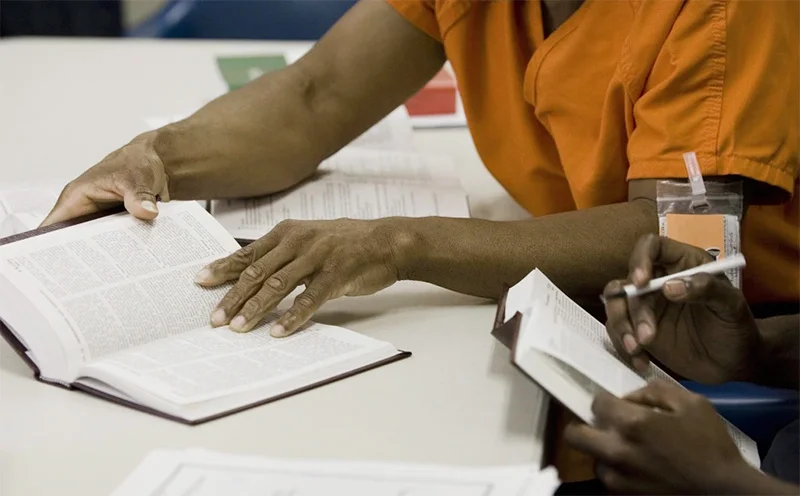
A quiet but powerful reform in Brazil is challenging traditional thinking about prisons. Instead of viewing incarceration purely as punishment, Brazil has introduced a system that rewards learning, reflection, and personal growth — and the results deserve serious attention in Sri Lanka.
Since 2012, Brazil has implemented a nationwide programme allowing prisoners to reduce their sentences by reading books. This is structured and measurable as follows:
* Prisoners must read approved books (literature, philosophy, science, classics)
* They must submit written reviews or essays proving comprehension
* Each completed book earns a reduction of four days from their sentence
* The system is capped at 12 books per year (maximum 48 days reduction annually)
This initiative, known as “remission through reading,” is part of Brazil’s broader legal framework aimed at rehabilitation.
Brazil’s prison system has long struggled with overcrowding, violence, and high re-offending rates. The reading programme intends to serve several purposes:
* Improve literacy among inmates
* Encourage self-reflection and empathy
* Reduce idleness and prison violence
* Support reintegration into society * Improve self-confidence and broaden knowledge
A mind that is gainfully engaged, is less likely to return to crime.
Traditional prison systems, including Sri Lanka’s, largely focus on containment. The benefits rehabilitation is often underestimated.
Brazil’s model represents a shift:
* From punishment to transformation
* From idle time to structured learning
* From release to reintegration readiness
This is not soft justice. It is smart justice.
Sri Lanka faces similar challenges:
* Overcrowded prisons
* Limited rehabilitation programmes
* High social cost of re-offending
Introducing a sentence remission through a reading programme such as this, could deliver immediate and long-term benefits.
Practical Advantages
1. Low cost, high impact
2. Reduces prison congestion
3. Improves post-release outcomes
4. Creates a culture of discipline
How It Can Be Implemented in Sri Lanka
* Establish prison libraries
* Create approved reading lists in Sinhala, Tamil, and English
* Require written or oral reviews
* Grant limited sentence reductions per book
* Integrate with education and vocational programmes
For inmates with low literacy:
* Guided reading sessions
* Audiobooks
• Basic literacy training
Individuals and organizations may be invited to volunteer towards joining this humanitarian effort This is not just about books. It is about redefining prison.
A prisoner who reads, reflects, and learns, is no longer just serving time — he is preparing for a different, more productive life.
Is that not the true purpose of justice?
A Concerned Citizen – Moratuwa
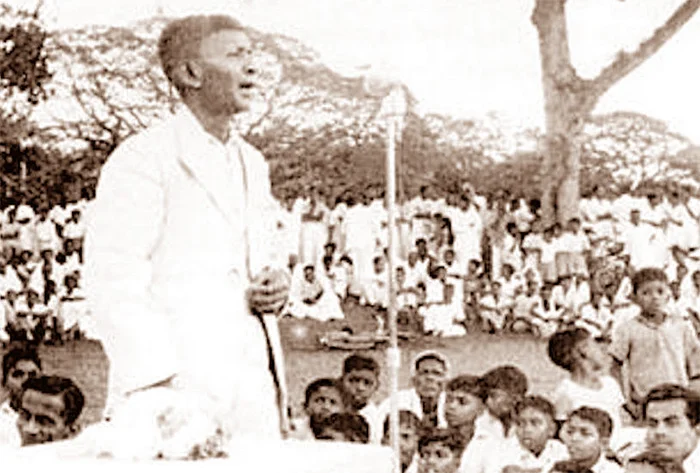
S. J. V. Chelvanayakam: Visionary and Statesman
S. J. V. Chelvanayakam KC Memorial Lecture Delivered at Jaffna Central Collage on Sunday, 26 April, by Professor
G. L. Peiris – D. Phil. (Oxford), Ph. D. (Sri Lanka); Rhodes Scholar, Quondam Visiting Fellow of the Universities of Oxford, Cambridge and London; Former Vice-Chancellor and Emeritus Professor of Law of the University of Colombo.
(First part of this article appeared inThe Island on 27 April 2026)
V. Subsequent Initiatives
Federalism, integral as it was to the value system which anchored the political life of Chelavanayakam, defies easy definition. Indeed, as the facilitators of the Sri Lanka peace process, when it was pursued at the international level, the Royal Norwegian government considered it central to their function to inculcate in the LTTE an understanding of the nuances of federal systems of government in practice in order to overcome inherent inhibitions. To this end, they arranged extensive travels for the political affairs committee of the LTTE in Nordic countries. Subsequent to his defection with almost the entirety of the cadres in the Eastern Province, arguably the greatest blow sustained by the LTTE in its entire history, Karuna was to declare that it was this exposure which opened his eyes to a world outside the jungles of the Vanni.
Federalism, as a concept, represents a spectrum rather than a split. This is brought out clearly in three sets of constitutional proposals by the Chandrika Kumaratunga administration during the period 1995 to 1997. They oscillated from one end of the spectrum to the other in establishing the line of demarcation between the functions of the central government and the periphery, in a coherent constitutional scheme.
I would like, at this point, to pay tribute to the legacy of a valued friend and colleague, Dr. Neelan Tiruchelvam, who co-authored with me, as Minister for Constitutional Affairs, Ethnic Affairs, and National Integration, with the support of many others, including Dr. Jayampathy Wickramaratna, the proposals of 1995, 1996, and 1997. Neelan, who had been a fellow undergraduate in the University of Sri Lanka, had proceeded to Harvard University while I was the recipient of a Rhodes Scholarship at Oxford. A further coincidence was the entry of both of us together into the Parliament of Sri Lanka in August 1994. He was brutally assassinated because he stood in the way of the LTTE’s claim to exclusivity of representation of the interests and aspirations of the Tamil people. The future might well have been different, had he lived.
The Constitution Proposals of 1995 embodied strong features of federalism, and indeed went well beyond. Regional Councils, forming the gist of the proposals, were vested with executive, legislative and judicial competence in the subjects assigned to them. In all key areas, these powers were to be protected against encroachment by the centre. With regard to finance, Regional Councils were to have powers of taxation, including international borrowings and the power to promote foreign investment, international grants and development assistance. In the crucial area of law and order and policing, provision was to be made for a regional police service headed by a regional police commissioner appointed by the Chief Minister. Land was clearly identified as a devolved subject, and state land within a region was to be vested in the Regional Council, with limited reservations in respect of requirements by the central government. This document represents the strongest movement towards a federal structure in the entire evolutionary process in Sri Lanka.
The Proposals of 1995 were modified by a more detailed draft in 1996, which represented a regressive development. The basic weakness consisted of conferment of awesome powers on the Presidency, fundamentally altering the balance of power between the Centre and the regions, and making the latter vulnerable to capricious exercise of discretion which could strike at the very root of the regions’ authority. The mere ipse dixit of the President was to prevail in a situation where the entire sweep of the regions’ powers, entrenched by constitutional provisions, was sought to be negated by executive action at the Centre, no recourse being available to the region for access to the courts. This was hardly likely to inspire confidence.
A corrective trend then set in, resulting in a further set of Proposals published in 1997. The solution chosen this time was conferment on the regions of a power, to veto proposed constitutional amendments to the content of the chapter on devolution of power to the regions and the two schedules to the draft constitution which dealt with the scope of the regions’ powers and the division of powers between the centre and the regions. A drastic curtailment of Parliament’s powers, this was movement from one extreme to the other. Invitation to arbitrary action was shifted from centre to periphery. It is scarcely surprising that these Proposals were seen to contain within them the seeds of their own destruction.
The most elaborate and thorough response to the widely acknowledged imperative of constitutional reform was contained in the Constitution Bill which, as Minister for Constitutional Affairs, I presented on behalf of President Kumaratunga on 3 August 2000.
While the nomenclature of federalism was not specifically invoked, its essence was captured in the provision that the Republic of Sri Lanka shall consist of “the institutions of the centre and the regions”. The legislative power of the people was to be exercised “by Parliament and by Regional Councils”, while the executive power of the people was to be exercised not only by the President, but also by “the Governors acting on the advice of the respective Chief Ministers and Regional Boards of Ministers”. Governors of regions were to be appointed by the President “in consultation with the Prime Minister and with the concurrence of the Chief Minister of the region”. Exclusivity of legislative power in respect of devolved subjects was explicitly conferred on the regions. No element of equivocation characterised treatment of the controversial subjects of land and police powers. With regard to the former, the applicable provision was that “Every region shall succeed to all state land within the region and be at the disposal of the regional administration of that region for the purposes set out in the regional list”. As for the latter, there was to be “a regional police service for each region, headed by a regional police commissioner who shall be appointed by the regional police commission with the concurrence of the Board of Ministers of the region”. Equally striking on the subject of finance was the amplitude of authority conferred through the Consolidated Fund of the region.
Robust hostility of the LTTE to implementation of these proposals as the core of a constitutional settlement had its gruesome manifestation in the brutal killing of Dr. Neelan Tiruchelvam. The chilling effect on the major Tamil formation in Parliament, the Tamil National Alliance, of which Dr. Tiruchelvam had been an active member, was overbearing.
Compounding the problems was the attitude of the main opposition party, the United National Party, which was disinclined to cooperate after their narrow defeat in the presidential election of December 1999. It was the nation’s misfortune that the culture of adversarial politics trumped a national initiative, compelling the government to withdraw the Bill during the debate in Parliament.
VI. Elevation to an International Profile
It was against the backdrop of failure of the constitutional process that direct negotiations were embarked upon between the Government of Sri Lanka and the LTTE, with Norwegian facilitation in September 2002. The insuperable obstacle, it soon became evident, was the ethos of the LTTE. Dominant in their mindset was the unshakable conviction of military invincibility. In light of this, Prabhakaran saw no necessity to make any significant concession and believed fervently that the state of Tamil Eelam was well within reach.
Anton Balasingham, who represented Prabhakaran in six rounds of direct discussions across the world, was the only member of the LTTE delegation with a grasp of underlying issues. As my relationship with him grew less formal, I decided to put to him a candid question outside the conference floor. I told him that I saw events moving relentlessly, much in the manner of a Greek tragedy, from the LTTE’s point of view, towards the climax. There was nevertheless a narrow window of opportunity, and I asked him why they were intractably resolved to make no use of it.
His response remains indelibly etched in my mind. He told me that he had nothing to reproach himself with: he had done his best to present the reality of the situation to his leader, but the latter, intransigent in his convictions, resisted reason to the point where Balasingham was convinced that further attempts at persuasion involved peril to his own life. Erik Solheim, who had a conversation with him a few days before his death in London, told me that Balasingham died, dispirited and disillusioned.
The theory that the LTTE, at a decisive phase of the peace negotiations, deliberately jettisoned the option of external self-determination, is total delusion. This was a myth around what came to be known as the “Oslo Declaration” during the third session of talks in the Norwegian capital. At the end of this session, the official communique by the facilitators declared: “The parties agreed to explore a solution founded on the principles of internal self-determination in areas of historical habitation of the Tamil-speaking peoples, based on a federal structure within a united Sri Lanka”.
The LTTE’s understanding of “internal self-determination”, however, was set out with clarity in the following statement: “We are prepared to consider favourably a political framework that offers substantial regional autonomy and self-government in our homeland on the basis of our right to internal self-determination”. But the sword of Damocles was ever present.
The caveat was added, with unrelenting emphasis, that “If this internal element of self-determination is blocked and denied, and the demand for regional self-rule is rejected, we have no alternative other than to secede and form an independent state”.
The LTTE, then, left wide open the option of external self-determination.
They purported to derive authority for their position from the United Nations Declaration in 1970 on Principles of International Law concerning Friendly Relations and Cooperation among States and from the judgment of the Supreme Court of Canada in 1998 in the Quebec Secession case.
The LTTE’s rigid stance was expressed with precision in their proposal for the establishment of an Interim Self-Governing Authority and the conferment of all-encompassing jurisdiction upon it: “The ISGA shall have plenary power for the governance of the North-East, including powers in relation to resettlement, rehabilitation, reconstruction and development, including improvement and upgrading of existing services and facilities, raising revenue, including imposition of taxes, revenue, levies and duties, law and order, and over land”. It was added for good measure that “These powers shall include all powers and functions in relation to regional administration exercised by the government of Sri Lanka in and for the North-East”. This was, in all but name, the blueprint of a separate state.
This went well beyond the solution which Mr. Chelvanayakam, in his mature judgment, deemed feasible in the political and economic context of our country.
VII. A Final Opportunity
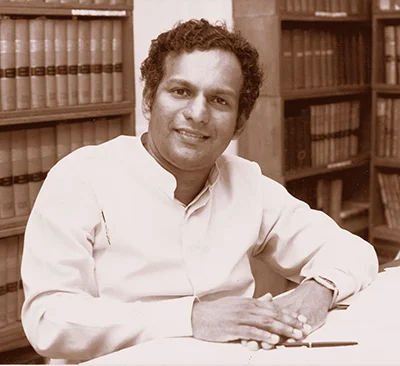
Neelan
Events, then, seemed to be moving rapidly towards an impasse incapable of resolution through dialogue. One final opportunity, albeit in uniquely distressing circumstances, appeared to present a lifeline.
This was the tsunami which struck Sri Lanka on Boxing Day, 26 December 2004. Since much of the destruction, especially on the east coast, was in areas controlled by the LTTE, there was the urgent need for a collaborative mechanism between the government and the LTTE to deliver relief and undertake immediate reconstruction. Consequently, a painstaking attempt was made to formulate a pragmatic framework for collaboration, its parameters strictly confined to the matter in hand and devoid of political controversy to the maximum extent possible. President Kumaratunga attached great importance to the resulting P-TOMS mechanism, which, in her judgment, held out the last chance for a successful peace negotiation.
However, the Supreme Court, in an Interim Order, struck down vital portions of the Agreement dealing with control of resources for urgently required construction and rehabilitation work. The ensuing message was unfortunate, in that serious doubt was cast on the capability of structures of the Sri Lankan state to evolve an appropriate mechanism, even in the face of as excruciating a disaster as the tsunami which claimed more than 35,000 lives.
VIII. Conclusion
Despite this unprepossessing trajectory of events, I would make bold to suggest that a sanguine outlook is not entirely unrealistic. The basis of my confidence in this regard is my experience, over the span of 26 years, as a teacher, Dean of the Faculty of Law, and Vice-Chancellor of the University of Colombo. It is my firm conviction that the youth of our country are not prey to narrow communal attitudes and prejudices.
Relations among the different ethnic communities in the environment of the country’s universities are typified by camaraderie rather than mutual acrimony or suspicion. Language, certainly, is a barrier. In my own undergraduate days in Peradeniya and Colombo, we made friendships on the basis of shared interests and values and were able to communicate comfortably in the English language. Stratification and compartmentalization are the implacable enemy of the forging of a national consciousness, especially in sentient minds.
When as Minister of Education and Higher Education, I was invited to preside over the annual prize-giving at the oldest girls’ schools in Sri Lanka and even South Asia, situated in Uduvil, I drew attention to the need for greater interaction with peers in the South through activities such as sports, debating, drama, and cultural pursuits. Reciprocally, I spoke to the leadership of schools in the South, urging them to reach out with enhanced vigour to the North to forge bonds which could potentially last a lifetime.
These are the values which informed the bedrock of the life and career of S. J. V. Chelvanayakam. The tempests of politics, in substance if not in style, were just as intense then as they are now, but the unwavering strength of what he held sacred, never succumbing to expediency, formed the wellsprings of the fortitude which sustained him through these tempests. He made his tryst with destiny in a fulfilling and inspiring career of dedicated service, which stands out today as a beacon of light, all the more redeeming amid the cynicism and apathy so sadly evident around us. It is my privilege this evening to honour a Colossus whose influence survives long after him.

Dulani and Samarawickrama set up Sri Lanka’s victory in T20I series opener

Heat Index at Caution Level in the Northern, North-central and North-western provinces and in Kegalle, Trincomalee and Batticaloa districts during the day time

Showers or thundershowers will occur in most parts of the island after 1.00 pm

Treasury chief’s citizenship details sought from Australia

President Anura Kumara Dissanayake handing over a sapling of the Sri Maha Bodhiya in Anuradhapura to Ven Bhikku Pannakara

USD 625,000 meant for US Postal Service goes missing

‘Dates have the highest sugar content to fight Coronavirus’

Sunday Island 27 December – Headlines

#SundayIsland 17th December – Headlines

Sunday Island – 28th March

Sunday Island Headlines – 21 March

Sunday Island – 21st February – Headlines
-

 News6 days ago
Lanka faces crisis of conscience over fate of animals: Call for compassion, law reform, and ethical responsibility
-
 News5 days ago
Whistleblowers ask Treasury Chief to resign over theft of USD 2.5 mn
-

 News5 days ago
No cyber hack: Fintech expert exposes shocking legacy flaws that led to $2.5 million theft
-

 News2 days ago
BIA drug bust: 25 monks including three masterminds arrested
-

 Business3 days ago
Nestlé Lanka Announces Change in Leadership
-

 News2 days ago
Banks alert customers to phishing attacks
-
 News3 days ago
Hackers steal $3.2 Mn from Finance Ministry
-

 News6 days ago
USD 2 mn bribe: CID ordered to arrest Shasheendra R, warrant issued against ex-SriLankan CEO’s wife