
News
COVID-19 fallout, economic turmoil, and import disruptions impact poultry sector

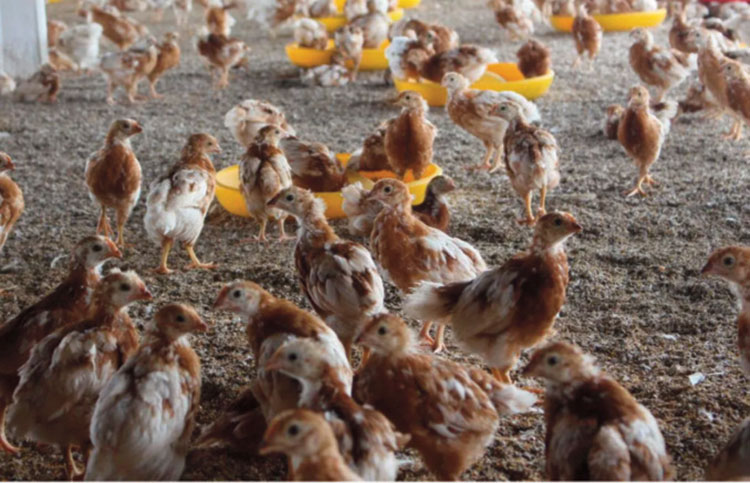
Sri Lanka’s Egg Price Crisis
The genesis of recent fluctuations in egg prices can be traced back to the COVID-19 pandemic, but the crisis was exacerbated by the mechanisms of the Ranil Wickremesinghe administration, Zahrah Imtiaz, Managing Editor of Singapore-based media organization, Asian Agribiz, which covers the Asian animal protein industry, has said in a recent article.
COVID created chaos in the poultry sector as farmers faced significant challenges in transporting their livestock, eggs, feed, and workers. With the distribution network in disarray and fewer buyers visiting farms, prices plummeted. At one point, farmers resorted to selling eggs at roadside stalls for as low as Rs 10 each, she said in an article for Project Footnotes, a web-based multimedia organization.
“As the pandemic continued, the poultry industry began to feel its full effects. The costs of imported raw materials, such as soybeans, vaccines, and other imported inputs skyrocketed due to rising shipping expenses. Compounding this, the Sri Lankan rupee depreciated, leading to a foreign exchange crisis that made imports increasingly difficult. The layer industry, which produces eggs, was slower to respond than the broiler meat sector, and the consequences became evident in 2022. By December 2022, egg prices had surged from Rs 22 per egg in January to Rs 70,” the article read.
Given below are excerpts of the article: “Several factors contributed to this dramatic increase. First, feed costs, which account for nearly 75 percent of production expenses, rose significantly. Small to medium-sized farmers, who dominate the layer industry, were hit hardest by the economic downturn and struggled to sustain their operations at such high costs. It’s estimated that over half of the egg farmers exited the industry during this period, resulting in a substantial supply shortage.
“In 2023, the industry faced another crisis: Avian Influenza (AI) was spreading rapidly in the countries where Sri Lanka imports its parent stock. These imported birds are raised locally to produce hatching eggs, then distributed to local layer farmers. Since it takes about five months for hens to mature and start laying eggs, the timing of these disruptions was critical. With the outbreak of AI globally, Sri Lanka found it challenging to replenish its stocks.
“In May 2023, the Government relaxed AI regulations to allow hatching eggs from AI-free areas, which helped inject much-needed stock into the industry. However, the long production cycle meant that it would take time for local farmers to recover. The high local egg prices at the time encouraged farmers to restart their operations.
“Amid these challenges, the previous regime imported eggs, disrupting the local market. In February 2023, for the first time, Sri Lanka opened its doors to egg imports from India, initially allowing them only for the bakery and hotel sectors under strict guidelines. This move was risky, as India had frequent AI outbreaks that could have potentially threatened Sri Lanka’s poultry industry, which had thus far remained free from the disease. Most layer farmers in Sri Lanka have small to medium farms, with open-cages.
“As imports began to flow and expanded to the retail market, they brought lower prices due to India’s cheaper production costs. However, the imported eggs were smaller than the larger, brown eggs that Sri Lankans typically prefer, and issues with cold chain transportation raised concerns about spoilage.
“The unpredictable nature of these imports introduced volatility in the local egg market, making it difficult for farmers to plan their production cycles amid sudden influxes of imported eggs.
“Fortunately, global feed prices began to stabilise by late last year, and shipping costs decreased. Feed prices have been more manageable this year, and production has steadily increased. By April, the Government declared that local production had become sufficient, halting imports. However, demand dropped in August, leading to a surplus and subsequent price crash.
“The primary concern for farmers at this stage is whether the revenue from egg sales will cover their feed and rearing costs. As the festive season approaches in November, demand is expected to rise again, but many farmers are not expecting much.
There were still a lot of eggs in the market, enough for the country’s daily consumption of seven million eggs. A lot of farmers are hoping current prices would hold, cautiously optimistic about how this eventful year will end.”



India are through to the semi-finals of the Asian Games men’s tournament, with persistent rain and a damp outfield in Nisshin forcing the abandonment of their quarter-final against Afghanistan 16 minutes before the scheduled toss. India’s higher seeding – determined by the ICC T20I team rankings – ensured they went through at Afghanistan’s expense.
India will next face the winners of Tuesday’s quarter-final between Nepal and Sri Lanka in Thursday’s second semi-final. As one of the four seeded teams – India, Pakistan and Bangladesh are the others – to qualify directly for the quarter-finals, Sri Lanka will progress to the semi-finals if their match against Nepal is washed out too.
By Shamindra Ferdinando
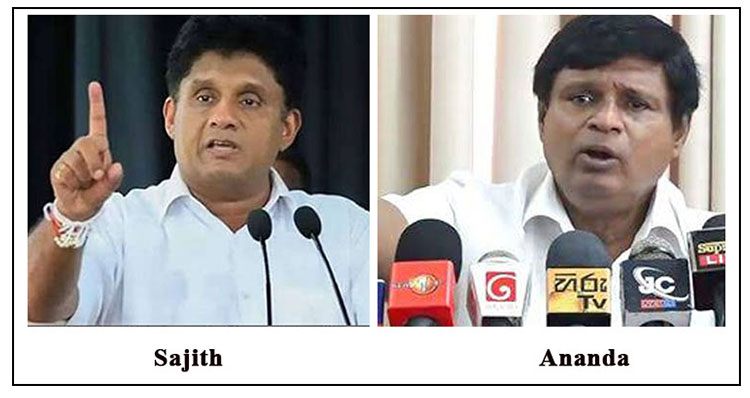
Alleging that the Samagi Jana Balawegaya (SJB) had betrayed the joint protest campaign, planned on 24 Sept., at Polduwa junction, against the enactment of the 22nd Amendment without securing public approval at a referendum, SJB trade union leader Ananda Palitha emphasised that SJB and Opposition Leader Sajith Premadasa should take remedial measures to restore the alliance against the NPP government.
Responding to The Island queries, the trade union activist said that he spoke on behalf of the vast majority of the SJBers who felt betrayed by the sudden declaration made by Colombo District SJB lawmaker S.M. Marikkar that they didn’t expect Opposition political parties’ participation, except that of the UNP.
Pointing out that at the behest of Premadasa, MP Marikkar belittled those who had pledged on 17 Sept. to join the SJB-led protest, Palitha emphasised the Opposition leader should be held responsible for restoring the shattered alliance. Palitha warned that the NPP, which was rapidly moving on a dictatorial path, would be the beneficiary of such treacherous actions.
When The Island raised the allegations pertaining to the 24 Sept. protest, Colombo District MP Premadasa said there was no basis for such claims. MP Premadasa called the accusations directed at him ‘rubbish.’
Palitha said that the pathetic failure on the part of the Opposition to genuinely challenge the authoritarian NPP should be examined, taking into consideration the government following an agenda almost 100 percent against the election pledges. Except the much touted anti-corruption campaign, the NPP reneged on all its election promises.
Recalling massive rice imports after having promised to stop the same in the run up to the national elections in 2024, Palitha alleged that the utterly corrupt NPP created an artificial shortage to enable import of large stocks of salt for their benefit. Massive earnings were made through commissions, Palitha said, urging the SJB to reiterate its commitment to the 17 Sept. pledge. According to him, the SJB’s irresponsible action sabotaged the joint Opposition agreement reached on the eve of President Anura Kumara Dissanayake completing two years in Office.
Palitha said that the disruption of a genuinely joint protest, at the last moment, caused irreparable harm to the Opposition. The unexpected eleventh hour declaration made by the SJB upset their efforts to organise a large scale two-day protest on 24 and 25 Sept. Palitha emphasised the responsibility on the part of the SJB leadership and its top management to spearhead an all-out campaign against the government. The former petroleum sector employee said that a strong and transparent campaign could undermine the NPP within as a section of its parliamentary group was deeply dismayed by the current policies and strategies.
Palitha, in his capacity as the trade union leader, invited the Bar Association of Sri Lanka (BASL) to join the trade unions’ protest on 25 Sept. to intensify pressure on the government. BASL President Rajeev Amarasuriya told The Island that they didn’t accept that invitation.
Former SLPP Kalutara District MP Sanjeewa Edirimanna said that the SJB was far more keen to organise a large-scale protest to counter the SLPP’s highly successful Anuradhapura rally held on 12 September than a genuine joint protest against the 22nd Amendment or the government. Edirimanna said that they realised that the SJB would probably join a joint protest campaign only after organising a gathering to counter the SLPP. According to him, the SJB hadn’t been honestly interested in a joint protest campaign. Instead, it sought to resist possible challenges from rival political parties, he said.
An aide to UNP leader and former President Ranil Wickremesinghe said that though the SJB announced they were welcome to join the 24 Sept. protest, the party never received an invitation. The official said that some UNPers joined the protest on their own though the party neither directed supporters to join or boycott the event. As the Janathawadi Joint Opposition decided against participating for want of formal invitations, the UNP, as part of that group, decided not to join the 24 Sept. protest.
By Norman Palihawadane
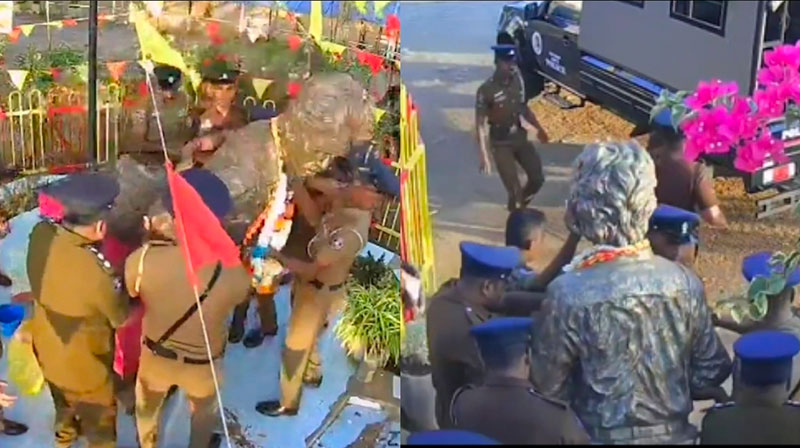
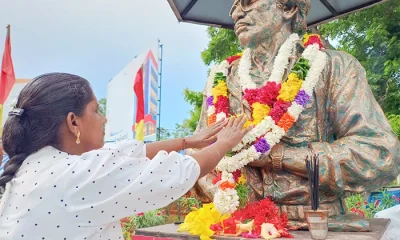
Police have removed a memorial statue of former LTTE member Rasaiah Parthipan, alias Thileepan, from the Thileepan Memorial Square in Nallur, Jaffna, following the conclusion of commemorative events, marking the 39th anniversary of his death.
The statue was removed in the early hours of yesterday (27), a day after the final day of the commemoration was held at the site.
CCTV footage from the memorial reportedly shows police officers removing the statue and taking it away in a vehicle.
Tamil National People’s Front (TNPF) Secretary and MP Selvarasa Gajendran alleged that more than 15 police officers arrived at the site, without prior notice, entered the premises wearing footwear, and forcibly removed the statue.
The reason for the removal and the legal basis for the police action had not been officially announced as of yesterday.
Thileepan, a former political wing leader of the LTTE, died in September 1987, after undertaking a hunger strike in Nallur, while making several demands of the Indian Government.
The memorial events, marking the 39th anniversary of his death, were held at the site on Saturday (26). A statue had been erected at the location in connection with the commemoration.

Mexico’s Pacific coast braces for Hurricane Polo

Washout against Afghanistan sends India into semi-finals

‘Still a lockdown’: Deadly floods hit Nepal tourism as peak season begins

Tharanga wins highly anticipated Asian Games gold

Tharanga on cusp of Asian Games Gold

Rain threat looms over lopsided India vs Afghanistan quarter-final

‘Dates have the highest sugar content to fight Coronavirus’

Sunday Island 27 December – Headlines

#SundayIsland 17th December – Headlines

Sunday Island – 28th March

Sunday Island Headlines – 21 March

Sunday Island – 21st February – Headlines
-
 News6 days ago
Mastermind Naufer Moulavi among 15 found guilty
-
 Midweek Review6 days ago
Thileepan’s fast unto death: An authentic narrative that many missed
-
 News7 days ago
Protest against setting up of cement factory in highly populated area near BIA
-

 Latest News5 days ago
Showers above 100 mm are likely at some places in the Western, Sabaragamuwa, Central and North-western provinces and in Galle and Matara Districts
-

 Editorial7 days ago
Trouble beginning in earnest
-
Editorial6 days ago
Big Bad Bills
-
 News7 days ago
Police may seek clarification from US
-
 News7 days ago
Govt. confident of 2/3 majority despite NPP split speculation