
Opinion
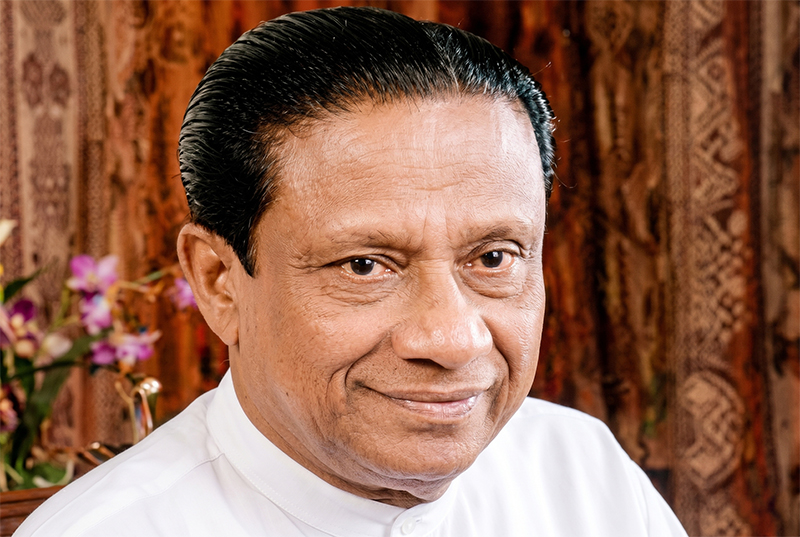
Servant of God: Thomas Cardinal Cooray OMI


36th Death Anniversary
The 36th anniversary of the death of His Eminence Thomas Cardinal Cooray falls on 29th October 2024. He was born as the fifth child to a devout catholic family of Periyamulla, Negombo on 28th December 1901. After pursuing his secondary education at St. Joseph’s College, Colombo, as a junior seminarian, he earned a B.A. degree from the University of London offering Botany, English Literature and Latin. He joined the Congregation of the Oblates of Mary Immaculate (OMI) making his first vows in 1925. His devout character and academic excellence won him the opportunity of being sent to Rome to further his priestly and missionary training. Ordained priest in 1929 he returned to Sri Lanka in July 1931 with doctorates in Theology and Philosophy to his credit. Assigned first to the staff of St. Joseph’s College, he was next appointed Warden to the Catholic University Hostel and finally became the first Sri Lankan Director of the Oblate major seminary in Borella in 1937. After an eight–year tenure in this office, he was nominated in mid-January 1945 as Co-Adjutor to the then Archbishop Jean-Marie Masson OMI whom he succeeded in July 1947. Thus he became the sixth and the first Sri Lankan Archbishop of the Metropolitan See of Colombo. In February 1965 Archbishop Cooray was created cardinal by Pope Paul VI, the first ever Sri Lankan to be thus honoured. While he is the third cardinal in the 200-year history of the Oblate Congregation, he is the fifth in Asia. Having administered the Archdiocese for nearly three decades he resigned in September 1976. His death occurred in the house of his retirement “Emmaus” closer to the Basilica Church at Tewatte (Rāgama) at the age of 87 and his mortal remains were interred in the crypt of the Basilica on November 3rd 1988 amidst a large crowd of bishops, priests, religious, lay faithful and State dignitaries. The servant of God had been 63 years an Oblate religious, 59 years a priest, 43 years a Bishop and 23 years a cardinal. It is well-known that he died in the odour of sanctity. The cause of his sainthood is now under the purview of the Vatican. An elaborate Memorial Celebration is scheduled for 26th October involving many churches in and around Negombo.
Multi-faceted Endeavours
The Cooray-era dawns with the independence period of Ceylon in 1948 and meanders through events of profound religious, socio-cultural and political changes. The dawn of independence saw the birth of nationalism igniting manifold conflicts, tensions and alienation among people. The majority-minority syndrome in the form of Sinhala-Buddhist ethno-nationalism emerged as a reaction to the prevailing vestiges of colonial rule. Articulated in the Buddhist-Commission report submitted by the All-Ceylon Buddhist Congress, it was incorporated with the Act No 24 of 1955. Seen as foreign to the local culture, Christianity was perceived as a relict left by colonial powers. The situation normalised with the Constitution of 1972 which made Ceylon the Republic of Sri Lanka with Buddhism though given the foremost place also guaranteeing religious freedom for others. Cardinal Cooray attended the promulgation of this constitution on 22 May 1972. With the independence-era also leftist and Marxist ideologies began infiltrating into the country and Archbishop Cooray feared that such influence would derail the benefits of independence, adversely affect the religious culture of the people and even seep into the universities. However, Cardinal Cooray always steered clear of political involvements yet standing strongly for social justice and fundamental rights. He dreamt of a motherland of peace and prosperity with differences reconciled in true patriotism and envisioning it an oasis of national unity and ethnic harmony.
Challenges and Issues of Crisis
Archbishop Cooray faced many challenges such as the 1960/61 schools take-over when out of the over 600 Grade-III schools run by the Catholic Church, the archdiocese of Colombo lost over 250. He could safeguard only some Grade I and II schools conceded but retained at heavy cost. Today, these same schools are prestigious and well-known for the quality of education, discipline, safety and character formation. Though bereft of schools, to ensure the formation of Catholic children, Cardinal Cooray initiated the Daham Pāsala church programme as well as opening a teacher-training center in 1972.
Successive governments which often vacillated, paved the way for social unrest amongst the youth which flared up in the youth insurrection of April 1971. The island was plunged in the first-ever virulent and bloody country-wide violence. Though the rebellion was suppressed, the rehabilitation of the errant youth became a formidable task in which Cardinal Cooray was ready to collaborate. As a result he readily offered a 150-acre land in Bangadeniya in Chilaw, for a farm-school for vocational training.
In the mid-sixtees, restriction of visas for foreign missionaries saw the exodus of many catholic priests and nuns including the Charity Sisters of Mother Teresa, thus creating a great void especially in church administration. However, continuity of spiritual care had to be ensured. It was this challenge foreseen much earlier that prompted Archbishop Cooray to initiate building an indigenous local clergy: one of his unique achievements. The National Seminary of Our Lady of Lanka nestling in the proximity of the Dumbara Valley was thus inaugurated in 1955 with the Jesuit-run Papal Seminary there since 1893 being shifted to Poona. Today this historic institution has become the nursery of the catholic clergy. An adverse situation arose for all Christians when Poya-days were declared public holidays with Sunday as a working day (Holiday Act 17/1965) till it was amended by Holiday Act 27/1971 restoring also Sunday. The ceiling on the acquisition of land for the building of places of worship too created difficulties.
Specific Services and Projects
His concern for social justice is seen in the Socio-Economic and Development Centre (SEDEC) opened in Kynsey Road, Borella in 1969 which became eventually the National Caritas with its affiliation to International Caritas organization. Meant to help the poor, animation and empowerment of vulnerable classes such as plantation workers, farmers, lower-income earners and unemployed youth, SEDEC is in the forefront of promoting human rights as well as national reconciliation.
Education in general was one of his priorities. The Aquinas University College in Borella he founded in 1954 has grown to be a degree-awarding institution providing diploma and degree courses in various branches in view of professional advancement. Today, it has become a hub of higher learning in Colombo. Fr. Peter Pillai OMI, one of Asia’s best brains assisted in this venture. Youth are able to receive practical skills in the Radio and Electronic Laboratory that was founded in Kotahena in 1962 with Fr. Ignatius Perera a man of multiple skills, providing training mainly to school drop-outs. The nine-storey edifice named Paul VI Centre in Pettāh, co-ordinates all Laity services which included Young Christian Workers (YCW) and Christian Workers Movement (CWM). The needs of the fisher-folk and farmers had been uppermost in his agenda. His rehabilitation projects for the victims of natural disasters such as the floods of Chilaw and NCP (1950s) and of Trincomalee (1960s) are well on record.
The pastoral zeal of Cardinal Cooray embraced his entire catholic flock scattered in 88 churches from Negombo along the west coast through Colombo, Moratuwa stretching up to Bēruwala, also along the Kandy road through Kadawata, Nittambuwa to Welivēriya. The Basilica Church of Our Lady of Lanka built in Tēwatte is a monument in oriental architecture. The massive trees planted with his own hands there is proof of his great love for the plant-world nurtured even from his student days at St. Joseph’s College. A retreat house and two convents of contemplative nuns adorn the surroundings of the Basilica making its environs an oasis for prayer and meditation. In January 1965, on his initiative, a nine-day renewal seminar conducted by the Better World Movement, an international organisation brought in more than 350 participants, including Bishops, priests, religious and laity to Kandy. It reflected the face of the entire catholic community of Sri Lanka. A significant spiritual endeavour was the missionary district and catholic settlements he inaugurated in Anuradhapura in mid-fifties to care for the scattered Sinhala-speaking Catholics of NCP which to his immense joy became a full-fledged diocese in 1982. Cardinal Cooray is credited with being a founding-father of the Association of the Asian Bishops (FABC) with headquarters in Bangkok and co-founding Radio Veritas based in Manila for beaming Catholic programs across South-East Asia.
The Servant of God, Thomas Cardinal Cooray OMI was truly a great spiritual leader and true patriot commanding much respect from both religious dignitaries of his time such as Madihē Pagnāseeha Nāyake Thēro, Ven. Dr. Walpola Rahula Thēro and by those in government. The New York Times of 1st November 1988 quoting the Vatican said that: “During his time as Archbishop, Cardinal Cooray ‘favoured a respectful dialogue with the Buddhists and with other Christians, …….During the years of suppression or limitation of religious freedom, Cardinal Cooray constantly affirmed the spirituality of his own mission and the loyalty of Roman Catholics to the Sri Lankan Government’. President R. Premadāsa had said of him: “A personality of exceptional character and grace, and an eminent spiritual leader who made a mark in the history of the country and brought to his motherland great honour”. Cardinal Cooray, is an illustrious son of the soil with his rare charisma gracing the landscape of our mother-land. May his dream of a united and prosperous Sri Lanka rich in her religiosity, culture and history be ours too.
Rev. Fr. Leopold Ratnasekera OMI.
OMI Seminary, Ampitiya, 20160.
Tel: 0764702299


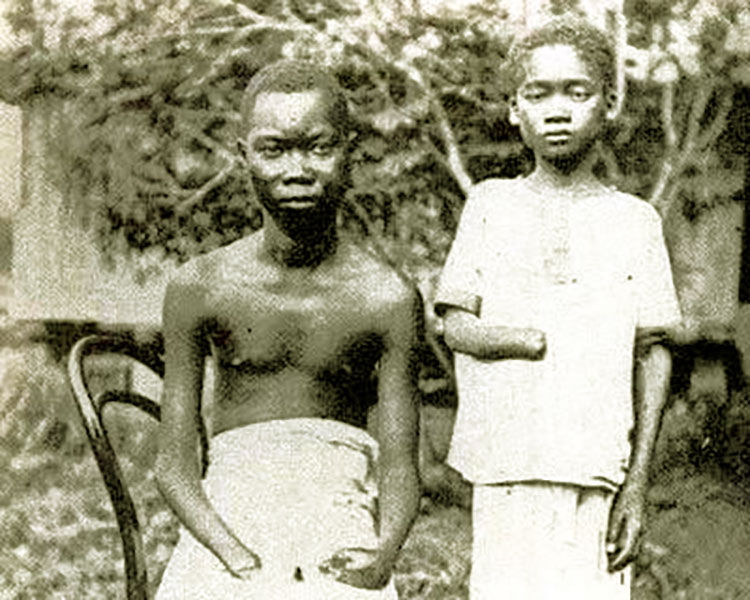
The central part of Africa was privately owned by King Leopold II of Belgium. It was 76 times the size of Belgium, established in 1885, and called the ‘Free state of Congo’. All sorts of expatriate Belgian, South African and other European white folk ran the colony whose people, it was said, were treated as children at best and animals at worst. They were whipped, maimed and killed, at the drop of a hat. Many had their right arms cut off as punishment. There were also many white missionaries who were outraged. Initially, the natives were never taught to read or write. Then, there were also Arab slave dealers running a roaring slave trade, by raiding and decimating villages to capture the natives. It was literally the law of the jungle. There were over 250 tribes within the Congo.!
While many European countries were limiting their operations to the coastal areas of Africa, King Leopold’s minions, led by a Welsh -American agent called Henry Morton Stanley (of “Livingston I presume” fame), worked at the King’s behest to find the source of the Congo River and there discovered 200 miles of turbulent ‘Rapids’ after which there were miles and miles of calm water. So, it was Stanley who suggested that steamboats be dismantled and carried by cart roads upriver to be re-assembled and used for transportation. Many trading posts were established along the river. A railway line was also built. There was a French team of explorers, too.
Initially, the main products from Congo were Ivory and Rubber. Rubber sap came from vines and not from trees. After the pneumatic tire was invented by John Boyd Dunlop, in 1888, the demand for Rubber was even greater. The Congo Free State, now nicknamed the ‘Dark Continent’ by many writers who experienced the appalling conditions that the natives (savages) had to work under. In 1889, at the Paris Exhibition, commemorating hundred years after the French revolution, they even had a human Zoo from the colonies, displaying people, including from the Congo, in a so-called ‘natural’ or ‘primitive’ state. Writers such as Stanley himself and Joseph Conrad of ‘Lord Jim’ fame, wrote about the Congo and imperialism in The Heart of Darkness.
Although King Leopold never set foot in Congo, it was big money for him. There were a few others like the UK educated Frenchman Edward Dene Morel, a shipping clerk and a surveyor/activist named Roger Casement who noticed that trade was only one way from Congo. Goods from Antwerp, Belgium, to Congo, Africa, consisted mainly of arms, ammunition and manacles (handcuffs). That seemed rather odd. They wrote a report about it in 1904. The phrase ‘Human Rights’ was first used in these writings. Arthur Conan Doyl and the American writer, Mark Twain, too, commented about the appalling conditions that prevailed. It was then that the world suspected that all was not well in the dark continent and brutality of the King’s regime. The King then appointed a Commission of inquiry into the affairs of the Congo Free State. (Sounds familiar?)
Eventually, under international pressure, in 1908 the Belgian Government took over its running and the Congo ceased to be ‘private property’ of the King. The State of Free Congo became Belgian Congo. Interestingly, in 1915, high grade (65% pure) Uranium was discovered in the Shinkolobwe Mines in the Katanga Province in the Congo. It was from here that Uranium was supplied for the two Atom bombs dropped on Hiroshima and Nagasaki by the USA to end WWII. The world discovered that Congo was also mineral rich in Copper, Cobalt and Diamonds. The western world and the USA cast their greedy eyes on them.
In Belgian Congo, living conditions of the natives slightly improved as in a ‘normal’ colony. Now there were missionary schools which gave rise to educated elites who then started clamouring for independence from Belgium.
On 30th June,1960, Belgium, without much warning (lead time), granted independence to the country. It was now called the Democratic Republic of Congo (DRC). A Congolese activist Joseph Kasavubu was elected as President, while another charismatic young activist, by the name of Patrice Emery Lumumba, a one-time postal clerk from a rival political party, was elected as Prime Minister. Since they could not individually form a government, they had to go for a ‘Coalition’. At the Independence Day ceremony King Boudouin (a kinsman of King Leopold II) was in attendance.
He said, “The Independence of the Congo is formed by the outcome of the work of King Leopold II’s genius, undertaken by him with tenacious and continuous courage with Belgium’s perseverance.”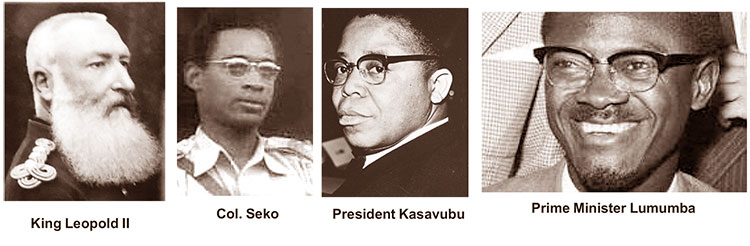
President Kasavubu made it a point to acknowledge and thank the Belgian Authorities for all they had done in the past.
Then Prime Minister Lumumba, who was not even scheduled to speak, stood up and recalled all the atrocities carried out by agents of Belgium. How the natives were controlled and impoverished. He spoke about white supremacy and exploitation. (An estimated 15 million were killed in the process while Belgium got rich.) He was only 35 years old.
He said “Although this independence was proclaimed today by agreement with Belgium, no Congolese will ever forget that independence was won in struggle. We are deeply proud of our struggle and our wounds are too fresh, too painful to be forgotten.”
“We have experienced forced labour in exchange for pay that did not allow us to satisfy our hunger, to clothe ourselves, to have decent lodgings or to bring up our children as dearly loved ones. Morning, noon and night, we were subjected to jeers, insults and blows because we were ‘Negroes’. We have not forgotten that the law was never the same for the White and the Black. That it was lenient to the one and cruel and inhuman to the other. Our lot was worse than death itself.”
Lumumba’s speech did not go down with the King and Belgian nation and the Western world. They were furious. From that day he became a marked man among the CIA and Belgian Intelligence. They plotted to assassinate him as he spoke up for the whole of Africa and not only Congo.
It seemed that independence was only on paper. Almost immediately afterwards the army, expecting quick changes, mutinied. Their leaders were still Belgian Officers with no change in their attitudes towards the natives. Many white Belgians fled the country and Belgium claimed that Belgians were at risk. Then the Belgian army moved, in without the permission of the new government. Almost simultaneously, the mineral rich Katanga, instigated by the mining companies, declared independence under the leadership of a pro Belgian Congolese politician Moise Tshombe as their head. Obviously, Belgium and the western world wanted to retain control of the mines which were the economic heart of DRC.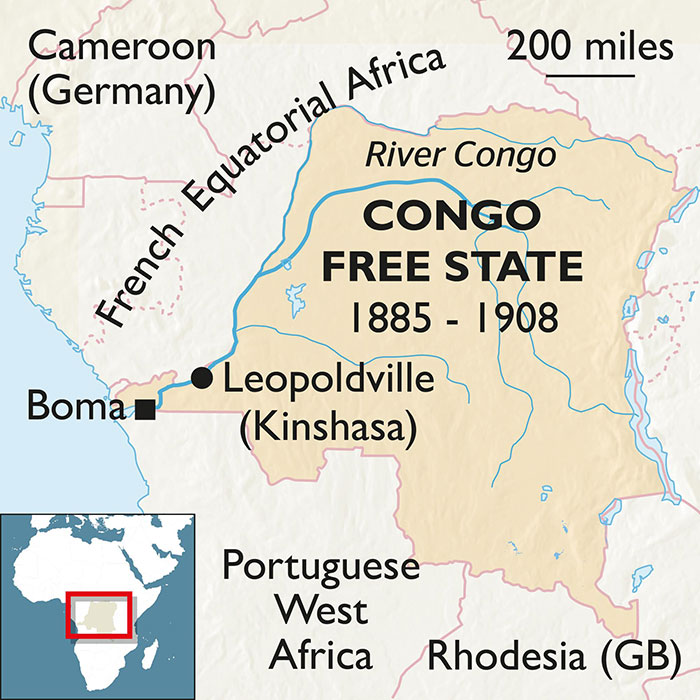
Lumumba appealed to the UN to intervene and send UN troops to get the Belgian forces to leave. The UN Secretary General, Dag Hammarskjold, under pressure of Western powers and the USA, refused such action. UN peacekeeping troops were sent with strict instructions to not interfere. Nikita, Krucheve of the USSR, called for the resignation of the Secretary General Hammarskjold, saying that he was pro Belgium. Lumumba had no alternative but to turn to Soviet Union for help.
This was during the height of the cold war. In the eyes of the USA, and the western world, Lumumba was confirmed to be a communist which he was not. He was only a nationalist. Looking at the declassified information, Allen Dulles, head of the Central Intelligence Agency (CIA) was authorised by President Eisenhower, for Lumumba to be eliminated. Lumumba’s CIA code name was ‘Satan’.
The country was in chaos. The rift between President Kasavubu and Prime Minister Lumumba widened. In early September, 1960, Kasavubu announced on radio that Lumumba had been sacked by him. A few days later Lumumba announced on radio that Kasavubu was sacked! However, there was a coup carried out by the army head Col. Mobutu, on14 September, 1960, to neutralise both politicians. It is now known that Mobutu was a CIA agent and was a secret supporter of President Kasavubu, the ‘Belgian puppet’.
Prime Minister Lumumba was put under house arrest. While the UN forces watched. He attempted to escape one night with his family, but was located by CIA and Belgian intelligence, captured by Mobutu’s forces, brutally beaten up in front of his wife and son and then imprisoned. A few days later he and two others were flown to an airfield in Katanga and killed by a firing squad. His body parts were subsequently dissolved in Sulfuric acid and destroyed, lest the Congolese rally round his burial place and make it a sort of mausoleum. He was still very popular among the people. Killed on 17 January, 1961, at the age of 36, two or three days before John Fitzgerald Kennedy (JFK) took oaths as the 35th President of the United States of America.
The declassified secret CIA documents and investigations by the Parliament of Brussels in 2001/2002 that the above action was planned in Washington and Brussels and executed in Africa. The incumbent police Commissioner, Gerrard Soete, who had been present at Lumumba’s execution and destruction had kept a tooth as a souvenir. This was returned to the family and buried with full honours.
One wonders where Congo and the rest of Africa would have been if Lumumba survived till JFK, another Charismatic young leader was appointed. Today, there are statues and roads named after Patrice Emery Lumumba in Congo and other parts of Africa and Brussels, Belgium. Patrice Lumumba Peoples’ Friendship University Moscow, to help nations to assist countries that had recently achieved independence from colonial powers was also established in 1960.
Col. Mobutu Sese Seko, ruled as a dictator for 32 long years. The name of Congo was changed to Zire (River), on 27th October 1971. After his overthrow in 1997, the country was known again as Democratic Republic of Congo (DRC).
What a shame!
God Bless America and no one else!
by Guwan Seeya
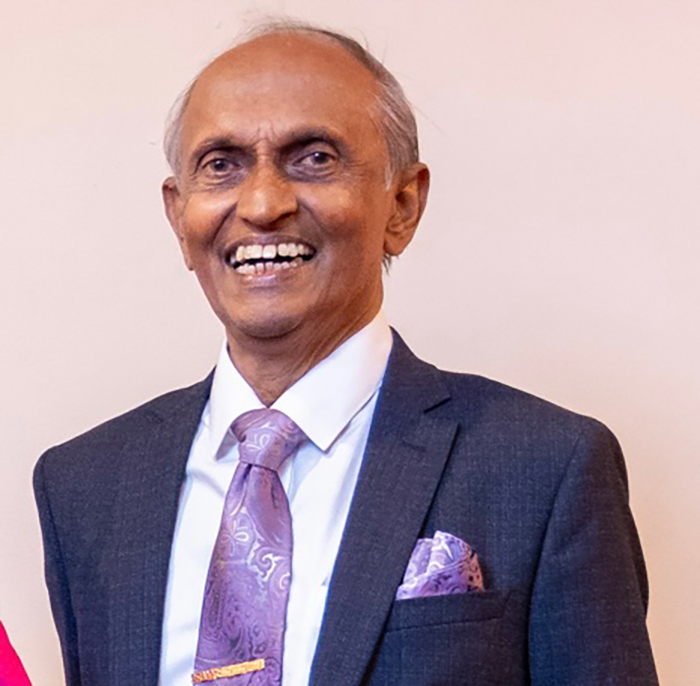
Twelve months, still feels like yesterday. A void in our hearts and minds that could never be filled. The world changed the day I lost you and suddenly, every lesson you gave by example, made sense.
Thaththi was a man of integrity and character, wisdom and intelligence, honesty and simplicity and most importantly a man of unwavering faith in Jesus Christ. His smile, witty humour and his ability to converse with almost anyone regardless of their age or status, was no doubt a rarity that set him apart. It was often said, that Mr. Jayamaha had an answer to any question and a solution to every problem, offering his wisdom with a calm assurance that brought comfort to those around him. A sing song with a whiskey in his hand and impromptu piano sessions will always be the fondest memories to those who were lucky enough to know him as he truly was. In other words, as my late maternal grandfather described Thaththi as “a man for all seasons”.
Thaththi worked tirelessly to give us the best, showering us with fatherly love and made us feel like royalty. Whatever duty he undertook, he made sure he did it to the best of his ability, in both his personal and professional life. When the days’ work was completed he made sure that everything was meticulously put away to its place.
Thaththi held my hand when afraid, cheered me in victory and listened without judgement. He was a man of quiet strength, wisdom and unconditional love. He treasured Ammi in a quiet way and was an exemplary husband.
We watched old movies and were introduced to actors of his time, enjoyed walks on the road and on the beach, listened to his achievements and stories of old, and laughed a lot. A weekly swim at the SSC and the daily practice of Yoga was a discipline he maintained throughout his life. Music was also a form of relaxation to him and at times all four of us would take turns on the piano and the violin.
Thaththi was always ready for adventure and vacation. During the civil war conflict in Sri Lanka when local travel was restricted, our vacations were mostly overseas. We were privileged to have travelled abroad at a very young age and explored the world together. Strangely Thaththi never forced us to study. After school we would always be taken out to
visit family or friends, to a dinner or a concert. Shows at the Lionel Wendt and the annual Christmas concert by the Symphony Orchestra of SL and Shakes were regular events we attended together as a family.
He had a passion for recording life as it happened, always behind the JVC GR-AX27 vintage camcorder, quietly capturing the excitement of our most meaningful moments be it, birthday parties and Christmas parties organized at our home, first holy communion, holidays overseas and out of Colombo and ballet concerts where my sister and I performed at the Lionel Wendt under the guidance of the late aunty Oosha and even my cousins’ wedding to name a few. It was a time before Instagram, when moments weren’t shaped for an audience but simply captured for the joy of remembering.
He was blessed to have enjoyed the special moments when Akki and I completed our professional exams. He especially enjoyed the box seat at the Royal Albert Hall for the 25th Anniversary performance of The Phantom of the Opera as well as attending the final rehearsal of the Opening ceremony of the 2012 London Olympics, at which Akki was a volunteer dancer. Thaththi’s career in the legal profession began soon after the untimely demise of his late father Don Hector Nicholas Jayamaha Proctor SC & Notary Public. To Thaththi his profession was never about the number of cases or the clients, neither did he want to put up a sign board at his office.
All that mattered was the service he rendered, with commitment and dedication irrespective of who the client was. He was one of a kind that never insisted on pomp and pageantry. In my brief years at the office I was lucky to have been introduced to many of his colleagues, friends and clients and observed the strong relationships and trust he built with them, which was indeed remarkable.
Thaththi was one who never hesitated to share his knowledge with anyone seeking clarity on legal matters. A telephone call was all that took, to get my father initiating a conversation. To me it was a sign of humility and a gift of being able to give back without being afraid of losing anything. An abundance mindset we rarely see in today’s society. What else could one expect from a legal luminary with 56 years at the Bar. I am grateful to have had my apprenticeship under my own father’s guidance.
During his distinguished years of service, he was appointed Director of the Ceylon State Hardware Corporation in 1980 and later served as a Director of the Ceylon Petroleum Corporation, where he also held the position of Chairman of the Audit Committee from February 2002 to April 2004. He went on to become the first Chairman and Managing Director of Ceylon Petroleum Storage Terminals Limited, serving on its Board from November 2003 to April 2004. In addition, he was a Director of Lanka Cement Limited and chaired its Audit Committee from March 2002 to April 2004. Most recently, he served on the Board of Directors of Lake House Printers and Publishers PLC.
One of the most meaningful lessons I will carry with me is to always have faith and trust in the Lord, even in the most difficult moments. Thaththi made it a habit to say a prayer before leaving home, upon returning, and throughout the day. No matter how long or tiring the day had been, the family Rosary was never missed. The greatest gift he gave my sister, my mother, and me is the gift of faith. He passed away on the Feast of Divine Mercy last year, and we rejoice knowing he is in heaven and find comfort trusting that he is our guardian angel guiding us from above.
Priyanti and Lasika (akki) Jayamaha
I was struck by the article written by MDD Pieris in The Sunday Island, under the title, “Free school uniform decision taken in minutes on a platform in Bakamuna” by President Premadasa. I am penning this piece as a tribute to this remarkable visionary in social development and grassroots economic policy, who was tragically assassinated by an LTTE suicide bomber in Colombo exactly 33 years ago.
The term of Sri Lanka’s first Executive President, J. R. Jayewardene (JRJ), was ending in 1989. As the constitution required, JRJ decided to call a presidential election. After some uncertainty within the United National Party (UNP) about who should be the next candidate, then-Party Chairman Ranjan Wijeratne and JRJ’s security advisor Ravi Jayewardene (JRJ’s only son) thought the best candidate was Prime Minister Ranasinghe Premadasa. They realised that the country was moving from elite-centred, Colombo-focused politics toward a more populist, grassroots and security-dominated phase.
They advised the President JRJ and party stalwarts accordingly.
At a UNP Parliamentary Group and Working Committee meeting, J. R. Jayewardene proposed Premadasa’s name. To maintain party unity and avoid an internal contest, he also arranged for Premadasa’s main political rivals from the UNP, Lalith Athulathmudali and Gamini Dissanayake, to second the nomination. This move made Premadasa the unanimous party choice.
Premadasa played a key role in the UNP’s landslide victory in the 1977 parliamentary election, boosting its grassroots membership through his “Man of the Masses” image. He was then appointed deputy leader of the party.
The second Presidential Election took place on December 19, 1988, amid severe unrest. The Janatha Vimukthi Peramuna (JVP) called for a boycott and staged a violent protest in the south.
Despite a low voter turnout and violence, the election went ahead, and Premadasa won a clear majority of valid votes, defeating main opposition candidate Sirimavo Bandaranaike from the SLFP. Ranasinghe Premadasa was sworn in on January 2, 1989, as Sri Lanka’s second executive president.
Premadasa was a strong nationalist who campaigned for the withdrawal of the Indian Peace Keeping Force (IPKF), whose presence was unpopular among the Sinhalese majority. He saw the Liberation Tigers of Tamil Eelam (LTTE), actively fighting the IPKF, as a potential ally in this effort.
His predecessor JRJ did argue that the Tamil issue was a very ancient problem and therefore external mediation might be necessary, which partly explains why he accepted Indian involvement leading to the 1987 accord.
In a pointed critique of India, Premadasa believed that the ethnic conflict could be resolved internally without foreign intervention.
He invited the LTTE and the JVP for talks as part of a strategy to end the prevailing dual insurrections, bring the groups into the democratic process, and secure the withdrawal of the IPKF from Sri Lanka. The LTTE accepted the offer and sent a delegation to Colombo for talks.
The LTTE delegation was transported by helicopter from the Mullaitivu jungles to Colombo. Premadasa arranged for LTTE ideologue Anton Balasingham and his wife, Adele, to fly to Colombo from London via Air Lanka at government expense. The LTTE team was provided with tight security managed by the Special Task Force (STF). During their stay in Colombo, LTTE cadres were permitted to retain their personal weapons as part of the security arrangements.
During the Premadasa–LTTE talks, the LTTE visited the homes of key traditional Tamil democratic leaders, such as A. Amirthalingam and V. Yogeswaran, for discussion and assassinated them, effectively destroying moderate Tamil parliamentary politics.
Both the JVP and Premadasa were opposed to the Indo-Lanka Accord and the IPKF presence, which provided a shared point of interest. He called an All Party Conference (APC) to resolve the problem through dialogue. JVP, however, refused to attend this conference. He then launched a brutal crackdown on the JVP using extreme counter-insurgency methods under the direct supervision of State Minister for Defence General Ranjan Wijeratne.
A period remembered for severe human-rights abuses and some opposition members even took the matter to the UN Commission on Human Rights. The crackdown ended with JVP leader Rohana Wijeweera being killed.
At the request of the President Premadasa, India withdrew the IPKF between September 1989 and March 1990.
Rural Unemployment and 200 Garment Factory Programme
Premadasa was from a humble, urban, working-class background, rose through grassroots politics in Colombo and had a better understanding of the grievances and aspirations of people of rural areas compared to JRJ. He knew the main problem was the unemployment of rural youth. He also knew that developing agriculture alone would not help solve this problem. He therefore decided to take industries to rural areas and embarked on the famous 200 garment factory programme.
He logically explained what his objective was when a prominent university professor of the time asked him what he was aiming to achieve through the programme.
He said one of the main problems Sri Lanka faced was rural unemployment, especially among the youth. Unless this issue was addressed, there would be no meaningful development in the country, as these youths would become pawns of political activists.
He identified unemployment as the root cause of political violence. Therefore, he wanted industrialisation to reach rural areas.
But he said there are obstacles. Sri Lanka, being an agriculture-based country, has most people not used to “industrial discipline.” It had been largely an Agricultural, Public-sector oriented and Plantation-based economy and society since colonial era and even after independence. The majority Sinhalese are accustomed to an easy life working in the paddy fields and practing Chena cultivation for thousands of years.
A common feature of the few factories established since Independence, both public and private, was the high absenteeism during the paddy harvesting periods, which left the management in a precarious situation.
Many rural youths had never worked in a factory environment with fixed working hours, meeting production targets, strict quality control and assembly-line work.
Without industrial discipline among the rural folks, no investor would risk his money setting up factories in rural areas. Some rural girls working in the Katunayake FTZ faced significant problems. They face isolation and lack of support, sexual risks and exploitation, language barriers, and more. When they work in a factory close to their homes, most of these issues could be resolved, Premadasa said.
On the other hand, garment manufacturing isn’t too complicated technology-wise. So, it was easy to train mechanics in preventive and break-down maintenance and operators in operational aspects.
He also knew it would help integrate rural areas into the export economy, and into a global value chain (GVC) moving beyond traditional free trade zones like Katunayake and Biyagama.
World Textile and Apparel (T&A) production went through three main phases, mostly based on production costs. First, in the 1970s in Hong Kong, Singapore, the Republic of Korea, and Taiwan, and during 1985-1990, they (Factory owners) reduced production and moved operations to the Philippines, Indonesia, Thailand, and Malaysia. The third phase involved shifting to countries like Bangladesh, Pakistan, Sri Lanka, Laos, Nepal, and Vietnam during the early 1990s. Premadasa aimed to take advantage of this trend.
His target was to create about 100,000 jobs, with factories typically employing at least 500 workers and giving employment opportunities in rural areas. Preference was deliberately given to economically disadvantaged families, helping spread incomes beyond urban centres.
Structural changes initiated to facilitate 200 garment factory programme
The Greater Colombo Economic Commission (GCEC), established in 1978 under JRJ, was originally created to manage Free Trade Zones (FTZs) like Katunayake and attract export-oriented foreign direct investment (FDI) into specific zones.
Premadasa transformed the GCEC into a national-level investment facilitator and renamed it the Board of Investment of Sri Lanka (BOI). It was more of a functional transformation and expansion of the GCEC role. With BOI, he established a centralised decision-making structure to expedite project approvals and reduce bureaucracy.
BOI effectively served as a “one-stop shop”, which was crucial because garment investors required speed and predictability.
President Premadasa Meeting the Potential Investors
\Working out the strategy with his handpicked officials, President Premadasa convened a meeting of potential investors at BMICH. The first meeting played a key role in launching the garment factory programme and demonstrated his hands-on, interventionist approach to economic development.
There were many would-be investors, mainly locals and entrepreneurs from countries like South Korea, Singapore and other Newly Industrialised Countries (NICs).
Premadasa personally addressed attendees and explained his vision of moving investment into rural districts. He said there are tax holidays on offer (the length varies by location, especially for rural/”difficult” areas), duty-free import of machinery and raw materials would be allowed, and guaranteed access to U.S. garment quotas under the Multi-Fibre Arrangement (MFA). The quotas would be allocated based on location: 10,000 dozen for non-difficult areas, 25,000 dozen for difficult areas and 50,000 dozen for the most difficult areas.\
He also said land, electricity, water, roads, and telecommunication would be provided by the state through the Board of Investment (BOI), the government agency responsible for promoting and facilitating investment. On the finance side permission to open foreign currency accounts would be allowed, and access to loans (including foreign currency banking units) would be available.
Premadasa requested investors to set up their factories to employ around 500 workers per factory and prioritise recruitment from low-income rural families. He also requested to provide meals (or subsidised food) to workers. It was however not a formal legal requirement written into BOI agreements.
He also offered duty-free import of a luxury vehicle (e.g., Benz car) after project completion.
Premadasa then concluded the meeting, assuring them that he will meet in a month or so to assess the progress.
At the progress review meeting held at the same venue, Premadasa asked if anyone had problems. About 10% of the attendees raised their hands, and the president asked them to move to the side. Then he said, “I will work with those who don’t have problems,” and asked the others to leave the chamber. This was how Premadasa achieved his goals.
Opening of factories under the programme
Premadasa personally supervised the progress of the programme. All initial problems reported to him by investors through his officials were quickly resolved.
He often had a clock tower built near many factories opened under the “200 Garment Factories Programme.” He believed that factory workers—mostly young people who had previously worked in agriculture or informal jobs—needed to adapt to strict working hours and punctuality. The clock tower served as a visible public timekeeper for workers and the surrounding community and it symbolized the transition from a village lifestyle to an industrial work culture.
Although Sri Lankan youth initially lacked technical skills and industrial discipline, they were able to assimilate into the garment industry relatively quickly because training requirements were short, production systems simplified tasks and strong factory training programs were introduced with the public institutions like Sri Lanka Institute of Textile & Apparel (SLITA). Above all literacy levels among the Sri Lankan youths were high.
This adaptability is one reason why Sri Lanka became a major garment exporter in the 1990s.
He attended numerous factory opening ceremonies from the late 1980s to the early 1990s, especially in less underdeveloped areas like Matale, Polonnaruwa, and Monaragala. Some factories launched under this programme have now grown into large conglomerates with factories in many other countries.
Success of the garment factory programme The 200 Garment Factories Programme played a pivotal role in transforming Sri Lanka into a global hub for apparel manufacturing, while also introducing modern industrial employment to rural districts for the first time.
Today, the garment industry continues to be Sri Lanka’s largest export sector, underscoring the lasting impact of this initiative.
J.R. Jayewardene’s modernisation strategy
It was JRJ who attempted to modernise Sri Lanka after coming to power.
Although JRJ’s government (1977–1989) achieved many successes in modernising the country, leading to economic development and improved living standards through major economic liberalisation and constitutional changes, it also faced numerous failures.
The benefits of the open economy concentrated in urban and Western Province areas. Expansion of the private sector and open economy did not absorb educated youth from rural areas. As a result, there was a huge mismatch between the education system and job market contributing to youth frustration and radicalisation, especially in the south.
Premadasa, after coming to power as Executive President of Sri Lanka, attempted to correct many weaknesses under the previous president, while taking forward the “Modernisation Programme” launched by him. Through “200 Garment Factories Programme” he attempted to take “National Development” to rural areas.
Another area he attempted to rectify was the recruitment process in public employment, which was often based on political patronage and arbitrary appointments made based on party loyalty. He directed that vacancies—particularly for non-technical jobs in the public service and state institutions—be filled through competitive written examinations and interviews, rather than ministerial recommendations.
Unfortunately, Premadasa’s main failure was underestimating the LTTE’s long-term goals. He only sought a political opening with the LTTE, mainly to achieve one objective: the withdrawal of the IPKF. Although he succeeded, the LTTE quickly turned against the government and launched the Second Elam War in June 1990 after attacking police and military targets.
Premadasa was assassinated in an LTTE suicide bomber attack in Colombo exactly 33 years ago.
The LTTE continued its insurgency until its defeat in 2009.
by Rohan Abeygunawardena
abeyrohan@gmail.com)

Maldivian President plants a sapling to mark 60 years of Sri Lanka–Maldives Diplomatic Relations

Sri Lanka and Maldives strengthen ties with productive bilateral talks

Maldives and Sri Lanka exchange seven MOUs

Warm Welcome Accorded to the President of the Maldives at the Presidential Secretariat

Modi’s BJP conquers Bengal, one of India’s toughest political frontiers

PM participated in ’Swarnabhivandana 2026,’ Sacred Relic Veneration Ceremony

‘Dates have the highest sugar content to fight Coronavirus’

Sunday Island 27 December – Headlines

#SundayIsland 17th December – Headlines

Sunday Island – 28th March

Sunday Island Headlines – 21 March

Sunday Island – 21st February – Headlines
-
 News6 days ago
Treasury chief’s citizenship details sought from Australia
-

 News5 days ago
Rooftop Solar at Crossroads as Sri Lanka Shifts to Distributed Energy Future
-
 News4 days ago
“Three-in-one blood pressure pill can significantly reduce risk of recurrent strokes”
-
 News7 days ago
Govt. assures UN of readiness to introduce ‘vetting process’ for troops on overseas missions
-
 Business7 days ago
ADB-backed grid upgrade tender signals next phase of Sri Lanka’s energy transition
-

 News6 days ago
Central Province one before last in AL results
-

 Sports6 days ago
Well done AKD!
-
 Business7 days ago
Update on independent forensic review