
Features
Save Democracy from a two-thirds disaster

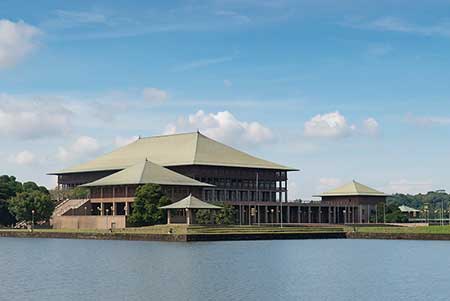
President Donald Trump, whose nonsense about the spread of Covid-19 in the US, is now using the major disaster it has caused, to get the coming presidential election postponed, with less than 100 days left.
In Sri Lanka that has so far tackled Covid-19 effectively, saw our Elections Commission postpone the General Election by more than three months, and is now moving to the polls – with just three days more.
Campaigning is fast moving to the close. The rival parties and alliances are readily violating the crowd control limits on the Covid threat, and rushing with the cheap parades of promises to the voters to grab a parliamentary majority. The issue that has become the core of electoral politics is the Two-thirds Majority.
The Podujana Peramuna – Pohottuva – campaign has the two-thirds as its demand from the voters. They want the victory that President Gotabaya Rajapaksa obtained in the Presidential Election last November, to be even bigger, to wholly manage the Parliament. Issues of a fast shrinking economy, rise of unemployment, fall of tourism and all related crises are ignored in the call for two-thirds in parliament.
With the main political rival of the Pohottuva – the UNP so hugely divided, as the Elephant trails hanging on to the wire of the Telephone. Ranil Wickremesinghe uses courtroom judgments to bolster a hugely weakened party, and the Sajith Premadasa team is twisted with a range of unreal promises. The JVP-led alliance of the NPP is much further behind in the overall national politics. This gives the Rajapaksas a clear lead — but their search for two-thirds is putting that lead into major doubt, in majoritarian politics.
 The theme of the Rajapaksas is the Sinhala-Buddhist dominance, which saw the huge majority that Gotabaya Rajapaksa obtained to be President. The Sinhala-Buddhists are certainly more than two-thirds in the overall population and the electoral registers too. But, is this workable in an election based on Proportional Representation or PR?
As the campaigns draw to a close there is the need to think more of Democracy, than any of the big players in this campaign are willing to allow. The electoral process is the fabric of democracy. We have seen a shift from ‘first-past-the-post (FPTP)’ to the PR system. And, we have also seen the major threats to Democracy from the two-thirds result.
The two last elections under FPTP in 1970 and 1977 saw the dangers of two-thirds power. Mrs. Sirimavo Bandaranaike who led the United Left of the SLFP-LSSP-CP to power in 1970, used the two-thirds to extend the term of that parliament from five to seven years – with the next election coming in 1977 and not 1975. That was the two-thirds at play. The also saw the abolition of the Civil Service that did a lot for clean administration, and replaced it with the Administrative Service – which has led to the dominance of political (and even family related) appointees, with the current shift to those in current and retired uniforms to drive the government.
The 1977 election – held two years later – saw the huge victory of JRJ-led UNP, getting a five-sixth majority. JRJ would have benefitted much from the earlier polls delay. That huge majority brought the new Executive Presidency, which showed the dangers of such electoral majorities. JRJ used that majority to postpone the next general election by six years! The new constitution axed the powers of parliament, giving huge dominance to the President. It saw the enabling of cross-overs in parliament, and did away with the process of by-elections.
These two results give sufficient proof of the dangers of a two-thirds result in electoral politics. The crude behaviour of MPs in parliament, the loading of allowances, luxury vehicles, and bill payments of MPs also followed the two-thirds result. Parliament was not the voice of the people, but the voice of those in power, and none other.
The issue before the voters in just four days time – is that of the two-thirds Majority and nothing else. To refuse it, is to give more strength to Parliament and Democracy.
The Pohottuva has big talk about removing the 19th Amendment – passed by a two-thirds obtained with inner-parliamentary understanding. The majority of those in the Pohottuva parliamentary team before dissolution, voted for it. There was only one opponent, with a few absentees. SLFP leaders and members , left party leaders and members, UNP leaders and members and the minority Tamil and Muslim party leaders and members all voted for it. Such understanding is the core value of a two-thirds parliamentary majority.
The 19A does need amendments – that will need two-thirds. But one must not forget that it was 19A that reduced the presidential term to five years from six, and importantly brought back the presidential terms of office to two – and not any number that Mahinda Rajapaksa brought in, after the victory over the Tamil Tigers.
Do the big callers for a Two-thirds want to bring back an unlimited term presidency? Just look at many African and Latin American dictatorships – with often violent elections. Should the independence of the Judiciary and the many Commissions such as Elections, Police, Human Rights, etc be removed and brought back under presidential dominance?
These are the issues of Two-thirds politics today. We must remove faults in 19A such as the so-called National Government mockery, and give more strength to the independence of commissions, as well as the Judiciary. The need is to elect candidates, from whatever party or independent group, who will move in that direction, and not those who seek to undermine Democracy and People’s Power through a two-thirds grab.
Let us think of electing members to parliament who will be ready to cut or slash MP’s pensions; give them official vehicles, where necessary, not not duty free luxuries; cut down their holiday payments on so-called parliamentary necessity; stop those who will use privilege to seek medical attention abroad; stop giving spouses, children, nephews and nieces employment under parliamentary privilege…. The list goes on!
Fighting the call for a two-thirds majority is fighting for Democracy.
The fight to save and build Democracy is one that needs constant action. Let the coming election be one such big fight.

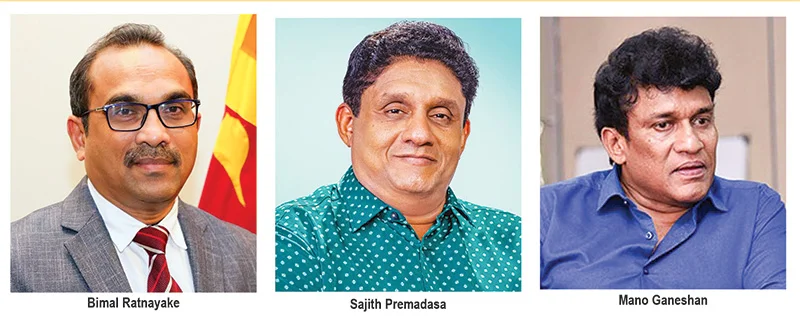
At a symposium on reconciliation organised by the National Peace Council last week, more than 250 religious clergy, civic activists and political representatives from different communities gathered to discuss the country’s future. Speaking at the event, Minister Bimal Rathnayake explained the government’s approach to national reconciliation. He said the government viewed the country’s recovery in terms of a three stage process. The first stage was stabilisation, the second was development and the third was transformation. Reconciliation, he implied, would come in that final stage. The participation of Opposition Leader Sajith Premadasa at the same symposium, and the constructive nature of his comments, strengthens that hope.
When the present NPP government took office in 2024, the country was emerging from one of the gravest crises in its post Independence history. The economic collapse of 2022 had led to shortages of fuel, food, medicines and electricity. Inflation soared, foreign reserves disappeared and long queues became part of daily life. The political upheaval that followed culminated in the resignation of former President Gotabaya Rajapaksa after mass public protests under the banner of the Aragalaya movement. The country was then governed by a leadership that spoke the language of reform and reconciliation but was widely perceived as lacking a direct popular mandate.
Sri Lanka’s past experience suggests that stabilisation and transformation cannot be treated as entirely separate stages. Postponing reconciliation until some future moment risks repeating the failures of the past. If transformation is endlessly delayed until a supposedly perfect moment arrives, there will always be new crises and new reasons for postponement. Minister Rathnayake’s contention that the government’s immediate priority has necessarily been stabilisation flows from the government’s awareness of the precarious situation the country is. Over the past two years, the government has succeeded to a significant extent in restoring economic and political stability. Inflation has reduced, shortages have ended and public institutions have regained a degree of functionality.
Guaranteed Changes
On the other hand, the country’s development continues to face challenges due to adverse global conditions, including disruptions caused by conflict in the Middle East and extreme weather events that have affected tourism, trade and the cost of living. The danger is that reconciliation may be indefinitely postponed in the name of stabilisation. This danger can be reduced if the government works proactively with the opposition and civil society to commence practical measures of transformation now rather than later. The participation of Opposition Leader Sajith Premadasa at the symposium, and the constructive nature of his comments, has strengthened the sense that bipartisan engagement on reconciliation may now be possible.
The urgency of transformation came through strongly in the presentations made by representatives of the Sri Lanka Tamil and Malaiyaha Tamil communities. ITAK parliamentarian S.Shritharan spoke of the frustration caused by unresolved post war issues in the north and east. He referred to disputes regarding land occupied during the war years, including controversies linked to Buddhist temples and state sponsored settlement activity in areas claimed by local communities. He also pointed to the continuing large scale presence of the security forces in the north and east nearly two decades after the end of the war. These grievances have remained central to Tamil political discourse since the end of the armed conflict in 2009. Families displaced by war continue to seek the return of ancestral lands. Civil society organisations in the north have repeatedly called for greater civilian control over local administration and a reduction in military involvement in civilian life.
Academic research and practical work on the ground have shown that reconciliation cannot be separated from questions of dignity, equality and justice. Former minister Mano Ganesan, leader of the Democratic People’s Front, focused on the longstanding problems faced by the Malaiyaha Tamil community. He spoke passionately about continuing housing shortages, landlessness and economic marginalisation, issues that have persisted since Independence. He also highlighted the devastating impact of recent extreme weather events on estate communities that remain socially and economically vulnerable. The condition of the Malaiyaha Tamil community remains one of the enduring social justice issues in Sri Lanka.
After Independence in 1948, a large proportion of them were denied citizenship and voting rights through legislation that rendered them stateless. Though citizenship rights were eventually restored, the social and economic consequences of exclusion continue to be felt generations later.
Many families still lack secure housing and land ownership despite their immense contribution to the country’s plantation economy. Minister Rathnayake’s responses to both these concerns were politically significant. He argued that recent political developments, including the declining influence of narrow ethnic politics across communities, indicated a major shift in public attitudes. According to him, the political ground has changed in ways that make it increasingly difficult for politicians who rely primarily on ethnic division and communal insecurity to retain public support.
Inter-Connected
There is evidence to support the assessment about the changing political grounding which sees future prospects in the resolution of long standing problems. . The economic collapse of 2022 affected all communities alike and generated a new politics centred on governance, anti corruption, accountability and economic justice. The Aragalaya protests brought together Sinhalese, Tamils and Muslims in a common demand for political change. Although ethnic grievances have not disappeared, the crisis created space for a broader understanding that the country’s future depends on cooperation rather than division. Opposition Leader Premadasa’s comments at the symposium reflected this changing political climate. He emphasised that national reconciliation could not be separated from economic justice and the need to address disparities between regions and social classes.v He also mentioned the need for civil society organisations to take this message to the community. This wider understanding of reconciliation is important because ethnic inequality and economic inequality have often reinforced each other in Sri Lanka’s history.
Academic studies have identified the denial of citizenship rights after Independence as a historic injustice that set back the Malaiyaha community for decades. The challenge now is to ensure that transformation becomes part of the stabilisation and development process itself. Practical first steps are both possible and necessary. The release of civilian lands still under state control, greater devolution of administrative authority, reduction of military involvement in civilian affairs, language equality in public administration and accelerated housing and land ownership programmes in the plantation sector are all measures that can begin immediately without waiting for a final stage of transformation.
The government’s recent commitment that provincial council elections will finally be held this year is therefore significant. These elections have been repeatedly postponed by successive governments. Holding them would not solve the ethnic conflict by itself. But it would signal a willingness to restore democratic institutions and share power in a meaningful way.
Sri Lanka has repeatedly postponed difficult reforms in the hope that a more convenient political moment would eventually arrive. But opportunities are invariably created and fought for instead of being provided as a gift by a benevolent government.
The present moment, shaped by the economic crisis and public demand for accountable government, offers a rare opportunity to move simultaneously towards stability, development and reconciliation. Provincial council elections can be the first meaningful step. But they must not be the last.
by Jehan Perera
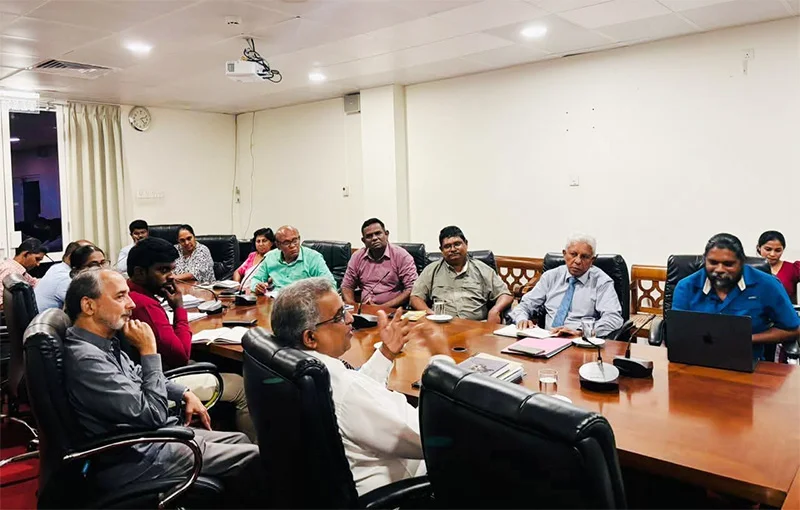
In a significant move aimed at steering Sri Lanka’s environmental governance towards a more science-based and evidence-driven path, the Ministry of Environment has initiated a new collaborative mechanism to integrate leading researchers into national policy formulation and conservation planning.
The initiative was discussed at a high-level meeting chaired by Dr. Dammika Patabendi at the Ministry of Environment on Tuesday, where top environmental scientists, wildlife experts and researchers were invited to contribute towards what officials described as a “strategic transition” in the country’s environmental management framework.
The discussions focused on strengthening the scientific basis of environmental conservation programmes and national policy decisions while creating a more research-friendly environment for academics and field scientists engaged in biodiversity and ecological studies.
Particular attention was paid to long-standing concerns raised by researchers regarding procedural and operational difficulties encountered when conducting studies in collaboration with the Department of Wildlife Conservation and the Forest Department.
Minister Patabendi stressed the need for environmental policies to be guided by credible scientific data rather than ad hoc administrative decisions, ministry sources said.
Among the key proposals discussed was the establishment of a streamlined mechanism that would reduce bureaucratic obstacles faced by researchers in obtaining approvals, accessing field sites and sharing scientific findings with state institutions.
The Minister highlighted the importance of building stronger partnerships between policymakers and the scientific community at a time when Sri Lanka is grappling with escalating environmental challenges including deforestation, biodiversity loss, human-elephant conflict, climate-related disasters and ecosystem degradation.
Environmentalists attending the meeting had also highlighted the urgent necessity of incorporating empirical research into national decision-making processes to ensure long-term ecological sustainability and better resource management.
The meeting brought together several of Sri Lanka’s leading environmental researchers and academics including Rohan Pethiyagoda, Saminda Fernando, Sewwandi Jayakody, Samantha Gunasekara, Dinidu Devapura, Himesh Jayasinghe, Manoj Prasanna, Mendis Wickramasinghe and Suranjan Karunarathna.
Director General of Wildlife Conservation Ranjan Marasinghe also participated in the deliberations.
Officials said the proposed framework is expected to pave the way for a more transparent, data-oriented and scientifically credible environmental governance structure capable of addressing emerging conservation challenges more effectively.
The government expects the new mechanism to support the implementation of practical and scientifically robust programmes aimed at safeguarding Sri Lanka’s ecological future while enhancing cooperation between state agencies and the country’s growing community of environmental researchers.
By Ifham Nizam
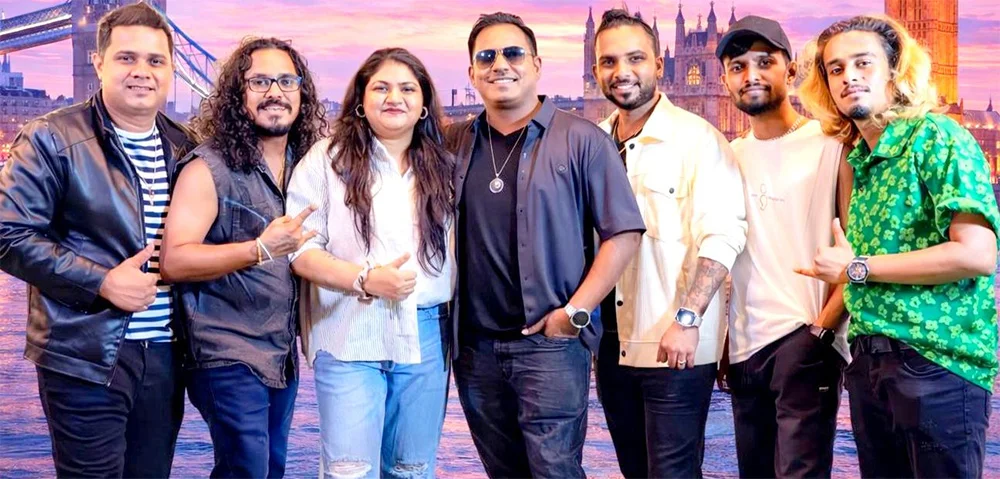
 Niluk Uswaththa, of Seven Notes fame, based in Dubai, surprised many when he and his wife Apeksha, turned up in Colombo, last week … unannounced.
Yes, they had a purpose in their surprise visit … to wish Apeksha’s mum for her birthday, which was on Monday, 18th May, and what a surprise it turned out to be!
In an exclusive chit-chat with The Island, Niluk said that the scene in Dubai is improving and Seven Notes do have work coming their way.
Since the members of Seven Notes are all employed (doing day jobs), they operate only on Saturdays and Sundays.
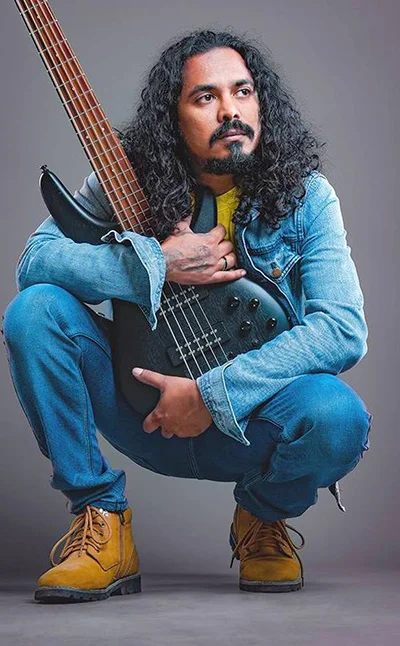
Niluk: Didn’t come prepared to perform, but obliged
friends in Galle
In fact, to get to Colombo for the birthday surprise (on Monday, 18th May), the band had to skip their 17th May, Sunday gig.
“Although it’s a short vacation, my wife and I are enjoying the setup here,” said Niluk, adding that they spent two days in Galle and that their next destination is Anuradhapura.”
Niluk didn’t come prepared to perform, but he obliged the crowd present, at a friend’s birthday celebrations, in Galle, singing and playing guitar.
They are scheduled to leave for their home, in Dubai, in the first week of June.
Seven Notes is an outfit made up of Sri Lankans and the band has been around for almost nine years.
Niluk came into their scene nearly seven years ago.
“When I went to Dubai, I had offers coming my way but it was Seven Notes that impressed me because of their acoustic style.”
The Dubai’s entertainment scene is showing clear signs of bouncing back and even levelling up in the next few months.
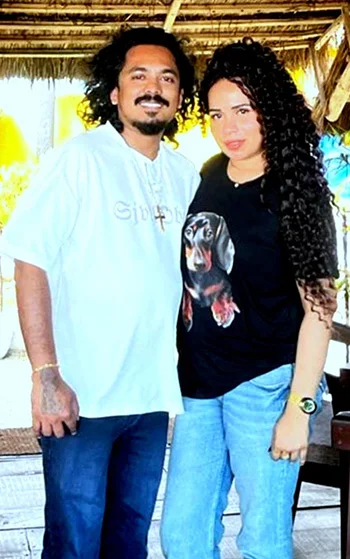
Niluk and Apeksha: Enjoying their short vacation
After a slowdown earlier this year due to regional tensions, shows and festivals are back on the calendar, and organisers say late 2026 could be the busiest concert season in years.
Time Out Dubai says “the 2026 concert calendar is filling up nicely” and “the city is ready to party once again” after some reschedules.
Dubai Summer Surprises in July brings retail activations, comedy nights, and indoor art exhibitions.
Organisers point to a backlog of postponed events that are being rescheduled for late 2026 and early 2027.
Yes, Dubai is calm on the surface but on alert. Life is mostly normal in the city, but there’s a “balancing act” as people watch for escalation.

Wave of child abuse cases shakes schools in Paris

Upcountry Hindu Priests meet President’s Secretary

Gibson, Dean knock over New Zealand for 80 as England cruise to series win

Solid Royal Challengers Bengaluru, surging Gujarat Titans clash for direct final ticket

US military launches strikes on southern Iran amid talks in Qatar

Pope says AI must be ‘disarmed’ to prevent domination, exclusion, and death

‘Dates have the highest sugar content to fight Coronavirus’

Sunday Island 27 December – Headlines

#SundayIsland 17th December – Headlines

Sunday Island – 28th March

Sunday Island Headlines – 21 March

Sunday Island – 21st February – Headlines
-
 Features7 days ago
Octopus, Leech, and Snake: How Sri Lanka’s banks feast while the nation starves
-
 Sports7 days ago
Sri Lanka women’s volleyball team ready for Central Asian challenge
-
 Opinion6 days ago
Murder of Ehelepola family, Bogambara Wewa and Sightings of Wangediya
-

 Business5 days ago
Historic launch of CCWE Fashion Week & International Summit 2026
-
 News6 days ago
Steps underway to safeguard Sri Lanka’s maritime heritage
-
 Features3 days ago
The NPP’s pivot to the past
-
 News2 days ago
Police probe underway to ascertain links between criminals deported from UAE and local politicians
-

 Editorial6 days ago
A play without its protagonist