
Business
The role of Management Accountants in economic development


by Indrajith Karunarathna
Qualified Mmanagement Accountants make a substantial influence to the economy at both national and international levels. It is important to understand as to how they contribute towards the growth of an organization as well as the development of a country.
Management Accounting provides the capability of scrutinizing the operational activities in such a way that the information can be utilized for the purpose of optimizing the profitability. Further, the management accounting practices would deliver the required information in order to plan out the activities within an organization. Thus, the organizations would adopt the future resource allocations in an effective way under this context. Sri Lanka is equipped with many qualified finance professionals. Amidst these professionals, Management Accountants are superior as they are typically considered as the information hub. Sri Lanka as a developing country requires information to plan and forecast the future development goals. Thus, the Management Accountants who are practicing and working in the corporates provide a tremendous contribution when generating such information on time.
The management accountants are mainly responsible for examining economic facts, preparing future forecasts, mitigating enterprise risk, planning financials, optimizing resource allocation, strategizing, exploring performance against targets, providing financial insights for decision-making, and ultimately contributing to strategic planning. Moreover, financial accounting and bookkeeping practices are beneficial in order to report the particulars about the historical financial performance within a particular set of guidelines. Those practices are not future oriented whereas they are more in to comply with the typical statutory requirements, international standards and disclosures. Nevertheless, the management further requires customized operational and financial information that should support the effective decision making which should be future oriented. Management accounting practices should be able to provide the ability to use such information in a flexible manner so that a conclusive understanding can be easily reached. Hence, management accounting practices in this context should promote making the right managerial decisions.
In Sri Lankan context, many Sri Lankan companies are doing well in terms of traditional responsibilities, including working capital management, performing typical annual budgeting process and improving the control environment etc. They are reluctant to excel at evolving tasks such as implementing strategy formulation, validation, and execution and supplying effective business insights. A discussion is going on whether management accounting practices are evolving to keep step with the changing needs of companies operating in an ever more complex business environment. Since the management accounting has the capabilities of identifying as to how the operational efficiencies are optimized, many Sri Lankan top conglomerates are now utilizing qualified management accountants for this purpose. Also, in Sri Lanka it is recently observed a trend of increasing the usage of forward-thinking management accounting techniques and the changing way in which management accounting practices are productively being used: from an old-style monitoring and control perspective to a modern business and support-orientated perspective. Consequently, the role of the management accountant has exceled with both operating concerns and strategic priorities. The Sri Lankan management accounting climate describes the current trends in management accounting such as identifying some of the environmental changes, ESG sustainability exposures that are driving management accounting change and discusses the impact of integrated information systems and the availability of financial information.
Despite its many benefits, there are a number of implications associated with improving the understanding related to the management accounting practices in Sri Lanka. The actual discourse requirements related to the management accounting studies are needed to be effectively developed. Further, localization of the understanding related to the management accounting practices is very important. In other words, while understanding the general management accounting concepts, the regional and industrial requirements related to the subject area also needs to be identified so that specific management accounting tools which are required by the common industries in the region might have to be industrialized with the right focus. This would offer other management practices with the right tools and capabilities in order to understand the operations related to the organizations and then make sure that they take right measures in order to optimize the profitability and economic value additions of the overall industries. This would eventually lead to industrial capabilities so that these industries can effectively compete in the international markets.
Management accounting remains a separate theme that needs to be effectively explored. There are a number of management accounting tools that can be used for the purpose of evaluating the cost, revenue as well as operational implications within an organization. Besides using modern management accounting tools professionals should have the capability of customizing them in line with the specific organizational requirements. This is the reason as to why the professionals with the right knowledge and the skill set related to the management accounting theme remains vigorous. The organization in the context of refining the knowledge related to the management accounting practices also remains a timely requirement of an emerging nation such as Sri Lanka. On the other hand, since the necessity of the management information becomes mandatory many top conglomerates should recruit qualified management accountants to their senior positions and obtain such specialized knowledge to meet the upcoming consequences. Sri Lanka is an emerging economy that has recently faced with challenging economic circumstances and will continue experiencing the negative implications. This is the reason that many organizations should have the capability of focusing on sustainable cost management while improving the overall economic value addition. They have to be competitive in the international markets in order to grow in the future. These indicators provide positive vibes as to see the successful future of the management accounting profession which adds a numerous value not only to the organizations but also to the development of Sri Lanka and its region.
Indrajith Karunarathna is a Senior Chartered Accountant, Fellow Member of Certified Management Accountants Sri Lanka, Chartered Professional Managers, AAT, ACCA (UK), IPA (Australia), IFA (UK), Associate Member of Chartered Institute of Marketing (UK), a Qualified Risk Management Specialist, an Authorized Tax Representative, Registered Company Secretary and Company Auditor and holds an MBA and a BSc. Business Administration (Special) Hons. degree from the University of Sri Jayewardenepura.

Business
Cost-effective clearance of goods across borders to determine worth of Customs Paperless Declaration

By Ifham Nizam
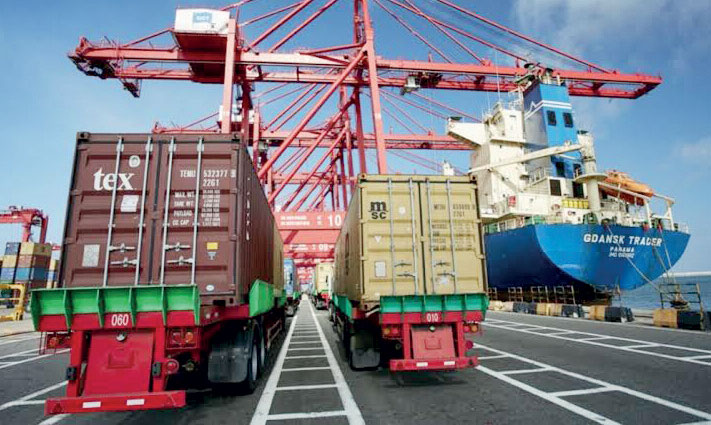
The introduction of the Customs Paperless Declaration from October 1 could mark an important step in Sri Lanka’s efforts to modernise trade, but its real value will depend on whether it reduces the time and cost of moving goods through the country’s borders, Customs House Agents & Traders Association President Mohamed Niyas said.
Niyas warned that digitising Customs declarations alone would not necessarily translate into faster cargo clearance or lower costs for businesses.
‘Expecting a dramatic improvement in clearance speed under the present conditions is like expecting Ferrari performance from a Morris Minor configuration, he said.
For importers and exporters, the issue extends well beyond paperwork. Every additional hour or day that cargo remains in the clearance chain can have wider consequences for businesses, including increased port and storage-related costs, additional working-capital requirements, uncertainty over delivery schedules and disruptions to production and distribution.
Niyas said the competitiveness of Sri Lanka’s trading sector ultimately depended on how efficiently goods could move through the country’s border-clearance system.
‘The real bottleneck is not merely the absence of paper. It is the entire clearance ecosystem—the limitations of the existing ASYCUDA World system, excessive regulatory interventions by Other
Government Agencies, multiple approvals, physical examinations, manual interventions, fragmented processes and institutional constraints, he said.
He cautioned that unless these bottlenecks were addressed, there was a risk that the paperless initiative would merely digitise existing bureaucracy.
‘If these underlying constraints remain unchanged, there is a real risk that the new paperless system could become another “copy-and-paste road show”—where an old, complex clearance process is simply transferred onto a digital screen without fundamentally changing the process itself, Niyas said.
For businesses dependent on imported raw materials, machinery, components and other inputs, clearance efficiency can directly affect the wider supply chain.
Delays at the border can create uncertainty for manufacturers, distributors and retailers, while exporters can face difficulties meeting delivery schedules when imported inputs or export consignments are held up.
Niyas therefore argued that the success of the October 1 initiative should be judged by its impact on trade flows rather than by the number of declarations processed electronically.
‘Paperless does not automatically mean faster, he said. ‘Digitising a slow process does not make the process fast. It only makes the slow process digital.’
He said Sri Lanka needed to move towards what he described as “process-less Customs”—a system in which unnecessary procedures are eliminated rather than simply converted into electronic procedures.
Among the reforms he called for are simplification of Customs declarations and approval workflows, improvements to the functionality of ASYCUDA World, greater use of risk-based inspections and better integration of Other Government Agency approvals.
Niyas also called for the elimination of repetitive document submissions and physical endorsements, greater use of pre-arrival processing, sufficient capacity for digital document uploads and clearly defined service-level timelines for Customs and OGAs.
By Sanath Nanayakkare
As global attention has fixed on the high-level diplomatic choreography at the United Nations General Assembly in New York, a subtler, yet profound geopolitical signal was sent from Colombo, yesterday.
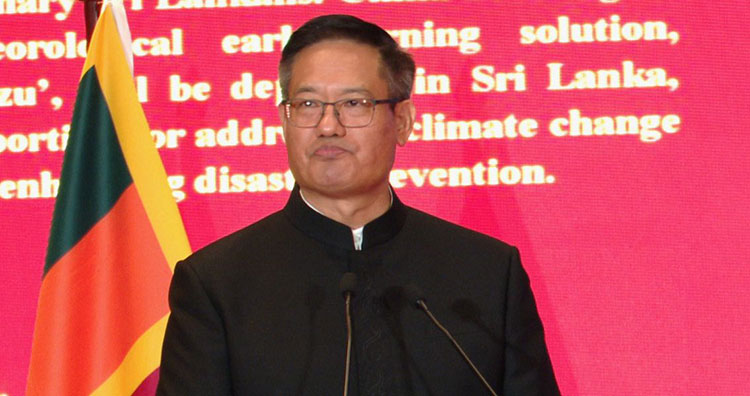
In a major address marking the founding anniversary of the People’s Republic of China, newly appointed Chinese Ambassador Wei Huaxiang chose to anchor bilateral relations not just in modern trade or infrastructure, but in a shared respect for Sri Lanka’s legacy of non-aligned independence.
By explicitly invoking Sri Lanka’s foundational role in the 1976 Non-Aligned Summit, Beijing was doing something unexpected in an era defined by fierce great-power rivalry: it was officially validating a small island nation’s right to maintain an independent foreign policy stance.
The Strategic Value of Independence
For decades, nations caught in the crosshairs of major-power competition have faced intense pressure to pick sides. Yet, Ambassador Wei’s embrace of Colombo’s non-aligned tradition signaled a different diplomatic playbook. Instead of demanding alignment, Beijing was framing its partnership as a reliable counterbalance to regional pressures. By honouring Sri Lanka’s diplomatic autonomy, China was effectively reassuring smaller economies that sovereign independence and robust economic cooperation can coexist.
Beyond Ports and Industrial Zones
This diplomatic framing reframed the narrative surrounding major collaborative ventures like the Colombo Port City and Hambantota Port. While foreign analysts often view these projects exclusively through the lens of strategic rivalry, Beijing’s diplomatic messaging tied them back to a historical ethos of solidarity—evoking memories of the 1952 Rubber-Rice Pact.
By marrying economic projects with a stated respect for non-alignment, China is positioning itself as a steadfast stakeholder that respects Sri Lanka’s internal agency during difficult economic and political seasons.
As both nations look toward major milestones in 2027—including the 70th anniversary of diplomatic ties—this nuanced diplomatic move revealed how historic traditions are being leveraged to navigate modern multipolar realities.
For global observers, the takeaway was clear: in the shifting architecture of Asian geopolitics, respecting a nation’s historical neutrality may just be the most effective way to secure a lasting partnership, a diplomatic masterclass that Ambassador Wei Huaxiang executed in style.

Sri Lanka Insurance Life (SLIC Life), the nation’s largest and strongest Life Insurer, is pleased to announce the appointment of Dr. Sameera Dharmasena as its new Chief Executive Officer, effective 22nd September 2026.
Dr. Dharmasena is a distinguished insurance professional with over 21 years of experience in the Sri Lankan insurance industry, having held senior leadership positions across several leading insurance companies affiliated with some of Sri Lanka’s largest business conglomerates. His extensive career spans both local and multinational insurance environments, bringing together broad industry expertise, strategic leadership and a strong commitment to the advancement of the insurance profession.

‘Vision’ Programme Marks Two Years

Costa Rica minister fired for unapproved meeting with Trump in US

At least 41 die as boat capsizes in DRC’s Lake Tanganyika

Showers will occur at times in the Western, Sabaragamuwa, Southern, Central and North-western provinces

Sajith vows to scrap 22A under future govt.

Two retired female Navy officers remanded over disappearance of two women during war

‘Dates have the highest sugar content to fight Coronavirus’

Sunday Island 27 December – Headlines

#SundayIsland 17th December – Headlines

Sunday Island – 28th March

Sunday Island Headlines – 21 March

Sunday Island – 21st February – Headlines
-

 News6 days ago
Shanakiyan urges urgent action over reported death sentence for Lankan in Saudi Arabia
-

 News5 days ago
Namal Rajapaksa Buddhist gambit fails, bail denied
-

 Features5 days ago
Why the spelling Sri Lankan names in English vary
-

 Features5 days ago
Three bands, a new identity: Sri Lankan wolf snake recognised as distinct species
-

 Business5 days ago
SLIIT holds largest-ever convocation
-

 News5 days ago
Govt monitors reported Saudi death sentence – Foreign Ministry
-

 News5 days ago
Vehicle prices drop by up to Rs. 1 mn, says importers’ body
-

 Business5 days ago
All-new Bolero MaXX Pik-Up unveiled in Lanka