
Features
Buddhist Way to Peace and Prosperity


by Ven. Siri Vajiraramaye Nanasiha
Economic and social policies based on Buddhist principles were the foundation of peace and prosperity in ancient Sri Lanka. A close examination of this Buddhist foundation would be of assistance to attain, once again, the cherished goal of peace and economic prosperity.
Economic and political theories before Western influence were based on two famous ancient treatises, namely, Kautilya’s Arthaśāstra and Brihaspati’s Arthaśāstra. They had one common feature, in that, under the title of ‘Arthaśātra’ both writers had written on politics and economics, leaving out the most important ingredient for any development process, i.e. the mental and spiritual development of man.
Generally speaking, the word attha as ‘well-being’ relates to the various aspects of man’s socio-economic development – such as economic prosperity, good governance, education, healthy lifestyle, rule of law and morality. It refers to social progress due to the harmonious unification of all the above factors, contributing to the prosperity and peaceful co-existence of a people. A socio-economic system based on Buddhist principles and practices could easily be formulated to suit today’s modern progressive society.
Current economic thought is based primarily on the works of Adam Smith and Karl Marx, the fathers of the theories of free enterprise and socialism. Neither of these systems pays attention to, nor considers, the inner development of man as an important ingredient in the growth of society. Hence there has been a rapid deterioration in human values and standards of behaviour in societies following these systems. Thus, what the world requires today is a socially stable economic system which yields the highest place to man’s moral development and cultivation of human values.
The Buddha lived in a society entangled and confused by 62 divergent views. The Buddha realized the importance of the external environment created by the laws of a country etc, in assisting the endeavours of the populace in working towards their socio-economic well-being. Hence the Buddha delivered many discourses on how to achieve human well-being through peace and prosperity.
One such is the Kûṭadanta Sutta of the Digha Nikaya. Therein, the Buddha has explained the importance of equitable distribution of wealth amongst its people, and the satisfaction of the basic needs of the populace, if peace and prosperity, and freedom from crime were to be achieved in a country. More specifically the Sutta indicates how the State could assist the people in their different walks of life.
To quote: “And he (King Maha Vijita) had the Brahman Chaplain called and said, ‘I am desirous, O Brahman, to offer a great sacrifice for my weal and my welfare for many days. Let the venerable one instruct me how.’
“Thereupon, the Brahman who was chaplain said to the King thus: ‘The King’s country, Sire, is harassed and harried. There are dacoits abroad who pillage the villages and town-ships, and who make the roads unsafe. Were the King, so long as that is so, to levy a fresh tax, verily His Majesty would be acting wrongly. But perchance His Majesty might think: ‘I will soon put a stop to these scoundrels’ game by degradation and banishment, and fines and bonds and death!’ But their activities cannot be put to a stop satisfactorily. Those left unpunished would still go on harassing the realm.
“Now there is one method to adopt to put a thorough end to this disorder. Whosever there be in the King’s realm who devote themselves to keeping cattle and the farm, to them let His Majesty the King give food and seed corn. Whosoever there be in the King’s realm who devote themselves to trade, to them let His Majesty the King give capital. Whosoever there be in the King’s realm who devote themselves to government service, to them let His Majesty the King give wages and food. Then those men, following each his own business, will no longer harass the realm; the King’s revenue will go up, the country will be quiet and at peace; and the populace, pleased one with another and happy, dancing their children in their arms, will dwell with open doors.”
“Then King Maha Vijita, O Brahman, accepted the word of his chaplain, and did as he said. And those men following each his business, harassed the realm no more And the King’s revenue went up. And the country became quiet and at peace. And the populace, pleased with one another and happy, dancing their children in their arms, dwelt with open doors.
“So, King Maha Vijita had his chaplain called and said, ‘The disorder is at an end. The country is at peace.’”
For economic stability and well-being, the Buddhist system stresses four factors:
· Uṭṭhâna Sampadâ – production of wealth through skilled, earnest endeavour;
· Ârakkha Sampadâ
– its protection;
· Samajivikatâ
– living within one’s means; and
· Kalyâṇa Mittatâ
– association with the virtuous i.e. good counsel
(Vyaggapajja Sutta)
The Buddha has encouraged the production of wealth by righteous means. There are five forbidden trades according to the Buddhist texts and ancient Kings of Sri Lanka eschewed them in their economic planning. The forbidden trades were trade in arms or weaponry, trade in living beings (slavery, prostitution), trade in meat or flesh, trade in intoxicating and addictive substances, and trade in poisons.
The main economic pursuit was agriculture even during the time of the Buddha. Hence in the discourses many references were made to agriculture. For example, in the Sadâ Puñña Pavaḍḍhana Sutta, it is mentioned that providing irrigation facilities yields increasing and continuous merit. In another discourse it is mentioned that the greatest asset for agriculture is cattle, from which man obtains milk, ghee, curd, butter and they are the best friends of a country. In developing countries, draught power that is provided by cattle and water were considered basic to agriculture. Dairy farming was encouraged to maintain the nutritional level of the people. Hence our ancient kings prohibited slaughter of cattle, under any circumstance.
In the discourse pertaining to a layman’s happiness, domestic and otherwise, (Gahapati Sutta), foremost is mentioned the satisfaction derived by a layman from the possession of wealth obtained through righteous means (atthi sukha). However, the Buddha warns society against the tendency of becoming slave to the accumulation of wealth for its own sake. This would lead to both physical and mental suffering. On the other hand, adequate means of livelihood to support oneself and family, to help relatives and friends, and to distribute among the needy and the deserving, would lead to contentment and inner satisfaction. The latter would form the basis for the moral and spiritual development of man, necessary for greater social good.
What has been righteously obtained should be protected from burglary, fire, floods, forfeitures etc. This is ârakkha sampadâ. The Buddha has extolled the virtue of personal savings. Hence this also forms a part of ârakkha or protection.
Obtaining money on credit was prevalent even during the Buddha’s time. Persons like Anâthapinḍika were the bankers of the day. The Buddhist texts make reference to instances where he gave loans both to the State as well as to ordinary people. However, Buddhism does not approve excessive borrowing. The Buddha advocates a life free from debts (anaṇa sukha) as being conducive to the happiness of a layman. This applies even to a country.
In the discourses of the Buddha, there are details of the proper use of one’s earnings. In the Sigâlovada Sutta He admonishes Sigâla to apportion his earnings into four and to spend one portion for his daily upkeep and that of his family, two portions for investment in his business, and to set aside the fourth for any emergency.
The third of the four basic principles for economic stability and well-being is samajîvikatâ – living within one’s means. A person should spend reasonably in proportion to his income, neither too much nor too little. In the discourse relating to the happiness of a household (Gahapati Sutta), enjoyment of one’s income appropriately and wisely (bhoga sukha) is stated as one of the four factors conductive to lay happiness.
The Buddha extols simple living as being most conducive to the development of one’s mind. A society progresses to the extent the mind of the individual is developed. Administration of such a society becomes easy when law and order is well established. Knowing this, ancient kings of Sri Lanka gave much publicity to the contents of the Ariyavaṃsa Sutta. In this Sutta, preached by the Buddha for the benefit of bhikkhus, they are exhorted to be content with the robes, the alms-food, and the abodes they receive and to develop the mind through meditation.
The last of the four principles for economic and social well-being is kalyâṇa mittatâ: companionship or association with the good and virtuous. Such a person or body of persons will always give good counsel and advice on matters of state business or personal life. What King Maha Vijita wanted was a tamasha, in today’s parlance, to celebrate his victories and achievements. His chaplain directed him on the correct path and brought about true peace and happiness to the people of his land through economic prosperity. The King too was humble enough to heed good counsel when given.
By advocating contentment along with increase in production and the equitable distribution of wealth, it is possible to reduce economic unease. At the same time, such action will help to inculcate the value and habit of simple living. With meditation the human mind will advance both morally and spiritually. This will result in reducing social disharmony and insurrection, which arise first in the minds of persons and then manifested externally. Peace and prosperity of a country will be assured. In this process, everyone from the highest in the land to the lowest will have a role to play and will become partners of peace and progress.
(NOTE: This article – edited and shortened – is from one written in 2005 as a layman (Olcott Gunasekera), which appeared in Vesak Sirisara of 2549/2005. The contents are relevant today with the country poised for considerable change.)


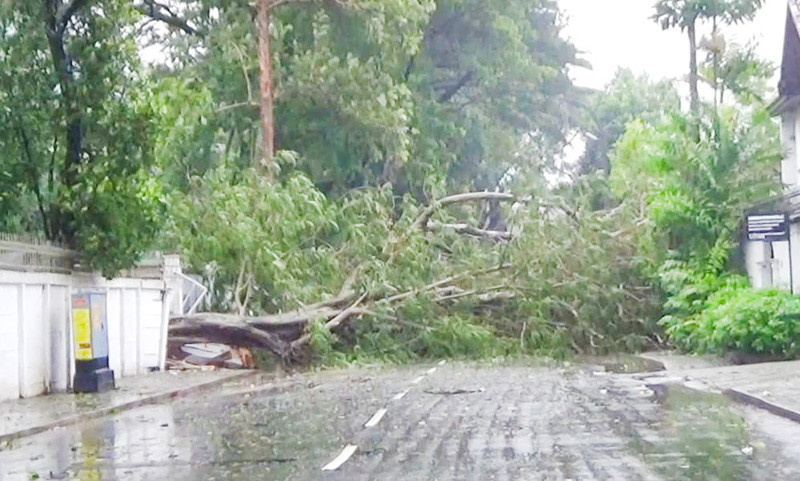
In recent years, falling trees have claimed lives, destroyed homes, and sparked an urgent debate: should Colombo’s ancient trees be cut down in the name of safety? But this is the wrong question. The real crisis is not that these trees are dangerous — it is that we have made them so. Through decades of road widening, root-smothering pavements, and indiscriminate branch cutting, we have steadily undermined the very trees we now fear. What we are witnessing is not nature failing us. It is us failing nature. As the world marks World Desertification Day on 17th June, Sri Lanka would do well to reflect that desertification does not begin only in distant, arid lands — it begins whenever a city turns its back on its own green heritage.
In recent years, falling trees have claimed lives, destroyed homes, and sparked an urgent debate: should Colombo’s ancient trees be cut down in the name of safety? But this is the wrong question. The real crisis is not that these trees are dangerous — it is that we have made them so. Through decades of road widening, root-smothering pavements, and indiscriminate branch cutting, we have steadily undermined the very trees we now fear. What we are witnessing is not nature failing us. It is us failing nature.
Colombo, our commercial capital, is considered one of the greenest cities in the world. This is highlighted by the award of the world’s first Wetland City designation to our administrative capital, Sri Jayewardenepura Kotte. Both cities and their green heritage should be treasured and protected — not only as assets of their citizens, but as a matter of national pride.
It is against this backdrop that one must view with deep concern the ongoing destruction of trees and greenery across Sri Lanka, particularly in urban settings such as Colombo and Kotte. The majestic trees lining our traditional tanks, rural areas, and urban areas are part of our heritage. The trees lining Colombo’s Ananda Coomaraswamy Mawatha (previously named the Green Path because of its large trees), Gregory’s Road, Thurstan Road, and Bauddhaloka Mawatha, are over a hundred years old. These are living monuments of our heritage. They provide shade, a natural canopy, and a habitat for a remarkable diversity of bird populations within the city. It is therefore vital that we make every effort to preserve these trees unless they pose a direct danger to human life.
Why Do These Trees Become Dangerous?
To address this question, we must first understand why large trees continue to fall during periods of strong winds. Old photographs indicate that it is we who have widened roads and built pavements to cover the roots of these majestic trees, a true heritage from the past.
A leading reason for trees to fall is age-related decay. Old trees tend to develop weak branches and trunks. Regular inspection of their structural integrity and timely treatment of disease would go a long way in preventing such failures.
The second reason is indiscriminate cutting of branches, which disrupts the natural balance of the tree. A principal offender in this regard is the Ceylon Electricity Board. When interviewing workers engaged in trimming city trees, one consistently hears the same justification: the branch must be cut because it is touching or close to a power line. There are no arborists, trained experts, or senior officials to guide these workers or determine whether a less destructive approach is possible.
The third reason is the destruction of root systems. Across the city, one can observe concrete and paving laid directly over the root zones of large trees. This prevents oxygenation and moisture from reaching the roots, causing them to deteriorate or die. The inevitable consequence is that the tree gradually loses its structural support at the base, making it vulnerable to falling.
What Should Municipalities and Town Councils Do?
To save our ancient trees, we must counter the flawed argument that we need to replace them—these trees are priceless “nature’s investments for hundreds of years” and, as a BBC article on ancient oaks suggests, their genetic heritage is vital for resilient future forests. See “1,000-year-old oaks used to create ‘super forest’ (See )
* A nationwide strategy is essential: we must start by strengthening the expertise of tree officers in the Colombo Municipal Council and other urban councils to ensure professional health assessments are available, while also linking with botanists, academics, and environmental groups at the University of Colombo.
* Use Google Maps and GIS for systematic mapping and reviving a citizen science platform, similar to one previously developed by University of Moratuwa, where students and the public can report environmental harm with photos and locations.
* Technology offers more powerful tools. There are Conventional Visual Tree Risk Assessment (VTRA) methods which fail to detect risks. More advanced methods were reported at the 30 th International Forestry and Environment Symposium 2026 e.g. Ground Penetrating Radar (GPR). These are able to find trunk decay and found examples in urban trees at Viharamahadevi park and Keppetipola road.
* We can raise public awareness through social media and community events like “tree walks,” a practice which could be further popularized by groups like Ruk Rakaganno (see ) and the Love A Tree Foundation (see )
* Finally, we must learn from international models like the UK’s Ancient Tree Forum (see ). The latter specialises in protecting trees as a heritage which must be preserved and protected for future generations.
by Saroj Jayasinghe
Emeritus Professor
Consultant Physician
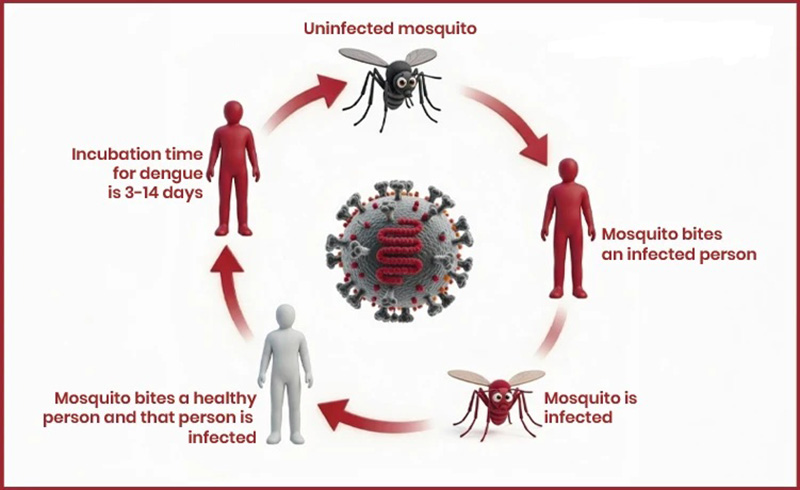
Dengue is one of the fastest spreading mosquito-borne viral diseases in the world today, posing a growing threat to nearly half of the global population. The World Health Organization describes dengue as a viral infection transmitted to humans through the bite of infected female mosquitoes, primarily Aedes aegypti and, to a lesser extent, Aedes albopictus. Once considered a disease limited to tropical regions, dengue has now expanded widely across continents, driven by urbanization, climate change, population movement, and weak vector control systems.
The global burden of dengue has increased dramatically over recent decades. According to WHO estimates, there are approximately 100 to 400 million infections annually, although a large proportion remain asymptomatic or undiagnosed. The disease is now endemic in over 100 countries, with Asia bearing the highest share of cases, followed by Latin America and Africa. As transmission intensifies and outbreaks become more frequent, dengue has emerged as a major public health concern requiring coordinated prevention and control strategies.
The nature of dengue infection
Dengue is caused by four closely related viruses known as serotypes: DENV-1, DENV-2, DENV-3, and DENV-4. Infection with one serotype provides lifelong immunity to that specific strain, but only partial and temporary protection against the others. This means a person can be infected up to four times in their lifetime.
Most dengue infections are asymptomatic or mild. When symptoms do occur, they typically appear 4 to 10 days after the bite of an infected mosquito. The clinical presentation includes high fever, severe headache, pain behind the eyes, muscle and joint pain, nausea, vomiting, rash, and fatigue. Because these symptoms resemble other viral infections, dengue is often underdiagnosed in early stages.
While most patients recover within one to two weeks, a small proportion develop severe dengue. This life-threatening condition is characterised by plasma leakage, severe bleeding, organ impairment, and shock. Without timely medical intervention, severe dengue can be fatal. WHO emphasises that early diagnosis and appropriate clinical management can reduce fatality rates to below 1 percent in well-managed settings.
Transmission and mosquito ecology
Dengue is transmitted primarily through the bite of infected female Aedes mosquitoes. These mosquitoes are highly adapted to urban environments and typically breed in artificial water containers found in and around homes. Unlike malaria-transmitting mosquitoes, Aedes mosquitoes bite during the daytime, with peak activity in the early morning and late afternoon.
The lifecycle of the mosquito plays a crucial role in transmission. Eggs can survive for months in dry conditions and hatch when they come into contact with water. Even small collections of water, such as flower pots, discarded containers, tyres, and water storage tanks, can serve as breeding sites.
Urbanisation has significantly contributed to the spread of dengue. Rapid population growth in cities often leads to overcrowding, poor waste management, and inadequate water storage practices, all of which create ideal breeding conditions for mosquitoes. Climate factors such as increased rainfall, humidity, and temperature further enhance mosquito survival and virus replication.
Risk factors and global expansion
Several factors increase the risk of dengue transmission. Population density is a key driver, as densely populated urban areas provide abundant human hosts for mosquitoes. Inadequate housing conditions and poor access to clean water force communities to store water in containers, which often become breeding grounds.
Human mobility also contributes to the spread of the disease, as infected individuals can introduce the virus into new regions where competent mosquito vectors are present. Climate change has expanded the geographical range of Aedes mosquitoes into previously unaffected areas, increasing the risk of outbreaks in both tropical and subtropical regions.
WHO has noted that dengue incidence has increased significantly over the past 50 years, with periodic outbreaks becoming more frequent and severe. The disease is now considered a major global health threat, comparable in burden to other high-impact infectious diseases in many regions.
Clinical management and absence of specific treatment
There is currently no specific antiviral treatment for dengue. Management is supportive and focuses on relieving symptoms and preventing complications. Paracetamol is recommended to reduce fever and pain, while non-steroidal anti-inflammatory drugs such as ibuprofen and aspirin are avoided due to their risk of increasing bleeding.
Patients with severe dengue require hospitalisation for close monitoring and supportive care, including intravenous fluid replacement and management of shock or bleeding. With proper medical care, mortality rates can be significantly reduced.
Early detection is critical. Warning signs such as persistent vomiting, severe abdominal pain, bleeding gums, rapid breathing, and sudden fatigue indicate progression to severe dengue and require immediate medical attention.
Prevention: the cornerstone of dengue control
Since there is no specific cure, prevention remains the most effective strategy against dengue. WHO strongly emphasises integrated vector management as the foundation of dengue control.
Personal protection measures are essential, especially during daytime hours when mosquitoes are most active. These include the use of mosquito repellents containing DEET, picaridin, or IR3535, wearing long-sleeved clothing, and using mosquito nets when resting during the day. Window and door screens also help reduce indoor mosquito exposure.
Environmental management is equally important. Communities are encouraged to eliminate breeding sites by removing stagnant water, disposing of waste properly, and cleaning water storage containers regularly. Even small water collections can sustain mosquito populations, making household-level participation crucial.
Public health programmes also rely on insecticide spraying during outbreaks to rapidly reduce mosquito populations. However, WHO emphasises that chemical control alone is insufficient without sustained community involvement and environmental management.
Community participation and public health response
Community engagement is a central pillar of dengue prevention. Effective control requires continuous participation from households, schools, workplaces, and local authorities. Public awareness campaigns play a vital role in educating populations about mosquito breeding habits and personal protection measures.
Surveillance systems are also essential for early outbreak detection and response. Health authorities monitor dengue cases and mosquito populations to identify high-risk areas and implement targeted interventions.
Integrated approaches that combine environmental management, biological control, chemical interventions, and public education have proven most effective in reducing transmission.
Vaccination and emerging tools
In recent years, dengue vaccines have been developed and introduced in some countries under specific conditions. WHO has recommended the use of certain vaccines in areas with high transmission, particularly for populations with prior exposure to dengue. However, vaccination strategies remain limited and must be carefully implemented due to the complexity of immune responses to dengue infection.
Research continues into new tools such as genetically modified mosquitoes, Wolbachia-infected mosquitoes that reduce virus transmission, and improved diagnostic technologies. These innovations offer promising additional tools but are not yet substitutes for established prevention measures.
Dengue remains a rapidly growing global health challenge with significant medical, social, and economic impacts. Its spread is driven by urbanisation, climate change, and the adaptability of mosquito vectors. While no specific cure exists, timely clinical care can prevent deaths, and effective prevention strategies can significantly reduce transmission.
The World Health Organization emphasises that dengue control depends on a combination of personal protection, environmental management, community participation, and strong public health systems. As the disease continues to expand geographically, sustained global commitment is essential to reduce its burden and protect vulnerable populations.

The Mediation (Civil and Commercial Disputes) Bill was passed by the Parliament on Thursday, June 11, 2026. Harshana Nanayakkara, Minister of Justice and National Integration, introduced the Bill, and explained its provisions and value for Sri Lanka and global developments in the use of mediation. Encouragingly, it was passed unanimously.
Sri Lanka’s commitment to provide legislative support for the use of mediation is timely and most welcome. Given that the backlog of cases pending before courts is over a staggering 1.1 million, it is clear that Sri Lanka is yet another country that remains challenged to find responses to make dispute resolution more efficient. The impact of laws delays is serious and damaging not only to the disputants personally, but also for businesses and the economic development of the country. The delays in concluding cases impacts the economy adversely, both directly and indirectly, but are often seen only as an access to Justice concern. This is unfortunate. In many jurisdictions across the globe, alternative dispute resolution processes (ADR), such as mediation, have been introduced to alleviate laws delays. While Sri Lanka enacted legislation (1988) to provide for mediation in respect of minor community disputes of a low monetary threshold, the enactment of the new law heralds a commitment to provide for the recognition of a disciplined regime for its use for higher value civil and commercial disputes.
The new law provides for the recognition of mediation as a dispute resolution option that can be voluntarily selected by parties, and for a governance regime to ensure that mediations are conducted in compliance with certain standards which are globally accepted. It provides statutory recognition to the principle that a mediated settlement agreement that has been signed by the disputants, is valid in law. It does not provide for any management control by government or establish entities. In addition to the voluntary reference by parties, a court can also refer a dispute in an action before it, to mediation, at its discretion, after considering all circumstances and if considered appropriate. The voluntary nature of the process is not affected because, while the court can refer the dispute to mediation and the parties must then engage in the mediation, there is no compulsion for the parties to settle against their will.
The law sets out the obligations of Mediators, disputants and the Service Provider. Certain categories of disputes cannot be referred to mediation. These are disputes the settlement of which requires the inclusion of terms that can be given effect to, only on a decree of court, such as the termination of a marriage or a declaration of nullity of marriage or the adoption of a child or the partition of land to obtain rights in rem. A schedule sets out eleven (11) categories of actions that cannot be settled by mediation. However, matters relevant to such disputes may be mediated for the purpose of submitting terms of settlement to court for consideration of incorporation in a judgement, decree or order in compliance with applicable law.
The new law also provides that in a mediation, certain key principles of the process must be complied with. These include the confidentiality and the without prejudice rule in respect of matters discussed at the mediation; the rule that Mediators must be neutral and impartial; the party centric nature of the process that provides primacy to the wishes of the disputants including that it is they that determine the outcome and that a settlement is reached only if all disputants agree to the terms; the noncoercive role of the mediator whose duty is to facilitate and manage the process using mediation specific skills and techniques, but is debarred from imposing a decision. Although a settlement agreement is valid in law, provision is included to obtain a decree of court, based on the terms of the settlement. A mediated settlement agreement can be set aside on an application made to court, on specific limited grounds which are provided for, including that it is offensive to the public policy of the country. If the parties are unable to agree on a settlement, a certificate of non-settlement is issued. The provisions of the law are based on international best practices and principles articulated in the 1988 UN Mediation Convention (the Singapore Convention) and the UNCITRAL model law.
The popularity of mediation has grown for its value in being time efficient, cost effective and party centric. Parties have control over the outcome and have the space to discuss their concerns, fears and interests and need never agree to settle unless fully satisfied that settlement terms address their interests. Disputants are free to walk out of a mediation process at any time, if dissatisfied with the progress. The discussions are confidential and a valuable feature is that the process offers an opportunity to reduce acrimony which is prevalent in most disputes, and to restore fractured relationships which is very important in family and business related disputes. This benefit and the prospects for governments to reduce the cost of the administration of justice, by using mediation, is articulated in the preamble to the 2018 UN Convention on International Settlement Agreements Resulting from Mediation (2018) which states that the use of mediation results in significant benefits.
Pursuant to the interest generated within the country regarding the value of using Mediation for commercial dispute resolution, and heralding what we like to see as the initial steps of a Mediation boom in the country, several positive advancements have taken place –
* Parties have opted to include mediation in the dispute resolution clause in contracts;
* Given that mediating disputes requires very specialised techniques and skills, many professionals, including predominantly Lawyers, have engaged in training programmes offered by international training bodies that offer accreditation;
* Trained Mediators are engaged in an effort to form themselves as a professional Organisation;
* Mediation Advocacy training programmes have been held to train Lawyers on their niche role in the mediation process. That role is distinctly different to that of a court Lawyer who’s obligations are centred on an adversarial approach where the dispute is adjudicated in terms of the law alone. Hence lawyers need training to be useful within a non-adversarial process which is party centric and has a focus on reaching a settlement, based on the interests of disputants.
* Sri Lanka enacted the Recognition and Enforcement of International Mediated Settlement Agreements Act No. 5 of 2024 (the UN Mediation Convention Act) and ratified the Convention becoming the 14th country to do so. Sri Lanka will be seen as an investor friendly country in respect of dispute resolution where mediation is used, since it offers an enforcement regime which is recognised universally.
* The landmark determination of the Supreme Court (SC SD 22 of 2025) in the challenge by the Bar Association to the constitutionality of the Mediation (Civil and Commercial Disputes) Bill, found that none of the provisions of the Bill were unconstitutional and gave a judicial sign off to statutory provisions that seek to ensure that mediation services are provided in this country, in a disciplined manner in compliance with universally accepted standards.
* Perhaps, inspired by the statutory obligation imposed on judges to attempt pretrial settlement of disputes, in terms of the Small Claims Court Act and the Small Claims Court Procedure Act (both of 2022) and the Civil Procedure Code provisions on Pretrial Conference and Pretrial Orders, 125 District Judges were recently trained (with support from the ADB) in Mediation. The training provided a dual benefit – it provided training in skills that are required to settle disputes and equally importantly, provided a comprehensive understanding of how mediation will function when judges themselves refer disputes for settlement by private mediators.
* Trained Mediators are already conducting mediations with success.
* A not-for-profit guarantee company, the International ADR Centre – www.iadrc.lk ) was established in 2018 as a joint venture of the Ceylon Chamber of Commerce and the Institute for the Development of Commercial Law & Practice (ICLP) to promote ADR and is actively engaged in promoting mediation through training, disseminating information and creating awareness among stakeholders, including the business sector. In addition to the International ADR Centre, “Udecide” is a project that promotes training of mediators and other activities that enrich the mediation culture.
* Commercial Mediation has been included in the Masters level programme at the Colombo University;
* The Sri Lanka Law College offers a component on Mediation in the Post Attorney Diploma programme, which commenced recently.
The private sector was actively engaged in the drafting of the Mediation Bill under the leadership of the International ADR Centre, which held many stakeholder consultations to obtain feedback from those that were conversant with the subject. The Centre had previously assisted the government to draft the UN Mediation Convention Act (Act No. 5 of 2024).
Several international Organisations that previously provided for resolution of disputes by arbitration, have provided for institutional rules to provide mediation services. These include WIPO and the ICC. Specifically, in relation to Investor State dispute resolution (ISDR), the International Bar Association (IBA) adopted its Mediation Rules in 2012 and ICSID (of the World Bank group) adopted its Mediation Rules in 2022. UNCITRAL, which is currently working on reforming ISDR, promotes mediation, observing that the use of mediation could reduce the costs of ISDS and also preserve relationships between the investor and the State. UNCITRAL has formulated provisions on and Guidelines for, Mediation for investor state dispute resolution.
(To be continued)
by Dhara Wijayatilake
Attorney-at-Law; Former Secretary to the Ministry of Justice; Director and Secretary General of the International ADR Centre.

CA Sri Lanka felicitates first woman Auditor General

Killing of Colombo’s ancient trees — a warning on UN’s World Desertification Day – 17 June

CID admits Sallay strip-searched in front of other detainees

Coast Guard in coordination with Navy nets suspect along with truck transporting Rs 14 mn worth of contraband

Dengue and its prevention: A global public health challenge

ComBank pioneers state-of-the-art 3DS authentication for UnionPay cardholders

‘Dates have the highest sugar content to fight Coronavirus’

Sunday Island 27 December – Headlines

#SundayIsland 17th December – Headlines

Sunday Island – 28th March

Sunday Island Headlines – 21 March

Sunday Island – 21st February – Headlines
-
 News5 days ago
CIABOC summons Yoshitha over his participation in British Navy training programme
-
 News7 days ago
Local firms move millions of dollars overseas for phantom imports: Govt.
-
 Midweek Review7 days ago
July 09: An inexcusable overall security failure and exceptional contingency plan
-

 Sports2 days ago
Tharanga set for high-profile javelin clash in Ostrava
-

 News5 days ago
Justice Minister responds to social media claims he represented Easter Sunday ringleader
-

 News4 days ago
Commonwealth lawyers urge Lanka to uphold rule of law
-

 Features3 days ago
Politics of protected species
-

 News7 days ago
AI raises concerns over arrest of Sallay and rapper under PTA