
Editorial
Throwing ministers behind bars


Friday 4th October, 2024
Much is being spoken these days about the need to eliminate corruption, which has eaten into the vitals of Sri Lankan society. However, clean governance has been reduced to a mere political slogan in this country, and the corrupt continue to go places. While Sri Lanka is paying lip service to the task of ridding itself of corruption, former Singapore Minister S. Iswaran has been sentenced to one year in jail for receiving gifts worth USD 300,000 and obstructing justice while in office.
Charges against Iswaran included accepting expensive gifts such as tickets to English Premier League football matches, the Singapore Formula 1 Grand Prix, London musicals and a private jet ride. If Sri Lankan politicians were to be prosecuted for such offences, most of them would be behind bars. The new government of Sri Lanka has taken moral high ground and is making a public display of what it calls its commitment to eliminating bribery and corruption. It has received praise from foreign diplomats for its anti-corruption drive, but its leaders are among the politicians who have received undeclared funds.
Iswaran, who held several key Cabinet portfolios, such as transport, communications and trade, had to resign as a minister last year, when his transgressions came to light. He initially protested his innocence, saying that he would fight to clear his name, but subsequently he pleaded guilty to five charges.
The Singapore court rejected Iswaran’s plea for leniency. Presiding Judge Vincent Hoong is reported to have said: “Trust and confidence in public institutions are the bedrock of effective governance, which could all too easily be undermined by the appearance that an individual public servant has fallen below the standards of integrity and accountability.” The classification of a minister as a public servant is of interest. Sri Lanka’s new government should seriously consider having Judge Hoong’s obiter dictum prominently displayed at all state institutions, here.
What basically made Singapore’s quantum leap from the ‘Third World’ to the ‘First World’ possible was its successful war on bribery and corruption under the unwavering leadership of Lee Kuan Yew (LKY), who also restored the rule of law. Clean governance has enabled the city state to retain its No 2 spot on the World Bank rankings for ease of doing business.
In a previous editorial comment on the arrest of Iswaran, we pointed out what LKY had said about ministers and officials in this part of the world. In his widely read book, From Third World to First, he has said: “The higher they are, the bigger their homes and more numerous their wives, concubines, or mistresses, all bedecked in jewelry appropriate to the power and position of their men. Singaporeans who do business in these countries have to take care not to bring home such practices.” When one sees Sri Lankan politicians and bureaucrats enriching themselves and living the life of Riley with impunity, one remembers LKY’s memorable words.
All Singaporean politicians who did not heed LKY’s aforesaid warning were severely dealt with. The fate that befell Teh Cheang Wan, the Minister for National Development, is a case in point. When the Corrupt Practices Investigation Bureau launched a probe into an allegation of bribery against him in the mid-1980s, he sought to meet LKY, who refused to see him until the investigation was over.
Wan took his life, and his suicide note said, inter alia, “As an honourable oriental gentleman I feel it is only right that I should pay the highest penalty for my mistake.” If the Sri Lankan ministers had received the same treatment as Wan from their leaders, most of them would have been pushing up the daisies by now, and the vital sectors such as health, education, finance, agriculture and trade and commerce would have been free from corruption, and, above all, fake and substandard drugs would not have snuffed out so many lives in the state-run hospitals.
Now that Singapore has set an example to other countries by throwing Iswaran behind bars, will it extradite one of its citizens, Arjuna Mahendran, to Sri Lanka to stand trial for his involvement in the Treasury bond scams carried out on his watch as the Governor of the Central Bank of Sri Lanka? Singapore should help other nations fight corruption, shouldn’t it?
Minister of Public Security Vijitha Herath has said the new government will do everything in its power to have Mahendran extradited. Let him be urged to ensure that the Attorney General’s Department makes a formal request to the government of Singapore to that effect, again.



Wednesday 6th May, 2026
The tragic death of Assistant Director of the External Resources Department of the Ministry of Finance, Ranga Rajapaksha, 50, has given rise to doubts, suspicions and various conspiracy theories. It has become an issue reminiscent of the complex plot twists and tropes found in classic whodunits such as Agatha Christie’s Murder on the Orient Express and modern murder mysteries like Knives Out. Not even a postmortem examination has helped put the matter to rest. Two schools of thought have emerged about Rajapaksha’s death. One asserts that he committed suicide after being suspended over the diversion of USD 2.5 million from the Treasury to a rogue account, and the other insists that foul play cannot be ruled out.
No sooner had Rajapaksha been found dead, on 30 April, than a four-member panel of forensic experts was appointed to conduct a postmortem examination, and its report was submitted fast. The experts reportedly concluded that the victim had committed suicide. But their conclusion has been challenged in some quarters.
Prominent Opposition politicians and legal experts are among those who argue that Rajapaksha’s death was not properly probed, and the postmortem report is therefore not acceptable. They have gone to the extent of alleging that Rajapaksha’s death was part of a grand cover-up, the implication being that they suspect murder. Some of them have claimed that Rajapaksha, who was reportedly the first to complain of the fund diversion at issue, faced the same fate as Dan Priyasad, who made a formal complaint of the questionable release of red-flagged freight containers without mandatory Customs inspection from the Colombo Port. Priyasad was shot dead in 2025.
As for Rajapaksha’s death, there is no evidence to prove the allegation of foul play, but doubts and suspicions being expressed about it could have a corrosive effect on the integrity of the legal and judicial processes, and should therefore be cleared forthwith. After all, anything is possible in this country, where governments have earned notoriety for subverting the legal and judicial processes to protect their political interests.
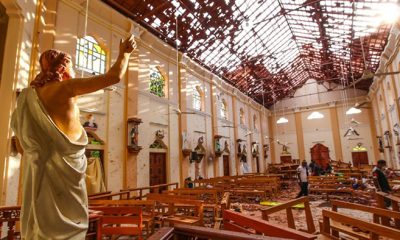
There have been allegations that narcotics samples sent to the Government Analyst’s Department for testing were replaced with kurakkan flour. The JVP/NPP politicians are among those who have questioned the validity of a DNA test that revealed that Sarah Jasmine, the widow of Muhammadu Hastun, who carried out the Katuwapitiya Church massacre, in 2019, had been among the National Thowheed Jamaath members killed in a suicide bomb blast in Sainthamarathu a few days after the Easter Sunday terror attacks. So, the government cannot fault those who have refused to accept the official version of Rajapaksha’s death.
In an article published on the opposite page today, Prof. Susirith Mendis has mentioned several instances where JMO reports were found to have been erroneous or even falsified. Arguing that postmortem examinations are prone to error, negligence and falsification, Prof. Mendis mentions a fourth possibility, a legitimate academically defensible difference of opinion and points out that neither medicine nor forensics is an exact science. He says that whether the four-member expert panel looked into all aspects of the death of Rajapaksha is a moot point.
Some legal experts have called for a psychological autopsy to find out Rajapaksha’s mental state at the time of his death. They are right in having asked for an investigation into the victim’s life, behaviour and mindset in the period leading up to his death, as it is alleged that he may have been driven to suicide. Psychological autopsies are common in other countries, where they are conducted by forensic experts, clinicians and legal authorities. They may not provide absolute proof but can help courts, investigators and victim families understand what may have happened.
Given the serious doubts and suspicions expressed by experts, politicians and others about Rajapaksha’s death, the need for a fresh postmortem examination cannot be overstated.
Tuesday 5th May, 2026
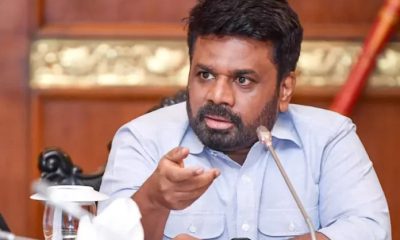
The JVP-NPP government turned its recent May Day rallies into a propaganda counteroffensive against the Opposition, which has effectively targeted its good governance credentials. The ruling party leaders, including President Anura Kumara Dissanayake, went ballistic, condemning their rivals as utterly corrupt politicians. Claiming that 2026 would be remembered as the year when the corrupt and thieves were sent to jail, President Dissanayake said 15 high-profile cases would come up in the current month itself.
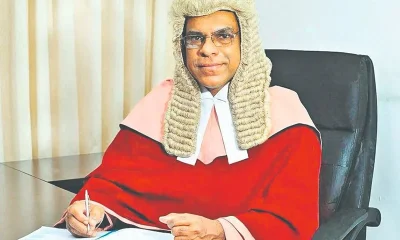
The Executive President can have himself briefed on cases to be filed and the progress therein, but it is unbecoming of him or her to leverage privileged access to such information for political expediency. Lashing out at President Dissanayake for having told his supporters, at a public rally, that they will be able to hail a judgement to be delivered in a corruption case later this month, the Joint Opposition yesterday said at a media briefing that by saying so, the President had undermined the integrity of the judiciary. Former Minister of Justice and Constitutional Affairs Prof. G. L. Peiris told the media yesterday that by claiming to have prior knowledge of the judgement to be delivered on 25 May, the President had assailed the very foundation of the Constitution. One cannot but agree with Prof. Peiris that in the civilised world, judicial decisions are not meant to entertain a third party, and the President’s statement at issue is tantamount to exerting political pressure on the judiciary. Prof. Peiris said the Opposition would make representations to the Chief Justice on the matter. The Bar Association of Sri Lanka must also take it up.
The political undertone of the aforementioned presidential declaration is disturbing, for it betrays a vested interest in the cases the President has referred to, and it is therefore only natural that he is seen to be ramping up pressure on the judiciary to be mindful of the government’s desire to have its political opponents incarcerated for corruption somehow or other. When he insists that the government politicians are not corrupt, and corruption cases would come up against their Opposition counterparts, the subtext of his statement is that he believes that the Opposition members concerned deserve punishment and expects them to be jailed. This can be considered a thinly veiled message intended to influence the judiciary.
The JVP/NPP came to power partly resorting to a false dichotomy. It divided politicians into two broad categories––clean individuals who supported it and others it portrayed as deserving imprisonment for corruption. One may argue that the government’s vested interest in prosecuting its political opponents, and its public declarations that they must be jailed, hang over the judiciary like the sword of Damocles.
The presidential declarations with the potential to erode public trust in the judiciary should be viewed against the backdrop of a controversial claim made by a Minister that the JVP-NPP government would devolve judicial powers to some committees to be set up at the village level. Is the JVP/NPP working according to a plan to undermine the judiciary and reduce it to a mere appendage of the government?
The JVP was critical of the Executive Presidency, while out of power, and even launched aggressive campaigns, seeking its abolition. The JVP/NPP promised to introduce a new Constitution, inter alia, “abolishing the executive presidency and appointing a president without executive powers by the Parliament” (A Thriving Nation: A Beautiful Life, NPP Election Manifesto, p. 109). Today, the JVP/NPP is silent on this solemn pledge which enabled it to garner favour with the public to win elections, and President Dissanayake is accused of undermining the cherished constitutional doctrine of the separation of powers. Worse, JVP General Secretary Tilvin Silva has declared that the incumbent government will be in power indefinitely. Senior public administrators have protested against a government move to plant JVP cadres in the District and Divisional Secretariats on the pretext of implementing the Clean Sri Lanka programme. One can only hope that the unfolding events are not ominous signs of an Orwellian nightmare.

Monday 4th May, 2026
Rice farmers are in a paddy. They are complaining that they have been left without fertilisers for the current cultivation season. The government has reportedly announced that it will not be able to meet the paddy farmers’ fertiliser requirements fully due to the current global supply disruptions. It has thus contradicted itself. Previously, it said there were adequate fertiliser stocks in the country, and there would be no shortages. It should not have given such an assurance amidst a global fertiliser crisis.
The West Asia conflict, especially the closure of the Hormuz Strait, has adversely impacted the global fertiliser supply. The Persian Gulf is a major hub of global fertiliser production and exports. Iran, Qatar, Saudi Arabia and Oman are among the world’s leading exporters of nitrogen fertilisers, including urea and ammonia, amounting to 30-35 percent of global urea exports and around 20-30 percent of ammonia exports, according to the Food and Agriculture Organization (FAO) of the UN. The FAO has said that overall, up to 30 percent of global fertiliser exports pass through the Hormuz Strait, the closure of which has disrupted the global fertiliser supply chains. Production cuts and shipping constraints have stalled an estimated 3-4 million tonnes for fertiliser trade per month, and the global fertiliser prices could average 15-20 percent higher during the first half of 2026 if the present crisis continues. Even the American Farm Bureau Federation has complained of fertiliser woes. It has written to President Donald Trump and the Congressional leaders, emphasising the severe economic pressures facing America’s farmers and ranchers. Falling crop prices, skyrocketing expenses, etc., due to rising fertiliser prices are creating conditions that are too much for farm families to bear, it has pointed out.
Anger blinds people to reason. It is therefore possible for politicians and political parties to weaponise farmers’ woes, food shortages and hunger to unsettle, if not topple, governments that fail to ensure an uninterrupted agrochemicals and food supplies even during crises. The fate of the SLFP-led United Front (UF) government in the 1970s is a case in point.
The early 1970s saw a severe world grain shortage. A run of poor harvests in the food producing regions, and a rising demand left many countries with no alternative but to adopt stringent measures to face the situation. An oil crisis in the early 1970s drove up the cost of fuel, fertilisers, and transport, increasing the cost of food production and distribution. Low global grain reserves aggravated the situation, and Sri Lanka was among the worst hit. Reeling from the food crisis, with food import bills increasing, the countries in the Global North scrambled to obtain supplies and remained focused on increasing domestic agricultural production, food security planning and seeking international cooperation to maintain buffer stocks. They had to ration some imported food items that were in short supply.
The UF government became hugely unpopular due to the extreme measures it adopted to curtail hoarding and increase domestic food production through import restrictions. It suffered a humiliating defeat in the 1977 general election. One may recall that the reduction of rice subsidy almost brought down a UNP government in 1953. Sri Lanka was experiencing the ill-effects of a severe grain shortage in Asia in the early 1950s. It was among the former colonies that had prioritised cash crops over subsistence farming and found rice production insufficient for rapidly growing populations. But those who were opposing the then UNP government’s decision to curtail the rice subsidy and increase rice prices ignored the aforementioned aspects of the problem, and organised public protests, triggering the 1953 hartal, which resulted in several deaths of protesters and the resignation of Prime Minister Dudley Senanayake. The then Opposition effectively harnessed public anger against that beleaguered government to engineer a regime change.
Sri Lankans tend to expect their governments to act as beneficent agencies. This mindset has arisen from decades of patronage-based politics, promoted by political parties, including the JVP. So, it is therefore only natural that when a government fails to deliver even during crises, it faces public anger.
If the current fertiliser shortage persists, it could lead to an ironical turn of events, with the farming community having to adopt biological soil amendments, such as compost, farmyard manure, etc., as they did during the Gotabaya Rajapaksa presidency for want of a better alternative. Gotabaya’s ill-planned organic farming experiment created a situation where the JVP was at the forefront of farmers’ protests, demanding fertilisers. Some JVP seniors were seen clutching clumps of withering paddy seedlings and urging the SLPP government to make fertilisers available. They made the most of farmers’ resentment and gained a turbo boost for their political campaigns to win elections. Today, the boot is on the other foot.

Ahmedabad to host IPL 2026 final on May 31

Man charged with attempted Trump assassination indicted for assaulting Secret Service officer

Vivek Ramaswamy wins Republican nomination for Ohio governor

Trump says US to pause operation to guide vessels through Strait of Hormuz

Samson, Kartik, spinners set up Chennai Super King’s clinical win

State Banquet Hosted by the President for the Maldivian President and Delegation

‘Dates have the highest sugar content to fight Coronavirus’

Sunday Island 27 December – Headlines

#SundayIsland 17th December – Headlines

Sunday Island – 28th March

Sunday Island Headlines – 21 March

Sunday Island – 21st February – Headlines
-

 News7 days ago
Rooftop Solar at Crossroads as Sri Lanka Shifts to Distributed Energy Future
-
 News2 days ago
CJ urged to inquire into AKD’s remarks on May 25 court verdict
-
 News6 days ago
“Three-in-one blood pressure pill can significantly reduce risk of recurrent strokes”
-

 News3 days ago
USD 3.7 bn H’tota refinery: China won’t launch project without bigger local market share
-

 News6 days ago
Alarm raised over plan to share Lanka’s biometric data with blacklisted Indian firm
-
 News5 days ago
Ten corruption cases set for court in May, verdict ordered in one case – President
-
 News4 days ago
Easter Sunday Case: Ex-SIS Chief concealed intel, former Defence Secy tells court
-

 News6 days ago
USD 2.5 mn fraud probe: Interdicted MoF official found dead at home