
Editorial
Blues of the Greens


Wednesday 25th September, 2024
The UNP has announced that its leader and former President Ranil Wickremesinghe will not contest the next parliamentary election; nor will he return to Parliament via the National List (NL). It has also said it will contest future elections under its Elephant symbol and invited the SJB to close ranks with it and form a new electoral alliance. The SJB has rejected the UNP’s invitation out of hand.
Ranil is known for his lateral thinking and unpredictable moves, and therefore it is not possible to guess what is up his sleeve. After suffering a humiliating defeat at the last parliamentary election, he said he would not enter Parliament, but a few months later he became an NL MP and went on to secure the premiership and the presidency.
Ranil, one of the most experienced and knowledgeable political leaders around, took over the reins of government in 2022 while the country was in flames and teetering on the brink of anarchy. No other leader dared come forward to do so in spite of repeated appeals from President Gotabaya Rajapaksa. Ranil skillfully navigated the ship of state between Scylla and Charybdis. He had the courage to make quite a few unpopular decisions, which helped resuscitate the economy and bring order out of chaos. It is doubtful whether any other leader would have done what he intrepidly did on the economic front despite the huge political costs his bold actions entailed. Some measures that the government adopted under his leadership were hurtful to the public, but there was no way they could be avoided, given the sorry state of the economy and IMF bailout conditions. True, Ranil did not act out of altruism; he had a political agenda, but what he did helped manage the economic crisis and prevent the country’s descent into anarchy.
Perhaps, what caused Ranil’s failure on the political front, as the President, was the arrogance of power, which he did not care to overcome like most other political leaders including Mahinda Rajapaksa. He was seen to be a defender of the corrupt. He refused to take action against Keheliya Rambukwella over several procurement scams in the Health Ministry during the latter’s tenure as the Health Minister. When it became too embarrassing for the government to go on defending Rambukwella, he was thrown to the wolves, but by then public opinion had turned irreversibly against the government and President Wickremesinghe. Rambukwella should have been sacked from the Cabinet when the mega rackets such as the procurement of fake immunoglobulin came to light.
President Wickremesinghe also protected the crooked cricket administrators in spite of a unanimous parliamentary resolution calling for their resignations. He incurred much public opprobrium as a result. He berated the judiciary while speaking in Parliament, and contemptuously defied a Supreme Court (SC) order that funds be granted to the Election Commission for conducting the local government elections, which he arbitrarily put off. He refused to carry out another SC order that IGP Deshabandu Tennakoon be suspended and an Acting IGP appointed. Perhaps, it was the on-arrival visa racket that sealed his fate; no action was taken against the masterminds behind that multi-billion-dollar scam. Unless new President Anura Kumara Dissanayake ensures that the visa racketeers are brought to justice forthwith in keeping with his solemn pledge to eliminate corruption, he too will be in serious trouble.
President Wickremesinghe undermined virtually all institutions, especially the judiciary, the legislature and the public service. Given the manner in which he behaved as an unelected President, it was only natural that the people became wary of electing him to the most powerful position in the country.
It was also a big mistake for Ranil to form an alliance with the SLPP dissidents with serious allegations against them. Maybe he was left without an alternative, but his dependence on those unpopular characters also became his undoing. Some of them have earned notoriety for drug dealing, extortion and chain snatching. The SLPP defectors who closed ranks with the UNP have fallen between Mahinda’s sataka and Ranil’s coattails! They have become a bunch of political refugees. The public must be deriving some perverse pleasure from their predicament.
Most political leaders in this country do not care to exercise power cautiously, minding public opinion and rectifying their mistakes. Ranil failed to be different and his good work on the economic front did not help him improve his chances in Saturday’s presidential race, which he could have won if he had learnt from his mistakes and mended his ways.

Tuesday 23rd June, 2026
The Financial Crimes Investigation Division (FCID) has uncovered a large-scale foreign exchange fraud and arrested a Colombo-based businessman who is reported to have transferred millions of US dollars out of the country through a large number of shell companies since 2023. He has been allegedly involved in money laundering and illegal transfer of funds for phantom imports, according to media reports. The FCID deserves praise for its successful raid, but there is reason to believe that it is only scratching the surface of the problem. Much more needs to be done.
There are many other foreign currency racketeers who deprive Sri Lanka’s banking system of a colossal amount of dollars annually through various illegal operations. Among them are many exporters. Public Security Minister Ananda Wijepala told Parliament about two weeks ago that investigations had revealed that a large number of import-export entities operated only for short periods of around six months. He said the Customs had identified 105 local companies operating 227 accounts in 13 banks, with funds transferred overseas on 26,108 occasions between 01 January, 2023 and 30 September, 2025, for phantom imports. Besides, there are many businessmen who park most of their export proceeds overseas and resort to unlawful practices, such as misinvoicing, to mislead the Customs.
Informal fund transfer systems like hawala and undiyal have thrived under successive governments due to better exchange rates offered by them, faster transfers, virtual absence of documentation and, most of all, secrecy. They facilitate unregulated forex flows with impunity, much to the detriment of the economy. It has been reported that many expatriate Sri Lankan workers use these informal channels to transfer funds.
The country gains only when migrant workers send remittances through official channels, for foreign currency enters the banking system; the Central Bank can accumulate reserves, and remittance inflows appear in official balance-of-payments statistics. When remittances are diverted through hawala or undiyal networks, foreign exchange bypasses the banking system, distorting balance-of-payments data, reducing official reserve accumulation and making the Central Bank lose regulatory oversight on foreign currency flows. These informal fund transfer systems not only take their toll on the country’s foreign currency reserves but also pose a threat to national security as they are used for funding illegal activities including terrorism. Curiously, there has been no all-out effort to neutralise these networks.
One may recall that when the first signs of a foreign currency crisis appeared in 2021, the media raised the issue of unregulated forex flows through informal fund transfer systems with the then government leaders, who sought to make light of the situation, claiming that there was no need for action against such operations. A few months later, the country was left with no forex even for essential imports, and those leaders had to outrun protesters. The present-day leaders are likely to face a similar fate unless illegal fund transfer operations are disrupted and everything possible is done to build foreign currency reserves. which are under tremendous pressure.
There is a pressing need for stronger laws to deal with foreign currency racketeers. The abolition of the Exchange Control Act of 1953 and the introduction of the Foreign Exchange Act of 2017 during the UNP-led Yahapalana government have stood foreign currency racketeers in good stead, as we pointed out in a previous editorial comment. The Exchange Control Act was the primary legislative framework governing foreign currency, gold, securities, and cross-border financial transactions in Sri Lanka. The Foreign Exchange Act introduced under the pretext of liberalising the foreign currency flow converted non-bailable criminal offences into civil offences. The incumbent government should seriously consider restoring the Exchange Control Act if it is to deal with racketeers effectively and shore up foreign currency reserves.


Monday 22nd June, 2026
The JVP-NPP government, like all its predecessors, has got obfuscation down to a fine art. It muddies the water whenever issues concerning fuel prices are raised in Parliament or elsewhere. Its leaders give evasive answers to questions about fuel cost calculations in a way that makes one wonder if they stretch the truth and pluck figures out of the air to support their arguments. Curiously, their claims go unchallenged. The Opposition is apparently at sea; it lacks focus. A wag says it seems to have been affected by Attention Deficit Hyperactivity Disorder.
An Opposition MP has at long last realised the need to challenge the government’s claims about its fuel pricing methodology and pump prices. SLPP National Organiser and MP Namal Rajapaksa has called upon the government to disclose how fuel prices are worked out and make public a full cost breakdown so that consumers will know whether its claim of a fuel subsidy is true or false. This is something the Opposition should have done much earlier. MP Rajapaksa has also asked the government to reduce fuel prices in keeping with world oil price decreases following the signing of an interim peace agreement between the US and Iran.
Interestingly, MP Rajapaksa’s contention is at variance with the position of some Opposition parties which are protesting against a government claim that funding will not be available for “the current fuel subsidy” after June. What one gathers from the aforementioned protests is that a section of the Opposition believes that fuel is actually subsidised and the subsidy must be retained. Given these contradictory claims about the so-called fuel subsidy, what needs to be done is to pressure the government to provide fuel cost breakdowns so that they can be examined independently. Figures given by government politicians apparently do not add up where fuel prices are concerned.
Last month, President Anura Kumara Dissanayake publicly stated that a litre of diesel cost as much as Rs 720 though it was sold at Rs. 392 at that time. (The current diesel price is Rs. 407 a litre.) The President also claimed the government provided a subsidy of Rs. 100 per litre on diesel. Prime Minister Dr. Harini Amarasuriya has recently repeated the President’s claim in a bid to support her argument that it is not possible to reduce local fuel prices immediately in keeping with global oil prices drops. Going by the President’s claim, the Ceylon Petroleum Corporation (CPC) and the private fuel companies suffer huge losses.
The government has chosen to remain silent on taxes and a special loss recovery levy of Rs. 50 on a litre of fuel. There have been attempts to have this levy converted into a cess so that the Treasury can recover it from the private fuel companies as well, but they have been in vain, according to some Opposition politicians. This issue must be raised in Parliament. Will the Opposition officially seek an explanation from the government?
It is believed that the government imposes an unconscionably high price mark-up on fuel to recover losses caused by the extensive use of diesel for producing extra power to compensate for the Norochcholai generation loss caused by substandard coal procured fraudulently. The CPC has admitted that it purchased diesel shipments at prices ranging from USD 281 to USD 303 per barrel at the height of the Iran war to prevent supply disruptions. Perhaps, it would not have been so desperate if there had been no coal procurement racket and the Norochcholai coal-fired power plant had operated at full capacity, producing 900 MW.
It is nothing but fair to demand that the CPC and the Finance Ministry provide accurate cost breakdowns whenever fuel prices are revised so that the public can see whether official figures add up or fuel prices are increased arbitrarily. The incumbent government, which came to power promising to usher in good governance, should uphold transparency in the process of determining fuel prices.
Successive governments have used the cost reflective fuel pricing formula, claiming that it helps determine fuel prices in a rational and fair manner. If so, the question is why they have not cared to make it legally enforceable and ensure transparency and accountability.

Global oil prices are falling thanks to the US-Iran peace deal. No sooner had US President Donald Trump and Iranian President Dr. Masoud Pezeshkian signed a framework for peace than some Opposition politicians in Sri Lanka began demanding fuel price reductions. The JVP-NPP government, which allegedly increased the prices of fuel stocks procured before the eruption of the West Asia conflict, has ignored the demand for fuel price decreases.
The JVP vehemently protested whenever fuel prices were increased during the previous governments, calling for measures, such as the abolition of petroleum taxes to bring fuel prices down. Its leaders even argued that there was no need for a government if local fuel prices were to be increased whenever global oil prices increased. Slashing fuel prices was one of the key election promises of the JVP/NPP. Now, the JVP-NPP government is under pressure to make good on its pledge.
There is much more to the fuel issue than high prices, and what is needed is a dispassionate appraisal of the situation. It is the prices of WTI and Brent benchmark futures that have decreased, and it will take some time for the oil prices to drop at the pump in many countries. Although the Hormuz Strait has been reopened, it will be weeks before international navigation through that chokepoint normalises, stabilising global oil and fertiliser markets.
There is no gainsaying that Sri Lankan consumers deserve relief and fuel prices should be reduced, but prudence demands that politicians stop playing politics with crucial economic issues, and cooperate to resolve them. The focus of the government and the Opposition must be on formulating a strategy to reduce the country’s dependence on fossil fuel, which accounts for about 20% of national import expenditure. Curtailing the national fuel bill is half the battle in easing the country’s chronic balance of payment pressures and shoring up foreign currency reserves. Populist slogans and politically-driven ad hoc remedies will not help resolve the fuel crisis.
A country that does not strategise to achieve energy security cannot achieve economic development; it remains vulnerable to shocks, both internal and external, as evident from Sri Lanka’s experience in 2022, when a foreign currency crisis almost crippled the power and energy sectors, triggering political upheavals. The possibility of the country experiencing a similar situation either under the current dispensation or under a future government cannot be ruled out. It was a close call when the Iran war escalated, with global oil prices soaring, a few weeks ago. The current Opposition ought not to make the mistake of deriving perverse pleasure from the incumbent government’s predicament, making Machiavellian promises and calling for relief measures that are not feasible. The fuel crisis is likely to worsen under a future government, perhaps to the extent of making its leaders head for the hills. Hence, it will be in the best interests of the government, the Opposition and the public for a national action plan to be formulated, with the participation of all stakeholders, to ease the country’s dependence on fuel imports.
What Sri Lanka desperately needs to reduce its fossil fuel dependence significantly is a diversified approach combining renewables, biofuel, electrification and energy efficiency. Some progress has been made in expanding solar and wind power, but much more remains to be done. Renewable energy, which provides a reliable hedge against volatile global fuel prices, should constitute the core of any long-term strategy. Once installed, solar panels and wind turbines produce electricity without requiring imported fuel, but renewable energy technologies involve substantial initial investment and this has stood in the way of the expansion of renewable energy production. The government must secure financing without creating unsustainable debt burdens. International climate funds, concessional loans, and public-private partnerships may help bridge this financing gap, according to renewable energy experts. There are other factors that need to be addressed urgently to ensure energy sustainability. They include grid modernisation and the installation of energy storage systems, promoting energy efficiency in households, industries and public institutions, electrifying transport through promotion of electric vehicles and public transport systems.
It is hoped that the government and the Opposition will stop fighting over fuel prices and address the serious issues that threaten the country’s energy security and economic stability.

More than 1,000 dengue cases reported in a day; 28 deaths so far

Climate forum warns of threats to Lanka’s marine and amphibian biodiversity from El Niño, La Niña

Lanka engages UAE business leaders to promote Port City as South Asian gateway

Jumbo brought for temple procession kills mahout and assistant

Forest cover loss threatens rare freshwater fish in Sinharaja streams

Sri Lanka rue missed golden opportunity

‘Dates have the highest sugar content to fight Coronavirus’

Sunday Island 27 December – Headlines

#SundayIsland 17th December – Headlines

Sunday Island – 28th March

Sunday Island Headlines – 21 March

Sunday Island – 21st February – Headlines
-
 Features6 days ago
Killing of Colombo’s ancient trees — a warning on UN’s World Desertification Day – 17 June
-

 News4 days ago
Creditor receives USD 2.5 mn as Lankan public bears loss from theft of Treasury funds
-

 News3 days ago
Creditor not yet paid
-
 News3 days ago
Consumers bearing 22% tax burden despite 18% VAT claim: Dr. Harsha de Silva
-
 Opinion5 days ago
Beyond diagnosis: A strategic design for 7% growth by 2029 (Part I)
-
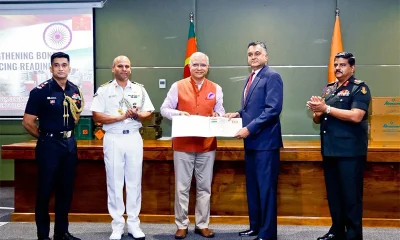
 News6 days ago
India provides military stores worth USD 5.5 mn to SL
-

 Opinion4 days ago
SriLankan Airbus struck by lightning
-

 Editorial2 days ago
Fuel crisis: Beyond price debate