
Sports
First Test evenly poised

Rex Clementine in Galle
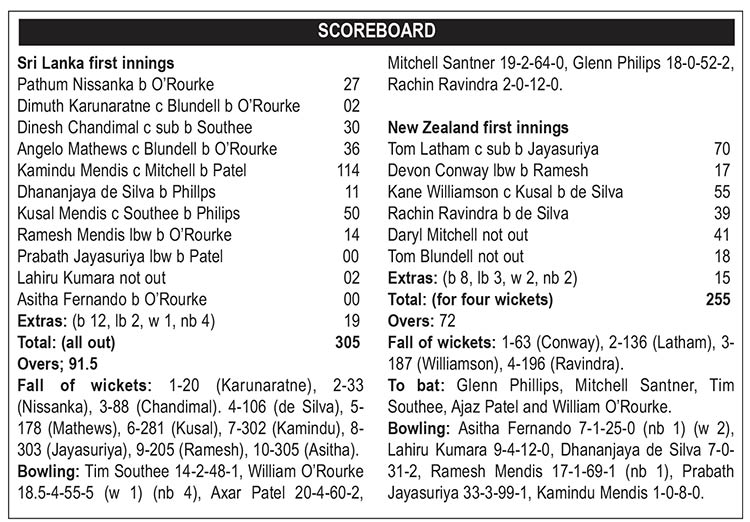
The first Test between Sri Lanka and New Zealand is finely balanced at the close of day two, with New Zealand trailing Sri Lanka’s first-innings total by 50 runs and six wickets in hand. Half-centuries from Tom Latham and Kane Williamson breathed life into the Kiwi innings, with the visitors finishing the day on 255 for four.
New Zealand’s approach to tackling spin in Galle, a venue notorious for its sharp turn, showcased a calculated shift in tactics. In their previous four outings here in Galle, the Kiwis have been spun into submission, losing each match due to their struggles against Sri Lanka’s spinners. This time, they came prepared. By adopting a more aggressive mindset, particularly using both conventional and reverse sweeps, they managed to unsettle the Sri Lankan bowlers and prevent themselves from being pinned down.
This counter-attacking strategy forced Sri Lankan captain Dhananjaya de Silva to spread the field, easing the pressure on the batters. The Kiwis, clearly believing that attack is the best form of defense, handled the spin threat better than in past encounters.
Both Latham and Williamson looked poised to break New Zealand’s century drought in Galle, but fate intervened. Their 73-run partnership for the second wicket steadied the innings, only for Latham to fall just before tea, top-edging a sweep to be caught by a substitute fielder at backward square leg.
Williamson, the world’s second-ranked batter behind England’s Joe Root, has an outstanding record against Sri Lanka, averaging a remarkable 78, well above his career average of 54. However, Galle had been his nemesis, with a dismal tally of just 14 runs across four innings at the venue. He seemed determined to right that wrong with a fluent half-century, but his team would have hoped for more. Trying to work Dhananjaya de Silva to the leg side for a single, Williamson got a leading edge, allowing wicketkeeper Kusal Mendis to take a sharp catch.
De Silva struck again when Rachin Ravindra, opting to leave a delivery, saw his stumps rattled. But Daryl Mitchell ensured New Zealand kept their grip on the match, countering the spinners with a bold approach. Sweeping regularly and finding the gaps, he remained unbeaten on 41. Tom Blundell supported him, ending the day on 18 not out.
Earlier in the day, Sri Lanka’s tail offered little resistance in a rain-hit morning session. They managed to add only three runs to their overnight total, losing their last three wickets swiftly.
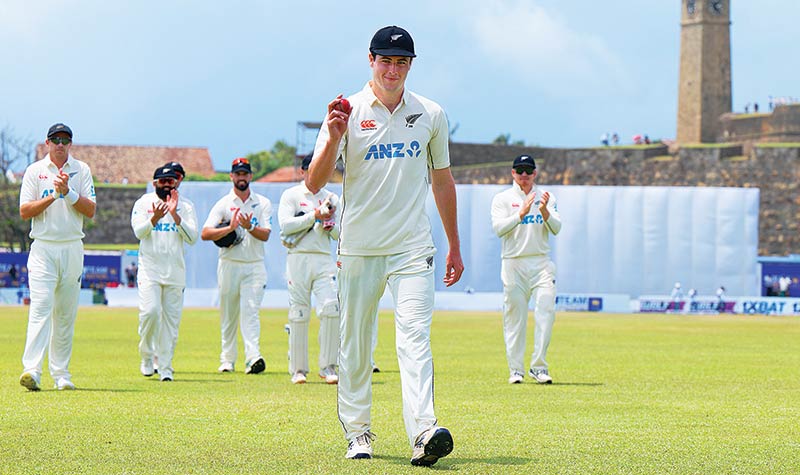
The highlight of the day belonged to New Zealand pacer William O’Rourke, who claimed a second five-wicket haul in his fledgling Test career. The 23-year-old, a surprise selection ahead of the seasoned Matt Henry, bowled with aggression, hitting the deck hard and troubling the Sri Lankan batters with his pace and bounce. Having played just his third Test, O’Rourke already shows signs of being New Zealand’s next big fast-bowling sensation. His earlier figures of nine for 93 against South Africa remain the best by a New Zealand debutant, and his star continues to rise.




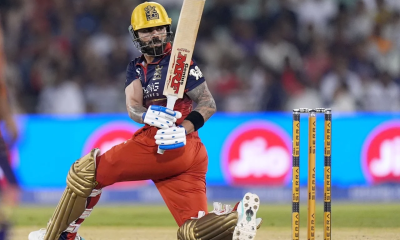


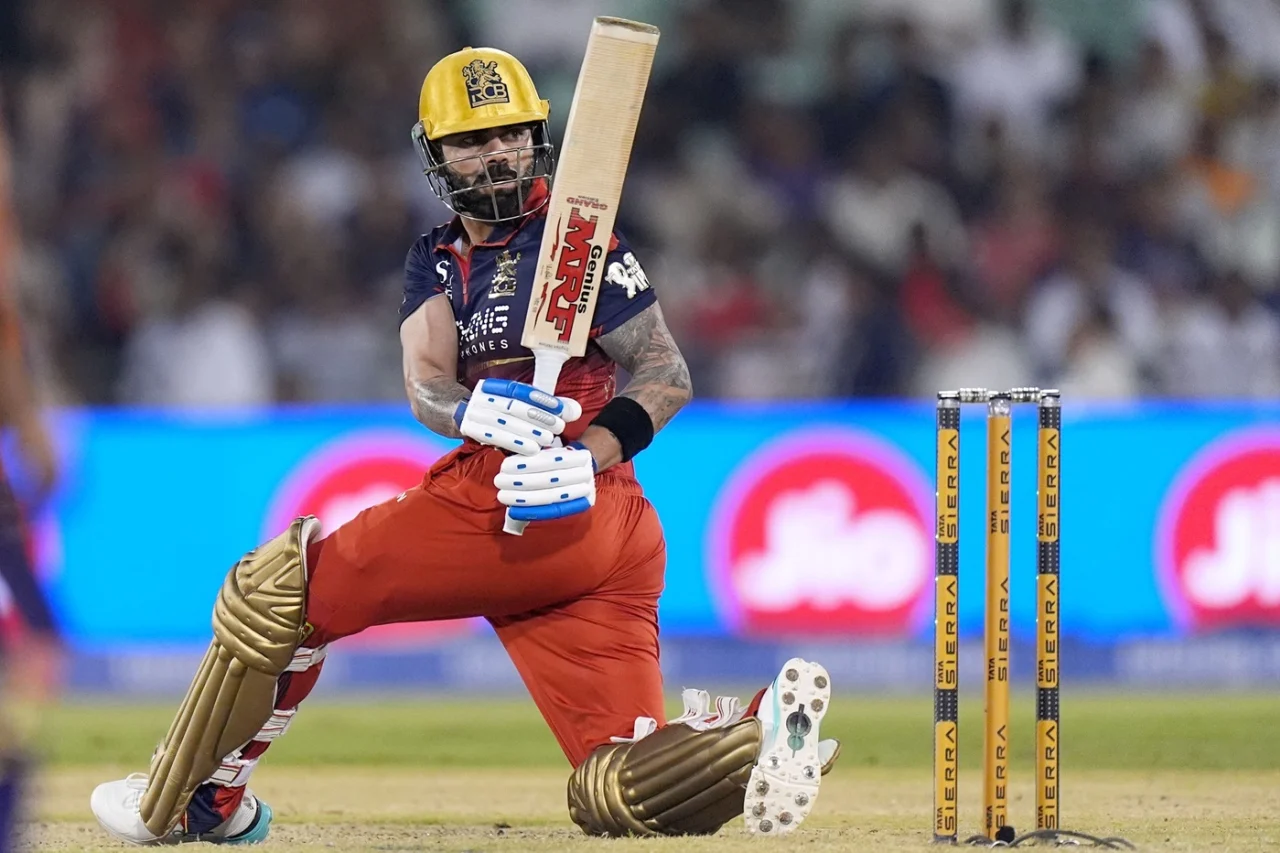
After back-to-back ducks in his last two innings, Virat Kohli showed most emphatically that he had merely been out of runs and not out of form, scoring his ninth IPL hundred to lead Royal Challengers Bengaluru (RCB) to the top of the IPL 2026 table with a commanding win over Kolkata Knight Riders (KKR) in Raipur.
Kohli’s unbeaten 60-ball 105 was a vintage effort in a run-chase – smooth, controlled, and full of both relentless sprinting between the wickets and gorgeous strokeplay, particularly at either end of his innings. That he never seemed stretched, however, was perhaps the story of the match – it may have been decided by the relative quality of the bowling attacks, particularly the seamers.
RCB’s bowlers did a superb job to keep KKR down to below 200 even though they only lost four wickets, and KKR’s inexperienced seam attack simply couldn’t match them for discipline and ability to extract misbehaviour from a slightly two-paced surface – with the caveat that it may have eased up a little during the second innings.
This was the first time RCB had fielded all three of Bhuvneshwar Kumar, Jacob Duffy and Josh Hazlewood – the legspinner Suyash Sharma made way. This suggested RCB expected conditions to play similarly to their previous game in Raipur, against Mumbai Indians, with seam movement and inconsistent bounce throughout.
When the match began – after a rain delay of an hour and a quarter – it became clear that this was a much better pitch to bat on, but there was still something in it for the seamers. Bhuvneshwar showed this with a cross-seamer that nipped away to nick off Finn Allen in the third over, and Hazlewood showed this by getting a short-of-length ball to rear at Ajinkya Rahane and have him caught and bowled off a miscued pull in the fifth over.
KKR still scored 56 in their powerplay, though, and 31 of those runs came in two overs from Duffy, who took the new ball ahead of Hazlewood, and didn’t do too much that was obviously wrong, but Allen, Rahane and Angkrish Raghuvansh were good enough to put away marginal errors in line and length.
That Dubey over was the last bit of real joy with the ball for KKR. Vaibhav Arora kept drifting onto Kohli’s pads in an 18-run second over, and then Bethell took his revenge on Dubey by going 6, 4, 4 at the start of the third.
Kartik Tyagi removed Bethell with a nasty short ball that rushed him on the pull, but he followed that up by straying down the leg side and overcompensating with width, and Devdutt Padikkal put both away to the boundary to get his innings moving.
RCB finished the powerplay at 66 for 1, with Kohli swivelling to pull Tyagi for six in the sixth over and ending that phase on 30 off 14.
From there, it was just a case of ticking off the remaining runs with no need for undue risk. No one is better at that game than Kohli. He scored eight twos – the joint third-most for him in an IPL innings – and found the boundary whenever the viewer may have wondered how long it had been since the last one. Mishaps at the other end – Tyagi dismissed Padikkal with an into-the-pitch cutter before pinging Rajat Patidar on the helmet; a Sunil Narine carrom ball forced a miscue from Patidar; Manish Pandey took a flying one-hander at point to send back Tim David – were mere blips in RCB’s otherwise silky-smooth ride.
And as the end neared, Kohli grew more expansive, playing two of his most eye-catching shots – a straight six off Anukul Roy with barely any follow-through, and a whipped six of iron wrists off Tyagi – to hurry towards the century mark. He got there with a single off Arora in the 19th over, and Jitesh Sharma finished the game soon after, flat-batting Dubey past long-on to bring up victory with five balls remaining.
Brief scores:
Royal Challengers Bengaluru 194 for 4 in 19.1 overs (Jacob Bethell 15, Virat Kohli 105*, Devdutt Padikkal 39, Rajat Patidar 11; Kartik Tyagi 3-32, Sunil Narine 1-31) beat Kolkata Knight Riders 192 for 4 in 20 overs (Ajinkya Rahane 19, Finn Allen 18, Angkrish Raghuvanshi 71, Rinku Singh 49*, Cameron Green 32; Bhuveneshwar Kumar 1-34, Josh Hazelwood 1-35, Raasik Salam 1-35) by six wickets
[Cricinfo]


Prema Pinnawala, one of Sri Lanka’s most experienced and influential sports administrators, passed away after a brief illness on Tuesday. He was 88 at the time of his passing.
Pinnawala, who dedicated more than six decades to sports administration, played a pivotal role in shaping athletics and Olympic sports governance in Sri Lanka. His contribution to sport extended across national and international platforms, making him a respected figure within the athletics fraternity.
He first rose to prominence as a sportsman during his school days at Christian Mission College in the 1950s. His journey into sports administration began in 1963 when he was appointed Chairman of the Sports Council at the University of Peradeniya, marking the start of a career that would span several decades.
Joining the Sri Lanka Insurance Corporation in the late 1960s, Pinnawala also became actively involved with the National Service Sports Association, where he held a number of positions over the years.
His association with athletics administration commenced in the late 1960s when he joined the committee of Sri Lanka Athletics. In 1978, he was elevated to the position of Vice President of the association, before taking on a more prominent national role in 1983 as Secretary General of the National Olympic Committee of Sri Lanka.
Pinnawala held the position for 15 years until 1998, becoming one of the key architects of Sri Lanka’s Olympic and sports administration during a transformative period. Following his tenure at the National Olympic Committee, he returned to Sri Lanka Athletics and assumed duties as General Secretary in 1998. He held the post thrice (1998-2010, 2013-2014 and 2017-2023) between 1998 and until his retirement in 2023.
Although his prolonged presence in sports administration, attracted criticism from certain quarters, Pinnawala remained steadfast, often maintaining that his continued involvement served the greater interests of sport. Undeterred by opposition, he continued to contribute extensively to the functioning of athletics.
Over the decades, he developed a reputation as an effective mediator and coordinator between local and international sporting bodies. His expertise and diplomatic approach saw his services sought by influential government officials, including heads of state, particularly in matters involving sports administration and international relations.
Internationally, Pinnawala earned considerable recognition within the athletics community. In 2025, his exceptional and long-standing service to athletics was acknowledged by World Athletics, which honoured him with the World Athletics Veteran Pin.
His contributions beyond Sri Lanka included serving as Secretary of the South Asian Sports Council, Secretary of the Media Committee of the Olympic Council of Asia, and as a Council Member of the Asian Athletics Association.
Apart from sports administration, Pinnawala also established himself as a prominent corporate leader, serving for many years as General Manager of the Sri Lanka Insurance Corporation.
He is survived by his wife, Jayani Pinnawala, a senior administrative officer and former Additional Secretary to the Ministry of Youth Affairs and Sports, and their two daughters.
(RF)
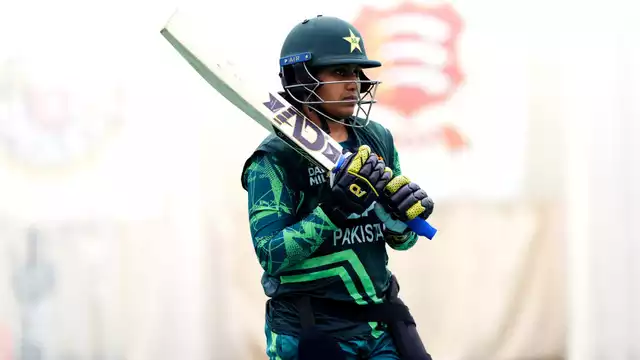
Before the first T20I against Zimbabwe Women, Ayesha Zafar had hit just one six in 28 T20 innings, with her career strike-rate in the early 80s. On Tuesday (May 12), she hit two sixes and 15 fours, smashing the joint third-fastest Women’s T20I hundred in a record-filled win for Pakistan Women.
Her unbeaten 47-ball 102 propelled Pakistan to 237/5 – the first time they crossed 200 in the format – paving the way for a whopping 153-run win in Karachi, their biggest ever margin by runs in T20Is. By the time she was done, Zafar’s career strike-rate had gone up to 97.
The 31-year-old Zafar, who made a comeback to the side in March after nearly two years away, put on a fine show dominant with leg-side hits, notching up her first T20 fifty and converting it to three figures.
At the crease in the second over, Zafar repeatedly shuffled to the backfoot and targeted the leg-side against spinners, pulling any remotely short deliveries to the midwicket or square leg fence. On 20, she got a reprieve playing that shot, with square leg shelling a catch. But Zafar continued to play that stroke, also punishing anything too full by hitting it firmly down the ground.
Gull Feroza, meanwhile, departed for a 19-ball 37, having given them an early push. Zafar raced to 40 off 18, but slowed down a bit thereafter, reaching her fifty in 29 balls.
From the 16-over mark, Zafar picked up again, showcasing her power-hitting against quicks, particularly with shots in the V and towards midwicket, using the crease well to make room. A 67-run stand off 35 balls with Aliya Riaz (48) and a 70-run partnership off just 27 balls with Fatima Sana ensured they easily crossed 200 for the first time. A last-ball four ensured Zafar crossed her three-figure mark.
In reply, Zimbabwe couldn’t really match the run-scoring, pegged down by a flurry of wickets in the Powerplay. Sana prised out Beloved Biza and Kelly Ndiraya off back-to-back balls in the third over to leave Zimbabwe at 14/3. Despite three boundaries in the sixth over, they had slipped to 30/5 at the end of the Powerplay.
There was very little resistance thereafter, with opener Natasha Mtomba top-scoring with 24 and staying put until the tenth over. No other player crossed 20.
Sana finished with 3-7, becoming the highest wicket-taker among T20I quicks for Pakistan Women (46). Zafar won the Player of the Match award and is now the only other Pakistan Women’s T20I centurion besides Muneeba Ali.
Brief scores:
Pakistan Women 237/5 in 20 overs (Gull Feroza 37, Ayesha Zafar 102*, Aliya Riaz 48, Fatima Sana 21*; Precious Marange 1-39, Nomvelo Sibanda 2-59, Beloved Biza 1-33, Michelle Mavunga 1-23) beat Zimbabwe Women 84 all out in 18.2 overs (Natasha Mtomba 24, Beloved Biza 10, Adel Zimunu 18; Fatima Sana 3-07, Sadia Iqbal 2-14, Rameen Shamin 1-18, Natalia Pervaiz 2-03) by 153 runs.
[Cricbuzz]

‘Watermelon deaths’ in Mumbai puzzle investigators

Mass sex abuse allegations force closure of boarding school in Indonesia

Gunshots fired in Philippine Senate where lawmaker wanted by ICC is holed up

Kohli’s ninth IPL hundred powers Royal Challengers Bengaluru to the top

Special Coordination Committee meeting for Badulla District chaired by the President

Showers or thundershowers will occur at times in the Western, Sabaragamuwa, Central, Southern, North-western and Northern provinces

‘Dates have the highest sugar content to fight Coronavirus’

Sunday Island 27 December – Headlines

#SundayIsland 17th December – Headlines

Sunday Island – 28th March

Sunday Island Headlines – 21 March

Sunday Island – 21st February – Headlines
-

 News4 days ago
Lanka Port City officials to meet investors in Dubai
-

 News1 day ago
Ex-SriLankan CEO’s death: Controversy surrounds execution of bail bond
-

 News5 days ago
SLPP expresses concern over death of former SriLankan CEO
-

 Editorial6 days ago
The Vijay factor
-

 News5 days ago
Police inform Fort Magistrate’s Court of finding ex-CEO of SriLankan dead under suspicious circumstances
-
Features2 days ago
High Stakes in Pursuing corruption cases
-

 Features2 days ago
When University systems fail:Supreme Court’s landmark intervention in sexual harassment case
-
 Features6 days ago
Palm leaf manuscripts of Sri Lanka – 1