
Features
Statesmanlike call to halt negative campaigning

by Jehan Perera
The effort of the March 12 Movement, a civil society collective, to bring presidential candidates onto one platform and share their visions and hopes with the general population was successful in its second round. All six of the presidential candidates who had been scheduled for the debate participated as expected and shared their visions and aspirations for the future. Their message went through the electronic and mass media to the general public. Although titled as a “presidential debate” the structure of the programme was different from that practiced in the United States, where the presidential candidates engage in verbal sparring with one another. The Sri Lankan version was to pose the same question to each of the presidential candidates and have them answer within a set time limit.
The intention of the March 12 Movement was to provide an opportunity for the presidential candidates to present their views on issues of interest to the public rather than engage in debate on them. At the conclusion of the presentations, the audience was to be invited to submit their questions in written form where they would be screened for content by a committee and passed on the candidates for their responses. However, despite all these safeguards to ensure the presidential candidates a safe environment, the first round of the debates held the previous day saw only one of the six invited candidates appear for the debate. The others, including the three main presidential candidates, did not join. They either declined in advance or failed to show up at the time of the event much to the chagrin of the audience, some of whom had come from Jaffna, Anuradhapura and Puttalam.
It appears that the tight nature of the three-cornered race between the presidential candidates is leading to a stressful situation in which none of them is willing to take a risk and expose themselves to an audience that is not in their sphere of influence. This was a negative phenomenon, as an open clash of different positions, strategies and actions on common issues is beneficial to educating the general public as well as generating new ideas about facing the future in the spirit of a shared future. Unfortunately, the tight nature of the presidential election time around, with three main candidates in the field, and not two as usual has also led to a significant amount of negative campaigning where the focus is on criticizing one or both of the nearest rival candidates.
TIGHTENING RACE
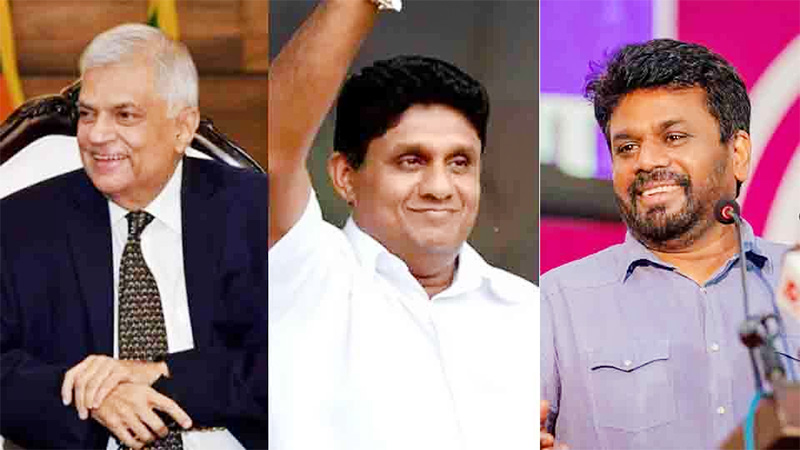
In recent weeks, public opinion polls have shown President Ranil Wickremesinghe to be the biggest gainer (in proportional terms) in comparison to his two main rivals, Opposition Leader Sajith Premadasa and NPP leader Anura Kumara Dissanayake. However, these same surveys also show that the president continues to lag behind his rivals. This may explain the measures being resorted to by the presidential candidates such as engaging in negative campaigning by critiquing the qualities of their rivals. At the same time, they have also been engaging in positive campaigning regarding the need to address the country’s most pressing problems. There has been a convergence among them on the need to abide by the basic framework of the IMF agreement which has opened the doors to the country’s economic ties with the larger world.
There is also convergence on the part of the three main presidential candidates on the need to deal with the country’s ethnic conflict. They have all promised to deal with the issue in a way that will unite the people on the principles of equality and justice. They have all been making strenuous efforts to win the votes of the ethnic and religious minorities. This is very positive, as the ethnic conflict has been a part of divisive politics since the dawn of independence. However, due to the tight nature of the competition, there is also negative campaigning vis-à-vis each other. During a recent visit to Jaffna, the NPP leader called on the Tamil voters not to thwart his victory or be seen as not being on the winning side along with voters in the south of the country who will vote for him. This has been portrayed as an implied threat to the Tamil people whereby he has called on them to vote for him and be a part of the electoral victory that the NPP/JVP is seeking rather than voting against him and losing the opportunity to be a part of this victory.
The approach by ITAK spokesperson M A Sumanthiran has been positive in this regard. He has disagreed with the negative interpretation given to the NPP leader’s speech in Jaffna and said he never thought the NPP leader made that statement with a view to expressing any racist feelings and that he has taken great care in eradicating racism in this country. The ITAK spokesperson said he would work with the NPP to eradicate corruption and misrule in the country. Indeed, these are the two most important aspects of the Aragalaya protest movement that led to the premature change of government two years ago but which have yet to be dealt with. These laudable statements by Mr Sumanthiran are now the subject of misinterpretation that he has changed sides.
RECONCILIATION MODE
The key role in the recent decision of the ITAK to endorse the presidential bid of Opposition Leader Sajith Premadasa was also made by Mr Sumanthiran. He led the ITAK to make a choice between the presidential candidates and to select the candidate whose manifesto and past commitment was believed to be the best for the Tamil people at this juncture. At the same time, he has shown that he will not be hostile to other political parties and their leaders, even those his party has not endorsed, and be open to cooperate with them in the best interests of the Tamil people. The spirit of leadership that the country needs is not to hold grudges, to look for the best in others and to hold them to the highest standards.
The Sri Lankan people continue to suffer in the aftermath of the economic collapse that took place over two and a half years ago. The need of the hour is national unity to face the local and international challenges that a world which is itself increasingly in conflict will find difficult to focus on. This suggests that the Sri Lankan polity cannot afford to be torn apart by polarization and misinterpretation which can generate more of the same. The vicious cycle needs to be addressed. The country and its people need to be united to face the challenges. In a situation where the people’s vote will be split more than three ways, the possibilities of polarization are increased.
The hope of the March 12 Movement in organizing the presidential debates has been to provide a platform where the presidential candidates can indicate the areas of their agreement on fundamental issues so that government policies would be consistent regardless of changes of government. President Wickremesinghe expressed this sentiment at a media conference when he said “We need a political system that supports basic fundamentals, even if we differ on details. This is what our country needs and what all desire.” The challenge to each of the presidential candidates is to commit themselves to support the winner of the presidential election, even if it is not themselves that wins. The way they conduct themselves and address the people and their opponents during the election campaign will determine the prospects for reconciliation in the future.



The world’s oldest constitutional democracy turned 250 on the Fourth of July, two weeks ago. It is a rather quirky coincidence that in the 250th year of its largely successful existence, America should be having as its president the most unfitting person in history, and that in keeping with the American trait for mixing serious purposes with fun and play, it should also be hosting perhaps the largest edition of the World Cup Football Tournament. The triple coincidence – the anniversary, Trump presidency and the World Cup – is not without some meaning.
The essence of the Trump presidency has been to recast America in the mould of Trump’s own vulgar and outlandish presuppositions about who belongs in America and what the rest of the world owes to America. Internal exclusions and external isolation have always been a part of American history, but Trump’s project has been to make them America’s sole and permanent purpose. Make America great again by making it more intolerant and more imperfect, as opposed to pursuing the country’s founding purpose of striving towards a “more perfect union.”
Trump is also giving a new meaning to America’s exceptional isolationism by slashing immigration, deporting American residents whom he and his Maga cabal don’t like for the vilest of reasons, withdrawing from global agencies that America created and closing down American agencies providing global services, imposing tariffs on every country and deeming them as payment for America’s past generosity under weak presidents, and threatening neighbours with annexation while militarily attacking others.

2007: Lionel Messi holding baby Lamine Yamal
He got his nose bloodied after listening to Netanyahu and starting a fight with Iran, made a fool of himself by first announcing that he will provide safe passage to ships through the Strait of Hormuz and charge them 20% of their cargo value, and immediately withdrawing it after being told that it was a lamebrained and impractical idea. The Iranian Foreign Minister tweeted that it is a good approach but 20% is too high! The reality is that Iran has effectively closed the strait again, after Trump said his ceasefire with Iran is over, and there is nothing the might of America can do about it – thanks solely to Trump.
The world, not to mention America, are back to where it was soon after February 28. And Trump is back to February 28, with more attacks on Iran while telling Israel to keep out of it and hoping that Iran will soon come to the table. The Iranian regime is insisting that it is Trump and not Iran who will have to blink first again. For the rest of the world and the people of America, fuel and fertilizer prices are again rising along with the prices of goods and services that depend on them.
Meanwhile, the Fourth of July marking America’s 250th Anniversary of American independence has come and gone. Every year, Americans cheer and celebrate the Fourth of July as a civic festival in their local communities. Families take their children to Washington, Philadelphia, Gettysburg and other historical sites to learn and appreciate their history. The state hardly gets involved and there are no military parades or flights of fighter jets. Trump changed it last year by holding a military parade in Washington but it did not excite anyone. The army had to go to extraordinary lengths to protect the city roads from cracking up while parading its massive tanks. This year Trump’s efforts to turn the 250th anniversary celebration into a personal vanity affair spectacularly backfired and what was becoming a national damp squib. Not so ironically, it was rescued by the 2026 World Cup tournament that began on Thursday, June 11 and will end on Sunday, July 19.
World Cup Down to the Wire
The 23rd FIFA World Cup hosted by America, Mexico and Canada with matches played in 16 cities – 11 in the US, three in Mexico and two in Canada – became a significant occasion for the US. It provided an antidote to Trump’s vain and unsuccessful usurpation of the country’s 250th anniversary, even as it became an occasion to show the world that there is still much more likeable about America in spite of all the ugly MAGA makeover that Trump has been giving it from the White House.
What is unique about America is that it is the first and the only immigrant country to become a superpower in world history. An open door country with a melting pot ethos, America has consistently struggled at every stage of its evolution to defy the homogeneity of the privileged, and to celebrate across-the-board heterogeneity in every aspect of the human condition. If the purpose of Trump’s presidency has been to break this arc of American history, the World Cup became an occasion to demonstrate that the arc will continue in spite of Trump.
The World Cup was an eye opener to both resident Americans and visiting football worshippers. Except for the Olympics sporting events, competitive sports in America are dominated by (American) Football, Baseball, Basketball and (Ice) Hockey, and the competitions are all limited to American teams along with some Canadian teams especially in Hockey. The extent of any international connection is limited to allowing players from Central America and Japan for Baseball, and from Canada and Eastern Europe for Hockey. In other words, American notions of exclusivity and self-sufficiency seamlessly extend to the world of sports from the universe of politics and economics.
The arrival of the World Cup, 32 years after America hosted its first and only World Cup in 1994, was an eye opener to American sports fans and the general public. This was international sports at their doorstep and an occasion to live through the experience of witnessing the world’s best exponents of the game fiercely displaying their talents in friendly competitions. The visiting fans who thronged the games brought life and diversity and retail spin offs to the cities where the games were played. The visitors to a person, both players and fans, were enthralled by the magnificence of America’s sporting facilities and the range of amusement and entertainment the host cities offered.
The tournament also became a smorgasbord of different nationalisms from around the world but manifesting pride and passion in support of national football teams and not boastful belligerence about national militaries. The teams were also more equal on the pitch than their governments are at the UN podium. The better teams of the day won in the end but every team made each game as competitive as it could. Small countries from West Asia, Africa and little Atlantic islands went boot-to-boot with European and South American giants and kept everyone guessing until the final whistle. The really big Asian countries – China, India, Indonesia etc. – could not qualify for admission, while Asia’s two industrial giants – Japan and South Korea – acquitted themselves well even though they were unlucky not to go beyond the group stage.
The team that America fielded should not have been allowed to represent the country based on Trump’s executive negation of all DEI (Diversity, Equity and Inclusion) programs in government and in federal hiring. But it did and the US team would have made the 1960s promoters of cross-racial ‘rainbow’ alliances proud. Similar rainbow teams have become the norm of almost all West European countries and England.
Players of colour have become superstars in western football teams and have quite clearly internalized natal nationalism as opposed to being assimilated by them. They are all descendants of birthright citizens of the old empires, a legal tradition that is more universal and anterior to the abolition of slavery and the 14th Amendment in the US, as Chief Justice John Roberts reminded the Trump Administration in overturning its executive order to end the recognition of birthright citizenship in America. A practice that is shared by three dozen countries.
The US Team at the World Cup began as a promising outfit playing with flair and freewheeling style and could have gone as far as the Quarter Finals to play Spain. The team was undone prematurely by Trump’s sleazy intervention with FIFA bosses to suspend the Red Card penalty ban of a US player, Folarin Balogun, for a foul he had committed in an earlier match. Trump’s role and the penalty suspension created a public uproar and in the upshot an inspired Belgium trounced the US whose players performed very poorly perhaps under the weight of the embarrassment that their President had inflicted on them.
The World Cup tournament itself is now down to the final match, the 104th of the tournament, on Sunday, July 19th, between the reigning World Cup champions, Argentina, and Spain, the current Euro Cup holders. The match for the Third Place will be played on Saturday (July 18), between France who lost 0-2 to Spain in a surprisingly one-sided game, and England who went down in a heartbreaking 1-2 defeat to Argentina after leading 1-0 up till five minutes before the final whistle.
The French were the tournament’s cracking team till they came up against Spain who had been belabouring until then. The English team had bestirred all of England back home with their gritty win against Mexico in its national stadium full of 85,000 spectators, but once again came up short in the penultimate game.
The final between Argentina and Spain will feature the 39 year old Argentinian maestro, Lionel Messi, looking to win his second World Cup, and the 19 year old Spanish prodigy, Lamine Yamal. The football internet is abuzz with a 2007 photograph showing then 20 year old Messi carrying Yamal as an infant during a photo session in Barcelona, Spain, where Messi played club football. On Sunday, in New York/New Jersey, they will face each other in a spirited encounter for the biggest prize in sports.
by Rajan Philips
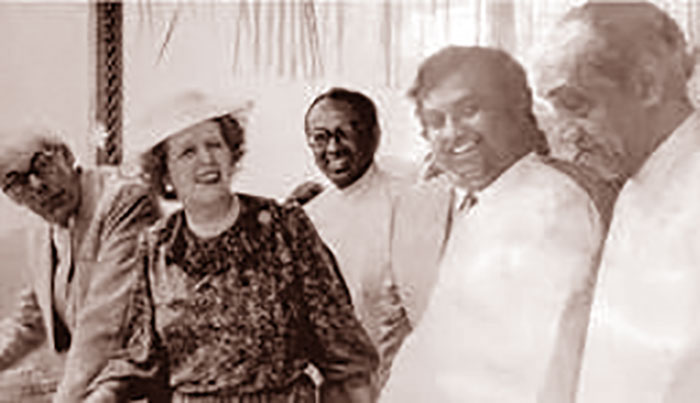
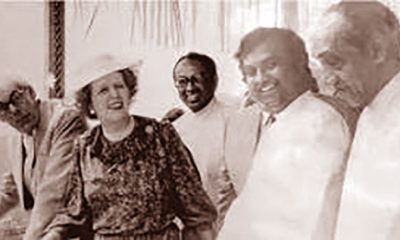
These two excerpts from the forthcoming book, To Survive As One Nation, One People by Air Chief Marshal Oliver Ranasinghe. A Retired Commander of the Sri Lanka Airforce makes interesting reading. The first is of a sudden demand on the SLAF for emergency air support for the besieged Jaffna Fort when the only available helicopters were being prepared for a VVIP flight for UK PM Margaret Thatcher and her husband, Mark.
The second deals with ferying PM Rajiv Gandhi and his wife Sonia to Katunayake after a naval rating had hit Gandhi with a rifle butt.
In April 1985, the UK’s first female prime minister visited Sri Lanka to ceremonially declare open the Victoria Dam and Power Station built with aid under the patronage of Queen Elizabeth II. The completion of the project was a significant milestone for the Accelerated Mahaweli Development Programme, with the power station having an installed capacity of 210 MW. Two helicopters were stationed at Air Force Headquarters premises to fly the VVIPs at 6:30 a.m. on 12 April to Victoria Dam. I was Commanding Officer of the Helicopter Wing and assigned to fly Prime Minister Margaret Thatcher and her husband.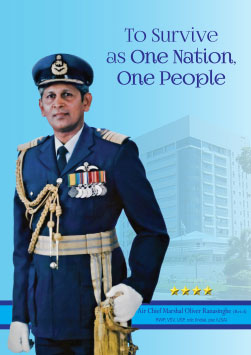
However, at around noon on the day before the flight, I got a desperate call from the Joint Operations Command (JOC) requesting that 250 troops be airlifted to the Jaffna Fort immediately, since “hot intelligence” had informed that the enemy had planned to attack the fort that night.
I did not have any helis in the Wing as all had been deployed throughout the North and East. The only other two serviceable helis were in the VVIP security cordon, standing by to fly Prime Minister Thatcher and the other VVIPs the next morning. According to VVIP flying procedures, the helis are kept for 48 hours before the flight within a security cordon which is well-guarded by guards and air dogs. No one is allowed to go witin the security cordon without the Commanding Officer’s approval.
I had to take a quick decision about whether to drop the troops using the two helis from the cordon and run the risk of having no heli to fly Prime Minister Thatcher the next morning. The alternative was to say “No,” to the Army and take the risk of losing hundreds of soldiers at the front, facing a humiliating defeat, loss of prestige, morale and losing the Jaffna Fort, which was the Army’s pride.
If the latter happened, our conscience would be inconsolable even today. When we were fighting the battle, we were one unit: Army, Navy, Air Force and Police. The Air Force was always there. We never said no. So, I took the decision to fly immediately to Jaffna to carry out the task using the two VVIP helis. I was taking a huge risk, jeopardizing my career in the Air Force, by disregarding the standing orders and removing the two helis from the VVIP cordon.
By 1:00 p.m., we took off from Katunayake for Jaffna, using the two VVIP helis without Air Force Headquarters approval. I was captaining one heli with Flight Lieutenant Lasantha Waidyaratne as my co-pilot. (He was the pilot who, a long time later on, landed a heli at Jaffna Fort in the impossible task code-named Operation Eagle.) Flight Lieutenant Tennyson Gunawardena was flying the other heli as captain. I had to fly as we did not have any pilots to spare.
From the Palaly airport, we flew with twenty-two passengers without seats, keeping within the maximum all-up weight, and headed into the Jaffna Fort, approaching with the wind and not headwind as usual, avoiding enemy guns.
By 5:30 p.m., Tennyson called me on the receiver transmitter unit and said, “Sir, it is raining heavily in Katunayake, and we have to go in bad weather in the night back to Katunayake. So can I leave now?” I said, “Okay,” and ensured the heli was made ready for the VVIP the next morning. In the meantime, I kept flying the balance troops.
I did not get down at all from the heli and refuelling, too, was done whilst I was sitting in the pilot’s seat. The Brigadier-in-Charge in Jaffna came up to the heli very late in the evening and told me that, if I couldn’t drop all troops that night, to do the balance first thing in the morning. I said, “No, I will drop all tonight as I have to fly back to Katunayake for a very important task.”
We dropped all 250 troops into the Jaffna Fort and, after refuelling at Palaly, left at around 10:00 p.m. to fly back to Katunayake. However, we got caught to heavy rain on the stretch from North of Mannar to Katunayake. The weather was so bad that we had to request radar assistance to steer to Katunayake. However, I decided to disregard radar advice and told my co-pilot to follow the coastline, just to be clear of obstacles such as high-tension wires. Helicopters do not fly in rainy weather, let alone bad weather, and definitely not at night, but we had no choice.
Lasantha, my co-pilot, swears that he has not done a bad weather flight of that nature, either before or since, in his flying career. In fact, he says that he matured as a pilot during the last hours of that flight!
At around midnight, we landed at Katunayake where the crew was ready to take the heli and clean it to VVIP standard, which they did throughout the night. I was relieved and happy that I could return to Katunayake the same night.
The next morning, we positioned the two helis by 6:30 a.m. at Air Force Headquarters premises to fly the VVIP. Prime Minister Margaret Thatcher and her husband, Mr.Denis Thatcher, had a safe and comfortable flight to Victoria and back. In fact, Mrs.Thatcher was fast asleep when we touched down in Colombo!
As the Commanding Officer of the No.4 Helicopter Squadron, I risked my life and career because I did not want the Jaffna Fort to fall into the enemy’s hands and lose Army lives. Also, I did not want to let down the VVIP and spoil the image of the Sri Lanka Air Force. If anything had gone wrong, obviously I would have been “thrown” in the sea. I believe such life and death situations reveal the inborn/emerging leadership potential of individuals.
This excerpt deals with flying Prime Minister Rajiv Gandhi and his wife, Sonia, to Katunayake after a naval rating on ab honour guard struck Gandhi with rifle butt.
In July 1987, I was out of the Helicopter Squadron and serving as Base Commander—Anuradhapura. The Commander of the Air Force called me one day and asked me whether I was still current on helis, and I said, “Yes.” He said, “I am sending a Bell 214 for you to do some flying training.” The next day, the heli arrived at Anuradhapura, and I got back into swing doing some flying training.
After two days, I was told to come to Katunayake to do a flight. I was told that I had to fly the visiting Indian Prime Minister, Rajiv Gandhi, from the Bandaranaike International Airport (BIA) to Galle Face and back. He was coming to sign the much-talked about “peace accord.” The Indian Prime Minister arrived at the BIA, and he was ferried to the Galle Face green, from where he was taken in a motorcade to President’s House to sign the Indo-Lanka Peace Accord.
Without taking much time, the motorcade returned to the Galle Face green. There was no panic. Rajiv Gandhi was smiling, but Sonia Gandhi helped Rajiv get in first, to the inner seat of the helicopter, and Sonia sat next to the window. If not for that, everything was normal.
I started up, switched on the VHF radio and contacted the Air Force Operations Room for take-off clearance. They told me that at the Navy’s Guard of Honour parade, there had been an incident targeting Rajiv Gandhi. That played havoc in my mind. I had to think that whoever planned and failed would have a “plan B,” and that would be to target the helicopter. Then I realized that, if so, both Rajiv Gandhi’s life and mine would be destroyed by “plan B.” That was my thinking. I had to save this VVIP, our state visitor. To do that, I had to make decisions on my own.
There was no one to tell me what to do. So, I took off in the most unexpected direction and avoided the usual route and followed a different route to BIA, whilst all the time being alert. Coming over BIA, I disregarded the usual approach procedure to the surprise of the Air Traffic Controllers and approached from the wrong direction and landed, but not in the designated landing place, to avoid a possible sniper or RPG attack.
The VVIP got off and walked away to the awaiting Indian Air Force aircraft. That relieved me of the tension of delivering the “precious cargo” in one piece.
(The book is distributed by the Vijitha Yapa Bookshop)
Spanish Israeli entrepreneur Simon Max Astandoust, a fourth-generation member of the renowned Astan fishing family, has endured years of legal battles, business setbacks and the loss of millions of dollars after investing in Sri Lanka’s fishing industry. Yet, despite the challenges, he has chosen to stay and rebuild.
In an interview with the Sunday Island, the founder and CEO of Seamax Ceylon (Pvt) Ltd speaks about his struggle, the restoration of his state-of-the-art factory vessel Astan II, and his plans to introduce cutting-edge seafood technology to Sri Lanka.
Q: You began operations in Sri Lanka in 2018. What was your original vision and investment?
A: We started operations in 2018 with an initial investment of around US$1 million. Over time, that investment grew into several million dollars because we believed Sri Lanka had enormous potential in the fishing industry.
My original intention was to develop a project through the Board of Investment (BOI) and introduce new technology to the country. However, the Government at the time encouraged us to work directly with it instead. We believed that this partnership would help us move forward faster and create something unique for Sri Lanka.
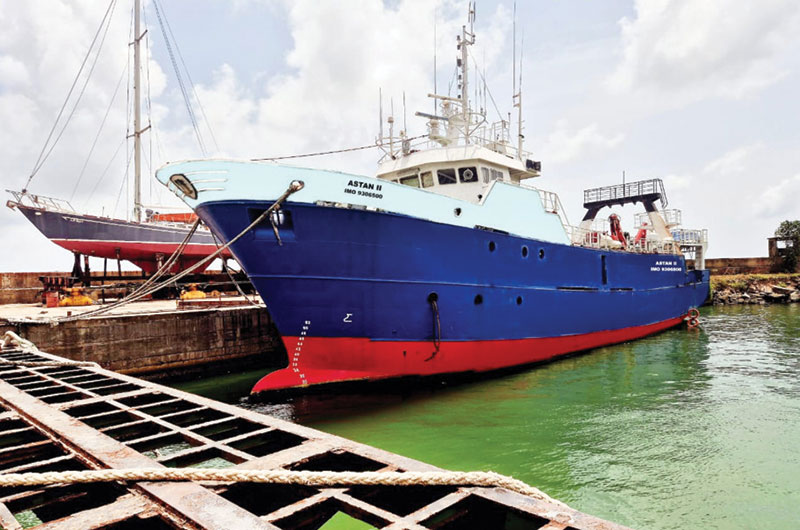
Overhauled Astan II
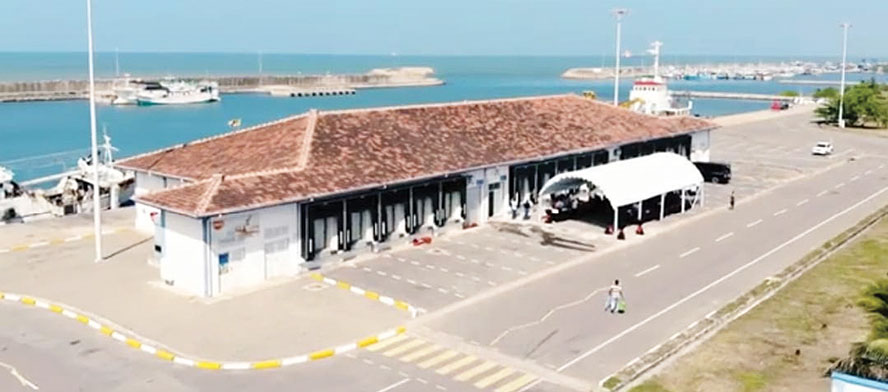
Our goal was to operate within the harbour and establish a modern fishing operation centred around advanced technology and sustainable seafood processing.
Q: What challenges did you face after starting operations?
A: Around eight to 18 months after we began our investment, COVID-19 hit. The pandemic created enormous difficulties. In countries such as Spain and the United States, governments provided financial support to help businesses survive. Here, the Government itself was facing a difficult economic situation and was unable to provide similar assistance.
Initially, we were told that there would be a grace period and that we would not be pressured for payments as long as we maintained our workforce and kept the operation alive. But later, that understanding changed, and demands for payments began despite the fact that we had a 15-year agreement.
That was the beginning of the major conflict.
Q: How did the change of Government affect your operations?
A: When a new Government came into power, the 15-year agreement signed with the previous administration was not recognized. The factory was closed and legal action was initiated against us.
This was extremely difficult because we had invested heavily based on a long-term agreement. We had built infrastructure, brought in technology and created employment opportunities.
During this period, while the vessel was caught up in legal disputes, a group of people attempted to take control of the ship. One of the most painful experiences was that some lawyers who had been working for us changed sides and supported those attempting to take the vessel.
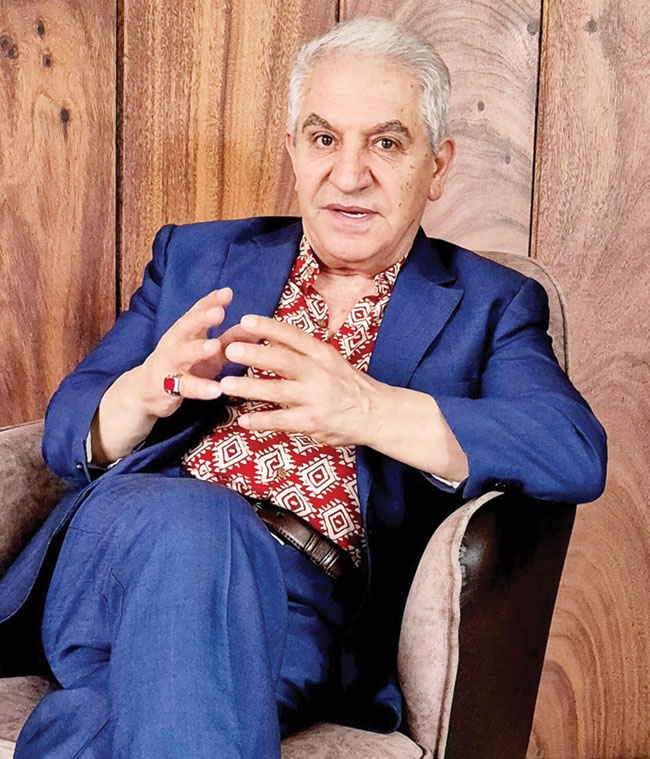
Simon Max Astandoust
The legal battle continued for years and only concluded in 2025.
Q: Your vessel, Astan II, is central to your investment. What happened to it during this period?
A: Astan II is not just a fishing vessel. It is a huge factory vessel with a complete processing facility inside. It was designed to bring a completely new level of technology to Sri Lanka’s fishing industry.
Unfortunately, because it remained idle during the legal proceedings, it suffered significant damage. Ships cannot simply sit in a harbour for months or years without proper operation and maintenance. The Sri Lankan weather conditions are particularly harsh on vessels.
The vessel deteriorated badly, but after we regained control, we decided to completely restore it. It was overhauled.
Q: How much did the restoration cost and what work was involved?
A: The restoration cost approximately US$1.5 million and took about one year, beginning in 2025. The vessel was almost a complete rebuild. One of the biggest technical challenges was repairing the three generators. Because the harbour did not provide electricity, these generators had been running continuously to maintain the vessel. Over time, this caused significant wear and tear.
Finding replacement parts was another major challenge. Many of these parts are not imported into Sri Lanka, so every component had to be sourced from different countries and brought in individually.
A team of around 14 to 20 people worked on the restoration, including a Sri Lankan chief engineer and local professional deck crew. Their expertise and dedication were extremely important.
Today, the vessel is in brand-new condition.
Q: You mentioned that the absence of diplomatic representation made your struggle more difficult. Why?
A: I hold Spanish and Israeli citizenship, and neither Spain nor Israel has an embassy in Sri Lanka. Normally, when a foreign investor faces serious difficulties, an ambassador can engage with authorities and help protect the investor’s interests.
In my case, I had to face everything alone. I had to deal directly with government institutions and the legal system through my lawyers. Having diplomatic support would have made a significant difference. But ultimately, I had to rely on the courts and the legal process.
Fortunately, the maritime judges understood the complexity of the situation and the importance of maritime law. Their fair approach restored some of my confidence.
Q: Your vessel uses unique -70°C “Ultra-Fresh” technology. Can you explain how it works?
A: This is one of the most exciting parts of our project. The technology comes from Japan and is only about two years old. Traditional freezing methods often affect the quality of fish because the freezing process is slower and damages the texture. This technology works differently. It uses a glazing process where the fish is frozen from the outside, creating a protective layer.
Within approximately two hours, the fish is completely frozen. This process eliminates bacteria and preserves the quality of the fish.
When the fish is later defrosted using the correct method, it is almost exactly like fresh-caught fish from the ocean. The taste, texture and quality are preserved. At present, nobody else in Sri Lanka is carrying out this type of ultra-fresh freezing technology onboard a fishing vessel.
Q: What advantage will this technology give Sri Lanka?
A: Sri Lanka has excellent fishing resources, but we need to move beyond simply catching fish. The future is about value addition, quality control and accessing premium international markets.
With this technology, Sri Lanka can export seafood at a much higher value because customers will receive a product that maintains the quality of freshly caught fish.
This is not just about one company. It is about introducing a new concept to the country’s fishing industry.
Q: After everything you have experienced, why did you decide to continue investing in Sri Lanka?
A: I come from a family of fishermen. This is my fourth generation, and my son represents the fifth generation. Fishermen are not people who give up easily. The sea teaches you resilience. You face storms, difficulties and uncertainty, but you continue. Of course, there were moments when I lost faith. Losing millions of dollars and spending years in court is not easy for anyone.
But eventually, the justice system gave me confidence again. The maritime judges understood the situation and treated the case fairly. That showed me that there are people in Sri Lanka who understand the importance of protecting investment and respecting the law. That is why I decided to continue.
Many people told me that, despite the difficulties, the Sri Lankan judiciary would ultimately deliver justice. At the time, after years of uncertainty, it was difficult to know what the outcome would be. But in the end, that is exactly what happened. The courts examined the facts and delivered a fair judgment.
The maritime judges understood the complexity of the situation and the importance of maritime law. Their fair approach restored my confidence—not only in the legal system but also in Sri Lanka itself.
Q: What are your future plans for Seamax Ceylon?
A: Our plan is to expand significantly. We intend to bring two or three more large factory vessels to Sri Lanka, along with five local fishing vessels. We also plan to establish a new processing factory near the beach. However, this time we will work through the Board of Investment rather than entering into a direct agreement with the Government.
The BOI provides a structured framework for investors, and we believe this is the right way forward. My son Sam, who is the CEO of our US-based company, will also return to Sri Lanka to help introduce successful business concepts and support the next stage of development.
Q: What keeps you motivated after such a difficult journey?
A:The answer is simple: we do not give up. I come from a family of fishermen. This is my fourth generation, and my son represents the fifth generation. Fishermen understand struggle. You cannot control the ocean, but you learn how to survive. You face storms, difficulties and uncertainty, but you continue moving forward.
I have lost money, faced difficult times and experienced moments of disappointment. But I never stopped believing in the potential of Sri Lanka. One thing that gave me strength was the faith many people placed in the country’s judiciary. I was repeatedly told that the courts in Sri Lanka would deliver justice, and ultimately that belief was proven right. The maritime judges understood the situation and gave a fair decision based on the law.
That experience reminded me that, despite challenges, Sri Lanka has institutions and people who respect justice. That is why I decided not only to stay but also to invest again.
For me, this is not merely a business project. It is about resilience, trust and proving that when you believe in something, you continue fighting until you succeed.
by Saman Indrajith ✍️

Russia launches major ballistic missile attack on Ukrainian cities

Messi on the brink of history – will it be his last World Cup game?

Manjot Kalra denies fixing allegations in LPL 2026

Lizaad, Traveen and Bhanuka steer Jaffna Kings to five wicket win

10th Navy Open Shooting Championship concludes

Akif Javeed and Sam Harper star in Galle Gallants five wicket win

‘Dates have the highest sugar content to fight Coronavirus’

Sunday Island 27 December – Headlines

#SundayIsland 17th December – Headlines

Sunday Island – 28th March

Sunday Island Headlines – 21 March

Sunday Island – 21st February – Headlines
-
 Business18 hours ago
‘Giving up was never an option’: The fisherman who fought back after losing millions in SL
-
 Latest News1 day ago
Davis cup Asia/Oceania Group IV 2026 to be held in Colombo from 20th to 25th July
-
 Features18 hours ago
Two memorable excerpts from a former SLAF commander’s memoir
-
 Features18 hours ago
Erdoğan’s New Republic
-
 Life style18 hours ago
Taste of the Swiss Alps comes to Colombo
-
 Features5 days ago
Dirty Money
-
 News2 days ago
Dengue outbreak gallops ahead: Infections surpasses 73,455, leaving 50 dead
-
 News2 days ago
Evidence recorded in money laundering case against Yoshitha Rajapaksa