
Opinion
Making mistakes in mathematics


by R N A de Silva
rnades@gmail.com
“Anyone who has never made a mistake has not tried something new “, said Albert Einstein. Although mistakes are inevitable in life, learning mathematics can be extra challenging due to the pressure of having to come up with the ‘correct’ answer as it generally demands precision and accuracy. But recent neurological research indicates that making mistakes is actually good as it not only provides opportunities for learning but also contributes to the growth of the brain. Mistakes play a crucial role in the learning process and they can be considered as stepping stones on the path to mastery. Embracing mistakes will help students in building the persistence required for success in mathematics. Making mistakes will help enhance critical thinking and problem-solving skills as they prompt students to reconsider their approach, identify the source of the mistake and explore alternative solutions.
A fear of failure may hinder learning and repress creativity. It should be stressed to the students to consider mistakes as not a sign of incompetence but an opportunity for improvement. With such a mindset they are more likely to approach mathematical challenges with confidence and enthusiasm.
In 1994, researchers conducted a landmark study comparing the US education system to Japan’s education system. They found that although American teachers praised students for correct answers, they ignored incorrect responses. No discussion took place about the correct or incorrect answers. They found that the Japanese teachers had discussions about the obtained answers. Students would learn why an incorrect answer was wrong and a correct answer was right. This reflection and reinforcement would lead to much better learning. Letting students make mistakes and learn from them was found to be a key reason Japanese students outperformed Americans on global math tests.
Mistake is an example of something that does not work
Examples of situations that do not work can be just as valuable as those which work out. The Thomas Edison, who invented the lightbulb, considered the attempts that had not worked as an accomplishment of learning how it should not be done in his long journey towards the invention. His quotation “I have not failed; I have learnt 10,000 ways that won’t work” is an extremely important lesson to all of us.
According to the nature of the lesson, I sometimes make mistakes purposely when teaching students. In this way, I can figure out whether they are involved in the thinking process to the extent of being able to spot the error. It also gives satisfaction to the students, who feel that they have corrected an error made by their teacher. Further, that also helps students understand that anybody can make mistakes and they are part of the learning process.
Mistakes lead you to the correct path
Spotting an error and thereafter the thought process behind why that mistake was made may show the correct path and will help in preventing it from happening again because of the hands-on experience gained. Let us consider some examples.
(1) Square -2.
The answer is not -4. The correct method is -2 x -2 which gives +4.
The importance of the consideration of the sign of the number is shown here.
(2) Subtract 2x – 3 from x2 + 5x – 7.
The answer is not x2 + 3x -10. The correct working should be as follows:
x2 + 5x – 7 – (2x – 3) = x2 + 5x – 7 – 2x + 3 = x2 + 3x – 4.
The importance of using brackets can be seen clearly in this situation.
(3) Solve x2 = 5x.
A student giving the answer x = 5 may wonder why full marks were not awarded. The correct working should be x2 – 5x = 0 followed by x (x – 5) = 0 which gives two correct values for x. Therefore x = 0 or 5.
The cancellation of a variable is not acceptable in mathematics.
Mistakes create an opportunity for deeper understanding
Often mistakes allow students to clear misunderstandings and enhance conceptual understanding or skills-based procedures. Here are some examples.
(4) Find the square root of 25.
The answer is 5 and not +5 and -5, as the square root of a number is always positive. However, if the question was to solve an equation such as x2 = 25, then there are two correct solutions: x = +5 or x = -5.
The difference between the two has to be clearly understood.
(5) Find the square root of 94 correct to 3 significant figures.
The answer is not 9.69 because the calculated value is 9.6953.
As the number after 9 is 5 (or more) the correct answer has to be written as 9.70.
Appropriate approximation is an important concept in mathematics.
Mistakes help you to make connections with reality Mistakes may help students to focus on mathematical reasoning thereby making connections with the real world.
Consider a problem of finding the number of people in a village. The answer cannot involve fractions or decimals as you are dealing with people.
If the problem is about the annual interest rate offered by a bank, can it be as high as 50%?
If a set of numbers include numbers in the range from 1 to 10, can the mean or median be 12?
The role of the teachers and parents are of paramount importance when dealing with mistakes made by students. Here are some suggestions to make mistakes a positive experience for students.
Consider mistakes as an unavoidable and necessary experience
We all make mistakes in life. Why should it be different when learning mathematics? Mistakes happen and we can make them work to our advantage. Accept mistakes as a part of the learning process. I have come across many who hated the subject because the teachers considered them as ‘stupid’ due to some mistakes made. ‘Stupid’ is a feeling of shame and our natural reaction is to avoid its source. Instead, we should consider mistakes as an asset to the deepening of understanding a concept or a skill.
Provide timely feedback
Recognise that the earlier a problem is discovered, the easier it is to fix. Probing questions can offer students different approaches for reflecting on their thinking. Help students to overcome mistakes on their own. Students who fixes a mistake on their own experience personal success. Such an experience may lead to enhanced motivation and self-esteem and also persistence in the problem-solving process.
Analyze the mistakes and take appropriate remedial measures
The mathematical mistakes can be divided into three broad categories: careless, computational and conceptual.
Careless errors may occur due to not paying attention to details and hastiness. Some examples are misreading the question, not following directions, making mistakes with negative signs and writing wrong numbers. These can be overcome by training the students to read the question carefully and understanding what needs to be done before attempting and the cultivation of neat and orderly presentation of work.
Computational error is a mistake made with an arithmetic manipulation. When such an error occurs, all subsequent work will be affected by that error. This happens mostly due to the hastiness in arriving at the final result. Usually, such an error can be detected by checking the answer after solving. This detection will be easier if all the steps have been shown and the work presented in a logical order.
Conceptual errors occur due to the misunderstanding of the underlying concepts. Such errors are more important to be corrected than the careless and computational errors as it deals with mathematical understanding. It is an indication of a lack of necessary prerequisite knowledge to solve the problem. When this happens, foundational gaps need to be identified and appropriately fixed by the teacher or a tutor, as it may need time and effort. If a teacher notices the same conceptual error from multiple students, the teacher has to go back and reteach the topic.
Mistakes made by students provide an opportunity to get a deeper understanding of the taught concept. They can be considered part of the learning process if it is examined properly. The identification and analysis of the mistakes made by students help understand their mathematical thinking.
“When one door closes, another door opens; but we so often look so long and so regretfully upon the closed door, that we do not see the ones which open to us” said Alexander Graham Bell.
The author is an educational consultant at the Overseas School of Colombo and a senior examiner for mathematics at the International Baccalaureate Organization, UK.

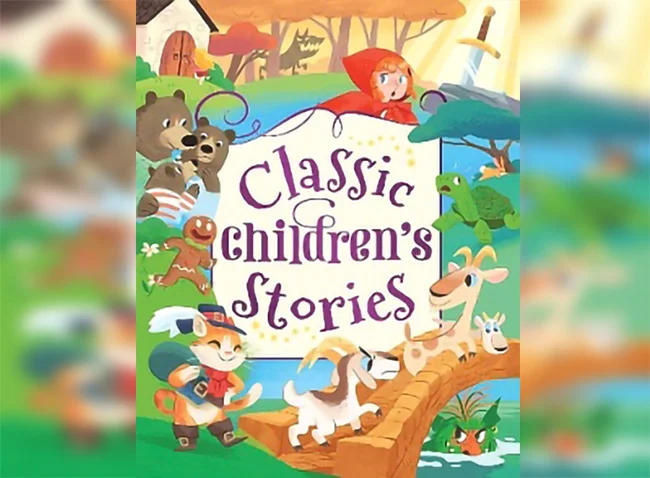
Children’s stories have always been an important part of childhood. From traditional fairy tales to modern picture books, stories entertain children while also helping them understand the world around them. When children are learning English as a language, stories become an especially valuable tool because they provide a natural, enjoyable, and meaningful way to develop language skills. Through characters, plots, and imaginative situations, children’s stories support vocabulary development, improve communication abilities, and encourage confidence in using English.
One of the greatest benefits of children’s stories in English language learning is that they introduce children to new vocabulary in a meaningful context. Instead of memorising isolated words from a list, children learn words through situations and actions within a story. For example, a story about a farm may introduce words such as “animal,” “field,” “farmer,” and “plant” while showing how these words relate to each other. This contextual learning helps children understand and remember new vocabulary more effectively.
Stories also improve children’s listening skills. When teachers, parents, or other speakers read stories aloud, children hear correct pronunciation, sentence structures, and natural expressions in English. Regular exposure to spoken English helps children become familiar with the rhythm, sounds, and patterns of the language. Even when children do not understand every word, they can often follow the meaning through pictures, gestures, and the events of the story. Over time, this develops their ability to understand spoken English in different situations.
Another important impact of children’s stories is the development of speaking skills. Stories encourage children to talk about characters, describe events, answer questions, and share their own ideas. Activities such as retelling a story, acting out scenes, or discussing what might happen next give children opportunities to practise English in a relaxed environment. Because stories are enjoyable and engaging, children are often more willing to participate and communicate without fear of making mistakes.
Children’s stories also support the development of grammar skills. Through repeated exposure to well-formed sentences, children gradually recognize how English works. They learn common sentence patterns, verb forms, and ways of expressing ideas. For young learners, grammar is often easier to understand when it is presented through a story rather than through direct explanations. For example, a story that describes past events naturally introduces the use of past tense verbs, allowing children to observe grammar in action.
In addition to language development, stories have a strong influence on children’s imagination and creativity. Stories allow children to enter different worlds, meet interesting characters, and explore new ideas. When learning English, imagination makes the language experience more meaningful. A child who becomes interested in a story about a brave character or a magical adventure is more likely to remember the words and expressions connected with that experience. Creativity also encourages children to create their own stories, which further strengthens their ability to use English.
Children’s stories can also help develop cultural awareness. Language is closely connected with culture, and stories often introduce children to different traditions, lifestyles, and values. English stories from different countries allow children to learn about people and places beyond their own experiences. This helps them understand that English is not only a subject to study but also a way to communicate with people around the world.
Reading stories in English can also increase children’s motivation and positive attitudes toward learning. Many children may find learning a new language challenging, especially when they focus only on textbooks or exercises. Stories make learning more enjoyable because they combine education with entertainment. When children associate English with fun and creativity, they are more likely to develop curiosity and continue learning.
The emotional impact of stories should not be overlooked. Many children’s stories contain themes such as friendship, kindness, courage, and problem-solving. Through characters and situations, children can learn important social and emotional lessons. Discussing these themes in English gives children opportunities to express feelings, opinions, and personal experiences. This not only improves language ability but also supports emotional growth.
Teachers play an important role in using stories effectively in English language classrooms. Selecting stories that match children’s age, interests, and language levels is essential. Teachers can support understanding by using pictures, asking questions, encouraging predictions, and connecting the story to children’s lives. Repetition is also valuable, as hearing the same story several times allows children to become more familiar with vocabulary and sentence structures.
Parents can also encourage language learning through storytelling at home. Reading English stories together, listening to audiobooks, or watching story-based programs can provide additional exposure to the language. A supportive environment where children feel comfortable experimenting with English can greatly improve their confidence and progress.
In conclusion, children’s stories have a powerful impact on learning English as a language. They provide children with opportunities to develop vocabulary, listening, speaking, reading, and grammar skills in an enjoyable and meaningful way. Beyond language learning, stories encourage imagination, creativity, cultural understanding, and emotional development. By making English learning engaging and enjoyable, children’s stories help young learners build a strong foundation for future communication and lifelong learning.
Saumya Aloysius
(A children’s writer contributing to both local and foreign newspapers as a freelance writer)

Any government that comes into power is a caretaker – of its people, environment and security. This is another glaring occasion where their lack of knowledge, or blatant disregard to the environment is causing long-lasting damage to this country.
After the devastation of the tsunami, then governments took the initiative to raise natural protection of the island by undertaking massive projects to plant mangroves. It was a long-term project, spanning 20 years, by the armed forces, to get these barriers up. Now the same army is used by this government to chop down these mangroves!!
This is happening right now in the Trincomalee lagoon. Nearly 40 lorry loads of mangrove forest have been taken away already. The excuse used for this is dengue control, a circular issued by the presidential secretariat in June. The ignorance is here; the seawater mixed lagoon does NOT breed mosquitoes. Trincomalee does not pop up in the dengue demographics, even as a high risk area. Yes, there is garbage, and plastic thrown into the mangroves that can be breeding grounds for mosquitoes. These can be cleared away in a clean-up operations, without harming the mangrove trees. It has been done a few times before, by previous government authorities, like coast conservation, who know the value of the mangrove belts. The local rumour becomes believable, that this deplorable act is done to please some local business partners of the area who run pleasure boats in the lagoon.
Yes, unhealthy mangroves can breed mosquitoes. But mangroves are ‘decease swamps’ is a dangerous myth. That mangroves are dirty, stagnant swamps teeming with decease carrying mosquitoes is a misconception that promotes harmful policies to control dengue outbreaks. This top myth justifies the illegal coastal clearance today in Trincomalee. It is destroying an important ecological asset of this country, mangroves, while failing to address the true root of dengue transmission. Where is the coast conservation department in this situ? Have they got CCD permission to carry out this butchery?
Healthy mangroves do not breed dengue mosquitoes, especially the one’s closely connected to the sea like in Trincomalee. The larvae needs completely still unmoving water to breathe at the surface, and mature. The power of tidal flushing which keeps water circulating in the mangroves makes this impossible. Also the daily ebb and flow of ocean tides keeps the water moving in the mangroves and frequently drains the forest floor. The natural hydrology of healthy mangroves, acts as an automatic self-regulating barrier against stagnant water collection, making viable breeding sites virtually impossible.
Also mangroves contain nature’s exterminators. It hosts a massive army of mosquito predators. These mangroves are not dead swamps but vibrant nurseries. Young Fish, dragon flies, crusteasians, and insectivorous birds are natural mosquito predators. Clearing mangroves collapses this natural food web, removing this natural pest control.
In fact, clearing mangroves is counterproductive and will backfire with worsened dengue cases. The heavy machinery will leave a scarred landscape with deep tyre tracks in the marshy soil making stagnant water pools and disrupted drainage. When rainwater fills these artificial depressions it will create perfect stagnant, predator free, fresh water pools, Ideal breeding grounds for Aedes aegypti. Also clearing this kind of buffers can bring in the urban sprawl with its people, housing, and garbage, to the new degraded land.
The collateral damage is even bigger. Destroying mangroves in the name of pest control leaves coastal populations poorer, hungrier, and highly vulnerable to extreme weather. One would have thought at least the people in the coast conservation department were knowledgeable enough about the loss of wave attenuation with removal of mangroves and the risk of flooding and storm surge damages to the coastal areas. Collapse of these fish nurseries should ring alarm bells in the fisheries department. Reduced fish harvest and loss of livelihood for the local fishermen should have had fisheries department people rushing to the site. But neither of the mentioned government departments have raised a murmur, in the face of political influence. This is the sad truth of the country at the moment. Sri Lanka’s climate resilience has been compromised by release of stored ‘blue carbon’ and a loss of natural buffer against rising sea levels, while the responsible people in the government are silent in front of an ignorant political hierarchy.
This is an appeal to the highest authority in the country to stop this environmentally insensitive projects of this nature being coughed up by ignorant municipal members. Clearing these forests directly violates so many policies on conservation. Our local fishermen depend entirely on healthy mangrove root systems—such as those being chopped down. From a health perspective, medical professionals have repeatedly assured us that under the current National Policy Framework, marshy lands and mangrove ecosystems pose no threat of dengue. We request your guidance and intervention to ensure our environment is not sacrificed.
Citizen S

In planning a long trip to Sri Lanka from the UK, I was disappointed to see different hotel pricing for foreign visitors when compared to local rates. Like many travellers, I prefer to book directly with hotels, rather than international hotel consolidators, as more money goes to local businesses. But the assumption that foreigners should pay more is simply distasteful. As such, I’ve chosen another long-haul destination that does not follow such practices, and hope that Sri Lanka will change its approach to overseas visitors in the near future.
Neil Roskilly Wetherlee UK

Current El Niño Status in Sri Lanka

A few showers may occur in the Western, Sabaragamuwa and North-western provinces and in Kandy, Nuwara-Eliya, Galle and Matara districts.

Argentina face fine for Falklands banner in semi-final win

US launches fresh strikes on Iran as Trump warns Tehran it ‘better behave’

Govt. move to extend retirement ages of top judges: Opp. complains to UN

Dengue surge pushes hospitals to the brink as cases near 70,000

‘Dates have the highest sugar content to fight Coronavirus’

Sunday Island 27 December – Headlines

#SundayIsland 17th December – Headlines

Sunday Island – 28th March

Sunday Island Headlines – 21 March

Sunday Island – 21st February – Headlines
-

 News6 days ago
Herath warns prospective migrant workers not to get fleeced by racketeers
-

 Features4 days ago
Prison riots and politics: NPP’s biggest challenge and Sri Lanka’s biggest opportunity
-

 Editorial5 days ago
What’s the world coming to?
-

 Foreign News6 days ago
Tensions erupt in Indian state after 11-year-old raped and murdered
-

 Features6 days ago
Devanesan Annan – in Memoriam
-
Editorial6 days ago
Punishment in hellholes
-

 Features1 day ago
Dirty Money
-

 News7 days ago
Representatives of the Organization of Professional Associations (OPA) of Sri Lanka meet the Prime Minister