
Sports
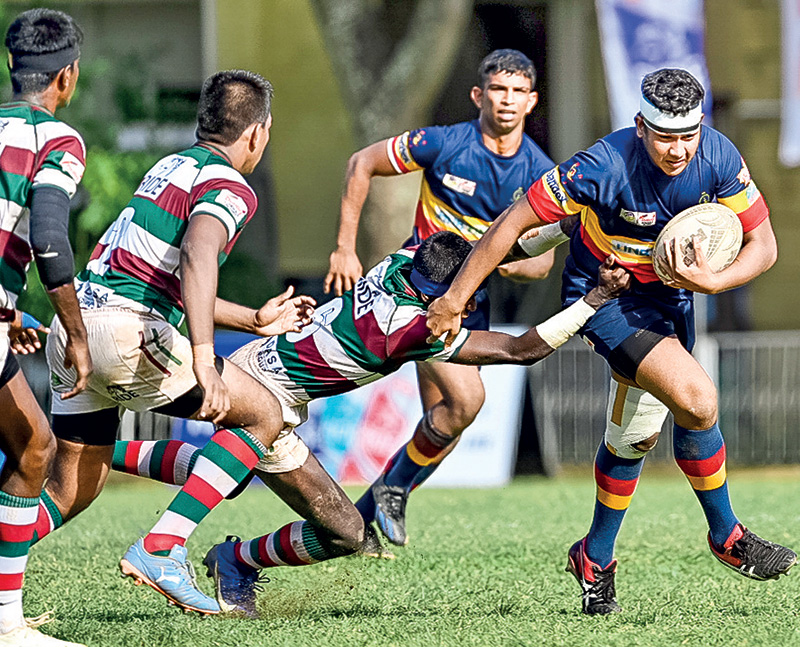
Are schoolboy ruggerites overworked in a sport where stakes are high?

by A Special Sports Correspondent
It’s amazing what school rugby has built for itself. Rugby at school level easily tops the list as the most popular discipline in which school children are involved. It could be safe to say that in a cricket crazy nation like Sri Lanka, even school cricket is no match for rugby where stakes are concerned. Just see the number of corporate logos on a school rugby jersey and you’ll understand that rugby at this level (junior under 19) can at times become something too big to handle even for the school authorities.
We saw this happen at the quarterfinals of the President’s trophy knockout tournament when teams like Royal and Trinity pulled out because they have to honour a traditional commitment; the Bradby Shield two-leg annual encounter between the two schools. You might not see this kind of bold decision being taken to pull out of an inter-school tournament in any other sport. Royal and Trinity have built histories in rugby which afford them to break away from the ‘bunch’ and still be counted in the sport played with the oval shaped ball. And still, despite that pullout, the main knockout tournament didn’t lose any of its glory. The best two teams this season – St. Peter’s and Isipatana -are keeping the knockout tournament going despite the upcoming final leg of the Bradby. Rugby in Sri Lanka is such that you can have different rugby cultures within the main culture. This is why when foreigners visiting this island are puzzled why the enthusiasm shown at school rugby doesn’t pour into to national rugby at senior level.
The other factor which showcases the rich rugby heritage of this country is the traditional fixtures between schools which are taking place alongside the main tournaments. When S.Thomas’ and Trinity met in their division 1 segment 1 group ‘A’ league tournament match this season it was also billed as a traditional fixture between the two schools. When Trinity won the game they also took home the Canon R. De Saram Shield for their efforts. The same happened when Royal scrummed down with Isipatana in the super round of the league tournament. Isipatana walked away with the Maj. Milroy Fernando trophy. But the beauty of rugby traditions in Sri Lanka will be seen soon before the season ends this year. That moment will come when the high-ridding Isipatana team has to grant a fixture to minnows Thurstan some time this season because there is a traditional rugby fixture between these two schools which is played for the Abdul Jabbar Shield. If a team doesn’t qualify for division 1 segment 1 and is demoted to segment 2, still traditional fixtures are there to offer schools struggling at rugby a lifeline.
These traditional fixtures might force the school authorities – the Sri Lanka Schools Rugby Football Association – to make compromises with the schools which have deep roots in the sport. This season, Royal and Trinity honored their commitments in the league tournament when they played their super round fixture and decided not to associate it with the two games of the Bradby. (The dates for the two leg Bradby Shield were announced well before the super round games began; hence there was no room for rescheduling the traditional rugby encounter). What was good is that both schools came for this tournament fixture in full strength. Imagine what would have happened to the quality of the league tournament if these two schools rested their key players for the Bradby and fielded second string teams? In the event these two schools played safe and protected their players for the traditional rugby fixture, the school rugby authorities would have had to plead with Royal and Trinity not to kill their tournament.
The other little concerning point in school rugby is the effect of all the overwhelming glory present in school rugby that can be a little too much for a school going child to handle. Basking in the glory of sponsors, rugby related events and all media attention they get can at times make these junior players think like sports professionals and be far removed from the ideology of living the lives of schoolboys who wear white uniforms. Suddenly we have a situation where a schoolboy, serious about his rugby, not being in a position to even have a piece of birthday cake offered to him because that type of junk food is not part of his sports diet anymore.
Also there was a time when some schools couldn’t condition the mind of schoolchildren to accept defeat at matches. This was because the stakes are too high in school rugby and the pressure is severe on the coaches to always be on the winning side. A school rugby coach knows that if his team loses a couple of matches during a season, he would be forced to look for alternative employment; come next season.
School rugby authorities and parents must understand that these are schoolboys who are involved in the sport, though they are ‘trained’ to play like professionals. These players must be taught how to balance their lives and understand the value of completing their education. There is a Sinhalese saying which goes ‘things that must be done and experienced at a specific age shouldn’t be postponed’. Some of the top clubs have already earmarked the cream of these rugby players who are turning out for their respective schools. If these players are not educated they can place their signatures on contracts with rugby playing clubs and end up getting a raw deal. Hence education at school is so important.
S. Thomas’, Isipatana, St. Peter’s and Wesley have found semi-final slots in the schools’ knockout tournament. This rugby columnist has often highlighted the fact that the environment present at some of the inter-school rugby matches is not very healthy due to uncontrollable jealousy and animosity. But we did come to hear of a warming moment in school rugby when some members of the Isipatana College team paid a courtesy call on the injured Peterite rugby player Yumeth Shihara who is in hospital and nursing an injured leg. Such tender moments in a robust game like rugby does help to remind rugby players that the human touch matters over both victory and defeat. If you lose the human touch you lose it all!


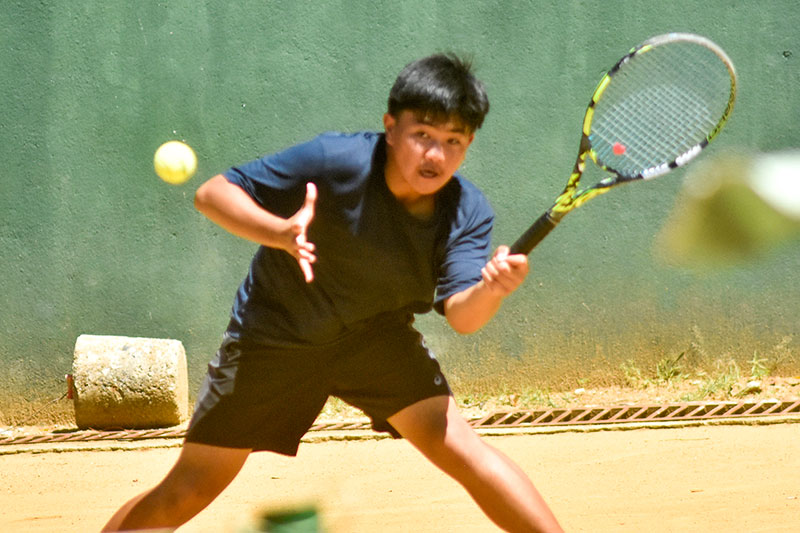
Risindi Hewawasam of Sri Lanka and Anthony Castigador of the Philippines won the girls’ and boys’ singles titles at the ATF 16 & Under Colombo 2026 – Week 1 tournament concluded at the Sri Lanka Tennis Association courts on Friday.
Castigador produced a dominant performance in the boys’ singles final, defeating India’s Gurshaan Chahal 6-2, 6-2 to secure the title. The Filipino maintained his advantage throughout the match, winning in straight sets to cap an impressive campaign.
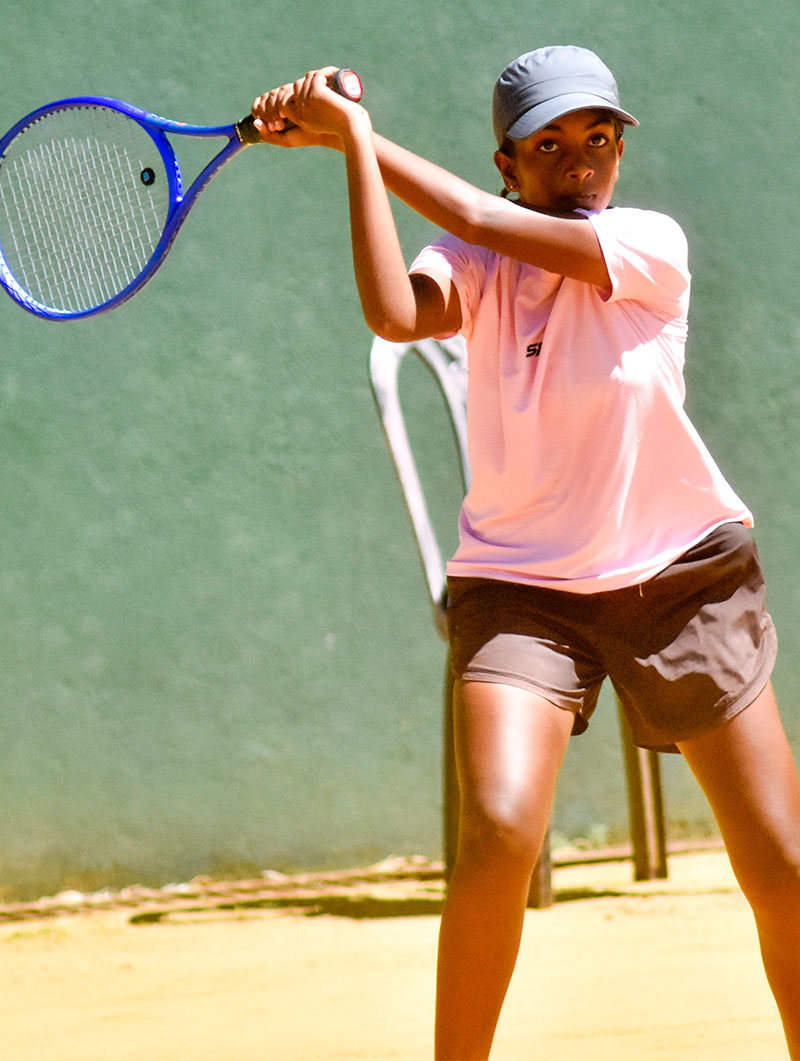
Risindi Hewawasam (Pix by Kamal Wanniarachchi)
In the girls’ singles final, Risindi delivered an equally dominant display to beat compatriot Kiara Jayamanne 6-1, 6-1. (RF)

Dialog Axiata PLC is supporting Sri Lanka’s national contingent at the 2026 Asian Para Games in Achi Nagoya Japan, continuing its long standing commitment to supporting Sri Lankan athletes and helping them compete at the highest levels of international sport.
As the team sponsor, Dialog is backing a group of 21 athletes whose journeys have been shaped by determination, discipline and a strong desire to represent their country on the international stage. For Dialog, however, the value of this team goes well beyond the medal tally.
Each athlete has taken a different path into elite sport. Their physical abilities may differ, as do their individual stories, challenges, and ambitions. What they share is the commitment and determination required to train, compete, and continue pushing themselves to achieve their goals.
Dialog’s support reflects its wider commitment to creating opportunities for Sri Lankans to pursue their ambitions and represent the country with pride. For 26 years, Dialog has supported Paralympic sport in Sri Lanka, helping athletes compete at national and international level. Its continued support for the Asian Para Games contingent is part of that long-standing commitment to creating opportunities for athletes and recognizing sporting talent.
Among them is javelin thrower Samitha Dulan, a silver medalist at the 2022 Hangzhou Asian Para Games. Palitha Bandara, another experienced member of the athletics team, has also won medals at both the 2018 Jakarta and 2022 Hangzhou Games.
Nuwan Indika arrives with an impressive record after winning gold in the 100 meters and silver in the long jump at Hangzhou, while Pradeep Somasiri returns as an Asian Para Games champion after winning gold in the 1,500 metres.
Dhananjana Wickramasingha will also be looking to build on her silver medal winning performance in the women’s long jump at Hangzhou, while Madhuranga Subasinghe, who won bronze in the 400 metres, is also back in the squad.
Sri Lanka’s medal winning experience extends beyond athletics. Swimmer Naveed Rasheen won bronze in the 400 metre freestyle at Hangzhou, while Nadin Basnayake claimed silver in the women’s event.
The squad also includes Buddika Indrapala, who won bronze at the 2018 Asian Para Games.
Together, the contingent includes nine athletes who have previously won medals at the Asian Para Games, bringing valuable experience to the 2026 campaign.
by Rex Clementine
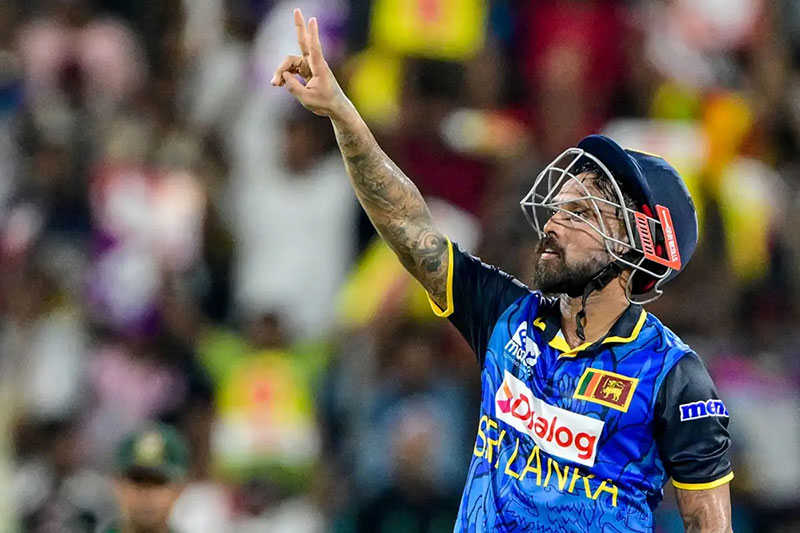
It is not often that a Test captain is replaced midway through a World Test Championship cycle. The fact that Dhananjaya de Silva has made way just days before the squad for the tour of Pakistan is announced is a clear indication that the cricket establishment was far from impressed with his leadership. He may now struggle to retain his place as a specialist batter, particularly if the selectors decide to relieve newly appointed Test captain Kusal Mendis of the wicketkeeping gloves.
Previous administrations of Sri Lanka Cricket would have taken the easy way out. They would have allowed the World Test Championship cycle to run its course before ringing in the changes. But when you have someone of Sidath Wettimuny’s calibre heading the Cricket Committee, tough calls are part of the package. Sidath has no favourites. He calls a spade a spade and has the best interests of the game at heart. It is no coincidence that Sri Lankan cricket flourished during his tenure as Chairman of Selectors from 1999 to 2001.
Kusal Mendis now suddenly finds himself captaining Sri Lanka across all three formats. Given his chequered past and bad boy image, there will inevitably be raised eyebrows over whether he deserves to wield so much influence over Sri Lankan cricket. But credit where it is due. Over the last five years, he has largely stayed out of trouble. More importantly, over the last three years, he has knuckled down, worked tirelessly on his game and earned the admiration of both the coaching staff and the cricket establishment.
The turning point came at Lord’s in 2024.
Every cricketer dreams of playing a Test match at the Home of Cricket. But the selectors pricked Kusal’s pride by dropping him for the showpiece occasion. The decision did not win them many admirers, with former captains Duleep Mendis and Aravinda de Silva among those who questioned the wisdom of the move.
But, as it turned out, the setback proved to be a blessing in disguise.
Kusal returned for the third Test at The Oval and produced an innings that was worth considerably more than the 39 runs against his name in the scorebook.
On a seaming surface, where England’s quicks were making life miserable for the Sri Lankan batters, Kusal showed admirable restraint without completely putting away his attacking instincts. His 39 came at less than a run a ball.
So what was so special about a knock that did not even reach fifty?
Plenty, as it turned out.
Kusal’s counterattack forced England to spread the field, taking the sting out of their bowling and allowing Pathum Nissanka to cash in. Pathum deservedly walked away with the plaudits for his magnificent hundred, but Kusal had done much of the groundwork.
It was not an innings that would find its way into cricket’s record books. But it was one that spoke volumes about Kusal’s changing attitude. Here was a player prepared to put the team’s cause ahead of personal milestones.
When Sri Lanka returned home for the Test series against New Zealand, the team management went a step further. They virtually created a position for Kusal, handing him the wicketkeeping gloves in Test cricket. He has remained a permanent fixture in the side ever since.
Since that Oval Test in 2024, Kusal has featured in nine Tests, scoring five half-centuries and a hundred. His work behind the stumps has been equally impressive, with hardly a blemish on his wicketkeeping record.
The maturity Kusal has displayed, both as white ball captain and as a senior member of the side, has impressed successive coaching teams. It is refreshing to see a cricketer learn from his mistakes, turn over a new leaf and allow his performances to do the talking.
Kusal has had his share of run ins with trouble over the years. Now comes the biggest challenge of his career. Leading Sri Lanka across all three formats is no small responsibility and the captaincy will test his temperament as much as his cricketing skills.
The selectors have placed their faith in a man who once struggled to keep himself out of the headlines for the wrong reasons. It is now up to Kusal to ensure that the headlines are about his leadership, his runs and, above all, Sri Lanka’s success.

Showers above 75 mm are likely at some places in the Western, Sabaragamuwa, Central, Uva and North-Western provinces and in Galle, Matara, Anuradhapura and Mannar districts.

Iranian ships stranded, Lanka fears US sanctions

Sri Lanka CERT warns of overseas university admission scams

Navi Pillay’s Lankan affairs in focus as she wins 2026 Nobel Peace Prize

Lanka welcomes Indian SC remarks on Katchatheevu dispute

UN at Crossroads, Trump nearing End of the Road

‘Dates have the highest sugar content to fight Coronavirus’

Sunday Island 27 December – Headlines

#SundayIsland 17th December – Headlines

Sunday Island – 28th March

Sunday Island Headlines – 21 March

Sunday Island – 21st February – Headlines
-

 News6 days ago
Geneva takes up Sallay’s case and govt. ignores opportunity to answer accusations
-

 Features5 days ago
Preventing grievances from becoming communal
-

 Features3 days ago
The Sri Lankan who made Scottish history
-

 Sports3 days ago
Nissanka absence opens door for Sri Lanka’s young guns
-

 News4 days ago
Gnansara Thera to be assigned to prison printing section: Officials
-

 Features6 days ago
Sri Lanka Cricket Bill: Governance reform is not yet a cricket strategy
-

 News2 days ago
NDB fraud Rs 60mn more than reported
-

 Features3 days ago
Future of Sri Lanka’s state university system: Should it be shut down and reopened?