
Features
JRJ recounts his famous 1951 speech advocating the Peace Treaty for Japan

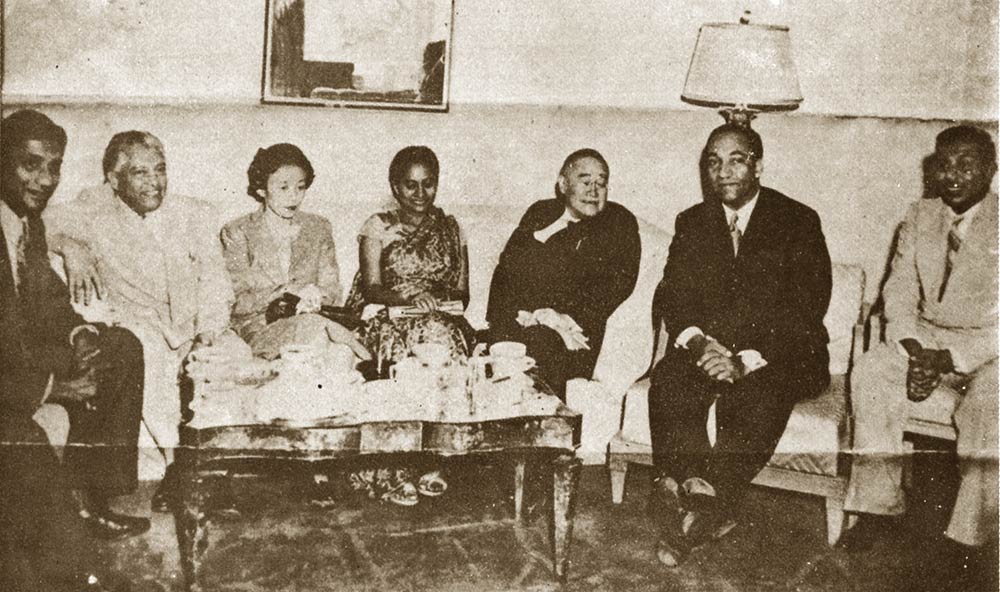
Interlude is post-war Japan en route to San Fransisco
(Excepted from Men and Memories by JR Jayewardene)
I attended the Japanese Peace Treaty Conference, San Francisco, USA, in September 1951 as the representative of Ceylon (Sri Lanka). The Foreign Ministers of the major nations and Prime Minister Yoshida of Japan attended. Yoshida shed tears when I stood up for Japan and made a speech which was hailed as the turning point of the Conference.
As Ceylon’s representative I travelled to America through Japan and the Pacific. During my stay in Japan for a few days, I met leading Japanese Buddhists and gathered impressions of the political post-War conditions in Japan. At the Conference my two speeches made me ‘the Hero of the Conference’, in the words of Mr. John Foster Dulles.
The value of this contribution could be gauged by the tributes paid by the world press. Some of the Press accounts are as follows:
San Francisco Chronicle . “The generalized, philosophical argument for forbearance was ably stated by Ceylon’s Minister of Finance, J.R. Jayewardene”.
The Salt Lake Tribune . “The address of Jayewardene, Ceylon’s articulate delegate, will go down as one of the most historic of the conference. He called Russia’s bluff at every turn and quoted Buddha in an effective plea for a merciful peace for Japan”.
The London Times . “A skillful answer to the case was propounded by Jayewardene. He recalled that the United Kingdom, in face of the Russian request that the Treaty be prepared by the Council of Foreign Minister, with the power of veto in operation, had insisted that the British Dominions be consulted, and he claimed that the case for restoration of a completely independent Japan was first considered at the Colombo Conference”.
San Francisco Chronicle. “There was the Minister of Ceylon–a man of great dignity and keen grasp of subtleties–who stripped the very hide off the Soviet position with his declaration: ‘It is interesting to note that the amendments of the Soviet Union seek to insure to the people of Japan the fundamental freedoms–which the people of the Soviet Union themselves would dearly love to possess and enjoy”.
San Francisco Examiner.
“A darkly handsome diplomat from the seldom considered Island of Ceylon spoke up resoundingly for international decency and magnanimity to a world that has of late known little of either. He was J.R. Jayewardene, the rubber rich Island’s Minister of Finance. Dispassionately and with fine logic he tore Russia’s wrecking crew to pieces in his address”.
Newsweek . “A swarthy Sinhalese named J.R. Jayewardene with a clear Cambridge accent shared honours as the most popular speaker with the fiercely bearded Moslem, Sir Mohamed Zafrulla Khan of Pakistan. To the delight of American officials both spoke eloquently as Asiatics to Asiatics”.
Time. “Ablest Asian spokesman at the conference was Ceylon’s delegate, Finance Minister J.R. Jayewardene, a slim, soft-spoken man with a razor-like tongue”.
Life. “Crucial support for West comes as Ceylon’s J.R. Jayewardene protests against Soviet assumption of a ‘protector’ role in Asia, adds that the eight Asian nations present would speak for themselves”.
New York Herald Tribune.
“Ceylon’s Jayewardene led the spokesmen for 13 of the 52 nations at the conference in proclaiming their intention to sign the Anglo-American sponsored treaty”.
I was to attend the Annual Conference of Governors of the World Bank and the International Monetary Fund to be held in Washington during the second week of September, 1951. A conference of 52 nations to discuss a Peace Treaty for Japan was also summoned to meet at San Francisco in the first week of the same month, and the American Ambassador was very anxious that the Prime Minster D.S. Senanayake should attend, as the other nations were sending their Foreign Ministers and President Truman was to open the conference.
The Prime Minister was unable to leave Ceylon and instead suggested that I should represent him. I gladly agreed because I had to be in America during this period of time, and as the Peace Conference was to be held at San Francisco it was possible for me to arrive there traveling eastwards, through Japan and the Pacific. After San Francisco I could attend the Washington Conference; cross the Atlantic, represent Ceylon at the Economic Conference which was to be held in September in London, and then return to Ceylon. It was indeed a journey that would put a girdle round the world by air and sea.
The BOAC Constellation Liner took off from Katunayake Airport Negombo, at 6.30 a.m. on Sunday, 26 August. Our delegation consisted of R.G. Senanayake, Parliamentary Secretary to the Minister of External Affairs, and my Private Secretary, R. Bodinagoda. I thought the plane would first travel along the western coast and after leaving the southern tip of Ceylon charter her course eastwards. I was surprised therefore, on looking out after about half an hour’s flight to see range upon range of mountains.
The plane was traveling over the central hills. In a few minutes I found my bearings, for the summit of Adam’s Peak. with the white building of ,the monastery was easily recognizable. We soon flew over the plains in the south-east corner of Ceylon and headed for the sea and Singapore.
At 4 p.m. we landed at Singapore. Our Commissioner Saravanamuttu, and Malcolm Macdonald’s representative were there to meet us. We dined with Malcolm Macdonald who was the Special Commissioner of the UK Government for South-East Asia. Dinner was served in the magnificent palace of the Sultan of Johore, “Bukit Serene”, where Macdonald was staying.
I had been here on an earlier occasion on my way from Australia after the Colombo Plan Conference in June 1950.1 had met Macdonald at the Ceylon Independence celebrations in 1948, and at the Colombo and Sydney Conferences in 1950, and knew him fairly well. We could not spend much time over our dinner as we had to leave early the following morning.
At 3 p.m. we sighted Hongkong and owing to the absence of rain and mist landed safely in this hill-locked bay. We were able to look round the town which ; built on the side of a hill facing the bay, the side facing the sea not being built upon. A Chinese restaurant where the real Chinese food was served was one of the places we visited.
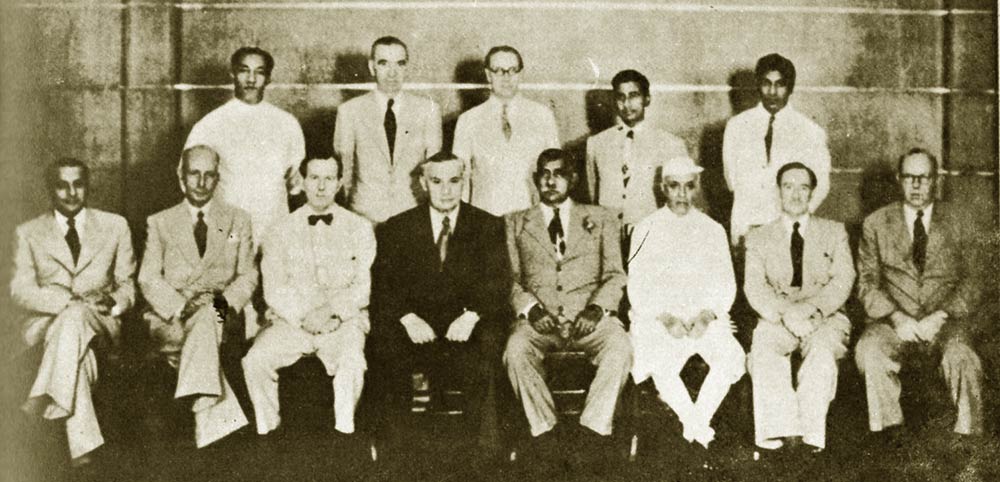
At the Commonwealth Conference in 1951 where the Colombo Plan was inawaegrated, with Prime Minister D. S. Senanayake sitting in the centre. On his left is Pandit Jawaharlal Nehru, Prime Minister of India, and on his right Ernest Bevin, Foreign Minister of the United Kingdom. J.R.J. is the first figure on the left in t he standing group
Early the next day we were again in the air. In the last stage of our journey while flying over Okinawa Island I could see the hulls of ships sunk during the War. Here was fought one of the bitterest battles in which the Americans and the Japanese were involved; where thousands of lives were lost, yet a few years later the two nations were friends, and the conference at San Francisco was to discuss how Japan could again enter the comity of free nations.
We were now approaching Tokyo, and who does not look out to see the peak of Fujiyama, as we did? I stayed five days in Tokyo. The first two days were spent in paying official calls on the American Representative, the Japanese Prime Minister, Yoshida, and the Supreme Allied Commander, General Ridgeway. I also met the Indian Representative at lunch and the British Representative at dinner. Leading members of the Japanese public life were present at these functions. I was able to gather useful information on Japan’s political and economic state after the War.
In my meetings with the Japanese Buddhist leaders I discussed the possibility of holding the next session of the World Fellowship of Buddhists in Japan as requested by Dr. Malalasekera, its President, before I left Ceylon.
A nation that had enjoyed Independence and an unbroken historical record since the sixth century BC was defeated in 1945. The atomic explosions over Hiroshima and Nagasaki compelled a proud people to surrender though their armies were still unconquered. The Allied Forces landed in Japan in August 1945, and on 2 September, General MacArthur, having assumed duties in Japan as Supreme Commander, accepted the surrender of the Japanese on board the US Battleship ‘Missouri’.
SCAP (Supreme Commander for the Allied Powers) was in charge of the occupation and control of Japan. His main task was to implement the basic policies laid down by the USA, China and the UK in the Potsdam Declaration of July 1945, defining the terms for Japanese surrender. The main terms relevant to the occupation were:
(1) to eliminate the authority and influence of irresponsible militarism,
(2) destruction of Japan’s war-making power,
(3) disarming Japan’s military forces,
(4) stern justice to be meted out to all war criminals,
(5) the revival and strengthening of democratic tendencies among the Japanese people.
McArthur, who had the choice of direct or indirect government, chose the latter and utilized the existing government of the country. He issued orders to them or made suggestions as he thought fit. The Japanese Government, which could do nothing contrary to SCAP policy, had also to carry out his wishes. The people, however, looked to the Prime Minister and his government for the elected government continued to function.
After the resignation of the Cabinet that surrendered, a Cabinet headed by Prince Higashikuni assumed office in August 1945. This difficult period of demobilization and food scarcity caused conflict between the SCAP and the Government. On the Prime Minister’s resignation in October, K Shidehara, once Ambassador to the USA was nominated Prime Minister. He accepted and implemented the policy of SCAP which the previous Prime Minister had refused to do, among these being the abolition of the secret police, dismissal of high officials and the liberation of political criminals.
The Shidehara Government functioned until May 1946, and during its tenure of office many measures for the establishment of a democratic constitution were initiated, such as the drafting of a new constitution, a declaration of the sovereignty of the people and the granting of universal franchise. The formation of trade unions was encouraged, and the functioning of political parties resumed. In spite of the liberal measures adopted by the government, the insufficiency of food and its bad distribution caused grave distress, ending in food riots.
In the General Election held in April 1946, the Liberal Party led by Hatoyama was elected with the largest number of members. When Hatoyama was about to be recommended for the office of Prime Minister, SCAP ordered that he should be excluded from office. This was in pursuance of a law which ‘purged’ from office almost two hundred thousand who had militaristic tendencies. The Liberal Party, which was the largest party in Parliament, elected Shigeru Yoshida, the Foreign Minister as its President, and the retiring Prime Minister recommended him to the Emperor as the proper person to succeed him.
The Yoshida Government was constantly faced with labour troubles; strikes were averted only by the intervention of the armed strength of the SCAP; and the Communists and the Left-wing socialists were gaining in strength by clever manipulation of labour troubles. In view of the mounting opposition, the SCAP suggested a General Election, which was held in April 1947, the Socialists becoming the largest party. Yoshida resigned and was succeeded by Katayama, head of the Socialist party, who could not carry on for long owing to dissension in his party. He resigned when a supplementary budget proposal was defeated due to absence of his members from the House during voting.
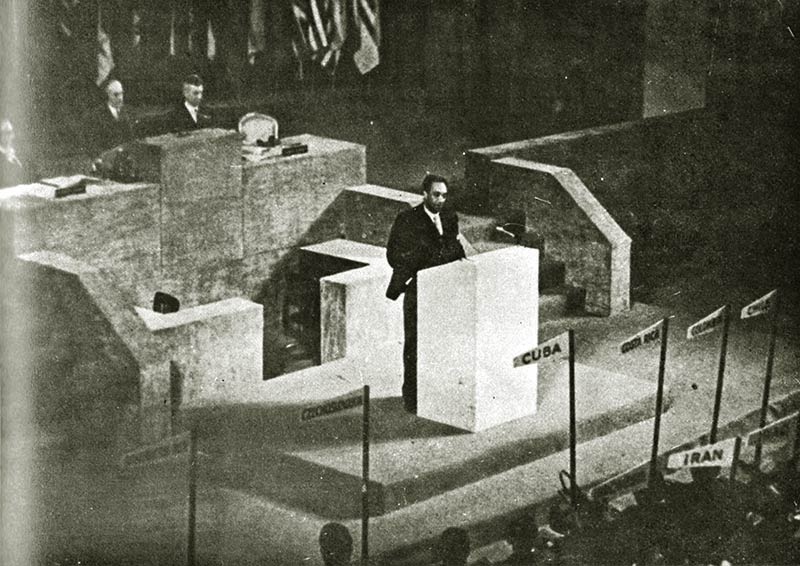
Speaking at the Japanese Peace Treaty Conference
Ashida, the Democratic Party leader, was voted Prime Minister by the House under the new law which empowered the House of Representatives to elect the Prime Minister by a majority vote. Ashida’s Government was assailed as corrupt from the very first day it assumed office. It was openly stated that Ashida, head of the third largest party was chosen as Prime Minister by the use of money. Financial transactions of members of the Cabinet were investigated into by the police and Ashida unable to face opposition from without, and corruption within his ranks, resigned.
A vote in the House elected Yoshida as Prime Minister for the second time in October 1948. As Yoshida’s’ Liberal Government was a minority-government, a General Election was held in December, when the Liberals won a great victory, securing an absolute majority over all other parties. The people showed their disapproval of incompetence and corruption’, favoured the constitutional methods adopted by Yoshida and approved his plans for removing controls. In spite of opposition from organized labour and the Communists, the government carried through a series of economic reforms.
In spite of initial sufferings which the people had to bear, the government pursued its policy with determination. By the end of 1950, the Yoshida Government could proudly claim that the finances and economy of Japan were established. The government then turned its attention to the problems arising from the Korean war and the preparation of a treaty of peace leading to the freedom of Japan.
The Japanese people felt keenly the occupation of their country by foreign troops but their feelings were not exhibited. In September 1951, the Japanese were not allowed to enter the hotels we stayed in, in Tokyo. They were made to feel that they were a conquered nation. The re-gaining of their ancient freedom was one of the achievements of Premier Yoshida and his Ministers.
The six years of occupation, ending with the Peace Treaty of 1951, saw a revolutionary change in the political, economic and social institutions that existed before the War. The concept of the Emperor as the source of all authority was removed by the new Constitution, which came into operation in May 1947. Parliamentary democracy, similar to that of England, was embodied in the Constitution. The first principle was that ‘sovereign power resides with the people’. The will of the people is expressed through their elected representatives in the Diet who choose the Executive, namely, the Prime Minister and his Cabinet. The Emperor was declared to be ‘the symbol of the state and of the unity of the people’.
The concomitants of this change were also seen in the reform of the government machinery, the independence of the judiciary and the extension of the local government. As stated earlier, the grant of universal franchise to men and women and the liberty allowed for the formation of trade unions took the mind of the people away from the disgrace of defeat and turned it towards a desire to better their conditions, worsened by the collapse of the economy after the close of the War.
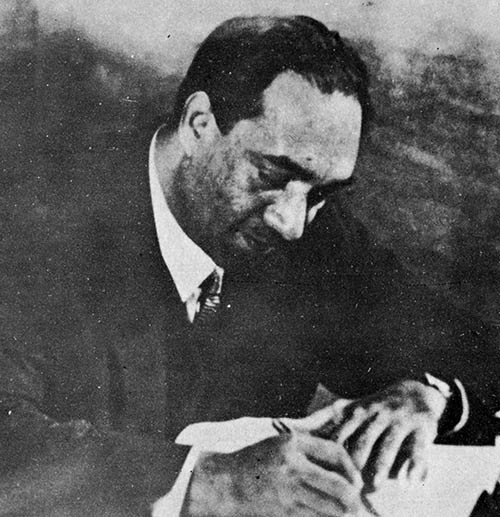
Signing the Japanese Peace TreatyAgreement in San Francisco in 1951
Another major and useful step was the attempt at agrarian reform. A large-scale transfer of land ownership from owners to tenants was carried out over a period of years. The principle applied was that he who tills the land must be its owner. These reforms, as well as the breaking up of monopolies and trusts, and the reform of the banking system, convinced the masses that the SCAP did not intend to use its victory for the benefit of a few. Japan was thus ready to regain her freedom in 1951. Her stability, politically and financially, was due to the wise leadership of the SCAP and the elected governments that co-operated with it.
I had read about and published a short essay on, ‘Buddhism in Japan’. I was afforded an opportunity of meeting some of the leading scholars and wished to make the best use of the time available to me. A common friend, an Englishman residing in Colombo who had recently visited Japan, contacted Christmas Humphreys, one of the leading British Buddhists, and provided me with a list of those whom I should meet. Humphreys who had spent some time in Japan a few years back as the prosecuting counsel in the International War Trials, had in his book Via Tokyo published his impressions of Buddhist Japan.
I was anxious to meet some of the distinguished Buddhist leaders, and to visit the historic places mentioned there. Professor Malalasekera, President of the World Fellowship of Buddhists, a newly-formed international Organization whose first convention was held in Ceylon in 1950, proposed to hold the second convention in Japan in August 1952. He requested me to discuss with the Buddhist leaders this proposal and find out their views.
Owing to the difficulty of corresponding with the Japanese directly, I contacted them through the British Embassy in Japan. On the second day after my arrival in Tokyo I was able to meet many of the Japanese leaders at the house of one Mr. Redman of the British Embassy. On this day, and during the course of the next few days, I met Mr. Yoshimuzu and Professor Kumura, Managing Editor and Editor of a well-known Buddhist journal, The Young East; Dr. Tachibana, the well-known author, and Dr. Miyamoto, Professor of Buddhism at the Tokyo University.
I also met Dr. Nagai, ex-Professor of the Tokyo University, and Mr. Tomamaisu who was taking the keenest interest in the forthcoming conference. Preparations were being made to hold the conference in September or October, and I realized that owing to the conditions that then prevailed in Japan much work would have to be done to organize it successfully. The attainment of freedom made this work easier, and the conference held in 1952 was very successful.
With these Japanese friends and the two Englishmen interested in Buddhism, I visited as many places as I could. I was also able to visit and spend some time with Dr. Suzuki one of the great minds of Japan, and the leading scholar of the Zen sect which he introduced to the world outside Japan. On the third day of our stay, I received a message from the British Embassy that Professor Suzuki would receive us at 3 p.m. the next day at the Matsugaoka Library at Kamakura, which is 70 minutes drive from Tokyo.
The world famous bronze statue of the Buddha is also situated in this town; so we were doubly pleased. The temple (Ji) of Full Enlightenment, Engaku-ji, was the present home of Dr. Suzuki. The library was on the opposite side of the valley and was reached by a steep climb. I had heard and read of Dr. Suzuki. He was now eighty years of age; had written several major works on the Zen sect and was renowned for his learning as well as his piety.
The name of the sect is an abbreviation of Zenna, a transcription of the Sanskrit word ‘Dhyana’, meaning meditation. The sect traces its origin to Bodhidhamma (520 AD) himself. The Zen philosophy appealed specially to poets and artists and became the religion of the Intrepid Samurai of yore. The sect owned 20,000 temples, monasteries and chapels. It had more than 7,800 abbots, 36,000 monks and 800,000 perpetual members. Training centres for monks were attached to the principal temples.


 Looking back over the years since the 9/11 catastrophe, it could be said that barring former Iranian President Mohammad Khatami no world political leader of note has made an earnest effort to change the nature of global political discourse for the better. Khatami won world acclaim for his pronouncement that the time is right to launch and sustain a ‘Dialogue among Civilizations’.
This was in marked contrast to US political scientist Samuel P. Huntingdon’s epochal theses, formulated in the wake of 9/11 and other global political tumults that the Post Cold War era is essentially one of conflicts among civilizations. That is, people’s identity markers, such as culture and religion, are the prime shaping forces of international conflicts.
From a Political Realism standpoint, Huntingdon’s theory may seem to have gained in credibility over the years but it is Khatami’s pronouncement that has evoked an empathetic response in the hearts and minds of publics world wide. So much so, 2001 was proclaimed by the UN General Assembly as the ‘Year of Dialogue among Civilizations’.
It could be said that the latter proclamation was an endeavour to give back to humans their essential identity of peace-makers. It was an eschewing of the position that war and conflict are central to the human condition and amounted to upholding constructive dialogue among peoples and civilizations as a path to peace.
That things have not worked out in the world in keeping with the expectations of peace makers does not in any way invalidate the thesis that peace is the essential propensity of humans.
If peace-making is seemingly ineffective it is primarily because the path to peace is narrow, tortuous and time-consuming. On the other hand, violence usually misleadingly recommends itself to the human as the more expedient, cost-effective way out of a conflictual situation. However, the ultimate cost of the latter approach is prohibitive because it brutalizes the human beyond recognition.
Some of the evidence is before our eyes. The Trump administration, for example, has, minus much forethought, unleashed what may be described as a ‘quick-fix’ war against Iran but is now finding that it is in a veritable military quagmire in West Asia. The priority for the administration now seems to be a face-saving escape strategy. Such are the costs of the war option.
However, there is no denying that much remains to be done by the world community to bring peoples and cultures together with a view to enabling them to work as one for the cause of a less dangerous world.
Meanwhile, the broad divisions in international politics continue and past political polarities are lingering to the detriment of enhanced international understanding. The East and the West and the South and the North, for instance, are continuing to work in separate collectives, more or less, and no notable efforts are being made by the international community to bring these sides together for the purpose of united constructive action that could usher greater international well being.
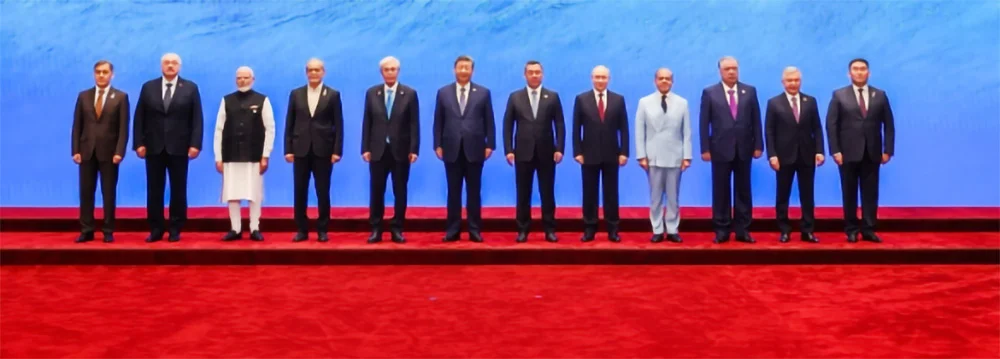
The recent Shanghai Cooperation Organization Summit, 2026, held in Kyrgyztan was a replication of the above broad trends but there were some statements at the forum by Indian Prime Minister Narendra Modi that deserve special scrutiny and comment.
Modi was quoted saying among other things: ‘The land of Gandhi and the land of Buddha share a single message: the path to peace!..We must move away from endless war towards an end to the war. This is essentially for the well being of humanity. A peaceful resolution to all issues at the earliest is the call of humanity, and this is India’s message.’
The above is the language of international peace and unity. It is such language that will help in building bridges among civilizations and advance the cause of world peace. Besides, it will help bring a measure of understanding between North and South.
In this regard, the Trump administration could take a leaf or more from the Modi government. Unless it makes a ‘U turn’, as it were, in the direction of peace and reconciliation it is very unlikely that the US and the world would experience any stability worth speaking of.
Right now the US is savaging the sovereignty of Venezuela. It is a question of the ‘Empire striking back’ but Venezuela is a far cry from Iran. Iran has outsmarted the US on the battle field and is in a position to influence broad trends in the world economy since it still has control over the Hormuz Straits. That is, Iran could exercise a determining influence over world oil, gas and energy prices. In short, the US consumer’s future peace of mind is very much in the hands of Iran.
Given the above backdrop it should have dawned on the US political leadership that working towards cordial relations with Iran is the most advisable option. The US, simply, has too much to lose otherwise.
Likewise, Russia too needs to take a leaf from India. It is plain to see that its invasion of Ukraine is proving totally ineffective. It has not brought any measure of peace for the Russian people. Russia is right now experiencing a rerun of its military misadventure in Afghanistan. On the other hand, sections of the peoples concerned have been victimized and even brutalized.
Accordingly, there needs to be a coming together of democratic opinion worldwide for a fresh consideration of the options facing humanity. There is a dire need for value-based politics to take the place of Realpolitik. Besides, the language of peace and humanity needs to replace current divisive discourse with its stress on polarities and antagonisms.
International organizations of the stature of the UN need to take the lead in spearheading the above initiatives. Right now the UN gives the impression of being a spent force. This columnist hopes that he would be proved wrong on this score because the UN remains the only hope of the poor and victimized. It will be in the interests of all peoples for the UN to rejuvenate itself and dedicate itself increasingly enthusiastically to the cause of international peace.
Whether it be the South or North, dynamic, visionary political leadership and direction emerges as essential. The need is for voices that would espouse peace and accord across boundaries and divisions. For South Asia, India and Pakistan have the potential to fill this lacuna.
by Shelton Dharmaratne
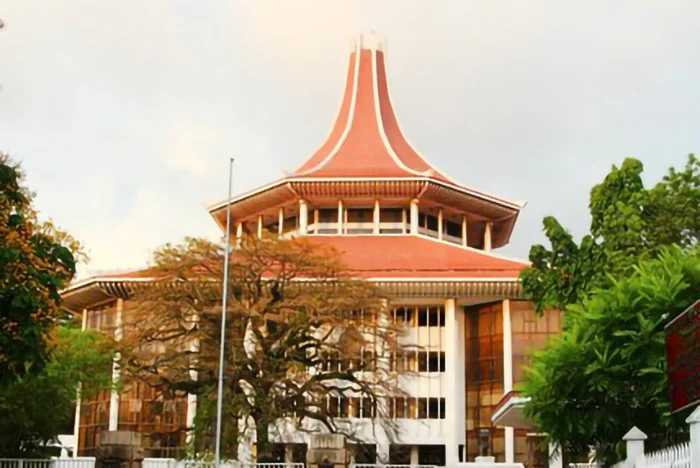
Sri Lanka has reached an important constitutional moment.
The proposed 22nd Amendment has moved beyond political debate and into the constitutional process through which its validity will be examined. That development should change the character of the national discussion.
That is understandable in a politically contested environment. But Sri Lanka should now resist reducing a question of constitutional design to a contest over political positions.
The deeper issue concerns the relationship between constitutional reform, judicial independence and public confidence in the institutions of the State.
The Supreme Court will determine the constitutional questions before it. Public commentators should therefore exercise restraint in predicting, interpreting or seeking to influence that determination. But restraint does not require silence. It requires a more rigorous discussion of the institutional principles at stake.
A narrower constitutional question than the political debate suggests
The proposed amendment principally concerns the retirement ages of judges of the Supreme Court and Court of Appeal, together with an increase in the maximum number of judges permitted on the Court of Appeal.
Under the proposal, the retirement age of Supreme Court judges would rise from 65 to 67 and that of Court of Appeal judges from 63 to 65. The maximum number of Court of Appeal judges would also increase from 19 to 24.
Other proposed changes concerning the retirement ages of judges in the lower courts arise under separate legislation. This distinction matters because the public debate has sometimes treated the wider package of judicial reform as though it formed a single constitutional proposal.
Nor should the central issue be reduced to whether retaining experienced judges is inherently good or inherently dangerous. Both propositions are too simplistic.
Sri Lanka faces a substantial burden of pending litigation, and delays in the administration of justice impose significant costs on citizens, businesses and the State. Experienced judges represent an institutional resource. Continuity, accumulated knowledge and familiarity with complex areas of law cannot always be replaced immediately.
Those are legitimate policy considerations.
But the opposing concern is equally important: judicial tenure is not merely an employment condition. It is a structural component of judicial independence.
The real question is institutional
The critical question is not whether an individual judge is capable of acting impartially. It is whether the constitutional structure provides adequate protection against circumstances in which judicial tenure could become connected, directly or indirectly, with political authority.
That is an institutional question, not an accusation against individual judges.
A judge may be entirely conscientious and independent while the institutional arrangements surrounding the judiciary nevertheless create public doubts about independence. Constitutional democracies therefore cannot depend solely on the personal integrity of office-holders. They must construct institutions capable of preserving independence even when governments, individuals and political circumstances change.
This is particularly relevant when constitutional reform concerns the tenure of serving members of the superior judiciary.
The institutional sensitivity of such a proposal should neither be exaggerated into an allegation of improper motive nor dismissed as irrelevant. The appropriate response is transparency, procedural fairness and confidence in constitutional safeguards.
Legitimate objectives do not settle constitutional questions
The government has stated that its objectives include strengthening the administration of justice, addressing delays, retaining judicial experience and increasing institutional capacity.
Those objectives deserve serious consideration. Sri Lanka needs judicial reform. Citizens waiting years for their cases to be concluded experience the justice system very differently from those discussing it in Parliament, courtrooms or universities.
A government is therefore entitled to propose reforms designed to improve judicial efficiency.
But legitimate objectives do not automatically resolve constitutional objections. The relevant question is whether the means chosen are compatible with the constitutional structure and whether sufficient safeguards exist against unintended institutional consequences.
That is precisely why constitutional scrutiny matters.
The concerns of the Bar Association of Sri Lanka (BASL) should likewise be examined without political labelling. Opposition to the proposed changes should not automatically be characterised as opposition to judicial reform or an attempt to obstruct the government. At the same time, invoking judicial independence does not place any argument beyond scrutiny.
The appropriate questions are straightforward:
Does extending judicial tenure strengthen the administration of justice?
What risks, if any, could it create for judicial independence?
Are adequate institutional safeguards in place?
Does the proposal operate prospectively, or does it affect judges already serving?
Could the same objectives be achieved by filling vacancies, increasing judicial capacity, improving court administration and strengthening case management?
These questions can be examined rationally without attributing improper motives to either side.
Judicial vacancies and institutional confidence
Recent concerns raised by the BASL regarding judicial vacancies add another dimension to the debate. The BASL has argued that vacancies in the Supreme Court contributed to the retirement of a senior Court of Appeal judge without promotion to the Supreme Court, despite vacancies having existed. It has also raised concerns regarding forthcoming judicial retirements and the need for timely consideration of appointments.
Such matters should not be treated as evidence of the motives behind the proposed amendment. They do, however, illustrate a broader principle.
Judicial independence is shaped not only by the retirement age written into the Constitution. It is also influenced by how vacancies are filled, how promotions are determined, how seniority and merit are assessed, and whether judicial officers and the public believe that institutional decisions are made according to transparent and defensible criteria.
The government has an opportunity to address these concerns constructively.
Prompt appointments based on publicly defensible principles would strengthen confidence in the judiciary irrespective of the eventual outcome of the constitutional debate.
Seniority, merit and transparent criteria
The controversy also exposes a longstanding question concerning judicial appointments.
Seniority has traditionally carried considerable weight in judicial advancement. Yet seniority alone need not be the sole measure of merit. Conversely, replacing established practices with undefined assessments of “merit” could create another institutional problem.
If governments or appointing authorities can determine which judges are sufficiently meritorious without clear and objective criteria, uncertainty itself may become a source of institutional anxiety.
Sri Lanka would therefore benefit from clearer, objective and defensible standards governing judicial appointments and promotions.
Such standards would protect judges as well as appointing authorities. They would reduce opportunities for favouritism, strengthen institutional confidence and make it harder for political actors to portray every appointment as politically motivated.
Institutional rules are stronger safeguards than assurances of good intentions.
The State is larger than any government
One principle deserves particular emphasis: a government is not the State.
Governments are temporary. The constitutional State is continuing. Political parties change, parliamentary majorities change and political priorities change. The judiciary, however, must continue to function independently of whoever occupies the government benches.
The judiciary is neither a government institution in the political sense nor an Opposition institution. It is an institution of the State whose legitimacy depends upon its independence from both.
For that reason, governments should exercise particular caution when proposing constitutional changes affecting the judiciary, even where the policy objectives are legitimate.
The stronger a government is politically, the greater its responsibility to demonstrate institutional restraint.
That is not political weakness. It is constitutional maturity.
Public confidence is a constitutional asset
The most consequential issue may ultimately be neither retirement age nor judicial capacity, but public confidence.
Courts do not possess political power in the conventional sense. Their authority rests substantially on the acceptance of their decisions as legitimate.
Citizens will sometimes disagree with judicial decisions. But where the judiciary is perceived as independent, even unpopular decisions can command respect. If judicial institutions are perceived as being shaped by political convenience, even legally sound decisions may become vulnerable to suspicion.
Constitutional reform affecting judicial tenure must therefore be evaluated not only by its immediate administrative benefits but also by its effect on institutional credibility.
A reform that produces short-term efficiency while weakening confidence in judicial independence could impose a greater long-term cost. Conversely, reform that improves efficiency while preserving independence can strengthen both justice and public trust.
The challenge is not to choose between judicial efficiency and judicial independence. It is to achieve both.
If a referendum arises …
If the constitutional process ultimately requires approval by the people at a referendum, the debate should rise above the conventional government versus Opposition contest.
The electorate should be given a clear constitutional question and sufficient information to assess it.
Citizens should understand what problem the amendment seeks to address, why the proposed mechanism is considered necessary, what institutional risks have been identified, what safeguards exist and whether alternative measures could achieve the same objectives.
A constitutional referendum deserves a higher standard of public discussion than an ordinary election campaign.
The people would not merely be choosing a political side. They would be deciding the institutional framework within which political power and judicial authority operate.
Beyond who wins
The most important question arising from the proposed Twenty-Second Amendment is therefore not simply whether the government succeeds or whether the Opposition and BASL prevail.
Nor is it ultimately whether judicial retirement ages become 67 and 65 or remain unchanged.
Those are immediate constitutional questions. The deeper issue is what Sri Lanka learns from the controversy.
If the government seeks to modernise and strengthen the justice system, that objective deserves serious consideration. If the BASL and others warn that particular reforms may affect judicial independence, those concerns deserve equally serious examination.
Neither side strengthens the country by assuming that the other is acting in bad faith.
The constitutional system is strongest when legitimate disagreements are resolved through institutions rather than political pressure.
Whatever the eventual constitutional outcome, Sri Lanka will still face the underlying challenges of judicial vacancies, case delays, institutional capacity, judicial appointments and public confidence. Those problems will not disappear with a judicial determination, nor should the national conversation end there.
Sri Lanka should instead seek a broader consensus around a fundamental proposition:
Judicial reform and judicial independence are not competing objectives.
The real challenge is to pursue reform in a manner that strengthens the judiciary without placing its independence under suspicion.
That requires sound legislation, transparent appointments, adequate resources, efficient court administration, responsible political conduct and safeguards capable of surviving changes of government.
The present controversy will eventually pass. Political arguments surrounding it will fade.
But constitutional arrangements can endure for decades.
That is why Sri Lanka must look beyond the immediate political contest.
The ultimate test is not who wins today’s constitutional argument. It is whether, when the political moment has passed, Sri Lanka has a judiciary that is more efficient, more accessible and more trusted—while remaining sufficiently independent to hold every government, including future governments, within the boundaries of the Constitution.

 Sri Lanka’s fashion world lost one of its brightest stars Monday morning – veteran model, actress, and elite pageant trainer Chulpadmendra “Chula” Kumarapathirana.
Her sudden demise has certainly come as a shock to many.
Chula had just completed a major event on Sunday (30th August), and was no more in the land of the living the following day (31st August).
Born in Colombo, she was an old girl of Buddhist Ladies’ College and later studied at the National Institute of Business Management, and has many awesome achievements to her credit.
In 2006, she won the “Miss Tourism Model of the World Press Award” in Tanzania.
She entered the entertainment industry, as an actress, and gained popularity through the teledrama “Wahinna Muthu Wessak.”
Chulpadmendra has been on TV, and many Sri Lankan hip-hop music videos, including “Hanthane” and “Heena Hirimal”, and has had several other minor acting jobs since then.
She hosted the Derana Miss Sri Lanka for Miss World 2008 and even participated in the reality TV show Sirasa Dancing Star.
For over 25 years Chula was active in local and international fashion and founded the Chulpadmendra Catwalk Studio to train young newcomers
She trained hundreds of models for runway, photoshoots, auditions, and international pageants.
She was known as a fierce mentor who believed in “not just learning to walk, but learning to command the runway”.
Many young models called graduating from her studio their “happiest moment.”

Chulpadmendra “Chula” Kumarapathirana: Many young models called graduating
from her studio their “happiest moment.” (L)/ Won the “Miss Tourism Model of the World Press Award” in Tanzania (R)
Chula was very fond of The Island newspaper and kept in touch with us on a regular basis.
Her last message to The Island was a ‘thank you’ note for the article ‘New benchmark in pageant industry’:
“Thank you, Ivan, for writing such a beautiful article about me. Your unwavering support, encouragement, and belief in me throughout my career mean more than words can express. I am truly grateful for your kindness and generosity.
“My heartfelt thanks also go to The Island newspaper for featuring the article. It is a great honour, and I sincerely appreciate the recognition and support.
“Thank you once again.”
In fact, just a couple weeks ago, she sent a photo of herself for our Glam Scene and that picture I publish today, as part of this story.
May she rest in peace. Our deepest condolences to her family, students, and all who loved her.

New Court of Appeal Judge Sajeewani Dilka Lakmali Sworn In

India to host inaugural Women’s Champions Trophy in February

Sun directly overhead Madampe, Thorayaya, Thotagamuwa, Rattota and Kalavanchikudy about 12.09 noon today (03)

Afternoon thundershowers in the Northern, North-central, Eastern and Uva provinces in next few days, starting from today (03).

22A: SC urged to suspend hearing, appoint full bench

Govt. seeks NATO assistance

‘Dates have the highest sugar content to fight Coronavirus’

Sunday Island 27 December – Headlines

#SundayIsland 17th December – Headlines

Sunday Island – 28th March

Sunday Island Headlines – 21 March

Sunday Island – 21st February – Headlines
-

 News7 days ago
Eight politicians in drug kingpin probe
-

 Features5 days ago
“Wrap Me Up in My Blazer”— A Gentlemanly Bradby Reminiscence
-

 Business7 days ago
Sri Lanka opens up: A new season of direct connectivity
-

 Features4 days ago
When Sri Lankan stories find their own voice
-

 Features7 days ago
Redefining ageing in Sri Lanka
-

 Editorial7 days ago
The toxic legacy of two lakes
-

 Business7 days ago
Jaffna Teaching Hospital secures lifeline water supply via ADB-funded Thalaiyadi sea water desalination plant
-
 Features5 days ago
JVP/NPP government as seen from outside by Lionel Bopage now domiciled in Australia