
Features
Kataragama Esala Festival over a century ago as recorded by Leonard Woolf, AGA, Hambantota


From the 1910 Diary of the Assistant Government Agent,
Hambantota Mr. L. S. Woolf – C.C.S.
Edited by S.D. Saparamadu 1852-1939
JULY 07, 1910
Rode 20 miles before breakfast to Tissa via Bundala where I paid a surprise visit to the salt collection. Everything in order. There is little pleasure to be derived from travelling in the Magampattu jungles after 8 a.m. now. There has practically been no rain for over 3 months. The heat is intense : a tremendous south-west wind sweeps clouds of sand and dust over the country : the grass burnt black, all the undergrowth and smaller shrubs brown and withered and many of the larger trees leafless. Very often the only things to remain green are the mustard trees (salvadora persica) and one of the dreariest of shrubs the Azina tetracantha, curiously enough the only two examples of Salvadoraceae in Ceylon. There have been numbers of small jungle fires and one continually crosses patches of jungle where everything has been burnt black. This unprecedented drought has allowed us to collect 130,000 cwts. of salt already and we ought to beat the record collection but it looks as if now the drought may spoil our chances. The water at Bundala is giving out which means that the gatherers will have to leave and the salt in the Lewaya is getting covered with sand.
At Tissa about 300 people applied for 75 tickets for Kataragama.
JULY 08th
Rode to Kataragama in early morning. Saw the RM. DMO and priests.
The heat during the day makes life intolerable : one cannot exist in the bungalow after 10 a.m. without wearing a hat or some sort while the glare is enough to warrant smoked specta-cles. In this condition one sits in a perpetual sandstorm waiting for the sun to go down and for the mosquitoes to come out and take the place of the eyeflies. I hope that the Kataragama god sees to it that the supervisor ofthe pilgrims acquires some little merit from this pilgrimage.
In the evening a distant thunderstorm and slight rain. Went round the place with the sergeant, RM etc. Very few Pilgrims have arrived yet.
JULY 09th
At Kataragama.
Government has been calling for explanations of the large number of imprisonments for default in paying the road tax in this district last year. This district has always been a notoriers. ously bad one for shirking the road tax. If the Ordinance is really enforced the result is at any rate for a time a large number of fines and imprisonments : if it is not, the result is a large number of ineffectives. Mr. Boake many years ago complained bitterly when Government informed him that the large number of ineffectives was most unsatisfactory. The enforcing of the Ordinance last year had a considerable effect as the percentage of those who discharged their liability to the number liable rose from 89.52 to 92.71. In many places the provisions of the Ordinance are, I believe, never adhered to; certainly it was the rarest event in Jaffna to fine a defaulter Rs. 10. But if one has a bad law I believe it is almost always better to enforce it than to leave it unenforced. However there is no doubt that the road tax is a bad tax. It is a tax which is no tax at all to the well-to-do man who uses the roads a great deal and sometimes goes to a resthouse. It is often a serious consideration to the villager who never goes to a resthouse and uses the roads very little. If I paid direct taxes in proportion to my income as the ordinary man who draws Rs. 10 a month I should pay Rs. 150 a year instead of Rs. 1.50.
JULY 10th Ditto.
JULY 11th
Ditto.
One of the game watchers came to see me. Punchirala, one of the other watchers, has been lost since June 27th. He is said to have left Katagomuwa on his usual rounds towards the sanctuary. He has not been heard of since. I have had many men searching for him. I am afraid he must have been killed or injured by some animals.
JULY 12th
Climbed the Kataragama hill, 4 hours most strenuous walking and climbing but a fine view of miles upon miles of jungle and the Uva and Batticaloa hills. They say that the Kataragama deviyo used to have his temple here and was Kandaswami. One day lie thought he would like to cross the river and I ive in Kataragama. He asked some Tamils who were passing to carry him across. They however said that they were going to Palatupana to collect salt but would carry him across on their way back. A little while afterwards came by some Sinhalese and the god asked them to move him. They did so at once and so to this day the Kapuralas of this temple are Sinhalese. The mixture of Sinhalese and Hinduism is most curious here. The man (a Sinhalese) who climbed the hill with me explained that the God used to be Tamil but he married into a Sinhalese family at Kataragama and became a Sinhalese God. My servant who is a Jaffna Tamil says that all these are mere tales. He is Kandaswamy and no one else. He cannot however explain how the dhobies and pariahs are allowed into the temple if it really is a Kandaswamy Kovil.
JULY 13th to 22nd
The pilgrimage passed off without incident. There has been most heavy rain the last week and everything is more or less under water. I am writing to the G. A. suggesting that the Devale authorities should be made to provide accommodation for pilgrims. There is no cover for 1000 people here and the amount of fever and pneumonia which must have resulted to the 3000 to 4000 pilgrims this year – unless the God protect them – should be extraordinary. The authorities should at least make temporary cadjan buildings and cut drains round them. There were only two deaths both of children at this pilgrimage.
JULY 23rd
Rode with Mr. Tyler ASP Tangalla who arrived last night to Katagomuwa. We only just got across the river in time. It had risen many feet in the night and was already in flood : I doubted whether my second cart would get across and when I arrived at Tissa I found that it had been unable to do so.
I went to Katagomuwa to hold an enquiry into the disappearance of the game watcher. A rumour has spread that he was murdered by some Tissa people who about the time of his disappearance went from Tissa to the Uva jungles north of Katagomuwa to shoot and collect horns. These people appear to have come across an Uva gang in the Uva jungles bent on the same business and to have robbed the Uva gang of a gun and their horns. I have been making enquiries quietly during the pilgrimage and have had the gun seized in the house of a man at Tissa : it is a gun licensed in Badulla. The Tissa gang is to be brought up before me tomorrow at Tissa.
Mr. Engelbrecht met me at Katagomuwa today. I had sent him up through the jungle to a chena in the Uva province, which the Tissa gang is said to have shot at, to try and trace their path and possibly to find the missing man’s body. He tracked the course taken by the gang but found nothing. I held an enquiry into the matter at Katagomuwa but there is no evidence that this gang met the missing watcher.
In afternoon rode on in rain to Tissa (21 miles in all).
JULY 24th
Census work in early morning. Very badly done by headmen. Had the Tissa ‘gang’ up before me. I charged and tried them (as a preliminary) for being in possession of an unlicensed gun. They made a long statement confirming the story related in the previous paragraph except that they stated that they had found the Uva gang collecting horns without permits. They threatened to take them to and report them at Kataragama but let them go when they gave them (as a present!) the gun.
OCTOBER 14th
Started from Kataragama walking and sent the car back via Wellawaya to meet me at Buttala on Monday. To get to Kataragama and back in any reasonable time I am obliged to go out of my Province the distance from the nearest cart road within the Province being 20 miles via Tanamalwila and Sittarama or 27 miles via Buttala & Galge whereas Kataragama is only some I I miles from Tissa six miles or so being within the Province.
A rough road and very little good jungle. Saw no game.
At Kataragama inspected the town temples and madams thoroughly, also Kirivehera.
A very miserable place on the whole. ‘file Government Agent has not been here for several years.
Inspected the latrine trenches used for the last pilgrimage. This is the first time they have been tried. They were altogether much too elaborate. Got up a man with a memory and had a simple trench cut in presence of the Basnayake Nilame a memoty’s width and mamoty and a half deep with the earth piled up on one side and instructed him in its use.
The Medical Officer who was here in 1909 recommended wells being dug for the pilgrims. This is impracticable. There is already one well in the place some 30 feet deep dug by chetties as a work of merit and it is absolutely dry so that I cannot see the use of wasting more money in digging wells.
If wells are sunk well below the bed of the river say some 40 feet they might get some water in them if they were close enough to the river but the amount of water available is likely to be problematical and ordinarily the river water is quite good.
Was shown some gold chains and presents at the Kataragama Devale which were said to have been presented by King Dutta Gamini. If this is true they are among the most interesting relics in the world. Anyhow they are very beautiful work.
There was also a palanquin now disused and falling to pieces presented by King Raja Singha. I must try and get it sent to the Kandy Museum. It is useless here and the remains of the carving on it are quite good. Heard elephants prowling about at night
OCTOBER 16th
Started in the dark at 5 a.m. to get as near Buttala as I could. The whole country seems a sea of chena and is included in the temple claim which still remains unsettled.
Stopped at Galge where there are three good caves and one good waterhole, for breakfast. There is another waterhole which is spoilt by bat droppings. Had intended sleeping here and looking for a bear but the weather was so threatening, that we decided to push on.
It came on to rain pretty hard about 4 p.m. Got to Talkotanwela just before dark and slept in a reeking wet leaf- but some 19 miles from Kataragama. A good march considering the nature of the country. Saw neither bears, elephants nor leopards through the country is supposed to be full of them and I had come with a battery of weapons.

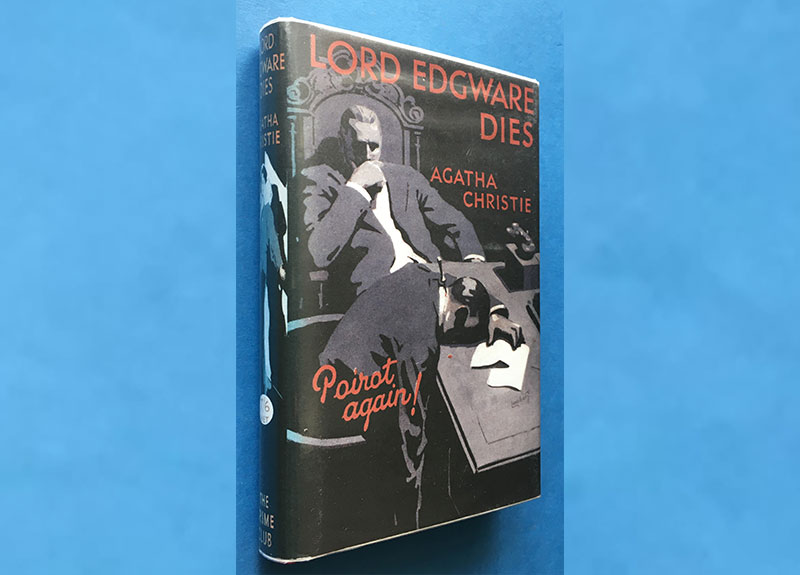
It has been some time since I read an Agatha Christie, the plot of which I cannot remember. So, I was delighted to find on the shelves of a friend Lord Edgware Dies, which I had a vague memory of, but no certainty about who had done it.
When I read it, I found that my memory of who was probably the killer was correct, but I could not be certain and the red herrings Christie threw in were so diverting that until almost the very end I wondered if I had been wrong.
The plot is very simple. Jane Wilkinson, who is married to Lord Edgware, tells him that she is desperate for a divorce since she is in love with a very proper Anglo-Catholic peer, Lord Melton, but Edgware refuses to divorce her. She asks Poirot to talk to him, which he does, and is surprised to find that Edgware has told Jane he is prepared to give her a divorce. This was, after he had categorically refused, through a letter, which Jane said she had not received.
That night Edgware is murdered, after Jane had been to see him, or so the butler said, and also Edgware’s secretary. But Jane had been that evening at a grand dinner many miles away, where a dozen fellow guests could swear to her presence.
There was a solution however to the mystery of two Jane Wilkinsons, namely a skilful impersonator called Carlotta Adams who, in the opening chapter had impersonated Jane Wilkinson, who had also been at the performance. But when Poirot goes to see her, he finds that she had been found dead on the morning after Edgware had been killed, of an overdose. And in her bag was a gold case, with a strange inscription, that contained the drug, along with a pair of pince-nez.
Her maid said she had written a letter to her sister in America and posted it the previous night. Poirot asks Inspector Japp to get the letter, and a transcript is received from America, and in it the name of Edgware’s nephew Ronald Marsh is mentioned; he had taken Carlotta to dinner after her performance, with which the book opens, and had then set her a challenge. Japp arrests Marsh, but Poirot is not happy and asks for the original of the letter, which the sister sends him. That shows that a page is missing, and the tear is obvious, though that raises the question as to why it had not simply been cut.
Matters are further complicated by the fact that Marsh had gone in a taxi to the Edgware house, along with Edgware’s daughter Geraldine, in the interval of an opera which had previously seemed to provide them with cast iron alibis. Geraldine had gone in to fetch her pearls so that Marsh could raise money he needed, and thus had an opportunity to kill Edgware, as did Marsh, for the driver said he had got out of the taxi while waiting and gone into the house.

Agatha Christie
Marsh explained why he had gone to the house on the night of the murder as having followed Bryan Martin, an American actor, who had been in love with Jane, whom he saw go into the house with a key. But there was no one visible when he entered, and Geraldine almost immediately came down and they left together. And Martin too has become an object of suspicion to Poirot, for he had been to see him before the murders were discovered with a story of being followed by a man with a gold tooth – a story Poirot immediately realized was false when he was asked how old the man was, and was told he was young, for young people did not have gold teeth.
A heap of French money Edgware had got for a trip to Paris was missing, but since Marsh had no need for it after his cousin’s offer of help, Poirot deduces that it must have been taken by the butler, who has disappeared. Christie has stressed that he is astonishingly handsome, unusual in a butler, and Poirot notes a resemblance to Martin, so he thinks the mysterious man going into the house must have been him.
Incidentally, later Poirot assumes that Edgware’s change of mind was because he was involved in some scandal, and I believe Christie intends us to see the cause of this in his handsome butler, though this is not specified.
Meanwhile, Poirot has asked Japp to find out the provenance of the case found in Carlotta’s handbag, and it turns out to have been made in Paris, specially commissioned, and collected by a woman with pince-nez.
But then another murder occurs—that of another guest at the grand dinner, which provided Jane with her alibi. The victim is an actor who had been bemused when Jane, at a lunch, thought the Judgment of Paris referred to the city. He told Hastings he wanted to see Poirot, but was killed before he could get to the appointment. Poirot had rushed there when told about his request, but it was too late.
Meanwhile, Poirot has tried out the pince-nez on Edgware’s secretary, but she could not see through these. It was only a chance remark heard outside the theatre that led him to try them out on Wilkinson’s maid Ellis, a spare pair that had been appropriated for the night of the murders.
Poirot then lays things out, having summoned Martin and told him that he probably suppressed Edgware’s letter, as he had been dropped by then and he did not want Jane to marry another. But after teasing Martin, Poirot says that Jane was in fact the murderer, and she got Carlotta to impersonate her at the dinner while she went to the house and killed her husband. After meeting Carlotta later and checking with her through a call that she had not been rumbled, Jane had gone ahead with the murder – she put veronal into her drink and the case with veronal into the handbag. She forgot to take out the pince-nez she had used earlier to imitate an American. Carlotta had registered as the American in a hotel and Jane had gone to see her, and there they exchanged identities. After seen the letter, she made use of it by tearing off the page that referred to her, and the S of She, so that the person who had challenged Carlotta to impersonate her seemed to be a man.
There is a coda in which Jane, condemned to death, writes to Hastings, still full of pride at her ingenuity hoping she will be remembered.
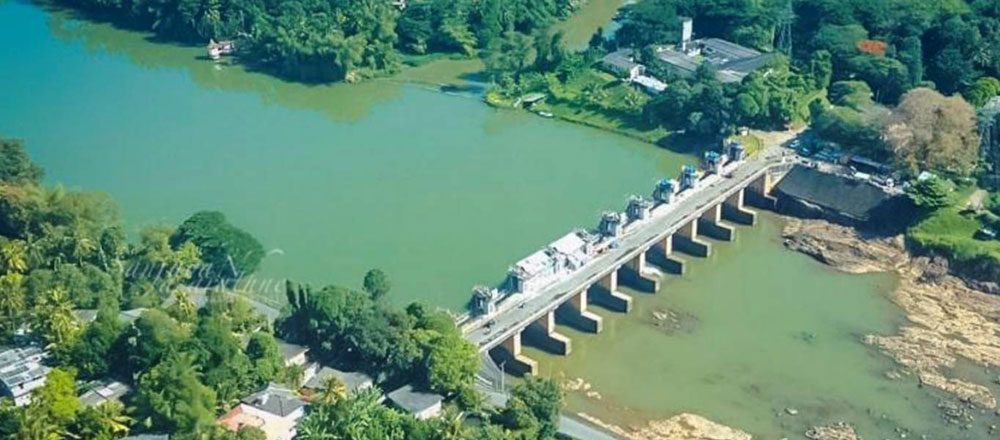
by Prof. O. A. Ileperuma
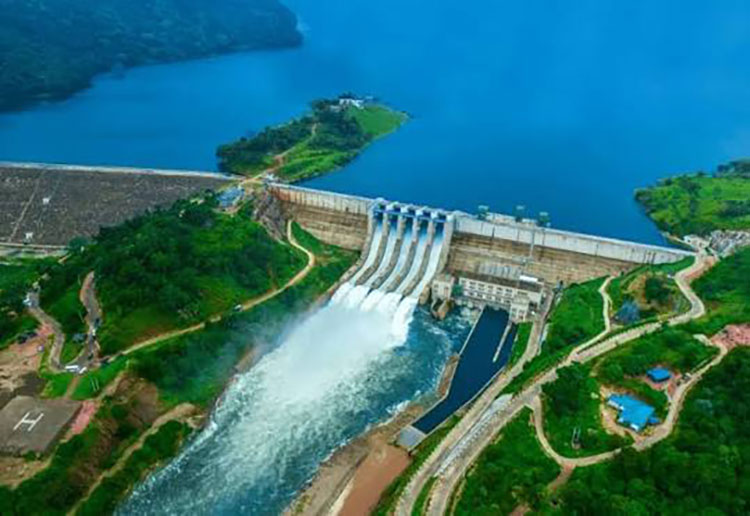
Silting of reservoirs is a major problem today affecting our hydropower production and irrigation systems. The main Mahaweli reservoirs are silted to a considerable extent reducing the water holding capacity of them. Due to poor soil management practices, floodwaters deposit large amounts of silt in these reservoirs. When the Polgolla reservoir was fully drained about two years back, one could see mountains of silt in the lower reaches of the reservoir. A rough estimate is that 50% of the total capacity of these reservoirs has been lost to siltation. This is a serious issue which affects not only power and agriculture but also flood control.
Our ancient irrigation systems ensured that desilting of reservoirs took place under royal decree where all users of the reservoirs were ordered to carry out desilting of reservoirs during the dry season. The clay thus collected was used in making bricks for the construction of great stupas which dot the landscape of our ancient kingdoms. This ensured that the reservoirs had their full capacity filled with water for the next cultivating season. Our ancient kings were clever enough not to construct reservoirs by blocking main rivers such as the Mahaweli. A classic example is the Minipe left canal where they tapped only the surface water of Mahaweli. Even the bigger tanks such as Nuwara Wewa and Parakrama Samudraya were fed with minor rivulets. There were also other ingenious features in the cascade irrigation systems built by the ancient kings, such as mud sluice canals and forest reservations between the reservoirs in the cascade system. These reservations helped trap silt and remove excess nutrients, which could otherwise contribute to increasing salinity as water flowed from one reservoir to another.
-

- Parakrama Samudraya
-
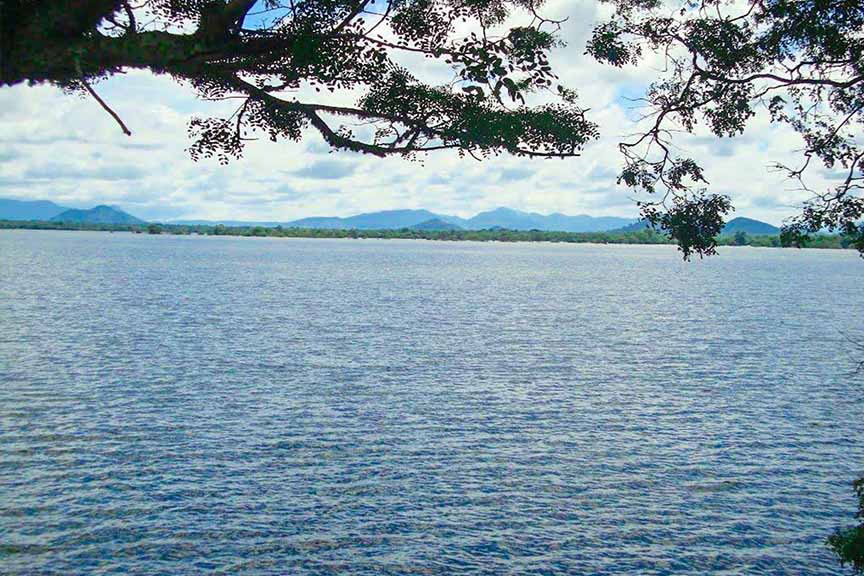
- Kalawewa
-
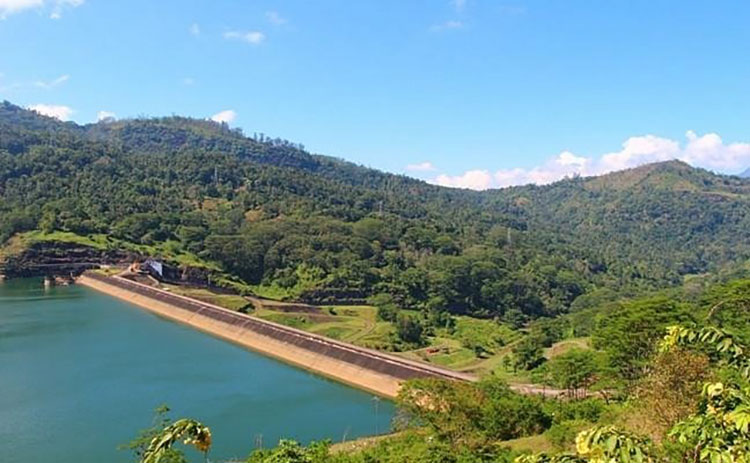
- Kotmale

Victoria
Moragahakanda
A classic engineering marvel is the former Yoda Ela, which carries water from Kalawewa to Nuwara Wewa and Tissa Wewa. It is 87 km long although the straight distance between these points is only about 40 km. The gradient of this canal is about 10 cm per km or 6 inches per mile. Yodha Ela functions as a moving reservoir and feeds about 4,600 hectares of paddy lands. It is a winding canal with about 120 smaller reservoirs on its way. It was constructed during the reign of King Dhatusena around 459 AD and later expanded by King Parakramabahu by connecting more reservoirs to the network. Unfortunately, during the Mahaweli project our modern-day engineers constructed a concrete canal replacing the winding path of this Yoda Ela also called Jaya Ganga. This effectively removed the ability of the old Yoda Ela to remove silt and nutrients. The bank of this Ela has wet zone trees such as jak and areca nut growing well. They take up the nutrients from the flowing stream making the water suitable for irrigation later.
Ancient Mesopotamian civilisations depended on dams constructed along the two main rivers, Euphrates and Tigris. After continuous irrigation of their fields over several thousand years, salinity of the irrigated lands increased making them unsuitable for agriculture. People died due to famine and this clearly illustrates the danger of blocking main rivers for agriculture. There is scientific evidence that the salinity of paddy soils in the Mahaweli C area is increasing.
We saw the devastation caused by Cyclone Ditwah. The sluice gates of the Kotmale Reservoir were opened, and Kandy and Peradeniya were flooded. If the reservoir had had greater storage capacity, couldn’t the opening of the gates have been delayed? This may not be an argument that modern-day engineers would readily accept, and I am not an irrigation expert. These ideas may well be naïve. But most of us tend to think of reservoirs mainly in terms of hydropower generation and irrigation, while their role in flood control receives much less attention. The question therefore deserves serious consideration. Could restoring lost reservoir capacity through desilting help improve our ability to manage extreme rainfall and reduce flood risks?
Desilting our reservoirs should be considered a national priority.
Export diversification – Missing the wood for the trees – Part III
by Gomi Senadhira
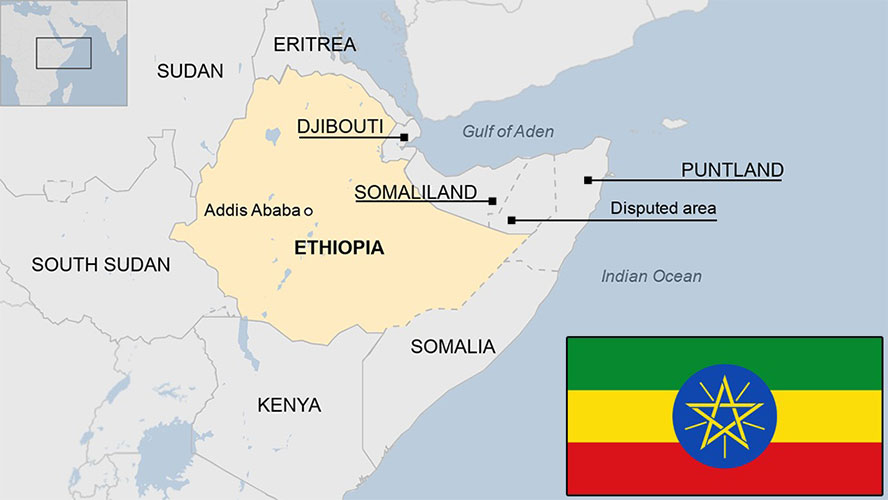
In Sri Lanka, the word “Ethiopia” is often used as disparaging slang to describe individuals or areas experiencing extreme poverty, starvation, or severe economic hardship. This linguistic habit originated in the 1980s with the Western media coverage of the devastating Ethiopian famine of 1983-85. That media coverage shocked the world but also left an outdated and offensive global stereotype that the country is permanently starving. Much has changed since then. By now, with an annual growth rate of around 9%, it is the fastest-growing economy in sub-Saharan Africa. Ethiopia has also emerged as a highly competitive exporter and is challenging not only its competitors in the region but also countries like Sri Lanka. This article is on how Sri Lanka has lost ground to Ethiopia (and a few other countries) in the GCC markets for agricultural and floricultural products.
Sri Lanka – A Pioneer in the Agriculture and Floricultural Market in the GCC
As discussed in Part II of this article, by the mid-1980s Sri Lanka had established a strong foothold in the GCC’s fruit, vegetable, and floricultural market. Geographical proximity and well-established shipping and air links gave Sri Lanka a strong comparative advantage over Southeast Asian and African nations. Thailand, Vietnam, and Kenya were not even in the market. At that time, Ethiopia was experiencing (as BBC news reports described) “a biblical famine”.
The market was not very large, but it was lucrative and growing. Trade Minister Lalith Athulathmudali as well as the Chairman of the Export Development Board, Victor Santiapillai, who visited Kuwait (and the GCC countries), recognised the market potential for these products and encouraged us to continue with our work. The minister was particularly keen to further develop links between the market for these products, exporters, and his Export Production Villages (EPVs). So, it was becoming a successful case not only for export diversification but also for transferring gains from exports directly to rural households.
From Trailblazer to Tailender
As a result, even by the beginning of this century Sri Lanka had a larger market share than most of its competitors from Asia or Africa. But since then, our competitiveness has weakened significantly. The tables below provide a comparative snapshot of Sri Lanka’s performance vis-à-vis Thailand, Vietnam, Kenya and Ethiopia in the GCC market for vegetables, fruits and floricultural products. As illustrated therein, in 2001 Sri Lanka was ahead of Thailand, Kenya and Ethiopia in this small but rapidly growing market. Since then, we have fallen behind Thailand, Kenya and many other countries in that lucrative market. If this trend continues, Sri Lanka will fall behind Ethiopia within the next few years. (See Table 1)
In the GCC market for vegetables (covered in HS chapter 07), Sri Lanka was ahead of most other competitors in 2001. As illustrated in Table 1 , Sri Lanka had failed to develop this market, while Thailand, Kenya, and even Ethiopia had very efficiently increased their market shares. The GCC is a market to which Sri Lanka can supply some vegetables, like cabbages, by sea. It appears Sri Lanka had also failed to exploit this mode of supply.
We can see a similar trend in the market for fruits. Vietnam, Kenya, and Thailand have emerged as major players, while exports from Sri Lanka have staggered on slowly. In this segment, Vietnam has emerged as a leading player during the last twenty years and the GCC imports from Viet Nam have shot up from US$44 thousand in 2001 to US$346 million by 2024. In part one of these articles, I discussed the remarkable increase of jackfruit exports from Vietnam “…just $3 million in 2015 to an impressive $236.8 million in 2023” while most of our jackfruit production rots under the trees. This explains how countries develop their markets, geographically and product-wise. (See Table 2)
Sri Lanka’s performance has been weakest in the market for floricultural products (HS Chapter 06), which groups live trees, cut flowers, and ornamental foliage. When we first entered the market in the 1980s, the market was dominated by the Netherlands, and Kenya and Ethiopia were not even in the market. At that time, we identified the Gulf states as a market where Sri Lanka could have a dominant presence due to geographical proximity. Even in 2001, Sri Lanka was ahead of Kenya, Ethiopia, and Thailand. But by now, Kenya has emerged as the dominant supplier. Ethiopia is also expanding its market share and is the third-largest exporter. (See Table 3)
Missing the Wood for the Trees
In the mid-1980s, Sri Lanka first established its foothold in the GCC market. Since then, Thailand, Vietnam, Kenya, and even Ethiopia have moved well ahead of us and have become leading players. Why did we lag behind in our export diversification efforts in general and, more particularly, in the GCC market?
The reasons are very clear. After the initial attempts in the 1980s and early 1990s, Sri Lanka has not been proactively involved in identifying, developing, and promoting new products and markets, or protecting and further developing new markets already established. The focus has simply been on traditional exports: tea, coconut, cinnamon, and garments, while other products were almost ignored. In essence, we have been and continue to focus intensely on a narrow group of products and markets, and we have lost sight of the bigger picture.
(The writer can be reached at senadhiragomi@gmail.com)
-

 Sports2 days ago
DDS set to lose Test captaincy
-

 Latest News7 days ago
Tharanga creates history with Diamond League crown in Brussels
-

 Features6 days ago
After the parade: What a traffic OIC’s walk-out tells us
-

 News7 days ago
Dispute which triggered listed company director being detained at BIA resolved
-

 Editorial6 days ago
Arrests as theatre
-

 News5 days ago
Thailand shuts door on undesirables from Sri Lanka
-

 Latest News6 days ago
Harshitha’s composed knock seals Sri Lanka’s semi-final berth
-

 News6 days ago
‘Choka Malli’ slips out of country before travel ban