
Features
JRJ encapsulates his autobiography in a 1992 post retirement book


by JR Jayewardene
(Excerpted from Men and Memories)
I was born on 17 September 17, 1906. My father was E.W. Jayawardene, K.C. and a Judge of the Supreme Court and my mother was Agnes Helen, the daughter of Tudugala Don Philip Wijewardene and his wife Helena Wijewardene. My maternal grandmother is remembered as a pious and noble lady who made munificent gifts for the restoration of the Kelaniya Raja Maha Viharaya, the 2,500 years old Sacred Buddhist shrine.
I was affectionately called ‘Dickie’ and was taught English and music by a Scottish governess, Miss Monro. At an early age I learned to play the piano. I entered the Royal College in 1911 and pursued my studies there till 1925 when I left Royal and entered the Ceylon University College. At the Royal College I was awarded the prize for general merit and the best speaker in 1925, the year in which I passed the London Matriculation Examination. I boxed, played cricket, rugger and football for the School, and played for the winning team in the annual Royal-Thomian encounter in 1925. At the University College I studied English, Logic, Latin and Economics.
In 1928 1 joined the Law College and the following year I was awarded the Hector Jayewardene Gold Medal for Oratory and the Walter Pereira Prize for Legal Research. In 1932 1 took my oath as an Advocate of the Supreme Court. The most symbolic act of my unconventional conduct as a law student was to hang of Mahatma Gandhi’s portrait in the parlour of the Law College. This sensational episode gained me much publicity at that time, for it amounted to a challenge thrown at the British Raj.
Born to a family of eminent lawyers whose private lives were played out in the public arena, I was propelled into politics in my youthful years. For a while my attention was directed to the Trade Union Movement launched by A.E. Goonesinha and in 1930 I addressed a meeting of Tramcar workers who were on strike.
Being the lawyer son of a lawyer father it did not take long for me to be recognized at Hulftsdorp. I never deviated from the high code of ethics of this learned profession. A voracious reader, I preferred history, current affairs, biography and political science to pure literature. The dynamic national liberation movement of India under the guidance of Mahatma Gandhi and his band of able lieutenants headed by Nehru was a source of inspiration to me.
I linked my fate with Elina B. Rupasinghe on February 28, 1935. Her affluence enabled me to pay more attention to politics and relegate law into the background although I was making my mark in the legal profession. We have one child, Ravindra, who qualified and worked as a Commercial Pilot in the Air Lanka untill ill-health compelled him to resign. He was a champion marksman representing his country in many International Games and led the Sri Lankan team to the Tokyo Olympics in 1954.
The Ceylon National Congress was dominated by politicians of Victorian vintage who followed the principles of liberal democracy of the era of Gladstone and Disraeli. The masses were either apolitical or showed total indifference to national problems. But in the neighbouring Sub-continent of India a mass movement was in full swing. Mahatma Gandhi, the frail ascetic, was the general who planned the Swaraj Movement, and his technique of Satyagraha or the power of Truth was the basis of the Indian freedom struggle. I was much impressed by the role played by Pandit Nehru for whom I developed a great affection.
In the Ceylon National Congress, I built up a significant relationship with D.S. Senanayake and the other elder statesmen. Always receptive to new ideas, a band of young radicals with myself bent our energies to transform the Ceylon National Congress into a mass political organization similar to the Indian National Congress. When I became the Joint Secretary of the Ceylon National Congress in 1940 with Dudley Senanayake we took steps to restructure and provide muscle and clout to this political forum which was dominated by members of elite families and representatives of the legal profession. We drafted a new Constitution and made great efforts to broadbase the organization. I led the Ceylon National Congress delegation consisting of J.E. Amaratunga and P.D.S. Jayasekare to the Annual Session of the Indian National Congress held at Ramgarh in March 1940.
The Ceylon National Congress nominated candidates for the Colombo Municipal Council elections in 1940 and I was elected as Member of the New Bazaar East Ward. At this time a group of young Marxists who had returned from English universities were busy organizing the urban working class and were active in rural areas as well. I cherished the friendship of Marxist intellectuals but I was not prepared to accept any ideology based on violence or which went against our national ethos, or conflicted with the ethics and tenets of Buddhism.
When I sought election to the State Council for the vacant seat of Kelaniya created by the resignation of Sir D.B. Jayatillake I had to face a formidable rival in E.W. Perera, the doughty freedom fighter. On April 18, 1943, I won the Kelaniya seat by a majority of 10,195 votes. On May 25, 1943, 1 took oath as Member of the State Council for Kelaniya and before long I became a recognized spokesman on major national issues. I introduced a bill in the State Council to make Sinhala the official language of Ceylon, later amended to include Tamil also.
Though immersed in national politics I also took a keen interest in Kelaniya. I never forgot to nurse the electorate and before long many rural hospitals, dispensaries and schools were built and numerous roads were constructed in the Kelaniya electorate which stretched from the banks of the Kelani River to the heartland of Siyane Korale. The State Council was no Mecca of mediocrities for it had a galaxy of brilliant young legislators and I worked hand in hand with them.
A founder member of the United National Party, which was formed in 1944 to contest the General Election of 1947, 1 was a follower of D.S. Senanayake and was offered the portfolio of Finance in the first Cabinet. Within a short period I understood the essentials of Public Finance and the first Six Year Plan was drawn up under my guidance. I had the reputation of being one of the hard working Ministers in D.S. Senanayake’s Cabinet, and I was able to get the best out of my subordinates as well as my advisers.
I become known in the international scene in September 1951 when I opposed Soviet Foreign Minister Andrei Gromyko’s attempt to sabotage the Japanese Peace Treaty at San Francisco to the infinite relief of war-torn Japan. The sponsorship of the Colombo Plan also made me known in the international arena.
In Sir John Kotelawala’s Cabinet I was assigned the portfolio of Food and Agriculture. Before long storm clouds were gathering over the political horizon and the popularity of the United National Party slid down as the resurgent nationalist force with the accent on Buddhist revival and enthronement of Sinhala as the language gathered momentum.
In the General Elections held in April 1956 the party which ruled Ceylon since independence was beaten by the Mahajana Eksath Peramuna, headed by S.W.R.D. Bandaranaike. The UNP was reduced to a mere rump of eight seats and I was one of the many casualties in this electoral holocaust.
This reminds one of a remark in Winston Churchill’s War Memoirs, written about the great French Prime Minister Clemenceau who was rejected by the electorate. Churchill said, “Ingratitude towards their Leaders is a hallmark of a cultured race”. Perhaps he was making a veiled allusion or an insinuation against the British electorate which rejected his party at the polls after the Second World War. Kelaniya electorate rejected its representative in Parliament. I had done much for the electorate but was defeated by an intruder in April 1956.
The thinking in the country was that the UNP was a spent force which had outlived its purpose. Sir John was not inclined to attend Parliament and as a political party the UNP became rudderless and began to drift in a troubled sea of uncertainty. Dudley Senanayake had left the Party. I did not withdraw into a political wilderness. I advised my defeated friends that “In defeat, defiance should be the slogan.”
I was able to discern the dilemmas which the nation faced and assessed correctly the incompetence and inability of the new regime to deliver the goods. With neither an organization, ideology nor a program, it was destined to an untimely end. The Mahajana Eksath Peramuna possessed seeds of disintegration within itself. The `Sinhala Only’ Act was passed with much fanfare and the canker of communalism began to eat into the body politic of Ceylon. Very soon problems began to pile up and the Mahajana Eksath Peramuna began to tear at the seams.
The time was ripe for a review of the UNP’s future, the only party in the opposition based on principles of democracy and it fell to my lot to undertake this task. With a band of courageous and faithful followers I organized mass meetings and rallies throughout the country and took steps to correct the image of the UNP which was considered a conservative, capitalist party. Very soon I was able to pick up the broken pieces of the UNP and to amend them. Thus I was able to rebuild the fortunes of my party and the UNP was ready to face its adversaries in an electoral combat.
I championed the rights of the common man in Ceylon during the dark days of the MEP regime. When President, I was questioned by the ‘Leaders’ magazine as to my single greatest accomplishment during my political career. I mentioned that the most remarkable and fruitful thing I had achieved was keeping my party together and reviving it after the defeat in 1956. It is my firm conviction that Democracy lives in Sri Lanka today because of that.
The United National Party was prepared to stage a come back in 1960 mainly due to the Herculean efforts made to re-fashion and revitalize it. I regained my Kelaniya seat but it was a Pyrrhic victory for the UNP. Dudley Senanayake had rejoined the Party and his government lasted only for three months and the formidable Opposition was able to defeat it. In the General Elections of June 1960 the pendulum once more swung in favour of the SLFP, but the UNP was a sizeable party in the opposition and a force to be reckoned with in the country.
Dudley Senanayake became the Leader of the Opposition and I directed the assault on the establishment. The Marxists joined the SLFP in a grand coalition and proposed a bill to nationalize the Press. This attempt was foiled and the coalition government was defeated on a motion of ‘No-Confidence’.
In the General Election held in March 1965 the UNP defeated the coalition. I became the Minister of State. I rendered assistance to Premier Dudley Senanayake to launch the ‘Green Revolution’. I did much to develop tourism in Sri Lanka and the tourist boom we are witnessing today stems from those policies. I am an ardent environmentalist. I caused areas like the Horton Plains and Laggala to be declared as nature reserves. Though much was done to increase food production, yet the electorate once more gave a massive mandate to the United Front in the General Elections held in 1970.
There was much youth unrest in the country specially among educated young men from rural areas for want of employment opportunities and they backed the United Front. Though reduced in electoral strength the UNP with me as the Leader of the Opposition had to fight many a battle in the parliamentary arena and outside. The armed insurrection of those who were disillusioned with the United Front Government brought in its wake a plethora of problems. I was quite sincere when I wanted to render assistance to the government which was in great difficulties.
My attention was directed to the problem of the ‘functions of the Opposition’ in a parliamentary democracy or specially in a developing country like Sri Lanka. I questioned whether it was always necessary for the Opposition to oppose the party in power. My move to cooperate with the Government was vehemently opposed by a powerful section of the UNP.
Very soon cracks began to appear in the United Front Government and rule by ‘Emergency’ became the order of the day. Sri Lanka was in a total mess in every way. The protracted ‘Emergency’ coupled with the short-sighted economic policies of state ownership it pursued, paved the way for its inevitable collapse.
After the death of Dudley Senanayake, I was unanimously elected as the Leader of the UNP on April 26, 1973. I streamlined the party organization and built up a strong party and was prepared to confront the SLFP which disregarded the democratic rights of the people. By the strategy which I planned and executed, the UNP was in a position to deal a crippling blow on the SLFP and all the forces of the Left in the July 1977 election.
I took oath as Prime Minister on July 23, 1977. In a series of new measures which were a great wrench away from the short-sighted policies of the previous regime we swept away the muck and ineptitude of the former regime in a short time in a massive effort of cleaning the Augean stables. We refashioned a new Constitution, and a new page in the history of Sri Lanka was turned when I took oath of office as the first Executive President of Sri Lanka in February 1978.
We caused a major overhaul of economic and political priorities and paved the way for a liberalized, open economy and dismantled the previous government’s array of quotas, import restrictions and subsidies. These were some of the achievements after I became the Executive President. The accelerated Mahaweli Development Program which my government started has brought about a transformation in a vast area of the Dry Zone where a new civilization in being created.
The first Presidential Election was held on 20 October 20, 1982 and I won by a majority of over nine lakhs. In the first referendum held in Sri Lanka on 22 December 22, 1982, I received a mandate from the people to extend the term of Parliament in order to continue with the Development Program launched by me and the response of the people has continued to be positive.
It was my destiny to steer Sri Lanka through one of the traumatic periods of its history during the eighties. The very peace and tranquility of the island-nation was torn by violence and ethnic strife. It was during this period that the Sri Lanka-India Accord was signed between Prime Minister Rajiv Gandhi and myself.
Now I am no longer in active politics, but often watch the world around me, gripped by senseless violence born of suspicion, fear and by not understanding the perceptions and positions of one another in both the national and the international spheres. As I watch the events and personalities in these events, I hope e that the Buddhist spirit of compassion would prevail, and peace return to our island once again.
In this account of Men and Memories, which is not strictly an autobiography, I seek to present some autobiographical recollections and reflections which were inseparable from my life, and for over more than half a century of work. This I do in the hope that the contemporary and future generations would be enabled to understand the Agony and Ecstasy of Sri Lanka and her people with more insight, understanding and compassion.


Series: The greatest digital rethink, Part V of V – Series conclusion
Five instalments. Five levels of education. One recurring pattern: the countries that ran the experiment are retreating, the countries that watched them are still paying the entry price. This final column asks the question the international education community has been carefully avoiding: does anyone actually learn from anyone else, or do we just take turns making the same expensive mistakes?
What five parts told us
Let us briefly take stock. In Part I of this series, we traced the arc of three decades of digital enthusiasm in education, from the early computer labs of the 1990s through the tablet explosion of the 2010s, to the pandemic acceleration and the emerging backlash that defines the present moment. In Part II, we watched Sweden take tablets away from preschoolers who should never have been given them in the first place, and Finland legislate to return the pencil to its rightful place in the primary classroom. In Part III, we confronted the paradox at the heart of secondary school de-digitalisation: governments triumphantly banning the phone in the student’s pocket while quietly expanding the data systems that monitor their every digital interaction. In Part IV, we sat in the university exam hall, a room that had been pronounced redundant 20 years ago, and watched it fill up again with students writing with pens, because the large language models (LLM) like Chat GPT, had made every other form of assessment untrustworthy.
The inconvenient asymmetry
There is a concept in international education research, ‘asymmetric correction’, that describes this phenomenon with academic precision. It means, in plain language, that the systems with enough money, data and institutional capacity to discover that an experiment has gone wrong can afford to correct it. The systems without those resources cannot, and often do not even know the correction is needed until the damage is visible in their own classrooms and their own assessment results.
This is not merely an abstract inequity. It has a specific mechanism. The countries now de-digitalising, Finland, Sweden, Australia, France, the UK, have had 20 or 30 years of experience with school digitalisation. They have run multiple cycles of national assessments. They have PISA data going back decades. They have teacher unions vocal enough to flag classroom deterioration before it becomes a crisis. They have the research infrastructure to connect a policy change to an outcome measure and draw a conclusion. When their scores drop, they investigate. When the investigation points at screens, they act.
The evidence that was always there
One of the more unsettling conclusions of this series is that much of the evidence driving the current de-digitalisation wave was available considerably earlier than the policies it has inspired. The finding that handwritten notes produce better conceptual understanding than typed ones was published in 2014. The OECD’s analysis showing that more computers do not produce better learning outcomes appeared in 2015. UNESCO’s concerns about platform power and datafication in education have been articulated consistently for years. The distraction research, documenting that students with open laptops in lecture halls perform worse, and drag their neighbours down with them, has been accumulating for well over a decade.
None of this stopped the rollout. The tablets arrived in the Swedish preschools. The 1:1 device programmes expanded. The learning management systems embedded themselves. The AI proctoring tools were procured and deployed. Evidence that gave pause was routinely absorbed into a narrative about implementation, the problem was not the technology, it was how it was being used; give us better training, better platforms, better connectivity, and the results will follow. The results, in many cases, did not follow. But by the time that was clear, the infrastructure was in place, the contracts were running, and the political cost of admitting the bet had been wrong was prohibitive.
What changed was not the evidence, it was the political permission to act on it. PISA 2022 delivered declines dramatic enough to be impossible to attribute to anything other than something systemic. UNESCO issued what amounted to an institutional mea culpa. And a sufficient number of teachers, in a sufficient number of countries, were by then willing to say publicly what they had been saying in staffrooms for years: that the screens were not helping, and in many cases were actively in the way.
What a responsible global policy would look like
This series is not a manifesto against technology in education. It has never argued that. Screens are indispensable tools, for accessing information, for enabling collaboration across distance, for serving students whose accessibility needs require digital solutions, for supporting the administrative and logistical complexity of modern educational institutions. The argument is not against technology. It is against the thoughtless, evidence-free, vendor-driven acceleration of technology in contexts where it undermines the very foundations it is supposed to strengthen.
A responsible global education policy would, at minimum, do several things that the current system conspicuously fails to do. It would require that the evidence base for large-scale digital procurement be genuinely independent of the vendors supplying the technology. It would insist that the learning from early-adopter systems, including the learning about what went wrong, be actively communicated to late-adopter systems before, not after, they make the same investments. It would treat the question of appropriate technology use at different ages and in different pedagogical contexts as a matter of ongoing empirical inquiry, not a settled ideological commitment to ‘more is better.’ And it would hold to account the international organisations and development banks that have promoted digital solutions to educational problems without adequate attention to long-term cognitive and social outcomes.
None of this is technically difficult. The knowledge exists. The research is available. The lesson is sitting there in the PISA data, in the Swedish preschool curriculum reversal, in the UK university exam halls filling up with students holding pens. The question is purely one of political will, and of whether the global education community considers it acceptable to keep selling a model it is quietly dismantling at home.
Who decides what technology is for?
Beneath all the policy detail in this series lies a question that is fundamentally political rather than technical: who gets to decide what role technology plays in education, and in whose interest do those decisions get made? The answer, across the period this series has covered, has too often been: vendors, with governments following at a respectful distance and parents and teachers arriving to the conversation after the contract is signed.
De-digitalisation, for all its imperfections, its occasional moral panic, its selective use of evidence and its tendency to become a political signalling exercise, represents something important: a reassertion that educational technology is a means, not an end, and that the people who should determine how much of it to use are educators, researchers and communities, not quarterly earnings reports. The fact that Finland chose to legislate, that Sweden chose to buy books instead of tablets, that Queensland schools now require phones to be away for the day, often collected, or switched off, from the moment students arrive and found their playgrounds transformed, these are acts of pedagogical agency. They are an insistence that schools are for children, not for platforms.
A final word
There is nothing wrong with technology in education. There is something very wrong with the assumption that more technology is always better, and something worse with the global system that allows wealthy nations to learn that lesson expensively, correct it quietly, and then export the uncorrected version to everyone else.
The pencil did not disappear because it failed. It was sidelined because screens arrived with better marketing. It is coming back, in Finnish classrooms, in Swedish preschools, in Australian playgrounds, in university exam halls, not out of nostalgia, but because 30 years of evidence have converged on an uncomfortable truth: some things, it turns out, require your full attention, your physical hand, and the irreplaceable cognitive effort of a human being working without a shortcut.
That is not a retreat. That is a reckoning. And the only question left worth asking is whether the rest of the world will get to benefit from it before they have to discover it for themselves.
SERIES COMPLETE
Part I: From Ed-Tech Enthusiasm to De-Digitalisation | Part II: Phones, Pens & Early Literacy | Part III: Attention, Algorithms & Adolescents | Part IV: Universities, AI & the Handwritten Exam | Part V: Who Is Going to Tell the Rest of the World?

Artificial intelligence (AI) in healthcare has come to stay and is a well-recognised development over the last decade or so. AI has now progressed on to even the ability to execute quite a few tasks and manoeuvres that were once the sole duties of doctors. Certain AI programmes are now designed to make tricky diagnoses, offer mental counselling, detect drug interactions, read and diagnose images, forecast results, and review scientific articles, to name a few amongst other capabilities. As the aptitudes of AI increase, the roles of doctors are likely to change. In the future, there is a real possibility that physicians would increasingly be placed in supervisory roles in semiautonomous systems, while retaining responsibility but with reduced independence.
Philosopher Walter Benjamin, in the 1930s, wrote that photography and cinema would have a telling effect on paintings and painters. It was argued that the introduction of visual images would render painting and painters quite obsolete. Many belittled the artistic value of photographs, just as today, many ask whether AI can truly understand illness or empathise with discomfort. The opponents of photography theorised that original works of art, such as paintings, had a so-called aura and that there was something special about an original artwork compared to a reproduction as a photo image, and that the painting echoed its singular history and unique trajectory through time, space, and social meaning.
Today’s doctors have something comparable. Their professional authority was grounded in their unique training, the practical wisdom that they had accrued, their face-to-face presence with patients, and their nuanced clinical judgment. Like an original painting, medical expertise appeared singular and inseparable from the clinician who exercised it rather than from the tools or institutions that supported the physician’s practice.
Now enters the latest AI initiative in healthcare. As documented in the Journal of the American Medical Association (JAMA) on the 13th of April 2026, it is the very first AI DRUG PRESCRIBER. It originated in the state of Utah of the United States of America, which is the 45th state admitted to the Union on the 4th of January 1896, and is well-known for its unique geography, including the Great Salt Lake and its “Mighty 5” national parks: Zion, Bryce Canyon, Arches, Capitol Reef, and Canyonlands.
In January 2026, the State of Utah publicised a first-of-its-kind partnership with an AI company to develop an AI-based programme to prescribe medications without physician involvement. The AI prescriber package sold by the company Doctronic is claimed to conduct a “comprehensive medical assessment” that “mirrors the clinical decision-making process a licensed physician would follow“. Originally, it was intended to focus on prescription renewals, and the software is designed to prescribe almost 200 drugs, including corticosteroids, statins, antidepressants, hormones, and anticoagulant agents. It has the potential to develop into an autonomous system that could even provide original prescriptions without the involvement of doctors.
There are perceived advantages to AI prescribing in a world facing shortages of primary care physicians, as well as certain specialists. The public health goal is to make sure that patients have access to safe, effective drugs and continue receiving them for as long as it is appropriate. There are documented scientific studies in Western countries on non-adherence, failure to take the drugs of a first prescription, and failure to get refill prescriptions. True enough, AI could reduce pervasive medication errors, enhance process efficiency, and free physicians to focus on complex diagnostic tasks or human-to-human interactions.
Yet for all that, technology-driven revolutions can also cause damage, create waste, and even destabilise the medical connection. They could reduce the patient-clinician encounters and substantially reduce the prospects for physicians to spot other problems and for patients to raise anxieties and ask questions. Doctors have to go through a rigorous process of training and demonstration of clinical fitness to be allowed to practice medicine. AI prescribers face no equivalent safety process. AI companies generally do not openly reveal the precise operational details of the software’s abilities to make medical decisions. In the Utah deal, generalisations were offered, including that the AI prescriber is “trained on established medical protocols,” and that its algorithm continues to progress through “feedback loops.” However, they are far from the absolute detailed guarantees that training of a physician offers.
In the American System of Governance, most states have long maintained foundational laws for dispensing medicines, positioning licensed physicians and pharmacists as essential caretakers and even as gatekeepers. Federal Law requires that any drug that “is not safe for use except under the supervision of a practitioner licensed by law” must be dispensed only “upon a written prescription of a practitioner licensed by law“. AI prescribers are not licensed “practitioners” of medicine, and here, Utah has waived state requirements. It has waived State Laws for businesses with novel ideas deemed potentially beneficial to consumers.
Under the main FDA statute, an AI prescriber comes under an “instrument, apparatus, implement, or machine clearly intended for use in the cure, mitigation, treatment, or prevention of disease,” which makes it an FDA-regulated medical device. The 21st Century Cures Act of 2016 created exemptions for software involving administrative support, general wellness, or electronic record storage. For clinical software, the FDA has generally exercised enforcement discretion only for tools that aid physician decisions. By design, AI prescribers remove the physician, meaning that FDA oversight is required.
However, in the Utah deal, the company has apparently not attempted to approach the FDA about the technology, thereby working on the presumption that the FDA does not regulate the practice of medicine. True enough, Federal Law and the FDA itself express that the FDA does not regulate the practice of medicine. However, Federal Law also emphasises that medical devices and drugs must be legally sold and used within a legitimate patient-clinician relationship. Federal Law does not permit the replacement of physicians with unlicensed computers.
The scientific aspects of the conundrum imply that the current political administration appears to be disregarding some of the federal oversight. Since its 2025 inauguration, the executive branch of the current administration has rescinded previous AI governance orders, encouraged the removal of policies that might impair innovation, and issued an executive order aimed at reducing federal funds for states that strictly regulate AI. The USA Commissioner of Food and Drugs has clearly emphasised the need for AI innovation. Given this antiregulatory environment for AI, the prospect of federal intervention against initiatives like AI prescribers appears to be quite slim.
As federal and state regulators retreat, private parties have stepped in. The Joint Commission (TJC), a private, non-profit organisation that functions as the primary accrediting body for healthcare organisations, recently released non-binding guidance urging healthcare organisations to establish internal AI governance structures and rigorously measure outcomes. The success of AI prescribers will ultimately depend on the acceptance of health systems, which should demand robust evidence of safety and effectiveness, optimally in the form of clinical trials.
Tort law, a branch of civil law that deals with public wrongs such as situations where one person’s behaviour causes some form of harm or loss to another, remains a potential avenue for addressing patient harm because Utah’s agreement leaves such remedies intact. However, injured patients face significant hurdles. Courts will have to determine whether AI could be held to the same standard of care as a human physician. A product liability lawsuit would typically require a plaintiff to show that there was a reasonable alternative design, a challenge for AI black-box technologies. Furthermore, companies might argue that patients “assumed the risk” of using the AI prescriber. However, that is not a complete defence.
AI prescribing would be safest under concurrent state and federal oversight. Yet Utah has granted a state waiver, and FDA compliance has not been demonstrated. Other companies may take the lesson that they can bypass federal safety standards, and they may race into the market to ensure they are not left behind.
Some examples beg for caution. The FDA fell behind in regulating flavoured e-cigarettes, which are now ubiquitous and have contributed to a youth e-cigarette epidemic, which has even reached Sri Lanka. The sheer scale of the unauthorised market and the subsequent legal tactics used by tobacco companies turned premarket requirements into a mere technicality. If AI prescribing becomes the industry standard before safety and liability frameworks are established, the power problem may render future regulation infeasible.
Although AI offers the promise of increased efficiency and expanded access, the evasion of legal obligations by early movers raises profound concerns. The company that is marketing the AI Prescriber is operating in a unique legal “grey zone” that has sparked intense debate among regulators and medical associations.
Incorporating AI into modern health care must be evidence-based and responsible. Physicians and health systems should insist that AI technologies should not be allowed to bypass long-standing and proven legal guardrails governing medical products. That needs to be the axiom that should apply not only to the Western nations but to the whole wide world.
by Dr B. J. C. Perera
MBBS(Cey), DCH(Cey), DCH(Eng), MD(Paediatrics), MRCP(UK), FRCP(Edin), FRCP(Lond), FRCPCH(UK), FSLCPaed, FCCP, Hony. FRCPCH(UK), Hony. FCGP(SL)
Specialist Consultant Paediatrician and Honorary Senior Fellow, Postgraduate Institute of Medicine, University of Colombo, Sri Lanka.
An Independent Freelance Correspondent.
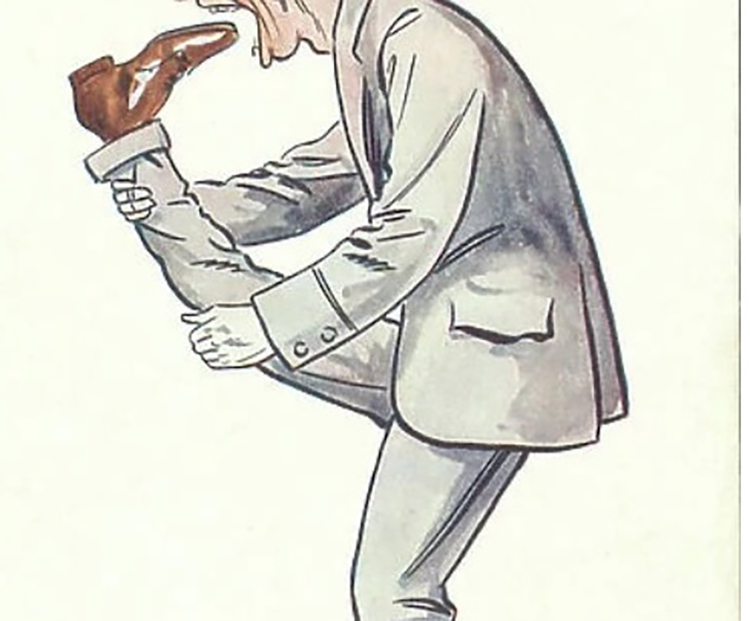
The Geathiswaran Chapter:
 Dr. Ganesanathan Geathiswaran, Sri Lanka’s Deputy High Commissioner in Chennai is in hot water, dragging in with him the Foreign Ministry as well as the Sri Lanka government into a worthless controversy. It stands as a classic example of a misplaced political appointment to a sensitive public position paid for by hapless Sri Lankan taxpayers. And that too by a government that came to power promising not to politicise appointments.
Why would a meeting between a Sri Lankan diplomat and a group of fishermen in South India in the last week of March 2026 be controversial? After all, illegal fishing in Sri Lankan waters by South Indian fishermen from the Tamil Nadu area, which negatively impacts the livelihoods of mostly Tamil-speaking Sri Lankan fishing communities, is a perennial problem that neither Sri Lankan nor Indian governments have been able to resolve. This is also a consistent political issue in Tamil Nadu politics. In this context, a Sri Lankan diplomat meeting local fishermen might well be within his job description. But the issue is how and where such a meeting should take place. The bottom line is that it should not be a public event.
Speaking to The Hindu on 5April 2026, Geathiswaran insisted his presence in the meeting was a “routine visit” and that the event was not organised by any political party. He also said, “I’m not here to do politics” and “I have nothing to do with politics.” He further insisted, “I did not take part in any political campaign. It was in an open area along the seashore. The meeting was not on a stage and in a public area.” These utterances show both Geathiswaran’s naivety, woeful lack of experience and understanding of the nature of politics in the region where he is our country’s chief diplomat.
Be that as it may, let us look at the optics and substance of the said event. According to information circulating in the media in both Sri Lanka and India, the Deputy High Commissioner attended a meeting with local fishermen in Puducherry. It was not a closed-door meeting. It appears, the Sri Lankan diplomat was invited to the event or it was coordinated by Jose Charles Martin, the leader of the newly formed political party, Latchiya Jananayaga Katchi (LJK). Though launched only in 2025, the LJK has been making inroads into Tamil Nadu politics mostly funded by the business interests and funds of Martin’s father, the well-known lottery tycoon, Santiago Martin. LJK joined the BJP-led NDA in the ongoing Puducherry Assembly Elections of 2026. Moreover, as indicated in the photographs in circulation, one can easily see the presence of several BJP politicians including V. P. Ramalingam, BJP’s Puducherry president and a candidate in the Raj Bhavan constituency.
Members of Martin’s family are craftily aligned with different Tamil Nadu political formations. Jose Charles Martin himself is contesting the Puducherry electoral area as a BJP ally, while his mother is contesting from the AIADMK, and his brother-in-law is contesting as a candidate of the Tamilaga Vettri Kazhagam (TVK) party.
Therefore, Geathiswaran’s assertion that the event was not organised by a political party is blatantly false. Further, the event does not become non-political just because of the absence of a stage just as much as a stage does not provide political attributes merely because of its higher elevation. It is unacceptable that a diplomat hand-picked by the Sri Lankan President for the important station of Chennai, thereby depriving the appointment of a senior career diplomat with years of work experience and awareness of political nuance and optics, can be allowed to be this naïve.
It is in this context that Pawan Khera, a senior leader of the Indian National Congress, complained in an X post on 4 April tagging the Indian External Affairs Minister noting that Geathiswaran’s participation in the meeting was “a gross violation of the 1961 Vienna Convention on Diplomatic Relations”, according to which “diplomats ‘have a duty not to interfere in the internal affairs of that State.’” He also noted in his post that the diplomat was invited by the leader of the LJK and also referred to the presence of senior BJP politicians. Leaving aside the overemphasis of the Vienna Convention, which in this instance makes no sense, the issue at hand is the complete lack of common sense on the part of the Sri Lankan diplomat that allowed this controversy to arise in the first place. Despite his insistence on not engaging in politics, which in the case is likely true, this was very clearly a political event, politically conceived, perceived and packaged, organised by a political party, and conducted in the presence of allied politicians who were contesting in a local election. As a foreign diplomatic representative, Geathiswaran should have the cerebral wherewithal to make the distinction or at least seek guidance from his superiors at the Foreign Ministry in Colombo.
Diplomats need not shy away from controversy if it makes sense and benefits the nation. But the incident under reference is purely nonsensical from any perspective. This brings me back to Geathiswaran’s appointment as Sri Lanka’s Deputy High Commissioner in Chennai, itself. What unique experiences did he bring to the post? Of course, he is Tamil-speaking. So are hundreds of thousands of other citizens in the country including potentially competent, well-trained, intelligent and experienced career diplomats. I am not saying that political appointments are necessarily unfavourable, though not ideal unless they bring to the service expertise that the Foreign Service does not have. But what quality and qualification does Geathiswaran possess for the position that is lacking in a career foreign service officer?
Does he bring in access to the different segments of Tamil Nadu political landscape that no one else has? If so, should this controversy not have arisen in the first place, owing to the good connections to the entire political spectrum? In short, he brings absolutely nothing to his office and the country he represents. He also does not have any diplomatic or any other public or private sector experience that would have injected sense and nuance into the present posting. His only qualification is the close political connection to the NPP through family.
This fiasco brings to mind some ideas I presented in 2024 in the government’s own newspaper, the Observer two weeks before the NPP government was established and about one month after President Dissanayake assumed office. Since those conditions still remain valid and the present incident raises the same alarm I raised then, I think it is worth reflecting on them yet again:
“During the last three decades, particularly during the Rajapaksa administration, Sri Lanka’s Foreign Service saw a significant nosedive … In real terms what this means is, the Foreign Service has been encroached by individuals purely based on their political and nepotistic connections, with little or no regard for requisite qualifications, expertise or experience. This is observed not only at ambassadorial level, but also right down to the junior levels in our overseas missions … The main reason for the sorry state of the Sri Lanka Foreign Service is that it has been problematically and parochially politicised over a long period of time, without any pushback … Political appointments are a serious problem. Due to the appointment of completely unqualified individuals on political patronage, there are very few intelligent and well-trained personnel in our embassies in the major cities of the world who are able to proactively work in the country’s interest, when problems arise at the global level. Furthermore, it is also not apparent if there are officials in the Ministry who can advise their unenlightened political superiors without fear and stand their ground on principle. This situation has come about as a matter of simple personal survival and bread-and-butter purposes, owing to which both the larger interest of the Service and self-respect of officers have been clearly compromised.”
Is this not what the Chennai incident also indicates? Geathiswaran being a wrongful appointment is one matter. But it also appears that he did not even have the common sense to seek advice before the meeting in Puducherry or such advice was simply not forthcoming or heeded, as political appointees are generally considered a know-it-all bunch who have the ears of the political hierarchy, and therefore above the norms and regulations that apply to mere career officials.
For many of us the advent of the NPP to power signified the dismantling of the culture of political patronage in which diplomatic postings were rewards for loyalty and friendships. It took less time for the present government than others to go against its own repeatedly stated pre-election positions and to stuff the Foreign Service with incompetent individuals. The present fiasco authored by one of these appointees exemplifies the consequences of this continuing malpractice.
Let me leave readers and government apologists with the words of Tom Nichols, former professor at the U.S. Naval War College about Trumpian ambassadorial appointments, as this applies to our country too: “[With some of his ambassador choices], Trump has elevated diplomatic incompetence to an art.”
Sri Lanka just might outdo the mighty US President on this score.

Minister of Power and Energy and Ministry Secretary resign from posts

Rwanda to host inaugural ICC Women’s Challenge Trophy from April 18

Canada T20 World Cup match under ICC corruption investigation

No date set for US-Iran talks, as Pakistan pushes to keep diplomacy alive

Arshdeep and Prabhsimran star as Punjab Kings hammer Mumbai Indians

Showers expected in the Western, Sabaragamuwa, Southern and Uva provinces and in Kandy and Nuwara-Eliya districts after 1.00 pm

‘Dates have the highest sugar content to fight Coronavirus’

Sunday Island 27 December – Headlines

#SundayIsland 17th December – Headlines

Sunday Island – 28th March

Sunday Island Headlines – 21 March

Sunday Island – 21st February – Headlines
-

 News6 days ago
CEB orders temporary shutdown of large rooftop solar systems
-
 Features6 days ago
From Royal College Platoon to National Cadet Corps: 145 years of discipline, leadership, and modern challenges
-
 Latest News5 days ago
PNS TAIMUR & ASLAT arrive in Colombo
-

 News7 days ago
Anura Solomons passes away
-

 Features6 days ago
CIA’s hidden weapon in Iran
-

 Latest News4 days ago
Prasidh, Buttler set up comfortable win for Gujarat Titans
-

 News2 days ago
PNS TAIMUR & ASLAT set sail from Colombo
-

 Business7 days ago
SL’s economic outlook for 2026 being shaped by M-E conflict