
Features
Centenary of the Berlin Viharaya

German Dharmaduta Society is now 72-years old
by Dr. S. H. Perera
Germans came to know about the Buddhism, when they travelled to Kalmyki region of Russia in 17th century, from the Nomadic people from Mongolia who settled there.
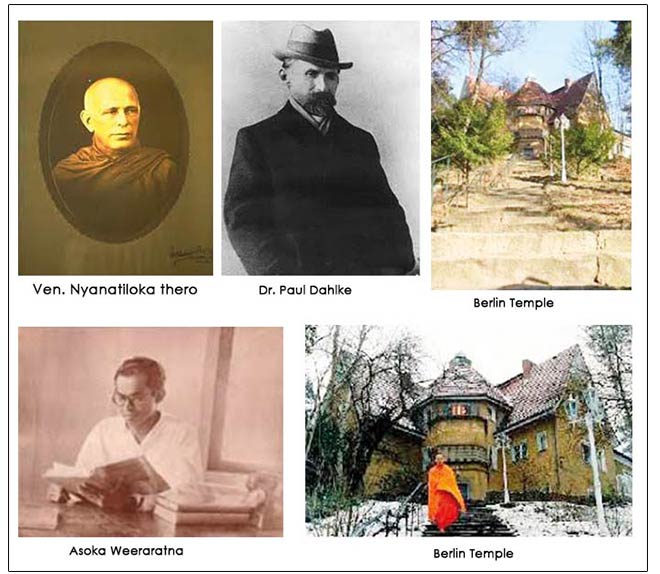
Anton Walter Florus Gueth (1878 – 1957), a German who had travelled to Burma in 1904 ordained as the first German monk and came to Sri Lanka as Ven. Nyanatiloka thero and lived at the Polgasduwa Hermitage. He has written and published several book in Germany. Hermann Hess, Nobel Prize winner (1877 – 1962) has published ‘Sidhartha’ in 1922, which was a great value to German Buddhism.
Dr. Paul Dahlke
Dr. Paul Dahlke (25 Jan. 1865 – 29 Feb. 1928) was a German physician and one of the pioneers of Buddhism in Germany. Dahlke was born in East Prussia as the son of a civil servant. He completed the Gymnasium (high school) in 1883 and proceeded to study medicine in Berlin. He received his MD degree in August 1887 and soon took over a Homeopathic medical practice.
In 1898 he started a journey around the world and was fascinated by the South Pacific. He also stopped over in Ceylon, where he encountered Buddhism. He had read about Buddhism when he studied Schopenhauer. Two years later he went on his second journey, this time specifically to Ceylon to learn more about Buddhism.
He learned Pali and met local Sinhala Buddhist monks, among them Ven. Hikkaduwe Sumangala, Ven. Suriyagoda Sumangala, Ven. Nyananissara and Ven. Wagiswara Theros. He returned a Buddhist and in the following years made several more journeys to Asia primarily to Ceylon, but also to China, India, Burma, Thailand and Indonesia. When the first World War started he was in Germany and was unable to travel to Ceylon as he had planned.
Dahlke had realized that studying and writing on Buddhism alone was not enough. He therefore decided to found a Buddhist Community right in the heart of Germany. Acquiring an extent of 11 acres land in the Berlin suburb of Frohnau in 1919, he proceeded to construct ‘Das Buddhistische Haus’ which he completed in 1924.
It was his intention that the property should be a Buddhist center. Besides the house proper, containing living quarters and library, a meeting hall was built close by, and separate rooms and cells for accommodating guests. Therefore, it was to be a midway solution between a monastery and layman’s habitation.
Before long Dr. Dahlke had a group of disciples around him prepared to live according to the Dhamma, and the Buddhist House soon become the center of German Buddhism. Anagarika Dharmapala, a good friend of Dr. Paul Dahlke, spent 10 days in the Buddhist House on his way to England in 1925.
Dr. Dahlke’s Buddhist group in Frohnau, Berlin had another strong link in Sri Lanka. The International Buddhist Union (IBU -Jatyantara Bauddha Samagama) with it’s headquarters in the island Hermitage (Polgasduwa Tapasarama) in Sri Lanka, which was under the leadership of the German born monk Ven. Nyanatiloka Maha Nayaka Thera. The Island Hermitage was a little island on the Ratgama Lake near Dodanduwa, that gradually became the home of a small band of European and Asian Buddhist monks.
One of the principal tasks of the IBU. was publishing and distributing Buddhist literature punished at Buddhist Publishing House “Benares Verlag”, Muenchen – Neubiberg, Germany.
At Das Buddhistische Haus, Dr. Dahlke was instrumental in publishing two Buddhist periodicals namely ‘Neu Buddhist’ and ‘Brockensammlung’ or ‘Scrap collection’. He has authored Buddhist books namely, ‘Buddhism Essays (1903)’ ‘Buddhism and Science’, ‘Buddhism and it’s place in the Mental Life of Mankind (1924)’ ‘Buddhism as a Doctrine of Actuality and way of Life’.
Dr. Dahlke died on February 29, 1928. With his death the Buddhistische Haus ceased to be a center for the Theravada Buddhist activities. His work was continued in a small house called ‘Holzhaus’ close to the premises of the Das Buddhistische Haus, built by Dr. Kurt Fischer, Dahlke’s secretary and editor of the magazine ‘’Buddhist Life and Thought’.
The Buddhistische Haus was in the hands of Dr. Dahlke’s sister, Bartha Dahlke from 1929 – 1944. She was the first disciple of Paul Dahlke having embraced Buddhism in 1914.

First Day cover and the stamp
After the flight of Rudolf Hess to England in May 1941, the Nazi German Government (1933 – 1945) began to frown on Buddhist activities. DBH later became a center for war refugees towards the closing stages of WW2. Bartha Dahlke left DBH in 1944 for the island of Sylt in Denmark and died in 1947. In 1942 the Gestapo police summoned several Buddhist groups and publishers of Buddhist literature for interrogation. Among them was Dr. Kurt Fischer, secretary of Dr. Dahlke, who died soon after receiving Gestapo summons.
Dr. Wolfang Schumacher, Herr Guido Auster, Dr. Helmuth Klar and other prominent German Buddhists thereafter continued Herr Fischer’s activities. Some of the German Buddhist groups had continued to hold meetings in secret during the latter stages of the war.
Asoka Weeraratna
Two businessmen, Asoka Weeraratna and his elder brother Dharmasena, re-located their family jewellery business from Galle to Maradana in Colombo in 1948. They also imported Swiss watches. Asoka made a number of business trips to Europe in 1950’s to import Swiss watches such as Paul Buhre, Boilat, Henry Sandoz, Roamer, Enicar and the German pen, Reform. They were the leading importers of Swiss watches to Sri Lanka.
In 1951 Asoka Weeraratna undertook his first business visit to West Germarny, meeting many people who had lost their families, wealth and possessions. This left a deep impression in him. In post-war Germany, the widespread sentiment was one of desperation and resignation – ‘kaput, kaput, alles kaput‘ (finished, finished, all is finished). He recognized the growing thirst for an alternative moral and spiritual philosophy.
On his return from West Germany, convinced of the potential for growth of Buddhism in that country, Weeraratna founded the ‘Lanka Dammaduta Society’ on September 21, 1952, and worked more or less in the back room of his family shop, P. J. Weeraratna and Sons at 592, Second Division, Maradana. This Society was later re-named ‘German Dharmaduta Society’ (GDS) on May 8, 1957.
Venerable Nanatiloka Maha thera, the well known German scholar monk was the first patron of the society.
A temporary training centre for Dharmaduta work opened at No. 145, Kandy Road, Dalugama, Kelaniya. The German monk, Venerable Nyanaponika Thera and several other Bhikkhus were given accommodation there.
In 1954, the Society launched a ‘Million Rupee Trust Fund’ for the permanent establishment of the Buddha Sasana in Germany. The Fund was inaugurated at a public meeting held at the Colombo Town Hall on September 6, 1954, presided by Mr. Dudley Senanayake, the former prime minister. The Government declared the Million Rupee Fund an approved charity. Walther Schmits, a German Buddhist, left DM 550,000 to the society upon his death in 1957.
In November 1955 the Government granted to the society an acre of vacant crown land at No. 417, Bullers Road, (Buddhaloka Mawatha) Colombo on a 99-year lease to construct new headquarters of the Lanka Dharmaduta Society. The foundation stone was laid on December 9, 1955 by Mr. Dudley Senanayake. On August 7, 1956, Prime Minister S.W.R.D. Bandaranaike declared open at a public meeting the new headquarters of GDS, consisting of a two storey dormitory with 14 rooms, an Assembly Hall, Office and Library built at a cost of Rs. 125,000.
The society sponsored the first Buddhist Mission to Germany, which left the Colombo Harbour by ship ‘SS Orantes’ on June 16, 1957. The three monks in this mission comprised Venerable Soma, Venerable Kheminda, Venerable Vinta of the Vajiraramaya Temple, Bambalapitiya. Mr. Asoka Weeraratna joined the mission in Berlin having flown from Colombo. Once the mission landed at Berlin the bhikkus reached Das Buddhistische Haus and stayed there.
By then Asoka Weeraratna had a thought of buying the Buddhist House. He negotiated with the nephew of the late Dr. Paul Dahlke, who lived in an island called Sylt near Denmark, in the extreme north of West Germany, 500 km from Berlin, He bought the property on December 13, 1957 for DM 174,370 (Rs. 318,016) on behalf of the GDS. Five trustees, Dudley Senanayake, Henry Amarasuriya, Dr. P. B. Fernando, Proctor Nelson Soysa and Asoka Weeraratne were appointed. The acquisition was completed on April 12, 1961.
Today Buddhist House is the oldest Theravada Buddhist Centre in Europe. It has been designated as a National Heritage Site since 1995 recognized by the German local authorities.
In 1964 Asoka Weeraratna acquired 500 acres from the Mitirigala Mukalana, a forest reserve, from the Government of Sri Lanka on a 99-year lease. With his personal funds and with the help of others who had volunteered to build ‘kutis’, he began the construction of the Mitirigala Forest Hermitage. Within a period of three years the reserve was transformed into a hermitage, which included ‘bhavana salawa’ (meditation center), ‘sakman malus’ and ‘kutis’.
On July 13, 1967 Ven. Nanarama Maha Thera arrived at the Nissarana Vanaya, accompanied by few monks to commence their residence there. The meditation program commenced on July 22, 1967.
On August 22, 1972, Asoka Weeraratna was ordained as a resident monk at the Nissarana Vanaya Aranya under the name, ‘Mitirigala Dhammanisanthi Thero’. He spent 27 years at the Nissarana Vanaya and passed away on July 2, 1999, at the age of eighty years.
Venerable Mitirigala Dhammanisanthi Thero (Asoka Weeraratna) is destined to be ranked in history as one of the preeminent figures of Sri Lanka’s post-independence Buddhist renaissance.
Berlin Viharaya celebrates it’s centenary in 2024. There will be a seminar conducted at the Berlin Viharaya on August 3 and 4. Tissa Weeraratna the nephew of Asoka Weeraratna is the present caretaker of the Berlin temple. The present resident monk of the temple is Ven. Palane Dhammakusala Thero.
Under the state sponsership Sri Lanka too will host a seminar at Temple Trees on August 3, 2024 from 3 p.m. to 5 p.m. Prime Minister Dinesh Gunawardena will be the chief guest. The German Ambassador and other dignitaries will also attend the meeting.
The book titled ‘100 years of Das Buddhistische Haus’ authored by the secretary of German Dharmadutha Sociecty Sri Lanka, Senaka Weerarata and stamp with first day cover will also be issued at the meeting.
Present Board of management of the German Dharmadutha Society (GDS) consist of the following: Trustees – Senaka Weeraratna, Lakshman Hettiarachchi, Ananda Wimaladaharma, Kosala Wickramanayake, President: Major General Sardha Abeyratne, Vice Presidents – Prof. Jayasiri Lankage, Dr. Newton Peiris, Harendra de Silva, Dr. Manouri Senanayake. Secretary– Senaka Weeraratna, Assistant Secretary – Dr. S. H. Perara, Treasurer – S. M. Wijeratne, Committee members – Chandra de Silva, Ms. Renuka Nagodavithana, Lalith Manage, Ranjith Wimalasiri, Prof. Virajni Karunaratne, Nayana Weerasiri. Administrative secretary – Mr. Keminda Silva.
(The writer may be reached at 038-2298198)



The appointment of former minister Eran Wickremaratne to chair the Sri Lanka Cricket Transformation Committee is significant for more than the future of cricket. It signals a possible shift in the culture of governance even as it offers Sri Lankan cricket a fighting possibility to get out of the doldrums of failure. There have been glorious patches for the national cricket team since the epochal 1996 World Cup triumph. But these patches of brightness have been few and far between and virtually non-existent over the past decade. At the centre of this disaster has been the failures of governance within Sri Lanka Cricket which are not unlike the larger failures of governance within the country itself. The appointment of a new reform oriented committee therefore carries significance beyond cricket. It reflects the wider challenge facing the country which is to restore trust in public institutions for better management.
The appointment of Eran Wickremaratne brings a professional administrator with a proven track record into the cricket arena. He has several strengths that many of his immediate predecessors lacked. Before the ascent of the present government leadership to positions of power, Eran Wickremaratne was among the handful of government ministers who did not have allegations of corruption attached to their names. His reputation for financial professionalism and integrity has remained intact over many years in public life. With him in the Cricket Transformation Committee are also respected former cricketers Kumar Sangakkara, Roshan Mahanama and Sidath Wettimuny together with professionals from legal and business backgrounds. They have been tasked with introducing structural reforms and improving transparency and accountability within cricket administration.
A second reason for this appointment to be significant is that this is possibly the first occasion on which the NPP government has reached out to someone associated with the opposition to obtain assistance in an area of national importance. The commitment to bipartisanship has been a constant demand from politically non-partisan civic groups and political analysts. They have voiced the opinion that the government needs to be more inclusive in its choice of appointments to decision making authorities. The NPP government’s practice so far has largely been to limit appointments to those within the ruling party or those considered loyalists even at the cost of proven expertise. The government’s decision in this case therefore marks a potentially important departure.
National Interest
There are areas of public life where national interest should transcend party divisions and cricket, beloved of the people, is one of them. Sri Lanka cannot afford to continue treating every institution as an arena for political competition when institutions themselves are in crisis and public confidence has become fragile. It is therefore unfortunate that when the government has moved positively in the direction of drawing on expertise from outside its own ranks there should be a negative response from sections of the opposition. This is indicative of the absence of a culture of bipartisanship even on issues that concern the national interest. The SJB, of which the newly appointed cricket committee chairman was a member objected on the grounds that politicians should not hold positions in sports administration and asked him to resign from the party. There is a need to recognise the distinction between partisan political control and the temporary use of experienced administrators to carry out reform and institutional restructuring. In other countries those in politics often join academia and civil society on a temporary basis and vice versa.
More disturbing has been the insidious campaign carried out against the new cricket committee and its chairman on the grounds of religious affiliation. This is an unacceptable denial of the reality that Sri Lanka is a plural, multi ethnic and multi religious society. The interim committee reflects this diversity to a reasonable extent. The country’s long history of ethnic conflict should have taught all political actors the dangers of mobilising communal prejudice for short term political gain. Sri Lanka paid a very heavy price for decades of mistrust and division. It would be tragic if even cricket administration became another arena for communal suspicion and hostility. The present government represents an important departure from the sectarian rhetoric that was employed by previous governments. They have repeatedly pledged to protect the equal rights of all citizens and not permit discrimination or extremism in any form.
The recent international peace march in Sri Lanka led by the Venerable Bhikkhu Thich Paññākāra from Vietnam with its message of loving kindness and mindfulness to all resonated strongly with the masses of people as seen by the crowds who thronged the roadsides to obtain blessings and show respect. This message stands in contrast to the sectarian resentment manifested by those who seek to use the cricket appointments as a weapon to attack the government at the present time. The challenges before the Sri Lanka Cricket Transformation Committee parallel the larger challenges before the government in developing the national economy and respecting ethnic and religious diversity. Plugging the leaks and restoring systems will take time and effort. It cannot be done overnight and it cannot succeed without public patience and support.
New Recognition
There is also a need for realism. The appointment of Eran Wickremaratne and the new committee does not guarantee success. Reforming deeply flawed institutions is always difficult. Besides, Sri Lanka is a small country with a relatively small population compared to many other cricket playing nations. It is also a country still recovering from the economic breakdown of 2022 which pushed the majority of people into hardship and severely weakened public institutions. The country continues to face unprecedented challenges including the damage caused by Cyclone Ditwah and the wider global economic uncertainties linked to conflict in the Middle East. Under these difficult circumstances Sri Lanka has fewer resources than many larger countries to devote to both cricket and economic development.
When resources are scarce they cannot be wasted through corruption or incompetence. Drawing upon the strengths of all those who are competent for the tasks at hand regardless of party affiliation or ethnic or religious identity is necessary if improvement is to come sooner rather than later. The burden of rebuilding the country cannot rest only on the government. The crisis facing the country is too deep for any single party or government to solve alone. National recovery requires capable individuals from across society and from different sectors such as business and civil society to work together in areas where the national interest transcends party politics. There is also a responsibility on opposition political parties to support initiatives that are politically neutral and genuinely in the national interest. Not every issue needs to become a partisan battle.
Sri Lanka cricket occupies a special place in the national consciousness. At its best it once united the country and gave Sri Lankans a sense of pride and international recognition. Restoring integrity and professionalism to cricket administration can therefore become part of the larger task of national renewal. The appointment of Eran Wickremaratne and the new committee, while it does not guarantee success, is a sign that the political leadership and people of the country may be beginning to mature in their approach to governance. In recognising the need for competence, integrity and bipartisan cooperation and extending it beyond cricket into other areas of national life, Sri Lanka may find the way towards more stable and successful governance..
by Jehan Perera

Court vacation this year came with an unexpected lesson, not from a courtroom but from the streets of Dhaka — a city that moves, quite literally, on three wheels.
Above the traffic, a modern metro line glides past concrete pillars and crowded rooftops. It is efficient, clean and frequently cited as a symbol of progress in Bangladesh. For a visitor from Sri Lanka, it inevitably brings to mind our own abandoned light rail plans — a project debated, politicised and ultimately set aside.
But Dhaka’s real story is not in the air. It is on the ground.
Beneath the elevated tracks, the streets belong to three-wheelers. Known locally as CNGs, they cluster at junctions, line the edges of markets and pour into narrow roads that larger vehicles avoid. Even with a functioning rail system, these three-wheelers remain the city’s most dependable form of everyday transport.
Within hours of arriving, their importance becomes obvious. The train may take you across the city, but the journey does not end there. The last mile — often the most complicated part — belongs entirely to the three-wheeler. It is the vehicle that gets you home, to a meeting or simply through streets that no bus route properly serves.
There is a rhythm to using them. A destination is mentioned, a price is suggested and a brief negotiation follows. Then the ride begins, edging into traffic that feels permanently compressed. Drivers move with instinct, adjusting routes and squeezing through gaps with a confidence built over years.
It is not polished. But it works.
And that is where the comparison with Sri Lanka becomes less about what we lack and more about what we already have.
Back home, the three-wheeler has long been part of daily life — so familiar that it is often discussed only in terms of its problems. There are frequent complaints about fares, refusals or the absence of meters. More recently, the industry itself has become entangled in politics — from fuel subsidies to regulatory debates, from election-time promises to periodic crackdowns.
In that process, the conversation has shifted. The three-wheeler is often treated as a problem to be managed, rather than a service to be strengthened.
Yet, seen through the experience of Dhaka, Sri Lanka’s system begins to look far more settled — and, in many ways, ahead.
There is a growing structure in place. Meters, while not perfect, are widely recognised. Ride-hailing apps have added transparency and reduced uncertainty for passengers. There are clearer expectations on both sides — driver and commuter alike. Even small details, such as designated parking areas in parts of Colombo or the increasing standard of vehicles, point to an industry slowly moving towards professionalism.
Just as importantly, there is a human element that remains intact.
In Sri Lanka, a three-wheeler ride is rarely just a transaction. Drivers talk. They offer directions, comment on the day’s news, or share local knowledge. The ride becomes part of the social fabric, not just a means of getting from one point to another.
In Dhaka, the scale of the city leaves less room for that. The interaction is quicker, more direct, shaped by urgency. The service is essential, but it is under constant pressure.
What stands out, across both countries, is that the three-wheeler is not a temporary or outdated mode of transport. It is a necessity in dense, fast-growing Asian cities — one that fills gaps no rail or bus system can fully address.
Large infrastructure projects, like light rail, are important. They bring efficiency and long-term capacity. But they cannot replace the flexibility of a three-wheeler. They cannot reach into narrow streets, respond instantly to demand or provide that crucial last-mile connection.
That is why, even in a city that has invested heavily in modern rail, Dhaka still runs on three wheels.
For Sri Lanka, the lesson is not simply about what could have been built, but about what should be better managed and valued.
The three-wheeler industry does not need to be politicised at every turn. It needs steady regulation — clear fare systems, proper licensing, safety standards — alongside encouragement and recognition. It needs to be seen as part of the solution to urban transport, not as a side issue.
Because for thousands of drivers, it is a livelihood. And for millions of passengers, it is the most immediate and reliable form of mobility.
The tuk-tuk may not feature in grand policy speeches or infrastructure blueprints. It does not run on elevated tracks or attract international attention. But on the ground, where daily life unfolds, it continues to do what larger systems often struggle to do — show up, adapt and keep moving.
And after watching Dhaka’s streets — crowded, relentless, yet functioning — that small, three-wheeled vehicle feels less like something to argue over and more like something to get right.
(The writer is an Attorney-at-Law with over a decade of experience specialising in civil law, a former Board Member of the Office of Missing Persons and a former Legal Director of the Central Cultural Fund. He holds an LLM in International Business Law)
by Sampath Perera recently in Dhaka, Bangladesh

 According to reports coming my way, the entertainment scene, in Dubai, is very much opening up, and buzzing again!
After a quieter few months, May is packed with entertainment and the whole scene, they say, is shifting back into full swing.
The Seven Notes band, made up of Sri Lankans, based in Dubai, are back in the spotlight, after a short hiatus, due to the ongoing Middle East problems.
On 18th April they did Legends Night at Mercure Hotel Dubai Barsha Heights; on Thursday, 9th May, they will be at the Sports Bar of the Mercure Hotel for 70s/80s Retro Night; on 6th June, they will be at Al Jadaf Dubai to provide the music for Sandun Perera live in concert … and with more dates to follow.
These events are expected to showcase the band’s evolving sound, tighter stage coordination, and stronger audience engagement.
With each performance, the band aims to refine its identity and build a loyal following within Dubai’s vibrant nightlife and event scene.

Pasindu Umayanga: The group’s new vocalist
What makes Seven Notes standout is their versatility which has made the band a dynamic and promising act.
With a growing performance calendar, new talent integration, and international ambitions, the band is definitely entering a defining phase of its journey.
Dubai’s music industry, I’m told, thrives on diversity, energy, and audience connection, with live bands playing a crucial role in elevating events—from corporate shows to private concerts. Against this backdrop, Seven Notes is positioning itself not just as another band, but as a performance-driven musical unit focused on consistency and growth.
Adding fresh momentum to the group is Pasindu Umayanga who joins Seven Notes as their new vocalist. This move signals a strategic upgrade—not just filling a role, but strengthening the band’s front-line presence.
Looking beyond local stages, Seven Notes is preparing for an international tour, to Korea, in July.

Bassist Niluk Uswaththa: Spokesperson for Seven Notes
According to bassist Niluk Uswaththa, taking a band abroad means: Your sound must hold up against unfamiliar audiences, your performance must translate beyond language, and your discipline must be at a professional level.
“If executed well, this tour could redefine Seven Notes from a local band into an emerging international act,” added Niluk.
He went on to say that Dubai is not an easy market. It’s saturated with highly experienced, multi-genre bands that can adapt instantly to any crowd.
“To stand out consistently you need to have tight rehearsal discipline, unique sound identity (not just covers), strong stage chemistry, audience retention – not just applause.”
No doubt, Seven Notes is entering a critical growth phase—new member, multiple shows, and an international tour on the horizon. The opportunity is real, but so is the pressure.
However, there is talk that Seven Notes will soon be a recognised name in the regional music scene.

INS Sindhukesari arrives in Colombo

Minister of Health of the Russian Federation attends the Sri Lanka–Russia Medical Forum

Members of Sri Lanka Cricket Transformation Committee Officially Appointed

Three prison guards arrested following the death of an inmate

Showers or thundershowers will occur at most places of the island after 1.00 pm.

CJ urged to inquire into AKD’s remarks on May 25 court verdict

‘Dates have the highest sugar content to fight Coronavirus’

Sunday Island 27 December – Headlines

#SundayIsland 17th December – Headlines

Sunday Island – 28th March

Sunday Island Headlines – 21 March

Sunday Island – 21st February – Headlines
-
 News7 days ago
Treasury chief’s citizenship details sought from Australia
-

 News6 days ago
Rooftop Solar at Crossroads as Sri Lanka Shifts to Distributed Energy Future
-
 News5 days ago
“Three-in-one blood pressure pill can significantly reduce risk of recurrent strokes”
-

 News7 days ago
Central Province one before last in AL results
-

 Sports7 days ago
Well done AKD!
-

 News2 days ago
USD 3.7 bn H’tota refinery: China won’t launch project without bigger local market share
-
 News17 hours ago
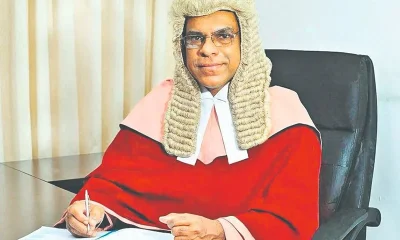
CJ urged to inquire into AKD’s remarks on May 25 court verdict
-

 News5 days ago
Alarm raised over plan to share Lanka’s biometric data with blacklisted Indian firm