
Features
NPP and the AKD science policy

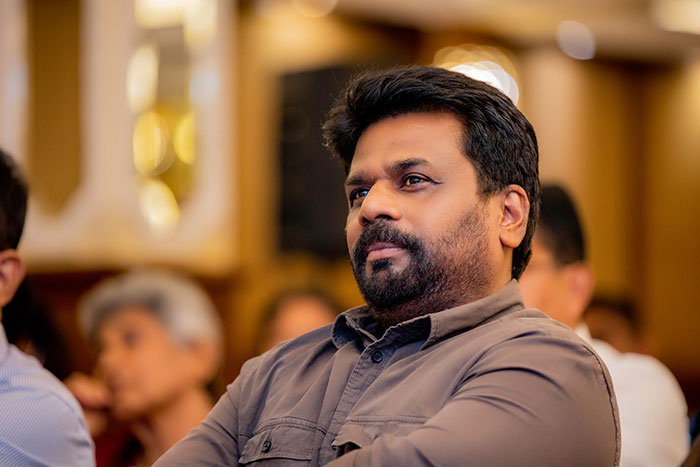
By Dinara S. Gunasekera
Dinara S. Gunasekera is a Sri Lankan-American industrial scientist and an entrepreneur who has received numerous academic and professional awards and authored multiple patents, and peer-reviewed publications. He co-founded Sri Lanka’s first science consulting company, dedicated to help S&M-scale local and international companies with their R&D efforts. He was instrumental in establishing Sri Lanka’s first and only GLP-accredited synthetic organic lab, molecular recognition lab, and active pharmaceutical ingredient plant.
The Jathika Jana Balawegaya (NPP) recently released their Science and Technology (S&T) policy framework which aims to serve as a “guideline for enriching scientific and technological knowledge, allocating resources, and establishing a regulatory framework for research and development (R&D)” in Sri Lanka. Despite such lofty goals, the actual proposal is lacking in substance, originality, and clarity, and its actual impact on scientific affairs in Sri Lanka is surprisingly insignificant. The framework was released amidst much fanfare and pomp at an event led by a team of NPP-backed academics and a few industrial scientists. The hype and anticipation surrounding this event created an atmosphere of grandeur and importance. For some NPP-backed YouTubers, it was absolutely thrilling to be graced by such a “dream-team” of academics and to be enlightened with their proposals, the so-called “quantum leap”.
The event was undeniably blown out of proportion, with every minute covered and amplified by Youtubers and TV channels. Modern science and innovation contributes to economic growth? Who would have thought?! It’s as if the Sri Lankan scientific community was just wandering in the dark, oblivious to recent advancements in R&D and ignorant of the country’s need for innovative solutions, until this dream team of academics showed up and turned on the lights. Despite all the hype and the fancy language, word among local academic and industrial scientists is that this is nothing but another one of NPP’s aliya kaapu divul gedi (the woodapple eaten by an elephant with just the whole empty shell ejected with the dung!
However, one cannot help but admire the initiative taken by the NPP to develop an S&T framework. This pioneering effort by NPP is truly commendable and represents an impressive level of commitment to addressing one of the most critical elements of our path to economic recovery. A key tenet of this proposal is the American governance model, which has led to significant socio-economic progress driven by science and technology. However, the foundation of the American governance model is capitalism, which directly opposes the socialist beliefs the JVP has been promoting for many years. So, does this mean that the JVP-led NPP has now fully embraced capitalism since it is more conducive to driving innovation?
This clearly represents an internal conflict that the NPP must resolve before moving forward. Moreover, implementing this S&T proposal requires systematic training of students on concepts such as discovery, innovation and product development. However, this has been difficult due to JVP-affiliated factions forcing teachers, university staff, and science/engineering students to participate in various protests, ragging, and student politics. Therefore, desisting university politics might be the most crucial step to take if the NPP aims to improve S&T in Sri Lanka.
The proposal astutely identifies potential applications of S&T in critical sectors such as agriculture, health, and education, among others. However, the scientific community of Sri Lanka has already identified many of these issues and discussions have been ongoing for a while on how to address these matters. Thus, the academics backing the NPP proposal lack an understanding of the ground-level science and technology situation in Sri Lanka. For instance, some innovations that have been highly publicized by the NPP (and gained significant attention on social media) either resemble existing products with no significant differentiation or face scalability issues that hinder cost-effectiveness. This could be the result of some prominent members of the NPP science team never having worked in Sri Lanka in either an official or voluntary capacity. Below are a few examples of this misalignment between the local and NPP scientific views.
Agriculture; The recommendations for improving the agriculture sector is eerily reminiscent of a list created by generative AI! Many of these suggestions, including breeding high-yielding crops, novel barn management methods, and crop diversification, have already been tested or carried out by farmers and agricultural scientists at various institutes. Moreover, methods for value addition to agricultural products are constantly being thought of by entrepreneurs and established consumables companies. Genetically modified crops provide a means of improving agricultural products both by improving yields and providing resistance to biological and environmental insults. However, the proposed framework does not clarify the NPP’s stance on genetically modified crops. On the one hand, they mention utilizing genome editing technologies, but they also mention conserving protected species and plants.
Health, education, and science: This section of the proposal includes many science buzzwords, such as AI, LLM, nanotechnology, ITO and genomics. It appears that every technology with a flashy name has been included in this proposal to create a high-tech facade. Probably with the goal of making the proposal more appealing to genZ voters. Even the figures in the proposal feature numerous arrows moving in various directions, reminiscent of complex biochemical pathways, seemingly to convey that scientific intervention is intricately complex and accessible only to PhDs. However, it’s important to note that most of these proposed technologies are typically seen only in well-developed countries with GDPs exceeding trillions of dollars. Even in financially prosperous nations, the private sector undertakes such projects. For instance, AI-based technologies are predominantly developed by companies known as the magnificent seven including NVIDIA, Google, and Apple.
Another area highlighted during the quantum leap proposal launch and in the proposal booklet is mineral exploration and how Sri Lanka has neglected existing resources such as thorium, gold, nickel, and other precious metals. Underutilization of Sri Lanka’s mineral resources has been a popular conversation among the general public as well. However, methods to utilize these resources have been studied extensively by our scientists for a long time. Thorium research was explored at the Sri Lanka Institute of Nanotechnology (SLINTEC) over a decade ago. However, this project was discontinued due to the high costs of excavating this material under UN regulations. Indeed, it is a well-known fact that mining and excavation of any mineral dramatically impacts the environment. Unfortunately for Sri Lanka, many of our mineral deposits are present in or near ecologically sensitive areas. The negative impact on the environment would likely outweigh any quick financial gains made through such means. For example, such activities may result in perturbations of the ecological balance in rainforests like Sinharaja or critical ecosystems in the southern seaboard.
Another buzzword gaining popularity among Sri Lankans is “value addition to products” (VAP). However, the NPP dream team has overlooked the efforts of Sri Lankan academic researchers, SLINTEC, ITI, and private sector scientists who are actively exploring ways to enhance the value of various products. Furthermore, the collaboration between the private sector and Sri Lankan scientists has already led to developing export-ready products, contributing to foreign exchange earnings. The NPP scientists are introducing this concept as if the Sri Lankan scientific community is unaware of such initiatives.
The lack of S&T application implementation in Sri Lanka is not because they have yet to be identified but primarily due to budget constraints and resistance to change. The proposal starts out by comparing GDP allocation for science and technology in Sri Lanka ((0.12%) versus neighboring countries. However, when considering GDP allocations to S&T, one must keep in mind that Sri Lanka provides free education and free healthcare with a GDP of just ~$75 billion. Although the proposal fails to mention the percentage that NPP would like to allocate, given the hype to this sector, they would probably allocate around 0.5 % of GDP. If so, one wonders which area they would compromise to achieve this: Healthcare or education?
If you do the simple math (assuming 20% as gov expenditure to GDP ratio), ~$75M/per year would be the amount allocated to S&T proposals. This amount is insufficient to achieve the NPP’s ambitious objectives such as establishing NRDMC, NIRD, drug discovery, mining and addressing reverse brain drain. These objectives also don’t align with the national priorities in a country experiencing economic difficulties, where scientists earn less than 60K rupees. One could argue that implementing these modern tools will eventually benefit GDP growth, but such outcomes typically require a minimum of 20 years to materialize. A significant drawback of these proposals is the lack of clarity regarding timelines and costing. Are these plans expected to be completed in a year, 10 years, or even 100 years? For instance, SLINTEC’s attempt to produce APIs (Application Programming Interface) already took nearly half a decade to achieve just two. Therefore, many of these proposals will likely require close to 20 years or more to realize their goals fully.
Conducting research in Sri Lanka is notably expensive and time-consuming compared to other regions. For example, a basic proof of concept (POC) experiment could easily span a year, and essential laboratory equipment like an GC/LC-MS would cost nearly five times more than in neighboring countries. If such instruments break down, it can take months or even years to find a qualified engineer for repairs. Importing chemicals can take up to eight months, and crucial chemicals and research consumables may be unavailable for import. Regrettably, the proposed framework lacks any strategy to reduce research costs or shorten timelines. In contrast, countries like China and India have numerous profitable Contract Research Organizations (CROs) due to lower research costs. Additionally, salaries for postgraduate and industrial scientists in Sri Lanka are so low that even a trishaw driver earns more. Consequently, many scientists must supplement their income by offering private tuition.
Furthermore, given Sri Lanka’s constrained funding for science and technology in the upcoming years, it is imperative that we prioritize research areas where Sri Lanka can excel. Otherwise, spreading limited funds thinly across various areas will dilute their impact and fail to make meaningful contributions to the economy. For instance, as Sri Lanka is a biodiversity hotspot, there should be a focused effort on natural product chemistry. Currently, Sri Lanka has only one modern NMR (nuclear magnetic resonance) instrument and faces challenges acquiring resources for chemicals and consumables needed for such research.
Another significant area of research is the whole genome sequencing (WGS), which has the potential to uncover hereditary cancer variations in the Sri Lankan population. Studies such as the UK Biobank in England, the 1000 Genomes project in the US, and the OrigiMed study in China propel research into their populations and discover cancer variants among their respective demographics. WGS could lead to early clinical intervention, reduce the number of cancer-related deaths, and reduce healthcare costs significantly.
In conclusion, the NPP’s S&T proposal fails to address the root causes of slow development in this sector and the significant challenges faced by Sri Lankan scientists who operate with minimal resources. Sri Lanka must prioritize addressing larger issues with science and technology soon. Academics and scientists should exercise caution when aligning with political parties. Politicians often exploit your qualifications for publicity and votes, only to discard your concerns once they gain power. Many Sri Lankan academics learned a harsh lesson from their support of GR in Viyathmaga. It’s widely known that one of the science advisors to the former president faced significant backlash from the scientific community following the fertilizer ban and had to leave the country as a result. This situation seems like a heightened version of Viyathmaga under the NPP, suggesting a troubling repetition of history.



The appointment of former minister Eran Wickremaratne to chair the Sri Lanka Cricket Transformation Committee is significant for more than the future of cricket. It signals a possible shift in the culture of governance even as it offers Sri Lankan cricket a fighting possibility to get out of the doldrums of failure. There have been glorious patches for the national cricket team since the epochal 1996 World Cup triumph. But these patches of brightness have been few and far between and virtually non-existent over the past decade. At the centre of this disaster has been the failures of governance within Sri Lanka Cricket which are not unlike the larger failures of governance within the country itself. The appointment of a new reform oriented committee therefore carries significance beyond cricket. It reflects the wider challenge facing the country which is to restore trust in public institutions for better management.
The appointment of Eran Wickremaratne brings a professional administrator with a proven track record into the cricket arena. He has several strengths that many of his immediate predecessors lacked. Before the ascent of the present government leadership to positions of power, Eran Wickremaratne was among the handful of government ministers who did not have allegations of corruption attached to their names. His reputation for financial professionalism and integrity has remained intact over many years in public life. With him in the Cricket Transformation Committee are also respected former cricketers Kumar Sangakkara, Roshan Mahanama and Sidath Wettimuny together with professionals from legal and business backgrounds. They have been tasked with introducing structural reforms and improving transparency and accountability within cricket administration.
A second reason for this appointment to be significant is that this is possibly the first occasion on which the NPP government has reached out to someone associated with the opposition to obtain assistance in an area of national importance. The commitment to bipartisanship has been a constant demand from politically non-partisan civic groups and political analysts. They have voiced the opinion that the government needs to be more inclusive in its choice of appointments to decision making authorities. The NPP government’s practice so far has largely been to limit appointments to those within the ruling party or those considered loyalists even at the cost of proven expertise. The government’s decision in this case therefore marks a potentially important departure.
National Interest
There are areas of public life where national interest should transcend party divisions and cricket, beloved of the people, is one of them. Sri Lanka cannot afford to continue treating every institution as an arena for political competition when institutions themselves are in crisis and public confidence has become fragile. It is therefore unfortunate that when the government has moved positively in the direction of drawing on expertise from outside its own ranks there should be a negative response from sections of the opposition. This is indicative of the absence of a culture of bipartisanship even on issues that concern the national interest. The SJB, of which the newly appointed cricket committee chairman was a member objected on the grounds that politicians should not hold positions in sports administration and asked him to resign from the party. There is a need to recognise the distinction between partisan political control and the temporary use of experienced administrators to carry out reform and institutional restructuring. In other countries those in politics often join academia and civil society on a temporary basis and vice versa.
More disturbing has been the insidious campaign carried out against the new cricket committee and its chairman on the grounds of religious affiliation. This is an unacceptable denial of the reality that Sri Lanka is a plural, multi ethnic and multi religious society. The interim committee reflects this diversity to a reasonable extent. The country’s long history of ethnic conflict should have taught all political actors the dangers of mobilising communal prejudice for short term political gain. Sri Lanka paid a very heavy price for decades of mistrust and division. It would be tragic if even cricket administration became another arena for communal suspicion and hostility. The present government represents an important departure from the sectarian rhetoric that was employed by previous governments. They have repeatedly pledged to protect the equal rights of all citizens and not permit discrimination or extremism in any form.
The recent international peace march in Sri Lanka led by the Venerable Bhikkhu Thich Paññākāra from Vietnam with its message of loving kindness and mindfulness to all resonated strongly with the masses of people as seen by the crowds who thronged the roadsides to obtain blessings and show respect. This message stands in contrast to the sectarian resentment manifested by those who seek to use the cricket appointments as a weapon to attack the government at the present time. The challenges before the Sri Lanka Cricket Transformation Committee parallel the larger challenges before the government in developing the national economy and respecting ethnic and religious diversity. Plugging the leaks and restoring systems will take time and effort. It cannot be done overnight and it cannot succeed without public patience and support.
New Recognition
There is also a need for realism. The appointment of Eran Wickremaratne and the new committee does not guarantee success. Reforming deeply flawed institutions is always difficult. Besides, Sri Lanka is a small country with a relatively small population compared to many other cricket playing nations. It is also a country still recovering from the economic breakdown of 2022 which pushed the majority of people into hardship and severely weakened public institutions. The country continues to face unprecedented challenges including the damage caused by Cyclone Ditwah and the wider global economic uncertainties linked to conflict in the Middle East. Under these difficult circumstances Sri Lanka has fewer resources than many larger countries to devote to both cricket and economic development.
When resources are scarce they cannot be wasted through corruption or incompetence. Drawing upon the strengths of all those who are competent for the tasks at hand regardless of party affiliation or ethnic or religious identity is necessary if improvement is to come sooner rather than later. The burden of rebuilding the country cannot rest only on the government. The crisis facing the country is too deep for any single party or government to solve alone. National recovery requires capable individuals from across society and from different sectors such as business and civil society to work together in areas where the national interest transcends party politics. There is also a responsibility on opposition political parties to support initiatives that are politically neutral and genuinely in the national interest. Not every issue needs to become a partisan battle.
Sri Lanka cricket occupies a special place in the national consciousness. At its best it once united the country and gave Sri Lankans a sense of pride and international recognition. Restoring integrity and professionalism to cricket administration can therefore become part of the larger task of national renewal. The appointment of Eran Wickremaratne and the new committee, while it does not guarantee success, is a sign that the political leadership and people of the country may be beginning to mature in their approach to governance. In recognising the need for competence, integrity and bipartisan cooperation and extending it beyond cricket into other areas of national life, Sri Lanka may find the way towards more stable and successful governance..
by Jehan Perera

Court vacation this year came with an unexpected lesson, not from a courtroom but from the streets of Dhaka — a city that moves, quite literally, on three wheels.
Above the traffic, a modern metro line glides past concrete pillars and crowded rooftops. It is efficient, clean and frequently cited as a symbol of progress in Bangladesh. For a visitor from Sri Lanka, it inevitably brings to mind our own abandoned light rail plans — a project debated, politicised and ultimately set aside.
But Dhaka’s real story is not in the air. It is on the ground.
Beneath the elevated tracks, the streets belong to three-wheelers. Known locally as CNGs, they cluster at junctions, line the edges of markets and pour into narrow roads that larger vehicles avoid. Even with a functioning rail system, these three-wheelers remain the city’s most dependable form of everyday transport.
Within hours of arriving, their importance becomes obvious. The train may take you across the city, but the journey does not end there. The last mile — often the most complicated part — belongs entirely to the three-wheeler. It is the vehicle that gets you home, to a meeting or simply through streets that no bus route properly serves.
There is a rhythm to using them. A destination is mentioned, a price is suggested and a brief negotiation follows. Then the ride begins, edging into traffic that feels permanently compressed. Drivers move with instinct, adjusting routes and squeezing through gaps with a confidence built over years.
It is not polished. But it works.
And that is where the comparison with Sri Lanka becomes less about what we lack and more about what we already have.
Back home, the three-wheeler has long been part of daily life — so familiar that it is often discussed only in terms of its problems. There are frequent complaints about fares, refusals or the absence of meters. More recently, the industry itself has become entangled in politics — from fuel subsidies to regulatory debates, from election-time promises to periodic crackdowns.
In that process, the conversation has shifted. The three-wheeler is often treated as a problem to be managed, rather than a service to be strengthened.
Yet, seen through the experience of Dhaka, Sri Lanka’s system begins to look far more settled — and, in many ways, ahead.
There is a growing structure in place. Meters, while not perfect, are widely recognised. Ride-hailing apps have added transparency and reduced uncertainty for passengers. There are clearer expectations on both sides — driver and commuter alike. Even small details, such as designated parking areas in parts of Colombo or the increasing standard of vehicles, point to an industry slowly moving towards professionalism.
Just as importantly, there is a human element that remains intact.
In Sri Lanka, a three-wheeler ride is rarely just a transaction. Drivers talk. They offer directions, comment on the day’s news, or share local knowledge. The ride becomes part of the social fabric, not just a means of getting from one point to another.
In Dhaka, the scale of the city leaves less room for that. The interaction is quicker, more direct, shaped by urgency. The service is essential, but it is under constant pressure.
What stands out, across both countries, is that the three-wheeler is not a temporary or outdated mode of transport. It is a necessity in dense, fast-growing Asian cities — one that fills gaps no rail or bus system can fully address.
Large infrastructure projects, like light rail, are important. They bring efficiency and long-term capacity. But they cannot replace the flexibility of a three-wheeler. They cannot reach into narrow streets, respond instantly to demand or provide that crucial last-mile connection.
That is why, even in a city that has invested heavily in modern rail, Dhaka still runs on three wheels.
For Sri Lanka, the lesson is not simply about what could have been built, but about what should be better managed and valued.
The three-wheeler industry does not need to be politicised at every turn. It needs steady regulation — clear fare systems, proper licensing, safety standards — alongside encouragement and recognition. It needs to be seen as part of the solution to urban transport, not as a side issue.
Because for thousands of drivers, it is a livelihood. And for millions of passengers, it is the most immediate and reliable form of mobility.
The tuk-tuk may not feature in grand policy speeches or infrastructure blueprints. It does not run on elevated tracks or attract international attention. But on the ground, where daily life unfolds, it continues to do what larger systems often struggle to do — show up, adapt and keep moving.
And after watching Dhaka’s streets — crowded, relentless, yet functioning — that small, three-wheeled vehicle feels less like something to argue over and more like something to get right.
(The writer is an Attorney-at-Law with over a decade of experience specialising in civil law, a former Board Member of the Office of Missing Persons and a former Legal Director of the Central Cultural Fund. He holds an LLM in International Business Law)
by Sampath Perera recently in Dhaka, Bangladesh

 According to reports coming my way, the entertainment scene, in Dubai, is very much opening up, and buzzing again!
After a quieter few months, May is packed with entertainment and the whole scene, they say, is shifting back into full swing.
The Seven Notes band, made up of Sri Lankans, based in Dubai, are back in the spotlight, after a short hiatus, due to the ongoing Middle East problems.
On 18th April they did Legends Night at Mercure Hotel Dubai Barsha Heights; on Thursday, 9th May, they will be at the Sports Bar of the Mercure Hotel for 70s/80s Retro Night; on 6th June, they will be at Al Jadaf Dubai to provide the music for Sandun Perera live in concert … and with more dates to follow.
These events are expected to showcase the band’s evolving sound, tighter stage coordination, and stronger audience engagement.
With each performance, the band aims to refine its identity and build a loyal following within Dubai’s vibrant nightlife and event scene.

Pasindu Umayanga: The group’s new vocalist
What makes Seven Notes standout is their versatility which has made the band a dynamic and promising act.
With a growing performance calendar, new talent integration, and international ambitions, the band is definitely entering a defining phase of its journey.
Dubai’s music industry, I’m told, thrives on diversity, energy, and audience connection, with live bands playing a crucial role in elevating events—from corporate shows to private concerts. Against this backdrop, Seven Notes is positioning itself not just as another band, but as a performance-driven musical unit focused on consistency and growth.
Adding fresh momentum to the group is Pasindu Umayanga who joins Seven Notes as their new vocalist. This move signals a strategic upgrade—not just filling a role, but strengthening the band’s front-line presence.
Looking beyond local stages, Seven Notes is preparing for an international tour, to Korea, in July.

Bassist Niluk Uswaththa: Spokesperson for Seven Notes
According to bassist Niluk Uswaththa, taking a band abroad means: Your sound must hold up against unfamiliar audiences, your performance must translate beyond language, and your discipline must be at a professional level.
“If executed well, this tour could redefine Seven Notes from a local band into an emerging international act,” added Niluk.
He went on to say that Dubai is not an easy market. It’s saturated with highly experienced, multi-genre bands that can adapt instantly to any crowd.
“To stand out consistently you need to have tight rehearsal discipline, unique sound identity (not just covers), strong stage chemistry, audience retention – not just applause.”
No doubt, Seven Notes is entering a critical growth phase—new member, multiple shows, and an international tour on the horizon. The opportunity is real, but so is the pressure.
However, there is talk that Seven Notes will soon be a recognised name in the regional music scene.

INS Sindhukesari arrives in Colombo

Minister of Health of the Russian Federation attends the Sri Lanka–Russia Medical Forum

Members of Sri Lanka Cricket Transformation Committee Officially Appointed

Three prison guards arrested following the death of an inmate

Showers or thundershowers will occur at most places of the island after 1.00 pm.

CJ urged to inquire into AKD’s remarks on May 25 court verdict

‘Dates have the highest sugar content to fight Coronavirus’

Sunday Island 27 December – Headlines

#SundayIsland 17th December – Headlines

Sunday Island – 28th March

Sunday Island Headlines – 21 March

Sunday Island – 21st February – Headlines
-
 News7 days ago
Treasury chief’s citizenship details sought from Australia
-

 News6 days ago
Rooftop Solar at Crossroads as Sri Lanka Shifts to Distributed Energy Future
-
 News5 days ago
“Three-in-one blood pressure pill can significantly reduce risk of recurrent strokes”
-

 News7 days ago
Central Province one before last in AL results
-

 Sports7 days ago
Well done AKD!
-
 News23 hours ago
CJ urged to inquire into AKD’s remarks on May 25 court verdict
-

 News2 days ago
USD 3.7 bn H’tota refinery: China won’t launch project without bigger local market share
-

 News5 days ago
Alarm raised over plan to share Lanka’s biometric data with blacklisted Indian firm