
Opinion
Part III: Devolution and Local Democracy

Collective for Democracy and Rule of Law
Principles and Proposals for Political and Constitutional Reform for Democracy
Devolution
Devolution of power deepens democracy by bringing government closer to the people. The Constitution should promote local democracy based on power-sharing, subsidiarity, and citizens’ participation.The allocation of subjects and functions will be guided by the above principles to enable lower levels of government to ensure maximum efficiency and accountability to the People. Accordingly, subjects and matters that could be more efficiently handled by the lowest tier should be vested in such tier.
Establish Grama Sabhas in every local authority ward to empower people and deepen democracy by bringing citizens’ participation to the lowest local government level. It will also help overcome the alienation and separation between the local government institutions and the citizens.
The following reform measures are proposed:
The right to vote
The right to vote at elections to Provincial Councils and local authorities will be included in the description of ‘franchise’ in Article 4(d), with constitutional provisions ensuring elections are held regularly for Provincial Councils and local authorities, with no room for arbitrary interventions by the Centre.
Provincial Councils
The Provincial Council system should be maintained and strengthened in recognising devolution as a framework for a workable approach for offering power-sharing as an essential component of a solution to the country’s ethnic problem with broad acceptance.
The Constitution would provide the circumstances in which Parliament may prescribe national policy on matters contained in the Provincial Council List. The approval of the Senate is necessary for such legislation as Provincial Councils would have to work within national policies so made. In making national policy, the Central Government must adopt a participatory process with the Provincial Councils.
Parliamentary legislation and national policy on a subject in the Provincial List would not have the effect of the Centre taking over executive or administrative powers, which would remain with the lower-level tier concerned.
The Governor shall appoint as Chief Minister the member of the Provincial Council who, in his opinion, is best able to command the support of a majority of the members of the Council and appoint the other Ministers on the Chief Minister’s advice.
If a Provincial Council passes a motion of no-confidence in the provincial administration or if the Draft Appropriation Statute (Budget) or the Statement of Policy is defeated in the Provincial Council, a multi-party administration with the parties that wish to participate in the Board of Ministers will be formed. A nominee of the party that polled the most votes at the last election would be appointed the Chief Minister. Ministries will be apportioned among parties that agree to join in proportion to the votes polled by them.
However, the Provincial Council stands dissolved if the Council passes a motion of no-confidence in the multi-party administration, or the Draft Appropriation Statute (Budget) or the Statement of Policy of the multi-party administration is defeated in the Provincial Council. Where the Provincial Council is dissolved, the Board of Ministers will continue until a fresh election is held.
The President shall appoint the Governor of a Provinces on the recommendation of the Constitutional Council and approval by the Senate. A Governor should not have been affiliated with any political party for three years immediately before appointment. S/he must not be involved in politics during the period of office.
A draft statute passed by a Provincial Council shall be presented to the Governor for assent, who shall either assent or refer it to the Constitutional Court within one month for a determination that it is not inconsistent with the provisions of the Constitution. Where the Constitutional Court determines that the statute is consistent with the Constitution, the Governor shall, on receipt by him/her of the Court’s determination, assent to the statute. Where the Constitutional Court determines that the statute is inconsistent with the provisions of the Constitution, the Governor shall withhold assent to the statute. Where the Governor neither assents nor refers the draft statute to the Constitutional Court within one month, the draft statute shall be deemed to have been assented to. We propose this change as there have been instances of Governors neither assenting to a draft statute nor the President referring it to the Supreme Court as provided by Article 154H(4) of the Constitution.
The National Public Service Commission would appoint the Chief Secretary of a Province with the concurrence of the Chief Minister and Secretaries of Provincial Ministries in consultation with the Chief Minister. The Provincial Public Service Commission would appoint heads of departments in consultation with the Chief Minister and the Chief Secretary.
The appointment, promotion, transfer, dismissal, and disciplinary control of officers of the Provincial Public Service would be vested in the Provincial Public Service Commission (PPSC) constituted for each Province.
The Governor would appoint the members of the PPSC on the joint nomination of the Chief Minister and the Leader of the Opposition of the Provincial Council. Where there is no agreement, the Constitutional Council shall make the nominations after consulting the Chief Minister and the Leader of the Opposition.
A Chief Ministers’ Conference, presided over by the Prime Minister, will meet regularly to discuss issues of common concern and promote inter-provincial and Centre-Province cooperation.
Local Government
The Constitution shall recognise the local government as the third tier with its list of subjects and responsibilities.
Local authorities would have the powers and be provided with resources to initiate and implement development programs.
Additionally, local authorities should be constitutionally recognised as an implementing agency about specified functions in specified laws of the Centre and statutes of Provincial Councils such as environmental, coast conservation, social welfare programs and pre-schools.
Grama Sabhas
A Grama Sabha would be established for each local government ward to empower the people through participation. They would be elected from among those nominated by recognised citizens’ organisations in the area. Nominations by political parties are not accepted.
Participation is recognised as a measure with two critical democratic functions at the local level, namely (a) allowing citizens to be actively engaged in the affairs of the community and voting at local elections and (b) offering citizens an active role in local self-government.
The people would periodically elect them and have the power to contribute to decisions about governmental activities in their area, including development activities. They could also play an advisory, supervisory, and regulatory (watchdog) role in the functioning of the local government institutions. Local authorities would be statutorily obligated to consult Grama Sabhas in all matters of policymaking and planning relevant to the ward.
Grama Sahas should be able to notify the authorities of maladministration, injustices, waste, bribery, and corruption. Such authorities would be required to respond to such communications.Grama Sabhas shall provide forums to enable the people to contribute directly, through participation, to local development planning, program implementation, and governance.Representatives of Grama Sabhas within a Divisional Secretariat area would form a Divisional Grama Sabha and contribute to the decision-making process at such a level.
Safeguards against secession
While power-sharing through devolution has successfully met secessionist challenges in many countries, many opposed to devolution have spread fear among the people that devolution would eventually lead to secession. There has been secession in some countries despite devolution. It has occurred not because of devolution but due to a devolved unit using its powers, such as powers relating to law and order, to secede forcibly. Such secession is almost wholly due to historical reasons. However, as there are fears among some that devolution might lead to secession, we suggest that safeguards against secession be included in the Constitution.
The following is proposed: Where a provincial administration is promoting armed rebellion or insurrection or engaging in an intentional violation of the Constitution, and there is a clear and present danger to the territorial integrity and sovereignty of the Republic, the Centre can intervene. This would be by a Proclamation by the President on the advice of the Prime Minister. The President may take over all or any of the functions of the provincial administration. Where necessary, the Provincial Council can be suspended.
Reasons for the making of such Proclamation need to be given. Such a Proclamation will be subject to approval by both Houses of Parliament. It may also be reviewed by the Constitutional Court. Such Proclamation will be valid for three months. It may be extended, subject to approval by both Houses of Parliament and judicial review.
Geoffrey Alagaratnam, President’s Counsel
Dr. A.M. Navaratne Bandara, Former Professor in Political Science, University of Peradeniya
Bhavani Fonseka, Attorney-at-law, Senior Researcher, Centre for Policy Alternatives
Dr. Mario Gomez, Executive Director, International Centre for Ethnic Studies
Dr. Sakuntala Kadirgamar, Executive Director, Law & Society Trust
Saliya Pieris, President’s Counsel
Dr. Pakiasothy Saravanamuttu, Executive Director, Centre for Policy Alternatives
Dr. Kalana Senaratne, Department of Law, University of Peradeniya
M.A. Sumanthiran, President’s Counsel
Professor Deepika Udagama, Chair Professor of Law, University of Peradeniya
Professor Jayadeva Uyangoda, Emeritus Professor of Political Science, University of Colombo
Dr. Jayampathy Wickramaratne, President’s Counsel
Lal Wijenayake, Attorney-at-law


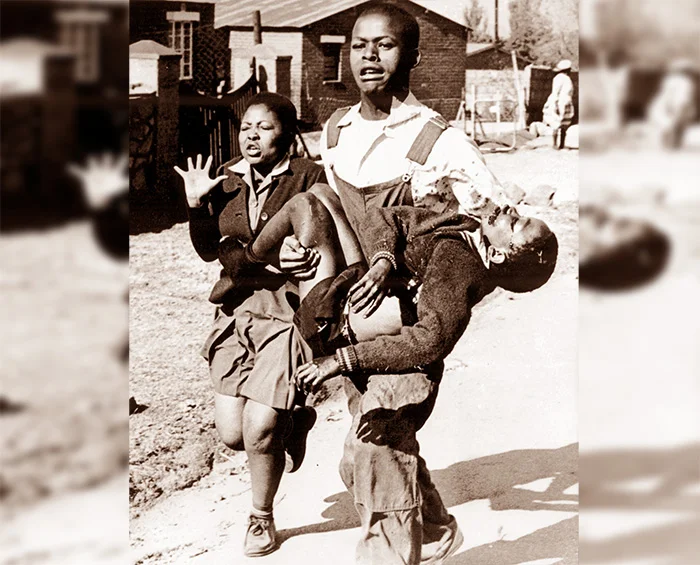
On 16 June 1976 began the revolt of school students in Johannesburg’s black underserved settlement complex, which kick-started the process of dismantling Apartheid.
Long before the formal advent of apartheid in 1948, South Africa functioned as a colonial extraction machine in which indigenous Africans were systematically subordinated to serve imperial economic interests. British and Afrikaner elites together built a political economy centred on mining, settler agriculture, and control of strategic sea routes around the Cape, dispossessing Africans of land and pushing them into cheap labour roles. The apartheid system installed by the National Party after 1948 did not create racial domination from nothing; it rationalised and intensified an existing colonial order into a more tightly codified regime of segregation, labour control, and political exclusion.
Education, Bantustans,
and Soweto as a system
The Afrikaner minority acted within this framework, as a settler elite securing both its own material interests and the wider stability of Western capital in southern Africa, especially for mining conglomerates extracting gold and other minerals. Apartheid laws on residence, movement, and employment guaranteed a dependable, rightless African workforce while insulating white society politically and spatially from the Black majority.
This structure of domination included education as a core instrument. The 1953 Bantu Education Act created a separate, inferior schooling system for Black South Africans, explicitly geared to produce a subservient labour force rather than citizens able to compete with whites in skilled or professional roles. Curriculum, funding, and language policy all reinforced the message that Africans had no legitimate claim to equal participation in the country’s political or economic life.
Simultaneously, between 1951 and 1970, the apartheid state constructed “Bantustans,” such as Transkei, Bophuthatswana, Venda, and Ciskei, designating them as supposed ethnic “homelands” for different African groups. By removing Africans from the national political community and assigning them to Bantustans, the regime tried to strip them of South African citizenship and rebrand them as “foreign” labour migrants inside what was still their own country.
Soweto (South Western Townships), purpose-built on the outskirts of Johannesburg, the urban counterpart to this system, functioned as a segregated dormitory zone to house Black labourers. They serviced, but had no permanent geographic, economic, or political rights in the white city. The Bantustans and Soweto formed two halves of the same apparatus: the former as reservoirs and political dumping grounds, the latter as tightly controlled labour depots feeding South Africa’s industrial and mining core. By 1976, this system had matured, with Bantustans entrenched, and Soweto grew into a massive, overcrowded township with acute housing shortages, poor services, and deep political resentment.
The Afrikaans decree and the spark in Soweto
Against this background, the decision to impose Afrikaans as a medium of instruction appeared as a provocation rather than a mere educational reform. In the mid1970s, the Apartheid government moved to require that key subjects, such as mathematics and social sciences, be taught in Black secondary schools in Afrikaans, while others would be in English. Black South Africans perceived Afrikaans as the language of the oppressor, associated with the police, the army, and the bureaucracy of apartheid, whereas they linked English to broader opportunities and international solidarity.
The policy hit Soweto’s schools amid rising enrolment, Black Consciousness ideas spreading among youth, and high levels of frustration over overcrowding, unemployment, pass laws, and Bantustan citizenship. Student organisations such as the South African Students’ Movement and local committees in Soweto mobilised against the Afrikaans decree, framing it as an attempt to deepen mental and material subjugation by forcing children to learn through a language many neither liked nor mastered, further sabotaging their prospects in an already unequal system.
On 16 June 1976, an estimated 10,000–20,000 students, many in school uniform, marched peacefully through Soweto to protest against the Afrikaans policy and to present their demands to authorities. The police confronted them, firing tear gas, and then using live ammunition on unarmed children, killing several. A photograph of the dying body 13-year-old Hector Pieterson travelled around the world and came to symbolise the brutality of apartheid.
The shooting of schoolchildren transformed what began as a focused protest on language into a broad uprising against apartheid itself. In Soweto, anger at the killings spilled into widespread unrest: clashes with police, the burning of government buildings and administration offices, seen as symbols of state control, and running street battles that lasted for days.
The state responded with escalating force, deploying heavily armed police and later military units, making mass arrests, and using banning and detention without trial in an attempt to crush the uprising. But rather than restoring the preexisting “calm,” repression helped spread the revolt. Protests, school boycotts, solidarity actions and general strikes erupted in other townships and cities across South Africa, including areas around Pretoria, Cape Town, Port Elizabeth, and parts of the Eastern Cape. This wave of unrest left hundreds killed (estimates place the death toll at more than 500) and thousands injured or detained, exposing the depth of youth anger and the fragility of everyday order in Black urban South Africa.
From Sharpeville to Soweto
The 1960 Sharpeville massacre marked an earlier turning point: the killing of protesters against “pass laws” led to the banning of the African National Congress (ANC) and Pan-Africanist Congress (PAC), the launch of underground armed struggle, and a decade of intense repression that enforced a harsh surface calm inside South Africa. However, at that time fewer independent African states existed nearby to provide safe haven, and internal organisations had less experience and fewer networks to sustain long-term clandestine activity.
Soweto 1976 occurred in a regional and international environment very different from that of Sharpeville. By the mid1970s, most African states north of South Africa gained formal independence, and the liberation struggles in Mozambique and Angola had succeeded in 1975, creating new frontline states sympathetic to antiapartheid movements. The South African military’s intervention in Angola in 1975–76, alongside Western-backed forces, underscored the apartheid regime’s determination to shape regional outcomes and, at the same time, highlighted its vulnerability to guerrilla and conventional resistance supported from neighbouring territories.
By 1976 the antiapartheid movement, both inside and outside the country, had matured. The Soviet Union and its allies (notably East Germany and Cuba) provided much-needed material help. Cities such as Lusaka and Dar es Salaam had established exile infrastructure; Mozambique and Angola had liberation governments; and South Africa contained expanded networks of student, religious, and community organisations. Soweto thus occurred at a moment when the system’s underlying tensions, generated by decades of dispossession, Bantustan policy, and labour exploitation, had grown cumulatively.
Within South Africa itself, the 1970s saw a resurgence of labour militancy (such as the Durban strikes of 1973), the growth of Black Consciousness, and a new generation of students and young workers with a shared experience of inferior schooling, Bantustan citizenship, and township life. In this environment, state violence in Soweto was not interpreted as an isolated atrocity but as confirmation that peaceful protest inside the existing constitutional framework had reached its limits.
Umkhonto we Sizwe
Before 1976, Umkhonto we Sizwe (MK), the armed wing of the ANC, operated mainly from exile, with a relatively small number of highly selected recruits engaged in sabotage and limited guerrilla operations, particularly after heavy repression in the 1960s. Estimates suggest that by the mid1960s only a few hundred recruits had managed to cross borders to join MK. The Soweto uprising changed this dramatically.
In the months and years after 16 June, thousands of politicised students and young people left South Africa, often via Botswana, Swaziland, Mozambique, and other neighbouring states, driven by grief, anger, and a desire to “strike back” at the regime. Many of these exiles joined MK camps and political schools run by the ANC and allied movements, with some studies estimating roughly 3,000 new recruits in the two years immediately following the uprising and more than 11,000 between 1976 and the unbanning of the ANC in 1990. This “1976 generation” carried with it the ideological imprint of Black Consciousness and the lived memory of township confrontation, helping transform MK from a small sabotage organisation into a larger force preparing for protracted guerrilla warfare and closer integration with internal township structures.
The mass youth rebellion and subsequent exodus to join MK represented a shift from incremental, “quantitative” changes in struggle capacity to a “qualitative” change in the nature and scale of resistance.
Shattering apartheid’s “stability” and the role of capital
The Soweto uprising shattered the illusion that apartheid could secure stable, lowcost resource extraction indefinitely. After 1976, South Africa experienced recurrent waves of township unrest, the growth of powerful trade unions, and a more sustained internal challenge that made large parts of the country intermittently “ungovernable” by the mid1980s. Repression remained intense, but each new cycle of violence tended to produce more recruits, deepen international isolation, and raise the political and economic costs of maintaining the system.
Internationally, the images of children shot in Soweto energised sanctions and divestment campaigns, while regionally the growing strength of liberation movements limited Pretoria’s freedom of action. Over time, powerful segments of domestic and international capital began to view apartheid not as a guarantor of order, but as a generator of risk and instability that threatened long-term profitability and access to markets and finance. In the 1980s, figures connected to major firms such as Anglo American and Consolidated Gold Fields played key roles in initiating quiet contacts between representatives of the apartheid state and the ANC in exile, including secret meetings facilitated by Michael Young of Consolidated Gold Fields in England.
Soweto 1976 can be seen as a structural break: it undermined the regime’s internal legitimacy, produced a new generation of militant activists, and accelerated the militarisation and politicisation of townships. Crucially, it set in motion feedback loops, through repression, resistance, international pressure, and capital’s recalculations, that made the eventual negotiated end of apartheid less a question of “if” than of “when.”
Vinod Moonesinghe, formerly chair of the Ceylon German Technical Training Institute and of the National Institute for Language Education and Training, serves as a Convenor of the Asia Progress Forum.
by Vinod Moonesinghe
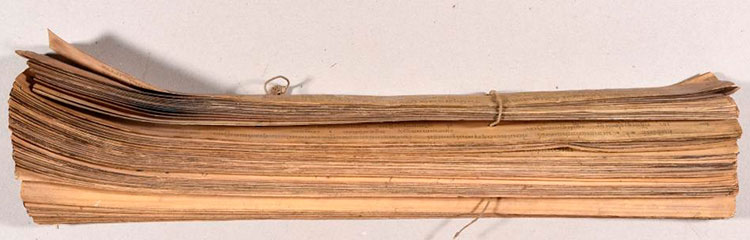
Medical prescriptions were written on palm leaf manuscripts. Bhesajja Manjusa (Casket of Medicine) is the oldest medical manuscript written in Sri Lanka. There is a Sinhala translation of the Pali original in the Colombo Museum library. The manuscript of Bhesajja Manjusa held in Ayurveda Research Institute, Maharagama was included in the UNESCO Memory of the World national register in 2016.
The Bhesajja manuscripts can be found in Dalada Maligawa Patirippuwa library, Galvene purana vihara Angoda, Mettaramaya in Bambalapitiya, Colombo Valukaramaya at Pamburana, Matara and Kosgodella Raja Maha Vihara.
Sirancee Gunawardana says she has seen a medical manuscript belonging to Sirimavo Bandaranaike, handed down from her grandfather, a medical practitioner. It had prescriptions using herbs, roots, barks of trees and indigenous seeds, for ailments ranging from stomach trouble, pediatric, pregnancy, fever, headaches, cholera, smallpox, chicken pox, eye, cancer and snake bite. It was written in 1850. There are 39 other such manuscripts in the collection.
Palm leaf manuscripts mention immersion therapy and acupuncture. Sirancee has paid special attention to acupuncture. Sirancee found a very old manuscript on acupuncture in the Institute of Ayurveda, Rajagiriya. It is very well illustrated. Pelmadulla Raja Maha Vihara has a 12th century manuscript giving acupuncture points for humans, also for cock, horse, buffalo. The full manuscript is reproduced in her book. She has also included in full another acupuncture manuscript by Sadiris Perera.
Manuscripts that give remedies for snake bites were known as Sarpa Veda oth. Colombo Museum Library has one where the prescriptions are given in verse. Sirancee owned a ‘very interesting’ ola on herbal treatment of cobra and other snake bites.
The Sinhala state had its own healing system in the Udarata before the British took over the kingdom. Western medicine soon displaced the Vederala (local doctor) but some parts of the native system survived up to the middle of the 20 century.
The Report of the 1950 Commission on the Ancient system of Sinhalese Medicine (SP 17 of 1950) stated that Sihala “vedakam” was a distinct medical system with its own drugs, diagnostic methods and treatments. It was particularly effective for snake bite, fractures, rabies and cancerous tumors, said the Report.’ The Sinhala “vedakam” or “Desiya chikithsa” physicians saw themselves as a distinct group, belonging to ‘veda parampara’ through the possession of secret family recipes, the report said. A national health system cannot operate on secret prescriptions. This secrecy would have been a later aberration.
Sinhala vedakam prescriptions would have been recorded on palm leaf. The National Library of Sri Lanka has publicized the fact that it has manuscripts on Sinhala Vedakam. Hugh Neville collection has a Sinhala pharmacopeia, written in the 19th century. Pelmadulla Purana Viharaya had an ola dealing with surgical specialties, written in Sinhala, copied in 1862.
There are many palm leaf manuscripts written in Sinhala containing herbal prescriptions that have originated in Sri Lanka, said Sirancee. Firstly, there is the collection of prescriptions which the vederala carries with him for immediate use. It is a collection compiled by him or his ancestors and is known as ‘beheth vattoru potha.’ This potha contained prescriptions for emetics, purgatives, medicine for diarrhea, piles, worm treatment and blood ailments.
There is a ‘beheth vattoru pota’ in the Kosgoda vihara library. There are about 103 beheth vattoru poth in the TPP Goonetilleke collection. Historical Manuscripts Commission was shown a Udarata beheth potha, one manuscript held in a curated collection, contained the prescriptions of a physician named Hatara Korale Huhgampola Ruppege Dara Mudalihami (sic).
Elephants played a major role in the Sinhala state. There are many palm leaf manuscripts on how to manage elephants and treat their illnesses. The manuscript titled ‘Hasti Yoga Silpa’ , seen by Sirancee is in verse and has charms for protection of elephants. Harakola Sri Anandarama Viharaya in Gampola had two manuscripts on elephants, one manuscript was an Ali veda pota , the other was on elephant charms and sensitive spots.
Palm leaf manuscripts provide scattered information on music, song and dance. Alutnuwara Raja Maha Vihara had a manuscript with music notations. Sirancee Gunawardana in her book ‘Palm leaf manuscripts of Sri Lanka’ said she has not seen anything else like it and published a photograph of the manuscript in her book. Historical manuscripts Commission found a manuscript which had a stanza in very rare meter in a chant for Kataragama Deviyo.
On the subject of drums, Andreas Nell presented the Colombo Museum library with a copy of an ola titled “Bera, davul, tammata adiye upata.” The original is in the British Library. The Tupavamsa manuscript mentions 20 types of drums used in Sri Lanka. The “Isavara nartaya” manuscript in the Colombo Museum, which is in Sinhala, gives 32 tunes for drums written in kavi style.
Regarding dance, Hugh Neville collection has a manuscript titled “nrutya upata“. It has three sections, gitaya, nrutya, and pada and provides 36 different beats for the drum. Alutnuwara Raja Maha Vihara had a manuscript called Pada Natuma.
There were three other manuscripts on movement. Hugh Nevill collection had a 100-year-old manuscript on Sokari nateema. There were many palm leaf manuscripts on leekeli in Colombo Museum library. Historical Manuscripts Commission (1951) had found a manuscript, titled Pandama ganna kavi ,5 verses sung to invoke the blessing of the gods before the dancers approached the road. This would have been for a perahera.
There was some information on the song. Historical Manuscript Commission (1933) found in family collections, lots of panegyric type songs for the Udarata kings. One manuscript had verses sung at the coronation of Kandyan kings. Verses sung at the coronation of king Narendrasinha were recorded in a manuscript titled “Sringara alamkaraya” (1842).
Sri Lanka has a notable “kavi” tradition. There are many kavi manuscripts dating from the 18th and 19th centuries, in palm leaf collections. An interesting feature in these collections are the kavi to be sung at work, including songs to be sung when spinning thread.
Colombo museum library has a manuscript with two sets of “kavi“. Kavi to be sung when weeding paddy fields and “Nelum kavi” to be sung when reaping the harvest. The “Nelum kavi” manuscript was prepared by Tikiri Yadesguru in 1862.
Olas contain kavi for harvesting Kurakkan. Colombo Museum library has a manuscript on growing kurakkan (millet), how to sow the grain, protect it, fence it from wild pigs , how to put up a watch hut, how to harvest the millet and how to cook it.
Hugh Nevill collection has a “kavi” manuscript titled “Peduru Male” This manuscript relates the story of a rush mat weaving competition between a mother-in-law and a daughter in law. They first weave ordinary mats then a strong knotted mat, gold flowered mat, tasseled mat, mat with hare, mat showing a jackal about to eat the hare, then a deer mat, leopard mat, cat, rat, lion and elephant mats. Thereafter, they weave a mat with a buddha’s throne and finally a mat with loha-maha-paya and dagoba design. Sirancee observed that this ballad describes various unusual mat designs and provides information on the art of weaving rush mats.
Historical Manuscripts Commission (1933) found an architectural plan at Lankatilleke vihara, 17th or 18th century. It was the ground plan of a royal palace, a ‘raja maliga salasma’. Design was rectangular, with ornate triangular and circular buildings within the space. The plan gave the Sinhala names for special buildings and the different departments set aside for different services. This was of considerable value since these words are rarely met and indicates the functions of these apartments.
Cook books were found among curated collections. Dalada Maligawa library has a book titled ‘Supa Sastra’ containing recipes and food prepared for the king. Hugh Neville collection has a manuscript in Sinhala which gives rules for selecting a cook, how to arrange the logs in a hearth, how to make a fire and how rice should be cooked. The ola gave instruction on cooking fish, meat, broths, vegetables, sambals, chutneys and spiced curries. The ola had recipes for making milk rice, pickle, jackfruit curry, and oil cakes. There was advice on how to avoid overeating and how to distinguish poisons in food.
Traditional Sinhala society believes in astrology. Horoscopes are cast when a child is born. The chart and interpretation are inscribed on an ola. This was the tradition up to the first half of the 20 century. My horoscope, prepared in the 1940s, is on palm leaf. It is wound round and round and fastened through a slit in the leaf itself. From 1960 onwards, horoscopes were written on paper, but there are persons capable of recording them on palm leaf, if requested, even today.
Traditional Sinhala society also believes in the supernatural. There is a great fear of sorcery in our society. Yantra (talismans) are used in Sri Lanka to counter such sorcery. Yantra are mystic diagrams and geometrical designs, drawn onto strips of palm leaf or engraved onto copper or gold foil which are then rolled up and worn in a little metal case around the neck or upper arm as a protection against harm.
Yantra are meant to be protective charms primarily, but yantra are also used for curative purposes, for soliciting favors, and in rituals of revenge. Yantra were inscribed on palm leaves until recently. They are now etched on thin copper sheets.
Yantra manuscripts are profusely illustrated. They have diagrams and also ritual images drawn on them. Yantra drawings are in secret code. The Hugh Neville collection has a manuscript containing seven yantras which served as guidelines for those creating yantra images. These were kept secret by the practitioners.
LSD Peiris has one of the largest collections of Yantra manuscripts in the country. He has written a book titled ‘Yantra drawings in palm leaf, Sri Lanka.’ He has studied the subject for many years and has some interesting observations.
He says there is intricacy in the art forms way beyond what is needed, while preserving their ritual properties and intended purpose. I found the proportions and the ornamentation around the geometric outlines, the circles, ovals, squares, rectangles, diagonals and arcs very pleasing to the eye, though I could not appreciate their ritual significance.
Peiris says the script in which the text is written has ‘the authentic flavor of the Sinhala written script’. He says it is possible to locate fragments of letters from the Sinhala alphabet in the drawings. This can be seen in the fingers, toes and facial features of the figures drawn in the yantra. CONCLUDED.
REFERENCES
1st report of Historical Manuscripts Commission 1933 SP 9 of 1933
3rd report of Historical Manuscripts Commission 1951, SP 19 of 1951.
Report of the Commission on ancient system of Sinhalese medicine SP 17 of 1950
Sirancee Gunawardana Palm leaf manuscripts of Sri Lanka . 1977
L.S.D. Pieris Yantra drawing on palm leaf Sri Lanka 2018
https://www.natlib.lk/NLDSB/unesco-mow/
by KAMALIKA PIERIS

On June 2, 2026, the U.S. government once again proposed a new tariff on 60 economies, including Sri Lanka, because these countries have failed “to address the importation of goods made with forced labor.” The proposed additional duty on 54 economies is 12.5%. On other six economies, namely Canada, Ecuador, European Union, Indonesia, Mexico and Pakistan, the proposed additional duty is 10%. Surprisingly, Sri Lanka is in the 12.5% group.
This U.S. policy initiative marks a significant paradigm shift in international trade rules, as this is the first time that forced labour has been used as a rationale to trigger blanket retaliatory tariffs by any country. Earlier, “forced labour” was factored into bilateral trade agreements and preferential trade arrangements. For example, the European Union’s GSP labour arrangement, which was introduced in 1999, provided an additional tariff preference to developing countries which had ratified and effectively implemented the key ILO conventions, including two core conventions on forced labour. Interestingly, Sri Lanka was the first developing country to become eligible to receive tariff concessions under this arrangement. In other words, more than twenty years ago, the European Union recognized that Sri Lanka had effectively implemented core ILO conventions on forced labour and provided additional duty concessions.
So then, why did the U.S. suddenly introduce these “forced labor” tariffs?
To understand this, let’s start from that awful day in April 2025… the day President Trump announced with much glee and fanfare his sweeping “reciprocal tariffs” on over 90 countries under the International Emergency Economic Powers Act (IEEPA). The additional tariffs imposed ranged from 10% to 50%. Sri Lanka was hit with one of the highest additional tariffs at 44 percent! Mercifully, this was later negotiated down to 20%.
On February 20, 2026, the United States Supreme Court struck down these reciprocal tariffs and ruled that President Trump did not have the authority to impose tariffs under the IEEPA, because under the Article 1 of the U.S. Constitution the power to impose tariffs belongs exclusively to the U.S. Congress.
With that, President Trump’s executive powers on tariffs narrowed down to the Trade Act of 1974 (Trade Act), which grants the President the authority to combat unfair foreign trade practices. Section 122 of the Trade Act authorizes the President to impose temporary import surcharges to address fundamental balance-of-payments problems, up to a maximum of 150 days. Section 301 of the Trade Act authorizes the USTR to investigate and impose sanctions on foreign countries that violate U.S. trade agreements or engage in policies that are “unjustifiable,” “unreasonable,” or “discriminatory” and burden U.S. commerce.
Thus, immediately after the Supreme Court’s decision, on February 24th, President Trump imposed an additional 10% tariff on all imports from all trading partners, under Section 122. However, these tariffs cannot be extended beyond July 24, 2026, without the approval of the U.S. Congress. So, on March 12, 2026, the USTR initiated sixty investigations into the United States’ most important trading partners, from where 99.4 percent of U.S. imports are shipped. “….to determine whether the acts, policies, and practices of various economies related to the failure to impose and effectively enforce a prohibition on the importation of goods produced with forced labor are actionable under Section 301 of the Trade Act of 1974.“
Sri Lanka’s Failure to Participate in Consultations and Public Hearings
After launching the 301 investigations on March 12th, the USTR requested consultations with the governments of each economy subject to investigation, and the USTR participated in confidential government-to-government consultations with 46 economies. As per available information, Sri Lanka was one of the fourteen countries that did not participate in these consultations. In addition to that, a public comment period was also opened for written submissions by all governments and other stakeholders, and the Section 301 Committee conducted a public hearing on April 28 and 29, 2026, with interested parties. Sri Lanka was once again conspicuously absent from these public hearings. It is difficult to understand why the Embassy of Sri Lanka in Washington, D.C., failed to participate in these consultations and public hearings! Participating in these consultations is an important part of the duties of Washington based diplomats. For example, at the public hearing held on April 29, Pakistan was represented by the ambassador and a leading garment exporter. Diplomats and trade experts from India, Indonesia, Egypt and other countries participated at these hearings. According to available information, by participating in these discussions and by taking appropriate follow-up measures, Pakistan, Ecuador, and Indonesia managed to get into the 10% duty category.
As these consultations are ongoing, one can only hope Sri Lanka will at least participate in the public hearings on July 7 and manage to get the duty reduced. After all, in the fight against forced labour, Sri Lanka has a much better track record than most other countries.
(The writer, a retired public servant, can be reached at senadhiragomi@gmail.com)
by Gomi Senadhira

Hundreds of cats stolen for food in Vietnam rescued by police, welfare group says

Canada-Netherlands ODI abandoned due to dangerous pitch in Toronto

Da Silva and Jangoo earn recalls for West Indies’ Tests against Sri Lanka

Spinners make it two in two for England

Messi hat-trick fires holders Argentina to win over Algeria at World Cup

UNDP, Central Bank deepen financial literacy drive to build economic resilience

‘Dates have the highest sugar content to fight Coronavirus’

Sunday Island 27 December – Headlines

#SundayIsland 17th December – Headlines

Sunday Island – 28th March

Sunday Island Headlines – 21 March

Sunday Island – 21st February – Headlines
-
 News5 days ago
CIABOC summons Yoshitha over his participation in British Navy training programme
-

 Sports2 days ago
Tharanga set for high-profile javelin clash in Ostrava
-

 News5 days ago
Justice Minister responds to social media claims he represented Easter Sunday ringleader
-

 News2 days ago
Release of 2025 O/L results likely to be delayed
-

 Features3 days ago
Politics of protected species
-

 News4 days ago
Commonwealth lawyers urge Lanka to uphold rule of law
-

 News2 days ago
Theft of USD 2.5 mn from Treasury: CoPF accused of complicity in NPP cover-up
-

 News1 day ago
Beijing Capital Airlines to resume flights to Colombo signalling boost to tourism