
Latest News
Spinners’ show followed by Feroza’s 62* put Pakistan a step closer to semi-final

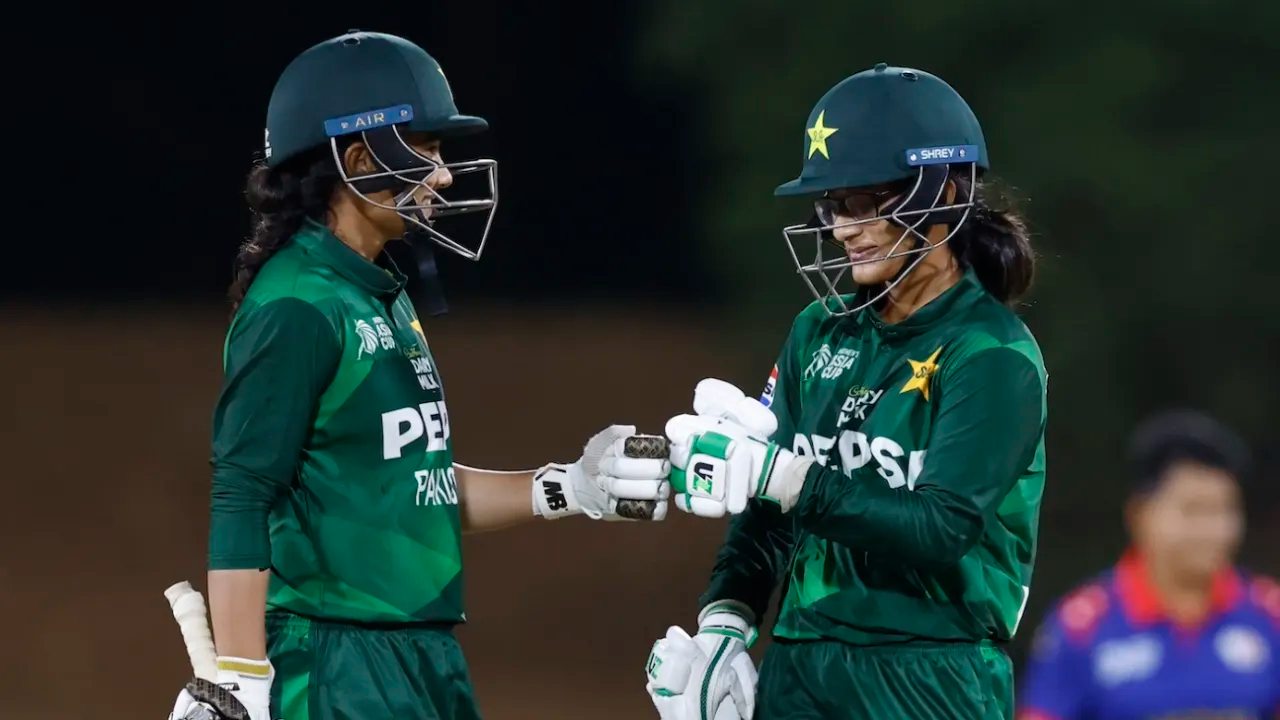
Gull Feroza and Muneeba Ali all but secured Pakistan’s spot in the semi-finals of the Women’s Asia Cup 2024 with their back-to-back century stands, sealing the first ever ten-wicket win in the tournament’s history. Pakistan’s spinners, who took seven of the eight wickets to fall, set up the ten-wicket thumping of UAE in Dambulla.
Sadia Iqbal was the pick of the bowlers with 2 for 11 at an economy of 2.75. Nashra Sandhu and Tuba Hassan contributed with two-fors, the former taking the first two wickets after UAE’s openers made their way out of the powerplay and the latter dismissing Theertha Satish.
UAE scrapped their way to 103 for 8 but Muneeba and Feroza hunted the total down with 35 balls to spare. As a result, UAE end their campaign with three losses.
Brief scores:
Pakistan Women 107 for 0 in 14.1 overs (Gull Feroza 62*, Muneeba Ali 37*) beat UAE Women 103 for 8 in 20 overs (Theertha Satish 40; Sadia Iqbal 2-11, Tuba Hassan 2-17, Nashra Sandhu 2-22, Nida Dar 1-15) by ten wickets

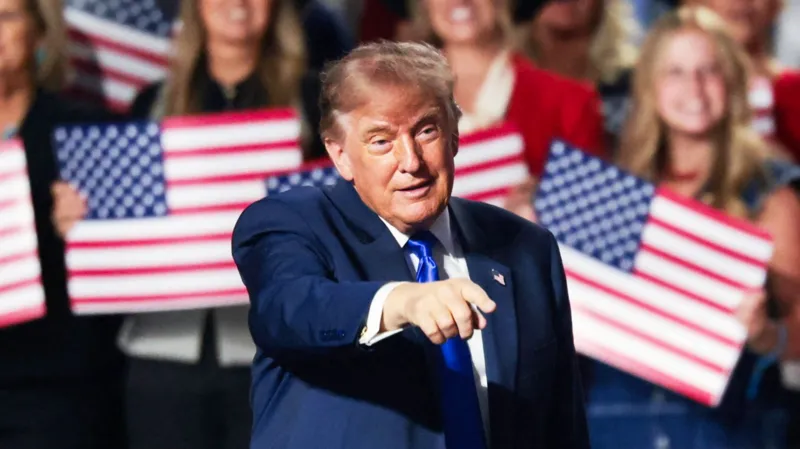
US President Donald Trump says he would offer every adult American a $5,000 (£3,700) payout if Republicans win both chambers of Congress in November’s midterm elections – a plan that would cost more than a trillion dollars.
The offer was made in a speech at the party’s first-ever convention in the middle of a US presidential term.
He gave no details on how it would work or be funded – saying only that the money would have to be spent in the US. Vice-President JD Vance has linked the plan to the revenue that Trump has raised for the US government using tariffs.
Democrats labelled it an “empty promise” and others questioned whether such a pledge was legal or feasible.
It may be the first time a US president offered such a payout to Americans, in the context of an election year plea to get out and vote.
The idea drew raucous applause at the convention and Trump seemed to relish the moment.
There are nearly 270 million American adults, meaning a $5,000 payout would cost the US government some $1.3 trillion.
Questions have begun to be raised about whether his plan is feasible – especially as prices rise in the US, partially as a result of the war that the US and Israel started with Iran in February.
Iran’s retaliation has included attacks against US bases and allies in the Gulf – but crucially it has largely closed the Strait of Hormuz, through which about a fifth of the world’s oil and liquefied natural gas used to transit.
The blockage has caused fluctuations in oil prices worldwide and Trump has faced pressure from his party to end the war.
On Wednesday, the US president warned his supporters that the war would not end until after the midterms and that oil prices would not come down until then.
He made the comments ahead of his speech in Texas, repeating it at the convention where he argued that short-term economic pain was worth it to prevent Tehran from developing nuclear weapons.
Trump’s long speech at the Republican convention in Dallas, Texas, touched on the core of the conflict – the impact on Americans’ standard of living. His pledge to increase their spending power drew raucous applause in the hall.
“If the Republicans win the House of Representatives and the United States Senate, both of them,” Trump said, “I will issue a dividend to every adult citizen in the United States of America for $5,000.”
“We don’t want you going to Canada to spend the money,” he said.
“We don’t want you going to China, to Germany. You got to spend the money in the United States of America.” It is not clear how the spending would be monitored.
The BBC has asked the White House for further clarification on how Trump’s plan would work.
One former Republican strategist and pollster said the promise should be firmly seen in the context of an election that is now less than two months away.
“It is an extraordinary promise, and I’m not sure where that money is going to come from – but it is campaign season,” Robert Moran told the BBC World Service’s Newsday programme.
Moran described it as a “novel solution to an interesting problem”, noting that the historical tendency was for the party of the president to lose seats in Congress during the midterm elections.
It is not the first time that Trump promised such payouts – he has previously proposed $2,000 cheques to be funded by tariff revenues.
Vice-President JD Vance indicated that these post-election payments could similarly be made possible by the money Trump has raised using his wide-ranging tariff programme.
“What the president is talking about is fundamentally a dividend for American workers,” Vance told Fox News.
“We’re taking in an extraordinary amount of revenue because the president of the United States is actually standing up to both foreign companies but also foreign countries who’ve been taking advantage of America’s workers.”
Vance went on to say: “I don’t think it’s a controversial idea.”
Other US politicians in the past have also promised economic rewards in return for electoral success.
For instance, Democrats in Georgia promised $2,000 relief payments if their party took control of the Senate at the height of the Covid-19 pandemic.
In the US, Congress authorises spending. The midterm elections, which will be contested on 3 November, will ultimately decide whether or not Trump’s Republican Party keeps its hold over both the House and Senate.
During his speech in Dallas, the president did not say whether he planned to ask Congress for such approval for the payments – which he dubbed “Trump Dividends”.
However, in addition to the overall cost to the US treasury, the latest proposal from the US president may raise legal questions.
Federal laws prohibit payments that are intended to influence voting.
The issue came to the fore ahead of the 2024 presidential election, during which billionaire Trump supporter Elon Musk offered cash incentives to registered voters in seven swing states who signed a certain petition.
However, some experts say the promise made by Trump during Wednesday’s speech may be seen as a pledge to cut taxes, which is legal.
John Day, a lawyer in New Mexico, said the plan would indeed be legal. It constituted a promise made to all adult citizens of the US during a campaign, rather than a “payment to individuals to try to get them to vote in a particular way”, he told the Associated Press.
Meanwhile, an election law expert who spoke to the New York Times said Trump’s promise would also be covered by the free-speech protection guaranteed under the First Amendment of the US Constitution.
[BBC]

The Italian Naval Vessel ‘ITS Giuseppe Garibaldi’ arrived in Sri Lanka today, 9 September 2026, on a replenishment visit.
The Sri Lanka Navy welcomed the visiting ship in accordance with naval traditions at the port of Colombo.
‘ITS Giuseppe Garibaldi’ is a 180m long Landing Helicopter Aircraft Vessel commanded by Captain Marco GUERRIERO.
During the ship’s stay in Sri Lanka, the Commanding Officer of ‘ITS Giuseppe Garibaldi’ is scheduled to call on the Commander Western Naval Area.
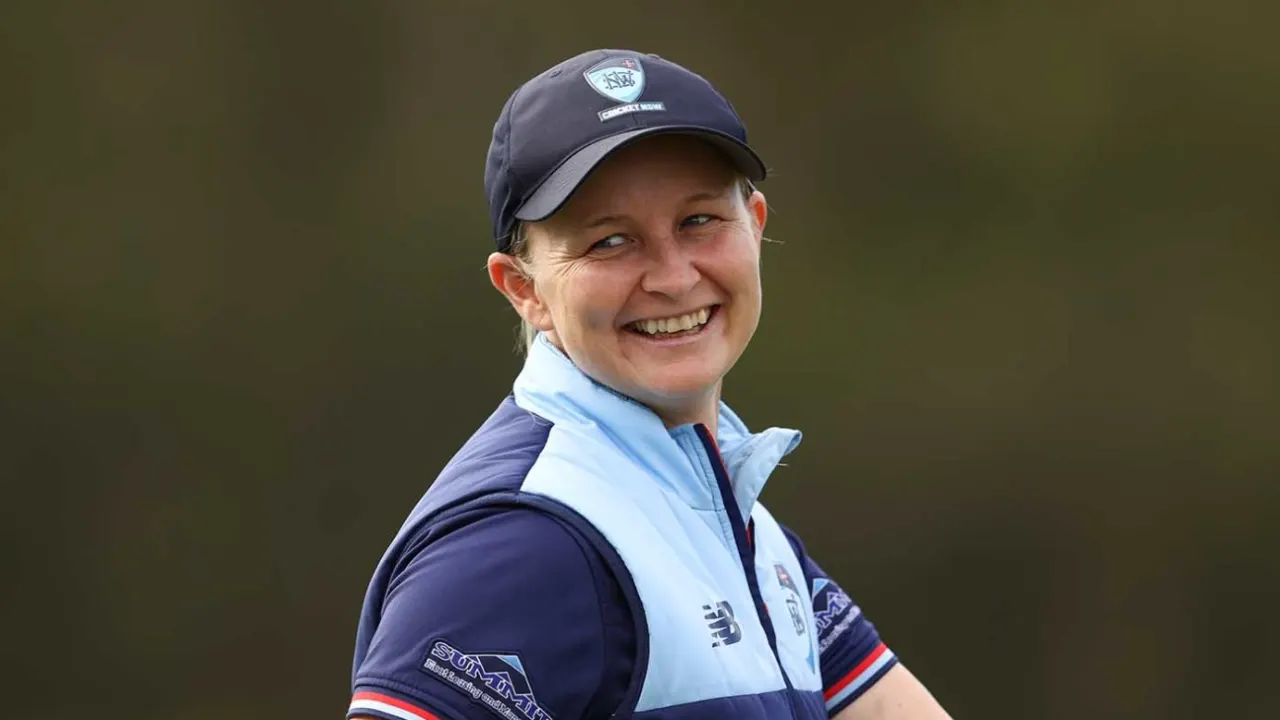
Leah Poulton the former Australia batter turned coach and administrator, will join England Women as managing director, succeeding Clare Connor.
Poulton will be charged with overseeing the success of the international team and pathways after the ECB cited her “impressive track record driving women’s cricket forward in Australia”.
Poulton earned 90 caps for Australia before retiring in 2015 and has spent the past six years as head of elite female cricket at Cricket New South Wales. There, she oversees cricket performance operations across two WBBL franchises, women’s state cricket and one of the world’s largest women’s cricket talent pathways.
Before that, she spent three years at Cricket Australia as a High Performance Coach, where she was instrumental in setting up Australia’s enviable women’s high-performance pathway, which included developing the Australia A and Under-19s women’s teams.
In her new role, she will be accountable for the performances of England Women, England Women A, England Women Under-19s and the overall women’s high-performance system.
Poulton will start in her new role in November with England set to host the Women’s Ashes next summer. She fills the role vacated by Connor, who announced earlier this year that she would be leaving the ECB after a career spanning 18 years, and will work closely with England Women’s head coach Charlotte Edwards and captain Nat Sciver-Brunt.
“I’m incredibly excited and honoured to be joining England, and to have the opportunity to help shape our programmes and, most importantly, invest in our people,” Poulton said. “I’m looking forward to working with Charlotte, Nat and the wider team, building on the strong foundations already in place and taking the programme forward.
“I know how vital strong pathways and a healthy domestic game are to sustained success, so I’m looking forward to connecting with people across the game and helping give the next generation of English players every opportunity to thrive. It’s a huge privilege to be part of England Women, and I can’t wait to get started.”
Richard Gould, the ECB’s CEO, said that with the senior women’s team had made under Edwards, appointed last year, and having reached the final of their recent home T20 World Cup, England Women were well placed for a successful era.
“I’m delighted to welcome Leah on board to help us build on this and take us to the next level,” Gould said. “She has a deep understanding of international cricket from her playing career and has built an impressive reputation in her time in administration.
“I believe she and Lottie will be a formidable combination, and will continue the team’s progress and development as we compete for the ICC Women’s Champions Trophy and Women’s Ashes in 2027.”
[Cricinfo]

Trump says every adult American will get $5,000 if Republicans win midterms

Protesters mistake Pakistan’s U-19 team for asylum seekers in Portsmouth

Steps are being taken to provide accommodation facilities for 16,000 university students – Prime Minister

Showers will occur in the Western and Sabaragamuwa provinces and in Kandy, Nuwara-Eliya, Galle and Matara districts.


Sri Lanka reiterates its territory won’t be used against India

‘Dates have the highest sugar content to fight Coronavirus’

Sunday Island 27 December – Headlines

#SundayIsland 17th December – Headlines

Sunday Island – 28th March

Sunday Island Headlines – 21 March

Sunday Island – 21st February – Headlines
-

 News6 days ago
Namal remanded until Sept. 18 over Airbus deal investigation
-

 Latest News5 days ago
Tharanga creates history with Diamond League crown in Brussels
-

 News5 days ago
Dispute which triggered listed company director being detained at BIA resolved
-

 Features4 days ago
After the parade: What a traffic OIC’s walk-out tells us
-
 Opinion7 days ago
In Memory of Dr Upatissa Pethiyagoda
-

 Editorial6 days ago
Power vs Equality
-
Editorial4 days ago
Arrests as theatre
-

 Latest News6 days ago
SLPP MP Namal Rajapaksa arrested by CIABOC