
News
Talawakelle Tea Estates PLC and WNPS PLANT bring meaning to World Environment Day, through a massive reforestation drive

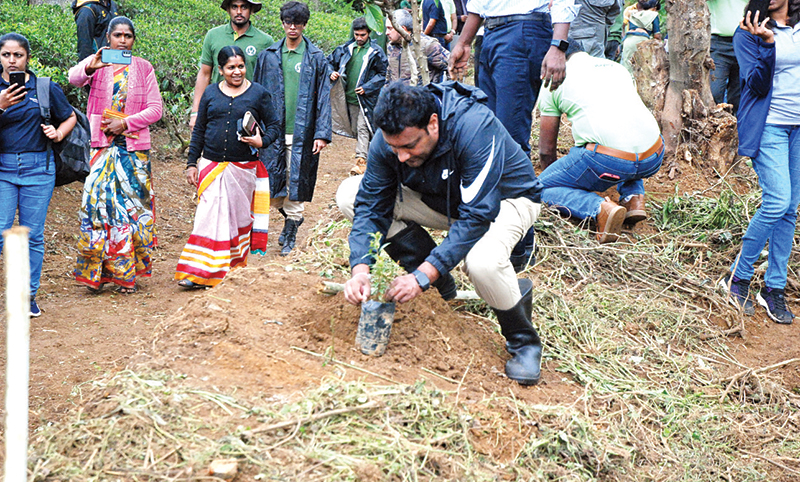
Embarking on a visionary restoration journey, Talawakelle Tea Estates PLC (TTE PLC) and WNPS PLANT jointly initiated one of the largest ecosystem restoration projects in recent times. This exciting but challenging, project in the central highlands aims at reforesting and creating a continual 13 km long forest passage bordering the Nanu Oya and Agra Oya banks, and will be supported by potentially different partners for each segment of the corridor, a WNPS news release said.
Celebrating World Environment Day on June 5, and the theme of this year- land restoration, desertification, and drought resistance, TTE PLC and WNPS PLANT launched the project with a tree planting program on the Somerset and Bearwell estate segments. The project will run through twelve estates under TTE PLC – Somerset, Bearwell, Dessford, Radella, Palmerston, Great Western, Mattakelle, Calsay, Clarendon, Holyrood, Wattegoda and Logie, and will create connectivity to the Great Western Mountain range forests.
The project spreads over four to five years and easily requires over 50,000 native trees and would create between 150 to 200 acres of new forest in the process. Giving life and hope to many wild species in the region, the initiative employs local community for the physical work, creates new plant nurseries and will have a baseline biodiversity study done as part of the process, the release explained.
“Restoring lands and bringing back biodiversity is critical for us to re-balance our hill country ecosystems. We desire to enhance the quality of life for all communities in and around our plantations, and protecting water sources, preventing flooding and helping people live in harmony with all species is very much a part of this vision.
“This initiative will yet again demonstrate our commitment and we are pleased to partner with WNPS PLANT on this ambitious multi-partner project” said Mr. Senaka Alawattegama, Director/ Chief Executive Officer of Talawakelle Tea Estates PLC.
The tree planting event brought together key figures and officials from the Central Environmental Authority, Forest Department, and Nuwara Eliya’s Assistant Divisional Secretary, along with key officials and volunteers from TTE PLC, WNPS, PLANT and the WNPS Youth Wing. The initially planned restoration work on the Somerset estate segment is funded by Avanti and Murtaza Esufally, whose generosity and social consciousness made a conservation dream a reality. The project invites added partners to join and take on the different segments in a similar fashion.
Speaking at the event, WNPS Senior Manager – Administration and Sustainable Initiatives, Ms. Rangika Perera called out the rich 130-year history of WNPS and outlined the PLANT vision of building connected forest corridors around the south-western parts of Sri Lanka and creating a social movement which anchored on private sector participation and land ownership. She iterated the importance of focusing on our future generations within the actions we take today.
Talawakelle Tea Estates PLC (TTE PLC) is renowned for its high-quality Ceylon tea and is owned by Hayleys Plantation Sector, which is one of the most awarded and certified plantation companies in the world. TTE PLC owns 16 estates, and some spread over Nanu Oya, and the Agra Oya. As part of their commitment towards restoring nature, TTE PLC has made it a priority to protect these natural spaces. Maintaining the riparian forest ecosystem associated with the upstream influents is crucial in safeguarding the overall health and function of the river.
WNPS PLANT is Sri Lanka’s largest private sector led ecosystem restoration initiative and aims at creating a reasonably connected forest corridor network, exclusively targeting the endemic rich southwestern quarter of the country (see www.plantsl.org). Recognized for its restoration work backed by solid science, PLANT mainly focuses on assisted natural regeneration and the natural regeneration of ecosystems.
Supported by many partners and working in over 20 locations already, PLANT focuses only on plant species that are native and typically found in that specific region or climatic zone and such efforts have further contributed to the continuous growth and success of WNPS PLANT. The WNPS (Wildlife and Nature Protection Society) and PLANT (Preserving Land and Nature (Pvt) Ltd) signed an MOU with the Hayleys Plantations in early 2023 to protect over 2,500 acres of land jointly and has been working continually on different initiatives since then.
Dr Roshan Rajadurai, Managing Director of Hayleys Plantation Sector expressed his appreciation to the teams for their commitment and hard work. “We began this journey with a clear vision of making a transformative impact on conservation, knowing full well that as a leading plantation company, we had a major obligation to Sri Lanka considering the land footprint that we are custodians for. Our entire Plantation sector has committed to deepen our conservation work through the engagement with PLANT and we see exciting outcomes through the progress so far” he added.
“Hill country wildlife is already challenged by increased incidents of conflict, and human populations continually keep encroaching into wilderness spaces for commercial and residential needs. By planting native species and creating corridors, PLANT and our partners aim to boost biodiversity, restore natural habitats, provide animal passages, improve water quality, and promote sustainability in this environmentally valuable region” said Sriyan de Silva Wijeyeratne, Chairman of PLANT.
Over the next few years, this project will continue to be a major focus of both parties as they battle against natural and man-made challenges. They feel that partners coming together to support a large project of this nature, is the only way forward in making impactful interventions of scale within Sri Lanka.

News
Showers will occur at times in the Western, Sabaragamuwa, Central, North-western and Northern provinces and in Anuradhapura, Galle and Matara districts


WEATHER FORECAST FOR 16 MAY 2026
Issued at 05.30 a.m. on 16 May 2026 by the Department of Meteorology
According to the today’s latest weather analysis, the low-pressure area located northeast of Sri Lanka, still persists. The Department of Meteorology is continuously monitoring the behavior, development and path of the system.
Due to the influence of the above system, Showers or thundershowers will occur at times and cloudy skies are expected in the Western, Sabaragamuwa, Central, North-western and Northern provinces and in Anuradhapura, Galle and Matara districts. Fairly heavy showers about 75 mm are likely at some places in these areas. Showers or thundershowers may occur at a few places in the Uva and Eastern provinces after 1.00 pm.
The general public is kindly requested to take adequate precautions to minimize damage caused by temporary localized strong winds and lightning during thundershowers.
News
Lanka’s eligibility to draw next IMF tranche of USD 700 mn hinges on ‘restoration of cost-recovery pricing for electricity and fuel’

The International Monetary Fund (IMF) said on Thursday that the completion of Sri Lanka’s combined Fifth and Sixth Reviews, under the Extended Fund Facility (EFF), remains subject to approval by its Executive Board, which is expected to meet in the coming weeks.
Addressing a media briefing, IMF Communications Department Director, Julie Kozack, said IMF staff and Sri Lankan authorities had reached a staff-level agreement on 09 April.
She noted that several prior actions must be completed before the programme can be submitted to the Executive Board, including the restoration of cost-recovery pricing for electricity and fuel, measures to protect vulnerable groups, and the completion of financing assurances.
Upon Board approval, Sri Lanka would gain access to approximately US$700 million in financing, Kozack said.
Responding to a question on whether the government’s fuel subsidy scheme — including the Rs. 100 per litre diesel subsidy — was consistent with the IMF’s pricing framework, Kozack declined to comment directly on the measure. However, she reiterated that the programme requires both cost-recovery pricing reforms and safeguards for vulnerable communities.
Kozack also observed that Sri Lanka had recently faced “two very large shocks”, referring to Cyclone Ditwah and the wider external impact of the Middle East conflict, which, she said, had affected both the economy and the public.
Despite these challenges, she said Sri Lanka’s reform programme was yielding positive results, citing strong fiscal performance in 2025, progress in debt restructuring, 5 percent economic growth, and inflation returning to positive territory following a period of deflation.
She reaffirmed the IMF’s commitment to supporting Sri Lanka’s reform agenda, stressing that the institution continues to work closely with the authorities to sustain economic stability and recovery.
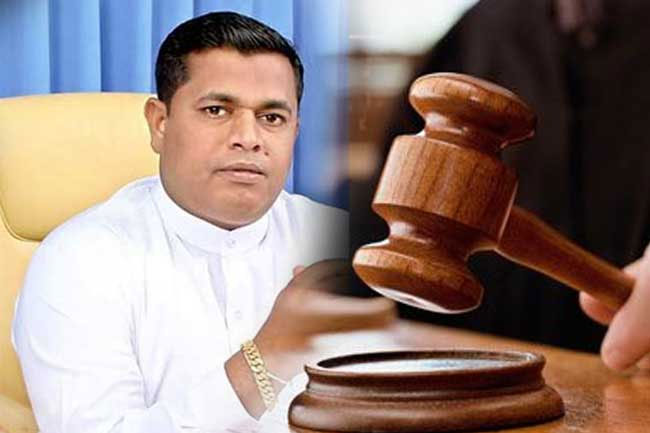
Former Arachchikattuwa Pradeshiya Sabha Chairman, Jagath Samantha, was yesterday sentenced to five-and-a-half years’ rigorous imprisonment by the Chilaw High Court after being found guilty of assaulting the Arachchikattuwa Divisional Secretary.
The court also ordered Samantha to pay Rs. 1 million as compensation to the victim, failing which he will serve an additional 24 months in prison.
The case had originally been filed against former State Minister Sanath Nishantha and his brother Jagath Samantha over the assault incident.
However, following the death of Sanath Nishantha, in a road accident on the Katunayake Expressway, on 25 January, 2024, only Samantha appeared before court for the proceedings.
The verdict was delivered after the High Court considered the evidence and submissions presented during the trial.

Fatima Sana smashes fastest fifty in women’s T20Is

On the hunt for China’s most famous green tea

Marsh onslaught, Akash three-for dent Chennai Super King’s playoffs chances

ICC suspends funding to Cricket Canada over governance-related issues

Showers will occur at times in the Western, Sabaragamuwa, Central, North-western and Northern provinces and in Anuradhapura, Galle and Matara districts

Lanka’s eligibility to draw next IMF tranche of USD 700 mn hinges on ‘restoration of cost-recovery pricing for electricity and fuel’

‘Dates have the highest sugar content to fight Coronavirus’

Sunday Island 27 December – Headlines

#SundayIsland 17th December – Headlines

Sunday Island – 28th March

Sunday Island Headlines – 21 March

Sunday Island – 21st February – Headlines
-

 News6 days ago
Lanka Port City officials to meet investors in Dubai
-

 News3 days ago
Ex-SriLankan CEO’s death: Controversy surrounds execution of bail bond
-

 Features4 days ago
When University systems fail:Supreme Court’s landmark intervention in sexual harassment case
-
Features4 days ago
High Stakes in Pursuing corruption cases
-

 Midweek Review3 days ago
A victory that can never be forgotten
-
 Features6 days ago
Serving as MR’s Deputy Finance Minister and the travel the job entailed
-

 Features6 days ago
Bengal Turns BJP, Didi Falls
-
 News5 days ago
150th anniversary celebrations of Ave Maria Convent, Negombo