
Features
Anita Desai – Indian Novelist


 I caught the infection of admiring almost anything Indian from my eldest brother – kind and pacifist like Gandhi; superb gentleman like Jawaharlal Nehru. His most prized possession was an autographed copy of Discovery of India, given him by Nehru himself when he visited Ceylon in 1957 in celebration of the Buddha Jayanti. A cherished memory of his was seeing newly wed Nayantara, daughter of Vijayalakshmi Pandit, leave by train in the Delhi station with husband Sahgal on their honeymoon.
They were surrounded by family. And what was Aiya doing over there? Intrepidly he had taken Mother on pilgrimage to Gaya and other places, all by himself in 1949, when pilgrimages were rare and fraught with risks.
Thus my admiration for Indian authors – Anita and Kiran Desai, Arundhati Roy, Jhumpa Lahiri, Vikram Seth and Aravind Adigar, some of whose books I have read. The film producing trio of yesteryear: script writer – Ruth Prawer Jhabvala, director – James Ivory, and producer/money collector – Ismail Merchant captured my fascination, as did their films; to mention but three: Heat and Dust, Remains of the Day and A Room with a View. Added to this list are films off the well known Indian born directors now living in New York and Canada: Mira Nair and Deepa Mehta whose trilogy of films – Water, Earth, Fire are masterpieces.
I was sent an article in a recent Guardian newspaper of an interview Emma Brockes had with Anita Desai in her home in a small town in New York State. This whet my appetite, also because she is in her late 80s and having made a couple of waves with her comments on Indian feminism and breaking away from the traditionally conservative Indian marriage to live in separate continents. She wanted more in life which the West offered and he preferred to stay home and nurture his business while also venturing into writing, fiction included. Thus I read more about her.
Life
Anita was born on June 24, 1937, in Musoorie, to East Bengali businessman father, D N Mazumdar who had married a German girl in Germany in 1927 while there on study. Thus the language spoken at home was German and Anita studied in English and of course spoke Hindi, Urdu and Bengali. Her early education was at Queen Mary’s Higher Secondary School, Delhi, and her BA in English Literature from the University of Delhi.
She was married at age twenty in 1958 to Ashvin Desai who owned a computer software business. She had four children – sons Rahul and Arjun and daughters Tani and Kiran. The family holidayed by the sea in a place called Thul in Maharashtra State, which became the backdrop of her 1983 novel Village by the Sea about an impoverished family, published by Heinemann, which brought her the British Guardian Prize, and fame. Her first novel Cry of the Peacock was in 1963 when she was 26 years old.
In all she wrote 12 novels and was short listed thrice for the Booker prize: Clear Light of Day 1980; In Custody 1984; and Fasting, Feasting 1999. Her last three novels were published in 2000, 2004 and 2011. It was paradoxical then that her daughter Kiran won the Man Booker Prize in 2006 for her second novel Inheritance of Loss. The following year both mother and daughter were at the Galle Literary Festival.
Anita won in 1978 the Sahitya Akademi Award from the Indian National Academy of Letters. Also Padma Bushan honour in 2014. She is on the advisory Board of the Lalit Kala Akademi; a Fellow of the Royal Society of Literature, London, American Academy of Arts and Letters; Girton College, Cambridge University. She is Burshard Professor of Humanities at the Massachusetts Institute of Technology.
The door to the West was open when Girton College, Cambridge, invited her to be a visiting fellow. She moved to Britain in 1986 with her children; Kiran her youngest aged 15. Anita was in her late 40s. Two older children continued higher studies in the US; her eldest son opted to return to India; and she lived in England with Kiran. In 1993 Anita accepted a Fellowship at the Massachusetts Institute of Technology and later, Holyoke and Smith Colleges invited her to teach.
Kiran and she moved to Boston where she made her home, invited to and helped to settle down in the small township of Hadley in Massachusetts, by her friend Ruth Jhabvala who, along with James Ivory, lived in the area close to the Hudson River. She did not return to live in India, though her home in certain references is given as Dehradun. Probably her son lives here. Her husband stayed on in India and so a marriage of commuting between countries resulted. Desai had been made familiar with Europe by her German mother, who did not, however, leave India.
Anita expressed what was particularly new to her when she moved to teach in America: “of being regarded not anyone’s wife, or anyone’s mother. But as a writer. That was an amazing experience for me. Because in India it’s the other way round. It took some adjustment. I had to train myself to express my thoughts and opinions. I wasn’t used to that. I was never asked my opinion in India; I just kept quiet and listened to others.
And then I’d go back to India and start expressing my thoughts and they’d all look at me and say, ‘what’s happened to her? Why is she telling us what she thinks?!’ That still happens, frankly. After all these years. When we go back, Kiran and I, we have to be very careful not to express too much of our thoughts.” (Quoted from Brockes’ article).
Anita Desai has often said she approves the sense she has of not being tied to any one place. When she would return to India she used to find it not the country she had left. America too seemed alien. “It’s not my country. And other people here see me as a stranger too. It suits me, being a writer, always being apart, an observer rather than a participant.” Her latest novella Rosarita is said to sharply convey that sense of separateness and dislocation. She narrates her story in the second person addressing her protagonist as ‘you’.
It is set in Mexico, a place she loves to go to. Her writing in the second person was a novelty, she noted, never attempted before but done this time with an eye on effect, as she admits. “If you keep describing people as ‘you’, you are distancing yourself. In other words not getting too involved.” Brockes in her article suggests the novelist wanted to get at the tenuousness of life within which lies a much greater truth: “that we are not bound to our circumstances as we may like to believe.”
She’s lived in Hadley for 20 years while Kiran has moved farther, obtaining two masters degrees from Hollins and Columbia Universities. Anita hardly goes to New York and other cities, very seldom latterly to India.
Anita Desai has had her fair share of criticism and censure. An essay she wrote for the Times Literary Supplement in 1990 caused controversy. Titled Secret Connivance she wrote “women connive under their own subordination for some set mythic rites.” She would have justly critiqued conservatism that existed in India generally over emancipation and independence of women in general. She was also faulted for depicting the Urdu Poet around whom she wove her novel In Custody as an easy going dissolute. The backlash was severer when Ivory-Merchant-Jhabvala made a film of the book starring Sashi Kapoor and Shabana Azmi. However, by every consideration, Anita Desai could be considered a woman whom India can be proud of among the very many such who drew global attention and admiration down the years since the early 20th century.
She has said: “Well, what does one have? Just a few threads to hold one. After that, memories. Which may or may not be quite true.”


Sri Lanka’s construction industry has long been a central pillar of sustainable development. From roads and bridges to homes, schools, and hospitals, construction shapes the country’s physical landscape and supports economic progress. As the nation continues to rebuild and modernise, the demand for construction materials and infrastructure keeps rising. However, this growth also brings a significant environmental cost. Cement, steel, bricks, aggregates, and timber all require energy, resources, and transportation, contributing to carbon emissions and environmental damage. If Sri Lanka continues with traditional construction practices, the long-term impact on the environment will be severe.
The encouraging news is that Sri Lanka has many opportunities to adopt more sustainable construction practices while still maintaining the highest standards of quality and safety. Sustainable construction does not mean weaker buildings or lower standards. It means using sustainable materials, reducing waste, improving design, and choosing methods that protect the environment. Many countries have already moved in this direction, and Sri Lanka has the potential to follow the same path with solutions that are practical, affordable, and suitable for local conditions.
A promising option
One promising option is the use of Compressed Earth Blocks (CEB), which are different from the concrete blocks commonly used in Sri Lanka for the past 25 years. CEBs are made from soil mixed with a small amount of stabiliser and pressed using machines. Unlike traditional fired clay bricks, CEBs do not require high-temperature kilns, which consume large amounts of firewood or fossil fuels. This makes CEBs a low-carbon alternative with a much smaller environmental footprint. In Sri Lanka, CEBs are already used in eco-resorts, community housing projects, and environmentally focused developments. They offer good strength, durability, and thermal comfort, making them suitable for many types of buildings. By expanding the use of CEBs, Sri Lanka can reduce energy consumption, lower emissions, and promote locally sourced materials.
Recycled aggregates also offer significant potential for sustainable construction. These materials are produced by crushing concrete, demolition waste, and construction debris. In Sri Lanka, recycled aggregates are already used in road construction, particularly for base and sub-base layers. They are suitable for non-structural building work such as pathways, garden paving, drainage layers, landscaping, and backfilling. Using recycled aggregates reduces the need for newly quarried rock and aggregates, decreases landfill waste, and lowers transportation emissions. With proper quality control and standards, recycled aggregates can become a reliable and widely accepted material in the construction industry.
Timber and sustainability
Timber is another important area where sustainability can be improved. In the past, timber for construction was often taken from natural forests, leading to deforestation and loss of biodiversity. Today, this approach is no longer sustainable. Instead, the focus must shift to legally sourced timber from managed plantations. Sri Lanka’s plantation-grown teak, jak, and kubuk can provide high-quality, legally sourced timber for construction while protecting natural forests and supporting rural economies. Using plantation timber ensures that harvesting is controlled, trees are replanted, and the supply chain remains legal and ethical.
Beyond materials, sustainable construction also involves better design and planning. Buildings that are designed to maximise natural ventilation, daylight, and energy efficiency can significantly reduce long-term operating costs. Simple design improvements such as proper orientation, shading devices, roof insulation, and efficient window placement can reduce the need for artificial cooling and lighting. These measures not only lower energy consumption but also improve indoor comfort for occupants. Sri Lanka’s tropical climate offers many opportunities to incorporate passive design strategies that reduce environmental impact without increasing construction costs.
Waste reduction is another key component of sustainable construction. Construction sites often generate large amounts of waste, including concrete, timber offcuts, packaging, and soil. By adopting better site management practices, recycling materials, and planning construction sequences more efficiently, contractors can reduce waste and save money. Proper waste segregation and recycling can also reduce the burden on landfills and minimise environmental pollution.
Promoting sustainable construction
Public projects such as schools, hospitals, and government buildings can play a leading role in promoting sustainable construction. When government projects adopt greener materials and designs, the private sector follows. This creates a positive cycle where environmentally responsible choices become the industry standard. Public sector leadership can also encourage local manufacturers to produce sustainable materials, improve quality standards, and invest in new technologies.
Sri Lanka also carries a proud and remarkable history in construction, with achievements that continue to inspire the world. The engineering brilliance behind Sigiriya, the advanced urban planning of Polonnaruwa, the precision of the Aukana Buddha statue, and the sophisticated water management systems of ancient tanks and reservoirs all demonstrate the deep knowledge our ancestors possessed. These historic accomplishments show that innovation is not new to Sri Lanka; it is part of our identity. As the world moves toward 2050 with increasing sustainability challenges, Sri Lanka can draw strength from this heritage while embracing modern technologies and sustainable practices. With the combined efforts of skilled professionals, industry experts, academic researchers, and strong government support, the country can introduce new systems that improve efficiency, reduce environmental impact, and strengthen resilience. By working together with determination and sharing knowledge across generations, Sri Lanka’s construction industry can build a future that honours its past while leading the way in sustainable development.
Foundation of sustainable development
Sri Lanka’s construction industry has always been a foundation of sustainable development. Today, it also has the chance to take a leading role in sustainability. By choosing sustainable materials, reducing waste, improving design, and supporting responsible sourcing, the country can build a future that is both modern and environmentally responsible. Sustainability is essential for Sri Lanka’s long-term goals of reducing carbon emissions and limiting the impacts of global warming. As Sri Lanka moves forward, the construction industry must embrace sustainability not only as an environmental responsibility but also as an opportunity to create stronger, smarter, and more resilient buildings for future generations. Sri Lanka has the talent, the heritage, and the technical capacity to shape a more sustainable future, and with the right national direction, the construction industry can become a model for the region. If professionals, policymakers, and communities work together with a shared vision, the country can transform its construction sector into one that protects the environment while supporting long-term progress.
About the Author: P.G.R.A.C. Gamlath Menike,
BSc (Hons) Quantity Surveying (University of Reading, UK), MSc Quantity Surveying (University College of Estate Management, UK), MCIArb, Doctoral Student, Department of Building and Real Estate, The Hong Kong Polytechnic University, Hong Kong, is a Senior Quantity Surveyor: Last Project (2022 -2025) Hong Kong International Airport Terminal 2 Construction Project, Gammon Engineering Construction (Main Contractor).
By P.G. R. A. C. Gamlath Menike

Palm leaf manuscripts have been in existence in Sri Lanka since ancient times. The two oldest palm-leaf manuscripts found in Sri Lanka today are the Cullavagga Pâli manuscript of the H. C. P. Bell collection, which is held at the Library of the National Museum, Colombo, and the Mahavagga Pâli manuscript in the University of Kelaniya collection. Photocopies of both are available at the Library of the University of Peradeniya. Both are dated to 13 century. Cullavagga manuscript has wooden covers richly decorated in lac with a design of flowers and foliage.
Karmmavibhâga
However, the oldest known Sinhala palm leaf manuscript in the world is the Karmmavibhâga which was found in a Tibet monastery in 1936 by the Indian scholar Rahul Sankrityayan. Rahul Sankrityayan, (1893–1963) former Kedarnath Pandey, was an Indian polymath, who searched out rare Buddhist manuscripts on his travels abroad. Sankrityayan visited Sri Lanka as well. Vidyalankara Pirivena is mentioned.
Sankrityayan visited Tibet several times to collect manuscripts from the Buddhist monasteries there. In May 1936 on his second visit to Tibet, Sankrityayan visited the Sa-skya monastery. The Chag-pe-lha-khang Library in this monastery was specially opened for Sankrityayan.
He stated in his autobiography that when the clouds of dust which greeted this rare opening of its doors had subsided, they beheld rows of open racks where volume on volume of manuscripts were kept. “After rummaging around, I came across palm-leaf manuscripts. They were not wrapped in cloth, but were tied between two wooden planks with holes through them.” Sankrityayan found several important manuscripts he had been looking for, in that collection.
Sankrityayan catalogued fifty-seven manuscripts bound in thirty-eight volumes. The thirty-seventh volume was written in the Sinhala script. Sankrityayan records that this volume contained ninety-seven palm- leaves each of which measured 18 1/4 by 1 1/4 in. (46 x 3 cm.) and that there were seven lines of writing on each folio.
According to Sankrityayan, these Sinhala texts originally belonged to a Sri Lankan monk called Anantaśrî who had come to Tibet in the time of ŚSrî Kîrttidhvaja (Kirti Sri Rajasinha). Analysts noted that Sankrityayan does not give the source of this information and the manuscript makes no mention of Anantaśrî.
Sankrityayan had taken with him to Tibet, one Abeyasinghe, (Abhayasimha) to help him with copying manuscripts. They made hand-copies of the important manuscripts. Abhayasimha had copied about 250 to 350 strophes each day. But he fell ill due to the extreme cold and was sent home in June. Abeyasinghe had written letters home during his stay in Tibet.
Photographs of the manuscripts found during Sankrityayan’s expeditions in Tibet are preserved at the National Archives in Colombo. There is also a copy in Vidyalankara pirivena library The Historical Manuscripts Commission In its 1960/1961 report, drew attention to this manuscript, known as Sa-skya Codex, describing it as “a unique document.” (Annual Report of the Government Archivist 1960/61, 1963)
Sinhala scholar P.E.E. Fernando examined photographs of the Sa-skya Codex at the request of the Historical Manuscripts Commission and assigned it to the 13th century. The Historical Manuscripts Commission, dated it to either twelfth or the thirteenth century.
The Historical Manuscripts Commission observed that this manuscript was of great value for the study of the development of the Sinhala script. Ven. Meda Uyangoda Vimalakîrtti and Nähinne Sominda in their edition of the Karmmavibhâga published in 1961 agreed that the Sa-skya Codex represented an early stage in the evolution of the Sinhala language.
Mahavamsa
The Mahavamsa is considered a unique historical document. There is nothing like it in South Asia, and probably all Asia, with the exception of China. Mahavamsa provides a historical account of events, with emphasis on chronology and dating. This, it appears, was rare at the time.
However, Mahavamsa is not a political history, though that is the popular perception of it. It is a religious history. It was written to record the introduction and entrenchment of Buddhism in the country. Other Buddhist countries, such as Cambodia, Burma and Thailand value the Mahavamsa for this reason. They held copies of the Mahavamsa and used events from it in their temple frescoes.
But Mahavamsa is also an important reference source for reconstructing the political history of Sri Lanka. Political and social facts are included in the Mahavamsa narrative when describing religious events, and this makes the Mahavamsa important for historians. This tradition of history writing, beginning with the earlier Sihala Attakatha and Dipawamsa, it is suggested, started in Sri Lanka in 2nd or 3rd BC.
Today, the Mahavamsa has become a major source of historical information, not only for dating kings, temples and reservoirs, but also for reconstructing ancient Sinhala society. The fact that Kuveni was seated beside a pond, spinning thread has been used to indicate that there was water management and textiles long before Vijaya arrived. Dutugemunu (161-137 BC) paid a salary to the workers building the Maha Thupa. This shows that money was used at the time.
Copies of the Mahavamsa have been treasured and looked after in Sri Lanka for centuries. They have been copied over and over again. The manuscripts were held in temple libraries because the subject of the Mahavamsa was the entrenchment of Buddhism in Sri Lanka.
The Mahavamsa manuscripts did not pop up suddenly during British rule as people seem to think. The British did not ‘discover’ the Mahavamsa. It was there. When the British administration started to take interest in the history of the island, the sangha would have directed them to the Mahavamsa, in the same way that they directed HCP Bell to the ruins in Anuradhapura and the Sigiriya frescoes. HCP Bell did not discover those either.
The British administrators saw the value of the Mahavamsa and copies were sent to libraries abroad. The Bodleian library, Oxford has a well preserved Mahavamsa manuscript, taken from Mulkirigala, which Turner used for his translation. Cambridge has two Mahavamsa manuscripts. The two copies at India Office library, and the copy in East India Library are probably in the British Library today. The Royal Library, Copenhagen, has a copy, consisting of 129 sheets, 12 lines to a leaf, written in good handwriting.
In Sri Lanka there are several copies of the Mahavamsa in the Colombo Museum Library. One copy, known as the ‘Cambodian Mahavamsa ‘is in Cambodian script. University of Peradeniya has at least three copies.
It is interesting to note that the Mahavamsa was known to the Sinhala elite and some had copies in their private libraries. The Historical Manuscripts Commission of the 1930s said in its first report that five copies of the Mahavamsa and a 19th century copy of the Dipawamsa were found in private collections.
The temple libraries had many copies of the Mahavamsa. Some were of very high quality. Wilhelm Geiger had looked at the copies held at Mahamanthinda Pirivena, Matara and Mulkirigala vihara. Asgiriya, Nagolla Vihara and Watagedera Sudarmarama Potgul vihara, Matara, are three of the many libraries that held copies of the Mahavamsa.
Sirancee Gunawardene examined the copy at Mahamanthinda Pirivena, Matara, very closely. She says that it is a very old manuscript. According to its colophon, the manuscript was first copied 400 years ago. It is in a very good state of preservation. It has 232 folios. Each 50 cm long 6.25 wide. Nine lines on each side, in Pali metric verse.
The writer of the manuscripts said that his version was an improvement on the copy. He wrote, “I will recite the Mahavamsa which was compiled by ancient sages. [their version] was too long and had many repetitions. This version is free from such faults, easy to understand and remember. It is handed down from tradition, for arousing serene joy and emotion’ .
The Mahamanthinda manuscript records the continuous history of 23 dynasties from 543 BC to 1758 AD. It refers to the principle of hereditary monarchy as 39 eldest sons of reigning monarch succeeded their fathers to the throne. It highlights the fact that fifteen reigned only for one year, 34 for less than four years, 22 kings were murdered by their successors, 6 were killed during battles, 4 committed suicide, 11 were dethroned.
Mahawansa as a World Heritage document
An ola manuscript of the Mahavamsa, held in the Main Library of the University of Peradeniya has been recognised by UNESCO as a part of World Heritage. UNESCO announced In 2023 that it has included the Mahavamsa as one of the 64 items of documentary heritage inscribed in the UNESCO’s Memory of the World International Register for 2023. The manuscript is dated to the early 19 century.
The certificate declaring the Mahawansa as a world heritage document was handed to the Chancellor of Peradeniya University by UNESCO Director General, who visited the University in 2024 specially to do so. She also unveiled a plaque marking the declaration.
The story began much earlier. The National Library of Sri Lanka and the Ministry of Buddha Sasana had jointly appointed a 6-member committee headed by Prof Malani Endagamage, to find the best preserved copy of the Mahavamsa in Sri Lanka. This would have been in 2000 or so. For two years, this team had examined copies from over 100 temples nationwide.
Temples around the country yielded copies, crumbling to well-preserved, reported Sunday Times. There was one from the Ridi Vihara that almost made the cut, but four other copies were shortlisted. One from the Dalada Maligawa, Kandy and three manuscripts from the Main Library of the University of Peradeniya. Three academics from the University’s History Department, Professors K.M. Rohitha Dasanayaka, Mahinda Somathilake and U.S.Y. Sahan Mahesh examined the three Peradeniya manuscripts
Dasanayaka said, “We poured over the copies together, and it became clear that one copy stood out. While the other two had numerous inconsistencies, this one, written in a curvy hand, was neat and beautiful. After more than two centuries, the manuscript was still very attractive, with a ‘flaming cinnamon orange’ cover and elegant lettering.
The first section of the manuscript ends with Mahasen (274–301 AD), written by the monk Mahanama. The second part ends at 1815. The author is given as Ven. Thibbotuwawe Buddharakkhita but he was dead by 1815. The final part was probably done by an acolyte. He has done a very neat job, seamlessly adding his bit, concluded Dasanayake.
This manuscript was acquired by the Library of University of Peradeniya when K. D. Somadasa, was the Librarian (1964 – 1970). It is held in the Main Library and its Accession Number is 277587.
National Library & Documentation Services Board of Sri Lanka, which administers the National Library of Sri Lanka submitted a nomination to UNESCO on behalf of this manuscript. UNESCO responded positively to the application.
UNESCO said the Mahavamsa was recognized as one of the world’s longest unbroken historical accounts, presenting Sri Lanka’s history in a chronological order from the 6th century BCE. The authenticity of the facts provided in the document has been confirmed through archaeological research conducted in Sri Lanka and India.
It is an important historical source in South Asia, said UNESCO. It was the first of its kind in South Asia, initiating a mature historiographical tradition. It has contributed singularly to the identity of Emperor Asoka in Indian history. The existence of a number of manuscripts of the Mahavamsa in several countries as well as the transliteration and translation of the text to several Southeast Asian and European languages stand testimony to its immense historical, cultural, literal, linguistic and scholarly values, .” UNESCO press release said.
Further, UNESCO found that this manuscript was correctly conserved at the University Library. The university and its library maintained high standards in safeguarding the palm-leaf manuscripts, preventing deterioration, declared UNESCO. (Continued)
REFERENCES
https://archives1.dailynews.lk/2021/02/25/local/242520/ola-leaf-mahavamsa-be-declared-world-heritage
Sirancee Gunawardana Palm leaf manuscripts of Sri Lanka . 1977 p 41,44-47 , 253 290 292, ,
N. E. I. Wijerathne Methods, Techniques and Challenges in Deciphering the Sa-skaya Codex. Vidyodaya Journal of Humanities and Social Sciences (2025), Vol. 10 (01) https://journals.sjp.ac.lk/index.php/vjhss/article/view/8571/6001
First report of the Historical Manuscripts Commision.1933 SP 9 of 1933. p . 53, 95, 96
https://journals.sjp.ac.lk/index.php/vjhss/article/view/8571/6001https://www.austriaca.at/0xc1aa5572%200x00314cc3.pdf
https://leftword.com/creator/rahul-sankrityayan/
https://www.sundaytimes.lk/230910/plus/in-search-of-the-perfect-mahavamsa-531513.html
https://www.dailymirror.lk/breaking-news/Mahawansa-declared-a-world-heritage/108-287528
https://mfa.gov.lk/en/visit-of-unesco-dg/
https://sundaytimes.lk/online/education/UNESCO-ready-to-support-digitalisation-of-Ola-leaf-books/290-1146314
https://media.unesco.org/sites/default/files/webform/mow001/53_131%252B.pdf
by KAMALIKA PIERIS

Tales of Mystery and Suspense – 1
“The House of Silk” is set in a grim Victorian winter, and moves from Baker Street to a luxurious suburban villa, from dingy pubs to elegant London clubs, from a correction school for boys high on a hill to Dr Silkin’s House of Wonders, which provided noisy low life entertainment. Holmes and Watson went there in search of the House of Silk, a name they had heard when looking into the death of one of Holmes’ Baker Street irregulars (slum children who ferreted out information for him) .
I do not think highly of sequels to books written by highly regarded writers, though I must admit that this dislike is based on just a few samples. But while in England I was given by my former Dean, with a forceful recommendation, a book about a Sherlock Holmes mystery, supposedly written by Dr Watson. I began on it soon after I got back home, and found it difficult to put down, so I suppose I will not look on Anthony Horowitz as an exception to my rule. I may even look out for his efforts at continuing the adventures of James Bond, though I suspect Fleming’s laconic style will be less easy to emulate.
“The House of Silk” is set in a grim Victorian winter, and moves from Baker Street to a luxurious suburban villa, from dingy pubs to elegant London clubs, from a correction school for boys high on a hill to Dr Silkin’s House of Wonders, which provided noisy low life entertainment. Holmes and Watson went there in search of the House of Silk, a name they had heard when looking into the death of one of Holmes’ Baker Street irregulars (slum children who ferreted out information for him). They had asked Holmes’ brother Mycroft for help in finding what and where this was, but he had warned them off, having been himself told by someone very senior in government that it might involve those in very high positions, and further inquiries might prove dangerous.
Needless to say, Holmes does seek further, and is lured to an opium den where he is drugged, to be found outside with a gun in his hand and the body of a girl beside him, the sister of the murdered boy Ross. A passer-by swears he had seen Holmes fire the shot, and the owner of the opium den and a customer swear that Holmes had taken too much opium and left the den in a demented condition. A police inspector who had been passing promptly arrests Holmes and Watson, and even their old acquaintance Inspector Lestrade finds it difficult to get access to him.
Watson eventually gets to see him when he is in the infirmary, after he has been told by a mysterious man that Holmes was going to be murdered before his case could be taken up. The man said he had earlier tried to get Holmes to investigate the House of Silk by sending him a white silk ribbon, such as had later been found tied round the hand of the murdered boy. But, as a criminal himself, he said, he could not reveal more, though he himself was horrified by the business of the House of Silk, which gave criminality a bad name, which is why he wanted it all stopped.
Holmes escapes from the infirmary, with a little help from the doctor whom he had once assisted earlier, right under the nose of the nasty Inspector Harriman. He then joins up with Watson, and having with the help of Lestrade overcome the men designed to kill him at Dr Silkin’s House of Wonders, he sets off, with an even large posse of policemen, to the House of Silk.
After much suspense, the habitues of the House of Silk are arrested, the Inspector having broken his neck in the course of a chase downhill, having fled when his misdeeds were exposed. The mastermind claims that he will not face a trial because of the important people involved, but instead falls down a staircase while in prison and breaks his neck. One of the noblemen involved commits suicide, but another, and the medical man who had sworn he saw Holmes kill the young lady, get off without charge.
But then we revert to the original story, which had involved an art dealer who came to Holmes because he was being followed by someone he thought was an American gangster out for revenge. This was because he had shipped some pictures to an American buyer, and these had been destroyed when a train was held up by an Irish gang and the coach with the safe in it dynamited. The buyer and the dealer had got a private agency to investigate, and this had ended with the gang being killed in a shootout, though one of the twins who led it had escaped. The buyer had subsequently been killed, and Mr Carstairs feared that the twin who survived had followed him to England.
Holmes and Watson went to Carstairs’ house, where they met his wife, whom he had met on the boat back from America, and his sister. Their mother had died some months earlier, when gas had filled her room after the flame had gone out. It transpired that there had been a break in, and some money and a necklace stolen from a safe, and it was in tracing these, through a pawnbroker, that Holmes and Watson had found the American murdered in the hotel where he had been staying.
The leader of the irregulars had come to tell Holmes that they had traced the man to the hotel, and Ross had been left on guard. He seemed terrified when Holmes and Watson and Carstairs turned up, but said he had seen nothing. When the boys had been dismissed, and the room opened up, the man was found dead, the murderer obviously having gained entrance through a window.
Holmes assumed the boy had seen someone he recognized, but he could not be traced, until he was found dead, horribly tortured. The silk band around his wrist then led Holmes to pursue the House of Silk. One of the boys at the school where Ross had been mentioned that he had a sister at a pub, and she, when confronted, asked in fear if they were from the House of Silk and then, having lunged at Watson with a knife, ran off – herself only to be found dead outside the opium den, which prompted the arrest of Holmes.
After the drama at the House of Silk, Holmes and Watson go to the Carstairs household, where he explains exactly what had taken place, identifying the murdered man as not a member of the gang but the head of the private agency which had investigated them. As my Dean told me, Horowitz then ties up all the loose ends with consummate skill, connecting with a fine thread all the malefactors, of various kinds.

Debutant Awais leads Pakistan’s strong reply after Abbas five-for

Peter Magyar sworn in as Hungary’s PM, ending Orban’s 16 years in power

Senior Sri Lankan monk arrested for alleged child sex crimes

Trade, Investment and Tourism Cooperation Forum strengthens economic ties between Sri Lanka and Vietnam

Accelerate projects related to resolving the public’s drinking water issues – President Instructs Officials

President of Vietnam and delegation departs Sri Lanka

‘Dates have the highest sugar content to fight Coronavirus’

Sunday Island 27 December – Headlines

#SundayIsland 17th December – Headlines

Sunday Island – 28th March

Sunday Island Headlines – 21 March

Sunday Island – 21st February – Headlines
-

 News3 days ago
MIT expert warns of catastrophic consequences of USD 2.5 mn Treasury heist
-
 News5 days ago
CJ urged to inquire into AKD’s remarks on May 25 court verdict
-
 News6 days ago
USD 3.7 bn H’tota refinery: China won’t launch project without bigger local market share
-
 News7 days ago
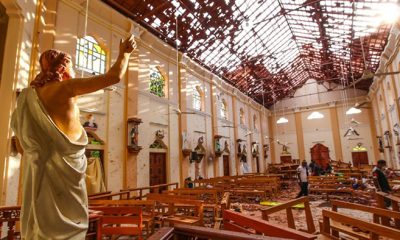
Easter Sunday Case: Ex-SIS Chief concealed intel, former Defence Secy tells court
-

 Business7 days ago
Dialog Surpasses 1,000 5G Sites, Strengthening Nationwide 5G Coverage
-

 Editorial3 days ago
Clean Sri Lanka and dirty politics
-

 Editorial6 days ago
Deliver or perish
-
 Opinion5 days ago
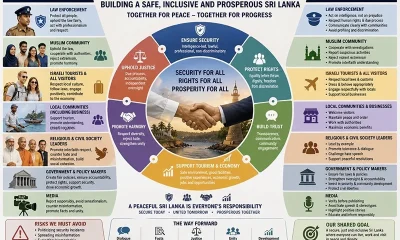
Security, perception, and trust: Sri Lanka’s delicate balancing act