
Business
Shift towards renewable energy in Sri Lanka seen as pivotal

By Ifham Nizam
The shift towards renewable energy in Sri Lanka is pivotal amidst growing concerns over energy security, said Professor Asanka Rodrigo of the University of Moratuwa, an expert in Electrical Engineering and a former Director General of the Sri Lanka Sustainable Energy Authority.
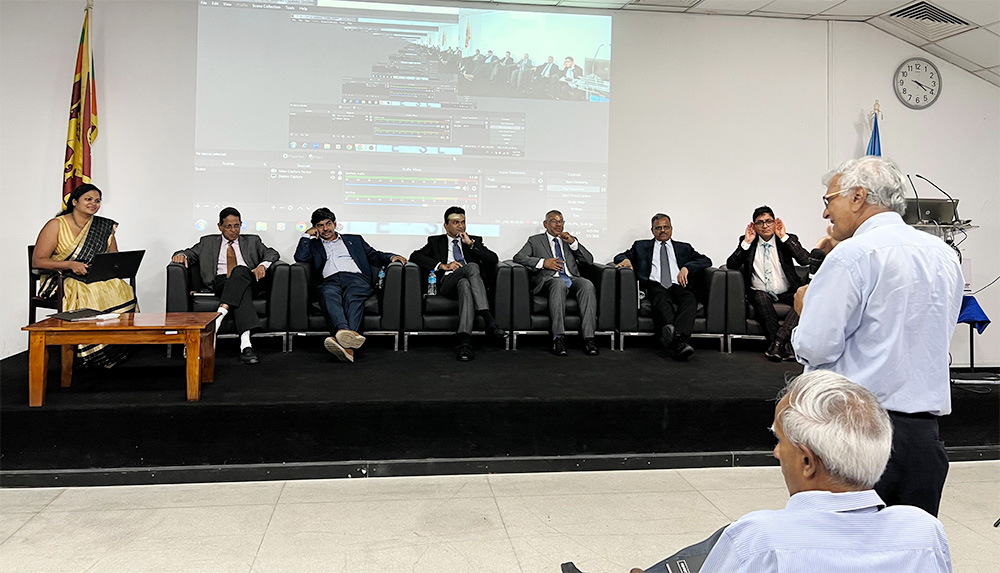
Speaking at the event titled ‘Energy Landscape of Sri Lanka: Transition Pathways’ at the Institution of Engineers Sri Lanka (IESL) at Wimalasurendra Auditorium in Colombo, on Monday he said; ‘The country’s historical reliance on imported fossil fuels has surged, prompting urgent measures to bolster indigenous resources like solar and wind power. Curtin Colombo, in collaboration with the IESL, hosted the event.
Professor Rodrigo stressed that integrating these intermittent sources into the national grid poses significant technical challenges, demanding upgrades in grid infrastructure, storage solutions and advanced management technologies.
“The journey towards a sustainable energy future hinges on robust policy frameworks, strategic investments, and international collaborations to navigate these complexities effectively, he said.
Excerpts from Dr. Rodrigo’s presentation: ‘Based on the latest data from the Sustainable Energy Authority, Sri Lanka’s primary energy supply comprises 38.1% petroleum and 13.1% coal from imported sources, with indigenous sources contributing 32.0% biomass, 10.5% major hydro, and 6.3% new renewable energy. Historically, somewhere in 1985, Sri Lanka relied on imported fossil fuels for only 20% of its energy needs, with the remaining 80% sourced from indigenous resources like biomass and hydro. However, the significant increase in dependency on imported fossil fuels since then has raised concerns about energy security.
‘To address this challenge, expanding renewable energy sources is the most feasible solution. This can be achieved through initiatives, such as, implementing large-scale solar projects, incentivizing rooftop solar installations, investing in wind farms and enhancing biomass energy use. Additionally, improving energy efficiency across industries, residential buildings, and commercial establishments, along with promoting energy-efficient appliances and conducting public awareness campaigns on energy conservation, can significantly reduce overall energy consumption.
‘Strengthening the policy and regulatory framework is essential to support renewable energy projects.
This includes investing in research and development to explore advanced renewable energy technologies and storage solutions. Improving grid infrastructure to accommodate a higher proportion of renewable energy sources is also crucial. Moreover, fostering public-private partnerships and leveraging international funding and technical assistance for large-scale renewable energy initiatives will be pivotal in achieving a more resilient and sustainable energy future for Sri Lanka.
‘Integrating indigenous resources such as solar and wind energy into Sri Lanka’s power grid presents several technical challenges. This is primarily due to their intermittent nature and the relatively small size of the country’s power system. Solar power generation varies with the time of day, weather conditions, and seasonal changes, while wind energy depends on unpredictable wind patterns. These fluctuations make it challenging to predict and manage power supply consistently.
‘Grid stability and reliability are major concerns when integrating these intermittent energy sources. Sri Lanka’s power grid operates at a specific frequency (50 Hz), and sudden changes in power generation can cause frequency fluctuations, potentially destabilizing the grid. Maintaining voltage stability is crucial as variations in power output can impact the safe operation of electrical equipment and overall grid stability. Given the relatively small scale of Sri Lanka’s power system, it is particularly vulnerable to instability from renewable energy fluctuations, necessitating significant upgrades to grid infrastructure.
‘To effectively integrate solar and wind power, Sri Lanka needs to modernize its grid infrastructure. This includes implementing advanced management systems, smart grid technologies, and real-time monitoring and control systems. Enhancing the capacity and reliability of transmission and distribution networks is crucial to accommodate variable output from renewable sources and prevent congestion. Energy storage solutions like battery energy storage systems (BESS) and pumped hydro storage can help mitigate the intermittency of solar and wind power by storing excess energy during peak generation and releasing it during low generation periods.’
IESL President Prof. Ranjith Dissanayake said by hosting this event, Curtin Colombo underscored its strengths and commitment to addressing crucial issues.
He said that the collaboration with IESL highlighted Curtin Colombo as a forward-thinking and engaged knowledge hub, fostering impactful discussions. ‘This partnership also emphasized Curtin Colombo’s strong ties with professional bodies and industries, particularly in the local engineering and energy sectors.’
The panel discussion focused on the current and future energy needs of Sri Lanka, exploring diverse pathways for energy transition. An introductory presentation provided accessible insights into energy and thermodynamics, laying the foundation for an in-depth exploration of renewable energy options available to Sri Lanka.
Panelists included professors from Curtin University and other institutions, showcasing a high-caliber academic network and international perspectives, which underscored Curtin Colombo’s global connections.


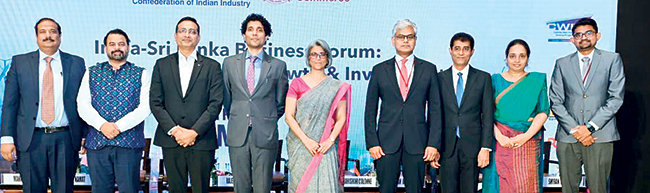
To catalyze bilateral trade and investment and drive regional economic integration, the Consulate General of Sri Lanka in Mumbai facilitated a series of high-level strategic engagements between The Ceylon Chamber of Commerce and leading Indian commercial institutions on May 13 and 14.
The delegation from The Ceylon Chamber of Commerce was led by its Chairman Krishan Balendra, CEO of John Keells Holdings Pvt Ltd and comprised a distinguished group of Sri Lankan industry leaders from Hirdaramani Group, Maliban Biscuit Manufactories (Pvt) Ltd, Sierra Cables PLC, A. Baur & Co. (Pvt) Ltd, Jetwing Travels (Pvt) Ltd, Ceylon Biscuits Ltd, Hayleys PLC, Vidullanka PLC, MAS India Clothing (Pvt) Ltd, Tudawe Brothers (Pvt) Ltd, David Pieris Holdings (Pvt) Ltd, Bank of Ceylon, Aitken Spence PLC, LTL Holdings Ltd. and Orel IT Pvt. Ltd.
On May 13, The Confederation of Indian Industry (CII) and The Ceylon Chamber of Commerce jointly hosted the ‘India–Sri Lanka Business Forum: Partnering in Sri Lanka’s Growth and Investment’ and an exclusive CEO interaction in Mumbai. The forum convened senior government officials, policymakers, and industry leaders from both countries.
These included, among others, High Commissioner of Sri Lanka to India Mahishini Colonne; Consul General of Sri Lanka in Mumbai Priyanga Wickramasinghe; Senior Economic Advisor to the President of Sri Lanka Duminda Hulangamuwa; Secretary (Protocol, FDI, Diaspora & Outreach) and Chief of Protocol Government of Maharashtra Rajesh Ravindra Gawande; Co-chairman, CII Western Region Sub-committee on International Trade & Investment and Chief Executive Officer, Polycab India Ltd. Anurag Agarwal; Chairman, CII Western Region Sub-Committee on Tourism and Hospitality and Executive Director, Kamat Hotels India Ltd Vishal Kamat and Secretary General & CEO of The Ceylon Chamber of Commerce Shiran Fernando.
Conversations centered on accelerating cross-border cooperation across high-priority sectors, including technology, manufacturing, healthcare, renewable energy, and digital transformation.
On May 14, the delegation engaged in productive Business-to-Business sessions with the IMC Chamber of Commerce and Industry, culminating in the formal renewal of the Memorandum of Understanding between The Ceylon Chamber of Commerce and IMC. The delegation also participated in an interactive session hosted by the World Trade Center (WTC) Mumbai and the All India Association of Industries (AIAI).
The two-day mission concluded with a robust exchange of views cementing a strong foundation for sustained bilateral collaboration and paving the way for a new era of industrial synergy between Colombo and Mumbai. (Consulate General of SL, Mumbai)
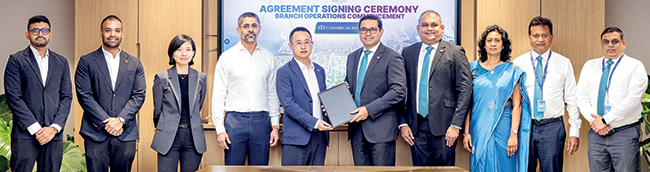
Demonstrating its commitment to supporting the nation’s next phase of economic transformation, Commercial Bank of Ceylon has become one of the first banks in Sri Lanka to enter into an agreement to establish a fully-fledged branch at Port City Colombo, marking a significant step in the Bank’s strategic expansion into the country’s emerging international financial hub.
The agreement was signed by Sanath Manatunge, Managing Director/CEO of Commercial Bank, and Xiong Hongfeng, Managing Director of CHEC Port City Colombo (Pvt) Ltd. The partnership further reinforces Commercial Bank’s position at the forefront of Sri Lanka’s evolving financial landscape.
The proposed branch will function as a fully-fledged banking branch, offering a full spectrum of products and services tailored to the needs of corporates, investors, businesses and retail customers operating within the Port City Colombo ecosystem. These will include digital banking facilities, trade services, foreign currency transactions, corporate banking solutions, deposits, lending, card services and remittance facilities.
By establishing a presence within Port City Colombo, the Bank said it aims to further strengthen its ability to support cross-border business and investment flows while positioning itself to meet the sophisticated requirements of global investors, multinational corporates and high-net-worth individuals expected to operate within the Special Economic Zone.
Commenting on this ground breaking initiative, Sanath Manatunge, Managing Director/CEO of Commercial Bank said the Bank’s decision to establish a fully-fledged branch within Port City Colombo reflects both its long-term confidence in the project and its readiness to support the evolving needs of a globally integrated financial ecosystem.
“As Sri Lanka’s largest private sector bank with a strong track record in serving corporates, international clients and high-value businesses, we see Port City Colombo as a pivotal development in the country’s economic future,” he said. “Our presence within this Special Economic Zone will enable us to seamlessly support cross-border transactions, facilitate international trade and investment, and deliver world-class banking solutions backed by advanced digital capabilities. Being one of the first banks to formalise plans for a full-service branch within Port City Colombo reaffirms our role as a pioneer in driving financial innovation and supporting national development.”
A 269-hectare extension of Sri Lanka’s central business district, Port City Colombo is being developed as a multi-service Special Economic Zone designed to serve as a regional financial centre, business and lifestyle hub. One of the largest public-private partnership projects in the country, it is envisioned as a catalyst for high-value investments, underpinned by advanced infrastructure, cutting-edge technology and a progressive regulatory framework.
“Our role as master developer goes beyond building the city itself. It is about creating the foundations for a functioning international business and financial hub,” said Mr Xiong Hongfeng, Managing Director of CHEC Port City Colombo (Pvt) Ltd. “The establishment of institutions such as Commercial Bank within Port City Colombo is an important part of that process, because it brings real operational depth and credibility into the ecosystem from an early stage. It reflects the broader momentum behind the project and the growing shift towards a more globally connected, investment-driven economy in Sri Lanka.”
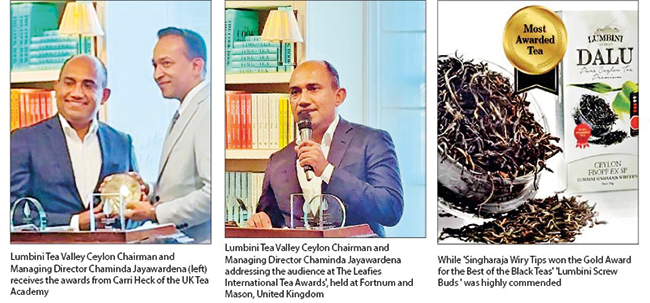
Sri Lanka’s renowned specialty tea brand “Singharaja Wiry Tips,” produced by Lumbini Tea Valley Ceylon, has won two major accolades at the prestigious “The Leafies International Tea Awards” held recently at Fortnum and Mason in the United Kingdom.
The award-winning low-grown Ceylon tea secured the titles of “Best Ceylon Black Tea” and the overall “Best of All Black Teas,” emerging as the top black tea entered at the international competition.
With these latest honours, “Singharaja Wiry Tips” has now earned its 43rd and 44th international awards, further strengthening its reputation as one of the world’s most highly awarded black teas.
Classified as FBOPF EX SP (Flowery Broken Orange Pekoe Fannings Extra Special), the tea is named after its distinctive golden-tipped wiry leaves and unique flavour profile derived from the ecosystem surrounding the UNESCO World Heritage-listed Singharaja Rainforest, which borders the Lumbini plantation.
Lumbini Tea Valley’s latest innovation, “Lumbini Screw Buds,” also received high commendation at this year’s competition, highlighting the company’s continued excellence in producing premium Ceylon teas.
Chairman and Managing Director Chaminda Jayawardena, who accepted the awards in London, credited the achievement to the dedication of the Lumbini workforce and the support of nearly 1,800 tea farmers supplying high-quality green leaf harvested using the traditional “two leaves and a bud” method.
by SK Samaranayake

Suspect killed after shooting at Secret Service agents, officials confirm

Trump says Iran deal ‘largely negotiated’ including reopening Strait of Hormuz

Showers expected in the Western, Sabaragamuwa and North-western provinces and in Galle, Matara, Kandy and Nuwara-Eliya districts

Devine intervention brings New Zealand back from the dead

US police responding to dozens of shots fired near the White House

Sri Lanka cricket finances ‘greater than feared’: interim chief

‘Dates have the highest sugar content to fight Coronavirus’

Sunday Island 27 December – Headlines

#SundayIsland 17th December – Headlines

Sunday Island – 28th March

Sunday Island Headlines – 21 March

Sunday Island – 21st February – Headlines
-
 Features4 days ago
Octopus, Leech, and Snake: How Sri Lanka’s banks feast while the nation starves
-
 News3 days ago
Steps underway to safeguard Sri Lanka’s maritime heritage
-
 Opinion3 days ago
Murder of Ehelepola family, Bogambara Wewa and Sightings of Wangediya
-
 Sports4 days ago
Sri Lanka women’s volleyball team ready for Central Asian challenge
-

 Editorial3 days ago
A play without its protagonist
-
 Midweek Review4 days ago
Overall SLPP failures stressed in new Aragalaya narrative
-

 Opinion2 days ago
The need to reform Buddhist ecclesiastical order
-
 Latest News5 days ago
At least 100 dead in Ebola outbreak in DR Congo, official says