
Business
OPPO brings back Christmas cheer amidst ‘new normal’


Sri Lanka’s most popular mobile phones & accessories brand OPPO recently concluded O FANS NIGHT – as part of their seasonal promotion O FANS FEST – an evening of fun & entertainment featuring Youtuber Anushka Udana of Wasthi fame and Signing Sensation & Umaria Sinhawamsa. The event was a resounding success with an overwhelming participation of ‘O Fans’ from all over the country.
The session had an interactive format enabling artistes to sing, chat to their fans and vice versa. Two lucky fans, Imesha & Tharusha, got to duet with their favorite stars Umaria & Anushka respectively. Imesha & Umaria sang ‘Pethu Pem Pathum’ – which happens to be Umaria’s debut – while Anushka & Tharusha collaborated on hit single ‘Merunu Hithe’.
Other songs sung at the event include Ayachana, Regume, Manda Pama & Jiyare by Umaria and Nurawani, Merunu Hithe, Koriyawa & Nai Naine by Anushka. They sang Umaria’s Hanthana Sihine as a duet which was originally sung by her and last Maestro WD Amaradeva. While Anushka considered it an honour to sing in place of the legend, Umaria recalled working with him with much respect& reverence.
Two fun games – ‘Throw the Ball’ & ‘Guess the Song’ – were organized for participants; both games were won by TEAM F17 PRO. Two winners selected to perform with the guest artistes out of hundreds of video submissions, Imesha & Tharusha, received exciting goodie bags courtesy of OPPO.
Umaria & Anushka thanked OPPO for organizing a programme of this scale & nature to lift the spirits of friends and fans at a time when the country is gradually returning to normalcy. While being mindful of health & safety, the artistes emphasized on the importance of entertainment to recover from stress & frustration caused by having to stay under lockdown for extended periods of time.
During the event, fans got the opportunity to capture their favorite artists using an F17 Pro which has been especially optimized for high quality images with the social media-savvy youth in mind.
Commenting on the event CEO of OPPO Sri Lanka Bob Li said: “We are thrilled to have organized this event to mark the beginning of return to normalcy following a turbulent year. We are hopeful that we will be able to serve our discerning Sri Lankan market even better in 2021. Much is being done to elevate the customer experience moving forward both in terms of services & product offering.”
He expressed his gratitude to loyal clientele & artistes for participating in this event which was carried out strictly adhering to health & safety guidelines pertaining to public gatherings. O Fans Night was part of O Fans Festival which is a seasonal promotion spanning the month of December during which many exciting offers & discounts are offered to customers including OPPO Enco Free W11 headphones for every purchase of the recently unveiled OPPO F17.


The much discussed latest electricity tariff debate has taken a controversial turn, with senior power sector officials and independent energy analysts questioning whether opaque fuel pricing mechanisms are artificially inflating the cost of electricity generation while shielding politically sensitive petroleum losses.
At the centre of the controversy is the widening gap between diesel pricing and the steep increases imposed on Heavy Fuel Oil (HFO) and naphtha — two fuels heavily used by the Ceylon Electricity Board (CEB)� for thermal power generation.
Energy analysts argue that while electricity tariffs are officially calculated on a “cost reflective” basis, the fuel pricing structure feeding into those calculations appears far from transparent.
A senior CEB official told The Island Financial Review that the present fuel pricing pattern raises “serious economic and policy concerns.”
“The entire electricity tariff framework is built on the assumption that fuel supplied to the power sector reflects actual import costs. But if fuel pricing itself is distorted, then tariff calculations become distorted too,” the official said.
According to CEB operational data reviewed by sector analysts, the utility regularly consumes nearly two-and-a-half times more HFO than diesel for thermal generation. Yet recent fuel revisions saw diesel prices rise only marginally — despite allegations that diesel cargoes had been procured at extraordinarily high dollar values.
Industry analysts pointed out that diesel imported at around USD 286 per barrel resulted in only about a Rs. 10 domestic price increase, while HFO prices surged by nearly Rs. 42 per litre and naphtha by around Rs. 34 — increases estimated at roughly 25 percent.
“This creates the impression that losses on diesel are being absorbed by overpricing HFO and naphtha,” an energy economist said.
“If CPC is maintaining artificially low diesel prices for political or inflation management reasons, the burden appears to be transferred to electricity consumers through thermal generation costs.”
The analyst noted that because the CEB relies heavily on HFO for regular dispatch operations, even relatively small increases in HFO pricing can translate into billions of rupees in additional annual generation costs.
In dollar terms, the implications are substantial.
Power sector officials estimate that every major upward revision in HFO pricing adds several billion rupees to annual generation expenditure, particularly during periods of low hydro availability. Given the depreciation pressures on the rupee and the dollar-denominated nature of fuel imports, the resulting tariff burden on consumers becomes even more severe.
A second senior CEB official expressed concern that institutional checks and balances within the energy sector appeared to be weakening.
“There is growing concern within the industry that the electricity sector regulator is no longer functioning with the level of independence expected of it,” the official said, referring to the Public Utilities Commission of Sri Lanka (PUCSL).
“The regulator’s responsibility is to independently scrutinise cost submissions, fuel assumptions and tariff calculations. But many in the sector now feel there is inadequate challenge or verification of the numbers being presented.”
The official warned that if regulatory independence is perceived to be compromised, public confidence in tariff revisions could deteriorate further.
A senior engineer attached to the CEB said the issue goes beyond tariff formulas.
“What is missing is cost transparency. There is no publicly accessible breakdown showing actual landed fuel costs, financing charges, hedging exposure, exchange losses, or refinery margins. Without that, nobody can independently verify whether the fuel pricing is truly cost reflective.”
Analysts also questioned the apparent disparity between crude oil acquisition costs and refined fuel pricing adjustments.
“If crude was purchased at almost the same price range, why are HFO and naphtha seeing disproportionate hikes while diesel remains comparatively protected?” one analyst asked.
Several observers believe the answer may lie in broader political and financial calculations.
Keeping diesel prices artificially low helps contain inflationary pressure across transport, logistics and food supply chains. However, critics say it may also help suppress scrutiny over controversial diesel procurements carried out at elevated international prices.
Energy sector sources further alleged that maintaining a lower diesel benchmark may also indirectly soften calculations linked to the long-running coal procurement controversy, where comparative generation cost modelling often references diesel-based thermal pricing.
“This has major political implications because lower diesel benchmarks can influence public perception regarding coal generation economics,” an analyst said.
By Ifham Nizam

BETSS.COM, the digital platform of Sporting Star, is ushering Sri Lanka’s horse racing into a new era through a landmark three-year title sponsorship of the BetSS Governor’s Cup and BetSS Queen’s Cup.
This long-term commitment by Sports Entertainment Services (Pvt) Ltd, operators of BETSS.COM, marks a significant step in elevating two of the country’s most prestigious racing events—enhancing their visibility, engagement, and relevance in a digitally connected world. As a brand positioned as a “Patron of Elite Sri Lankan Sports & Heritage,” BETSS.COM continues to support and transform iconic sporting platforms that carry deep cultural significance.
The Governor’s Cup and Queen’s Cup are the flagship “blue riband” races of the Nuwara Eliya Racecourse and remain central to the town’s April holiday season—where sport, fashion, and highland tourism converge. Horse racing was first introduced to Sri Lanka in the 1840s by Mr. John Baker, brother of the renowned explorer Samuel Baker, who established a training course for imported English thoroughbreds in the hills of Nuwara Eliya. The inaugural race at the Nuwara Eliya Racecourse was held in 1875, organised by the Nuwara Eliya Gymkhana Club. In 1910, the then Governor of Ceylon, Sir Henry Edward McCallum, inaugurated the prestigious Governor’s Cup and Queen’s Cup. Now in its 153rd year of racing, the event stands as an enduring symbol of Sri Lanka’s rich thoroughbred heritage.
Business
Siam City Cement (Lanka) officially enters into Memorandum of Understanding with Chief Secretary of Southern Province

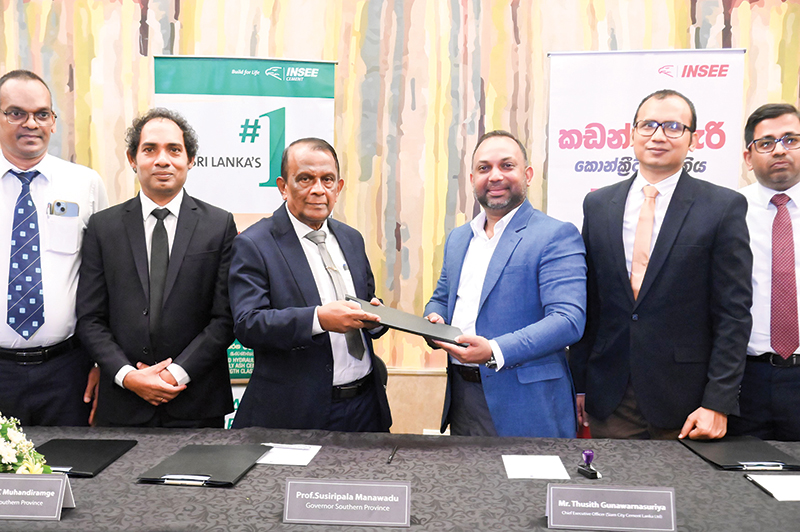
The MoU was signed by Thusith Gunawarnasuriya (CEO, Siam City Cement (Lanka) Ltd) and Chandima C. Muhandiramge (Chief Secretary, Southern Province), under the patronage of Governor Prof. Susiripala Manawadu, in the presence of many distinguished government officials.
The event was held at the Radisson Blu Hotel, Galle, with the participation of engineers and technical officers from government institutions, including local government bodies, the PRDA, the Building Department, and the Irrigation Department. This underscored the importance of strong public–private collaboration to elevate industry standards and empower technical professionals with the latest knowledge in the Southern Province.
This initiative will be delivered as a series of three (03) continuous training programmes in the coming months, aimed at upskilling engineers and technical officers across the province. The sessions will cover key areas such as SLS 573, quality control, construction management, waterproofing, durable concrete, and concrete mix-design optimisation.
Together, we are shaping a more knowledgeable and resilient construction industry for the future.

President of the Socialist Republic of Vietnam arrives in Sri Lanka on State Visit

Former SriLankan Aorlines CEO Kapila Chandrasena found dead

Fast bowling riches in focus as Bangladesh and Pakistan switch to Test mode

Iran says it attacked US Navy ships after they targeted Iranian tanker

Heat index likely to increase up to ‘Caution level’ in the Sabaragamuwa, Northern, North-central, North-western, Eastern provinces and in Hambantota and Monaragala districts during the daytime

Showers above 100 mm are likely at some places in the Western, Sabaragamuwa, Central, Uva, North-western provinces and in Galle and Matara districts.

‘Dates have the highest sugar content to fight Coronavirus’

Sunday Island 27 December – Headlines

#SundayIsland 17th December – Headlines

Sunday Island – 28th March

Sunday Island Headlines – 21 March

Sunday Island – 21st February – Headlines
-
 News3 days ago
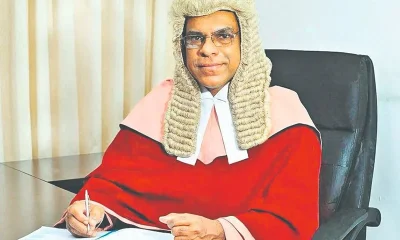
CJ urged to inquire into AKD’s remarks on May 25 court verdict
-

 News1 day ago
MIT expert warns of catastrophic consequences of USD 2.5 mn Treasury heist
-
 News4 days ago
USD 3.7 bn H’tota refinery: China won’t launch project without bigger local market share
-
 News5 days ago
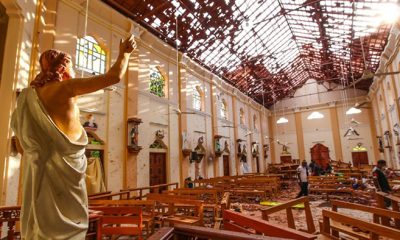
Easter Sunday Case: Ex-SIS Chief concealed intel, former Defence Secy tells court
-
 News6 days ago
Ten corruption cases set for court in May, verdict ordered in one case – President
-

 Business5 days ago
Dialog Surpasses 1,000 5G Sites, Strengthening Nationwide 5G Coverage
-

 Editorial4 days ago
Deliver or perish
-

 Editorial1 day ago
Clean Sri Lanka and dirty politics