
Latest News
SL given time until 2043 to settle loans – President

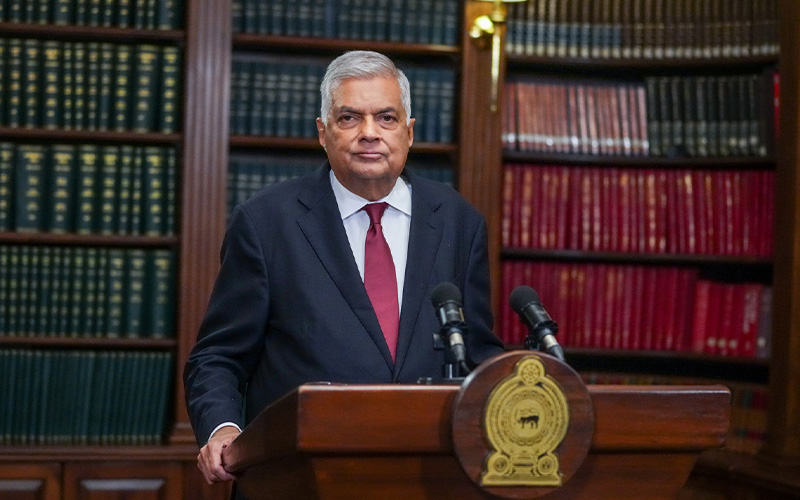
Declaring that his government had secured agreements with the official creditors, as well as China, on debt restructuring, President Ranil Wickremesinghe, in his address to the nation, said that the country could now defer all bilateral loan installment payments until 2028.
The President said the country had received an opportunity to repay loans on concessional terms, with an extended period until 2043. The UNP leader warned those who attempted to disrupt the debt restructuring process. Pointing out that they hadn’t been able to achieve their objectives, the President warned whom he called detractors would face the shame of having betrayed their country.
Full text of the President’s speech:
Today marks a significant milestone in the recent history of our country, a special juncture reflecting the hard work and dedication of our efforts. Our country is now reaping the positive results of our persistent endeavours over the past years.
This morning in Paris, Sri Lanka’s official creditors signed a Memorandum of Understanding with us. Similarly, we signed another memorandum of understanding with China’s Exim Bank today in Beijing. This is indeed encouraging news for those who genuinely care about our country’s welfare.
Over the past two years, we have worked diligently to reach agreements with our bilateral creditors, engaging in extensive discussions. The economic progress we have achieved has provided us with considerable strength in these negotiations.
I extend my gratitude to our creditors, including China and Exim Bank of China, India, Japan, and France, who co-chair the Official Creditors Committee. I also thank the other members of the committee and the Paris Club Secretariat for their support in making these negotiations successful.
Additionally, I would like to acknowledge the representatives of Sri Lanka and other countries who participated in these discussions, as well as the officials from Lazard and Clifford Chance for their valuable advice.
With these agreements, we will be able to defer all bilateral loan installment payments until 2028. Furthermore, we will have the opportunity to repay all the loans on concessional terms, with an extended period until 2043.
In 2023, we successfully completed the restructuring of domestic debt. Now, we have also successfully concluded the bilateral debt restructuring with foreign countries. Our next objective is to reach an agreement with commercial creditors, which includes International Sovereign Bond (ISB) holders. By continuing on our current path, we are confident that we can achieve this agreement, and discussions are ongoing.
The agreements we reached today will provide significant relief to our economy. In 2022, we spent 9.2% of our gross domestic product (GDP) on foreign debt payments. With the new agreements, it will pave the way for us to maintain debt payments at less than 4.5% of GDP between 2027 and 2032.
The government’s annual gross fiscal requirement was 34.6% of GDP in 2022. Due to these agreements, this requirement will decrease by more than 13% by the period of 2027-2032.
In April 2022, Sri Lanka officially declared its inability to meet its debt obligations. Following this declaration, international business transactions with Sri Lanka came to a halt. No country is willing to engage in financial relations with a nation that is bankrupt and unable to pay its debts. Consequently, we were unable to secure loans or even obtain letters of credit.
Against this backdrop, all projects in our country, funded by foreign loans, were halted. The countries involved closed their project offices and withdrew. Consequently, development work came to a complete standstill. However, now that we have achieved a crucial milestone in debt restructuring, there are legal opportunities for these countries to resume all projects funded by foreign loans. Projects such as the development of Katunayake Airport, the light railway, and the expressway are set to recommence. Moreover, we can look forward to initiating many new development projects.
International confidence in our country is reaffirmed as bilateral creditors have reached an agreement with us, serving as a kind of international endorsement. The global community, which previously refused to accept our letters of credit, is now prepared to grant us a certificate of confidence.
We are presenting both Memoranda of Understanding (MoUs) signed today to Parliament. Our Prime Minister will introduce these agreements in a special parliamentary session on July 02nd. I urge all patriotic members of Parliament to ratify these agreements.
The journey to this point has not been easy. We have travelled a difficult and arduous path. Our Ministers and officials have worked tirelessly towards this goal. The majority of our citizens have supported us with patience and resilience, enduring various hardships. Despite the ongoing challenges, we have persevered.
A few individuals attempted to disrupt our progress and continue to do so, but they have not succeeded in halting our journey. In the future, these detractors will face the shame of having betrayed their country.
As our economy improves, we have provided concessions in a manner that does not harm our economic stability. This approach will continue. By following the correct path, as our economy strengthens, we can gradually alleviate current difficulties. The burden we carry can now be incrementally reduced. Strikes and threats will not resolve these issues. By uniting to strengthen the economy, we will find solutions and obtain further concessions.
When we assumed responsibility for the country two years ago, I emphasized that we had a very challenging path ahead. I made it clear that these problems could not be resolved within a week, a few months, or even a year. Using the metaphor from the play “The Caucasian Chalk Circle”, I illustrated that we had to navigate a precarious journey across a metaphorical fallen vine bridge over a terrifying, bottomless chasm.
At that time, our country’s economy was in a dire state. Many were hesitant to step forward to help rescue the nation. There was fear and reluctance. Some said, “You need more than just effort to treat this situation.” One faction stated they would take charge only if given control of the entire government. Another group said they would accept if allowed to appoint their own people to the Cabinet. Others indicated they would accept the presidency if it were offered to them.
Despite these conditions, I accepted the challenge without any preconditions. I believed in my ability to save our country and its people from the economic abyss. I had a comprehensive work plan and a deep understanding of the strategies that other nations had employed to emerge from similar crises. Furthermore, I had faith that with my planned policies and dedication, the economy could be revitalized.
I was confident that I could garner international support for our recovery efforts.
That was all I had. I had no Members of Parliament. I did not have my own Cabinet. I did not have a government to call my own. Despite these challenges, I accepted the daunting task.
At that critical juncture, I recalled a quote from the renowned creator Walt Disney: “The way to get started is to quit talking and begin doing.” Without hesitation, I got down to business.
On August 3, 2022, during the opening address of the parliamentary session, I unveiled to the nation a four-step plan to reconstruct the faltering economy.
*Securing extended credit facilities in consultation with the International Monetary Fund and instituting fiscal discipline nationwide.
*Collaborating with international financial and legal experts from Lazard and Clifford Chance to formulate a debt stabilization plan and negotiate agreements with creditors.
*Implementing policies, regulations, and initiatives to attract foreign investment, bolster the export economy, and promote a digital green economy.
*Aiming to transform into a developed nation with a debt-free advanced economy by 2048 through this comprehensive programme.
Throughout this process, I consistently presented detailed updates on our strategic roadmap to Parliament, ensuring transparency in every step. The successful advancement of the first three components of our four-pronged programme validates the correctness of our approach and strategy.
Achieving such significant progress, within two years, from a state of debt inability and near-bankruptcy, marks a remarkable milestone. Historically, countries facing economic crises, similar to ours, have taken much longer to achieve such positive outcomes. This achievement stands as a testament to our dedication and the effectiveness of our initiatives.
We possessed a clear understanding of the depth of the economic crisis we faced and were equipped with the appropriate solutions guided by vision, determination, and unwavering commitment. As a result of our resolute efforts, it is now evident that we are on course to achieve our fourth objective: transforming into a developed country by 2048.
Reflecting on the state of our nation in 2022, which was grappling with severe economic challenges, what is the present status?
After six consecutive quarters of economic contraction, our economy began to grow again starting from the third quarter of 2023.
Our foreign reserves, which had plummeted, have rebounded to USD 5500 million by April 2022. The strength of the rupee has increased, and bank interest rates have declined.
Inflation, which had soared to 70 percent in September 2022, has now been reduced to a manageable 0.9 percent.
We have achieved a surplus in the primary account balance, and for the first time, since 1977, a current account surplus has been achieved in our foreign account balance. These milestones underscore our successful navigation away from bankruptcy through effective economic management.
The recognition and support received from our official creditors for restructuring our debt have reinstated international confidence in our nation. This reaffirms that the path we have charted is not only correct but also endorsed internationally.
On that occasion, I extended an invitation to all political parties and groups to prioritize the national interest and support the programme I presented to Parliament. While some political parties have responded positively and joined me in this collective effort, others have chosen to criticize. It is pertinent to address these criticisms.
During President Gotabaya’s tenure, those who previously insisted that the IMF was the only solution are now asserting that the IMF should not be approached. Those who argued that economic improvements were futile amidst public suffering are now promising extravagant benefits upon assuming power.
Certain individuals engage in populist or partisan rhetoric, displaying a limited understanding of economic and political dynamics beyond elementary levels. Despite my consistent efforts to highlight the gravity of our challenges and propose solutions since assuming office, some individuals still fail to grasp the seriousness of our situation.
Since assuming leadership, I have implemented numerous measures to rebuild our nation. It has taken nearly two years for some to acknowledge the wisdom of those decisions. It may require additional time for them to recognize the validity of the current steps I am undertaking.
Nevertheless, those who persist in empty rhetoric will continue to do so. Allow me to clarify an important point: Sri Lanka has sought IMF assistance on 16 previous occasions, each ending in failure. Why? We consistently failed to meet the conditions set, neglected our commitments, and lacked financial discipline.
This marks the first instance in our nation’s history where an IMF programme has been successfully implemented. Previously, in 16 instances, we approached the IMF, not from a position of inability to repay debts, but as a country facing bankruptcy. Leading this successful endeavour to seek assistance fills me with satisfaction.
However, our journey does not end here; this is only a juncture in our journey. We should start anew from here. We have received international assurances and we have once again gained international trust. We should make use of this and forge ahead towards a developed economy. We should achieve complete success, ensuring that our country never again finds itself in need of IMF support. This objective drives our efforts to establish a robust and disciplined advanced economy that can sustain itself independently.
To achieve this, my Cabinet, our government, and I are diligently working and demonstrating tangible results. In contrast, some critics, from various political groups, appear more focused on gaining power. These groups, eyeing future electoral victories, have already envisioned presidential appointments and speculated about Cabinet compositions. Reports suggest some individuals are even contemplating familial succession within ministerial positions.
How many among these aspiring leaders have misled the nation with false promises and press conferences? The falsehoods propagated about the accomplishments I highlight today are now exposed for what they are—a fabrication.
Why do they react with such disdain to our nation’s achievements? Why do they view good news for the country as inauspicious? Why do they seek to capitalize politically on every development? Their actions reveal a culture of opportunism, driven solely by ambitions for personal gain and political positioning.
While they vie for presidential positions, we remain steadfast in our commitment to the country’s development and progress. Their dreams revolve around titles and accolades; ours are anchored in advancing the nation.
They strategize to divide ministries; we strategize to advance the nation. They traverse Sri Lanka seeking power, visiting schools and travelling the world in relentless pursuit of authority. Meanwhile, I dedicate my days and nights to serving the country, addressing the needs of our people, and launching economic strengthening programmes. I engage globally to garner international support for our nation’s development.
Given this context, I pose a crucial question: Will you move forward with me, who comprehended the problem from its inception, offered practical solutions, and delivered results? Or will you align with those grappling in the dark, still struggling to grasp the issues?
Will you stay the course towards a brighter future for yourself and the nation? Or will you opt for a different path?
We are all aware of the perils of veering off course or choosing the wrong path. Therefore, make the right decision. You have the full right and freedom to make that choice.
The future does not merely belong to Ranil Wickremesinghe; it pertains to the country, to your future, and the future of our children. In just two years, without a parliamentary majority, without my appointed government officials or ministers, I successfully elevated our country from bankruptcy and economic turmoil to a position that astonished the world.
Consider this reflection: Two years ago, as we walked down the street, what did we see? Today, as we walk down that same street, what do we see now? I made a promise that day, and I have safely guided the child named Mother Sri Lanka through treacherous waters. What has transpired since then?
Much like the tale of The Caucasian Chalk Circle, those who once hesitated to shield the child during difficult times, those who offered no support, now clamour to claim the child’s rights. Even before we have crossed the perilous vine bridge, they vie to seize the child, tugging in every direction.
Yet, as we know from The Caucasian Chalk Circle, the rightful claim to the child belongs to the true mother. In the words of Grusha from the play: Things should belong to those who do well by them, Wagons to good drivers that they may be well driven …
Therefore, akin to Judge Azdak in Hunuwataye kathawa (The Caucasian Chalk Circle) drama, I urge you to make the right decision. Let the deserving receive their due. Let our country stride confidently towards a brighter future.”

Latest News
Man charged with attempted Trump assassination indicted for assaulting Secret Service officer
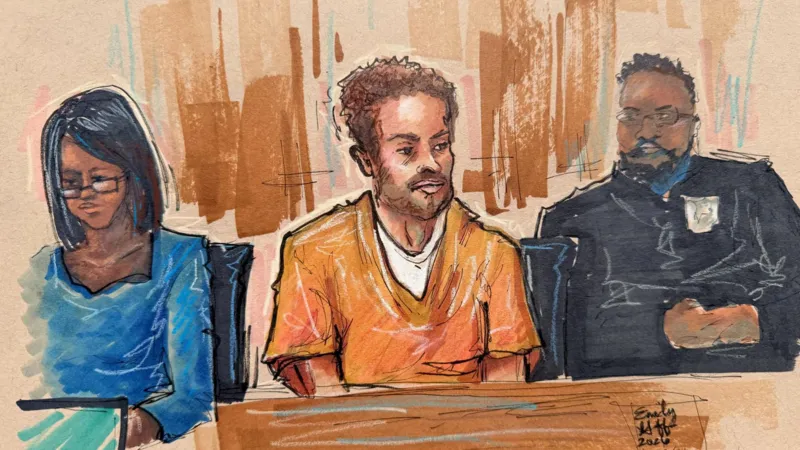
The California man who allegedly tried to assassinate President Donald Trump at a Washington gala has been indicted on a fourth charge of assaulting a US officer or employee with a deadly weapon.
The new charge comes in the wake of questions over whether a Secret Service officer – who was shot but not seriously wounded in the attack at the White House Correspondents Dinner on 25 April – was hit by crossfire from another officer.
US Attorney Jeanine Pirro signed off on the new indictment unsealed on Tuesday, which supersedes the previous charges.
Cole Tomas Allen, 31, appeared in court in Washington DC last week. He has not yet entered a plea.
According to court documents filed on Tuesday, a grand jury also indicted Allen on charges of attempting to assassinate the US president as well as two firearms offences – transportation of a firearm and ammunition in interstate commerce with intent to commit a felony, and using, carrying, brandishing and discharging a firearm during a crime.
Allen was previously charged on those counts last week via criminal complaint.
The suspect was carrying a semi-automatic handgun, a pump-action shotgun and three knives as he allegedly rushed through a security checkpoint one floor above the basement venue at the Washington Hilton hotel on 25 April, prosecutors have said.
After gunfire rang out, Trump, Vice-President JD Vance, cabinet members and other White House officials were rushed from the hotel ballroom as dinner attendees sheltered under tables.
The incident has sparked a White House security review.
The Torrance, California , man studied at the prestigious California Institute of Technology, and worshipped at the Pasadena United Reformed Church in the Los Angeles area.
Federal campaign finance records show he donated $25 to a Democratic Party political action committee in support of Kamala Harris for president in 2024.
He allegedly sent an email to his family shortly before the attack that said, “Administration officials… are targets, prioritised from highest-ranking to lowest”, according to court records.
“I would still go through most everyone here to get to the targets if it were absolutely necessary,” he allegedly added.
Allen, who remains in custody, could face life in prison if found guilty.
[BBC]
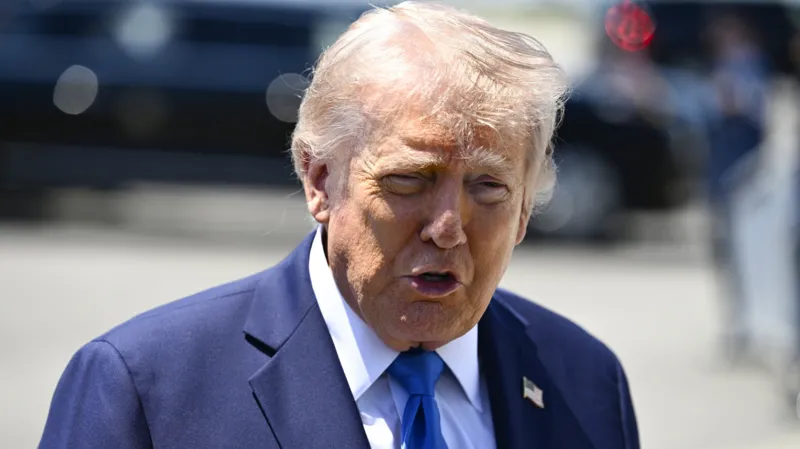
The US operation to guide stranded vessels through the Strait of Hormuz will be paused for a “short period of time”, President Donald Trump announced on Tuesday evening.
Trump said that “Project Freedom”, which began days earlier, would be halted by “mutual agreement” because “great progress” had been made toward a deal with Iran.
Iranian state media characterised it as a victory, saying the pause demonstrated that Trump “retreated” after “continued failures” to reopen the vital waterway for global shipping.
The US president’s announcement came as Secretary of State Marco Rubio said the initial US-Israeli offensive in Iran – Operation Epic Fury – was over after achieving its objectives.
In a post on social media, Trump said that he had made the decision “based on the request of Pakistan”, which has acted as an intermediary between the US and Iran. He added that the US blockade of Iranian ports would remain in place.
Trump’s announcement may surprise some. It undercuts a day’s worth of messaging from Rubio, defence secretary Pete Hegseth and Joint Chiefs chairman Gen. Dan Caine – all of whom vowed that the operation would ensure freedom of navigation and commerce in the Strait of Hormuz and Persian Gulf.
“We would prefer the path of peace. What the president [Donald Trump] would prefer is a deal,” Rubio told reporters on Tuesday.
What happens next is unclear. The administration had stressed that Project Freedom was a “separate and distinct” campaign from the blockade, which is meant to pressure Iran economically.
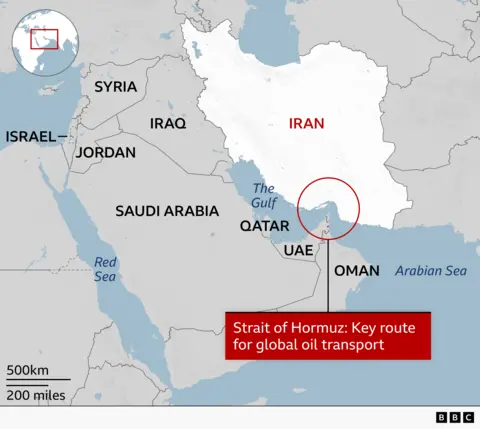
Project Freedom was meant to help restore the flow of oil from the region and the global economy’s eventual return to normalcy by guiding stranded ships out of the Gulf through the largely closed waterway. But if during the “pause”, global shipping firms and the insurance companies working with them are stymied by Iranian interference, it will be difficult for Trump to claim that objective has been achieved.
On the other hand, the administration may hope that freezing Project Freedom – which the Iranians strongly objected to – helps bring them to the negotiating table again.
Rubio’s comments earlier in the day came after a spate of attacks in the Strait of Hormuz raised fears the ceasefire between the US and Iran was in jeopardy.
Tehran did not commented on Rubio’s statement, but Iran’s parliamentary speaker Mohammad Ghalibaf earlier said: “We know well that the continuation of the status quo is intolerable for America, while we are just getting started.”
Ghalibaf, Iran’s top negotiator in last month’s talks with the US, said, “Shipping security and energy transit have been jeopardised by the US and its allies with the ceasefire violations and blockade. However, their evil acts will fail”.
Late on Tuesday the UK Maritime Trade Operations (UKMTO) said a verified source had told it that a cargo vessel has been struck “by an unknown projectile” in the Strait of Hormuz. Further details were not immediately available.
Earlier in the day the UAE said its air defences were engaging missiles and drones from Iran for a second day in a row. On Monday it accused Iran of firing missiles and drones including a strike on an oil port in the emirate of Fujairah which is located outside the Strait of Hormuz, calling it a “dangerous escalation”.
Iran on Tuesday denied launching any attacks on the UAE, with a military spokesman saying that, “If such an action had been taken, we would have announced it firmly and clearly”.
Operation Epic Fury began on 28 February when the US and Israel launched a wave of air strikes on Iran. Tehran responded by blocking the crucial waterway through which 20% of the world’s oil and liquefied natural gas usually passes.
In early April, the US and Iran announced a ceasefire under which Iran ended its drone and missile strikes on Gulf countries including the UAE, but few vessels have been able to transit the strait since then. The US also imposed its own blockade on Iranian ports.
On Monday, the US said it had attacked seven Iranian fast boats in the strait while Iran said it had fired warning shots at a US vessel. Both sides denied the respective claims. Two commercial ships reported attacks and one said it had successfully exited the strait under a US military escort, as part of Donald Trump’s plan to unblock the strait.
Speaking at the White House, Rubio said that while Trump wanted a deal, “That is so far not the route that Iran has chosen” adding: “What that may lead to in the future is speculative.”
He said US and Israeli attacks on Iran had caused “generational destruction to their economy” and the country’s leaders should “check themselves before they wreck themselves in the direction that they’re going”.
Hegseth said the ceasefire with Iran was “not over”.
“Right now the ceasefire certainly holds, but we’re going to be watching very, very closely,” Hegseth said during a press conference on Tuesday.
Caine said that while Iran had attacked US forces 10 times since a ceasefire began, these attacks were “below the threshold” of resuming fighting “at this point”.
Trump was later asked by reporters what would constitute a breach of the ceasefire by Iran. “You’ll find out because I’ll let you know,” he responded. He also said he believed a negotiated settlement with Iran to end the conflict was still possible.
The various comments from American officials suggest that the US has little desire or appetite to return to full-scale operations – further disturbing markets, sending prices skyrocketing and meeting opposition from large swathes of Americans.
Trump also has said he is discussing the strait’s reopening with Japan and expects to have a positive conversation with Chinese President Xi Jinping about it when he visits China next week.
[BBC]

Cabinet approves recognition of ‘Sri Lanka National Export Development Plan – 2026–2030’
Cabinet nod to accept the Global Charter for Children’s Care Reform for Sri Lanka
Cabinet grants policy approval to amend the Consumer Affairs Authority Act, No. 9 of 2003
Cabinet approal for Legal Draftsman to prepare a Bill to enable the amendment of Finance Business Act, No. 42 of 2011

M.S. Mahadiulwewa appointed act in the post of Director General of Commerce
Wimal S.K. Liyanagama appointed Director General of Customs

‘Dates have the highest sugar content to fight Coronavirus’

Sunday Island 27 December – Headlines

#SundayIsland 17th December – Headlines

Sunday Island – 28th March

Sunday Island Headlines – 21 March

Sunday Island – 21st February – Headlines
-

 News7 days ago
Rooftop Solar at Crossroads as Sri Lanka Shifts to Distributed Energy Future
-
 News2 days ago
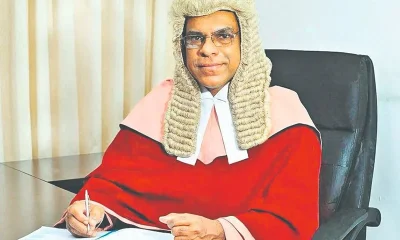
CJ urged to inquire into AKD’s remarks on May 25 court verdict
-
 News6 days ago
“Three-in-one blood pressure pill can significantly reduce risk of recurrent strokes”
-

 News3 days ago
USD 3.7 bn H’tota refinery: China won’t launch project without bigger local market share
-

 News6 days ago
Alarm raised over plan to share Lanka’s biometric data with blacklisted Indian firm
-
 News5 days ago
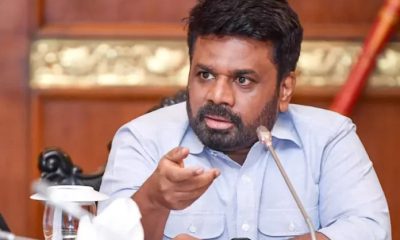
Ten corruption cases set for court in May, verdict ordered in one case – President
-
 News4 days ago
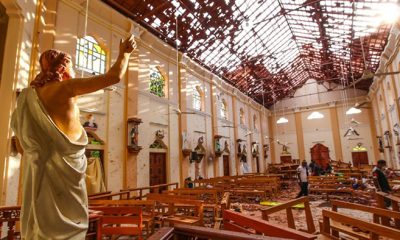
Easter Sunday Case: Ex-SIS Chief concealed intel, former Defence Secy tells court
-

 News6 days ago
USD 2.5 mn fraud probe: Interdicted MoF official found dead at home