
News
UNDP helps Lanka improve local access to clean and renewable energy


The Strategic Steering Committee meeting and summary workshop of the Biogas, Biomass and Solar South-south and Trilateral Cooperation Project was successfully held in Colombo, from 12-14 June with the participation of 30 key stakeholders from the Strategic Steering Committee Board, with a thematic focus on presenting the project’s results and achievements, alongside an independent evaluation to assess lessons learned and provide recommendations for ensuring the project’s continued sustainability, the United Nations Development Programme (UNDP) said on Monday.
It said that participants also engaged in a two-day visit to project sites in Wennappuwa, Kurunegala and Trincomalee.
The project, in partnership with the governments of China, Ethiopia and Sri Lanka, was implemented by the UNDP, with the aim of improving local access to clean and renewable energy in Ethiopia and Sri Lanka. The project also facilitated two-way exchanges of expertise and technologies, as well as mutual learning among China, Ethiopia and Sri Lanka.
Specifically, the Project was a collaboration between the Ministry of Commerce of the People’s Republic of China (MOFCOM), the Ministry of Science and Technology of China (MOST), the Ministry of Water and Energy of Ethiopia (MoWE), Sri Lanka Sustainable Energy Authority (SLSEA), Administrative Center for China’s Agenda 21 (ACCA21), China Agricultural University (CAU), coordinated by UNDP China and implemented by UNDP Ethiopia and Sri Lanka.
Under the banner of South-South and Trilateral Cooperation modality, in Sri Lanka, UNDP Sri Lanka implemented the ‘Biogas, Biomass and Solar Trilateral Cooperation (TSSC) Project’ from 2019-2024.
The project spanned five provinces, delivering 262 Solar Powered Renewable Energy Technology(RETs) Applications, including solar PV systems, solar-powered greenhouses, cold rooms, solar-powered aerators for shrimp farms, solar-powered sprayers, solar animal repellers, and solar insect traps to over 233 beneficiaries including 80 women and 200 vulnerable groups. Key outcomes of the project included the development of an Energy Data Management System (EDMS) to monitor energy savings from these RETs with the support of the Sri Lanka Sustainable Energy Authority (SLSEA); the distribution of IT equipment among the 5 provinces for data collection and updating EDMS; development and handing over of 5 Provincial Energy Plans for the agriculture sector for the Eastern, North-Western, Northern, Southern and Uva provinces.
Commenting on the impact of the project over the years at the summary workshop, Azusa Kubota, Resident Representative, UNDP Sri Lanka stated, “UNDP’s Biogas, Biomass, and Solar Trilateral Project exemplifies the success of South-South and triangular cooperation in promoting innovative development solutions and fostering transformative change towards net-zero development pathways. The Project has supported Sri Lanka’s national targets for greenhouse gas emission reductions and has greatly supported vulnerable farmer communities in Sri Lanka, enabling them to secure a sustainable income through the transfer of renewable energy technologies.”
From the Government of Sri Lanka’s perspective, Sulakshana Jayawardena, Secretary, Ministry of Power & Energy commented, “We are looking forward to deeper and larger opportunities to cooperate with the global South in our journey of national development. This pilot project clearly showed the greater mutual understanding of partners and brought experience from China on renewable energy technologies and provided opportunities for Sri Lanka to exchange ideas and lessons learnt with China and Ethiopia. We foresee the ever-broadening space for South-South cooperation in our accelerated energy transition programme launched to reach carbon neutrality”
From the Chinese perspective, Chen Qizhen, Deputy Director General, ACCA21 noted, “Throughout the project implementation, we not only shared advanced technologies and experiences in the field of renewable energy with our partners, promoting technology transfer and innovation, but also jointly explored new paths to address energy poverty and advance green, low-carbon development. From solar energy, and biogas, to biomass energy, and from technical training to the construction of project demonstration sites, every step reflects the dedication and wisdom of all experts and representatives involved. Each achievement stands as a testament to our collective commitment to pursuing a green future.”
Adding to this, Charu Bist, Deputy Resident Representative, UNDP Ethiopia also highlighted the impact in Ethiopia “Ethiopia is the third-highest country in Sub-Saharan Africa facing electricity access deficits. Only around 35 per cent of its population is connected to on-grid electrification, with an additional 13 per cent utilising off-grid pre-electrification, resulting in a combined electricity access rate of 48 per cent. Addressing these energy disparities not only enhances social equality, particularly for vulnerable populations and women but also mitigates health issues, and improves access to essential services, education, and information.”
Played as the bridge between China, Ethiopia and Sri Lanka, Beate Trankmann, Resident Representative, UNDP in China commented, “At a time when global progress towards the SDGs has not only stalled – but in some areas such as climate action is in fact regressing, and when government budgets are overstretched, partnerships like this can make a critical contribution. By developing and deploying biogas, biomass, and solar technologies, this project has brought access to clean and renewable energy to vulnerable people and communities in Sri Lanka and Ethiopia, improving livelihoods and enabling sustainable growth.”
South-South cooperation is a manifestation of solidarity among peoples and countries of the South that contributes to their national well-being, national and collective self-reliance, and attainment of internationally agreed development goals, including the 2030 Agenda for Sustainable Development. Trilateral Cooperation including the engagement of UNDP adds value to that.





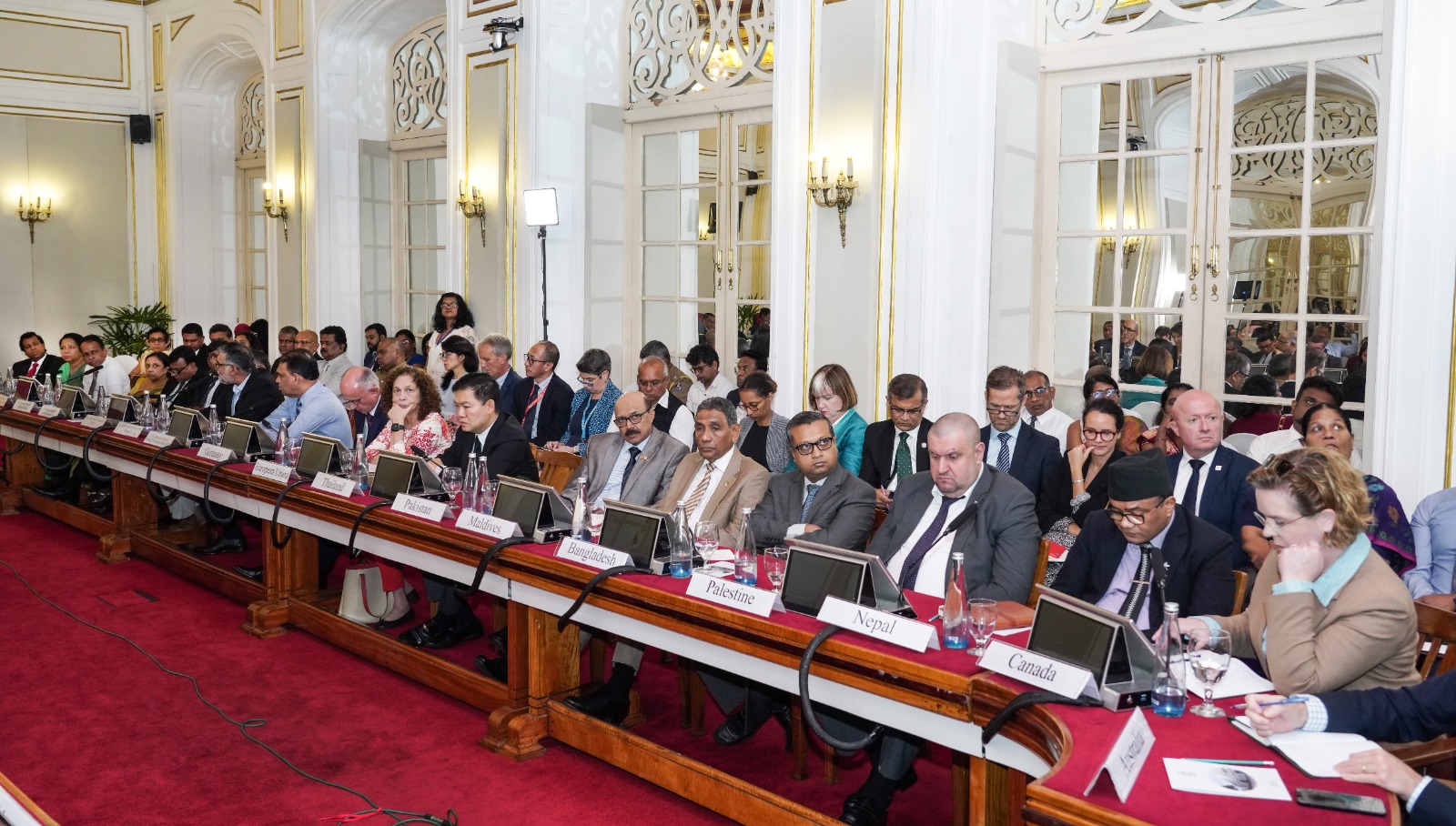
A special briefing for the diplomatic community in Sri Lanka was held on 4 December at the Ministry of Foreign Affairs, Foreign Employment and Tourism, chaired by Prime Minister Dr. Harini Amarasuriya together with the Minister of Foreign Affairs, Foreign Employment and Tourism, Vijitha Herath. Senior government officials, including representatives of the Disaster Management Centre (DMC) and the Sri Lanka Tourism Development Authority (SLTDA), also participated.
Opening the session, Prime Minister Dr. Harini Amarasuriya expressed her gratitude to the diplomatic community for their immediate support and solidarity following the recent floods and landslides. She noted that Sri Lanka had endured one of the most severe disasters in recent years, but the resilience of the people and the coordinated efforts of government agencies had enabled a rapid response and significant progress in relief operations. She confirmed that not a single tourist has been reported harmed during the disaster and noted that the previously inaccessible areas are now reachable. Massive cleanup and decontamination operations are underway to ensure that lands and public spaces are safe for return, and communications have been restored in the affected areas.
The Prime Minister emphasized that relief, evacuation, and emergency assistance were carried out with the collective effort of the tri-forces, police, public officers, health workers, volunteers, and local authorities. She acknowledged the continuing challenges, including the restoration of infrastructure, resettlement needs, and long-term disaster-mitigation work, and welcomed the technical, humanitarian, and financial support offered by partner countries.
Maj. Gen. Sampath Kotuwegoda (Retd), Director General of the Disaster Management Centre, delivered a detailed presentation on the current status of the disaster, including the number of affected families, evacuation centres, damage assessments, and the ongoing coordination with international agencies for recovery planning. The cyclone affected almost the entire country, with 22 districts severely impacted. Some locations recorded up to 540 mm of rainfall and winds of up to 70 km/h, causing widespread infrastructure damage. Early assessments indicate that 2.3 million people were exposed to flooding, with 1.8 million people directly affected on the ground and 1.1 million hectares of land impacted. The assessment also identified 40,152 pregnant women among those affected, who have been prioritized for support. He also highlighted areas where further technical cooperation, such as early-warning systems, mapping capabilities, and climate-response technologies would be valuable.
Buddhika Hewawasam, Chairman of the Sri Lanka Tourism Development Authority, briefed the diplomatic community on the impact of the disaster on the tourism sector. He reassured attendees that major tourism zones remain operational, safety assessments are underway, and contingency measures have been activated to support visitors and protect the industry during the upcoming peak season. The Chairman of the Hotel Association of Sri Lanka Ashoka Hettigoda confirmed that the Coastal and resort hotels from Maravila to Passikudah are operating, with many reporting 60–65 percent occupancy; the hotels in Nuwara Eliya are partially operational. He made an appeal that the best assistance that the international community can give to Sri Lanka is the continued support provided through tourism.
Several diplomats conveyed their condolences to affected communities and reaffirmed their governments’ readiness to assist Sri Lanka in both immediate relief efforts and long-term rebuilding. They expressed appreciation for the government’s transparent engagement and the coordinated approach to managing the crisis.
Prime Minister thanked the diplomats for their continued cooperation and underscored the government’s commitment to ensuring an effective and inclusive recovery. She stressed that strengthening disaster preparedness, climate resilience, and institutional capacity will be central to Sri Lanka’s national development agenda moving forward. Deputy Minister of Foreign Affairs, Foreign Employment and Tourism, Arun Hemachandra, Secretary to the Prime Minister, Pradeep Saputhanthri, and Secretary to the Ministry of Foreign Affairs, Ms. Aruni Ranaraja, also attended the meeting.

[Prime Minister’s Media Division]
News
All parties have agreed to recruit Development Officers into the teaching service through a competitive examination – PM

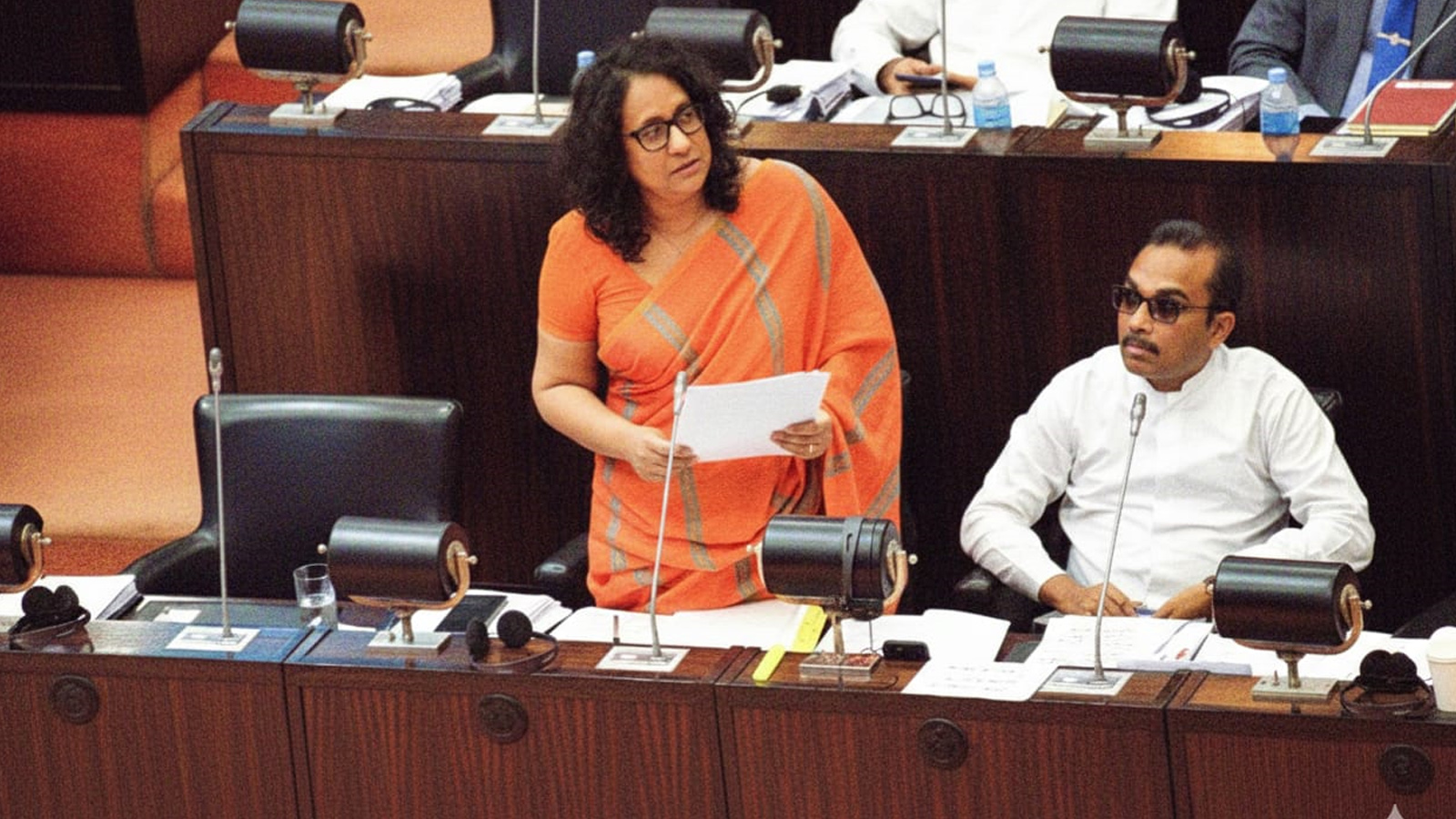
Addressing Parliament on Friday (05), the Prime Minister stated that, in accordance with the Supreme Court decision, the recommendations issued by the Public Service Commission, and the Sri Lanka Teachers’ Service Minute, all parties have agreed to recruit teachers through a competitive examination. The Prime Minister further noted that during the second phase of the recruitment process, the Development Officers currently serving in schools will be given preference during the interviews.
Addressing further, the Prime Minister stated,
“In compliance with the final order of the Supreme Court and the provisions of the Sri Lanka Teachers’ Service Minute, the Development Officers will be given the opportunity to join the Sri Lanka Teachers’ Service.
It has been decided to revise the maximum age limit of 40 years, as specified in the examination notification for applicants, to 45 years for this instance only”.
The Prime Minister further stated that, in accordance with the Supreme Court decision, arrangements have been taken to revise the age limits for graduates employed in the public service and graduates not employed in the public service, and to conduct separate examinations accordingly, in order to recruit teachers to Grade 3. i (a) of the Teachers’ Service to fill the available vacancies.
[Prime Minister’s Media Division]

Prime Minister Dr. Harini Amarasuriya said that despite the recent devastation caused by severe flooding and landslides, Sri Lanka continues to recover rapidly due to the exceptional strength and solidarity demonstrated by the people. “We have taken a blow, but we are far from fallen. Our people have shown remarkable resilience, and that spirit has carried us through every crisis we have faced,” she stated while addressing the visiting NASSCOM Executive Committee and SLASSCOM leadership during their interaction held on 4th December at ICT Rathnadeepa Hotel, Colombo.
The meeting brought together NASSCOM—the apex body of India’s technology industry representing over 3,000 companies—and SLASSCOM, Sri Lanka’s national chamber for the IT and BPM sector with more than 350 member companies, to discuss digital-economy collaboration, investment opportunities, and the path forward for Sri Lanka’s ICT landscape.
The Prime Minister thanked the NASSCOM delegation for proceeding with their annual visit to Sri Lanka despite the country’s recent challenges, noting that their presence sends a strong message of confidence in Sri Lanka’s stability and recovery. She explained that the government, together with the World Bank and the United Nations, is conducting short- and long-term assessments to guide reconstruction efforts, which will include resettlement, improved disaster preparedness, flood control, and major infrastructure restoration.
During the discussion, the Prime Minister highlighted that Sri Lanka’s economic recovery plan remains firmly on course. She noted that the government has set a medium- to long-term target of 7% economic growth and emphasized two key priorities relevant to the visiting technology leaders: export diversification and accelerating the digital economy. “We are committed to developing a strong digital economy. This is an area where we look forward to India’s continued collaboration and partnership,” she said.
Responding to questions on how digital transformation is progressing within government institutions, Prime Minister stated that the Ministry of Education has already begun implementing a National Education Management System, which is expected to be launched in January. She also noted that other ministries have commenced their own digitalisation work and will be ready to introduce their systems in the coming months.
The Prime Minister also welcomed an offer of support from an Indian technology company specialising in drones for disaster response, mapping, and geospatial data. The representative proposed extending technical assistance to improve Sri Lanka’s disaster-management capabilities, including documentation and real-time monitoring. In response, Prime Minister acknowledged that Sri Lanka must strengthen early-warning systems and invest in modern technologies to better manage future disasters, noting that inadequate systems had limited the ability to predict this year’s extreme rainfall.
Detailing the government’s broader reform agenda, the Prime Minister explained that regulatory frameworks, governance reforms, and digital transformation initiatives are underway to make Sri Lanka an attractive destination for major IT and BPM investments. She stressed that Sri Lanka aims to reach USD 5 billion in export value in the IT and BPM sector by 2030, supported by improved human-resource development, education reforms, and a national plan to expand skilled employment. She further highlighted that the government is working closely with India on digitising the public sector, implementing a universal digital ID system, and introducing integrated platforms such as the National Education Management System.
The NASSCOM delegation’s visit forms part of a long-standing collaboration between NASSCOM and SLASSCOM, aimed at strengthening Sri Lanka’s ICT sector and positioning the country as a strategic extension market for leading Indian and global technology industries. Their visit also coincides with SLASSCOM’s preparations for the 2026 NASSCOM Technology & Leadership Forum.
Deputy Minister of Digital Economy Eranga Weeraratne, Chief Advisor to the President on Digital Economy Dr. Hans Wijesuriya, Indian High Commissioner Santosh Jha, and representatives from SLASSCOM and NASSCOM attended the event.

[Prime Minister’s Media Division]

Government briefs Diplomatic Community on recovery progress

All parties have agreed to recruit Development Officers into the teaching service through a competitive examination – PM

“Our people have shown extraordinary resilience.” – PM

Justin Greaves 202*, Kemar Roach 58* anchor West Indies to epic draw

Landslide RED warnings continue to be in force for the Districts of Kandy, Kegalle, Kurunegala, Matale and Nuwara Eliya

Fakhar Zaman fined 10% of match fee for showing dissent at umpire’s decision

‘Dates have the highest sugar content to fight Coronavirus’

Sunday Island 27 December – Headlines

#SundayIsland 17th December – Headlines

Sunday Island – 28th March

Sunday Island Headlines – 21 March

Sunday Island – 21st February – Headlines
-
 News6 days ago
Weather disasters: Sri Lanka flooded by policy blunders, weak enforcement and environmental crime – Climate Expert
-
 Latest News7 days ago
Level I landslide RED warnings issued to the districts of Badulla, Colombo, Gampaha, Kalutara, Kandy, Kegalle, Kurnegala, Natale, Monaragala, Nuwara Eliya and Ratnapura
-
News3 days ago
Lunuwila tragedy not caused by those videoing Bell 212: SLAF
-
 Latest News7 days ago
INS VIKRANT deploys helicopters for disaster relief operations
-
 Latest News5 days ago
Level III landslide early warnings issued to the districts of Badulla, Kandy, Kegalle, Kurunegala, Matale and Nuwara-Eliya
-
 News2 days ago
Level III landslide early warning continue to be in force in the districts of Kandy, Kegalle, Kurunegala and Matale
-
 Features4 days ago
Ditwah: An unusual cyclone
-

 Latest News5 days ago
Updated Payment Instructions for Disaster Relief Contributions