
Latest News
Ferguson’s incredible 4-4-0-3 helps NZ exit T20 World Cup on a high


New Zealand signed off a disappointing T20 World Cup 2024 campaign with a dominant win over Papua New Guinea, chasing down a paltry target of 79 with seven wickets and 46 balls to spare at the Brian Lara Stadium, in Tarouba.
The scale of the mismatch was characterised by Lockie Ferguson’s figures of 3 for 0 from his four overs. The New Zealand speedster became only the second bowler to bowl four maidens in a T20I fixture after Canada captain Saad Bin Zafar achieved the feat in 2021 when he returned 2 for 0 against Panama.
While Ferguson was sharp and accurate, the moisture in the pitch and what remained in the air from the morning showers that delayed the toss by an hour made it a tough ask for PNG’s batters. The weather was a primary reason Kane Williamson inserted the opposition upon winning the toss, who in turn were 16 for 2 after the powerplay.
Charles Amini’s 17, the highest score of the innings, came in the most productive stand – 27 for the third wicket with Sese Bau – before he was pinned lbw for Ferguson’s second of the innings.
Trent Boult, playing in his last T20 World Cup match, went on to pocket two wickets when he returned to bowl his final two overs at the death. Ish Sodhi, replacing Jimmy Neesham in the XI for his first match of the competition, also picked up a brace, taking the final PNG wickets in the 20th over as they were bowled out with two balls left in their innings.
But PNG were not about to bow out without a fight.Kabua Morea returning to the XI after playing the opener against West Indies, removed Finn Allen, caught behind, off the second delivery of New Zealand’s innings. He then pocketed Rachin Ravindra when the left-hander tried and failed to lift beyond deep midwicket at the start of the fifth over.
Further excitement on the field came when Semo Kamea trapped Devon Conway on the crease. His 35 – which included two fours and three sixes – had, however, taken the sting out of the chase. Conway and Williamson added 34 runs for the third wicket – New Zealand’s highest partnership of the tournament.
Williamson and Daryl Mitchell then completed the formalities, scoring the remaining 25 runs from 18 balls to earn New Zealand their second win, consigning PNG to a fourth defeat.
It began with a wicket: extra pace across Assad Vala that enticed a drive. There was even a bit of extra bounce which only served to make Mitchell’s catch at a wide first slip that little bit tougher. From that point on, Ferguson was locked in.
Did he know a place in the record books was in the offing? Probably not. But the movement through the air and off the deck, not to mention the high pace that was always going to ask unanswerable questions to a limited PNG batting line-up, meant Ferguson was likely to emerge with extraordinary figures.
The 33-year-old was primarily over the wicket to the left-handed Bau, who entered the fray upon Vala’s dismissal. Having switched to over the wicket midway through his second over (the seventh), Ferguson returned for the 12th from that angle and was immediately rewarded with a delivery into Amini’s pads that skidded on with the angle so sharply it was initially given not out on the field.
DRS corrected that error before Ferguson took matters into his own hands by hitting Chad Soper’s stumps for his third. Then came two leg byes down to deep third – which did not count against the bowler – and the final three deliveries, which were counted down by those in the commentary box, now fully invested in witnessing history. Kiplin Doriga’s mistimed pull almost broke the streak – though it also could have resulted in a catch at mid-off – before the right-hander charged Ferguson’s final delivery to no avail.
Ferguson looked a little sheepish as his team-mates filed over to congratulate him. Nevertheless, a forgettable T20 World Cup now has a memorable side note.
As valiant as PNG’s displays have been at their second T20 World Cup, there is good reason to look at their batting and wonder what might have been. Particularly when Allen and Ravindra were snared early.
Signing off with a score of 78, following totals of 95 against Afghanistan and 77 versus Uganda, highlights the limitations of their batters. Even the 136 for 8 against West Indies looked light at the halfway stage, having faced 55 dot balls when setting that evening in Guyana.
Even discounting the 23 scoreless deliveries off Ferguson, they failed to find a run from the 58 balls delivered by the rest of the New Zealand attack. Conditions were not kind to batters throughout, particularly those taking guard against the new ball duo of Boult and Tim Southee on a new track with variable bounce, but more intent could have been shown.
Particularly against Mitchell Santner. The left-arm spinner floated plenty up but conceded just one boundary. Perhaps spooked by Bau lifting Santner into the hands of long on, it took until Santner’s final delivery for someone to land one on him, as Doriga smeared a sweep shot to midwicket for four.
Of course, this match does not really qualify as a missed opportunity given New Zealand’s undoubted superiority. But it did serve as a reminder of the shortcomings that cost them victory against Uganda and allowed West Indies off the hook.
It was 15 days between appearances at this T20 World Cup for Morea. The left-arm seamer started against West Indies, arriving into the match with the expectation he would be a crutch for the attack over the coming fortnight. He ended up with figures of 0 for 30 from three overs, the last of which went for 13 as Roston Chase profited off a couple of full tosses to take the hosts over the line with an over to spare
Morea spent the next two matches on the sidelines as PNG opted for a more spin-heavy attack. Conditions dictated as much, but Morea would have every reason to consider himself an unfortunate casualty of this shift having been the side’s leading wicket-taker at the 2021 edition.
But here in Tarouba, he seized the opportunity to leave the World Cup on something of a high, returning home with figures of 2 for 4 from 2.2 overs. Allen’s hot-headed hack gave him a wicket with the second ball. And having tied Ravindra down for the rest of that first over, the Kiwi No.3 greeted his reintroduction for the fifth over with a desperate charge and swipe that nestled into the hands of Kamea in the deep.
It was at this point that the rain made a return. New Zealand were 20 for 2, level with the five-over par score, which they passed when Williamson punched a single off his first ball. It was the only run off the over, with Morea boasting figures of 2 for 2 from his first two overs. As it turned out the rain did not stop play, either. While not as headline-grabbing as Ferguson’s exploits, Morea’s 11 dots against an engaging and far more equipped New Zealand batting line-up were equally impressive.
Brief scores:
New Zealand 79 for 3 in 12.2 overs (Devon Conway 35, Daryl Mitchell 12*, Kane Williamson 18; Kabua Morea 2-04, Semo Kamea 1-23) beat Papua New Guinea 78 in 19.4 overs (Charles Amini 17; Lockie Ferguson 3-00, Tim Southee 2-11, Trent Boult 2-14, Ish Sodhi 2-29, Mitchell Sntner 1-17) by seven wickets
[Cricinfo]










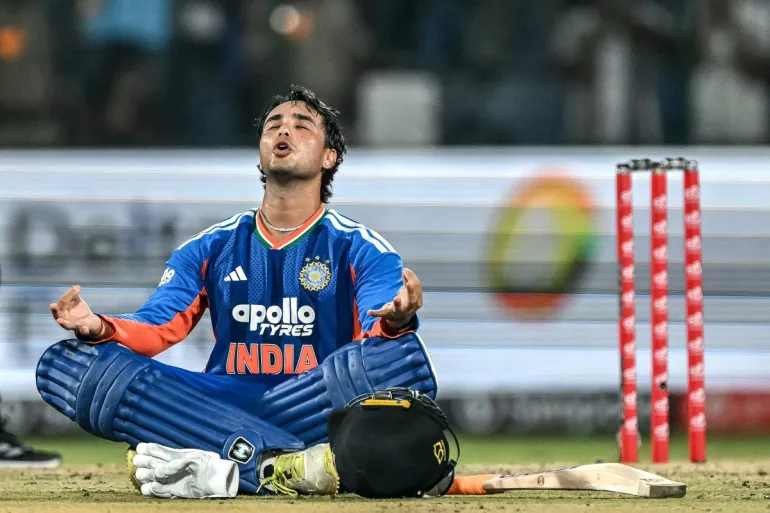
Opener Abhishek Sharma hit a record T20 century off 30 balls to set up a crushing 127 run win for India in the third match against Afghanistan and sweep the series 3-0.
Left-handed Abhishek’s ton on Thursday was the fastest in a T20 international between full Test-playing nations as he guided India to 221-7 at New Delhi’s Arun Jaitley Stadium.
Afghanistan, who were the official hosts for the series, checked the opposition surge after Abhishek departed for 108 off 34 balls and India lost their way from 142-1 in 10 overs.
But the Afghan batters once again disappointed and were bowled out for 94 in 14.1 overs.
Afghanistan had posted 156-8 and 159-8 while batting first in the first two matches.
Left-arm spinner Axar Patel struck twice in his first over to send back Rahmanullah Gurbaz, for 15 and Sediqullah Atal, for one. Afghanistan could never recover from the losses.
Seam bowler Nitish Kumar Reddy also took two wickets in one over to return figures of 3-25.
Leg-spinner Ravi Bishnoi wrapped up the Afghanistan innings with his third strike of the match.
Abhishek stood out with his third T20 century as he surpassed Zimbabwean Sikandar Raza’s ton off 33 balls against Gambia in 2024 and Finn Allen’s effort from the same number of deliveries in New Zealand’s T20 World Cup semi-final win over South Africa earlier this year in India.
The only two faster T20I hundreds came in matches between the lower-tiered associate members of the ICC.
Sahil Chauhan of Estonia holds the overall record of 27 balls after his century against Cyprus two years ago, while Muhammad Fahad needed just 29 balls for his ton for Turkey against Bulgaria in 2025.
Abhishek tore into the Afghanistan bowling attack after India were invited to bat first.
The swashbuckling opener hit a six to reach 99. He completed the hundred with a single and sat in meditation pose to celebrate.
He finally fell for 108 off 34 balls to leg-spinner Rashid Khan. The 26-year-old’s knock was laced with nine fours and 11 sixes.
His opening stand of 142 with Sanju Samson, who hit 50, put India on course for a big total but the Afghan bowlers hit back with regular wickets.
Tilak Varma was run out for two by Rashid and Samson departed after his second successive half-century as he fell to pace bowler Azmatullah Omarzai.
Omarzai struck another blow helped by a stunning catch by Rashid in the deep to send back Shivam Dube for 14.
India raised their 100 in six overs but managed just 79 from the last 60 balls.
India now head to Japan for the Asian Games starting September 19 at Nagoya-Aichi.
Afghanistan will send a largely different team to the Asian Games under Darwish Rasooli.
[Aljazeera]

United States President Donald Trump’s administration has asked lawmakers to clear the sale of 48 F-35 fighter jets to Saudi Arabia for an estimated $24.3bn.
“This proposed sale will support the foreign policy and national security objectives of the United States by improving the security of a major non-NATO ally that is a force for political stability and economic progress in the Gulf region,” the State Department said in a statement on Thursday.
The administration said the sale of the jets, the most advanced fighter aircraft the US has, would “not alter the military balance in the region” in keeping with longstanding US policy that Israel must have a military edge over potential regional adversaries.
The announcement comes after the Houthis in Yemen claimed on Wednesday they shot down a Saudi F-15 fighter jet over Marib, a key city in their battle against Saudi-backed Yemeni government forces. The group released video of fighters in the city standing before burning wreckage of what appeared to be a US-made F-15 fighter jet with Saudi Arabian markings.
The Houthis claim the aircraft was shot down with a “locally made” surface-to-air missile, which would mark a dramatic change in the group’s ability to wage war in the area. Until now, Saudi Arabia’s military has enjoyed relative air superiority in Yemen, and has relied heavily on its ability to carry out air strikes in the neighbouring country.
Intensifying fighting between Saudi Arabia and the Houthis reportedly killed at least five people, including three children, on Thursday.
[Aljazeera]
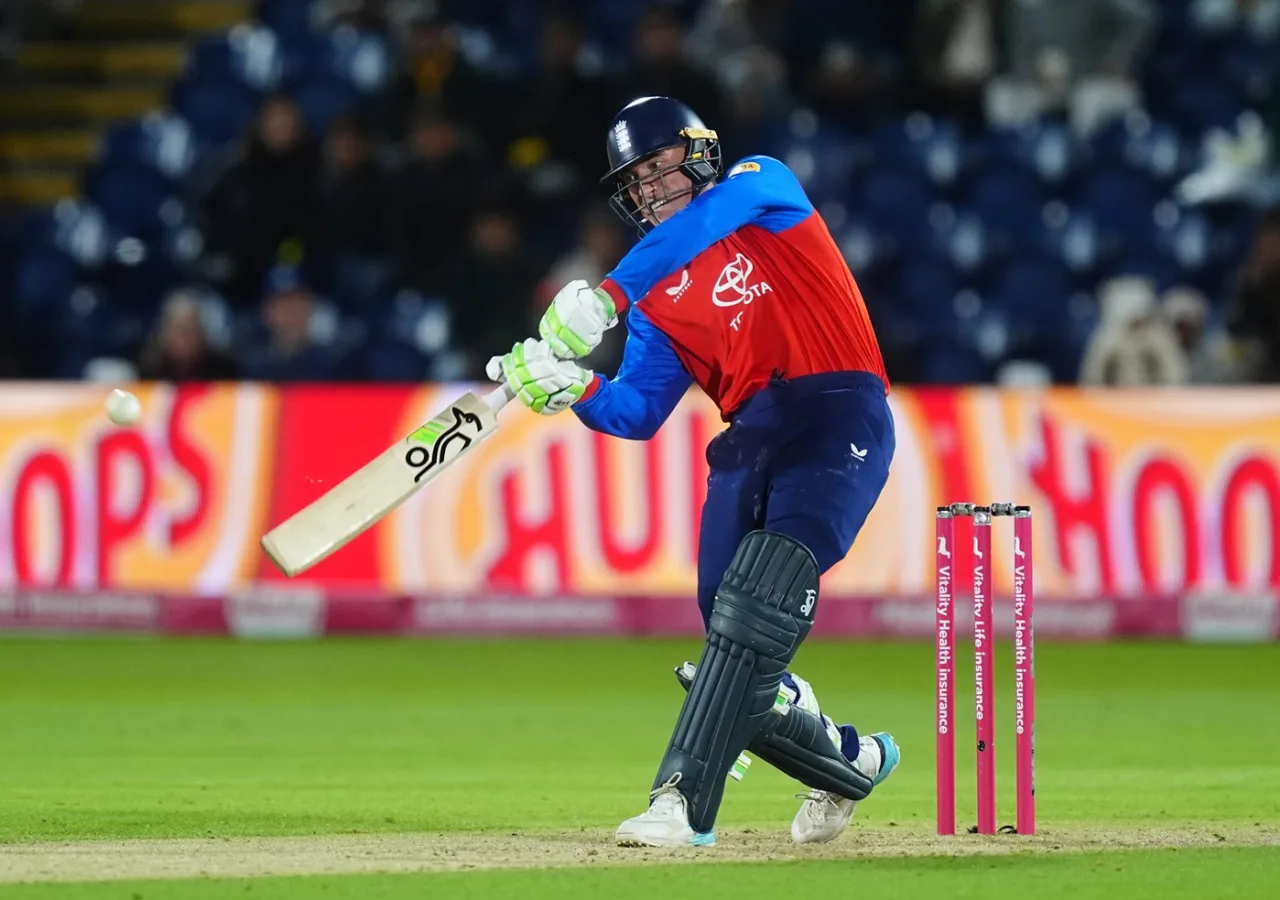
Consecutive thrashings in three days saw England take the T20I series against Sri Lanka with a game to spare. Thursday’s victory was just as one-sided as the opener at the Utilita Bowl, which they took by 119 runs; in Cardiff, Harry Brook’s side reached a lacklustre target of 146 with 47 balls to spare, with Tom Banton unbeaten on 52 off 24 for the conclusion as England took an unassailable 2-0 lead.
Brook was able to give his team their usual chasing privileges at Sophia Gardens. They punched their ticket once more for a 10th win in 12 completed T20Is at this venue. Their overall record has extended to 22 wins from 25 completed matches since Brook took over last June.
Sri Lanka’s stand-in skipper Charith Asalanka also wanted to bat second to make use of the shorter, straight boundaries, a fact Sri Lanka seemed to forget when setting a total. Their paltry 145 for 9 was baffling: barring Pathum Nissanka’s 37 from 21 and Kamindu Mendis’s 12 off 8, there was no urgency or attempt at ingenuity.
Nissanka lifted them to 55 for 0 after the first five overs, but they were held hostage for the final 15, returning 90 for 9. That included just seven runs from the final three overs, including a wicket-maiden in the 19th for Sonny Baker.
That initial burst of scoring was capped with a 17-run over off Will Jacks, who failed to hide the short, straight hit from the River Taff End. Liam Dawson then removed Lahiru Udara and Kamil Mishara in consecutive balls in the final Powerplay over.
That proved to be the end of Sri Lanka’s impetus, and this contest. Asalanka’s 31 and Wanindu Hasaranga’s 27 came in the face of an exceptionally professional middle-overs display from Jamie Overton, Adil Rashid and Dawson, who finished with 3 for 32 to earn player-of-the-match honours.
Aneurin Donald, as the hometown hero returning to his boyhood county, Glamorgan, had the crowd with him, managing to better his debut knock with 21 off 13 this time but struggled to get his timing right.
Buttler initially had no such issues, carrying over his form from the 80 struck on Tuesday. He wasted no time getting to 30, moving to 15,000 runs in all T20, reclaiming the outright lead, now one ahead of Kieron Pollard. That included taking 16 off the second over from left-arm seamer Dilshan Madushanka, brought into the XI with debutant Tharindu Rathnayake, as spinners Dunith Wellalage and Maheesh Theeskshana made way.
With Buttler removed, and Brook dismissed for the first time in four innings – his 23 today taking his aggregate in that stretch to 311 runs – there was a hint of jeopardy at 79 for 3 after seven overs. But with 69 required from the remaining 78 balls, England’s middle order could decided between themselves who was going to see it home with a score of note.
In the end, it was Banton, adding another finishing cameo to his catalogue. He ticked over a fifth half-century from 24 deliveries before a succession of no-balls and wides was followed by Jacks’s lame tuck into midwicket for an underwhelming finish.
The silent “W” in the ECB (England and Wales Cricket Board) was represented in the first T20I on Tuesday by Aneurin Donald. It was the first time since 2005 that an England team has featured a product of Glamorgan. This evening, however, was that much more special.
Born in Swansea, Donald – who hails from a family with deep roots in the game – stepped out at Cardiff to an emotional home coming. Even Kevin Pietersen, who presented Donald his maiden cap, referenced it ahead of Southampton. This, really, meant more.
It was with Glamorgan that Donald made his domestic debuts, before leaving to join Hampshire in 2015. The route to this point, back at Sophia Gardens as a Welshman of international repute, has been long, and riddled with doubt.
Donald was not quite able to grab the night for himself. With a low crowd, and against poor opposition, it felt like the evening needed him to be the story. But a lap over fine leg for six, and two fours – all in a row against Dushmantha Chameera – did get the Welsh support vibing with him a little more.
A scuffed heave off Eshan Malinga – misreading a slower ball – saw him depart for just 21 in a low run-chase. But it was an important cameo in the bigger picture.
“I’ve got the opportunity to fly the flag for everyone that’s put some time and energy into me, but not just that, the wider Welsh game,” Donald told the BBC in the lead-up to this match. “It’s an added responsibility but I’m determined to try and fly the flag.”
If you really squint, Pathum Nissanka’s breezy innings could be seen as a silver lining.
Two months on from surgery to his right wrist – which took place in London – the 28-year old produced his most recognisable innings since returning to competitive action at the end of August.
Having missed the Test series against India, and the Lanka Premier League, a couple of T20s for Nondescripts and a couple of hits against England Lions meant he looked understandably rusty in Southampton. Sri Lanka were a doubt to challenge their 255 target, and certainly not when their best batter managed just 12 from 11.
Here in Cardiff, there was a return close to the norm. He was a cut above his teammates, a chasm initially exaggerated at first by Lahiru Udara struggling at the other end, who at one point had 1 off 9 balls.
It was clear Nissanka was central to any respectable total. The only batter sharp enough to use his feet, and create different angles, Jofra Archer was taken for 14 in his opening over. After a flick around the corner, Nissanka charged and cut square before lapping the final ball over his shoulder, crouching to send England’s fastest quick inside the man at short fine.
The problem was always going to be the other end, and consecutive dismissals in the final over of the Powerplay summed that up. After the six-over mark, Sri Lanka were 56 for 2, with 33 contributed by Nissanka, having only faced 13 balls with the fielding restrictions. If that felt like a waste, then his dismissal at the end of the 9th certainly was, having added just 4 runs in eight more balls.
Remarkably, he was the only Sri Lanka batter to target the short, straight boundaries when he hit Will Jacks for a straight six at the start of the fourth over.
Scores:
England 146 for 4 in 12.1 overs (Jos Buttler 30, Aneurin Donald 21, Harry Brook 23, Tom Banton 52*, Jordan Cox 12; Dushmantha Chameera 1-29, Wanidu Hasaranga 1-42, Eshan Malinga 1-27, Tharindu Rathnayake 1-25) beat Sri Lanka 145 for 9 in 20 overs (Pathum Nassanka 37, Lahiru Udara 21, Charith Asalanka 31, Kamindu Mendis 12, Wanidu Hasaranga 27; Sonny Baker 1-15, Joffra Archer 2-34, Liam Dawson 3-32, Jamie Overton 2-23, Adil Rashid 1-18) by six wickets
[Cricinfo]

Athapaththu and Dilhari muscle Sri Lanka past Malaysia in mismatch

Abhishek Sharma hits record T20 ton as India beat Afghanistan by 127 runs

Trump administration approves sale of F-35 jets to Saudi Arabia

Banton steers England into unassailable 2-0 series lead

Showers expected in the Western, Norrh-western and Sabaragamuwa provinces and in Galle, Matara, Kandy and Nuwara-Eliya Districts.

Bid for Basil’s extradition nears final stage: Police

‘Dates have the highest sugar content to fight Coronavirus’

Sunday Island 27 December – Headlines

#SundayIsland 17th December – Headlines

Sunday Island – 28th March

Sunday Island Headlines – 21 March

Sunday Island – 21st February – Headlines
-

 Latest News6 days ago
Sri Lanka thwart Fatima Sana challenge to secure Asia Cup final spot
-

 News5 days ago
Gnanasara Thero absconding after SC ruling
-

 News6 days ago
Ammunition cache found in old Kandy bungalow
-

 News6 days ago
Green Climate Fund (GCF) Regional Dialogue for East and South Asia will be held from 14 to 17 September 2026 at Cinnamon Life at City of Dreams Hotel, Colombo
-

 News6 days ago
Prof. Pieris says Buddha Dhamma recognised as source of law under Constitution
-

 Opinion4 days ago
From Galkissa (Mount Lavinia) to Tambuttegama
-

 News7 days ago
Bambalapitiya Railway Station renovated under the “Dream Destination” project opened to the public
-

 Latest News6 days ago
ITS Giuseppe Garibaldi’ departs Colombo