
Features
Sri Lankan Cocoa – a promising inter-crop with coconut

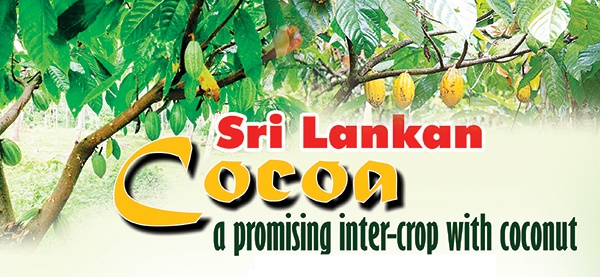
Sri Lanka’s fame for some of world’s finest cocoa is threatened with the local production volumes declining sharply. Although an ideal inter-crop with coconut, promoting the ecological balance, the disinterest of many local landowners in this wonder crop considered the ‘food of the gods’ is declining at an accelerated pace. We spoke to several Sri Lankan Cocoa enthusiasts who warn that unless urgent interventions are made, Sri Lankan Cocoa is on the path to botanical antiquity.
by Randima Attygalle
Botanically termed Theobroma cacao, the cocoa tree is believed to have originated in the Amazon basin and spread to Central America, largely to Mexico. The natives in this region including Mayans and Olmecs revered it as the ‘food of gods’. Cocoa seeds were used as currency by the Aztecs. By the beginning of the 19th Century, it was introduced to the colonies and was developed in Africa and Asia as a commercial plantation.
Cocoa is mostly processed into chocolate and a wide range of intermediate products such as cocoa liquor, cocoa butter, cocoa cake and raw cocoa powder used in the beverage industry. Cocoa butter is also sought as a base for soap, cosmetics and medicinal products. Its pulp juice is also fermented and used in brandy and wine. The pod husks are used in preparation of animal feed. The husks and shells are also used as a renewable energy source and to produce bio-diesel.
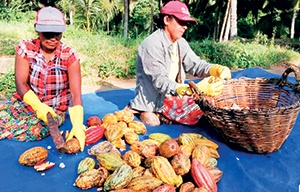 The nutritional value of cocoa is very high. Besides its antioxidant properties, cocoa’s healing properties are many. Research confirms its impact on improving dermal blood flow and the maintenance of skin health. Cocoa butter is used as a home remedy for burns, cough, dry lips and wounds in some leading cocoa producing countries. It is also reported to be antiseptic and diuretic.
Cocoa thrives in deep, well-drained clay loam soils rich in organic matter. The colonial planters found our immature brown loams and reddish brown latosols to be perfect to introduce cocoa to the island. The first cocoa plantation here at home was set up by the British in 1819 in Nalanda, Matale. By 1960 the island claimed 30,000 acres of cocoa. Today, it is reduced to around 5,000 acres, points out the Director General of the Department of Export Agriculture (DEA), Dr. A.P. Heenkenda. “Among the finest plantations we lost was the Pallakelle Esate of Rajawella Plantations, when the Victoria reservoir was built. Today cocoa is largely an intercrop with coconut,” he says. While Matale, Kandy, Badulla, Kurunegala, Kegalle and Monaragala districts are considered the main cocoa growing area, suitable conditions for its growth can be found even in North Western, Sabaragamuwa, Central and Western Provinces.
Cocoa, Dr. Heenkenda explains, is one of the best intercrops that is presently promoted with coconut and rubber. “We have initiated several projects in Kurunegala and Gampaha districts in collaboration with the Coconut Cultivation Board and another in rubber-centric Moneragala.” Despite the ready know-how being available for cocoa cultivation, the attitude of many growers remains very negative, notes Heenkenda. “While cocoa plants can be obtained from the regional plant nurseries affiliated to DEA, technical know-how is available through DEA Extension Officers at Govijana Sewa Centers, Research Stations, District Assistant Directors’ offices and the DEA’s head office in Peradeniya.”
The cocoa market, according to the International Cocoa Organization (ICCO) distinguishes three main types of cocoa beans: Forastero or ‘bulk cocoa’ comprising 93.5% of world cocoa production; the specialty beans, often originating from Criollo planting materials which is rare today and Trinitario, a hybrid that originated in Trinidad from crossings between mixed Criollo and mixed Forastero types.
Bernard Minifie in his work Chocolate, Cocoa and Confectionery (Third Edition) documents that Criollo-the original “wild” variety is found in very small proportion of the world supply and is found in Samoa, Java, and Sri Lanka. This ‘small proportion’ the author alludes to is made even smaller today, says Dr. H.M.P.A Subasinghe, Director (Research), Department of Export Agriculture. “Today what we mostly find locally are crosses of Criollo and Forastero types,” he says.
The fine taste in Sri Lankan Cocoa due to its chemical composition and the high butter content, still puts it among the finest cocoa in the world, says Subasinghe. “While the butter content found in many other foreign varieties is between 35 to 45% our cocoa contains more than 50% butter.” Despite the lucrative revenue it promises in the global market, disease control efforts, animals such as monkeys and giant squirrels that feed on cocoa pods, lack of knowledge on canopy management and the insufficient domestic market price per kilo compared to other crops such as cinnamon, pepper etc. drive many cultivators to abandon cocoa and replace them alternatives crops such as pepper or cinnamon, he says.
Many measures have already been taken by DEA to revive an interest in Sri Lankan Cocoa. Introduction of new varieties, production of quality planting material, support for selection of suitable land, providing soil test reports, issuing of planting material free of charge after registration, subsidies for relevant machinery and processing centers, subsidies with the success of cultivation (80% field establishment), planting material for gap filling, training programmes on planting material production, crop management, pest and disease control and post-harvest technology and other technology transfer activities at field level and providing price and market information are among these.
Cocoa is largely encouraged as an intercrop with coconut where ideal soil and other climatic conditions meet, particularly in the Kurunegala District, says Subasinghe. “The difficulties in finding suitable lands for cocoa as a monocrop in ‘traditional cocoa-grown areas’ (such as Matale, Kandy, Badulla etc.) can be mitigated when it’s intercropped with coconut. Moreover, farmers can generate a higher income from unit land area with a two-crop yield.” With unprecedented climate change, the yield in a main crop can also increase due to modification of micro-climate in the crop environment, he says. Inter-cropping also has more potential for soil and soil moisture conservation and creates a certain amount of ecological balance, points out the researcher.
The domestic requirement for cocoa is around 6,000 MT. Yet only around 600 MTs are presently produced locally according to DEA figures. While a kilo of local cocoa beans is sold around Rs. 450, the world cocoa beans price is around 3 US$. In 2019 according to the DEA, 48,887.8 MT of cocoa beans were imported to the country costing Rs. 3.46 billion. Imports are made largely from Ghana, Ivory Coast, Malaysia and Indonesia. Compared to other cocoa exporters, our export figures are negligible points out the DEA. Ivory Coast, Ghana, Ecuador, Cameroon, Nigeria, Indonesia, Brazil, Peru and the Dominican Republic are the major cocoa exporters according to the ICCO.
Cocoa can do wonders to coconut plantations providing organic fertilizer (with the leaves that are shed) and retaining moisture, points out S.M.M Samarakoon, CEO of Kurunegala Plantations Ltd. “Climate change has taken a huge toll on coconuts resulting in immature falling of the nuts and cocoa as an intercrop can help build a micro-climate within a plantation and thereby increase the yield by about 26%,” says this senior planter. It is also a buffer against soil erosion he adds.
Today 35 acres of coconut in Dodangaslanda estates of Kurunegala Plantations Ltd are complemented by cocoa. A fervent supporter of cocoa, Samarakoon urges the responsible state authorities to kindle more interest in the crop among potential cultivators by introducing a national policy and encourage confectioners to support growers as part of their CSR campaigns.
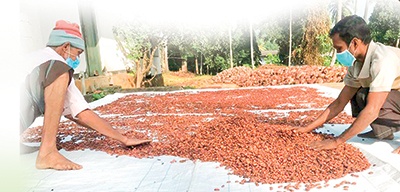 While it takes five to six years for cocoa to bear, it takes five to six months for fruit to mature. A single tree, according to Samarakoon can produce one kilo of processed beans per season and their plantations produce around three tons per year. The life span of a cocoa tree, if managed well, is 30 to 40 years. The harvest depends on the rainfall pattern. Peak harvesting season is usually from July- August. Once cocoa beans are harvested from the pods, they are allowed to naturally ferment over a period of three to four days before they are dried.
While many cultivators who have been discouraged by pests and diseases to which cocoa is prone, including the black pod disease and swollen shoot disease had abandoned most of their cultivation, Samarakoon is positive that if one is really passionate about this crop, there is always a way out. It is also a means of empowering communities at ground level, he believes. “We get the necessary know-how for fighting diseases and for crop management from the DEA and we have also installed a high frequency device to keep the giant squirrels and monkeys away.”
The cocoa beans supply has been declining over the years and in another ten years times, the volumes will deplete further, lament the cocoa bean suppliers to whom we spoke. “It is tragic that when we have some of world’s finest cocoa, there is no state patronage to revive this dying crop,” remarked one of the old hands who lobbies for a wide scale national intervention to replant cocoa and create a dialogue with potential cultivators and offer more incentives and encourage those who are already in the trade by offering a better buying price.
Ceylon Chocolates Ltd (CCL), is the largest buyer of Sri Lankan cocoa in the local market. The company sources cocoa from Matale, Kandy, Kegalle, Kurunegala, Monaragala and Badulla. “CCL’s factory in Kundasale, housed in one of the prime cocoa-growing regions in the country, is the one and only facility in Sri Lanka equipped with the ‘Beans to Bar’ process,” says Thilan Gunarathne, Plant Manager of CCL in Kundasale. “We are positioned to purchase much larger volumes of local cocoa given the capacity of our processing plant. As a company that prides itself in Sri Lankan empowerment, we urge cultivators to revive their interest in this staple of our chocolates.”
Master chocolatier and internationally renowned patissier Gerard Mendis dreams of manufacturing a ‘100% Sri Lankan Cocoa based chocolate’. “This is my ultimate dream,” says Mendis who has grown up among cocoa and coffee in his ancestral Kandy. A cocoa lover and a farmer in his leisure, Mendis laments that despite the prevalence of ideal growing conditions in the island, cocoa’s decline is fast-tracked with no recognition given to it as a sustainable crop. The connoisseur who had learned the art of gourmet chocolate-making in Switzerland and Belgium, candidly admits that he is yet to taste a type of cocoa superior to ours.
(Photo credit: Department of Export Agriculture & Kurunegala Plantations Ltd)

 It was a few years back that a former President of Sri Lanka took it on himself to pronounce SAARC ‘dead’. Since then there have been other sections of Sri Lankan opinion that have joined the critics of SAARC and taken the solemn stance that SAARC has indeed died what may be called a natural death.
Their fatalism is understandable. SAARC has failed to meet at heads of government or state level for the past several years to take the SAARC process notably forward. Regional cooperation has more or less been only an appealing idea. No substantive concrete projects have taken off to make the idea a hard reality. ‘Inner paralysis’ seems to be SAARC’s lot. Hence the fatalism in these circles.
However, being one of the worst cash-strapped regions of the world and a teemingly populated one with people virtually left to their devices, what choices do the ‘SAARC Eight’ have other than to try their best to band together and continue with their cooperation efforts, however small they may be?
There is no escaping the mounting debt trap for many of these countries and bankrupt Sri Lanka is a glaring example, but ‘throwing in the towel’ and abandoning themselves entirely to the diktats of the strongest economies and their agencies will prove a ‘living death’ for many countries in the SAARC fold.
The gains may be meagre but giving-up on SAARC cooperation in full would prove self-defeating for the organization and South Asia. Right now, the collective intention ought to be to salvage what the region could from the tenuous cooperative efforts. Moreover, such initiatives could go some distance to generate a degree of goodwill among the Eight and help in sustaining a dialogue process.
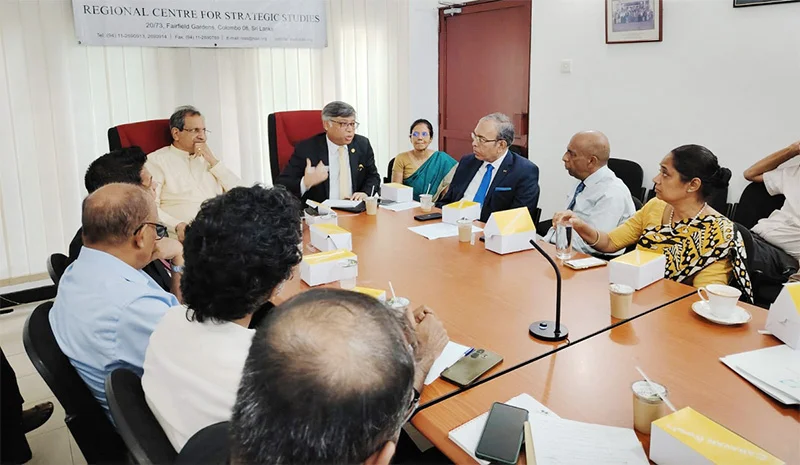
Given this backdrop it proved ‘a stich in time’ for the Regional Centre for Strategic Studies (RCSS), Colombo, to recently host the SAARC Secretary General Ambassador Md. Golam Sarwar to a round table discussion on the unifying potential of SAARC and its future possibilities, besides other related issue areas.
Held on June 24th and moderated by RCSS Executive Director and former ambassador Ravinatha Aryasinha, the forum brought together a vibrant, wide ranging audience comprising academicians, diplomats, senior public servants, civil society activists and many others. Following the presentation by Ambassador Golam Sarwar titled, ‘Reigniting SAARC: Achievements, Challenges and the Way Ahead’, a lively Q&A followed.
The above forum could be described as an act of lighting the proverbial ‘candle’ rather than ‘cursing the darkness.’ It surely is a ‘darkness’ that could be seen as daunting considering that the region’s pivotal powers, India and Pakistan, are failing to act in a spirit of accord but are engaged in bitter finger-pointing on a number of questions of vital importance to SAARC.
On the other hand, what is the rest of the region doing to bring the above sides together? It is disappointing that to date the rest of SAARC has failed to launch a major diplomatic drive to bring peace between the feuding regional heavyweights. It needs to act without delay and establish its earnestness and this effort would need to prove SAARC’s staying power in the unfolding months and even years.
In assessing SAARC’s seeming failure local opinion in particular has failed to factor in what could be described as weak leadership. Since Sheikh Mujibur Rahman of Bangladesh, the founding father of SAARC, the region has failed to produce a visionary leader who could advance the SAARC cause with charisma and drive.
Among other reasons, weak leadership accounts considerably for the faltering and stuttering status, as it were, of SAARC. Badly needed are leaders who could go the extra mile, think less of narrow national interests and work diligently towards the collective well being of the region but SAARC’s millions of ordinary people have been made to wait in vain for leaders of such stature. Instead, they have been burdened with politicians who seem to be relishing the apparently moribund state of SAARC.
Looking back, it could be said that it was the dynamic leadership factor that led to the launching of the Non-Aligned Movement and for its sustenance for a few decades. True, it could be seen in some quarters that NAM is no more, but as in the case of SAARC, the former too has been unfortunate to be burdened over the years with politicians who lack the vision and drive to unflaggingly advance the fortunes of the South. NAM and SAARC lack the dynamism and vision of leaders of the stature of Jawaharlal Nehru, for example, to give them the required guidance and intellectual depth.
The reasons are complex for there not being among us currently political leaders with the vision and the steadfast commitment to advance the legitimate interests of the South. However, it could be stated with conviction that the majority of Southern leaders have too easily caved in to the demands of the global North and its financial agencies.
These leaders have failed to see, for instance, that the largely market economy oriented Northern governments would not view with favour a centrist economic model that attaches priority to the interests of the dis-empowered publics of the South. This realization ought to have dawned on the current government in Sri Lanka, for instance, some while ago but it has no choice but to abide by IMF dictates since economic survival at present is unthinkable without the latter’s succour.
Accordingly for SAARC this should be the time for some soul-searching. Priority needs to be attached to ending the feuding between India and Pakistan since at present the material fortunes of the region hinge largely on these regional giants giving peaceful relations among them a try. This is no easy challenge to meet but some daring, visionary diplomacy needs to take hold among the rest of SAARC.
There is some sense in SAARC bringing the peoples of the region together through programs that address their best collective interests. A meeting of minds among SAARC nations could enable SAARC and its agencies to build a region-wide people’s movement for progressive political and economic change that could in turn lead to the region’s political leaders sensitizing themselves more to the neglected needs of their publics.
However, the time is ‘now’ for the initiation of these progressive changes and the voice of SAARC well wishers would need to drown out those of their critics.
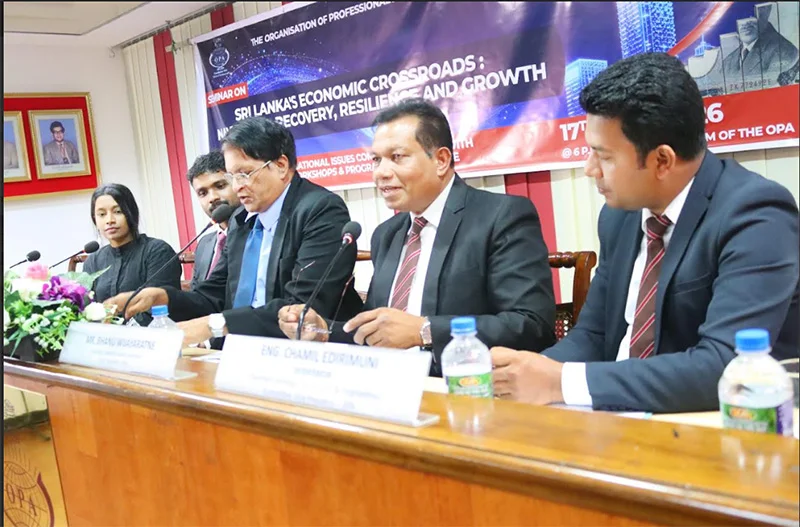
A seminar, “Sri Lanka’s Economic Crossroads: Navigating Recovery, Resilience and Growth” was recently held by the Organisation of Professional Associations of Sri Lanka (OPA) at the OPA Auditorium, bringing together economists, OPA members, and professionals from diverse fields for an insightful discussion on Sri Lanka’s economic recovery and future growth prospects.
The event was held under the patronage of Jayantha Gallehewa, President of the OPA, and was jointly organised by the National Issues Committee (NIC) and the Seminars, Workshops and Programmes Committee of the OPA. The event reaffirmed the organisation’s commitment to advancing professional excellence, fostering insightful intellectual engagement, facilitating interdisciplinary knowledge exchange and creating a constructive platform for informed dialogue on issues of national importance.
The panel of speakers comprised Dr. Harsha Aturupane, Lead Economist and Programme Leader for Human Development at the World Bank for Sri Lanka and the Maldives; Dr. Achinthya Koswatta, Senior Lecturer in Economics at the Open University of Sri Lanka, and Anushan Kapilan, Lead Economist at Verité Research.
In his welcome address, the President of the OPA emphasised that Sri Lanka was at a critical juncture in its economic recovery journey where sustained reforms, effective implementation, and collective national commitment are essential to achieving long-term stability, resilience and inclusive growth. He noted that the country had experienced one of the most severe economic crises in its history with the economy contracting by 7.8 percent in 2022 and a further 11.5 percent in 2023, resulting in significant economic and social challenges.
Delivering his introductory remarks Bhanu Wijeyaratne, Vice President of the OPA and Chairman of the National Issues Committee, underscored the need to move beyond short-term economic stabilisation towards a comprehensive agenda of structural transformation. He observed that the economic crisis had revealed deep-rooted weaknesses within the economy, including persistent fiscal pressures, rising public debt, foreign exchange limitations, and insufficient diversification of the export base. He stressed that addressing these challenges through strategic reforms, institutional strengthening and long-term economic planning would be essential to establishing a more resilient and competitive economy.
While acknowledging recent positive developments, including improved inflation management, tourism recovery and signs of economic stabilisation, Wijeyaratne stressed the need to advance reforms aimed at strengthening fiscal discipline, enhancing productivity, improving competitiveness, developing human capital and reinforcing governance and institutional effectiveness.
He further highlighted the important role of professionals, businesses, academia and other stakeholders in contributing to evidence-based dialogue and supporting Sri Lanka’s journey towards a resilient, inclusive and sustainable economic future.
Delivering the keynote presentation, Dr. Harsha Aturupane provided a comprehensive assessment of Sri Lanka’s economic prospects within the broader context of global economic transformation. He argued that Sri Lanka functioned as a small open economy whose performance is significantly influenced by developments in the global marketplace. External factors could not be controlled, and the country must strengthen its domestic capacity and resilience to respond effectively to international economic shifts, he noted.
Tracing the evolution of global economic systems, Dr. Aturupane highlighted the transition from ideological divisions between state-controlled and market-oriented economies towards increasingly pragmatic approaches focused on growth, competitiveness and development. He noted that Sri Lanka’s own economic journey reflects a similar evolution, with contemporary policy debates now centred on practical solutions for sustainable economic progress.
The presentation also examined the transformative impact of globalisation. Dr. Aturupane observed that global economic integration had enabled several East Asian economies, including South Korea, Singapore, Taiwan and Hong Kong, to achieve remarkable economic advancement through export-led growth strategies. Sri Lanka similarly benefited from this process through the expansion of its apparel industry and increased integration into global value chains.
Turning to Sri Lanka’s recovery programme, Dr. Aturupane emphasised that the ongoing stabilisation process should be viewed as a national programme supported by the International Monetary Fund rather than solely as an IMF initiative. He observed that strong worker remittances, improved tourism earnings, enhanced government revenue mobilisation and prudent import management have contributed significantly to economic stabilisation.
Despite this progress, he cautioned that rebuilding foreign exchange reserves and meeting future debt obligations remain major challenges. He underscored the need to strengthen export performance, attract investment and generate sustainable foreign exchange earnings to ensure long-term economic resilience.
The discussion also focused on monetary stability, inflation management and exchange-rate policy. Dr. Aturupane stressed that maintaining price stability was fundamental to sustainable growth and household welfare, while sound monetary policy remains essential for preserving economic confidence.
Looking beyond stabilisation, he argued that Sri Lanka must transition towards a broader economic transformation agenda. Sustainable growth, he noted, will depend on expanding productive capacity through investment, technological advancement, innovation, skills development and structural reforms.
Among the key constraints identified was the high cost of energy, which continues to affect competitiveness and investment attractiveness. Dr. Aturupane emphasised the importance of improving efficiency and affordability within the energy sector to enhance Sri Lanka’s business environment.
He further highlighted the social dimensions of the crisis, noting the rise in poverty and economic vulnerability among households. Strengthening social protection systems and ensuring inclusive growth, he argued, must remain central components of the national development agenda.
Another critical challenge identified was Sri Lanka’s demographic transition. With an ageing population, outward migration and evolving labour market dynamics, the country is increasingly confronting labour shortages in several sectors. Dr. Aturupane suggested that greater automation, increased labour-force participation and strategic workforce planning would be necessary to address these emerging realities.
Concluding his presentation, he emphasised the need to improve governance, strengthen institutions, enhance competitiveness and create an enabling environment for private sector investment. Sri Lanka’s future success, he noted, will depend on its ability to move decisively beyond crisis management towards a development model founded on resilience, innovation, productivity and inclusive growth.
Dr. Achinthya Koswatta reiterated the importance of policy consistency and predictability in fostering investment and industrial development. She observed that frequent policy changes create uncertainty and discourage long-term investment decisions, whereas stable and coherent policy frameworks build confidence and support sustainable economic transformation.
Meanwhile, Anushan Kapilan highlighted the substantial progress achieved in restoring macroeconomic stability following the recent crisis. He noted significant improvements in fiscal performance, including increased government revenue, reduced reliance on debt financing and a historically low fiscal deficit.
He further observed that public debt levels are declining faster than anticipated, economic growth has exceeded expectations and inflation has been brought under control more rapidly than forecast. Nevertheless, he cautioned that the recovery remains uneven, particularly within the industrial sector and that many households have yet to experience a meaningful improvement in living standards.
The seminar was expertly coordinated by Eng. Chamil Edirimuni, Vice President of the OPA and Chairman of the Seminars, Workshops and Programmes Committee, while the technical moderation and interactive discussion session were facilitated by Bhanu Wijeyaratne, Vice President of the OPA and Chairman of the National Issues Committee.
The event was attended by Tisara De Silva, President-Elect of the OPA, Eng. Ravi Rupasinghe, General Secretary, Past Presidents, members of the Executive Council, representatives of the General Forum and professionals representing a wide range of disciplines.
The seminar concluded with a vibrant exchange of ideas and perspectives, reaffirming the importance of evidence-based policy dialogue, institutional collaboration and collective national commitment in advancing Sri Lanka’s economic recovery, resilience and sustainable growth.

 Yes, for UK-based presenter and artiste Samantha Kay, home is where the heart – and the roots – are. And her roots run deep in Sri Lanka.
In an exclusive interview with The Island, Samantha says “I’m proud to be Sri Lankan. My mum is from Kandy and my dad is from Colombo, so Sri Lanka has always held a very special place in my heart.
“Whenever I visit Sri Lanka, I love spending time on the beautiful south coast, especially Hikkaduwa and Mirissa. It’s somewhere I always feel connected to my roots and completely at peace.”
Now living in Bournemouth, on the south coast of England, where, she says, she is lucky to be close to some of the UK’s most beautiful beaches, including the iconic Sandbanks, Samantha has built a career that refuses to fit into one box.
She is a radio presenter, podcast host, singer-songwriter, personal trainer and life coach.
“I genuinely love the variety because every role allows me to connect with people and, hopefully, make a positive difference in someone’s day.”
Of course, music has taken her far.
One of her proudest achievements, she says, was releasing a song with 90s music icon Angie Brown, which reached No. 9 in the UK Club Charts.
She also reached the final stages of The X Factor and performed at Wembley Stadium in front of thousands.
Beyond music, Samantha competed in bikini bodybuilding across the UK, winning several titles. “It taught me discipline, resilience and self-belief,” she recalls.
Today, her focus is on radio, podcasting and coaching women. Her podcast encourages people to live life on their own terms rather than feeling pressured to follow society’s expectations.
Says Samantha: “Whether someone is single, changing careers, travelling solo or simply trying to find their purpose, I want them to know that it’s never too late to create a life that feels authentic. If you’ve ever felt like you don’t fit into the box, maybe you were never meant to.”
Samantha Kay also spent a year in Dubai, performing at five-star hotels, including FIVE, and coaching at the iconic outdoor gym on Palm Jumeirah.
“I taught strength and conditioning classes, and hosted wellness retreats, combining my passion for music, health and inspiring others.”
However, with family matters calling her back to the UK, she made the choice to return. “Family comes first,” she says.
Looking ahead, Samantha plans to grow her radio and podcast work, release more music, and expand her wellness retreats.
“My biggest passion is helping people, especially women, build confidence and believe in themselves,” she says.
“Wherever my career takes me, I hope to continue inspiring others to live with courage, kindness and authenticity, while never forgetting my Sri Lankan roots.”

Current El Niño Status in Sri Lanka

A few showers may occur in the Western, Sabaragamuwa and North-western provinces and in Kandy, Nuwara-Eliya, Galle and Matara districts.

Argentina face fine for Falklands banner in semi-final win

US launches fresh strikes on Iran as Trump warns Tehran it ‘better behave’

Govt. move to extend retirement ages of top judges: Opp. complains to UN

Dengue surge pushes hospitals to the brink as cases near 70,000

‘Dates have the highest sugar content to fight Coronavirus’

Sunday Island 27 December – Headlines

#SundayIsland 17th December – Headlines

Sunday Island – 28th March

Sunday Island Headlines – 21 March

Sunday Island – 21st February – Headlines
-
 News6 days ago
Herath warns prospective migrant workers not to get fleeced by racketeers
-
 Features4 days ago
Prison riots and politics: NPP’s biggest challenge and Sri Lanka’s biggest opportunity
-

 Editorial5 days ago
What’s the world coming to?
-
 Foreign News6 days ago
Tensions erupt in Indian state after 11-year-old raped and murdered
-
 Features6 days ago
Devanesan Annan – in Memoriam
-
Editorial6 days ago
Punishment in hellholes
-
 Features1 day ago
Dirty Money
-
 News7 days ago
Representatives of the Organization of Professional Associations (OPA) of Sri Lanka meet the Prime Minister