
Latest News
India and Ireland break new ground in New York

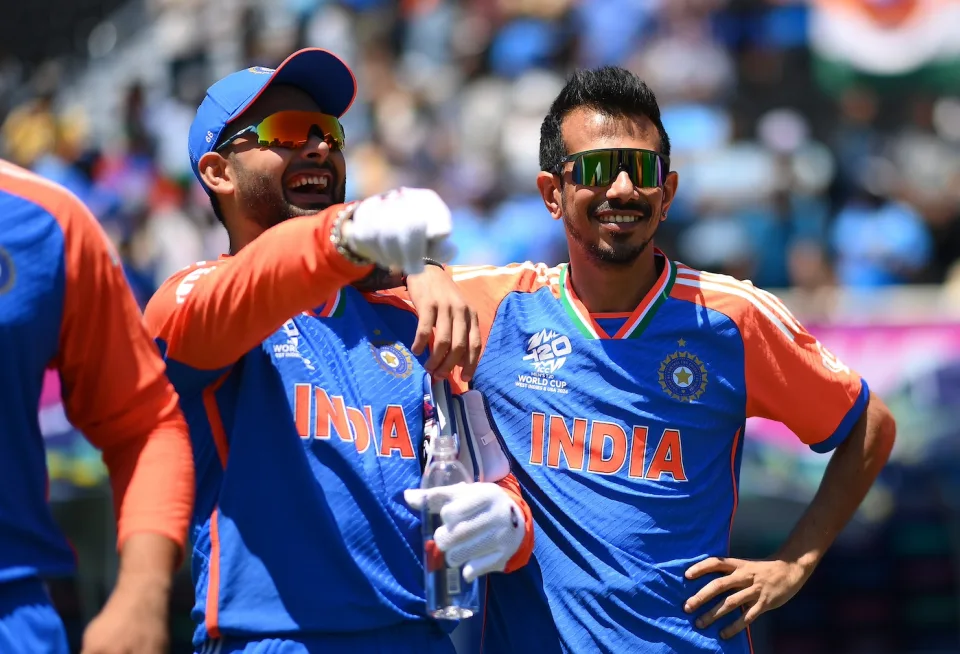
India played two high-profile games at the last T20 World Cup. They won the one where the pitch was tough to bat on and lost the one where it was considerably easier. They will be pleased that the surfaces at this tournament are proving trickier than expected. That means they won’t be bested by the team with the better six-hitting pedigree, like they were in 2016 and in 2022.
Less-than-placid conditions also bring Ireland into the game. Josh Little will be asked to do what other left-arm quicks have done against India in the past. Bowl full and try to get lbws and bowleds, which if he manages to do so will be doubly useful, because India are front-loading at this World Cup. Rohit Sharma, Virat Kohli and Suryakumar Yadav – their three best batters – are likely to be Nos. 1, 2 and 3. Taking them out early might be half the job done.
It’s early days, but so far, discipline more than strength seems to be the necessary ingredient to win at this T20 World Cup, which has taken a leap into the unknown. So watch for Jasprit Bumrah holding his length back and prioritising being unhittable first. And for Paul Stirling to respond with calculated risks to maximise the powerplay. Kuldeep Yadav will make the most of his improved air speed by never giving up the stumps. All of Ireland – particularly their middle order of Harry Tector and Curtis Campher – will have to work together to deny him wickets. It will be hard but that’s what they want. Ireland live for games like these, for occasions like these.
Putting just the jersey back on gave him goosebumps. Imagine how it would feel when Rishabh Pant walks out there to bat. Or even just out there, that first step back on the field for India in an official match at a World Cup no less. He might make the headlines. Or he might not. But the mere fact that he is back and is able to play cricket at this level again after that car accident less than two years ago is huge. The sport is lucky to still have him and his no-look flicks for six.
Harry Tector made his highest T20I score against India, an action-packed 64 off 33 balls, although that was against a decidedly second-string attack. Rather more recently, he stood up to Rashid Khan and Afghanistan with 56 off 34 balls and helped them to a score that eventually proved more than defendable. The middle-order batter stands out for both his power and his temperament and this T20 World Cup might just be his time.
A left-hand batter at the top of the order is a useful advantage and in Yashasvi Jaiswal India have one of the best, but they may forgo that in favour of another left-hand batter with a very different set of skills. Shivam Dube is likely to slot into the middle order and take on the spinners. India’s bowling contains plenty of variety but it is centered around Bumrah and Kuldeep, players with the kind of talent that can dominate whole tournaments, let alone a single match.
India (probable): Rohit Sharma (capt), Virat Kohli, Suryakumar Yadav, Shivam Dube, Rishabh Pant (wk), Hardik Pandya, Ravindra Jadeja, Kuldeep Yadav, Arshdeep Singh, Jasprit Bumrah, Mohammed Siraj
Ireland’s batting goes down to No. 8 and it has a reasonable split between power-hitters and shock absorbers. Andy Balbirnie and Lorcan Tucker have the ability to do both of those roles. Their bowling is seam-dominated but left-arm spinner George Dockrell could get an over or two against the more orthodox batters in the Indian line-up.
Ireland (probable): Andy Balbirnie,, Paul Stirling (capt), Lorcan Tucker (wk), Harry Tector, Curtis Campher, George Dockrell, Gareth Delany, Mark Adair, Barry McCarthy, Craig Young, Ben White
[Cricinfo]


Kenya’s Agnes Ngetich took a second off the women-only half-marathon world record on Sunday when she won the World Athletics Road Running Championships in Copenhagen, stopping the clock at one hour, five minutes, and 15 seconds.
Ngetich, who also broke the women-only 10km (6.2-mile) world record last year, pushed to the front from the outset on a sunny morning in the Danish capital and led until the end, finishing 50 seconds ahead of compatriot Veronica Loleo, who came in second.
The previous record was set by Peres Jepchirchir, another Kenyan, when she won the World Half Marathon title in Poland in 2020.
The overall women’s half-marathon world record is held by Ethiopia’s Letesenbet Gidey, who clocked 1:02:52 in 2021 at the mixed-gender Valencia Half Marathon in Spain.
Sunday’s win was the latest major title this year for the 25-year-old Ngetich, who also won the team half marathon in Copenhagen and the World Cross Country Championships in Florida in the US in January.
(Aljazeera)
Latest News
Flood warning issued to the Divisional Secretariat Divisions of Ganga Ihala Korale, Udapalatha, Doluwa, Udunuwara, Yatinuwara, Gangawata Korale, Harispattuwa, and Pathadumbara

Due to heavy rainfall received in the upper catchment areas of the Mahaweli River over the past few hours, there is a risk of minor flooding in the low-lying areas surrounding the Mahaweli River within the Divisional Secretariat Divisions of Ganga Ihala Korale, Udapalatha, Doluwa, Udunuwara, Yatinuwara, Gangawata Korale, Harispattuwa, and Pathadumbara.Residents living in the above mentioned areas and motorists using roads passing through these areas are urged to exercise extreme caution and remain highly vigilant regarding the prevailing situation.
Furthermore, residents living in close proximity to the Mahaweli River in these areas are advised to remain highly alert to the situation and take all necessary precautions to protect themselves from any potential flooding.The relevant disaster management authorities are requested to take all necessary measures in response to this situation.

The National Building Research Organisation [NBRO] has issued landslide Red Alerts to the districts of Kandy, Kegalle and Nuwara Eliya effective from 14:00 hrs on 20.09.2026 To 14:00 hrs on 21.09.2026
Accordingly,
LEVEL III [RED] Land Slide early warnings have been issued to the Divisional Secretaries Divisions and surrounding areas of Pasbage Korale in the Kandy district, Dehiowita, Aranayake, Deraniyagala, Mawanella and Yatiyanthota in the Kegalle district and Kothmale West, Kotmale East, Ambagamuwa and Norwood in the Nuwara Eliya district
LEVEL II [AMBER] Land Slide early warnings have been issued to the Divisional Secretaries Divisions and surrounding areas of Padukka in the Colombo district, Nagoda, Thawalama and Neluwa in the Galle district, Bulathsinhala, Palindanuwara, Walallawita and Agalawatta in the Kalutara district, Ganga Ihala Korale in the Kandy district, Bulathkohupitiya and Kegalle in the Kegalle district, Akuressa and Pitabeddara in the Matara district, Thalawakele in the Nuwara Eliya district and Pelmadulla, Ratnapura, Ayagama, Kuruwita and Ratnapura in the Ratnapura district.
LEVEL I [YELLOW] Land Slide early warnings have been issued to the Divisional Secretaries Divisions and surrounding areas of Seethawaka in the Colombo district, Niyagama and Baddegama in the Galle district, Mirigama in the Gampaha district, Ingiriya in the Kalutara district, Udapalatha and Yatinuwara in the Kandy district, Galigamuwa, Warakapola and Ruwanwella in the Kegalle district, Kotapola, Pasgoda and Athuraliya in the Matara district, and Eheliyagoda, Kalawana and Elapatha in the Ratnapura district.

Kenya’s Ngetich breaks women-only half-marathon world record by a second

Showers about 100 mm are likely at times in the Western, Sabaragamuwa and North-western provinces and in Galle, Matara, Kandy and Nuwara-Eliya Districts

New Constitution to decide fate of executive presidency, PCs: NPP

NBRI issues landslide warning for three districts

Mahaweli rises as heavy rain triggers flood, landslide fears

SC determination on 22A to be conveyed to Speaker shortly

‘Dates have the highest sugar content to fight Coronavirus’

Sunday Island 27 December – Headlines

#SundayIsland 17th December – Headlines

Sunday Island – 28th March

Sunday Island Headlines – 21 March

Sunday Island – 21st February – Headlines
-

 News4 days ago
US embassy won’t comment on IGP’s probe into joint drug raid
-

 Features6 days ago
The emptying university: why are academics leaving?
-

 News3 days ago
Bid for Basil’s extradition nears final stage: Police
-

 Business4 days ago
All-new Bolero MaXX unveiled in Sri Lanka
-

 News2 days ago
Shanakiyan urges urgent action over reported death sentence for Lankan in Saudi Arabia
-

 Weather7 days ago
Showers above 100 mm are likely at some places in the Western, Central, Sabaragamuwa, Southern, North-central and North-western provinces
-
 Opinion6 days ago
Who committed genocide and created mass graves in Sri Lanka?
-
 Opinion4 days ago
A journalist who wrote across the divide