
News
SC deems Electricity Amendment Bill inconsistent with Constitution

By Saman Indrajith
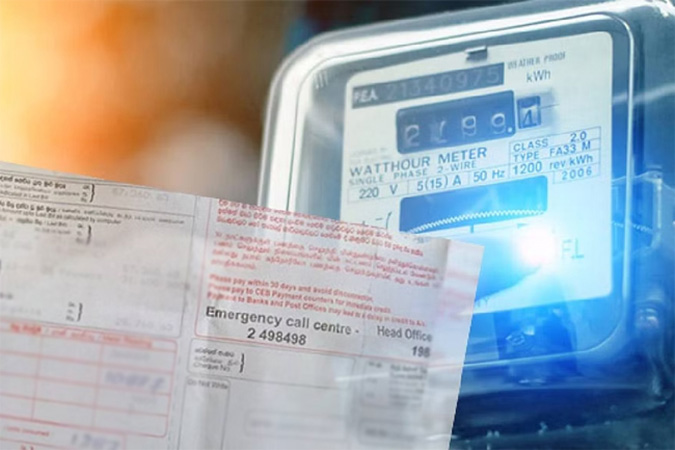
The Supreme Court has determined that the Electricity Amendment Bill is inconsistent with the Constitution as a whole.
Speaker Mahinda Yapa Abeywardena yesterday informed the Parliament of the SC’s ruling.
The Supreme Court has determined that some clauses in the draft Bill were inconsistent with the Articles 3, 4 (a), 12 (1), 14 (1) a, and 76 of the Constitution.
The Court has ruled that the Bill could be passed if it is amended, as per the guidelines stipulated by the Court.
Chief Opposition Whip Lakshman Kiriella raising a point of order said that the amendments recommended by the SC for the Bill could not be studied within a day. Kiriella asked the Speaker to put off the debate scheduled for Thursday (06).
“At the last party leaders’ meeting we pointed out this. It is practically not possible to study all these guidelines today and then go for the debate the day after tomorrow.
This is a very important Bill. It proposes that the CEB be divided into 12 sectors to pave the way for privatization. This affects the lives of 23,000 employees of the CEB. We need time. “
Speaker Mahinda Yapa Abeywardena’s declaration that he couldn’t rule on the matter led to exchange of words between government and Opposition members.
Speaker Abeywardena said that the matter of making that decision was not up to him but to the party leaders.
However, when the MPs kept demanding that a party leaders’ meeting be announced, the Speaker continued in reading his announcements.
SJB and Opposition Leader Sajith Premadasa called for a postponement of the debate. “We need to conduct a broad study on the Bill and the Supreme Court determination and therefore we call for a postponement of the debate set for Thursday,” Premadasa said.
Minister of Power and Energy Kanchana Wijesekera said that the Bill would be amended as per the Supreme Court determination. “We can go ahead with the debate on Thursday with the amendments. The Supreme Court determination is a guideline to ensure that the Bill is consistent with the Constitution. We will ensure that the Electricity Amendment Bill will be made consistent with the Constitution. We have already agreed with some amendments, and we stated this when the case was heard by the Supreme Court. We wonder why the SJB is shouting about the Bill as they themselves have stated in their economic blueprint that they will also restructure the CEB,” the Minister said.
NFF leader Wimal Weerawansa said that it was regrettable to note the way Minister Wijejesekera oversimplified the Supreme Court recommended amendments. “We must study these recommendations and make sure that they are incorporated because this government is notorious for overlooking Supreme Court recommendations in passing Bills,” Weerawansa said.
SLPP dissident MP Chandima Weerakkody: The Supreme Court has determined that this draft Bill violates Article 12(1) of the Constitution. That Article is there to ensure equality of opportunity for all. There are some other recommendations, too. We need time. This could be debated in the Sectoral Oversight Committee for two days.
SLPP Dayasiri Jayasekera: I am a member of Sectoral Oversight Committee on Power and Energy. I know that not all the stakeholders of the power and energy sector have been consulted in making this draft Bill. The reason for trying to rush this Bill through Parliament is obvious to some of us. There are companies lining up to enter into agreements. Suppose the Minister signs an agreement this evening with a wind power company and gets this Bill passed tomorrow, then the provisions of this draft Bill would not be applicable to that company. It is to favour such deals that the need to rush through the Bill arises.
SLPP dissident MP Genvindu Cumaratunga said that the MPs have not been given copies of the Supreme Court ruling. When we ask for the SC rulings, the officials tell us that it would be printed in the Hansard. The Supreme Court rulings are printed in very small letter size in the Hansard that no one bothers to find magnifying glasses to read them. We demand that a copy of the SC ruling be given us today,” he said.
Leader of the House Education Minister Susil Premajayantha said that the government would include all recommended guidelines by the Supreme Court, and it would go ahead to hold the debate on Thursday as scheduled.
Minister Wijesekera said that the government would adhere to the parliamentary process and to the agreements reached at the party leaders meeting. The debate would be on Thursday and the vote would be taken at 6 pm on that day. Those who oppose this bill can come and oppose it on that day too.
State Finance Minister Shehan Samarasinghe said MP Cumaratunga does not know the parliamentary process and becomes a nuisance by raising impertinent points of order. We invite private companies to invest in the electricity sector. We break the ongoing monopoly so that people would benefit. We do so while upholding Supreme Court guidelines. There are some MPs who think like frogs in a well.
JVP/NPP leader Anura Kumara Dissanayake said that Minister Semasinghe was against privatization when in the Rajapaksa camp and now being a member of the Wickremesinghe camp become an ardent supporter of privatization. “According to his description he was in the well when with Rajapaksas and now is out of the well. This House is known for bypassing Supreme Court determinations. We did not have a chance to attend the party leaders’ meeting that determined the dates for this debate. We keep on asking the Speaker to hold party leaders’ meetings on sitting days. This is what happens when party leaders’ meetings are held on non-sitting days.”
MP Nimal Lanza said that the debate should be held on Thursday and should not be postponed under any ground cited by the Opposition because the latter opposes anything done by the government.
MP Harsha de Silva said that the reforming of CEB was there in the SJB blueprint to revive the economy, but it was wrong for the government to interpret it as privatization. He requested that the debate on the Bill be extended to two days and not to be confined to a single day.
NFF leader Weerawansa said that he and other SLPP dissidents are not represented in the party leaders’ meeting. “We have 17 MPs. When the time is allotted for debates, we get only two slots of seven minutes. Therefore, we, too, demand that the debate on the Bill should be held on two sitting days.”
SJB MP Mujibur Rahuman said that the content of the draft Bill was in contradiction with the SLPP manifesto ‘Vistas of Prosperity.”
Speaker Abeywardena said that the matter should be sorted out at a party leader’s meeting. Then the opposition MPs demanded that a party leaders’ meeting be held, however, the Speaker continued to read the next items in the list of announcements despite the shouting by MPs.








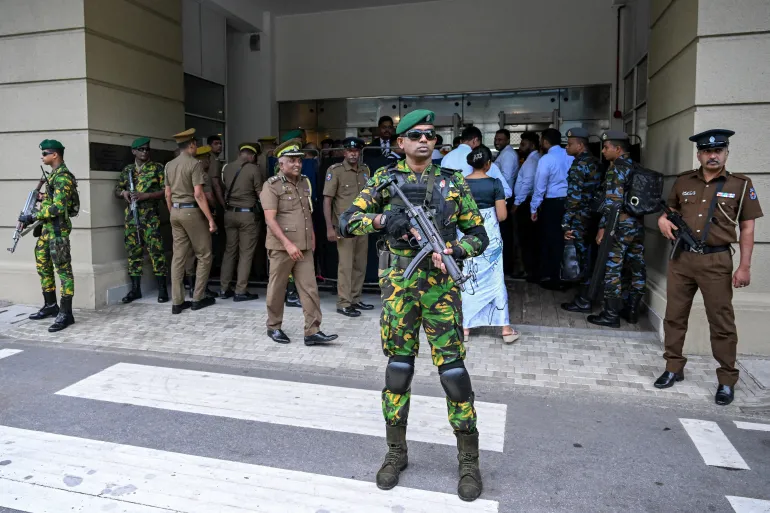
The High Court has convicted 14 of the 24 men accused of being directly involved in the 2019 Easter Sunday bombings, which killed 279 people.
The three-judge bench read out its decision on Tuesday after a five-year trial and said sentencing would take place later, the AFP news agency reported.
The charges included murder and conspiracy to commit terrorism.
Nine others were acquitted, while another defendant was found guilty of only some of the charges, the court said.
[Aljazeera]
By Shamindra Ferdinando
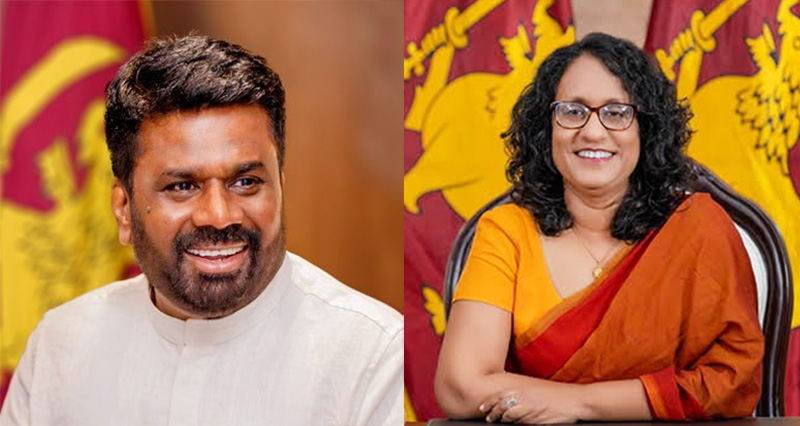
The ruling NPP yesterday (21) dismissed claims of a widening rift, within the government, over the proposed 22nd Amendment. Asked whether the NPP was concerned over a section of the Opposition alleging Prime Minister Dr. Harini Amarasuriya and two dozen MPs taking a view contrary to that of the party in this regard, authoritative party sources said some persons were propagating speculation for their own interest.
Declaring that there was absolutely no issue regarding the controversial Amendment, sources emphasised once it was tabled in Parliament, it would be passed with 2/3 majority.
Sources dismissed claims that out of its 159-member parliamentary group a section of NPPers was opposed to the government move. According to an influential Opposition activist, there are 57 JVPers and 66 NPPers in the government group and the rest contested the last parliamentary polls, having aligned with the JVP.
Ministerial sources told The Island that the government was confident of going ahead with the 22nd Amendment and Judicature (Amendment) Bills. Sources said that the NPP was not bothered about the Opposition protests in and outside Parliament.
Speaker Dr. Jagath Wickremaratne is expected to disclose the confidential ruling that he received from the Supreme Court in respect of more than 65 petitions for and against the 22nd Amendment and Judicial Amendment Bills. The enactment of the 22nd Amendment would pave the way for extending the retirement age of Supreme Court judges, from 65 to 67 years, and Court of Appeal judges, from 63 to 65 years.
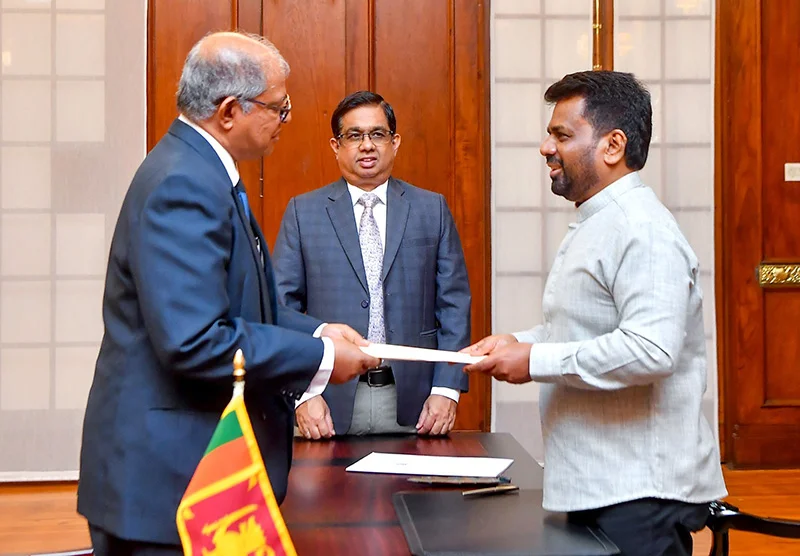
President Anura Kumara Dissanayake has appointed Court of Appeal Judge Mayadunna Sri Mevan Anthony Edirimannasuriya Corea as the Acting President of the Court of Appeal.
The appointment has been made as President’s Counsel Nalin Rohantha Abeysuriya, who currently serves as President of the Court of Appeal, will be overseas until the 24th.
Accordingly Justice Mayadunna Corea was sworn in as Acting President of the Court of Appeal before President Anura Kumara Dissanayake at the Presidential secretariat last morning (21).
Secretary to the President Dr Nandika Sanath Kumanayake was also present at the occasion.

High Court convicts 14 over deadly Easter bombings

Mandhana, Shafali and Ghosh lead dominant India to Asian Games gold

Fatima Sana and Umm-e-Hani secure bronze for Pakistan in Asian Games

India bat first in Asian games womens cricket final

Showers about 100mm will occur in the Western, Sabaragamuwa, Central and North-western provinces and in Galle and Matara Districts

Govt. confident of 2/3 majority despite NPP split speculation

‘Dates have the highest sugar content to fight Coronavirus’

Sunday Island 27 December – Headlines

#SundayIsland 17th December – Headlines

Sunday Island – 28th March

Sunday Island Headlines – 21 March

Sunday Island – 21st February – Headlines
-

 News6 days ago
US embassy won’t comment on IGP’s probe into joint drug raid
-

 News5 days ago
Bid for Basil’s extradition nears final stage: Police
-

 News4 days ago
Shanakiyan urges urgent action over reported death sentence for Lankan in Saudi Arabia
-

 Business6 days ago
All-new Bolero MaXX unveiled in Sri Lanka
-

 News3 days ago
Namal Rajapaksa Buddhist gambit fails, bail denied
-
 Opinion6 days ago
A journalist who wrote across the divide
-

 Editorial7 days ago
More fuel price shocks shrouded in secrecy
-

 Sports7 days ago
MAS Holdings, official clothing sponsor of Sri Lanka team at Aichi–Nagoya 2026 Asian Games