
Latest News
Mexico elects Claudia Sheinbaum as first woman president

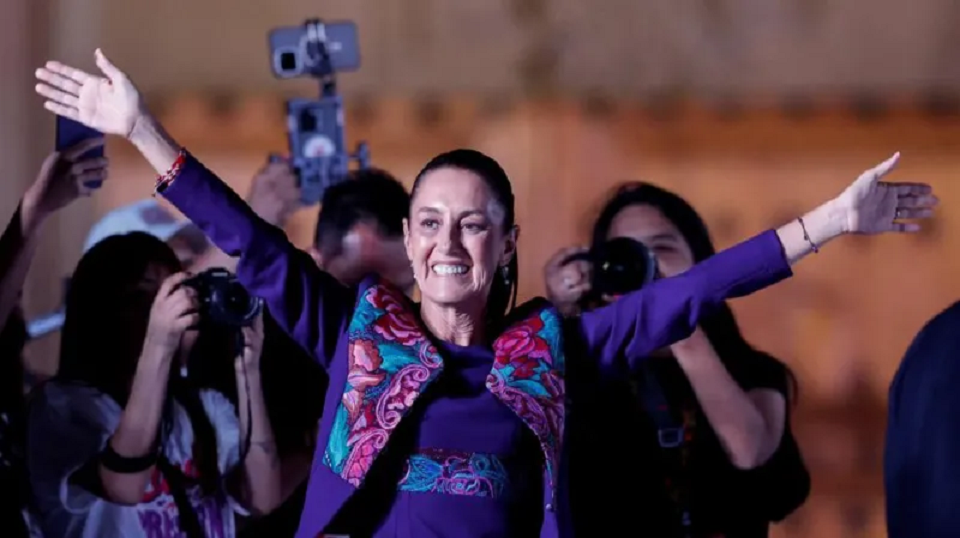
Claudia Sheinbaum has been elected as Mexico’s first woman president in an historic landslide win.
Mexico’s official electoral authority said preliminary results showed the 61-year-old former mayor of Mexico City winning between 58% and 60% of the vote in Sunday’s election.
That gives her a lead of about 30 percentage points over her main rival, businesswoman Xóchitl Gálvez.
Ms Sheinbaum will replace her mentor, outgoing President Andrés Manuel López Obrador, on 1 October.
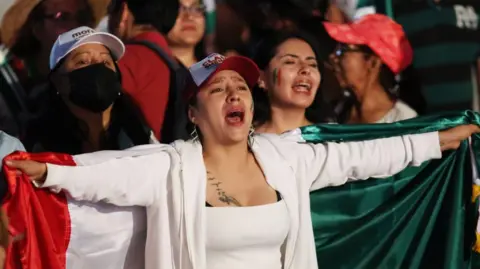
The election of a woman to the highest office was an emotional moment for some [BBC]
Ms Sheinbaum, a former energy scientist, has promised continuity, saying that she will continue to build on the “advances” made by President López Obrador, further building on the welfare programmes which have made the outgoing president very popular.
But in her victory speech she also highlighted what has set this Mexican election apart from previous ones. She told cheering voters: “For the first time in the 200 years of the [Mexican] Republic, I will become the first woman president of Mexico.”
She said it was an achievement not just for her but for all women. “I’ve said it from the start, this is not just about me getting [to the top office], it’s about all of us getting here.”
She added: “I won’t fail you.”
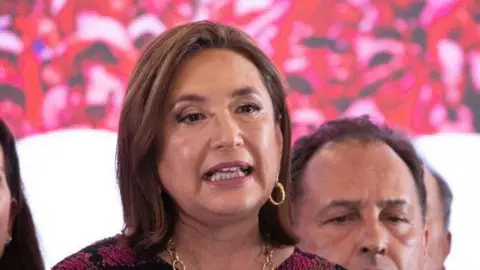
Ms Sheinbaum also thanked her rival, Xóchitl Gálvez, who has conceded victory.
Prior to running for president, Ms Sheinbaum was mayor of Mexico City, one of the most influential political positions in the country and one that is seen as paving the way for the presidency.
Ms Sheinbaum, whose Jewish maternal grandparents immigrated to Mexico from Bulgaria fleeing the Nazis, had an illustrious career as a scientist before delving into politics. Her paternal grandparents hailed from Lithuania.
Both of her parents were scientists and Ms Sheinbaum studied physics before going on to receive a doctorate in energy engineering. She spent years at a renowned research lab in California studying Mexican energy consumption patterns and became an expert on climate change.
That experience and her student activism eventually earned her the position of secretary of the environment for Mexico City at the time when Andrés Manuel López Obrador was mayor of the capital. In 2018 she became the first female mayor of Mexico City, a post she held until 2023, when she stepped down to run for president.

The election, which pitted Ms Sheinbaum against Ms Gálvez, has been described as a sea change for women in Mexico.
Edelmira Montiel, 87, said that she was grateful to be alive to see a woman elected to the top office. “Before, we couldn’t even vote, and when you could, it was to vote for the person your husband told you to vote for. Thank God that has changed and I get to live it,” she told Reuters news agency, referring to the fact that women were only allowed to vote in national elections in 1953.
While the fact that the two front-runners were women was widely celebrated, the campaign was marred by violent attacks.
As well as a new president, voters were also electing all members of Mexico’s Congress and governors in eight states, the head of Mexico City’s government, and thousands of local officials.
And it was local candidates in particular who were targeted in the run-up to the vote. The government says more than 20 were killed across Mexico, although other surveys put the total at 37.
Ms Gálvez harshly criticised the government and her rival in the presidential race for the violence which blights large parts of Mexico.
She promised to be “the bravest president, a president who does confront crime” if elected, but failed to provide many details about how she would tackle the powerful criminal cartels which are behind much of the violence.
After Ms Sheinbaum’s lead became unassailable, Ms Gálvez called her. “I told her I saw a Mexico with a lot of pain and violence. I wished that she could solve the severe problems our people have,” Ms Gálvez said of the call.
How to tackle Mexico’s violent cartels is going to be one of the many challenges facing Ms Sheinbaum when she takes up office. She has said that it is important to tackle what she says are the roots of the violence and has promised to invest in welfare programmes to prevent poor young Mexicans from being recruited by criminal groups.
On relations with Mexico’s northern neighbour, the United States, which at times have been testy under her predecessor in office, she said she would ensure there would be “a relationship of friendship, mutual respect and equality”.
But in a reference to the many Mexicans living and working in the US, she promised to “always defend the Mexicans who are on the other side of the border”.
Relations between the US and Mexico suffered under Mr López Obrador, who has been in power since 2018. The outspoken leader was barred from running for a second term under Mexico’s constitution, which limits presidents to a single six-year-term.
He threw his weight behind Ms Sheinbaum instead.
Having the backing of the popular president, who has an approval rate of close to 60%, gave Ms Sheinbaum’s campaign a huge boost. Many of those voting for her said they backed Morena’s programme to alleviate poverty and wanted to see it continued.
[BBC]










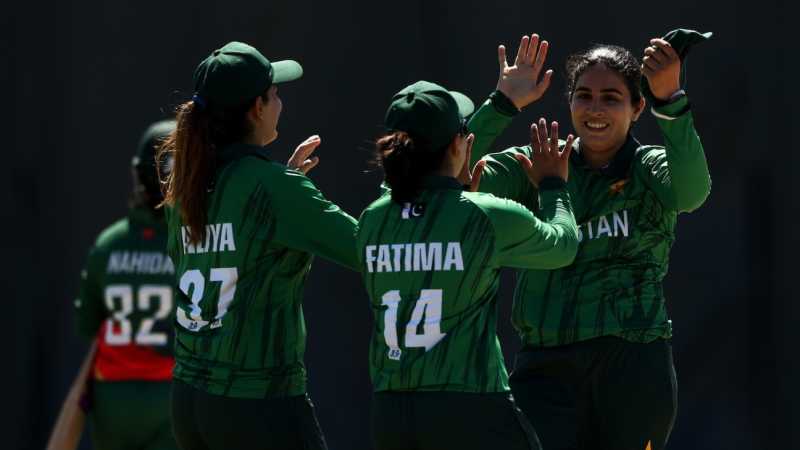
At 67 for 5 in the 12th over, Pakistan were under the cosh against Bqngladesh in their bronze-medal playoff at the Asian Games women’s competition. That’s when Fatima Sana walked out, slammed 45 in 30 balls, and gave Pakistan 145, which was 31 too many for Bangladesh, especially after Umm-e-Hani picked up three top- and middle-order wickets to end with 3 for 10 from her four overs.
Bangladesh’s big concern, of late and in general, has been the number of dot balls they play out in a typical T20 innings. In this game, it was a marginal improvement from the loss to India in the semi-final – they had 43 dot balls here compared to 61 in that game. But it was still fewer than the 48 they bowled to Pakistan in the first half. The difference was Sana, who scored at 150.00 to change the complexion of the contest.
Pakistan’s start had been decent, thanks to Gull Feroza, after they won the toss and opted to bat. Feroza and Shawaal Zulfiqar added 46 in 41 balls before being separated in the seventh over. The one to be dismissed was Feroza, who had scored 31 in 23 balls. Zulfiqar batted on before becoming the third batter to fall, having struggled to 17 off 27 balls. And the wickets kept falling, Shorna Akter picking up two of them to leave Pakistan in a mess with five batters gone.
Sana had a solid stand for the sixth wicket with Aliya Riyaz, who scored 25 in 22 balls and added 67 with Sana in just 43 balls. The control Bangladesh had was gone with the two hitting five sixes between them.
The target for Bangladesh, which looked like it might be in the region of 100, was suddenly closer to 150. And the chase never took off. Umm-e-Hani struck in the third over, then in the fifth over, and again in the 16th over. By then, Bangladesh were floundering: 77 for 5 with under five overs to go.
The resistance came from senior pro Sharmin Akther, who scored an unbeaten 46 in 45 balls, but there was nothing around her, and Pakistan ran out comfortable, 31-run victors.
Scores:
Pakistan women 145 for 8 in 20 overs (Shawaal Zulfiqar 17, Fatima Sana 45, Gull Feroza 31, Aliya Riyaz 25; Sanija Akter Meghla 1-28, Nahida Akter 2-21, Shorna Akter 2-16, Ritu Moni 2-27) beat Bangladesh women 114 for 7 in 20 overs (Dilara Akter 12, Nigar Sultana 25, Sharmin Akhter 46*, Nahida Akter 10*; Tasmia Rubab 1-25, Fatima Sana 1-25, Umm-e-Hani 3-10, Nashra Sandhu 1-19, Ayesha Zafar 1-10) by 31 runs
(Cricinfo)

India Women won the toss and chose to bat first in the Asian Games women’s cricket final in Nishin, Japan.
India: Smriti Mandhana, Shafali Verma, G Kamalini, Harmanpreet Kaur (capt), Richa Ghosh (wk), Bharti Fulmali, Deepti Sharma, Shreyanka Patil, Kranti Gaud, N Shree Charani, Nandani Sharma
Sri Lanka: Imesha Dulani, Chamari Athapaththu (capt), Hasini Perera, Kavisha Dilhari, Harshitha Samarawickrama, Hansima Karunaratne, Kaushini Nuthyangana (wk), Kawya Kavindi, Mithali Ayodhya, Chamudi Praboda, Sugandika Kumari
(Cricinfo)
The National Business Facilitation Centre (NBFC), which is being established under the Presidential Secretariat with the aim of removing administrative and regulatory barriers that exist among government institutions in relation to investment and industry and expediting these processes, will be opened tomorrow (22).
The centre is being established on the President’s initiative with the aim of bringing about a positive transformation in the industrial sector. The centre will provide solutions to issues that arise in dealing with the government machinery when starting and operating a business, while also coordinating with the relevant government institutions to provide the necessary facilities.
The “ViYASA” National Business Facilitation Centre (NBFC) has been established at Building C-80, Hector Kobbekaduwa Mawatha, Colombo 07, and is headed by Senior Additional( Secretary to the President, Seevali Arukgoda.
The centre will be opened under the patronage of Minister of Labour and Deputy Minister of Finance and Planning Dr Anil Jayantha Fernando and Minister of Industry and Entrepreneurship Development Sunil Handunnetti, with the participation of Secretary to the President Dr Nandika Sanath Kumanayake.
The website https://nbfc.presidentsoffice.gov.lk is also scheduled to be officially launched on the occasion.
President’s Media Division)

Fatima Sana and Umm-e-Hani secure bronze for Pakistan in Asian Games

India bat first in Asian games womens cricket final

Showers about 100mm will occur in the Western, Sabaragamuwa, Central and North-western provinces and in Galle and Matara Districts

Govt. confident of 2/3 majority despite NPP split speculation

Justice Corea appointed Acting President of the Court of Appeal

Protest against setting up of cement factory in highly populated area near BIA

‘Dates have the highest sugar content to fight Coronavirus’

Sunday Island 27 December – Headlines

#SundayIsland 17th December – Headlines

Sunday Island – 28th March

Sunday Island Headlines – 21 March

Sunday Island – 21st February – Headlines
-

 News6 days ago
US embassy won’t comment on IGP’s probe into joint drug raid
-

 News5 days ago
Bid for Basil’s extradition nears final stage: Police
-

 News4 days ago
Shanakiyan urges urgent action over reported death sentence for Lankan in Saudi Arabia
-

 Business6 days ago
All-new Bolero MaXX unveiled in Sri Lanka
-

 News3 days ago
Namal Rajapaksa Buddhist gambit fails, bail denied
-

 Opinion6 days ago
A journalist who wrote across the divide
-

 Editorial7 days ago
More fuel price shocks shrouded in secrecy
-
 Sports7 days ago
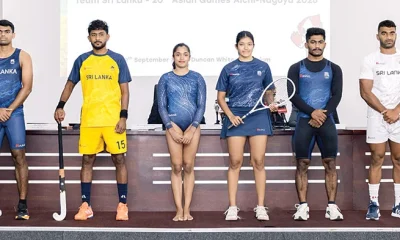
MAS Holdings, official clothing sponsor of Sri Lanka team at Aichi–Nagoya 2026 Asian Games