
News
Sri Lanka renewables, power lines without tender to be legalized in new law: IESL


ECONOMYNEXT –Procurement of renewable energy as well as transmission lines without competitive tenders will be legalized in a planned electricity reform law, the Institution of Engineers of Sri Lanka has warned.
“Despite declaring the objects of the proposed Act to be “allowing open competitive procurement of new generation capacity including renewable energy”, the body of this Act states the complete opposite,” the IESL said.
“The present practice of procuring renewable energy projects at higher prices through negotiated deals and at feed-in-tariffs that never decrease, has been further strengthened by incorporating it into the main electricity legislation in the country, when most countries have given up such practices long ago to make way for competition.
“The proposed Act does not have clauses that bring any relief to Sri Lanka’s electricity customer, burdened with prices almost double that of competitor countries in the region.
“Similarly, procurement of transmission capacity can be non-competitive…”
Privately owned transmission can also be procured without competition, the IESL said.
India’s Adani is expected to build a transmission line apparently without competitive tender.
It is also building the largest renewable plant in the island so far without competitive tender.
Related India’s Adani to build Sri Lanka transmission line with wind plants
The IESL said the powers of the Public Utilities Commission would also be watered down through the new law.
“This Council and the Minister have been bestowed with powers to decide on electricity tariff policy and approval of the long-term power generation and transmission plans, too, making a mockery of these highly technical functions so far handled by the PUCSL,” the IESL said.
“Instead of strengthening the existing regulatory functions and capacity of PUCSL, this Act makes PUCSL an agency that merely implements what the Minister and his Council decides.
“The worldwide best practice is otherwise: a stronger, highly professional and fiercely independent regulator implements the law and the policy, through licensing.”
The full statement is reproduced below:
The Proposed Sri Lanka Electricity Act 2024
The Institution of Engineers Sri Lanka (IESL) is the apex body representing over 25,000 professional engineers. IESL has closely followed the developments in the electricity supply industry, making constructive recommendations to ensure customers receive a reliable electricity supply at a regionally competitive price. Sadly, both the above conditions have not been fulfilled owing to actions or inaction of governments and sector institutions. The electricity sector has been moving from one crisis to another. In the ongoing efforts to reform the sector, IESL made several representations to the government since 2022. Sadly, the proposed Act tabled in Parliament in April 2024 does not reflect most necessary recommendations of IESL and other stakeholders who value meaningful reforms, thus failing to bring solutions to several serious shortcomings in the sector.
Instead of making the sector governance simpler and the government intervention smaller, the proposed Act creates a new institution called an Advisory Council. It duplicates some functions or transfers some functions of the Public Utilities Commission of Sri Lanka (PUCSL) – the regulator, to the Council.
The proposed Act hands over the role of the government as the policy maker to the Advisory Council appointed solely by the Minister of Power and Energy. This Council and the Minister have been bestowed with powers to decide on electricity tariff policy and approval of the long-term power generation and transmission plans, too, making a mockery of these highly technical functions so far handled by the PUCSL. Instead of strengthening the existing regulatory functions and capacity of PUCSL, this Act makes PUCSL an agency that merely implements what the Minister and his Council decides. The worldwide best practice is otherwise: a stronger, highly professional and fiercely independent regulator implements the law and the policy, through licensing.
Despite declaring the objects of the proposed Act to be “allowing open competitive procurement of new generation capacity including renewable energy”, the body of this Act states the complete opposite. The present practice of procuring renewable energy projects at higher prices through negotiated deals and at feed-in-tariffs that never decrease, has been further strengthened by incorporating it into the main electricity legislation in the country, when most countries have given up such practices long ago to make way for competition. The proposed Act does not have clauses that bring any relief to Sri Lanka’s electricity customer, burdened with prices almost double that of competitor countries in the region. Similarly, procurement of transmission capacity can be non-competitive, and in addition this Act allows private transmission lines.
The proposed Act allows private investments in generation, transmission, and distribution. However, the authority to grant a license to conduct such a business, presently with PUCSL (which is the worldwide practice in power sector reforms), will now be transferred to the Minister by this Act. Such “political” approval of licenses for a commercial business, at a time when Sri Lanka embarks on the next phase of reforms by inviting private investments to transmission and distribution, will make the reforms meaningless.
With private ownership allowed into 100% of each generation and distribution entity, safeguards to prevent formation of monopolies are grossly inadequate.
Technical matters too, have not been addressed adequately. The grid and technical codes thereof have been defined to be “above 33 kV”, ignoring the need for a distribution code, in an era where distributed generation is growing and would eventually be the main supplier of generation. This not only brings an unregulated block of generation and power wheeling across distribution networks, without adequate technical safety and economic regulation. Serious control problems leading to brownouts or blackouts cannot be avoided.
IESL calls upon the government to seriously review these glaring shortcomings and amend the proposed Act to ensure the above and other serious deficiencies pointed out by our detailed report are rectified. Without revisions, this Act will further aggravate problems of governance, unreliability, and high costs, that have plagued the electricity sector for decades. The proposed Act, if implemented without these amendments, is designed to fail technically and economically, with excessive political interference at every turn.

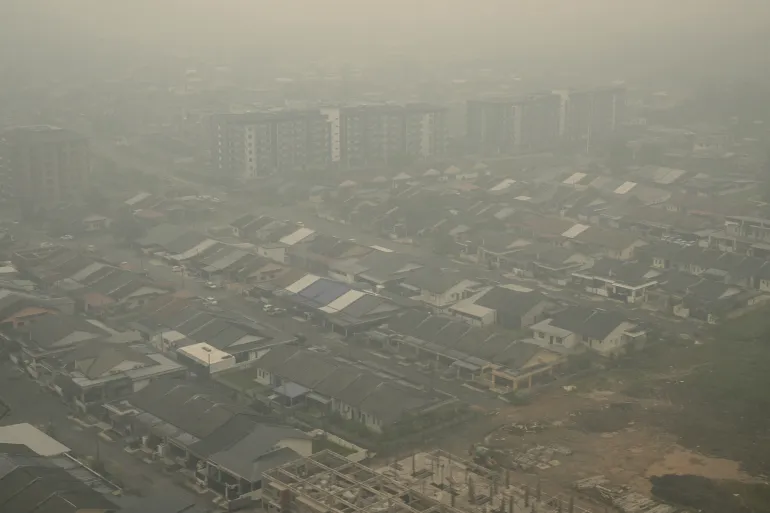
Malaysia has declared a state of emergency in a district in Sarawak state after haze caused by wildfires in neighbouring Indonesia increased air pollution to “hazardous” levels.
King Sultan Ibrahim “has consented to the declaration of emergency throughout Serian Division, Sarawak, following haze conditions that have reached air pollution levels hazardous to public health and safety”, Prime Minister Anwar Ibrahim’s office said in a statement on Thursday.
The declaration followed a formal request from the Sarawak Disaster Management Committee after the region’s Air Pollutant Index reached levels warranting consideration of a local emergency.
Under the order, 647 schools in Serian will close from Monday until at least the end of next week, alongside government and private offices, plantations, construction sites and quarries, with only essential services continuing to operate.
The state’s disaster management authorities said a three-day cloud-seeding operation launched on Thursday would be extended to at least Monday, citing forecasts of “more conducive cloud formations” during that period.
Sarawak State Disaster Management Committee chairman Douglas Uggah Embas, speaking at a news conference in Kuching, stressed that the emergency applied only to Serian, not the entire state, but urged residents there to take the situation seriously.
“Please minimise outdoor activities and avoid strenuous activities outdoors,” he said.
Sarawak, in the northern part of Borneo island, has been heavily affected by haze for weeks, as have the neighbouring states of Sabah and Peninsular Malaysia.
(Aljazeera)
Latest News
Sun directly overhead Moratuwa, Kesbewa, Handapangoda, Idalgashinna, Yudhaganawa, Kotiyagala and Panama about 12.08 noon today (05)


The sun is going to be directly over the latitudes of Sri Lanka from 28th of August to 07th of September due to its apparent southward relative motion.
The nearest places of Sri Lanka over which the sun is
overhead today (05) are Moratuwa, Kesbewa, Handapangoda, Idalgashinna, Yudhaganawa, Kotiyagala and Panama about 12.08 noon
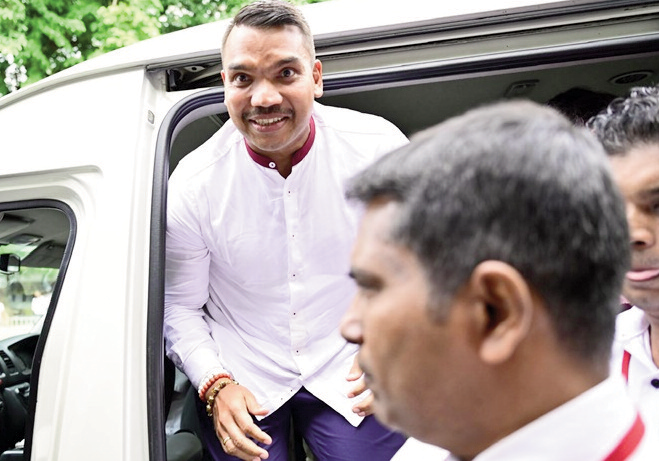
Sri Lanka Podujana Peramuna (SLPP) National Organiser and Parliamentarian Namal Rajapaksa was yesterday remanded until September 18 by the Colombo Chief Magistrate’s Court following his arrest by the Commission to Investigate Allegations of Bribery or Corruption (CIABOC) in connection with an investigation into the controversial SriLankan Airlines Airbus aircraft transaction.
Rajapaksa appeared before the CIABOC at around 9.15 am yesterday to record a statement after being summoned over the transaction. He was taken into custody following several hours of questioning and subsequently produced before the Colombo Chief Magistrate.
The investigation centres on allegations surrounding the acquisition of six Airbus A330 and eight A350 aircraft by SriLankan Airlines in 2013, in connection with an alleged USD 2 million bribe.
Former SriLankan Airlines Chief Executive Officer Kapila Chandrasena and his wife, Priyanka Niyomali Wijenayake, had previously been named in connection with the alleged bribery.
Chandrasena was arrested on March 12 as part of an investigation launched by the CIABOC under the Anti-Corruption Act and was subsequently released on bail. He was later found dead on May 8 while on bail, with police suspecting that his death was a suicide.
Open warrants have been issued for the arrest of Wijenayake, who is named as the second suspect, and Shamindra Rajapaksa, named as the third suspect, in the case pending before the Fort Magistrate’s Court in connection with the Airbus transaction.
The investigation has also received assistance from Airbus, with a delegation from the company’s parent group in France visiting Sri Lanka during the first week of August. The delegation provided statements and other assistance to the CIABOC as part of the ongoing inquiry.
Rajapaksa’s arrest and remand yesterday mark a further development in the widening investigation into the controversial aircraft deal.

Malaysia declares emergency in Sarawak as haze from Indonesia worsens

UAE keep semi-final hopes alive after convincing win over Indonesia

Sun directly overhead Moratuwa, Kesbewa, Handapangoda, Idalgashinna, Yudhaganawa, Kotiyagala and Panama about 12.08 noon today (05)

Showers above 75 mm are likely at some places in the Uva, Central and Eastern provinces and in Polonnaruwa and Mullaittivu districts after 2.00 p.m

Namal remanded until Sept. 18 over Airbus deal investigation

Dengue cases surpass 96,000 this year

‘Dates have the highest sugar content to fight Coronavirus’

Sunday Island 27 December – Headlines

#SundayIsland 17th December – Headlines

Sunday Island – 28th March

Sunday Island Headlines – 21 March

Sunday Island – 21st February – Headlines
-

 Features7 days ago
“Wrap Me Up in My Blazer”— A Gentlemanly Bradby Reminiscence
-

 Features6 days ago
When Sri Lankan stories find their own voice
-
 Features7 days ago
JVP/NPP government as seen from outside by Lionel Bopage now domiciled in Australia
-

 News6 days ago
BASL takes exception to Justice Ganepola being denied a place in SC
-

 Features7 days ago
Prof. Savitri Goonesekere: What has she done?
-

 News3 days ago
Denied of promotion to SC despite vacancies, justice Gurusinghe retires
-

 Latest News3 days ago
Grade 5 scholarship exam results released
-

 News3 days ago
22A: SC urged to suspend hearing, appoint full bench