
Foreign News
Have Trump prosecutors made their case at hush-money trial?

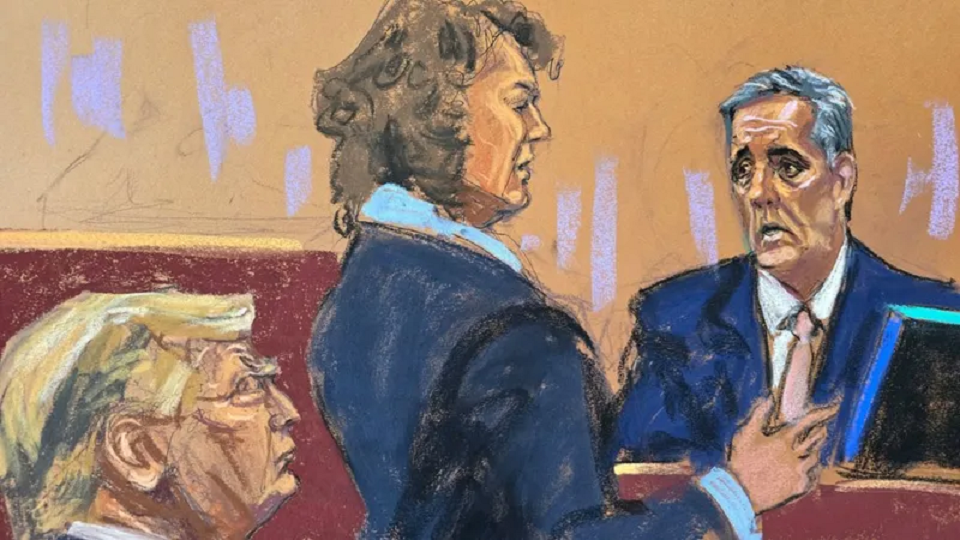
For nearly four weeks, Donald Trump has sat quietly in a New York courtroom while state prosecutors laid out the first-ever criminal case against a former US president.
Lawyers from the Manhattan District Attorney’s Office have called on a cast of blockbuster witnesses and produced dozens of surreptitiously recorded conversations and documents to help corroborate their case.
They allege Mr Trump directed a hush-money payment to an adult-film star in 2016 to avoid a sex scandal he feared would derail his presidential campaign – and then authorised an illegal reimbursement scheme to cover it up. Mr Trump denies 34 counts of falsifying business records.
The prosecution’s final witness, Michael Cohen, will face further cross-examination on Monday before Trump’s lawyers get an opportunity to present his defence.
Legal experts say the prosecution has done an efficient job. But even with solid evidence and testimony, they acknowledge that a conviction in the complex felony case is far from guaranteed.
“The pieces are all there. But is it there beyond a reasonable doubt?” said former Brooklyn prosecutor Julie Rendelman. “I don’t know.”
“It only takes one juror,” she added.
Laying out the story
Though Mr Trump’s case centres on a reimbursement he made to Cohen, his former fixer, prosecutors spent the first weeks of the trial walking the court through what led up to the $130,000 (£102,000) hush-money payment Cohen made to adult-film star Stormy Daniels.
They started with David Pecker, the former publisher of the National Enquirer.
He described a series of meetings in Trump Tower where he, Cohen and Mr Trump hatched a plan to suppress negative stories about Mr Trump – including alleged sexual encounters – as he ran for president.
His testimony proved influential, said former Manhattan prosecutor Lance Fletcher. “He doesn’t have a reputation that’s been blown apart by this. And he came into it really seeming to be Trump’s friend,” Mr Fletcher said. “So I think he comes off as almost an impartial witness.”
From there, prosecutors called a host of others, including former Trump aide Hope Hicks and Daniels’ former attorney Keith Davidson, to corroborate the story.
“They sort of connected a fascinating novel … about how all of these characters interacted,” said Columbia Law School professor John Coffee. “And that was wise.”
They also interspersed evidence such as meeting logs, recordings and receipts of hush-money payments made to a Trump Tower doorman and Playboy model Karen McDougal to bolster witnesses’ stories.
Star witnesses air secrets
Prosecutors used weeks of storytelling and evidence to build up to the most highly anticipated witnesses, including Ms Daniels.
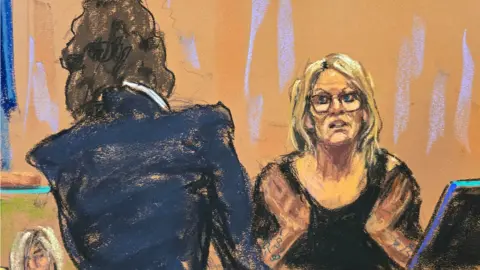
Mr Trump’s attorneys worked hard to limit Ms Daniels’ testimony.
While prosecutors pledged to tread lightly when quizzing her about the alleged sexual encounter at a hotel suite in Nevada in 2006, she still proved at times an uncontrollable witness, Judge Juan Merchan told the court. Mr Trump has denied having sex with her.
Her explicit testimony led to several unsuccessful mistrial motions from Mr Trump’s legal team and may have opened the door for an appeal, some legal experts said.
But others said that context helped prosecutors show why Mr Trump would be desperate to pay for her silence in order to protect his campaign.
“She got into some salacious details, which I thought went too far,” said Ms Rendelman. “But at the same time, the argument for the prosecution is the more salacious it is, the more Trump would want it to be shut down.”
Ultimately, Ms Daniels could only testify to what led up to the hush-money payment.
For the behind-the-scenes reimbursement, they had to rely on a problematic witness: a convicted felon who recently has made a living off attacking Mr Trump.
A calm and collected Cohen takes the stand
Members of the public held their breath earlier this week as Mr Trump’s former fixer-turned foe, Cohen, was called to the stand. Many anticipated the same character who authored fiery social media posts attacking Mr Trump, for whom he once pledged to take a bullet. But the man speaking in a blue suit and tie took them by surprise. Cohen appeared composed as he detailed his decades with Mr Trump.
“He is measured. He is reflective,” said Diane Kiesel, a former New York Supreme Court Justice and Manhattan prosecutor. “He has not let any bias or animus for Mr Trump show through.”
Cohen told the court of his initial admiration, working as Mr Trump’s personal attorney for 10 years. He acknowledged the lows as well, including lying on Mr Trump’s behalf, leading to regrets.
His composure boosted the prosecutors’ case, and his testimony was bolstered by a weak cross-examination from Mr Trump’s legal team on day one, experts said.
Mr Trump’s attorney, Todd Blanche, appeared disorganised at first, stumbling sometimes in his questioning, experts told the BBC.
But he appeared to make strides on the second day, Thursday, casting doubt on details of Cohen’s testimony, including an October 2016 phone call Cohen made to Mr Trump’s bodyguard in which he claimed to have to talked to Mr Trump about details of the hush-money payment.
It was a reminder of what experts said was one of prosecutors’ largest problems: Cohen’s credibility. The defence hammered home the point that Cohen is a convicted criminal, who spent time in prison after being convicted on several charges including lying to Congress.
Cohen was able to testify to a key part of prosecutors’ case – Mr Trump’s direct knowledge of the hush-money payment reimbursement scheme.
Cohen said former Trump Chief Financial Officer Allen Weisselberg – currently serving a perjury sentence at Rikers Island prison – decided to classify reimbursements from Mr Trump’s account as legal expenses. Cohen testified that he heard Weisselberg get the OK from Mr Trump himself.
As Cohen spoke, prosecutors also displayed the dozens of cheques, ledgers and invoices at the heart of the 34-count indictment.
But Cohen’s story may not sway all jurors.
“You are relying on a witness who in many respects … comes with a larger load of baggage than others,” Ms Rendelman said. “It makes it a bit more difficult to prove the case beyond a reasonable doubt.”
Connecting the dots
Other challenges remain for the prosecution.
In a relatively novel approach, the Manhattan District Attorney’s Office elevated falsifying business records charges to a felony by claiming Mr Trump did so with the goal of concealing another crime.
To prove their case, prosecutors must show intent – that Mr Trump illegally classified records for the purpose of aiding his campaign. Several witnesses seemed to corroborate this.
“He wasn’t thinking at all about [his wife] Melania,” Cohen told the court. “This was all about the campaign.”
But prosecutors must make this connection clear to the jury.
“Essentially they have to connect these payments to a motive that links them to a campaign,” said Ms Kiesel. “This requires a summation of a lifetime, because you really have to connect these dots.”
Mr Fletcher said prosecutors succeeded in doing so, with witnesses arguing the hush-money payment and reimbursement was not made to protect Mr Trump’s family.
“This was all about the election,” Mr Fletcher said. “If I was going to bet, I would bet on a conviction. But I don’t think it’s a slam dunk.”
In the end, the verdict could come down to jury selection, experts said.
The 12 members and six alternates were picked from hundreds who expressed a range of political views and familiarity with Mr Trump and this case.
Jury members are often unpredictable, Ms Kiesel said. “It only takes one person to decide that the people have not met their burden,” she said. “The people have 12 jurors to convince.”
(BBC)







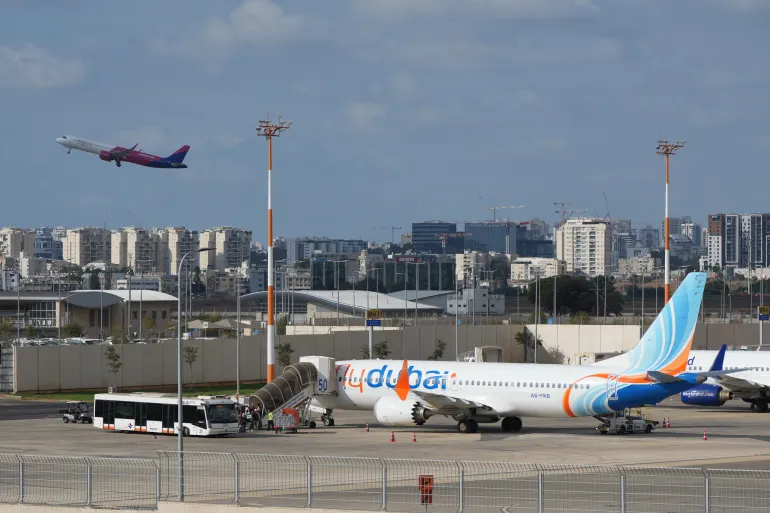
A flight from the United Arab Emirates to Israel was diverted to Saudi Arabia after issuing a distress signal, in what appeared to be a hijacking attempt, on Wednesday.
The Flydubai flight FZ1073 was diverted as it flew from Dubai to Tel Aviv through Jordanian airspace, prompting Israel to deploy warplanes, the Reuters news agency reported.
Israeli Prime Minister Benjamin Netanyahu said one of the pilots had stabbed the other and then tried to crash the plane. He added that Israel was preparing for other “potential threats” after the incident.
There has been no official confirmation of a hijacking attempt, however.
Flydubai said an altercation had occurred on the flight deck and that all passengers were safe and accounted for. The plane was secured by on-duty crew travelling onboard, it added.
At Saudi Arabia’s Tabuk airport, where the plane landed, officials said both the plane’s captain and the first officer had been hospitalised after sustaining injuries. Both were taken to the hospital, according to a statement from the Prince Sultan bin Abdulaziz International Airport in Tabuk carried by the Saudi state-run Alekhbariya television.
The UAE has become a popular vacation destination for Israeli tourists since the countries normalised ties in 2020. Here’s what we know about what happened.
Footage taken onboard the plane appears to show the captain of the aircraft lying on the ground with several stab wounds, and a passenger with a bloody wound to the head.
In another video, passengers weep and cry out in distress as the aircraft shakes.
Yasmin Abukasis, the mother of one of the passengers onboard, said her daughter Miriam thought she was going to die. “The plane started to lose control,” she told journalists at Israel’s Ben Gurion Airport, before other pilots onboard took control of the aircraft.
Flight tracking data indicated the plane descended over 14,000 feet in less than 30 seconds around two and a half hours after leaving Dubai. Flightradar24 said on X that an initial general emergency signal designated by code 7700 was issued at around 05:31 UTC and was later changed to another emergency signal with code 7500 declaring “unlawful interference”.
Passenger Dalia Shpigel told Israeli newspaper Haaretz that some people seated towards the front of the plane broke into the cockpit after the plane began to descend and they realised something was wrong.
“An hour before landing, we felt that there was no control over the plane, that it was starting to jump,” she said. “The guys saw that the plane had begun to dive and broke into the cockpit.”
Netanyahu said he later spoke to one of the Israeli passengers who broke into the cockpit and overpowered one of the pilots who was reportedly trying to sabotage the aircraft’s systems.
“I salute these heroes who demonstrated extraordinary resourcefulness and courage,” Netanyahu said in a statement. “They saved many lives and prevented a major disaster.”
Timeline of events
03:05 – Flight FZ1073 takes off from Dubai05:21 – Altitude fluctuations begin05:22 – Aircraft drops more than 14,000 ft in under 30 seconds05:31 – Signal from aircraft changes to 7700 (general emergency)05:38 – Signal changes to 7500 (unlawful interference)06:45 – Aircraft lands at Tabuk Regional Airport
[Aljazeera]
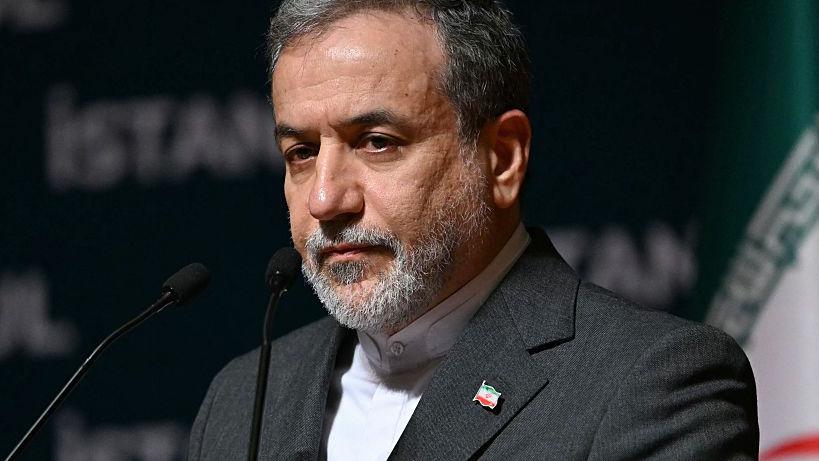
Iran’s Foreign Minister Abbas Araghchi has met with Qatari mediators in New York to discuss a proposal to reopen the Strait of Hormuz, while a United States official said there would be no agreement to end the war unless Tehran’s nuclear programme is addressed.
Araghchi told Iranian state media on Monday that the Qatari mediators would carry the ideas discussed at the meeting to the US and that he hoped to receive Washington’s final response by Tuesday.
“We talked about ideas and how to find solutions to fulfil Iran’s conditions and how to implement those conditions,” he said. “They had some ideas, and we had a discussion that they will also present to the American side.”
Asked whether he would stay in New York to await the reply, Araghchi said he would fly to Tehran within hours.
“Whenever the Qataris have a response, they know how to get it to us,” he said.
He described the meetings as part of an existing exchange of messages through Qatari and Pakistani mediators, which he said had taken on “a more serious form” since Iran submitted its proposal.
The Iranian plan , announced on Friday at the United Nations General Assembly in New York City, calls on the US to release frozen Iranian funds, lift sanctions and end its naval blockade of Iranian ports. Araghchi said those steps could be completed within four or five days, allowing the strait to reopen and negotiations on a final agreement, including on Iran’s nuclear programme, to begin by the seventh day.
US President Donald Trump, however, rejected the proposal on Saturday, calling it “unacceptable”
The US official, who spoke to Al Jazeera, said indirect discussions were continuing.
The talks were “positive and constructive”, the official said, but stressed there would be no agreement unless Iran’s nuclear programme is addressed. The official said Trump is willing to relieve sanctions and release Iran’s frozen funds in exchange for progress on nuclear issues.
“Iran has indicated they are flexible on the nuclear issues, but the sides still remain apart on the timing of the commitments and who takes which steps first,” the official said.
The official also expressed scepticism of Iran, saying it had broken the memorandum of understanding signed in June by firing on commercial vessels. Tehran denies the accusation and says it was Washington that broke its commitments by failing to halt Israel’s attacks on Lebanon and by seeking to establish alternate shipping routes through the Strait of Hormuz.
Iran had closed the strait, which handled roughly 20 percent of the world’s oil and gas supplies before the war, shortly after the US and Israel launched their offensive on February 28. Iranian attacks on vessels since have sharply curtailed shipping, and oil prices have risen above $100 a barrel.
Even so, crude exports from major Middle East producers rebounded in September to 12.8 million barrels per day, their highest level since the war began, the Reuters news agency reported, citing data from the maritime intelligence firm Kpler.
That is still well below the 18.8 million bpd exported in February.
Some ships have used the US military-supervised route hugging the coast of Oman, travelling at night with tracking systems off and offloading oil to tankers outside the strait. Admiral Brad Cooper, the head of US Central Command, said on Saturday that American forces had assisted 2,000 transits and more than 1 billion barrels of oil in recent months.
The US has also imposed a blockade on Iranian ports and threatened secondary sanctions against airports and companies that do business with Iranian airlines. The United Arab Emirates, Iraq and Oman have already cancelled related flights.
(Aljazeera)

Like every year, Pushpraj Rimal, a tour planner and taxi driver in Nepal’s capital, Kathmandu, was looking forward to September for his business to boom.
But what he got instead was a series of cancellations by tourists after catastrophic floods last month killed more than 1,450 people and destroyed key highways, deeply impacting the Himalayan nation heavily dependent on tourism.
“It is still a lockdown kind of situation,” the 42-year-old told Al Jazeera nearly a month after the disaster.
Pushpraj, who speaks Nepali and Hindi, works on commission for several hotels and trekking companies in Kathmandu and the scenic town of Pokhara, known for its lake nestled in the Annapurna mountain range. Pokhara also serves as a base for Himalayan trekkers.
Nepal’s tourist season peaks after the monsoon ends in August and the skies are clearer. Tourism attracts thousands of international travellers, accounting for nearly 8 percent of Nepal’s gross domestic product and employs more than 1 million people.
Last year, Nepal saw more than 1.15 million tourists visiting the country, nearly a third of them during the September-November season.
But the floods this year, triggered by a glacial mountain collapse along the Nepal-Tibet border in the north, have pushed tourists away from the unaffected areas as well.
“I had rented two cars for two months, but I have done one fourth of the business I usually do in a season. Tourists generally start pouring in from September, but most of them have cancelled this year,” he said.
“I will get no commissions from the hotels or trek organisers, nor has the taxi business worked well. … I am now waiting for the season to end.”
Rimal has two children, Hema, 14, and Rahul, 12, whom he had promised a tablet this Dussain, a prominent Hindu festival that usually falls in October. “But it seems impossible now. I will have to break their hearts and my promise to them for the very first time.”
(Aljazeera)

Trump hints US could strike Iran, warns time coming

Showers or thundershowers will occur at most part of the island after 1.00 p.m.

US-assisted ‘Ice’ detection: NPC to examine IGP’s move to transfer drug-busting team

2027 Budget to be held from 12 Nov. to 14 Dec.

CB Governor confident over timely disbursement of next IMF tranche; hands post-2027 programme decisions to govt.

Cabinet spokesman explains why Thileepan statue was removed

‘Dates have the highest sugar content to fight Coronavirus’

Sunday Island 27 December – Headlines

#SundayIsland 17th December – Headlines

Sunday Island – 28th March

Sunday Island Headlines – 21 March

Sunday Island – 21st February – Headlines
-

 Features6 days ago
Beyond traditional jobs: Why Sri Lanka needs to facilitate the gig economy
-

 Editorial5 days ago
Birth of a bad law
-

 News3 days ago
Police remove Thileepan statue in Jaffna
-
 Latest News6 days ago
Kusal, Wellalage star as Sri Lanka defend 322 in Headingley thriller
-

 News5 days ago
TIN mandatory for key transactions from Nov. 1
-

 Features3 days ago
The 22nd Amendment, constitutional recovery and illiberal slippage
-

 Features3 days ago
Of foreigners as CEOs of Lankan ventures
-

 News3 days ago
Sajith rejects Jt. Opp. protest sabotage claim; SJB TU chief demands remedial action