
News
Prez-PM battle no excuse for intelligence failure – GL

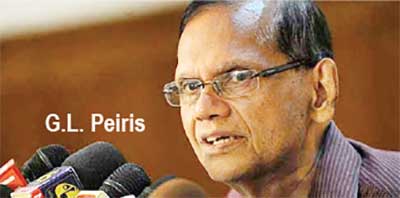
… ex-spy chief cited to prove futility of political partnerships
By Shamindra Ferdinando
Former State Intelligence Service (SIS) Chief Senior DIG Nilantha Jayawardena’s testimony before the Presidential Commission of Inquiry probing the Easter Sunday carnage had shown why the President and the Prime Minister should not be elected from two different parties, SLPP Chairman, Prof. G.L. Peiris, told The Island.
Prof. Peiris, who heads the SLPP National List said that former spy chief Jayawardena hadn’t shied away from pointing out how a dispute between President Maithripala Sirisena and Prime Minister Ranil Wickremesinghe had placed the SIS in an extremely difficult situation at the onset of yahapalana administration in January 2015.
The former External Affairs Minister was commenting on Jayawardena’s testimony on Monday (27).
Jayawardena, who had been in the staff of Director General, Intelligence the late Cyril Herath succeeded Senior DIG C.N. Wakista.
Jayawardena, faulted for failure to thwart the Easter Sunday carnage by a Parliamentary Select Committee (PSC) in Oct 2019 explained to PCoI how his outfit struggled to cope with UNP-SLFP coalition in the run-up to a spate of near simultaneous suicide bombings.
Prof. Peiris said that the breakaway UNP faction, the Samagi Jana Balavegaya (SJB) readiness to serve a government under President Gotabaya Rajapaksa should be examined against the backdrop of Jayawardena’s assertion.
Having repeatedly warned of a dictatorship in case Gotabaya Rajapaksa won 2019 presidential election, its leader Sajith Premadasa on several occasions declared his readiness to serve as the Premier under President Gotabaya Rajapaksa, Prof. Peiris said.
The UNP couldn’t work with Maithripala Sirisena, in spite of him being installed in the Office of the President by the UNP. A devastating political crisis destabilised the much touted yahapalana administration within weeks after 2015 presidential poll. It would be silly even to think about President Gotabaya Rajapaksa having to invite the SJB leader to form the next government, Prof. Peiris said, warning the UNP and SJB to expect debilitating defeat at the Aug 5 presidential poll.
Responding to another query, Prof. Peiris emphasized that whatever the political complications caused by what he called a disastrous arrangement at that time, the then SIS Chief couldn’t justify their failure to thwart the murderous Thowheed Jamaat project. There was no doubt the political leadership failed, the former minister said, adding that those who allowed the terror project to go ahead by negligence couldn’t solely blame it on the President-Premier battle.
Describing the beleaguered ex-spy chief as a yahapalana insider, Prof. Peiris alleged that those who had served the previous government sought to side step the key issue.
The issue at hand is why law enforcement authorities refrained from taking tangible measures in spite of having actionable intelligence from a friendly country, Prof. Peiris said.
At the time Thowheed Jamaat struck Commander-in-Chief President Sirisena, in addition to defence he also held the law and order portfolio.
Prof. Peiris said that political rifts couldn’t be allowed to jeopardize national security. Former SIS head’s testimony coupled with that of former presidential secretary P.B. Abeykoon’s exposure showed how the previous administration handled post-war national security, Prof. Peiris said.
Terrorists could have achieved their objectives without much difficulty due to ‘security services’ playing politics, he said.
Nilantha Jayawardena received appointment as SIS Chief in March 2015. At that time he was called by the then IGP N.K. Illankagoon to take over SIS, he was in charge of the Kankesanthurai Division in the Jaffna peninsula.
Prof. Peiris said that the disastrous handling of security/intelligence apparatus leading to the Easter Sunday carnage exposed those who were at the helm of defence apparatus.
Jayawardena received promotion to the rank of Senior DIG with effect from Feb 28, 2019, with the approval of the National Police Commission (NPC).
In the wake of the 2019 presidential election, President Gotabaya Rajapaksa for the first time in our history brought the SIS under a military officer. One-time Director of the Directorate of Military Intelligence (DMI) Brigadier Suresh Sallay was named new SIS Chief. Subsequently, he was promoted to the rank of Major General
President Rajapaksa also named retired Maj. Gen. Jagath Alwis as the Chief of National Intelligence (CNI) in place of retired DIG Sisira Mendis.
Intelligence veteran Maj. Gen. Kapila Hendavitharana served the CNI at the time of the 2015 government change. On the UNP’s request, President Sirisena appointed retired DIG Sisira Mendis as the CNI and Mendis was replaced soon after the Easter attacks.
Maj. Gen. Hendavitharana told The Island that national intelligence services should present the correct ‘intelligence picture’ to relevant political and military authorities. The assertion that political crisis caused difficulties to the SIS in sharing available information with government partners could not be acceptable. Hendavitharana played a crucial role in the overall intelligence effort against the LTTE during the war before being named the first CNI.
Hendavitharana said that the country paid a very heavy price for not taking threats posed by extremists/terrorists seriously.
Nearly 275 persons perished in multiple blasts, over 400 suffered injuries.


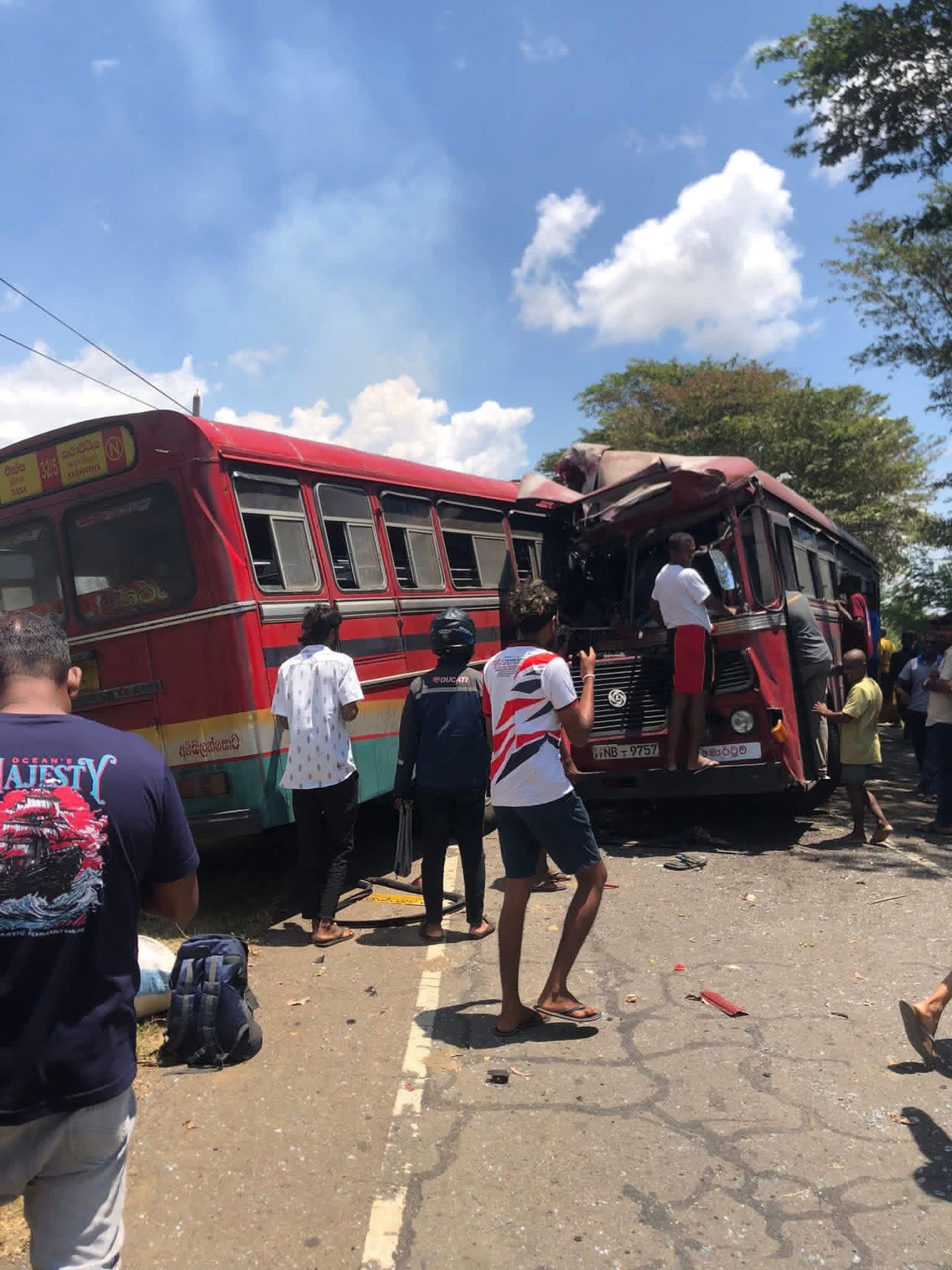
Four persons including a Budhist monk died and 32 others were injured when two SLTB buses collided head on at Weerawila at arond 12 noon today (18).
Three of the deceased were women. 22 of the injured were admitted to the Hambanthota Hospital while 10 others have been admitted to the Debarawewa hospital.
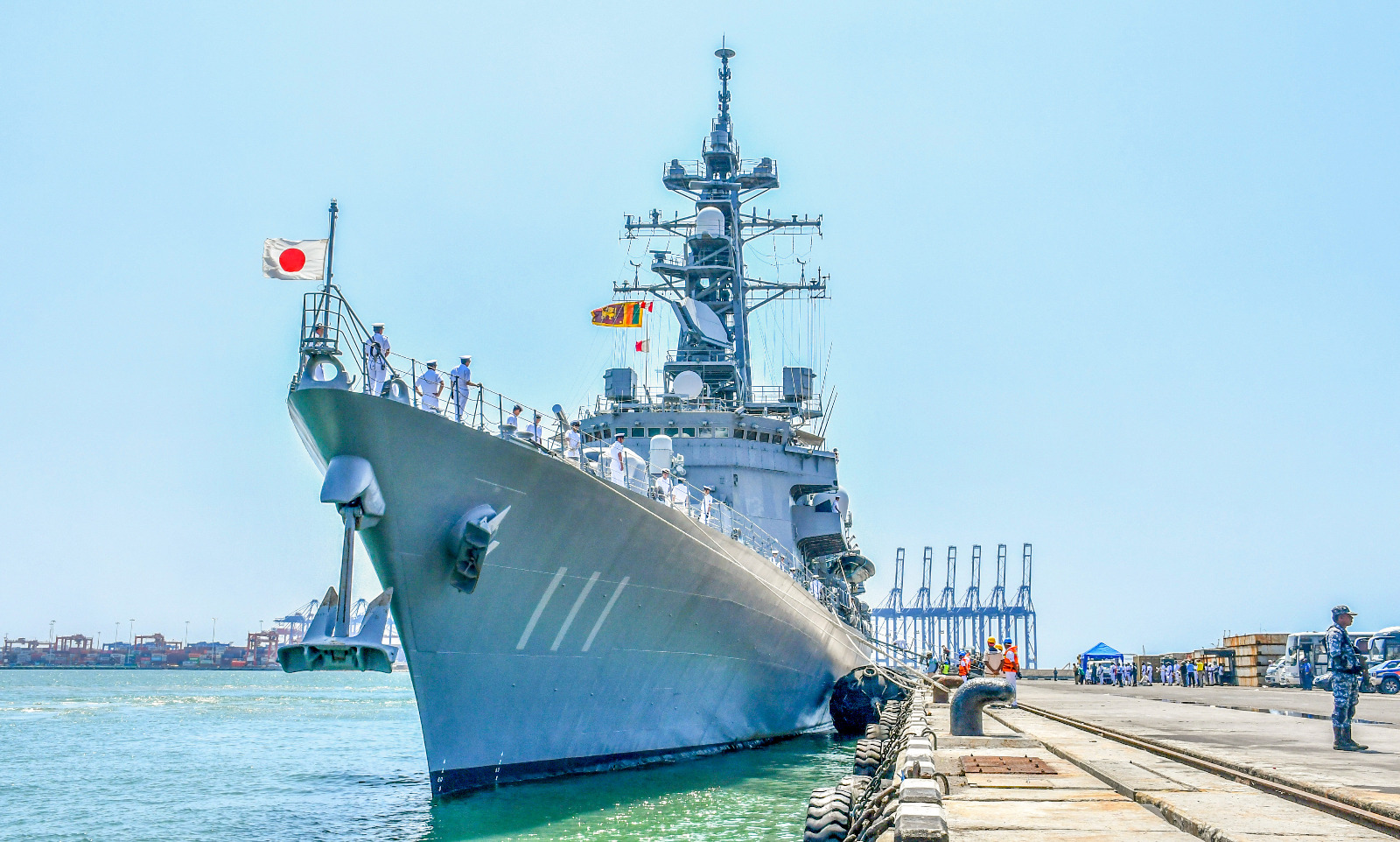
The Japan Maritime Self-Defence Force (JMSDF) ship OONAMI which arrived at the port of Colombo on a goodwill and replenishment visit on 09 Mar 26 departed on 11 March.
The departing ship was given a formal farewell from the Sri Lanka Navy, in keeping with naval traditions at the Port of Colombo.
The 150.5m long JMSDF OONAMI is commanded by Commander IIO Hiromasa.
During the stay in the island, crew members of the ship explored some tourist attractions in Colombo. The itinerary also included a coastal clean-up drive participated by naval personnel of both countries and engagements with the Sri Lanka Navy, designed to strengthen the bonds of friendship and cooperation.

The Central Cultural Fund established under the provisions of the Central Cultural Fund Act No. 57 of 1980 is responsible for development of cultural and religious monuments in Sri Lanka, settling the expenditure borne for development, renovation and conservation of local and foreign cultural monuments, awarding financial donations for artisans as well as awarding those who served the nation in the fields of culture and religious sectors.
The said act has been passed in Parliament 45 years back and, the requirement to revise the provisions of the act according to the contemporary requirements haa been recognized.
Accordingly, the Cabinet of Ministers granted their policy
approval to amend the said act, considering the resolution furnished by the Minister of Buddhasashana, Religious and Cultural Affairs.

SriLankan Airlines Alerts Customers to Social Media Scams

Four dead 32 injured in head on collision at Weerawila

JMSDF ship OONAMI concludes goodwill visit

Cabinet nod to amend Central Cultural Fund Act No. 57 of 1980
’National Namal Uyana’ declared as a National Heritage
Establishment of Supervisory Committees for restoring economic activities.

‘Dates have the highest sugar content to fight Coronavirus’

Sunday Island 27 December – Headlines

#SundayIsland 17th December – Headlines

Sunday Island – 28th March

Sunday Island Headlines – 21 March

Sunday Island – 21st February – Headlines
-
 News7 days ago
Historic address by BASL President at the Supreme Court of India
-

 Sports7 days ago
The 147th Royal–Thomian and 175 Years of the School by the Sea
-

 Business3 days ago
Browns EV launches fast-charging BAW E7 Pro at Rs. 5.8 million
-

 Life style4 days ago
From culture to empowerment: Indonesia’s vision for Sri Lanka
-
 News7 days ago
Power sector reforms jolted by 40% pay hike demand
-

 Latest News4 days ago
QR code system will be implemented for fuel with effect from 06.00 a.m. today (15th)
-
 Opinion6 days ago
M. D. Banda: Memories of Appachchi – II
-

 News2 days ago
Australian HC debunks misleading travel risk claims for Sri Lanka