Connect with us

News

Post-pandemic: Changing the way we view fitness in Sri Lanka

Published

on

by Talavou Alalima

When the first Covid-19 wave hit Sri Lanka in March this year, people physically active realized how important exercises were for their health and well-being. The second corona surge, now sweeping across the country, has ensued a sharp decline in physical fitness with many people gaining weight and diets in disarray.

This has driven home the fundamental point that we need to organize, prepare and participate in various outdoor activities in uncrowded places. We need go out and be active to boost our immunity. Research shows that activities within open spaces pose a lower risk of the spread of the contagion.

One of the commendable factors is building walking tracks. This has motivated people to walk, jog or cycle. We need to change the mentality and get more and more people into fitness encompassing both nutritional and exercise aspects. This is where organized activity comes into play. One should discover a total physical transformation, and for this to happen, certain equipment with adequate facilities, coupled with guidance from those who understand the science, are imperative. That’s where gyms play a key role. I believe the state sector should invest substantially on such infrastructure and create more awareness by introducing programs at ground-level.

Today, many degenerative and non-communicable diseases are destroying lives primarily due to lack of knowledge and access to organized fundamental physical activity structures without paying a steep price. The conventional annual memberships are outdated and archaic. In this day and age, people look for access to any physical activity facility or service at their convenience to suit their budget and location.

We see many people talking about various topics related to fitness. Despite the many technological advances and awareness, there are no sufficient innovative solutions that have an absolute impact on an individual’s health and wellness.

We need to build a healthy Sri Lanka – a future generation which values healthy lifestyles, with parents still around to see their children grow up and produce grandchildren. If we don’t make this change today, we’ll continue to see a decline in the nation’s health and wellness standards. We have to strengthen our immunity to our best, beginning with changing the way we view exercise, fitness and activity.

I’ve seen a significant number of people coming into the gym for the first time. In this backdrop, those who have been into physical training from their young adult life have a higher level of appreciation for activities and trends that have evolved throughout. However, for the majority of the population there’s a long way to go as only less than a mere one percent is into active fitness and exercises.

My philosophy in life is about serving, uplifting and strengthening others, especially those who are disadvantaged, ignored, forgotten, helpless and are underprivileged. I recall never asking from my single parent mother for anything. I love to see the impact and contribution I make. So, I chose to build gyms to give access to quality facilities to those who cannot financially afford it.

The 1996 Cricket World Cup winning team benefited from working out at my gym, with Sanath Jayasuriya discovering his true gift here. From thereon, almost every Sri Lankan national team and clubs, including at school-level, have trained in my gyms free of charge.

In 2000, I pioneered the sports nutrition manufacturing industry. Later in 2007, I hosted the Edge Grand Prix, a series of Track and Field championships. I also launched, funded and backed the ‘Loin Warrior Sports High Performance Program’ for five years, training and sponsoring nutrition needs of over 40 Sri Lankan champion sportsmen. Today, we see the wisdom of performance, nutrition and training that must go hand-in-hand embedded in the fabric of all sports.

I donated fully-equipped gyms to the Welisara, Mahara and Bogambara prisons. I noticed that 80% of prisoners seemed to have begun their life of crime after they first stole food to feed their children. No child must be denied food to such an extent that a father must steal to feed them.

Seeing the devastating impact of the dengue epidemic on families during its peak, I took on the leadership to fight the viral disease by launching the ‘Death to Dengue’ campaign in association with the Colombo Municipal Council (CMC). The battle towards this end still continues.

I also hypothesized that, if the sporting talent of children could be predicted early enough with a high level of accuracy, the chances of them competing to become world champions across all sports when they reached their physically maturity are realistic. This gave birth to a first of its kind predictive algorithm-based system. Today, seven years later, testimonies of children confirmed the prediction was accurate.

Though technology has brought about convenience, one cannot take away the human touch. In my experience, I have seen that people are able to achieve higher levels of fitness because of another human being. The connection between two people encourages and motivates the way no technology could. For example, we have many fancy tracking devices, but this is only feedback.

What’s critical is what we should do with all that data and how to use it for yourself to achieve the desired outcome. Exercising is a discipline that is embedded into one’s lifestyle over time; it takes a lot of hard work and commitment.

I’ve seen many gym members joining with tremendous excitement but due to their demanding lifestyles, they are unable to sustain a continuous training regime to achieve their desired fitness goals. Times have changed and people look forward to experience and enjoy a full cross section of various exercises, recreations, adventure, sports, coaching among others.


Continue Reading
Click to comment

Leave a Reply

Your email address will not be published. Required fields are marked *

News

Government assures University community of support to rebuild Peradeniya stronger and safer

Published

on

By

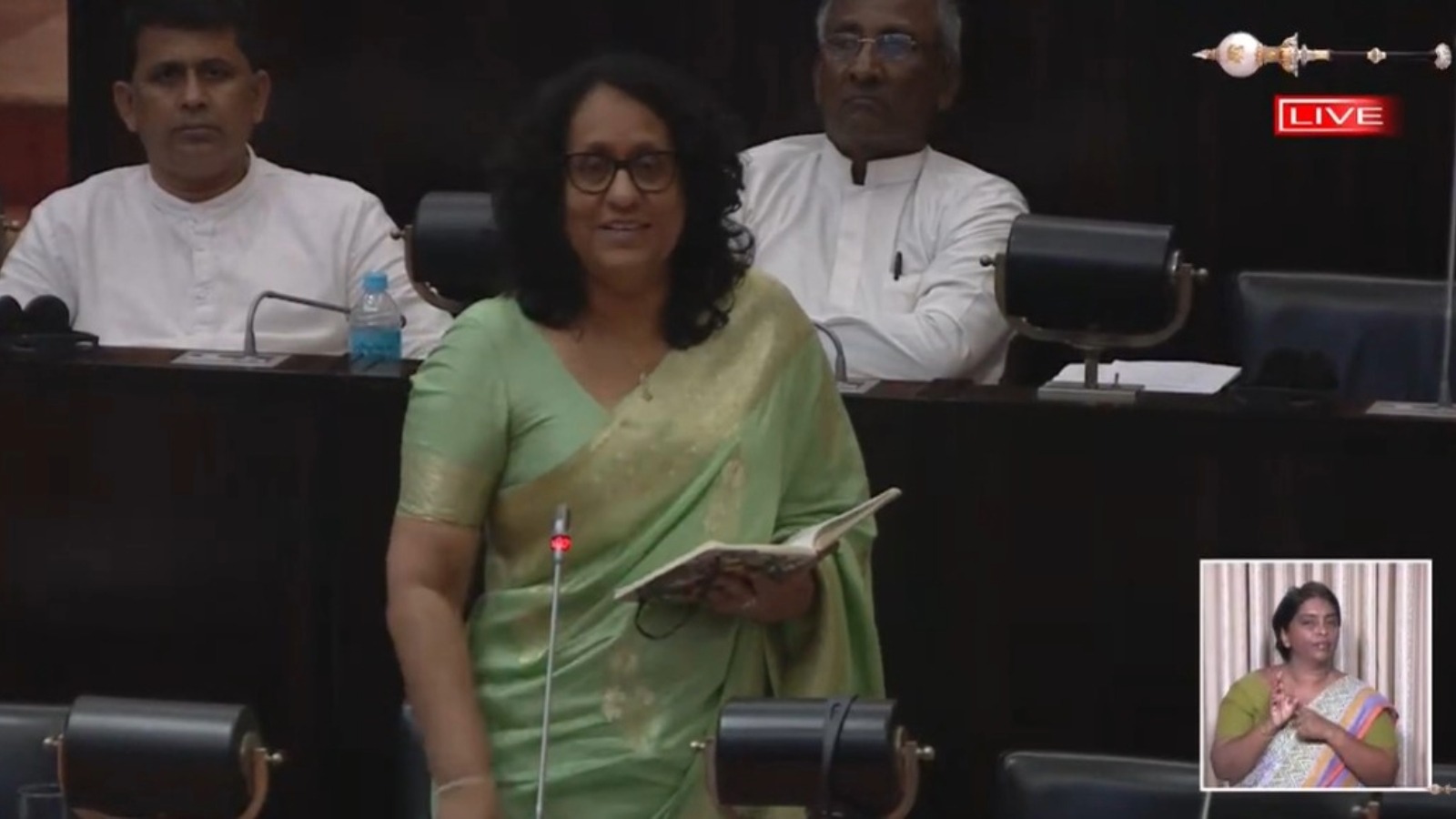
Prime Minister Dr. Harini Amarasuriya stated that the Government stands ready to support the University of Peradeniya in rebuilding stronger, safer, and more resilient than before. She made these remarks while visiting the University of Peradeniya on Sunday  (07), where she met with student representatives and Heads of Departments affected by the sudden floods that swept through the campus on 27 November.

The visit aimed to personally inspect the damage, which caused extensive harm to academic buildings, student facilities, and key infrastructure. University officials briefed the Prime Minister on the severity of the impact, highlighting significant losses to the Faculties of Management, Agriculture, and Veterinary Medicine, as well as the IT Centre, CDCE, gymnasium, swimming pool, and playgrounds.

The Prime Minister was also briefed on how the disaster disrupted both academic activities and the wellbeing of students and staff, including the loss of more than 110 computers, vital laboratory equipment, examination documents, and four central IT servers, with preliminary damage estimates exceeding Rs. 6 billion. She commended the swift evacuation of nearly 750 students from hostels located along the Mahaweli River and acknowledged the resilience shown by nearly 11,000 students who remained on campus during the crisis.

She expressed her appreciation to the Sri Lanka Army, the Disaster Management Centre, and local donors for providing food, water, and essential supplies at a time when access and communication were severely disrupted.

A joint engineering team has confirmed that university buildings remain structurally stable, although several require urgent repairs. With academic activities suspended until 15 December.

The Prime Minister discussed with the Vice Chancellor and emergency response teams the immediate steps required to restore normalcy and provide necessary support to students whose studies and daily routines have been significantly affected.

During these discussions, the Prime Minister issued a series of directives focusing on both immediate relief and long-term safety. These include restoring essential services such as water, electricity, and safe access pathways for students; accelerating the rehabilitation of heavily damaged faculties and laboratories; strengthening early warning systems for flood-prone areas; and implementing long-term mitigation measures such as riverbank protection, improved drainage, and the relocation of vulnerable facilities. She also directed the relevant agencies to fast-track government assistance, assuring the university community that the Government stands ready to help Peradeniya rebuild stronger, safer, and more resilient than before.

The meeting was attended by  Nalaka Kaluwewa, Secretary to the Ministry of Education, Higher Education and Vocational Education; Kandy District Parliamentarian Thanura Dissanayake, Professor Terrence Madhujith, Vice Chancellor of the University of Peradeniya; and Professor R. W. Pallegama, Deputy Vice Chancellor of the University of Peradeniya, along with Heads of Departments, officials, and student representatives of the University of Peradeniya.


[Prime minister’s media division]

Continue Reading

Latest News

Level III landslide early warnings issued to the Districts of Kandy, Kegalle, Kurunegala and Matale extended till 1600 hrs on Tuesday [09]

Published

on

By

The Level III RED landslide warnings issued to the districts of Kandy, Kegalle, Kurunegala and Matale by the landslide early warning center of the National Building Research Organisation [NBRO] have  been extended till 1600 hrs on 09th December 2025.

Accordingly,
The LEVEL III RED warnings issued to the Divisional Secretaries Divisions and surrounding areas of Hatharaliyadda, Yatinuwara, Ududumbara, Pathahewaheta, Medadumbara, Pasbage Korale, Deltota, Poojapitiya, Ganga Ihala Korale, Panvila, Gangawata Korale, Udapalatha, Harispattuwa, Kundasale, Minipe, Doluwa, Thumpane, Akurana, Udunuwara and Pathadumbara in the Kandy district, Kegalle, Galigamuwa, Mawanella, Bulathkohupitiya, Aranayaka, Yatiyanthota, Rambukkana and Warakapola in the Kegalle district, Mawathagama, Mallawapitiya and Rideegama in the Kurunegala district, and Naula, Wilgamuwa, Pallepola, Ambanganga Korale, Laggala Pallegama, Ukuwela, Rattota, Matale and Yatawatta in the Matale district have been extended.

In the meantime,

LEVEL II AMBER warnings have  been issued to the Divisional Secretaries Divisions and surrounding areas of Uva Paranagama, Meegahakivula, Badulla, Kandeketiya, Bandarawela, Soranathota, Hali_Ela, Ella, Lunugala, Welimada, Haputhale, Passara and Haldummulla in the Badulla district, Dehiowita, Ruwanwella and Deraniyagala in the Kegalle district, Alawwa and Polgahawela in the Kurunegala district, Ambagamuwa Korale, Hanguranketha, Mathurata, Norwood, Kothmale West, Nuwara Eliya, Thalawakele, Nildandahinna, Walapane and Kothmale East in the Nuwara Eliya district, and Kahawatta, Godakawela and Kolonne in the Ratnapura district.

LEVEL I YELLOW warnings have been issued to the Divisional Secretaries Divisions and surrounding areas of Yakkalamulla and Elpitiya in the Galle district, Attanagalla, Mirigama and Divulapitiya in the Gampaha district, Narammala in the Kurunegala district, and Eheliyagoda, Opanayake, Kalawana, Imbulpe, Kaltota, Kiriella, Kuruwita, Nivithigala, Ayagama, Pelmadulla, Balangoda, Elapatha and Ratnapura in the Ratnapura district

Continue Reading

Latest News

President chairs Nuwara Eliya District Special Coordinating Committee Meeting

Published

on

By

A special District Coordinating Committee meeting, convened to review the damage caused to the agricultural sector in the Nuwara Eliya District due to Cyclone Ditwah and to discuss the urgent measures required, was held this morning (08) at the Nuwara Eliya District Secretariat. The meeting was chaired by President Anura Kumara Dissanayake, with the participation of the relevant responsible officials.

Due to adverse weather conditions, 1,421 hectares of vegetable cultivation in the Nuwara Eliya District has been damaged. President Anura Kumara Dissanayake instructed the relevant officials to take the necessary measures to provide compensation to farmers without delay.

Officials stated that although there has been crop damage, the reduction in the vegetable harvest in the Nuwara Eliya District would be around 25%. They added that Nuwara Eliya district would be able to meet the daily demand, but a decrease in the daily demand has been observed.

Officials further pointed out to the President that the reason for this decline is the spread of false information claiming a vegetable shortage in the Nuwara Eliya District and that prices have excessively increased.

Continue Reading

Trending